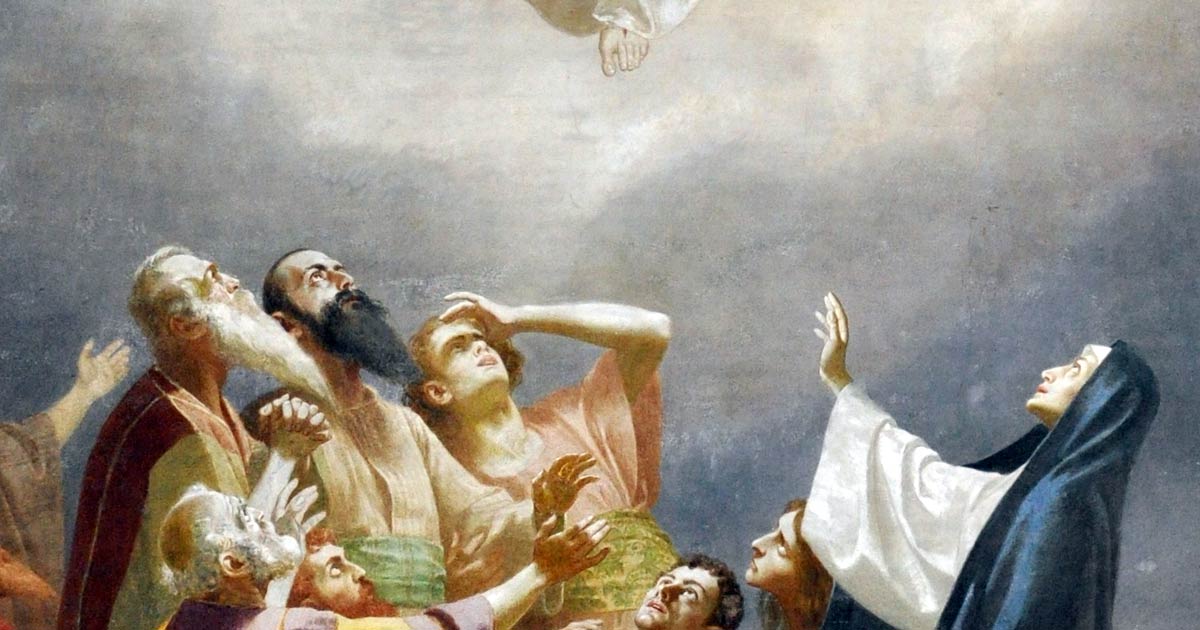
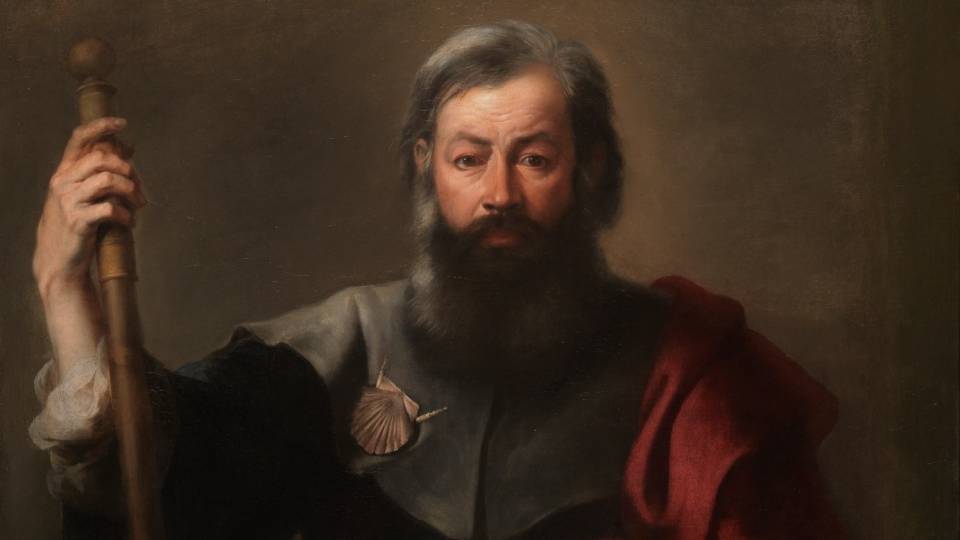
Ambition or Service: The Feast of St James~The Very Rev. Lady Sherwood, OPI
Reading 1: 2 COR 4:7-15

Responsorial Psalm: PS 126:1BC-2AB, 2CD-3, 4-5, 6

Gospel: MT 20:20-28

Liturgical Colour: Red.

Is it Ambition, or True service=St James the Apostle

We all know of those certain people who have very high ambitions in life. These can range from wanting to win the lottery, or in obtaining that certain perfect job. Maybe their ambition is for a top-class sports car, or maybe a mansion with lots of rooms and it’s own personal swimming pool. Maybe it’s  being rich with wealth and possessions. Even within some churches, I have personally seen those whose only ambition is to become a Bishop, when nothing less is good enough for them,the ambition of power and status, having mitre fever as I call it.

Whilst to have some ambition is a good thing, if you are setting goals for yourself or for an organisation, it is when those ambitions lose their balance and ignores the consequences for others, that ambition can become very toxic and corrupt.

We have an excellent example of over ambition in our Gospel reading today from Matthew. James and his brother John, who together with Peter are the three favoured apostles, approached Jesus together with their mother. According to Matthew, it was indeed their mother who asks Jesus to promise her sons would get the highest places in His heavenly Kingdom. Jesus responds directly to James and John and Jesus recognising the possibility of corruption in their ambition, Jesus puts a stop to it by asking them, “Can you drink the chalice that I am going to drink?” Without truly understanding what they had agreed to, they replied that they could. Jesus knowing full well what awaited them, concurred with their agreement. Just like a good parent will give their teenage children a realistic picture of what to expect in Adult life, Jesus tells them that indeed they will have much to suffer.

James the Apostle that we celebrate today, became the first Martyr amongst the apostles. Jesus knew that ambition wasn’t a bad thing in itself, and he didn’t wish to extinguish his apostles enthusiasm, indeed it’s an enthusiasm about eternal life, it’s a goal that each and every one of is should indeed have as great things are rarely achieved without both enthusiasm and suffering. Jesus just needed to refocus their ambition, so that they would truly understand not just the goal of eternal life, but also the true nature of the pathway that that is required to achieve this goal. Jesus knowing that the Apostles could possibly succumb to the temptations of personal ambition, gave the Twelve apostles a lecture on power and authority to remind them that authority in the kingdom must not imitate the authority that is ever so present in the world.

Jesus tells them that their role as his apostles =the first shepherds of His church, was not to rule but instead was to serve. Jesus didn’t only tell them to serve only each other and the lowly of the world, but offers himself as an example -revealing to them that he will go so far as to sacrifice his very life for the sake of all humanity. “The Son of Man did not come to be served but to serve and to give his life as a ransom for the many”. Jesus is telling James, John and the other apostles that the ambitious are blessed, but that their ambition must not be driven by self=assertion, but by self=extinction. This message also goes the same for us today, that we always act with Thanksgiving and praise :Thanksgiving because all that we have, all that we are, all that we achieve =all of this is solely given to us by the Grace of God, and praise because all that we do must be for the Glory of God and not for ourselves.

Let us pray :

O Gracious God,

We remember before you today thy servant and Apostle James, the first amongst the Twelve to suffer martyrdom for the name of Jesus Christ ; and we pray that you will pour out upon the leaders of your Church that Spirit of self=denying service by which alone they may have true authority amongst thy people, through the same Jesus Christ our Lord,

Who lives and reigns with you and the Holy Spirit, One God, for ever and ever.

Amen.

Bargaining, Bread, and Belief~The Rev. Frank Bellino

One day someone should compile a collection of photos of people at prayer; not the fake ones we see in some religious books but real ones of real people really praying.

 Something happens to a person when they are at prayer – their whole demeanor changes – something magical, which can’t be counterfeited. The mere sight of someone at prayer touches the deepest part of us and we can’t help but be drawn.

A businessperson who needed millions of dollars to clinch an important deal went to church to pray for the money. By chance he knelt next to a man who was praying for $100 to pay an urgent debt. The businessperson took out his wallet and pressed $100 into the other man’s hand. Overjoyed, the man got up and left the church. The businessperson then closed his eyes and prayed, “And now, Lord, now that I have your undivided attention….”

Recently I read a commentary on Luke’s Gospel which gives a very interesting spin on today’s Gospel passage. The author asks the question: in Jesus’ parable about the friend who begs bread from his neighbor at midnight really about persistence which is the way it has traditionally been interpreted. In other words: keep pestering God and eventually God will get tired of the nagging and give you what you want, like the man in the parable. But the author suggests that something else might be going on here.

 To think fresh thoughts about this story, he says, it helps to know five bits of background information. First, in the ancient Near East it was taken for granted that one offered a meal to a visiting traveler, even to a stranger – as we heard last week with Abraham and his three visitors. Second, bread was essential to any meal in that culture; grain in the form of bread was a major part of the diet, and it also served as a utensil; pieces were used to dip into the common serving bowls. Third, since baking was done out of doors in an oven shared by several families, it was a kind of community experience, and everyone knew who had baked bread on a given day. Fourth, the reputation of a village for hospitality was a matter of community honor, so that if the man who came begging bread at midnight could not offer any to his guest, the whole town’s reputation might suffer. And fifth, there is a fascinating question about the proper translation of the word usually given as persistence, Now remember: Jesus’ parables always have an element of surprise to the people who hear them, something that makes them sit up and take notice. It’s hard for us to realize this from our perspective and from our familiarity with these stories. So, what is the element of surprise here? It’s when the man inside says, “Leave me alone. The door is shut now, and my children and I are in bed. I can’t get up to look after your needs.” The reaction from Jesus’ hearers would be outrage. “That’s ridiculous,” they would say. No one would refuse the duties of hospitality that way and incidentally risk the reputation of the whole town. It just wasn’t done.

 Now, what about that word that’s usually translated persistence? Pardon me if I seem to get a bit technical here, but I’m going to talk about the Greek text, because it often helps to understand what is really going on by consulting the original. The fact is that in the Greek text that word could refer either to the man begging for bread or to the one already in bed with his family. Translators have usually made it refer to the one begging and so the moral of the story has always been: pray persistently with perseverance, never give up, and God will eventually hear your prayer and in some way answer it. Now I suspect that there may be a few of you that have in fact prayed persistently and nonetheless feel that God has not heard you or answered your prayers. Yes? Well, our author suggests another interpretation which in fact makes much more sense. The word in question literally means “avoidance of shame.” If we take it as referring to the man in bed it should be translated something like this: “Yet because of his avoidance of shame, or in order to avoid shame, he will get up and give him whatever he needs.” And in fact, that fits better with what Jesus implies in the questions that follow the parable. Even if the guy next door is a grouch, you know he will come through with the bread to avoid dishonoring his own and the village’s reputation for hospitality. With this interpretation the point of the parable is not persistence but assurance. The man comes begging for bread in the middle of the night because he knows, for sure, that his neighbor will help him. And that’s the way Jesus says we should pray, with assurance, with certainty that God hears us and in God’s own way we will be answered.

 I’m reminded of the story of the little boy who prayed to God that he would receive a bicycle for his birthday. When the great day came around there was no bike, and so a “wise” adult said to the little boy, “I guess God didn’t hear your prayer.” The child replied, “Oh yes, God heard me. But he said no.” Out of the mouths of babes!

Now in the light of what I have said about hospitality in Near Eastern culture, I feel I must say something about that first reading and not so much about that homely little dialogue between Abraham and God in which Abraham, fully assured that God will listen, does not hesitate to bargain to save as many people as possible in the cities of Sodom and Gomorrah. 

 What I want to point out however is the misuse of this passage to bash gay people and to demonize unjustly a whole segment of our society. Even the “Catholic Church” is not innocent in this regard. The scripture scholars are telling us today that the sin of Sodom and Gomorrah was not specifically same-sex activity, although illicit sexual activity both gay and heterosexual was apparently involved in the life of these two cities. The sin was the violation of the duties of hospitality.

In the ancient Near East, again, hospitality was one of the most important virtues. It was given much more attention than anything that had to do with sex and sexuality. Sexual sins, again, both gay and heterosexual, are condemned quite strongly in other parts of the Old Testament. But they are never as serious as sins against hospitality. So, when you hear certain “religious” people trying to use this text to condemn gay people and consign them to outer darkness, well, take it with several large grains of salt. I try not to judge people. Let’s hope they are sincere. But the fact is they are mistaken.

 There is something very human about today’s scriptures. God is certainly not presented with an aura of otherness or aloofness. God’s exchange with Abraham is lively and very down to earth – even humorous.

This dimension of our faith should not be overlooked. The transcendence of God is important for faith, for liturgy, and for forming Christian conscience. But there is also a charm about inspired human speech about God. That too is part of the message. Jesus’ homespun Palestinian parables really don’t lend themselves to being sanitized. We don’t serve religion well in identifying it solely with spotless sanctuaries and shining marble, with beautiful floral arrangements and flowing vestments – as important as these may be. A crying baby, a hearty laugh, a good round of applause – even in church – are an integral part of the mix of faith. Faith is not just about a world beyond. Much, maybe even most, of it is about living in the here and now. And we do that as people, as citizens of a nation, as part of a city or region. God did not hesitate to plunge into the human scene. And in so doing God accepted limits. In becoming flesh, God laughed, cried, told interesting stories, and mixed with both men and women quite freely. In today’s scriptures, God lets Abraham strike a good bargain. Jesus tells us that his Father can be moved, not so much by persistence, but by confident, assured prayer – fascinating insights into God, but also very real dimensions of faith.

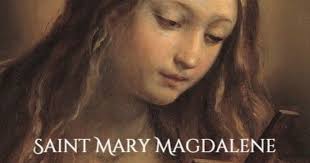
St. Mary Magdalene, Protectress of the Order

Mary Magdalen is a model of contemplation, and is thus a suitable proctectress for an Order whose end is the salvation of souls by the preaching of the truths contemplated


Epistle: Canticle 3:2-5; 8:6,7

I will rise and will go about the city; in the streets and the broad ways I will seek him whom my soul loveth; I sought him and I found him not. The watchmen who keep the city found me: Have you seen him whom my soul loveth? When I had a little passed by them, I found him whom my soul loveth. I held him; and I will not let him go till I bring him into my mother’s house, and into the chamber of her that bore me. I adjure you, O daughters of Jerusalem, by the roes and the harts of the fields, that you stir not up, nor awake my beloved till she please. Put me as a seal upon thy heart, as a seal upon thy arm, for love is strong as death; jealousy as hard as hell; the lamps thereof are fire and flame. Many waters cannot quench charity, neither can the floods drown it; if a man should give all the substance of his house for love, he shall despise it as nothing.

The soul that, following the direction of the watchmen, that is, the priests, teachers, and rulers of the Church, seeks Jesus, He goes to meet, gives Himself up to, takes up His abode in, with all His love, with all His treasures. The soul which has found Christ for delight forgets all outward things, and no longer has love or joy but for and in Christ. How should it be otherwise? What can be wanting to him who truly possesses Christ? This love for Him Who loved us unto death shows itself by outward acts that are heroic. So Mary Magdalen loved Jesus. Follow her example.

St. Mary Magdalene is one of the greatest saints of the Bible and a legendary example of God’s mercy and grace. The precise dates of her birth and death are unknown, but we do know she was present with Christ during his public ministry, death and resurrection. She is mentioned at least a dozen times in the Gospels.

Mary Magdalene has long been regarded as a prostitute or sexually immoral in western Christianity, but this is not supported in the scriptures. It is believed she was a Jewish woman who lived among Gentiles, living as they did.

The Gospels agree that Mary was originally a great sinner. Jesus cast seven demons out of her when he met her. After this, she told several women she associated with and these women also became followers.

There is also debate over if Mary Magdalene is the same unnamed women, a sinner, who weeps and washes Jesus’ feet with her hair in the Gospel of John. Scholars are skeptical this is the same person.

Despite the scholarly dispute over her background, what she did in her subsequent life, after meeting Jesus, is much more significant. She was certainly a sinner whom Jesus saved, giving us an example of how no person is beyond the saving grace of God.

During Jesus’ ministry, it is believed that Mary Magdalene followed him, part of a semi-permanent entourage who served Jesus and his Disciples.

Mary likely watched the crucifixion from a distance along with the other women who followed Christ during His ministry. Mary was present when Christ rose from the dead, visiting his tomb to anoint his body only to find the stone rolled away and Christ, very much alive, sitting at the place they laid Him. She was the first witness to His resurrection.

After the death of Christ, a legend states that she remained among the early Christians. After fourteen years, she was allegedly put into a boat by Jews, along with several other saints of the early Church, and set adrift without sails or oars. The boat landed in southern France, where she spent the remaining years of her life living in solitude, in a cave.

St. Mary Magdalene’s feast day is July 22. She is the patroness of converts, repentant sinners, sexual temptation, pharmacists, tanners and women, and many other places and causes.


Be Still and Listen~ The Rev. Frank Bellino

The story of Jesus in the home of Martha and Mary complements the story of the Good Samaritan, which we heard last week in Luke’s Gospel. Both stories are unique to Luke. The story of the Samaritan opens with the words “a certain man.” Today’s reading opens with the words “a certain woman.” The Samaritan is an example of how a disciple should see and act. Mary is an example of how a disciple should listen. Mary, a woman, is a marginalized person in society, like the Samaritan. Both do what is not expected of them. As a woman, Mary would be expected, like Martha, to prepare hospitality for a guest. Here again Jesus breaks with the social conventions of his time. Just as a Samaritan would not be a model for neighborliness, so a woman would not sit with the men around the feet of a teacher.

Both stories exemplify how a disciple is to fulfill the dual command which begins chapter 10—love of God (Mary) and love of neighbor (the Samaritan). These are the two essentials of life in the kingdom. By using the examples of a Samaritan and a woman, however, Jesus is saying something more. Social codes and boundaries were strict in Jesus’ time. Yet to love God with all one’s heart and one’s neighbor requires breaking those rules. The Kingdom of God is a society without distinctions and boundaries between its members. It is a society that needs times for seeing and doing and also times for listening and learning at the feet of a teacher.

I always feel that Mary and Martha’s home was a kind of sanctuary where Jesus could take time out to be among his friends especially if he had things weighting on his mind. The Bible tells us that Jesus loved Mary and Martha and their brother Lazarus. I wonder why he was so fond of them. Maybe because they allowed him space and time to unwind and share with them his innermost thoughts and feelings. In the first reading Abraham and Sarah did the same bending over backwards to accommodate their three mysterious visitors who turned up at their tent unannounced.

Do we ever make space in our lives for people who could do with a listening ear especially if they catch us on the hop and we’re not expecting them? Loving someone is not just about helping them in a time of crisis, like the Good Samaritan in last Sunday’s gospel, but also about making space and time for them on a more mundane level and especially if it inconvenient to us.

But before this happens it is important to make space and time for God in our busy lives. It mentions a number of times in the Gospel that Jesus took time out for prayer usually in a place where he wasn’t likely to be disturbed. According to the old catechism answer prayer is ‘a raising up of the mind and heart to God’. That simply cannot be done if our minds are all over the place. How can we raise up a restless heart to God if it is preoccupied with other things?

The gospel tells us that Mary sat down at the Lord’s feet and listened to his words. Blaise Paschal, the renowned 17th century philosopher and mathematician, wrote that “All of humanity’s problems stem from man’s inability to sit quietly in a room alone.”

If that was true of the 17th century, how much more relevant is it for modern people. Even Sunday rest, which the Church calls for, is paid lip service to by many. We need to make uninterrupted space and time for God if we are ever going to give quality time to others. Martha and Mary were equally loved by Jesus. On this occasion he gently reminds Martha that Mary had chosen the better part on this occasion, and it would be a shame to take it from her

If you read about the lives of saintly Catholics who were very active in their ministries, like Saint Teresa of Calcutta or St. Rita, you may be surprised at how much time they spent in a chapel each day, praying at the feet of the Lord, before engaging in their ministries of service.

For this reason, I believe every one of us needs to have both a Mary and a Martha in us. To be a healthy Catholic is to unite in the soul the contemplative life and the active life. That mix will be different for each and every one of us. For those who work all week on the job and at home, this can be a challenging message indeed. My friends, can we devise strategies to help ourselves, every member of our family, circle of friends, and parishioners here at St. Michael’s to be rooted in the Mary side of our relationship with God and neighbor? Do we care enough to voluntarily give the Martha’s in our lives a break every so often, so she too can be rooted in the better part?

For we know the task of running a healthy parish here at Saint Michael’s takes the joint effort of an army of Martha’s, everyone doing their part. On the other hand, if we are not first Mary’s in our daily lives, our efforts are in vain. The Gospel challenges our parish, and in truth the Gospel needs all of us at home and outside of home, to root all of our activities in our prayerful discipleship of the Lord. This is very important because, as imperative as all the things we have to get done each day, if these activities are not rooted in a relationship with Jesus Christ, why does it matter?

Not an Option~ The Rev. Frank Bellino

Little Jenny was being taught that the proper thing to do was to write a ‘thank you’ letter to those persons who sent her gifts at Christmas. She seemed to do pretty well until it came to Aunt Mary’s gift. Finally, she finished her note which read: ‘Thank you, Auntie Mary, for your Christmas present. I always wanted a pin-cushion, although not very much.

We are a bit like that. We all want to love our neighbor although not very much – certainly not with the same keenness as the Good Samaritan. Jerusalem is 800 meters above sea level and Jericho is 400 meters below, so it’s downhill all the way. I’m told to this day robberies along that stretch of road happen quite frequently. Jerusalem was God’s city while Jericho was quite a worldly place, hot as hell in summer and a playground for the rich and famous in winter. So, the man was going alone and in the wrong direction putting himself at risk. His life was going downhill – away from God. And if our lives are taking us away from God, we are prone to ‘hit the buffers’ too but this is where the Good Samaritan enters the scene.

When I was going to school the old catechism answer to the question: ‘Who is my neighbor’ was: ‘My neighbor is all humankind, even those who injure me or differ from me in religion’. And that was long before we heard of ecumenism or multiculturalism.

The priest passed by on the other side because the law said he would incur ritual impurity to touch a dead body. Being in love with the Law, he overlooked the law of love. Like the priest do we ever give certain people a wide berth whom we wouldn’t want to be caught dead with, even though they’re going through a rough patch? Do we use political correctness as an excuse for keeping our distance from certain people or situations? Do we ever step outside our comfort zone or line of duty to help individuals in dire straits?

I was called on the 4th of July out of my comfort zone. We received a phone call about 10 in the morning, we had no idea who it was. Ms. Alma answered the phone it was a Hospice Chaplain who said that she had a family who was looking for a Priest to give last rites to a dying man. They said that they had tried and no “Priest” would help them. I suited up got my priestly things that I needed and went to the address supplied where the family was gathered. There was 8 family members and the look of relief when I went into the residence to provide their loved one with the sacrament that was deserving to the person. God knew that I needed to go, as much as I was in my head saying no, God led, and the family was blessed to know that the 90 year old patriarch of their family could travel in peace to the other side.

Also, Jews and Samaritans were often at loggerheads – the Jews shunned the Samaritans because they interbred with pagans centuries before. Jesus, the Jew, cuts through all of this. He wasn’t one to be cowed by political correctness. He seems to have a soft spot for the ostracized Samaritans. On one occasion, for instance, we find him sitting at a well, in deep conversation with a Samaritan woman of dubious reputation – much to the dismay of His apostles. Her life-style changed dramatically after that. On another occasion He praises the Samaritan leper who thanks Jesus for his healing, unlike the other nine Jews who show no gratitude.

The Samaritan was ‘moved with compassion’ when he saw the man. If compassion were the common denominator in all religions, then every person would be my neighbor regardless of what religion or ethnic group or class they belonged to. You remember a couple of years ago in Glasgow, London England where a well-loved and respected Muslim Good Samaritan was killed by a fellow Muslim for posting on-line Easter greetings to all his Christian friends.

Actually, it’s Jesus Himself who is the Good Samaritan par excellence. In the story soothing oil and wine were poured on the man’s wounds. But Jesus has gone further. He has poured out his blood for all humankind in order to heal us of the wounds of sin which we have incurred on our life’s journey. Unlike the Levi and the priest, he doesn’t pass us by.

The story of the Good Samaritan is an invitation to see the world through the compassionate eyes of Jesus and not let fear, prejudice, or even the law get in the way. For the true believer in Jesus passing by on the other side is not an option

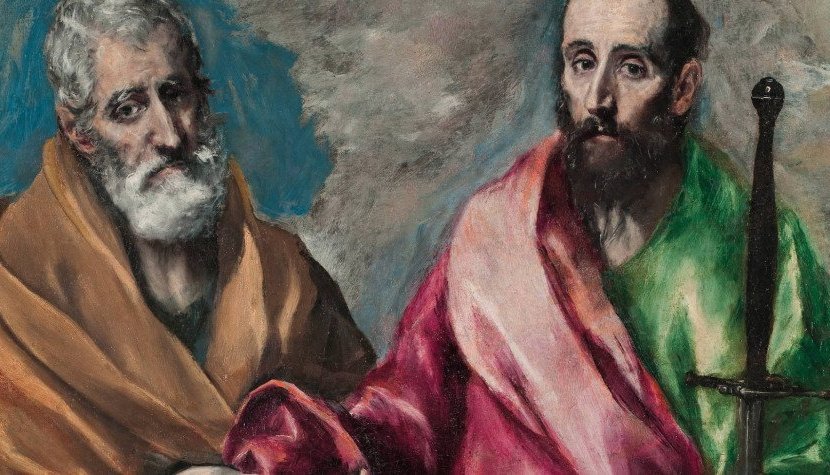
The Feast of Sts. Peter and Paul~Br. Milan Komadina

When you are old, you will stretch out your hands and another

will dress you and carry you where you do not want to go   

Today we commemorate St. Peter and St. Paul. This day honors the martyrdom of the two saints, sometime between AD 64 and 68. While the church recognizes that they may not have died on the same day, tradition says that this is the day that they were both martyred in Rome by Emperor Nero. Peter was the rock on which Christ formed His Church, and became the first Pope as the specialized Shepard of Christ’s Flock on Earth. Paul wrote the majority of the New Testament, with 13 letters ascribed to his name (most scholars agree that 7 are objectively his, yet the other 6 are of contested authorship). St. Paul (born as Saul) is often considered to be the most important person after Jesus in the history of Christianity. His epistles (letters) have had enormous influence on Christian theology, especially on the relationship between God the Father and Jesus, and on the mystical human relationship with the divine. St. Peter and St. Paul had been imprisoned in the infamous Mamertine Prison of Rome and both had foreseen their approaching death. While I was reading today more information about apostles Peter and Paul I was inspired to talk about one thing from the Bible. I read John 21:15-19. In this chapter Jesus is talking to Peter and here is what it says:

When they had finished breakfast, Jesus said to Simon Peter, “Simon, son of John, do you love me more than these?” He said to him, “Yes, Lord; you know that I love you.” He said to him, “Feed my lambs.” He said to him a second time, “Simon, son of John, do you love me?” He said to him, “Yes, Lord; you know that I love you.” He said to him, “Tend my sheep.” He said to him the third time, “Simon, son of John, do you love me?” Peter was grieved because he said to him the third time, “Do you love me?” and he said to him, “Lord, you know everything; you know that I love you.” Jesus said to him, “Feed my sheep. Truly, truly, I say to you, when you were young, you used to dress yourself and walk wherever you wanted, but when you are old, you will stretch out your hands, and another will dress you and carry you where you do not want to go.” And after saying this he said to him, “Follow me.”

While reading Bible for today I was very touched with this last sentence saying:” …when you are old, you will stretch out your hands, and another will dress you and carry you where you do not want to go.” This sentence brought me back to some memories that I have experienced almost 13 years ago. In 2009, when I was preparing to become a novice in order to become an orthodox monk I was instructed by my spiritual father (abbot) that before moving to monastery I should serve the army and I was told to serve civil army in Gerontology Centre. This is how we call the nursing home for old and week people. I applied for the civil army and in that year I spent 9 months helping and serving people in need who were users of the services of the Centre and who lived there. There were more than 300 people mostly between 70 and 90. Many of them were left alone. Their children (if they had them) usually were living far away and there were no cousins or friends to help them in their daily needs. Such as preparing food for them, bringing medicines or accompanying them to the doctor. I remember that many of them were suffering on daily level. Few times I even witnessed some of them dying. At that time I was readying Bible every day and I was regularly attending prayers in the local church. While caring the old sometimes I used a chance to spontaneously mention Jesus. If they were eager to learn more about Jesus we kept the conversation in that direction. And I remember a very important thing that I was regularly noticing between old and sick who were atheists and those who were believers. Atheists were usually depressed and often unhappy. They were feeling that they are at the final period of their life. Left alone, sick and depending on the care of Gerontology Centre workers. With one word depressed and hopeless. And they were often complaining. Another group was a group of the people in the same position. Same old, same sick and same alone. But actually they were not alone. They were not complaining. They were thankful for having people around them, thankful for the rest of their life, thankful for everything. Their mindset was positive and the only thing that distinguished these two groups was faith in God. The happy group was alone, but actually not alone. They had God, they had joy and happiness. Today in readings I found another important sentence that I may bring into correlation to the story that I shared. We read in 1 Timothy 6:17-18: 

Command those who are rich in this present world not to be arrogant nor to put their hope in wealth, which is so uncertain, but to put their hope in God, who richly provides us with everything for our enjoyment. Command them to do good, to be rich in good deeds, and to be generous and willing to share.”

The sentence that I would like to pay attention to advises us to put our hope in God who richly provides us with everything for our enjoyment and in the other hand not to put our hope in wealth. Again I remember my experience from working and helping in nursing home for old people for nine months. There were people who were rich for the local Serbian standard. They could afford better service in the Gerontology center, with private nice equipped apartment and additional health care service. But still, they were not very happy. Additionally there were old people from poor background who could only afford a bed. They had shared bathroom, shared room and poor conditions. But those among them who were having Jesus were really happy, relaxed, grateful and complete. In the end of this sermon I would like to bring the message to all of you that as Jesus said. Maybe one day when we are older and sick another will dress us up and take care of us, maybe we would be alone or even feeling hopeless. But also let us then remember that God also says we should put our hope in God and surely our life will have much better quality and with Jesus we would be complete, happy and loved. Also, I would be happy if this sermon help you remember your neighbor who might be old and sick and might be needing help. Let us help to those in need and let us be blessed with prayers of the apostles Peter and Paul. Glory be to our God. Amen.

One Bread, One Body: The Feast of Corpus Christi~The Rt. Rev. Michael Beckett, OPI

Well y’all….  I have a confession to make.   You know how I talk about showing love all the time?  In a lot of ways I’m preaching to myself.  Loving is HARD.  I find myself making snarky comments, cracking on folks, getting angry at people who don’t share my views (really they should know better, but still,) and not being as loving as I should.  I have to remind myself that there is not ONE person on this planet who God doesn’t love.  I need to do better.   SO much better. 

What has brought this on, you ask?  Well, lemme put on my mitre (pointy bishop hat) and I’ll tell ya.

Today is a great Feast Day in the life of the liturgical church throughout Christendom:  The Solemnity of Corpus Christi.  This day is celebrated in recognition of the Eucharist, and everything the Eucharist is and means.  Today we celebrate, literally, the Body of Christ.  We all know that the Eucharist was instituted by Christ at the Last Supper.  We all know that we, as Catholics, believe that the bread and the wine become the body and blood of Our Lord.  We all know that our Protestant brothers and sisters believe that the bread and the wine are symbolic of the body and blood of our Lord.  We all know that wars have been fought over these two basic, yet entirely different, beliefs.  We also know that from many, if not most, of the liturgical pulpits in the world, the Word will be proclaimed concerning the Eucharist.  Today, however, I would like to put a different spin on Corpus Christi.  I would like for us to leave the upper room of Christ and the disciples, and jump ahead a few years to Corinth, and to listen to what the Apostle Paul has to say about “the body of Christ.”

12 For as the body is one and has many members, but all the members of that one body, being many, are one body, so also is Christ. 13 For by one Spirit we were all baptized into one body—whether Jews or Greeks, whether slaves or free—and have all been made to drink into[c] one Spirit. 14 For in fact the body is not one member but many. 

We, the Church, we, the people of God, we, puny imperfect people that we are, WE are the body of Christ.  Some of us dress funny.  Some of us talk funny.  Some of us have emotional issues.  Some of us just have issues.  But we, ALL of us, together, make up the body of Christ.  Warts and all.  Some of us are wildly and multiply talented.  Some of us are incredibly intelligent.  Some of us have been blessed with physical beauty.  Some of us have been blessed with spiritual beauty.  Be we, ALL of us together, make up the body of Christ.

Because we are all of us different, it can be said that we make up different parts of the body of Christ.  We each of us have different gifts.  Some make up the head, some the heart.  Others are the feet and the hands of the body of Christ.  Granted there are parts of the body of Christ that we would rather keep hidden, under wraps.  But are these parts any less important?  Do these parts not serve a major and important function in the working of the body?  I believe that they do.

My point, here, folks, if I haven’t made it already is simply this:  WE, all of us, make up the body of Christ.  What one person brings to the table may not be of particular interest or value to another person, but there is someone at that table who needs just that.  Perhaps we feel that this person or that person isn’t quite what we would like to see in our church, or in our family, or in our lives, but to someone, somewhere, that person is exactly who is needed.  The very person whom we consider to be “less than worthy” to represent Christ and His church may just be the exact one who is needed in certain situations.

There has been much made of certain politicians being excluded from receiving communion because of their political beliefs.  Who are we, as clergy, to deny anyone the Body of Christ?   I would ask these folks, ‘Did Jesus not sit down and break bread with Judas?’  Who are we to judge wo is worthy, if we, all of us, are a part of the body of Christ?  It’s a puzzle to which I certainly do not have the answer.  I do, however, think that the artist, John Michael Talbot, sums it up nicely:

One bread, one body, one Lord of all, one cup of blessing which we bless.

And we, though many, throughout the earth, we are one body in this one Lord.

Gentile or Jew, woman or man, no more.   Many the gifts, many the works, one in the Lord of all.

Grain for the fields, scattered and grown, gathered to one, for all.

One bread, one body, one Lord of all, one cup of blessing which we bless.  And we, though many, throughout the earth, we are one body in this one Lord.

As we go along in our daily lives, let us remember the lessons of today, this Feast of Corpus Christi, that we all of us make up the One Bread, the One Body, the One Cup, that is the Body of Christ.  Amen.

1+1+1=1 Or Why Math Makes Me Crazy~The Rt. Rev. Michael Beckett, OPI

There are a few things about which I could not be more certain:  Scott loves me truly, madly, deeply (I really like that song.)  My Daddy was the wisest man on the planet.  My Momma was the bestest woman to ever draw breath.  Jesus loves me, and my salvation is secure. 

And, conversely, there are things in life that I will never, never fully grasp.  Like, why do some people think it’s OK to wear stripes and plaid together?  Pi or upper-level mathematics?  How things travel a zillion miles a minute in space?  Why chocolate isn’t its own food group?

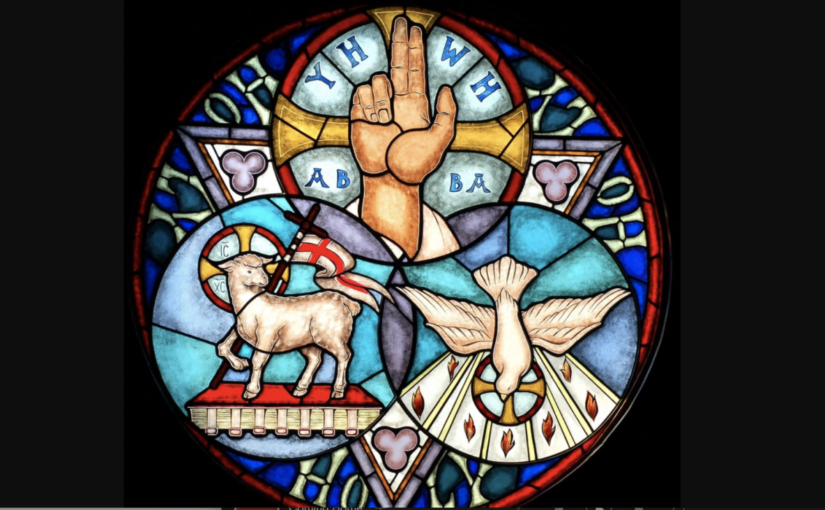
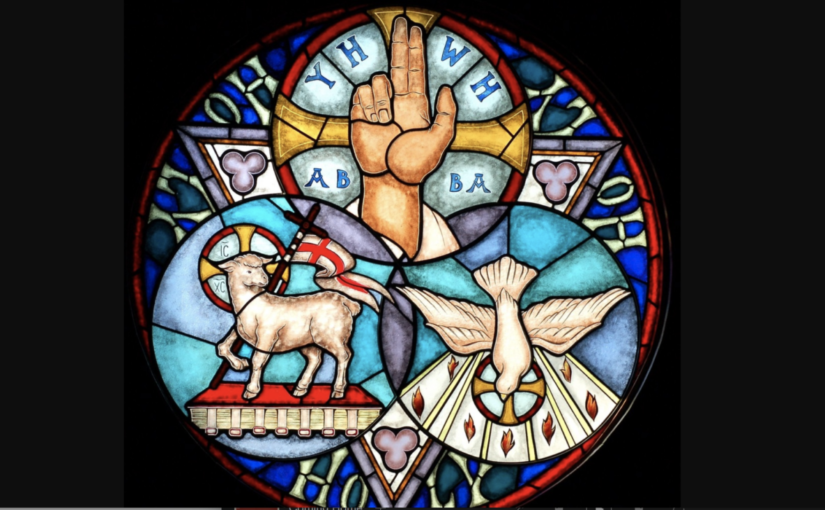
And  then, there’s the Holy Trinity.  The Holy Trinity is a mystery that we will never fully understand; never even come close to understanding.  We believe that the God of the Bible is one God. God has one essence – one substance. In other words, one “stuffness.” However, God exists in three Persons: the Father, the Son, and the Holy Spirit.  Each Person in the Trinity (or the Godhead) is fully God and fully a Person. They are equally eternal, powerful, sovereign, and worthy of worship. But they are one God.

Got that?  Me, neither, but it is central to our faith. 

Many theologians and holy men and women of God have attempted to explain just how this Trinity Thing works.  One God, Three Persons.  Three in one and one in three.  They have, of course, failed.  It has been said that if you try to explain the Trinity, you will lose your mind. But if you deny it, you will lose your soul.  There are several popular analogies often used to explain the Trinity, but, they don’t work and in reality are heresies.   (Uh oh!)  Here they are:

God is like water. Now, we know that water can be in three different forms:  Liquid, Ice, and Vapor.  But this doesn’t work and this particular heresy is called “modalism.”  Modalism expresses the belief that God is not, in fact three separate persons, but one God expressed in three different forms.  Now, if this were the case, then and the Trinity really is like water, then the story of Jesus (the Son) praying to the Father all those times in the Bible, is just Jesus talking to Himself.  This belief denies something central to God that makes Him God. So comparing God to water isn’t really as helpful as one might think.

It’s also been said that The Trinity is like a man:  A father, who is a son, who is a husband.  Nope.  Same as modalism.  Won’t work.

Then there is the age-old story-legend-myth of St. Patrick using the shamrock.  Or the more modernized versions using an egg or an apple.  The shamrock has 3 leaves to make one whole plant, the yolk, shell, and white make up one egg, or the peel, flesh, and core of an apple make up one fruit.  Umm…no.  Won’t work, because any of these three things that make up one thing will not stand on their own to be a complete thing?  Know what I mean?  The egg yolk, shamrock leaf, and apple peel don’t make one complete whole.  And this particular heresy is called Partialism.  Sigh……

Moving on…

The sun has been used to explain the Trinity.  This example says that the Father is like the sun. The Son is like the light rays that visibly reveal the sun, as Jesus is the visible image of the invisible God.  The Holy Spirit is like the heat that emanates from the sun, unseen yet powerful and effective in making the sun felt.  This makes sense, right???  Nope. Sorry.  This explanation is fatally flawed in that is describes the Son and Spirit as creations of the Father. This is the error of Arianism (not to be confused with Aryanism, which is also bad).  In Arianism, the Son is not eternally equal with the Father, but was the Father’s first and best creation. This would make Jesus something less than fully God.  This little gem of heresy is called Subordinationism and was first espoused by Arius who lived in the late 200s/early 300s, and whose modern-day followers are now known as  Jehovah’s Witnesses.

A couple more illustrations of the Trinity that aren’t quite so bad, but aren’t great either are these:

American Christian pastor, speaker, author, and widely syndicated radio and television broadcaster in the United States, Tony Evans, has said that the pretzel is a good illustration because it consists of one piece of dough with three holes. Take away any one of the holes and the pretzel isn’t really a pretzel anymore. (According to some people, the pretzel was actually invented in Europe several hundred years ago by a monk who wanted to illustrate the Trinity to the children of his village, so he took some dough, looped into the familiar three-hour shape, based it, and gave it to the children as an edible object lesson.)

Or this from noted scientist Dr. Henry Morris. He notes that the entire universe is trinitarian by design. The universe consists of three things: matter, space, and time. Take away any one of those three and the universe would cease to exist. But each one of those is itself a trinity.

Matter = mass + energy + motion

Space = length + height + breadth

Time = past + present + future

Are we having fun yet?  No?  OK, I’ll bring this to a close.  In so doing I’m gonna end where I started. The Trinity is a doctrine that all Christians believe but no one really understands. That much should be clear from this message. If you try to explain the Trinity, you will lose your mind. But if you deny it, you will lose your soul.

Someone asked Daniel Webster, who happened to be a fervent Christian, “How can a man of your intellect believe in the Trinity?” He said, “I do not pretend fully to understand the arithmetic of heaven now,” he replied. How kewl is that little phrase???  “The arithmetic of heaven.”

The Trinity should cause us to bow in humble adoration before a God who is greater than our minds could ever comprehend.

Today, the Feast of the Holy Trinity, we rejoice that we have a Triune God who has provided for a Trinitarian salvation. When we were lost in sin, our God acted in every Person of his being to save us. The Father gave the Son, the Son offered himself on the Cross, and the Holy Spirit brought us to Jesus. We were so lost that it took every member of the Godhead to save us.

In 1774 a man named Ignaz Franz wrote a hymn of praise to the Trinity: Holy God, We Praise Your Name. This is the fourth verse:

“Holy Father, Holy Son, Holy Spirit, Three we name you;

While in essence only one, undivided God we claim you.

Then, adoring, bend the knee, and confess the mystery.”

Let us pray.

Holy God, above us, among us, within us: we rejoice this day that while you might have chosen to be unknown to us, you have revealed yourself in many ways. Each encounter with you calls us to return blessings with worship, compassion, and service. As we worship you today, we do so in gratitude for all your parental care for us through your creation.  As we worship you today , we do so because, in love, you gave us Christ, that through him we might find eternal life. As we worship you today  your Spirit leads your church to reach out in compassion, mercy, and grace to all your children everywhere. In gratitude, we celebrate you, three and yet one. Amen.

Fired Up! Pentecost~The Rev. Frank Bellino

You’ve likely heard the joke about how you make holy water, right? How do you make holy water? You take water, and you…boil the hell out of it! But have you heard what you get when you mix holy water and…vodka?  A holy…spirit! This day celebrates a different type of holy spirit: God’s sustaining Spirit in our world!

Bottom line: The Holy Spirit creates, heals and sustains. We only have to open our hearts to the fire of his love:

How many of you know this prayer: “Come, Holy Spirit, fill the hearts of your faithful and kindle in them the fire of your love…” What is this fire?

Let’s start at the beginning. Fire creates. Even those with basic modern physics know this. There was a time when the universe was ity-bitty, smaller than an apple. Scientists have a theory that says the cosmos lacking in size it made it up for in temperature: trillions and trillions of degrees. The numbers are beyond imagining – higher even than our national debt! Anyway, from this primitive fire comes the material to make up the galaxies, stars and planets, including our own.

So, fire creates. The Holy Spirit prayer says, “Kindle in us the fire of your love,” and adds, “send forth your Spirit and they shall be created…” The fire of the Holy Spirit creates us.

Addition to creating, fire purifies. Later this summer we have our parish picnic. The Altar Society will grill chicken and sausage. The fire not only gives the meat a delicious taste but also kills harmful bacteria. Fire likewise purifies gold or silver. Just so the Holy Spirit burns away the greed, lust and bitterness that poison our hearts.

Because fire creates and cleanses, we pray, “kindle in us the fire of your love”. Fire also sustains. We hear today how the Holy Spirit came upon the Apostles in tongues of fire. Before receiving the Holy Spirit, they were uncertain and fearful. The Holy Spirit gave them courage and directed them.

We need the Holy Spirit to keep going. I don’t know about you, but I sometimes feel blue and discouraged – even paralyzed or frozen. Sometimes rage or guilt will well up and I feel powerless. Like Shakespeare says, “In sooth, I know not why I am so sad.” But you know at precisely that moment something amazing happens, it’s a weird solace. Like that old spiritual, “Sometimes I feel discouraged and feel my work’s in vain but then the Holy Spirit revives my soul again.”

It can be something simple like the Holy Spirit reminding me what I have to be grateful for. Or maybe he directs my attention on the other person and his need. It may be something more complicated like when I worry, I have hurt someone by what I said or did. I can’t do anything direct so I pray the spirit would touch that person’s memory. I’ve been amazed at how the Holy Spirit heals memories.

We need the Holy Spirit. We need him so much that Jesus says it is good that he goes away so he can send the Advocate. We live now in the age of the Holy Spirit.

When we began the Easter Season, we heard Jesus say, “Peace be with you…Receive the Holy Spirit.” The Spirit enables a person to believe, that is to trust Jesus. Then take the decisive step of touching his Body. The Holy Spirit is behind what we do. For example, when I extend my hands over the bread and wine, it’s by the Holy Spirit they become the Body and Blood of Jesus.

The Holy Spirit is the life of the Church. In baptism we see water; the reality is the Holy Spirit. So, it is in all sacraments. So, when we take time to pray – the Spirit prays in us. The Holy Spirit creates, heals and sustains. If only we would open our hearts to the fire of his love: “Come, Holy Spirit, fill the hearts of your faithful and kindle in them the fire of your love. Send forth your Spirit and it will be built, and you shall renew the face of the earth.

The Feast of the Ascension~The Rt. Rev. Michael Beckett, OPI

While Ascension Day is a Day of Holy Obligation, it is one of the most neglected feast days of the Christian church. This is sad enough in itself, but in ignoring the festival, the opportunity is lost for reflecting on what the Ascension means.  Because of this, the church in her wisdom has moved the actual celebration of The Feast of the Ascension to Sunday.  Sadly.

Maybe we tend to ignore Ascension Day because it falls on a weekday.  Is this the reason it doesn’t get the attention it deserves? This is a pity because it is full of significance in the historical life of Jesus when on Earth – and his continuing ministry for us in heaven. As a weekday event it reminds us that Christianity isn’t just something for Sunday – it’s an experience for every day.  As Christians, we are to celebrate Our Lord every day, every second of our being.  If we gloss over its truth we rob ourselves of a most important doctrine, for without the Ascension, the work of Christ would be incomplete.  Because we do not place as much emphasis on the Ascension, we miss the tremendous truth of the Ascension.

 St. Augustine, the great fifth century theologian, called the ascension the most important Christian festival of the year, more important than Christmas, more important than Pentecost, even more important than Easter. For the ascension reminds us just how high Jesus was raised, and what that means.

‘This is that festival which confirms the grace of all the festivals together, without which the profitableness of every festival would have perished. For unless the Saviour had ascended into heaven, his Nativity would have come to nothing…and his Passion would have borne no fruit for us, and his most holy Resurrection would have been useless.’

What Saint Augustine says here resonates with the passage in Ephesians 4:10, where Saint Paul says that ‘He who descended is he who also ascended far above all the heavens, that he might fill all things’ – i.e.; that by ascending into Heaven, and taking our human nature up with Him into the heavenly places, He completed the process of redemption by reclaiming His place as rightful sovereign of the universe, so that He might be present to us in a different way. If He had not so returned, the process would not have been completed, and as Jesus said in John 16:7, ‘it is to your advantage that I go away, for if I do not go away, the Counselor will not come to you; but if I go, I will send him to you’.

The gospel writer Luke is renowned as a careful historian. When he recorded the birth of Jesus he rooted the event in its historical setting within the Roman Empire. He continues that same preciseness at the end of our Lord’s earthly ministry by recalling the place of the Ascension – at Bethany. He dates the event – 40 days after the resurrection on Easter Day. He emphases the presence of eyewitnesses – the Ascension took place he writes “before their very eyes” (Acts 1:9). Yes, the Ascension was a real event of history.

Some people are puzzled as to why Jesus waited around on Earth 40 days after his resurrection, but that period is no accident, and Jesus had things to do.

Jesus had endured the Devil’s temptation for 40 days in the wilderness at the beginning of his public ministry, but now the tables were turned. In the period after Jesus’ resurrection, He triumphantly paraded his victory over the Satan. During this time, the conqueror of death displayed his supremacy before his faithful followers so that they might share in the joy of his victory. But there was another reason. Those 40 days of his appearing after the resurrection were of immense value to the believers for they established the reality of his lordship. A single sighting of the risen Christ may have been open to question, but his continuous encounters with the disciples would remove the doubts of the most skeptical among them and assure them of his power and authority.

The resurrection of Jesus marked the ending of a chapter in his earthly life. Things could never be the same again and it was essential that there should be a clear-cut event to bring the chapter to a close. It’s true that Jesus was making a series of appearances to his followers, but they couldn’t go on forever.

It would have been odd if Jesus’ post-resurrection appearances had grown fewer until finally they just stopped – that would only cause confusion and even loss of faith. No, there had to be a single, miraculous occurrence, separating the time when the Jesus of Earth would become the Christ of heaven. The Ascension was the only fitting conclusion to the life of Jesus on Earth.

Luke tells us of the disciples with their eyes straining to catch the last glimpse of the cloud bearing up their Lord. But then they were quickly brought back to earth. It would seem that with their eyes heavenward they didn’t notice the two heavenly beings that slipped quietly alongside them until they spoke: “Men of Galilee, why do you stand looking unto heaven?,” as if to remind the disciples of the work that they had been given to do.  The angels, for angels they were, had to tell the disciples to get to business.

And so it is with us.  Ascension Day reminds us of the Mystery of Faith: “Christ has died, Christ is risen, Christ will come again.”

Christ will come again.  And as we await the “coming again” of Christ, we, like the disciples, have a job to do, business to attend to.  Although we live in the time between Jesus’ Ascension and his coming again, we have something to do now.   In Matthew 28:18-20, Jesus says, “Go to the people of all nations and make them my disciples. Baptize them in the name of the Father, the Son, and the Holy Spirit,  and teach them to do everything I have told you. I will be with you always, even until the end of the world.”

Where do we start?   Jesus has the answer for that, too.  In John 13 Jesus says to us, “ But I am giving you a new command. You must love each other, just as I have loved you.  If you love each other, everyone will know that you are my disciples.”  We are to continue to change the world in the work that Jesus has given us to do by helping others to see Jesus through and in us, by showing that love that he demonstrated, by bringing that love to everyone.

Jesus told us to love everyone.  Love.  Everyone.  Period.   Not just those whose politics are the same as ours.  Not only those whose religion is the same as ours, not only those whose lifestyles are the same as ours.  Love.  Everyone.  Period. 

We would all of us do well to pray:

“Lord, make me an instrument of thy peace.
Where there is hatred, let me sow love;
Where there is injury, pardon;
Where there is doubt, faith;
Where there is despair, hope;
Where there is darkness, light;
Where there is sadness, joy.

Love.  Everyone.  Period.

Come Lord Jesus. 

Amen.