Memorial of Blessed Stephanie of Quinzanis

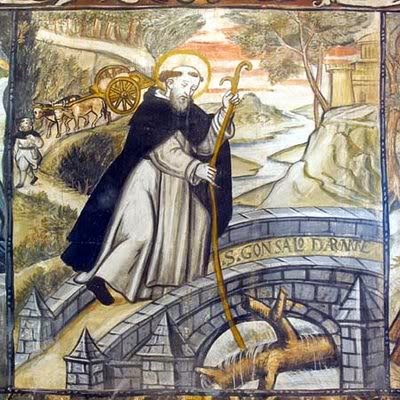
Born to pious parents in 1457 in Soncino, Italy,  her father became a Dominican tertiary while Stephana was very young. She was taught the catechism by the stigmatic Blessed Matthew Carrieri who lived at the nearby Dominican convent. Even though she was too small to understand, he told her that she was to be his spiritual heiress.  She began receiving visions of Dominican saints from age seven, at which point she made vows of poverty, chastity and obedience.  Carrieri died when Stephana was 14, and soon after he appeared to her in a vision and she received the stigmata.

She became a Dominican tertiary at Soncino at age 15, and was devoted to caring for the poor and sick. She founded a community of Third Order sisters in Soncino, and served as its first abbess. Her counsel was sought by many,  including Saint Angela Merici, Blessed Augustine of Biella, and Blessed Osanna of Mantua.

Although she had no formal theological training, she could discuss mystical theology at the most profound level. She could read the hearts and minds of the people around her, and had the gift of prophesy and healing. She lived in a nearly continuous fast, and inflicted severe penances on herself. Stephana accurately predicted the date of her own death.  She died of natural causes on 2 January 1530, and was beatified 14 December 1740 by Pope Benedict XIV.

Keep the Faith! St. Stephen the Martyr ~ The Very Rev. Lady Sherwood, OPI

Reading 1 ACTS 6:8-10; 7:54-59

Responsorial Psalm PS 31:3CD-4, 6 AND 8AB, 16BC AND 17

Gospel MT 10:17-22

Liturgical colour: Red.

Dear brothers and sisters in Christ!  We have just celebrated both Christmas eve, and only yesterday, we celebrated Christmas day itself, the Wonderful feast of the birth of Jesus, Our Lord and Saviour. We have reflected upon the little newborn babe in the crib,  we have sung “silent night” and “Hark the Herald Angel’s Sing”, amongst other hymns, Carol’s, and no doubt festive non religious tunes of all varieties as well, and we have heard the tidings of peace, joy and salvation to all the world. And suddenly today, in stark contrast, we are clothed in blood-red vestments, we hear of the bloody death of Stephen, and of Jesus’ warnings of persecution, death, and hatred for his name’s sake. So, Is there a connection between Christmas and the first Holy martyr Stephen? How are we to make sense of this dramatic sudden contrast? Does it mean we shouldn’t take the beauty and the peace of Christmas too seriously? Does it mean that Christmas is merely a wonderful story, but that the reality is indeed extremely different…?

Not at all!! The long tradition of the Church in celebrating the memorial of St. Stephen the day after Christmas does not serve to demote Christmas in any way whatsoever, but to continue it, to strengthen it, and to manifest more clearly in our hearts the important meaning of the Christmas celebration. Jesus became mankind, he became born as an earthly child, so to in in his adult earthly years, to sacrifice himself for us and for our salvation.  He wanted as he wants today and always, for us to give him his rightful place within our hearts.  So after Christmas, the birth of the small Jesus, we contemplate also the birth of the Church,  because Our Lord was and is the Church, he was the church as a child.

Now when Jesus comes to dwell in our hearts, that cannot remain without effect upon us.  When Our Lord  and Saviour, who can do all things dwells within us, he transforms our hearts, and thus makes a difference in our attitudes towards one another and toward life.  St. Stephen’s life is an excellent example of this. As one of the first deacons he had a double task. He was assigned to the service of the tables, to the “service of love” to the poor, so that the Apostles would have more time for their preaching. But Stephen also had the gift of preaching, and so he would also perform the ministry of truth. Stephen, trusting in Jesus, devoted himself whole-heartedly to the tasks entrusted into him. He was stoned to death because his preaching of Jesus as the Son of God was considered blasphemy. Now, we might think that if Stephen, had been far more considerate of the understanding and passion of his Jewish brothers for the oneness of God, and had spoken more carefully about Jesus, that he would not have been stoned, that maybe he could have continued to preach about Jesus, and that by doing this,he could have done more good….

But St. Stephen make no compromises concerning the truth. He proclaims the Jesus who revealed himself and the one truth whom he had come to know. But he does not proclaim this truth by way of any violence or hatred, but in instead in the acts of love and self-giving. Until the last moment he forgives the men who kill him. As Jesus prayed for those who killed him, so St. Stephen prayed, “Lord, do not count this sin against them!” And his witness, his death was fruitful for us as members of the Church. The remembrance of this witness, for example, probably helped Saul later to accept Christ’s message as the truth, and to later become the great Apostle Paul.

St. Stephen is an excellent example to us of true and unwavering faithfulness to Jesus, an example of holding fast to the truth in love. This is an example of the way we all should and want to go within our lives. This path of truth and salvation is not always easy. It is not always easy to avoid deviating from the correct path in one way or another. Sometimes one hears that faithful Christians, in order to be tolerant of others, must abandon the claim to truth, that they must not proclaim or hold the faith as truth or even as true, for that to some, may lead to intolerance and to hatred. But the example of St. Stephen shows us clearly that the world needs the witness of the truth, and that it is possible to preach this truth with steadfast conviction and yet without  any violence or hate, but in the acts of love and self-giving.

Let us pray to Jesus, who came into this world as a child for our sakes, that we have the courage and the wisdom to profess our faith in our family life, in our workplaces, in our society, wherever we are, in a convinced and convincing loving manner, as St. Stephen did. Amen.

Peace Has Come! The Rt. Rev. Jay Van Lieshout, OPI

Blessings and peace to you my brothers and sisters on this most auspicious solemnity of the nativity of our Lord!  It is amazing how swiftly the seasons have flown; last Christmas, Epiphany, Lent, Pentecost, Kingdom Tide, then Advent and now we once again rejoice in the birth of our Savior.  As I sit and reflect on God’s message given us through these seasons, I am drawn to the promise of each Sunday in Advent: Hope, Love, Joy and Peace.  I am especially inspired by the Sunday set right at the cusp of Christmas tide, the promise of Peace (I would like to mention in some traditions the 4th Sunday in Advent is Love; though seemingly different, Peace and Love are sides of the same coin, for how can you have Love without Peace, and without Peace how can Love exist?)

Isaiah (9:6) promises the Messiah would come as a Son of Man, God’s son, given to us and all authority in heaven and earth will rest upon His shoulders and He will be called Wonderful Counselor, Mighty God, Everlasting Father and the Prince of Peace.  How wonderful a gift to have a Lord who brings to the world not extravagance and glitz, but the simple gift of Peace.  As I reflect on this gift, I consider the biblical concept of Peace (in Hebrew salom) and its four equally glorious aspects.  Peace reflects wholeness in body and health, harmony in relationship with each other and with the Creator, prosperity and fulfillment in spiritual and worldly life and the absence of conflict, war and strife.  When greet one another or extend our farewells and extend our wish for Peace in their lives, what better blessing can there be?  What better way to show agape love than through extending our wish for Peace!  And from where does all Peace emanate but from our Heavenly Father and Creator, who so loves us His children as to send down the ultimate emissary and vessel of everlasting Peace, His Son, our Lord Jesus Christ.

When Peace came down from heaven in the form of this precious child, the world was seemingly devoid of Peace.  It was a  nation occupied by foreign forces, civil rulers fighting over power, spiritual leaders fighting for control, and all three suppressing the people so as to procure and maintain wealth and power. Turmoil predominated, the people (especially the poor and weak) were just expendable pawns in the political, social and religious power plays.  The tree of Jesse was seemingly extirpated by evil, and yet out of this darkness, it brought forth a shoot, a Son was given, a child who’s light would bring about change, validate all people, disburse the wicked and topple corrupt governments through acts of Love and the gift of heavenly Peace.  Rejoice, Alleluia!

Brothers and Sisters, today I look around and hang my head.  For even as the church bells chime commemorating the Savior’s birth and its ancient promise of Peace and good will, just as in the old familiar carol, I say “There is no peace on earth… for hate is strong and mocks the song of Peace on earth”.  We too live in trouble times, reminiscent of a time when a small child was born two millennia ago.  The weak are persecuted, people are marginalized, civic and religious leaders fight for money, power and control.  Lies are the new truth, animosity is norm and self-righteousness is the new Gospel.  Just the other day I saw a post where a christian religious leader bought an expensive car and lavish gifts for his wife (to the tune of hundreds of thousands of dollars) and people defended this extravagant display of wealth born from the hard labor of his parishioners even though members of the community go hungry or homeless.   Similarly, a bishop publicly posted on social media animosity towards gay priests, even though his fellow priests who have been supportive of him through the years happened to be gay.  How disheartening it is to see such things cloud the light, the good work, the Good News of God’s church.

Life is dynamic, yet the more things change, the more they stay the same.  Today, just in times past, children of God are wandering through life like sheep lost in desert looking for their shepherd to bring them home to peace and safety.  We as the Church, must stand up and be this shepherd for Christ, gathering up these lost sheep, feeding and caring for them both body and soul.  Like St. Peter, we are called to be the rocks on which Christ’s Church is built, a church which is strong, resilient and steadfast against the temporal tempests which blow through life.  Our lives and corporal acts of worship must be steadfast beacons of Peace, Love, Hope and Joy which guide the lost sheep to the verdant pastures of the Kingdom of Heaven here on earth.  Let us rejoice in the rituals and traditions handed down to us from our church fathers and mothers.  It is time to once again live the solemnities, feasts, celebrations and religious ceremonies which are the life blood of His church throughout the year. We must eschew the trappings of populous spirituality rich in its entertainment value and poor in substance, instead focusing worship being the promises of the advent season upon which the word of God is inscribed and from which the Light of Christ shines forth: Hope, Love, Joy and Peace.

Brothers and Sisters, the world needs the promise of our Lord’s nativity  now more than ever; not just on December 25th, but each and every day throughout the year.  We must carry the Peace and Love which comes from the Christ child in our hearts and offer salom to every person we meet and to all whom we bid farewell. We must remember, WE are the Church, we are the bearers of Peace and Love in the world, shepherds to God’s lost sheep and each time we open our salom to those we meet, especially the poor, the weak, the ostracized and those different from us, we pay homage to the Christ Child Himself, born of Mary, swaddled and laid in a manger.


Shepherds-Another Christmas Sermon ~ The Rt. Rev. Michael Beckett, OPI

After 2000 years of Christmas sermons, in hundreds of languages, in different countries throughout the world, and by way of innumerable faith traditions, is there anything new or original left to be said about Christmas, and what it means, that hasn’t been said before? Perhaps not. However, like re-reading that favorite book for the 17th time, or watching that favorite movie or television show for the 358th time, even when you know exactly what comes next, what the very next word is going to be, often we find a new meaning or a new slant on something that is as tried and true as Christmas itself.

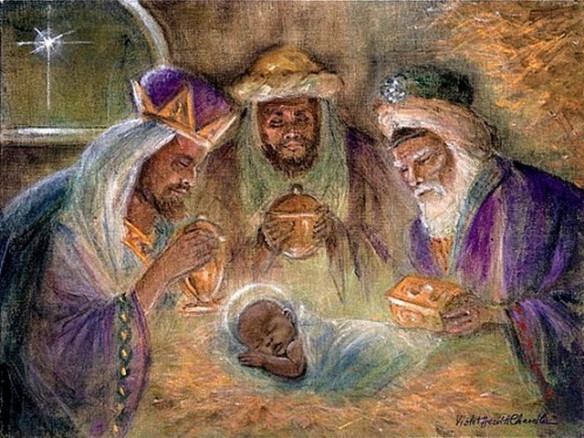
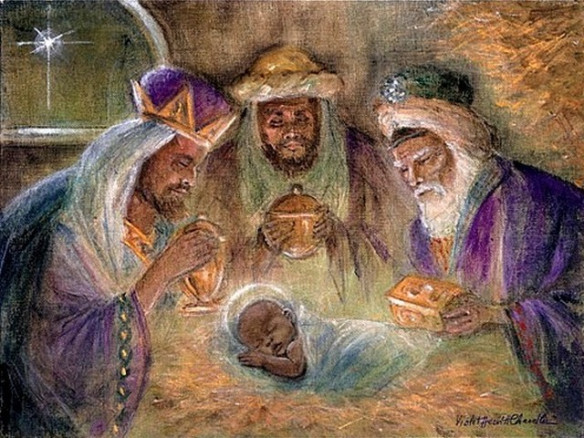
And so it is with me this year. This Gospel reading recalls the story of the angels bringing the news of Christ’s birth to the shepherds. Now, we all know that story. We’ve heard it many times over, and those of us who cherish “A Charlie Brown Christmas” will always, in some ways, hear Linus quoting from Luke, no matter who is reading that passage of the Bible to us. We know the story. We SEE the story in every Nativity scene we pass by. There is almost always a shepherd near the manger carrying a lamb on his shoulders and another lamb or sheep to be seen somewhere hanging around. It’s always seemed to me that the sheep and the shepherds were just THERE, minor players in a Christmas play, the “extras” assigned to the kids who didn’t quite measure up to the roles of Mary or Joseph; they enter stage left, ooh and aah over the baby, and exit stage right, singing “Go tell it on the mountain”, singularly unimportant and taking secondary roles to the more illustrious wise men (who in reality weren’t there at all) and most definitely playing supporting roles to the Holy Family, or just standing around as so much scenery, contributing to the mood and filling up the bare spots in the Nativity scene. I overheard a conversation recently that made me really think about the shepherds. While visiting some friends, their cat jumped into the midst of the family crèche and knocked over the obligatory shepherd. It was chipped. The younger daughter of the family was somewhat distressed, and to make the little girl feel better, the mother said to her, “Don’t worry about it, Honey. It’s just the shepherd. He’s not all that important.” I didn’t think much about it at the time, but when reading the Scripture appointed for today, it struck me. Not all that important? But weren’t they? Who WERE these shepherds? Why were they there in the first place? Why did THEY get the news of Christ’s birth in such a spectacular way? Who were they that they should be eyewitnesses of God’s glory and receive history’s greatest birth announcement?

In Christ’s day, shepherds stood on the bottom rung of the Palestinian social ladder. They shared the same unenviable status as tax collectors and dung sweepers. Only Luke mentions them. When the twelve tribes of Israel migrated to Egypt, they encountered a lifestyle foreign to them. The Egyptians were agriculturalists. As farmers, they despised shepherding because sheep and goats meant death to crops. Battles between farmers and shepherds are as old as they are fierce. The first murder in history erupted from a farmer’s resentment of a shepherd. Smug religious leaders maintained a strict caste system at the expense of shepherds and other common folk. Shepherds were officially labeled “sinners”—a technical term for a class of despised people.

Into this social context of religious snobbery and class prejudice, God’s Son stepped forth. How surprising and significant that God the Father handpicked lowly, unpretentious shepherds to be the first to hear the joyous news: “It’s a boy, and He’s the Messiah!” What an affront to the religious leaders who were so conspicuously absent from the divine mailing list. Even from birth, Christ moved among the lowly. It was the sinners, not the self-righteous, He came to save. So is it really all that surprising that the first announcement of Christ’s birth was to the lowly shepherds on Bethlehem’s hillsides?

Consider the events leading up to Christ’s birth. Mary was barely 15. Christ was born to an unwed mother, Mary, a servant girl; Mary the young woman who delivered while only betrothed to Joseph. He was born in a stable, a cave! A holy God being born to a couple no different than immigrants, far from home and in a strange city, in a place where animals were kept. A couple who couldn’t even find a place to stay, turned out of every inn! It’s all too bizarre.

Yet this is the God we experience. This is our claim; This is the meaning of his very name: Immanuel, meaning “God with us” — with us not just in nice times, but most especially in the times of our lives when we are in the caves, and stables of our lives, when we are turned out of the places we’d like to be, when we are at the lowest of low points, when we are out in the dark, and in the cold like the shepherds.

Our God, the God who comes to us in the person of Jesus Christ, is the God of the oppressed, the repressed, the depressed; the God of the sad, the grieving, the sorrowful; the God of the lonely, the lowly, the poor, the God of the Shepherds; the God of the despised, the destitute, the dejected. Our God is the God of Abraham, Isaac, and Jacob, the God who stood with the enslaved Hebrews in Egypt, who led them out of Egypt to a promised land of freedom. Our God is the God of widows and orphans and stranded travelers. Our God is the God who doesn’t stay neat and tidy and spotless, but comes and stands beside us in our times of deepest need, who comes among us as the child in the dirty manger and the God of the shepherds on the hillside. The God we’re speaking of dares to join the unsuccessful, the failures, the dispossessed, and the downtrodden; the God of the Shepherds.

Wherever there is suffering, our God is there. He stands with Zacchaeus, the despised tax collector, and with Bartimaeus, the blind beggar. He is with us when we face cancer, chemotherapy, and radiation treatments. He is with us when we face amputations, operations, loneliness, the loss of a loved one, or even death itself. The God of the manger and the Shepherd is Immanuel, God with us. At our deepest times of loss and need, in the dirtiest and most embarrassing parts of our lives, God is with us, His rod and His staff, they comfort us. It is God who glues us back together when we become, like that figure in my friends’ Nativity scene, chipped, flawed, and much less than perfect.

And it is up to us, to demonstrate the love of God, the God of the lowly, the downtrodden, to the world. We, like the shepherds in the Christmas story, are to be the ones who are to proclaim the good news “which shall be to all people” to all the people of the world. It is our responsibility as Christians to be the instruments through which God can work in this world. As was most famously stated more than four centuries ago by Saint Theresa of Avila:

Christ has no body but yours,
no hands, no feet on earth but yours,
Yours are the eyes with which he looks with compassion on this world,
Yours are the feet with which he walks to do good,
Yours are the hands, with which he blesses all the world.
Yours are the hands, yours are the feet,
Yours are the eyes, you are his body.
Christ has no body now but yours, no hands, no feet on earth but yours,
Yours are the eyes with which he looks with compassion on this world.
Christ has no body now on earth but yours.

My very favorite Christmas carol, “In the Bleak Midwinter,” includes the lines, “What, then, shall I bring him, empty as I am? If I were a shepherd, I would bring a lamb. If I were a wise man I would do my part. What can I give Him? I can give Him my heart.”

Won’t you, this Christmas, give Him your heart? Won’t you, like the shepherds in the children’s plays of the Christmas story, be one to “go tell it on the mountain, over the fields and everywhere” that Jesus Christ is born? Amen.

Christmas and Sacrifice ~ The Rev. Dcn. Scott Brown, OPI

What are you sacrificing for Christmas?


HEB 10:5-10

Brothers and sisters:
When Christ came into the world, he said:
“Sacrifice and offering you did not desire,
but a body you prepared for me;
in holocausts and sin offerings you took no delight.
Then I said, ‘As is written of me in the scroll,
behold, I come to do your will, O God.'”

First he says, “Sacrifices and offerings,
holocausts and sin offerings,
you neither desired nor delighted in.”
These are offered according to the law.
Then he says, :Behold, I come to do your will.”
He takes away the first to establish the second.
By this “will,” we have been consecrated
through the offering of the body of Jesus Christ once for all.


When Christ came into the world as the baby born in Bethlehem there were shepherds watching over their flocks by night just outside of Bethlehem. Those shepherds raised sheep and lambs, some of which were no doubt used for sacrifices at the Temple in Jerusalem. Sacrifices that were commanded by God. Sacrifices that were offered to God as an atonement for sins. But those sacrifices themselves didn’t forgive the sins of God’s people. As a Lenten hymn tells us, “Not all the blood of beasts On Israel’s altars slain Could give the guilty conscience peace or wash away the stain.” Those sacrifices themselves didn’t wash away the sins of God’s people, and yet God’s people went home with the assurance that their sins were forgiven, not because of the sacrifices themselves, but because of the One to whom those sacrifices pointed. They pointed to Jesus, the “Lamb of God, who takes away the sin of the world.” As that Lenten hymn goes on to tell us, “But Christ, the heavenly Lamb, takes all our sins away, a sacrifice of nobler name and richer blood than they.” Sacrifice what you want for Lent, or even for Christmas, but keep in mind that your sacrifices can never make you right with God. Your sacrifices can never give you better standing with God. How often aren’t we tempted to think that they can? When it comes to how much we go to church? How much we put in the offering plate? How much we volunteer our time and talents? God’s people in the Old Testament often felt the same way. It often led them to go through the motions, worshipping God with their lips, while their hearts were far from him. They missed the point, and it even came to the point where God told them, “stop bringing meaningless offerings! Your incense is detestable to me. I cannot bear your evil assemblies. They have become a burden to me; I am wearing of bearing them…I desire mercy, not sacrifice, and acknowledgement of God rather than burnt offerings.” Yet even in his anger, we see his love, telling his people, “Come now, let us reason together, though your sins are like scarlet, they shall be as white as snow; though they are red as crimson, they shall be like wool.” It doesn’t matter how much you give of your time, talents, or treasures. It doesn’t matter how much you go to church or Bible class or even how much you volunteer. These are all good things, but if these things aren’t motivated by God’s love for you, you’ve missed the point. John makes the point when he writes, “we love because he first loved us.” Looking back on our lives, we can probably think of the many good things we’ve done for the wrong reasons. Serving because it was expected of us. Helping because no one else stepped up to do so. Volunteering because no one else seemed to care. Showing up because we were afraid of what people might think if we didn’t. We may have put a lot of time and effort into these things, but if these things weren’t motivated by God’s love for us, Paul tells us, “I am nothing and I gain nothing.” Isaiah tells us, “all of us have become like one who is unclean, and all our righteous acts are like filthy rags.” No matter what we do, our sacrifices cannot save us, but thankfully Christ’s sacrifice alone saves us. He took the filthy rags of our righteous and unrighteous deeds and he carried them to the cross where he washed them and us, making us clean through his holy precious blood. The innocent one became the guilty one. The righteous one became the unrighteous one. Stricken, Smitten, and Afflicted by God who, “made him who had no sin to be sin for us so that in him we might become the righteousness of God.” Though his perfect life, his innocent death, and his glorious resurrection, our unrighteous garments have been removed and we’ve been clothed in the garment of Christ’s righteousness. Because of Jesus, we are at peace with God. Peace with God doesn’t begin with what you do for God, rather it begins with what God has done for you. On the night of His birth, the angels sang, “Glory to God in the highest, and on earth peace to men on whom his favor rests.” Glory to God in the highest that he sent his Son to be our Savior. The Savior who said, “Here I am—it is written about me in the scroll— I have come to do your will, O God.” Jesus came to do God’s will to forgive the many times we haven’t. As we learn in Catechism class, God’s will involve His Word being shared with all people. God’s will involve all people being saved. God’s will involves living a holy life. Loving God and our neighbor perfectly. How many times have we failed to do this? How many times have we spoken words that hurt others? How many times have we made sacrifices in life to the point where it hurt? If we’re honest with ourselves, we see how our sins are many and our sacrifices are few. For the times we went about life with the attitude of, “my will be done,” we can be thankful that Jesus always went about life with the attitude of “thy will be done.” Love God and His Word. “Thy will be done,” perfectly by Jesus. Even as a teenager, he never grumbled and complained when mom or dad said it was time to go to church. Love and serve your neighbor. “Thy will be done,” perfectly by Jesus. He never looked the other way or made excuses when the opportunities to help and serve were placed before him. He wasn’t afraid to tell people to repent and believe the good news of God’s forgiveness. In his active obedience, he kept the law perfectly for us. In his passive obedience, he willingly died for our sins against it. Out of love for us, he allowed himself to be led away in chains like a criminal. Out of love for us, he allowed soldiers to drive nails through his hands and feet. Out of love for us, he was led like a lamb to the slaughter. Whereas we are all like sheep that have gone astray, the Lord laid on him the iniquity of us all. As the perfect Lamb of God, he offered his life on the cross to take away your sins and mine and the sins of the world. He perfectly fulfilled the will of God, and “by that will, we have been made holy through the sacrifice of the body of Jesus Christ once for all.” No matter how much or how many, the end result of our sacrifices would have brought God’s wrath and punishment in hell. But the end result of Christ’s sacrifice brings us grace and every blessing here on earth and for all eternity in heaven. Through the perfect sacrifice of Jesus, we have been made holy through the blood of Christ. Through the perfect sacrifice of Jesus, our sacrifices take on a whole new meaning. They’re not done to earn heaven, but rather to thank God for His gift of heaven. Jesus is the reason why we make sacrifices to give God the very best in our time, talents, and treasures. To say thank you to God for the treasure of salvation that is ours in Jesus! Working through Word and Sacrament, the Holy Spirit has given you the gift of faith and the realization that our greatest treasure in life is Jesus. The work we do together as individual Christians, as members of a Christian congregation. The sacrifices we make in our lives, our schedules, our home, our church, our school, our preschool, our Sunday School, and our youth group programs are done to connect people to Jesus and keep them connected for time and eternity. What are you sacrificing for Christmas? May any of the sacrifices we make be done out of thanks and praise to Jesus. Sacrifices that come from cheerful hearts praising God for all the wonderful things he has done. This Christmas will find people making sacrifices to give their loved ones a Merry Christmas. Companies competing for your time, attention, and money. Something we’re far too often too eager to give. But the sacrifices we make for the things of this world will last us for just that, if that. But the sacrifices we make for God’s Word and God’s Work will last for time and eternity. The sacrifices we make to share the sacrifice of Jesus with others will result in people enjoying the glories of heaven one day. With that kind of attitude and mindset, no matter what happens this Christmas, you will have a truly Merry Christmas indeed!


Repent! Rejoice! Gaudete! ~ The Rt. Rev. Jay Van Lieshout, OPI

Brothers and Sister: Blessings to you all on this 3rd Sunday in Advent!   Gaudete in Domino semper: iterum dico, gaudete!  Rejoice in the Lord always, again I say rejoice!  And how good it is in this penitential season of introspection and preparation for the coming of the Lord, to turn our hearts with anticipation to joyous prospects of the return of the bridegroom.  What’s this you ask, joy in a season of repentance?  Amen I say to you, how better to prepare ourselves for the coming of the bridegroom then to sing praises and thanksgiving for all the Creator has given us; after all, are we not to be the torch bearers of the light of Christ into the darkness of the world and preachers of the Good News?  How good can the news be if its bearers trudge from place to place covered in ashes, donning sack cloth and and emanating an air of personal unworthiness?

Gaudete: iterum dico, gaudete, for the Lord has done great things for us! Our Creator knows of our imperfections and loves us just the same; when we, in our flawed nature, stray from the righteous path and commit transgressions, the Creator does not get mad or hold a grudge against us, but grieves with disappointment for our failings.  Then, when we repent, are we not forgiven and joyfully welcomed into the kingdom with open arms?  This is the Good News John the Baptist announced as a prelude to the coming of the and the Message Jesus Christ brought at His nativity, proclaimed in His ministry and sealed by His sacrifice on the cross.

As John preached repentance and prepared to baptize the faithful, they in turn asked what they should do so that they might be saved; his response surely must have bewildered them.  Surely they expected to be told to make an offering and sacrifice at the temple; yet they were instructed to share their bounty with those in need, to use fair and honest business practices, and to not blackmail or falsely accuse the innocent.  Would not offerings be better made at the temple to win the Lord’s favor than to give them to the poor or a stranger?  As we are told in Hosea (6:6) the Creator desires “ mercy, not sacrifice, and acknowledgment of God rather than burnt offerings.”  The Creator’s institution of sacrifice was to be a lesson in willingness to offer up what you have to the will of the Creator and an exercise against sins of hoarding and greediness.  Initially, for the small nomadic families, the practice would have demonstrated that giving up a portion for God’ work would not be a detriment but a blessing to the family, therefore, altruism and hospitality to a wandering stranger as the fulfillment of God’s will also provide blessings.  As populations grew and settled into cities, caring for the needy became centralized as a function of the temple and so communal sacrifice predominated with its many legal impediments and corruption flourished.  The Creator sent John to “make straight” the righteous path and bring the people back to the concept of hospitality and altruistic sacrifice as an individualize responsibility.  Jesus Christ made the final an ever lasting blood sacrifice by offering up Himself as the eternal and everlasting example of individual altruism, grace and the Creator’s love for humanity.

So on this 3rd Sunday in Advent, as the prophet Zephaniah has proclaimed: “Be glad and exult with all your heart, O daughter Jerusalem!  The LORD has removed the judgment against you, The LORD, your God, is in your midst, a mighty savior; he will rejoice over you with gladness, and renew you in his love,” (Zep 3:15, 17).  The Good News is we are all loved by our Creator and Christ paid the ultimate sacrifice so that those who repent their transgressions and share their bounty with those less fortunate,will receive forgiveness and everlasting salvation in God’s heavenly kingdom. Brothers and Sisters, shed that air of sack cloth and ashes, lift up your heads, hands and hearts, sing praises of joy and thanksgiving for all that the Lord has done.  Radiate the hope, love and joy of the light of Christ as your carry the Good News to all you meet.  Repent and share your bounty with the strangers in need among us so that they too may cry out: “Gaudete in Domino semper: iterum dico, gaudete!”

Is God Calling You? The Feast of Our Lady of Guadalupe ~ The Rev. Shawn Gisewhite, OPI

Feast of Our Lady of Guadalupe
Luke 1:26-38

December 12th, 2018
Fr. Shawn E. Gisewhite, OPI


Today we are here celebrating our Lady of Guadalupe, who has also been proclaimed the patroness of the Americas, the Empress of Latin America, and the Protector of Unborn Children. Around the world, and especially in Latin Communities, Christians will bring their best to this celebration with great music including Mariachis, dancing, roses and candles, inspiring and moving readings, and traditional Latin foods. What an appropriate time in the life of our Country for our Lady to come and remind us that she is not a mellow, mute virgin, but that she is a warrior, who from the very beginning has challenged the establishment, the dark forces of the world.

Not only she has been a symbol of unification, she has also been an active participant in the fight, “la lucha,” against oppression, unfairness, and social injustice. She was present, “presente” in The Mexican War of Independence, and the Mexican Revolution. Both wars were led with flags including an image of our Lady of Guadalupe.

Guadalupe also served as an icon and a symbol for farm-workers in their fight to gain union representation and recognition of their rights. A fight led by César Chávez and Dolores Huerta. Referring to Guadalupe, Dolores Huerta Said that “she is a symbol of faith, hope, and leadership.”

We have also seen the Guadalupe image in the marches in Los Angeles, advocating for fair immigration reform, and against deportation.

In what we consider to be very challenging times for women, immigrants, people of color, LGBTQ, and for people with disabilities…Guadalupe is ready for action!

In the US, elected officials, both Left and Right, are leading our country down a dark path.  Our political system if ripe with greed.

Greed is not a value of God’s world.  God’s world is full of love and compassion.  God’s economy is simply God’s plan to distribute itself into humanity.

In God’s intention to distribute itself to many people in mass production, and free of charge, God has also assembled its administration. The administration that God needs to bring itself into humanity.

I don’t know if you checked CNN or FOX News today, but God released a list of people in his Cabinet. God’s cabinet includes:

Chief Strategist: Jesus of Nazareth
Secretary of State: John the Baptist
Chief of Staff: Our Lady of Guadalupe
Secretary of Defense: Mahatma Gandhi
Secretary of the Department of health and human services: Desmond Tutu
Ambassador to the United Nations: Mother Teresa of Calcutta
Co-secretaries of Agriculture: Dolores Huerta and César Chavez

We are an integral part of God’s mass production system too, and to become active producers the qualifications that we need are two: Spiritual Poverty and Humility.

Today, both in the lesson and the Gospel, God gave us two examples of human beings like you and I who changed the world in response to God’s call.
God decides to incarnate, to become human among us in the person of Jesus, through this low-income teenager, who lived with her parents, and who was engaged to Jesus, and who was probably not that highly educated.

In the story of Guadalupe, we hear that Guadalupe chose Juan Diego- a farmer, native Indian, low-income, probably not that educated, to challenge the existing system of oppression represented by the conquerors, and the highly bureaucratic Church.

Were both of them expecting these calls? Apparently not from the way that they initially reacted.

The Gospel said that Mary was much perplexed by the words of the Angel, and pondered what sort of greeting this might be. Then she said to the angel, “How can this be, since I am a virgin?”

And Juan Diego’s response to Guadalupe was “I earnestly beg you, my Queen, that it be one of the principle ones, those who are known, respected and esteemed, that you send to take your message, so it might be believed. Because I am a farmer from around there, I am rope, I am a ladder, I am the excrement of the people, I am a leaf.”

In this season of Advent, a season of expectancy, what is leaping inside you?

Is it is a desire to fight to overcome homelessness?  To protect the rights of women and children, the disabled, the LGBTQ Community, of legal immigrants?  A desire to give up what you have (fancy clothes, a comfy home, a luxury car, a prestigious job) to help those less fortunate?

If this is the kind of call that you are experiencing, like Mary and Juan Diego, you may ask ourselves, why Me? I can’t, these things are too big for me!
If you feel that desire to act, do not be afraid, I encourage you to answer like Mary and Juan Diego did:

“Here am I, the servant of the Lord; let it be with me according to your word.” “My dear Lady, I will not cause you affliction; I will go willingly to fulfill your will; in no way will I leave it aside nor will the task be difficult. I shall go to do your will, though I may not be listened to with a good Disposition. I will talk to them even if they don’t believe me”

Through Baptism we have all received the same Spirit that Jesus received to fulfill his mission, the same Spirit that moved Mary and Juan Diego to say yes to their call. So, we have what we need to accomplish our mission – the Spirit of God that was given to us by God’s grace.

Brothers and Sisters, if Mary and Juan Diego lived here in the USA now in December 2018, would they be fearful?  Would they be fearful because of who they are as a woman, minority, colored, low-income, and uneducated?  Sadly, I expect that the answer would be, “Yes.”

And today, not by chance, God has brought to us one of the key members of God’s cabinet, Chief of Staff Our Lady of Guadalupe, a warrior that through history has been at the forefront of the fight for social justice, for “la lucha.”

She does not want to be enclosed in an office. She is ready to walk with us in every march, and demonstration, resisting the dark forces that are threatening God’s economy of love and compassion.

Let us ask her to lead us in this difficult times in the life our country.

Amen


Get Ready! ~ The Very Rev. Lady Sherwood, OPI


Reading 1: BAR 5:1-9

R Psalm: PS 126:1-2, 2-3, 4-5, 6.

Reading 2:  PHIL 1:4-6, 8-11

Gospel: LK 3:1-6

Liturgical colour: Purple/violet


Brothers and sisters in Christ:

Baruch, was a Hebrew prophet who isn’t very well known as such, and whom we heard in today’s First Reading. He had a strong sense that things in the world would be different.

The people suffered because their leaders were so painfully inadequate – and sadly, this still happens in our own world today.  Both priests and kings, religious and secular leaders, totally    unwilling to trust God and God’s ways, were leading the nation into unnecessary suffering and to eventual destruction.

Baruch connected peace with integrity, honour with devotedness.

Along with Isaiah, whom Luke quoted in the Gospel reading, Baruch was saturated with God’s vision for his world. They both had a sense of what life could be like if genuine concern for the common-good of all replaced the self-interest and national interest of the powerful and the rich; and if a sense of the inviolable dignity of every person replaced violence and the culture of death.

For that to happen, people’s eyes needed to be opened – to see that many familiar and unquestioned ways of doing things were not necessarily the only ways, or the best ways. People needed to be educated, their consciences formed, and their sense of mutual responsibility sharpened and activated.

The need is universal, as important now as then.

Six centuries after Baruch and Isaiah, John the Baptist appeared on the scene. Luke summed up his striking entry onto the stage in today’s Gospel:

The Word of God came to John, son of Zachariah, in the wilderness… and he went through the whole Jordan district proclaiming a baptism of repentance for the forgiveness of sins.

John believed that the power of sin could be broken, not in some distant long=term to come, but immediately, by one who would follow in his footsteps.  But people first needed to share his pain, and his distress at the way things were. Then they needed to become aware of their own often unconscious sharing in the destructive networks, relationships and customary ways of doing things that destroyed their own human dignity as they undermined the dignity of others. And thirdly, they needed to find the motivating power and the energy to do things differently: they needed to share John’s hope for change and his confident sense of God.  John sensed that God was moving… God – the source of being, the creator of the universe, the life-force of all that lives – was moving. Indeed, unknown to John, God had stepped into the flow of human history in order to engage with it from within. God had taken human flesh and blood, and become incarnate in Jesus.

It is so sad in today’s world, that the true meaning of Christmas is often forgotten, and for many has replaced the awe-inspiring mystery of incarnation of Our Lord and saviour, with commercialisation, with Santa Claus, and with songs such and ideas like Rudolph the red-nosed reindeer.  We need to Prepare a way for the Lord, we need to make his paths straight. This is a call to active commitment in the true reason of Christmas…

God’s Kingdom is possible. But we do not get captured by that realisation as we ought in the midst of noise, frantic movement or distractions of the world.  During the coming days of the remainder of the advent season, it is important that we try our hardest to construct some quiet time in the midst of all the noise; and to find some stillness in the midst of the frantic distractions of the world, and to focus on the coming of Christ amongst us.

 Fishers of Men: The Feast of St Andrew, Apostle ~ The Very Rev. Lady Sherwood, OPI


Liturgical Colour: Red.

Reading 1: ROM 10:9-18

Responsorial Psalm: PS 19:8, 9, 10, 11

Holy Gospel: MT 4:18-22


Today’s Holy Gospel Reading tells us this:


As Jesus was walking by the Sea of Galilee, he saw two brothers,

Simon who is called Peter, and his brother Andrew,

casting a net into the sea; they were fishermen.

He said to them,

“Come after me, and I will make you fishers of men.”

At once they left their nets and followed him.

He walked along from there and saw two other brothers,

James, the son of Zebedee, and his brother John.

They were in a boat, with their father Zebedee, mending their nets.

He called them, and immediately they left their boat and their father

and followed him.

If you have ever been fishing, you will know how important it is to know the type of fish you are looking to catch, and how to attract it so that you can land it successfully. Before anyone goes fishing, it is a must to know which equipment to use, to have the knowledge of the surrounding habitat and the depth of the water of where you are intending to fish, It is also important to ensure you have the correct bait for the fish you are intending to catch, so that the fish will be interested in going after it. That is what is required if we go fishing in the usual sense of the word, but how do we relate this knowledge of going fishing, to us as Christian children of God being fishers of men?

God asks us to make disciples of all nations of the world (Matthew 28:18–20). Just as in preparation to go for an afternoon of fishing, we also need equipment to go fishing, we need the important equipment to be fishers of mankind. Putting on the armour of God is one way to be ready at all times with everything we need (Ephesians 6:10–18). Especially important are the shield of faith with which we ward off the opposition from the evil forces who don’t want to see mankind saved by the gospel of Christ (v. 16) and the sword of the Spirit, which of course, is the Word of God (v. 17). Without these two vital pieces of spiritual equipment, we will find fishing for the souls of mankind to be impossible.

Ok, so now we have the equipment, but just like in actual fishing, we must also know the fish we are trying to catch. Knowing the lost and needy condition of the people around us will help us to understand that, no matter how good we are at fishing, we will never “catch” the fish by ourselves. No reasoned argument will convert the soul of a darkened mind, because “the god of this age has blinded the minds of unbelievers, so that they cannot see the light of the gospel of the glory of Christ, who is the image of God” (2 Corinthians 4:4). But God can and frequently does penetrate the darkness with the glorious gospel, and He uses us to do it. He knows which “fish” are His; therefore, we are to seek out His wisdom and His guidance on all our fishing expeditions. Prayer is a must!!

Lastly we must offer the only effective net—the gospel of Jesus Christ. To us, it is the power of God (1 Corinthians 1:18). The gospel message has the power to change people’s lives, to shine a light into the darkness, and deliver mankind from sin to eternal salvation. There is power in no other message than the Holy word of Our Lord Jesus Christ, and no other “net” which is able to catch the fish of God. “I am not ashamed of the gospel, because it is the power of God for the salvation of everyone who believes: first for the Jew, then for the Gentile” (Romans 1:16). This was Jesus’ message to Peter and Andrew—follow Me, learn of Me, know and understand My mission and My message. Only then will you be able to be fishers of men.

Let us pray:

Father, it is during times of discouragement, bewilderment, or delay that we find ourselves more attentive to godly instruction. It seems our hearts are more yielded and our minds more absorbing of the truths You want to convey when we’re no longer trying to take charge. Like the disciples who were fishing in the usual way expecting the usual results we also relate to such efforts.  But You are extraordinary and You do extraordinary work in our lives as we yield our will to Yours and heed Your instruction. Shape us into the most useful and enduring vessel that brings glory to You while we cast our nets for the great catch of men and women, boys and girls for the kingdom.  In Jesus’ name we pray.  Amen.


Do You Know the King? ~ Fr. Brenden Humberdross, OPI


God Almighty bless us each with an open mind and an open heart to hear your word and to apply it in our daily walk through life.

I want to start today’s thoughts with a question; do you know the King?

Over the centuries many have tried to answer this question in a variety of ways. Some have sought out sages and mystics, some have run the desert to spend lives in prayer, whilst others have sought the King in the face of the poor and afflicted. The paths to knowledge of the King are many and varied but we are all called to tread them.

Before our reading today starts, Jesus is arrested by the leaders of the Jewish community and brought before the Roman Governor Pilate for trial and condemnation. Pilate, obviously having listened to the report of the Jewish authorities asks Jesus if he is the King of the Jews. The response given is a rather cryptic one; “Do you say this of your own, or have others told you about me?”

When I first read this words I was a little puzzled by it, much like I imagine Pilate was. In Pilate’s mind, it should have been obvious to Jesus that he hadn’t ordered the arrest of Jesus. For this reason, it’s logical that Pilate would have spoken to the arresting authorities about what charges were being brought. So do these words of Jesus have another, deeper, meaning for those of us reading them?

To me, these words give us a clear indication of the only way that we can come to know Jesus, his role in our lives, and the place of his Kingdom. Jesus does not say to Pilate “you’ve been told all about me so you already know”. Instead, he asks Pilate if he has come to his own knowledge of Jesus, and this is the message to us. Have we taken what we have been told about Jesus and simply accepted it with a blind faith or have we walked the path as a seeker and come to a sure knowledge of who Jesus is, what he did, and what he continues to do for each and every one of us?

Jesus goes on to lay before Pilate some important teachings about himself, that he is a King but not of the world. And so it is for each of us, we are each called to come and listen to Christ as he unveils for us the mysteries of faith. I am sure that some of you are wondering what I mean by this, unlike Pilate we can’t stand physically before Christ so how are we to learn these mysteries.

The paths to understanding are many and varied but there are some key things that each and every one of us can do to progress on the path.

Firstly, each and every one of us has access to the Scriptures, here we can read the words of Christ and hear of the things that he did when walking upon the earth. In these pages we can learn much about Jesus and the mysteries that he taught his disciples. However, I know that often times when reading the scriptures things are not clear-cut and easy to understand, for this reason, prayer and meditation become another important key.

The life of the Church through the ages has been littered with mystics and saints called to a life of prayer and contemplation. These saints and sages have left us many methods of contemplating the word of God and calling the Spirit to work within us. Amongst these are Lectio Divina (a prayerful, meditative reading), Centering Prayer, the Daily Office, the Mass, and many others. Through these methods, the scriptures and the teachings of Christ within them can be opened up to us.

Throughout this coming week and through Advent I want to encourage each and every one of you to set some time aside to read the scriptures, and to pray and meditate to come to a deeper knowledge of Christ our Lord and King of the whole Universe.

Let us pray:

Heavenly Father, You have told us in Your word that if anyone lacks the knowledge and wisdom that we need we ought to ask You in faith because You have promised to give liberally to all who come to You trusting Your promises.

Lord, there are so many things that I do not understand and so much that is happening in our world that I come to You to ask for that precious gift of wisdom and knowledge. Your word says that Your people perish for lack of knowledge and I pray that You would supply me with all that I need to live the life that You would have me live – in spirit and truth –being as gentle as a dove but yet being as wise as a serpent.

Enlighten my understanding and provide me with the knowledge that I need each day so that I can step out into the future confident that I am in Your will. Lord I just ask that You provide what I need day by day, trusting You to oversee all my choices and praying that You would guide me along my life-path – to Your praise and glory.

As I search the scriptures daily I pray that You would teach me Your ways and empower me to stand firm in the evil day – knowing that Your grace is sufficient for ever eventuality that I may have to face – Thank You in Jesus name, Amen.