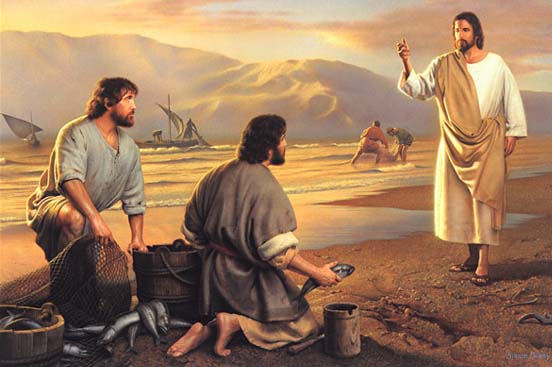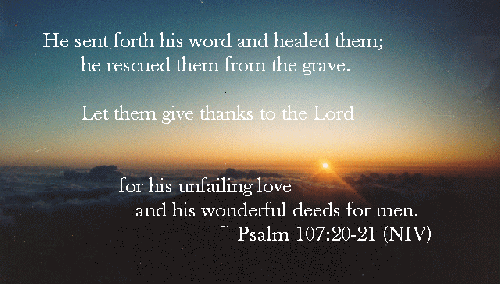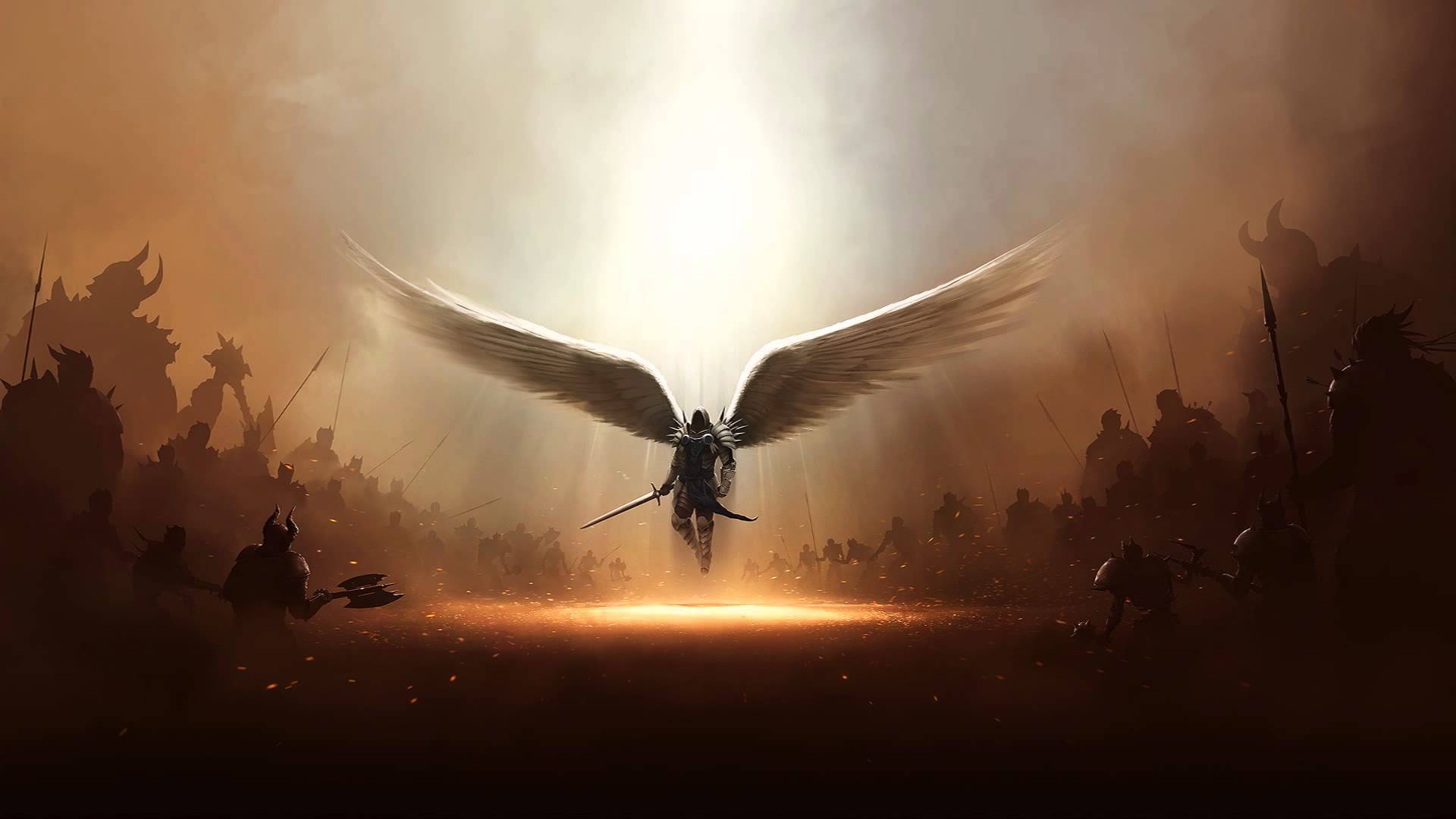
Today we commemorate St. Luke the Evangelist, Patron saint of Physicians. Luke, from his perspective, records for us in his Gospel writings, the life of Jesus=from His birth at Bethlehem, through His ministry and His many healings. How Jesus heals the blind, the deaf, and the lame.
Luke tells us of the peace which Jesus speaks to all, because Jesus is indeed the peace and healing of God, then in human form. That is why in Luke 10, Jesus tells the 72, to say, “Peace be with this house”, as he sends them out as apostles of his peace.
Jesus gives us spiritual healing and peace which forgives our sins, and which reconciles us with God, our Heavenly Father, by His death upon the cross for us.
Jesus is truly the physician of our Soul. He knows all too well, that we are sick with sin, but it deters him not. Each and every one of us, is precisely why He came to earth to be amongst us, the reason he lived with us upon the earth, and why he suffered, bled, was tortured, and died for all our sakes.
Jesus came down from Heaven to our world, to take from us our dark sickness of sin and of death, and to heal us, to bring us true life and salvation. He took all upon himself for us upon the cross, our sickness and death, died with the Lord, to all who truly believe, love and follow Him. We are forgiven, we are healed, we are saved, we are at peace.
If we truly examine our lives, we will see our constant need for healing of the sins of this world. As with the body, if we are sick, we see our dr for diagnosis and treatment, that’s why today, we give thanks to God for His servant, Luke, the Evangelist. It’s Luke’s role to bring Jesus, His healing and peace to each of us through the living and active word of God.
The word of God is the scalpel of Jesus our physician and saviour. With total precision, Jesus’ laws cuts us and ‘kills’ the sickness of the human condition, so that he can heal us, and give us true life.
Each of the commandments of Jesus is a precise incision of his law. We have failed to fear, love, and trust God above all else as we ought to do. We have failed to use God’s name as we should, and to call upon him as our Father, as his children when in every trouble or need, or to give him worthy thanks and praise. We have ignored God’s Holy word and preaching, we have not loved our neighbour, or helped to eased their needs. We have been bad stewards of earthly material things such as money, or possessions. We have failed in giving kindness and forgiveness to our brothers and sisters.
So indeed, our human sickness of sin is dire=without Jesus as our Lord, our Saviour, and physician, the diagnosis is terminal.
But Jesus is merciful, he does not delight in punishment. Jesus our physician of our soul, cuts with His law in order to heal us with His Gospel. The Lord heals the broken hearted and binds up their wounds (PS 147:3). Jesus has kept on our behalf, all those commandments, which we have failed to truly follow.
If we want to call our dr, we pick up the phone, and wait for an appointment to become available. But Jesus as our physician for our souls, is contactable 24 hrs per day, every single day with no exception. He is contactable easily anytime, day or night, by the important communication of prayer.
So let’s end today with the simplest but most important prayer of all, to our Saviour and physician of our soul:
Lord Jesus Christ, Son of God, have mercy on me, a sinner.
I recently had lunch with my sister. Though we barely live five miles from each other, we rarely get together. Something always comes up, like one of her children gets sick, or my husband has a doctor’s appointment. Life just gets too busy sometimes. But while we were talking yesterday, I started to realize just how much I had missed us hanging out, talking, laughing, sharing stories about our days. Just the simple act of sharing a meal with someone turned in to a heartwarming, bonding experience. I began to think afterwards, how comforting and rewarding the experience was. And, how can I continue to have these type of experiences?
Over the weekend, my granddaughter turned seven. Her mother invited us all to go out to dinner, which was an enjoyable but noisy affair (because there were quite a few of us). Later we went to a pottery place, where the children could paint their own piece of pottery. The kids enjoyed it, including my granddaughter. She also received many presents. We then had a sleepover at a local hotel. The whole experience was fun, and I was blessed to be a part of it. Of course, all of this costs money.
While it would be unfair to compare these two experiences (lunch with my sister and birthday party/sleepover) I can’t help but wonder which one left me more refreshed, joyful, and optimistic. For some reason, lunch with my sister just seemed more enjoyable. I came away feeling better. Just the simple act of spending time with someone, talking and laughing, was way more rewarding. We didn’t even need to eat lunch, just be with each other. This left me wondering why sometimes we feel the need to spend money buying stuff we probably don’t need, or spend money on experiences (sports, video games, movies, etc.). While those things are fine, maybe we need to come up with more ways (for little or no money) to give us the same pleasure and joy we normally get by buying stuff.
Have you heard the saying, “You can’t take it with you”? What does it mean? You came in to this world with nothing, and when you die, you leave with nothing. So why do we spend the years in between, working to acquire so much STUFF? Does it make us happy – maybe for a short time. Does it show others what a good person we are – not always. Does it make life easier – sometimes, sometimes not. Does it get us a free pass to Heaven – definitely not! Jesus reiterates that fact in Mark 10:17-31:
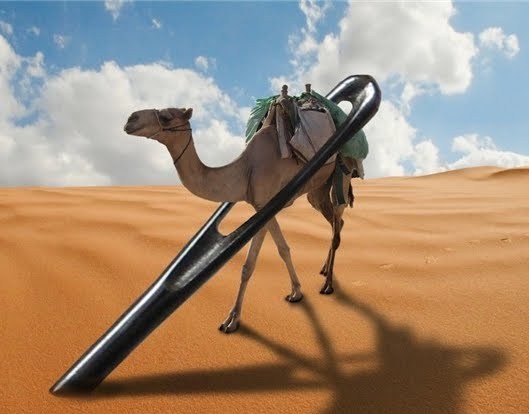
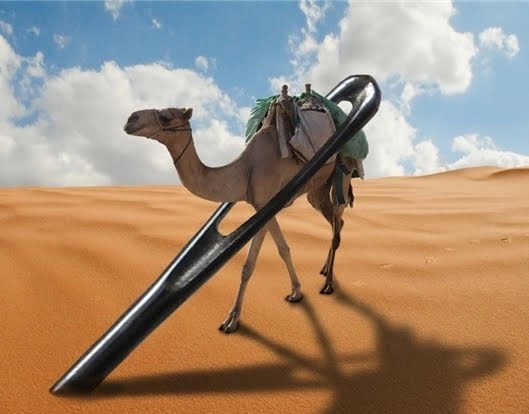
As he was setting out on a journey, a man ran up and knelt before him, and asked him, “Good Teacher, what must I do to inherit eternal life?” Jesus said to him, “Why do you call me good? No one is good but God alone. You know the commandments: ‘You shall not murder; You shall not commit adultery; You shall not steal; You shall not bear false witness; You shall not defraud; Honor your father and mother.'” He said to him, “Teacher, I have kept all these since my youth.” Jesus, looking at him, loved him and said, “You lack one thing; go, sell what you own, and give the money to the poor, and you will have treasure in heaven; then come, follow me.” When he heard this, he was shocked and went away grieving, for he had many possessions. Then Jesus looked around and said to his disciples, “How hard it will be for those who have wealth to enter the kingdom of God!” And the disciples were perplexed at these words. But Jesus said to them again, “Children, how hard it is to enter the kingdom of God! It is easier for a camel to go through the eye of a needle than for someone who is rich to enter the kingdom of God.” They were greatly astounded and said to one another, “Then who can be saved?” Jesus looked at them and said, “For mortals it is impossible, but not for God; for God all things are possible.” Peter began to say to him, “Look, we have left everything and followed you.” Jesus said, “Truly I tell you, there is no one who has left house or brothers or sisters or mother or father or children or fields, for my sake and for the sake of the good news, who will not receive ahundredfold now in this age–houses, brothers and sisters, mothers and children, and fields with persecutions–and in the age to come eternal life. But many who are first will be last, and the last will be first.”
In the last line of this verse, “but many who are first will be last, and the last will be first.” Jesus was talking about heaven when He spoke these words, and He actually used this expression on several occasions. Jesus spoke this immediately after a very wealthy young man came to Him and asked what he needed to do to inherit eternal life. As Jesus talked with him, it became clear that the man was not only rich and powerful, but also very moral and religious. When Jesus listed many of the Ten Commandments, the man could truthfully reply, “All these I have kept” (Matthew 19:20). But Jesus looked beneath the surface of the man’s life and saw what was going on in his heart: He was driven by greed and covetousness. When Jesus challenged him to give up his wealth and become a disciple, “he went away sad, because he had great wealth” (Matthew 19:22). He had obeyed every one of the Ten Commandments except the last: “You shall not covet” (Exodus 20:17). Tragically, his wealth and power meant more to him than God. Jesus’ words are a solemn warning to us that earthly success will not get us into heaven. In fact, it can get in the way by blinding us to our own sin. Only Christ can save us, and no matter who we are, we need to give our lives to Him. Are you trusting Him alone for your salvation?
“Francis is the easiest saint to understand and love, while Dominic is the most difficult,” thus saith Chesterton.
This is sadly true for many Catholics and non-Catholics alike. When we think of St. Francis of Assisi: a joyful ever-smiling beggar standing in a lush garden, surrounded by birds, rabbits, and a tame wolf. Everything about Francis has been positive: his preaching to the birds, Canticles of the Sun, and even the newfound love for Pope Francis has propagated this pleasant image of the humble saint.
But then, there is St. Dominic. Who is he? Many, many people have no idea. Isn’t he that stern-faced preacher wearing a regal black-and-white robe who always carries a book? Didn’t the start the Inquisition? He must have been a real piece of work. Maybe he was pretty smart and all, but he doesn’t sound like a real great guy. Was he?
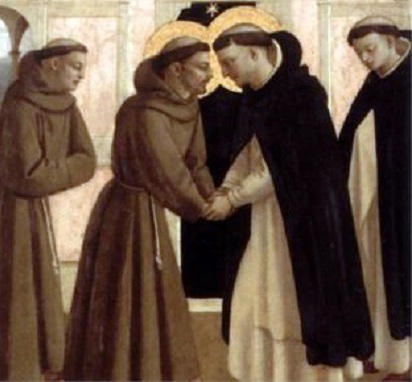
Unknown to many, St. Francis and St. Dominic were, in reality, contemporaries and friends. Surprise!!!! We read the following story:
One summer night in 1215, during his stay in Rome, Francis had a vision: he saw Our Lord prepared to unleash the most terrible chastisements upon the world. His Most Holy Mother was making an effort to placate Him, asking His mercy and forgiveness. For this purpose, she presented two men who would labour for the conversion of the world and return a countless number of lost sheep to the fold. Francis recognised himself as one of these apostles. He did not recognise the other one, however.
The following day, he was in one of the churches of Rome when suddenly an unknown person came up to him, embraced him, and said: “You are my companion, we will work together, supporting one another toward the same end, and no one will prevail against us.” Francis recognised him as the other man in the vision. It was St. Dominic, who had also received a similar vision before the meeting. When he saw Francis in that church, he immediately went to greet him, inspired by the Holy Spirit.
While in reality Dominic loved peace and the poor as much as Francis did (Dominic sold his expensive and rare theology books to feed the victims of famine!), and both had a profound Marian devotion, Francis and Dominic were indeed two very different personalities, and consequently they infused these different characters into their respective orders. The Franciscan Order is known for their simplicity in approach to life and faith. The great conversions of the Franciscans came about through the consideration of the Wounds of Our Lord, His Passion, His poverty and spirit of sacrifice. They preach with zest directly from their fiery souls, for they aim to move the will through the heart.
Meanwhile, the Order of Preachers, the Dominican Order, is the “scholarly order”; to his friars Dominic always emphasised study, because he believed that solid evangelisation wouldn’t be possible if they hadn’t studied first. The Dominican mission is an intellectual work, that is, the study and teaching of philosophy, theology, and apologetics. St. Dominic was known to spend sleepless vigils poring over his books, and later in life these study sessions transformed into nights of thorough preaching and conversions. Indeed, the Dominicans move the will by appealing to the mind.
A great similarity leads to friendship, but so also does a great dissimilarity when it is not the dissimilarity of opposition, but rather one that is complementary. One had something that the other was lacking. Together they constituted a harmonic ensemble. For this reason, they admired one another. These two holy men embraced each other and were enthusiastic for each other’s mission, because although they had different approaches, their end was essentially the same: the conversion of souls and the building of the Kingdom.
To this day, the two orders enjoy a unique and special relationship. The Franciscans celebrate St. Dominic with a Feast, and likewise the Dominicans honour St. Francis of Assisi in their calendar of saints. A Dominican event can be led by a Franciscan friar, and likewise a Franciscan ceremony may be led by a Dominican. Even in the Litany of the Saints: the names of St. Francis and St. Dominic are mentioned together!
Today, we as a Dominican Order not only celebrate our father, St. Francis, we also celebrate our centuries old friendship with the Franciscan Order. We wish you all a very blessed Feast Day!
Today is the Memorial of the Guardian Angels, first promulgated in the Roman Calendar in 1607 by Pope Paul V. And yet, today’s Reading from Job conveys all the anguish of a person who thinks there is no help, no peace, no respite from the hardships of this life. Job even laments that death will not come to save the toilers from their misery.
This anguish is reflected also in today’s Psalm:
You have plunged me into the bottom of the pit,
into the dark abyss.
Upon me your wrath lies heavy,
and with all your billows you overwhelm me.
How often have we felt like that? Perhaps more than we would like to admit. Even those of us strong in our faith, I would dare to say, have despaired over some thing or other.
As for myself, I must confess that the thought of my angel by my side is almost never one I turn to in times of trouble. Out of sight, out of mind…
And yet, all through the Bible we find references to our angels, those messengers from God who are charged with out safekeeping. No, I don’t expect my angel to rush in to save me, nor is that what the word of God tells us. But they are powerful in spirit and soul. As “messengers” (the Greek word is angelos) they carry the memory and the guidance of the Holy Spirit, imparting to us urgings and feelings that we should take as comfort, if we would only remember.
Today’s Alleluia from Psalm 103 reminds us: Bless the Lord, all you angels, you ministers, who do his will.
But today’s Gospel gives us clear instruction that we each have an angel who looks on the face of the heavenly Father. Jesus is showing us that though we may be helpless, like little children, our angel is present to give us comfort, again, if we would only remember.
Pope John XXIII reminded us in his Meditation for the Feast of the Guardian Angels:
Everyone of us is entrusted to the care of an angel.
That is why we must have a lively and profound devotion to our own Guardian Angel, and why we should often and trustfully repeat the dear prayer we were taught in the days of our childhood.
May we never fail in this devotion to the angels! During our earthly pilgrimage we may often run the risk of having to face the natural elements in turmoil, or the wrath of men who may seek to do us harm. But our Guardian Angel is always present. Let us never forget him and always remember to pray to him.
And so I remember my mother teaching me this prayer:
Angel of God, my guardian dear, to whom God’s love commits me here, ever this day be at my side, to light and guard, to rule and guide. Amen.
38 “Teacher,” said John, “we saw someone driving out demons in your name and we told him to stop, because he was not one of us.” 39 “Do not stop him,” Jesus said. “For no one who does a miracle in my name can in the next moment say anything bad about me, 40 for whoever is not against us is for us. 41 Truly I tell you, anyone who gives you a cup of water in my name because you belong to the Messiah will certainly not lose their reward.
Causing to Stumble
42 “If anyone causes one of these little ones—those who believe in me—to stumble, it would be better for them if a large millstone were hung around their neck and they were thrown into the sea. 43 If your hand causes you to stumble, cut it off. It is better for you to enter life maimed than with two hands to go into hell, where the fire never goes out. [44] [a]45 And if your foot causes you to stumble, cut it off. It is better for you to enter life crippled than to have two feet and be thrown into hell. [46] [b]47 And if your eye causes you to stumble, pluck it out. It is better for you to enter the kingdom of God with one eye than to have two eyes and be thrown into hell, 48 where “‘the worms that eat them do not die, and the fire is not quenched.’[c]
49 Everyone will be salted with fire.
50 “Salt is good, but if it loses its saltiness, how can you make it salty again? Have salt among yourselves, and be at peace with each other.”
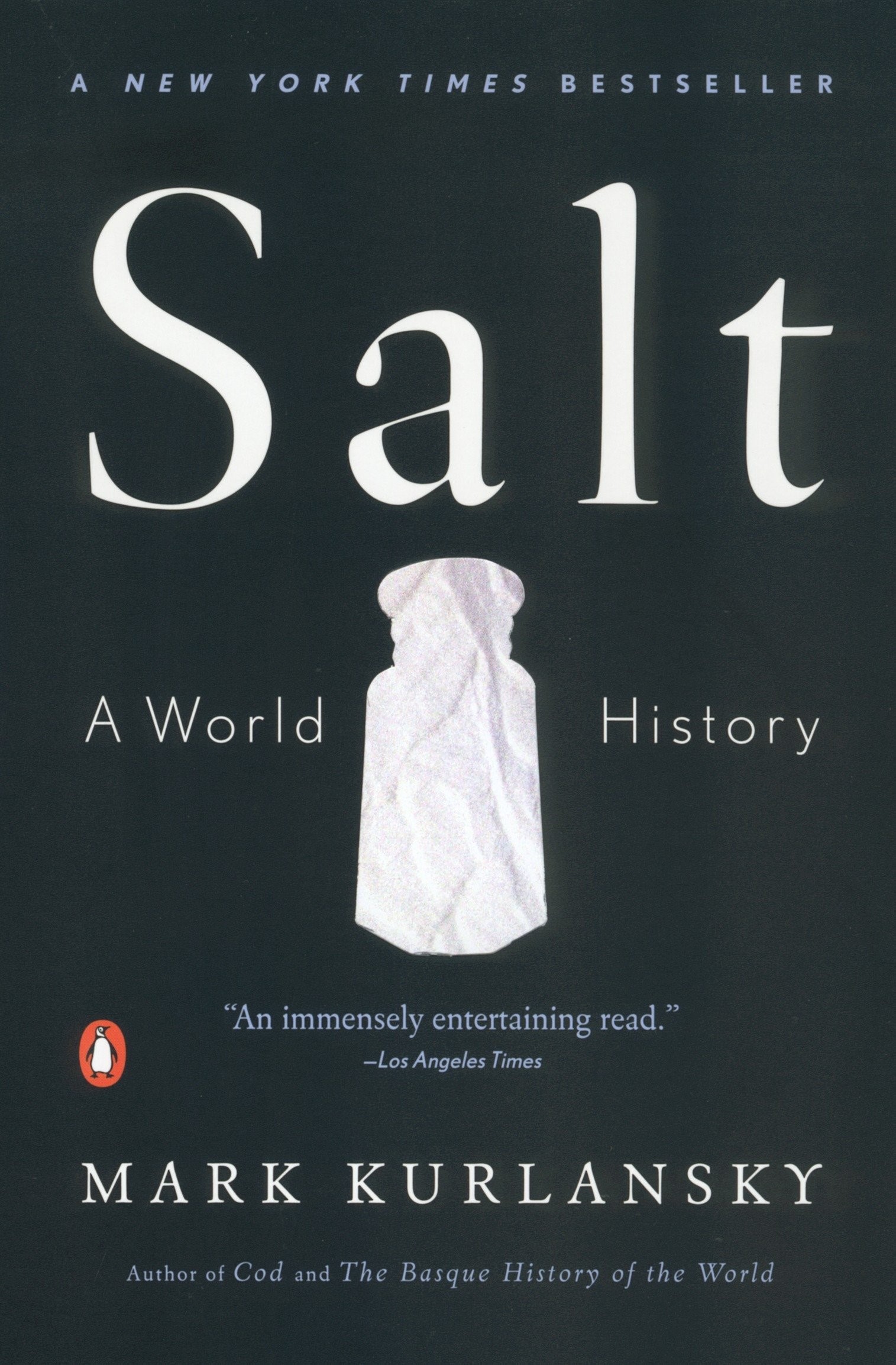
Confused? I was when I first read this, but then it dawned on me that I had read a book many years ago titled “Salt – A World History” I am a geek and a nerd down deep, so for me to read a book instead of watch a movie it must be a real doozie of a book. This book taught me a lot about the only rock that we as humans eat, about the rock that used to be used as currency, and about the only rock that can be used as a preservative. I never really thought about how basic salt was to life. I admit, I took salt for granted, and you probably do too. Sure, I know that salt is in the food that I eat, and if the food isn’t tasty enough I will add a little bit of salt to enhance it and make it more palatable. Sure, I know that salt is an essential element for our bodies to continue to be healthy. Without enough salt in our diet we can suffer from any or all of the following symptoms – weakness, fatigue or low energy, headache, nausea, vomiting, muscle cramps or spasms, confusion, and irritability.
Sure, I know that salt has many purposes in our world. Salt melts snow in the winter so that we can drive on the roads and get where we need to be. Salt is a natural deodorizer, a drain opener, a cleaner, and an excellent weed preventer for your garden. But to tell you the truth, I never really thought about salt and all of its wonderful uses, it just was, it just is It is just one of those things in life we take for granted.
Why did Jesus need to say that we need to have salt within ourselves and why does Jesus need to warn us about salt losing its saltiness. I kept coming back to the text and saying, “Jesus no one wants a sermon on the properties of salt. That’s not a message that’s going to keep them coming back for more. Salt is boring. It’s just there. It is a part of life. No one wants a sermon on salt. What in the world does salt have to do with the Kingdom of God? Where is the good news in salt? Jesus couldn’t you come up with some better metaphors?”
We as churches and as people of faith are called to serve. We are called to be the salt of the earth, to be worthy servants of our God. We are called to see beyond boundaries and the lines that separate us and to see the things that unite us, our basic core elements: grace, peace, hope, love, welcoming and most importantly – service. Just like there are some basic elements that unite our bodies and give us life. That’s what Mark is talking about in our Scriptures today. He is inviting us as readers to put aside what divides us and celebrates us, our saltiness, our desire to serve, our desire to enhance the lives of others, our desire to preserve justice for all of God’s people, our abilities to flavor the bland existence of others with the seasonings of the Kingdom of God: Grace, peace, love, welcoming and service.
Mark is also reminding us that as people of faith, we lose our way sometimes, that our saltiness loses its ability to season, that our desire to serve sometimes stands in the way of the work of the Kingdom of God. And we have a responsibility to get back to the basics and renew, restore our purpose as the people of God. Mark tells us that when Jesus heard that the disciples stopped a man from healing just because this man was not a part of their group, he knew that he had to go back to basics. He had to break down the Kingdom of God into its core elements and remind the disciples of how these core elements make up a community of faith. Jesus knew that he had to go back to Chemistry 101 and remind his disciples of how the different elements are supposed to interact with each other and how the different elements of faith, grace, hope, peace, love and welcoming make up the Body of Christ. He knew that he had to get them to see what unites them, not what divides them. He knew that he had to get the disciples to recognize that they had forgotten their purpose and that their “saltiness” had lost its ability to season the Kingdom of God with grace, peace, hope, love, and welcoming.
Mark reminds his community and us today that these basic elements, grace, peace, love, hope, service and welcoming flavor the Kingdom of God. They add spice to our lives as believers. They enhance our experiences as people of faith here on earth. They add flavor to our lives as disciples of Christ. Mark reminds his community and us today that we are called to share the basic elements that make up the Body of Christ with all of God’s children. We are called to pass the salt down the table and let everyone sprinkle a little grace, peace, hope, love, service and welcoming on the feast of life that God has spread out before us.
Heavenly Father, help us that we may never lose our saltiness as people of faith. Help us to remember our purpose and what unites us as people of faith. Amen.
And for an entertaining read I recommend the following:
(and it is published by Penguin Books) go figure!!!!!
Holy Michael, the Archangel, defend us in battle. Be our safeguard against the wickedness and snares of the devil. May God rebuke him, we humbly pray; and do you, O Prince of the heavenly host, by the power of God cast into hell Satan and all the evil spirits who wander through the world seeking the ruin of souls.
Amen.
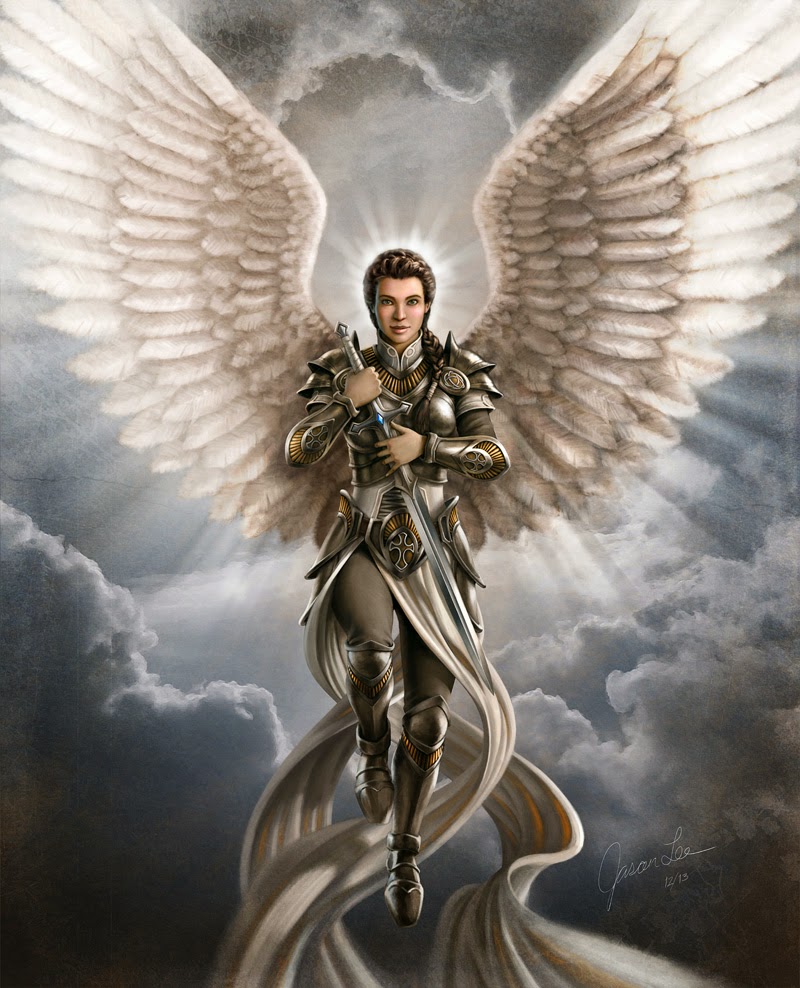
Today we celebrate the Feast of the Archangels. Every so often there’s a story in the news about how many Americans believe in angels. Usually it’s presented in somewhat alarmist language…”more Americans believe in angels than in evolution, poll suggests!” Or “7 things Americans think are more plausible than man-made global warming! #1 Angels!” A 2011 poll conducted by the Associated Press says 77% of Americans believe angels are real. To me, how they ask the question is important. Years ago, I was one of those polled while touring the campus at Gettysburg Lutheran Seminary, and they asked, “Do you believe in angels?” and I thought “do you mean, do I believe in little adorable, chubby-cheeked Raphaelite cherubs with rainbow wings?” No, not really. Do I believe that there are things in the universe beyond my powers of comprehension who are active in doing God’s will? Then, yes. Without a doubt! When I asked for this clarification the poll taker looked at their clipboard and said, “it just says, do you believe in angels?” Well, then. “yes.”
A lot of Americans may believe in angels, but I don’t know how many of us give them much thought. Angels are one of those ubiquitous pop-culture things that show up in lots of places but I, for one, don’t spend an awful lot of time thinking about them. When I volunteered to write today’s sermon, I decided that I should do some research on angels, so I did what any self-respecting Generation-”Y”er would do…I went and re-watched the movie Dogma. Yup, you heard right!
That’s the Kevin Smith movie starring Matt Damon and Ben Affleck as a pair of angels who have been banished from heaven and sent not to hell, but to Wisconsin. They think they’ve discovered a loophole in Catholic Dogma that will allow them back into heaven and the movie is the wackiness that ensues as they try to enact their plan.
I enjoyed seeing it again, but I’m not sure it told me all that much about angels.
At least the angels in Dogma are somewhat closer to biblical angels than Clarence in “It’s a Wonderful Life,” or Michael Landon on “Highway to Heaven,” or Roma Downey and Della Reese on “Touched by an Angel.”
At least for me, it’s hard to reconcile the “I’m just sent to help people out,” angles of those shows with the fearsome, world-ending appearance of the angels in our readings. TV angels are really pleasant, angels in scripture are really scary! Our ancestors thought much more systematically about angels. A lot of what we think we know about angels comes from a Syrian monk writing around the 5th century of the common era known as Dionysius the Areopagite. He’s the one who gives us the nine orders, or choirs, of angels.
Beginning with the Seraphim…those closest to God, the ones with six wings, two covering their feet, two covering their face, and two to fly with.
Next are the Cherubim…NOT the chubby little children that Raphael painted. These are the winged creatures with flaming swords guarding the entrance to Paradise, and represented on the top of the Ark of the Covenant. They are sometimes represented with the front quarters of a lion, and the hind quarters of a bull, the head of a man, and the wings of an eagle. Or with four-faces those of a bull, an eagle, a lion, and a human.
Then continuing down the ranks come the Thrones, Dominions, Virtues, Powers, Principalities, and finally Archangels. This is where we find Michael, also Raphael, Gabriel, and sometime Uriel. At the very end, plain old angels.
It’s all quite dizzying!
Michael is one of the few named angels in scripture, and as such has attracted much devotion from a very early date. In Jewish midrash, Michael is the one who is said to have prevented the sacrifice of Isaac, saves the three young men from the fiery furnace, and the one who wrestles with Jacob. In Christian tradition, Michael is regarded as both a warrior—defeating Satan in the battle in heaven—and a healer—the earliest sanctuary dedicated to St. Michael was associated with a healing well.
Often feast days are associated with at least quasi-historical dates…often the presumed date of the saint’s death, but since angels and archangels don’t die, the association of Sept 29th with the feast of Michaelmas came from the 5th century dedication of a St. Michael’s basilica near Rome. In medieval England, Michalemas marked the end of the “husbandman’s year” when the harvest was done and accounts were settled, and hiring for the next year took place.
The fact that it takes place around the fall equinox is (I think) significant. Because in addition to angels, another thing we post-modern folks don’t think an awful lot about is the calendar. Oh sure, we are tied to our calendars but mostly to make sure that we are where we’re supposed to be when we’re supposed to be there. But our liturgical or church calendar does much more than simply mark time…it sanctifies it.
In the English Church the Feast of the Archangels would have been celebrated last night at a service called Evensong. Evensong is perhaps one of the most ancient of all prayerful actions. Our ancestors understood the necessity of marking the times of the day, the week, and the year. Those “thin-spaces” where time and eternity, earth and space, breath and Spirit flow into and out of one another. Morning Prayer at dawn. Evening Prayer at dusk. The two great hinges of every day. Weekly Sabbaths establishing times of work and rest. And yearly festivals not merely marking time but actually (re)creating and sanctifying the rhythm of existence—the rhythm of being. Michaelmas is almost an autumnal mirror of Pentecost.
In the northern hemisphere, the Triduum—the great three days of Holy Week—Maundy Thursday, Good Friday and Holy Saturday mark the dying—the pause in the tomb and the resurrection of our Lord, who becomes the first fruits of the new and unending life.
From that single seed the Holy Spirit—in the burst of Pentecost—is poured out on us to effect our transformation and the renewal of the whole earth—in this season of growth and greenness—bringing all creation closer to God’s realm.
Then as the season of growth turns to the abundance of fall and harvest our focus is increasingly drawn to the fullness of the Eschaton—the edge of time—the horizon of existence. As the sun lowers in the sky, our eyes are drawn to the horizon. As the days shorten and shadows lengthen Michaelmas directs our attention to the horizon and beyond to the heavenly host—to those who are always above and beyond us—angels.
As we move toward the fall Triduum—All Hallow’s Eve, All Saints, and All Souls day—the church continues to direct us to the culmination of all things—to those who have gone before—and then the coming of Christ just before Advent. The culmination of all things, dominions, princedoms, powers, virtues, archangels, angel choirs—all things find their reason and their rest in Christ.
You see, I do believe in angels, but more in the sense that there really are more things in heaven and earth than are dreamt of in our philosophy.
So for me, this year, this celebration of the feast of St. Michael and All Angels is a gift from the church in her wisdom—a reminder to keep my eyes and heart focused on these things that really are above me and beyond my ability to grasp or understand. As the earth turns, once again, her northern face away from the sun, and we prepare again to enter the time of darkening days and cooler nights, it’s helpful to think of the heavenly hosts, the powers that I still don’t and never will totally understand—but knowing that they are working and praying and guarding and guiding and enacting God’s will…and allowing and inviting us to experience God’s grace in our own lives is somehow enough.
The 8th century scholar and monk Alcuin wrote a sequence litany for Michael and the other archangels that ends like this:
Hear us, Michael,
Greatest angel,
Come down a little
From thy high seat,
To bring us the strength of God,
And the lightening of His mercy.
And do thou, Gabriel,
Lay low our foes,
And thou, Raphael,
Heal our sick,
Purge our disease, ease thou our pain,
And give us to share
In the joys of the blessed.
Amen.
“This is the most important: ‘Hear O Israel, the Lord our God is One Lord, and you shall love the Lord your God with all your heart andwith all your soul and with all your mind and with allyour strength.’ The second is this: ‘Love your neighbor as yourself.’ No other commandment is greater than these” Mark 12:29-30. Such simple rules by which to live our lives are they not? And yet, how we human struggle in our worldly lives to even come close to meeting just a fraction of these two simple requirements. Of course, the difficulty comes from the blending of our secular desires with our inner spiritual desires; the crashing of these two aspects of our existence easily causes us to divert from God’s path, which is the underlying nature of our hamartia (aka sin), our missing the bullseye of spiritual direction. Though we are created in the image of the heavenly hosts, we are flawed, imperfect, prone to mistakes, drawn away from the path of the righteous towards self interest and familiar contentment. What is the root of our human hamartia? It is fear, fear of loosing out, fear of falling behind those around us, fear of change, fear of losing control over our lives an fear of loosing our “stuff”. Now this is not the type of fear that comes from being chased by a bear or being injured or killed by natural disasters, but the psychological fear that comes with asking “what if”, and what about” or “but…”. There is great benefit to to us, our families, our society and indeed all of humanity to consider the ramifications of our single and corporal actions on the future; it is the cloud of darkness that veils our eyes to the reality of the here and now when we are consumed by the “what ifs” in lieu of the here and now, and so we loose focus on the target and stumble into the pit of hamartia. Jesus even warns us to “Therefore do not worry about tomorrow, for tomorrow will worry about itself. Today has enough trouble of its own” Matthew 6:34. And now we worry about worrying..and as I always say: “that’s my job!”
St. James tells us “Where jealousy and selfish ambition exist, there is disorder and every foul practice” James 3:16. An so it is when we worry about keeping up with the Smiths or who might take advantage of us; we covet, kill, and envy. We fight against unseen enemies and so we create enemies by scapegoating the weak, the popular, the foreigner, and the marginalized; in our fearful passions we wage wars against our scapegoats and loose everything to gain nothing and so, further feed our fears. We feed our “what ifs” and fail to ask in wisdom “how can I rely on God to change me so that I might be a positive change to others and to the world?” We exchange our pleas for wisdom in prayer for wickedness in action.
There are subtle differences between knowledge, wisdom and wickedness. Knowledge is knowing many answers, wisdom is the ability to put these answers to the correct questions and problems, and wickedness is using answers to only promote ones own desires and agenda, regardless of any concern for others. HaShem gives us knowledge and wisdom in the gift of scripture, the prophets teaching and the promise of the presence and willing sacrifice of Christ. But as Wisdom (2:12) tells us “The wicked say: Let us beset the just one, because he is obnoxious to us; he sets himself against our doings, reproaches us for transgressions of the law and charges us with violations of our training”. In fear we then follow those who ignore the scriptures, minimize the teachings of the prophets and continually lash the back of the Son of Man as we pound the spikes deeper into His flesh on the cross saying “let us condemn Him to a shameful death; for according to his own words, HaShem will take care of Him” (Wis: 2:20), so crucify Him, Crucify Him, CRUCIFY HIM!
Jesus showed His disciples the wisdom from above by being “first of all pure, then peaceable, gentle, compliant, full of mercy and good fruits, without inconstancy or insincerity” and that “the fruit of righteousness is sown in peace for those who cultivate peace” (James: 17-18); and in turn they thought only of their own prestige and gain as they questioned who among them would be the greatest. Their own fearful lack of understanding pierced the silence like echos of a mocking crowd crying “CRUCIFY HIM!” and their words echoed off the hills like the clang of a hammer against a spike as it penetrated soft human flesh into the hard core of olive wood. In the loving wisdom that comes only from HaShem’s heavenly sphere, Jesus embraced a child walking in their midst, lifted the bewildered child up as the one who was greatest among them! Like a father lifting up His own innocent and lowly child, unlike our children in modern times, would probably not survive into adulthood and whose value was limited to serving as a indentured servant to the family. This child, in their lowly servitude to their parents, IS the the pride of HaShem’s kingdom-no frills, no power no expectations, the last of all and servant their father’s needs. What a shock to hear Jesus’ words that “Whoever receives one child such as this in my name, receives me;
and whoever receives me, receives not me but the One who sent me” (Mark 9:37). What knowledge and wisdom we can find in this one uncomplicated act, this one elementary statement in reply to the question of how we can keep the command to love HaShem and love each other.
Let us live our lives lives like a true child of HaShem. Let us lift from our eyes the dark veil of fear so that we might see the light that is His light.
Let us sow the seeds of righteousness in our hearts, overcome the impediments of our own hamartia, shed the “what ifs” we bear as our cross in this journey, and be the merciful and good fruit of His peace, His Gospel, and walk the straight path into the arms of He who created us in the grace of His own image.
I’m sure if you have never owned a gemstone piece of Jewelery, that you would most definitely have seen them in shop windows, or maybe being worn by a relative or a friend. Maybe it is a diamond, sparkling bright. Maybe a beautiful rose red Ruby, a shiny Emerald, as green as fresh grass, or maybe a Sapphire, as beautiful blue as the sky on a sunny day. They are beautiful works of nature aren’t they?
But no valuable gemstone started as the beautiful shiny gems, that we are so used to seeing. They have to be mined from deep mine rock, they are rather plain, and look nothing like the beautiful things which they would become, if they were the ones chosen as being suitable. Not all are chosen, and some are later discarded. The ones which make it, go through a full treatment process, then they need to be shaped and polished, until they shine like coloured stars in the skies. They have to undergo a major change process, to become as we know them, the best they can be.
So what has this got to do with today’s Feast of St. Matthew, the Apostle and Evangelist, and what significance does it have also for us today?
Mathew was originally named ‘Levi’, which means ‘Adhesion’ in Hebrew. He was a tax collector, a publican, a position despised by the other Jews, as they saw it that Levi was working for their enemy, the Roman empire, by robbing his own people, to gain large personal financial gain for himself. The Pharisees saw him as the ‘typical sinner’. He was not permitted to trade, eat, or even to pray with the other Jews because of the role he held that was so hated and unaccepted.
Whilst Levi was sat with his silver, Jesus came and only needed to say to him two words, those being, “follow me”. Immediately in response to this, he rose, left his silver and followed Jesus. Mathew was then renamed by Jesus as Matthew, which means “Gift of God”. As well as being one of the Lord’s twelve apostles, Matthew was also one of the four evangelists.
Mathew invited Jesus to dinner at his home and Jesus was criticised for eating with sinners and tax collectors. This prompted Jesus to answer, “I came not to call the righteous, but sinners to repentance.” (Mark 2:17).
Mathew was one of the witnesses of the Ascension and Resurrection of the Lord, where afterwards, they all withdrew to an upper room in Jerusalem. (Acts 1:10=14).
Just as Levi changed his life to become Matthew the Apostle, and just like valuable gem stones from the mine in their raw states, we also must undergo major change for Christ. We must enable Jesus to shape us and to polish us, so that we can be the best we can be, and good enough to be able to listen with our hearts, and follow the will of Christ, and to serve him as his chosen stewards, upon the earth. Like Matthew, we need to leave behind the things of the world and follow our Saviour.
Let us pray:
We are a work=in=progress, Lord, and alł we ask you today is that you cleanse our hearts, shape us and mold us into who you want us to become. Reveal to us your great plan and will for our lives. Use us Lord to fulfil our destiny for you and to spread your love and message of salvation across the world.
Today’s readings and Gospel could leave one feeling mighty flat…no miracles, no rousing call to action, no hosannas shouted from the rooftops.
Just several admonitions, almost stern in their nature, certainly not the kind that make us gird up our loins and set out to slay dragons
No, there is the vision, almost a promise, of hardship, suffering, abuse, fear. Even the Psalm is tainted with what may look to be a useless promise of eventual life with the Lord. But in the meantime, we’re going to feel all the slings and arrows that are arrayed against us.
Whew! Now what’s the good news?
Well, the good news, the Gospel, is subtle today. We know we’re in for pain and hardship because we’re in the midst of it almost every day. All we must do is open our eyes, remember the past month, read or listen to the news. The Gospel tell us, however, that while the task ahead may be hard, the way to get going is simple: deny ourselves, take up our cross, and follow Jesus.
OK, so, again, what’s the good news?
It’s a simple message today, and we should really stop asking for something good to happen to us. Do we always have to be in a position where everything is sweetness and light? Especially in our era, when we demand instant gratification, the big score, the magic pill, we’re going to find today’s readings unsettling, even uncomfortable.
Perhaps the message of Jesus is that we have to grow up. He says it specifically when chastising Peter and the Disciples: “You are thinking not as God does, but as human beings do.” Maybe the whole purpose of Salvation History is to help us grow from infant human beings to mature people of God. And the readings today are setting the stage for how we are to get there.
Isaiah: Listen to God and then stand steadfast in your beliefs, even against physical retribution.
Responsorial Psalm 116: When you are afflicted, call on God, not necessarily to save you from pain, but to keep you, unstumbling, on the road to salvation.
James: You really can’t just talk the talk. You have to do something. You have to demonstrate your faith by giving those who need them the necessities of the body.
Galatians (Alleluia): Don’t be smug about all you’re going through.
Mark: Accept your fate, listen to and believe in Jesus, and above all, be ready to put all aside if necessary to save your life, even your life itself.
No, today’s readings are not for the feint of heart. But there permeates them this clear message that the world of childish magical thinking is only for children, not for anyone who is maturing into a Person of God. And hard as it may seem when we finally face it, acceptance of the word of Jesus is, in the end, solace enough for us…if only we can get to that state of mind. And really, we do know how to get there, don’t we?
Let us pray: Lord, help us to walk before you today, and always, in the land of the living. That’s all we ask today.
The title, “Our Lady of Sorrows,” given to our Blessed Mother focuses on her intense suffering and grief during the passion and death of our Lord. Traditionally, this suffering was not limited to the passion and death event; rather, it comprised “the seven dolors” or “seven sorrows” of Mary, which were foretold by the Priest Simeon who proclaimed to Mary, “This child [Jesus] is destined to be the downfall and the rise of many in Israel, a sign that will be opposed– and you yourself shall be pierced with a sword– so that the thoughts of many hearts may be laid bare” (Luke 2:34-35).
Below are the seven sorrows of Mary:
1. The prophecy of Simeon: “And Simeon blessed them, and said to Mary his mother: Behold this child is set for the fall and for the resurrection of many in Israel, and for a sign which shall be contradicted; And thy own soul a sword shall pierce, that out of many hearts thoughts may be revealed.” – Luke II, 34-35.
2. The flight into Egypt: “And after they (the wise men) were departed, behold an angel of the Lord appeared in sleep to Joseph, saying: Arise and take the child and His mother and fly into Egypt: and be there until I shall tell thee. For it will come to pass that Herod will seek the child to destroy Him. Who arose and took the child and His mother by night, and retired into Egypt: and He was there until the death of Herod.” – Matt. II, 13-14.
3. The loss of the Child Jesus in the temple: “And having fulfilled the days, when they returned, the Child Jesus remained in Jerusalem; and His parents knew it not. And thinking that he was in the company, they came a day’s journey, and sought him among their kinsfolk and acquaintance. And not finding Him, they returned into Jerusalem, seeking Him.” Luke II, 43-45.
4. The meeting of Jesus and Mary on the Way of the Cross: “And there followed Him a great multitude of people, and of women, who bewailed and lamented Him.” – Luke XXIII, 27.
5. The Crucifixion: “They crucified Him. Now there stood by the cross of Jesus, His Mother. When Jesus therefore had seen His Mother and the disciple standing whom he loved, He saith to His Mother: Woman: behold thy son. After that he saith to the disciple: Behold thy Mother.” – John XIX, l8-25-27.
6. The taking down of the Body of Jesus from the Cross: “Joseph of Arimathea, a noble counselor, came and went in boldly to Pilate, and begged the body of Jesus. And Joseph buying fine linen, and taking Him down, wrapped Him up in the fine linen.” – Mark XV, 43-46.
7. The burial of Jesus: “Now there was in the place where He was crucified, a garden; and in the garden a new sepulcher, wherein no man yet had been laid. There, therefore, because of the parasceve of the Jews, they laid Jesus, because the sepulcher was nigh at hand.” John XIX, 41-42.
In all, the prophesy of Simeon that a sword would pierce our Blessed Mother’s heart was fulfilled in these events. For this reason, Mary is sometimes depicted with her heart exposed and with seven swords piercing it. This Feast of Our Lady of Sorrows grew in popularity in the twelfth century, although under various titles. Granted, some writings would place its roots in the eleventh century, especially among the Benedictine monks. By the fourteenth and fifteenth centuries, the feast and devotion were widespread throughout the Church.
In 1668 the feast in honor of the Seven Dolors was set for the Sunday after September 14, the Feast of the Holy Cross. The feast was inserted into the Roman calendar in 1814, and Pope Pius X fixed the permanent date of September 15 for the Feast of the Seven Sorrows of the Blessed Virgin Mary (now simply called the Feast of Our Lady of Sorrows). The key image here is our Blessed Mother standing faithfully at the foot of the cross with her dying Son: the Gospel of St. John recorded, “Seeing His mother there with the disciple whom He loved, Jesus said to His mother, ‘Woman, there is your son.’ In turn He said to the disciple, ‘There is your mother.’” (John 19:26-27). The Second Vatican Council in its Dogmatic Constitution on the Church wrote, “…She stood in keeping with the divine plan, suffering grievously with her only-begotten Son. There she united herself, with a maternal heart, to His sacrifice, and lovingly consented to the immolation of this Victim which she herself had brought forth” (#58).
St. Bernard (d. 1153) wrote, “Truly, O Blessed Mother, a sword has pierced your heart…. He died in body through a love greater than anyone had known. She died in spirit through a love unlike any other since His” (De duodecim praerogatativs BVM).
Focusing on the compassion of our Blessed Mother, our Holy Father, Pope John Paul II, reminded the faithful, “Mary Most Holy goes on being the loving consoler of those touched by the many physical and moral sorrows which afflict and torment humanity. She knows our sorrows and our pains, because she too suffered, from Bethlehem to Calvary. ‘And thy soul too a sword shall pierce.’ Mary is our Spiritual Mother, and the mother always understands her children and consoles them in their troubles. Then, she has that specific mission to love us, received from Jesus on the Cross, to love us only and always, so as to save us! Mary consoles us above all by pointing out the Crucified One and Paradise to us!” (1980).
Therefore, as we honor our Blessed Mother, our Lady of Sorrows, we honor her as the faithful disciple and exemplar of faith. Let us pray as we do in the opening prayer of the Mass for this feast day: “Father, as your Son was raised on the cross, His Mother Mary stood by Him, sharing His sufferings. May your Church be united with Christ in His suffering and death and so come to share in His rising to new life.” Looking to the example of Mary, may we too unite our sufferings to our Lord, facing them with courage, love, and trust.
You must be logged in to post a comment.