Catherine Mancini was born in Pisa in 1355, of noble parentage, and from infancy began enjoying the miraculous favors with which her life was filled. At the age of three, she was warned by some heavenly agency that the porch on which she had been placed by a nurse was unsafe. Her cries attracted the nurse’s attention, and they had barely left the porch when it collapsed. When she was five, she beheld in an ecstasy the dungeon of a place in Pisa in which Peter Gambacorta, one of the leading citizens, was being tortured. At Catherine’s prayer, the rope broke and the man was released. Our Lady told the little girl to say prayers every day for this man, because he would one day be her benefactor.
Catherine would have much preferred the religious life to marriage, but she obeyed her parents and was married at the age of twelve. Widowed at sixteen, she was compelled to marry again. Of her seven children, only one survived the death of her second husband, and Catherine learned through a vision that this child, too, would soon be taken from her. Thus she found herself, at the age of twenty five, twice widowed and bereft of all her children. Refusing a third marriage, she devoted herself to prayers and works of charity.
She soon worked out for herself a severe schedule of prayers and good works, fasting and mortifications. She tended the sick and the poor, bringing them into her own home and regarding them as Our Lord Himself. She gave her goods to the poor and labored for them with her own hands. Our Lord was pleased to show her that He approved of her works by appearing to her in the guise of a poor young man, sick, and in need of both food and medicine. She carefully dressed his wounds, and she was rewarded by the revelation that it was in reality her redeemer whom she had served.
St. Catherine of Siena visited Pisa at about this time, and the two saintly women were drawn together into a holy friendship. As they prayed together in the Dominican church one day, they were surrounded by a bright cloud, out of which flew a white dove. They conversed joyfully on spiritual matters, and were mutually strengthened by the meeting.
On the advice of St. Catherine of Siena, Catherine (Mary Mancini) retired to an enclosed convent of the Second Order. In religion, she was given the name Mary, by which she is usually known. She embraced the religious life in all its primitive austerity, and, with Blessed Clare Gambarcota and a few other members of the convent, she founded a new and much more austere house, which had been built by Peter Gambacorta. Our Lady’s prophecy of his benefactions was thus fulfilled.
Blessed Mary was favored with many visions and was in almost constant prayer. She became prioress of the house on the death of her friend Blessed Clare Gambacorta, and ruled it with justice and holiness until her death.
She died in 1431 and was beatified by Pius IX in 1855.
Before I began writing today’s sermon, I spent some time in prayer and decided to read a few pages in my devotional. Without really looking, I opened the book to the topic of “Hope.” If you will forgive me for departing from our usual lectionary series, please
allow me to share with you what it says….
Hope
Lord I need a big dose of hope today.
None of the pie in the sky kind.
Not even a pretty sure guess.
I need the real kind of hope that brings lightness to a heavy day.
I am tired of gritting my teeth, trying to swallow the pain that is my reality.
When I look back on my life, I see how you proved faithful time after time.
There were moments I thought you had forgotten me only to discover you were holding me so close I couldn’t see.
So if the stubborn pain refuses to subside for a while,
I will still whisper your name in praise.
Refocus my mind on you Lord.
Only on you.
It is there I find hope.
How many of you here can understand and relate to what the author is feeling in this text? Of feeling the need to have a big dose of hope, of being tired of trying to swallow the pain that is reality? I think the longer we live, the more we can identify with what the author is feeling here; that life is hard, life is filled with a lot of valleys, a lot of storms and a lot of pain. Even though I am still relatively young, from my limited life experience, I see this to be true already.
In every situation we frequently encounter many storms – illness, surgeries, funerals, job loss, financial problems, conflicts with family and friends.
In the midst of all these storms and trials, let me ask you, what are the things that you find yourself hoping in or have hoped in the past? Sometimes we use the word hope as being synonymous with the word “wish.” When we say, “I hope,” what we are really saying is, “I wish.” When our hope is inappropriately placed, it doesn’t matter how much we hope or wish for something, it’s not going to bring us fulfillment. Instead we’ll find ourselves being disappointed, disillusioned, and maybe even depressed.
Isn’t that our common experience in the things of the world we’ve hoped in? I think a lot of us here who have placed our hope in money, romance, friends, and even family have seen how they have failed us at one point or another, and so it’s easy to see why people become cynical and apathetic. The common attitude nowadays is – “Who cares? Is there any hope?” We see around us defeatism, fear, indifference, apathy, and lethargy.
So how are we supposed to have hope when the reality is that there are so many problems, troubles in our lives, so much going on to really not have hope for? What does the bible have to tell us?
Psalm 31:24 says,
Be strong and take heart all you who hope in the Lord.
This verse reminds us that we are called to put our hope in the Lord. Why is that? For Christians, hope is a future certainty grounded in a present reality. The present reality is the faithfulness of God; not merely God’s faithfulness in our personal lives but throughout history as well.
Perhaps some of you here are thinking that you don’t see God’s faithfulness. If he was really there, then why would he allow certain painful, difficult situations to occur in your life? We look around at what’s happening and we think God doesn’t care. I know there have been times in my life where I have lost hope because I feared that I had somehow disappeared from God’s radar screen. I felt like my circumstances at times have caught God off guard. There were things that happened in my life that caused me great heartache and led to a long period of uncertainty in my future and a long period of unemployment. During that time, there were numerous times when I found myself wondering if God really cares. If God really cared, why would He allow me to unemployed for so long? Why would he allow me to go through so much pain? Sometimes we are disappointed when our expectations are not met by our circumstances. But the bible clearly teaches that to have hope does not mean the absence of problems in our lives.
In the bible, I think the story of Job really captures this idea of having hope in the midst of suffering better than I can try to describe. Let me summarize for you the story of Job.
Job was a man who was wise, rich, and good. Then suddenly, all these terrible things happened to him all at once. His ten children are killed. He loses all his wealth. And on top of all of that, he becomes ill with a painful skin disease.
Three friends come to visit him, and they try to explain to Job why these bad things have happened. They tell Job that sin caused his suffering and God was punishing him.
Job insists it is not true, but no one believes him. Job becomes very discouraged and angry but he still believes God cares about him, although he doesn’t understand why he must suffer so.
In the end, God answers Job by reminding him that humans can never understand how great God is. After Job hears God speak, Job realizes that his trust in God should not depend on what happens to him. God says that Job’s friends didn’t know what they were talking about. Finally, God restores Job’s health, makes him twice as rich as he had been before, and gives him ten more children.
Think about how you would have reacted if you were in Job’s shoes? Isn’t it so amazing that Job never lost his faith in God, even under the most heartbreaking circumstances that tested him to his core? It’s hard to imagine losing everything we own in one day—property, possessions, and even children. Most men would sink into depression, I know I probably would and even become suicidal after such a nightmare. However, although Job must have felt all those emotions, he never wavered in his understanding that God was still in control. Job’s three friends, on the other hand, instead of comforting him, gave him bad advice and even accused him of committing sins so grievous that God was punishing him by making his life miserable. Job knew God well enough to know that He did not work that way.
I think the author of the devotional passage we read also shares the same sentiments as Job. Like the author writes, “When I look back on my life, I see how you proved faithful time after time. There were moments I thought you had forgotten me only to discover you were holding me so close I couldn’t see.”
Both Job and this author through their personal life journeys have realized that even though at times they have felt that God has abandoned them, the reality is that God has always been there for them. One of my favorite poems really captures this idea, I think many of you here probably are familiar with this poem as well.
Footprints in the Sand
One night a man had a dream. He dreamed He was walking along the beach with the LORD. Across the sky flashed scenes from His life. For each scene He noticed two sets of footprints in the sand. One belonging to Him and the other to the LORD.
When the last scene of His life flashed before Him, he looked back at the footprints in the sand. He noticed that many times along the path of His life there was only one set of footprints. He also noticed that it happened at the very lowest and saddest times of His life.
This really bothered Him and He questioned the LORD about it. LORD you said that once I decided to follow you, you’d walk with me all the way. But I have noticed that during the most troublesome times in my life there is only one set of footprints. I don’t understand why when I needed you most you would leave me.
The LORD replied, my precious, precious child, I Love you and I would never leave you! During your times of trial and suffering when you see only one set of footprints, it was then that I carried you.
I know perhaps some of you here feel abandoned by God, feel like the man in this poem, that in the darkest moments of your life, you only see one set of footprints in the sand. But I want to remind you that that is not the case, that even in the darkest moments of your life, God is there to be with you. How do we know that to be true, how do we know God is faithful? Hopefully, as you look at your own life, you can see instances of God’s faithfulness in the past, but we can also see God’s faithfulness throughout history to mankind in the bible. Ultimately, we see God’s faithfulness to each one of us through the cross and resurrection of Jesus Christ.
As it says in 1 Corinthians 1:9:
9 God, who has called you into fellowship with his Son Jesus Christ our Lord, is faithful.
Whenever I find myself going through difficult times in my life and when I find myself wondering if God is really there for me, if he really cares, then what I do is I remind myself of the cross. I remind myself of what God did for me on the cross and I remember once again how much God does really care for me. So, I encourage you to do the same when you find yourself feeling discouraged, or going through tough times. Remind yourself that God so loved each and every one of us that he was willing to allow his one and only son to die on the cross for our sakes, for our sins so that we can have fellowship with Him.
Finally, I want to close with 1 Peter 1:3-4:
1 Peter 1:3-4
3 Praise be to the God and Father of our Lord Jesus Christ! In his great mercy he has given us new birth into a living hope through the resurrection of Jesus Christ from the dead, 4 and into an inheritance that can never perish, spoil or fade.
Peter shares with these first century Christians the secret of maintaining their hope. We read that the hope Christians have is a living hope through the power of the resurrection of Jesus.
So what is this inheritance that God has given us that will never perish, spoil or fade? It is the inheritance of eternal life in heaven. We have this living hope knowing that not only will God be with us through all the storms of life, but even through our greatest fear of death we no longer have to fear anymore because of the hope of heaven. The hope that when this life is over…when we are freed from all the stress, the pain, the anxiety, the sadness, illness, loneliness, the many burdens of life……we will be met with open arms and the greeting, “Well done my good and faithful servant!”
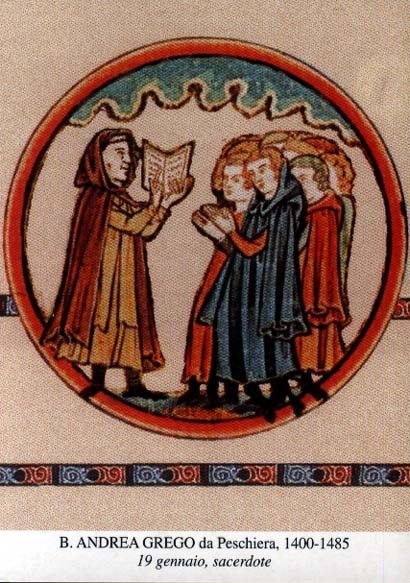
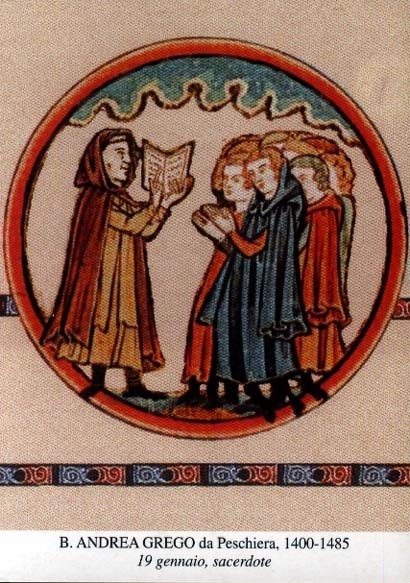
As a child, Andrew Grego lived on the southern shore of Lake Garda, in northern Italy. His training for a life of heroic sanctity began early, with voluntary penances and unquestioning obedience to his father. Andrew’s first desire was to be a hermit, an ambition that was met with ridicule from his brothers. Failing to realize this hope, he made for himself a severe schedule of prayer and penance, and, in his own house, lived the life of one wholly given to God.
After the death of his father, it became increasingly difficult to carry out his plan, so he resolved to enter the cloister. Although his brothers had persecuted him without mercy, he knelt and humbly begged their prayers and forgiveness for having annoyed them. Then he gave them the only possession he had, a walking-stick. This stick, thrown carelessly in a corner by the brothers, was forgotten until, long afterwards, it bloomed like the legendary rod of Saint Joseph in token of Andrew’s holiness.
The 15-year old received the Dominican habit at Brescia and then was sent to San Marco in Florence. This convent was then at its peak of glory, stamped with the saintly personalities of Saint Antoninus and the Blesseds of Lawrence of Riprafratta, Constantius, and Antony della Chiesa. Andrew’s soul caught the fire of their apostolic zeal, and set forth on his mission in the mountains of northern Italy.
Heresy and poverty had combined to draw almost this entire region from the Church. It was a country of great physical difficulties, and, in his travels in the Alps, he risked death from snowstorms and avalanches as often as from the daggers of the heretics. Nevertheless, he travelled tirelessly, preaching, teaching, and building–for his entire lifetime.
Churches, hospitals, schools, and orphanages were built under Andrew’s direction. He would retire from time to time to these convents for periods of prayer and spiritual refreshment, so that he could return with renewed courage and zeal to the difficult apostolate. He was known as “the Apostle of the Valtelline,” because of the district he evangelized.
Blessed Andrew performed many miracles. Probably his greatest miracle was his preaching, which produced such fruits in the face of great obstacles. At one time, when he was preaching to the people, the heretics presented him with a book in which they had written down their beliefs. He told them to open the book and see for themselves what their teachings amounted to. They did so, and a large viper emerged from the book.
Blessed Andrew closed a holy life by an equally holy death, and died in 1485. He was buried in Morbegno. He had labored so long among the poor and the neglected that his place in their hearts was secured. Because of the miracles worked at his tomb, and the persistent devotion of the people, his relics were twice transferred to more suitable tombs. He was beatified in 1820.
May the words of my mouth and the meditations of our hearts be always acceptable to you O Lord, our God and our Creator. Amen.
Before I begin my homily on today’s Gospel reading I’d like to take a little time to reflect on the lives of the Saints whose memorial we celebrate today. It’s impossible for us to know with any certainty how many have gone to dwell in the presence of God since Christ opened the path to do so through His atoning sacrifice. However, these saints of God both known and unknown play an important role in the life of Christians not only as intercessors but as examples of lives lived for Christ.
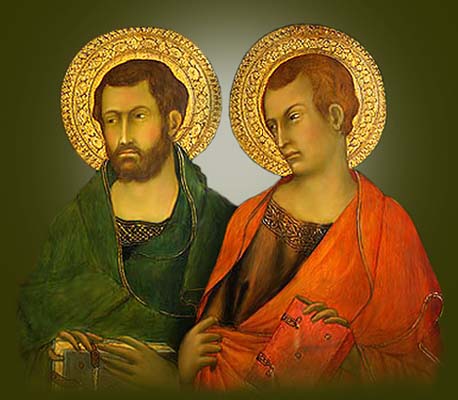
Two such saints, whose memory we keep today are Saints Timothy and Titus; some of you may have heard of these men but to many they will remain little known characters of the biblical narrative. Both Timothy and Titus were companions and co-workers with Saint Paul travelling with him on his journeys and faithfully ministering to the growing Christian community.
So what is it that these men preached on their journeys? Quite simply, like all the apostles, Paul and his companions preached salvation in Christ and it is this which the Gospel speaks of today albeit veiled in the allegory of parable.
The word parable is one that we often hear bandied around when we’re studying the scriptures but it’s one that we often don’t take the time to define to those who may not be familiar with the jargon of biblical analysis. In general terms a parable is a simple story told to illustrate a deeper, often spiritual meaning. The parable was a teaching method that Jesus used frequently. He was fond of taking images from the everyday life of those around him and using those images to convey the great mysteries of the Gospel.
I have heard it asked before why Jesus would choose to teach like this instead of simply “saying what He meant” and as it happens an answer to this is actually found within today’s Gospel. In the reading we find “With many such parables he spoke the word to them as they were able to understand it. Without parables he did not speak to them, but to his own disciples he explained everything in private.”
From this we learn that Jesus was using the parables as a means of keeping higher truths for those who were ready to hear them. We have to remember that Jesus preached in public where any could come and hear Him. By speaking in parables those without faith and no desire to learn would simply hear an interesting story being told whilst those with faith in their hearts would be able to digest that story and find hidden within it the gems of the Gospel. In private, with his closest followers though the Gospel’s author tells us that Jesus did speak and teach plainly.
So today we hear a story about farming; the occupants of Israel in the first century AD were typical of many cultures of the time; they were subsistence farmers and herders and so Jesus’ story of growing plants from seeds would have been easily understood and grasped. To us separated by distance and culture sometimes these stories feel far less familiar and their meaning can be hidden behind a thicker veil.
In this parable Jesus begins by making mention of the Kingdom of God; when we hear this term it’s easy to conjure up images of a throne and God sitting upon it ruling over the Earth. However often the meaning of this term is far more mystical and refers to the whole span of God’s interaction with his creation. For this reason Jesus using this term is a way to tell those of His listeners who are of faith that what follows will be about God’s plan for humanity or what is often termed the plan of salvation.
The parable that Jesus tells is of a man planting seed. The seed falling upon the ground seeming dies and lies inert until without notice new life springs forth. This story, though interesting if you’re into gardening does have a far deeper and significant meaning. In this case the man who is planting the seed is none other than Christ himself. What is it that Christ came to this earth to plant? He came to plant the seeds of the Gospel; He travelled, taught and preached so that Israel could hear the Gospel and carry it throughout the world. So in this parable Jesus tells us that the seed of the Gospel, though it may at times seem to fall on barren ground and be dead, will always spring forth new life when those of faith are attentive.
The seed laying in the ground seemingly dead has a double meaning; Jesus is the Word, the Gospel incarnate and we know that his ultimate faith was to die for our sins. In this parable He was reaching out to His followers and trying to prepare them for what lay ahead. That He would die and they would become disheartened thinking that the Gospel was dead but that in His death new life would rise.
It is through this great promise of a new life that we all find the hope of our salvation. We are all but seeds, we contain a divine potential to unite with God in total perfection, basking in His divine presence and worshipping Him in unending glory!
It is my constant prayer, that each and every one of us will live our lives in the hope of the resurrection and our ultimate salvation in Christ. May the abundant grace that God has given us flow out of us and may we always be prepared to share the great message of hope with all we come in contact with.
Let us pray:
Blessed Father, we thank you this day for the great gift that you have given us in the life, death and resurrection of Christ. May we all live worthy of this great promise and one day, when our mortal walk is over, return to you and dwell in your glory. May the example of Saints Timothy and Titus every be before us and guide us in our service; may we spread the Gospel as called and serve those people in our care in the spirit of these great saints. In the name of Christ, our Saviour. Amen.
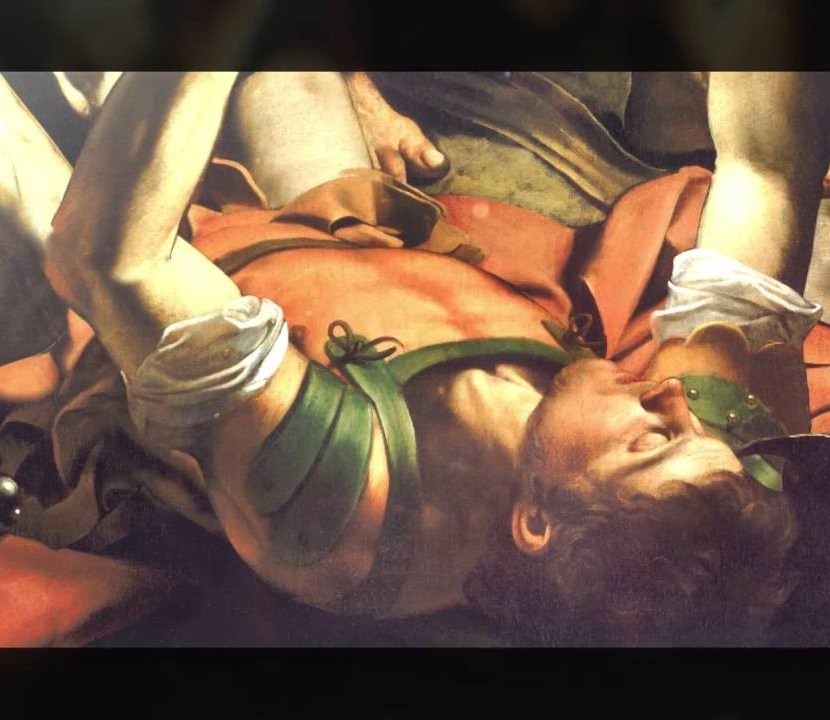
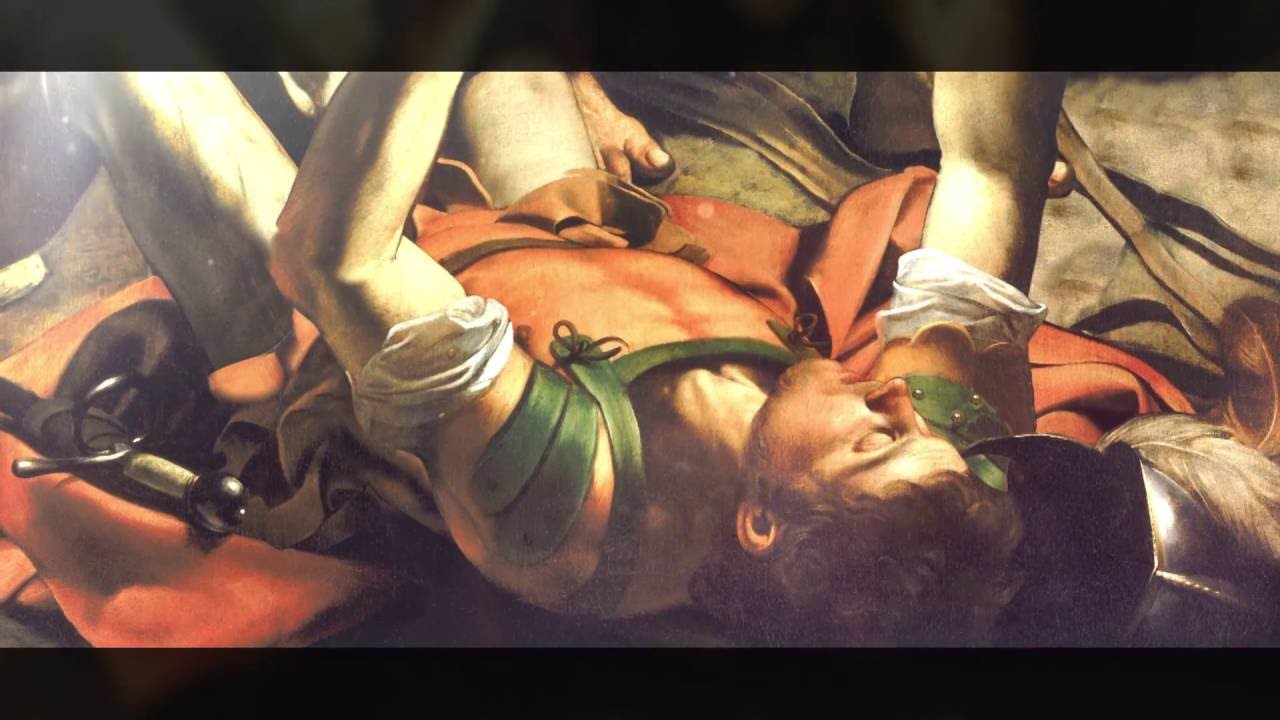
Today is the Feast of the Conversion of Saint Paul, or Saul as he was known in Hebrew. Who was he?
First, let me say that his name change had nothing to do with his conversion. Paul was the Roman version, and speculation is that as a Pharisee he was more drawn to the Romans than the Greeks and preferred the Roman “Paul”. In 1 Corinthians 9:19-23 he says he has “become all things to all people” and would probably be more accepted by the Gentiles with a Roman name. He was first referred to as Paul for the first time on the island of Cyprus. All that being said, he is variously cited as knowing Greek (the lingua franca of the region), Aramaic, and Hebrew, and perhaps Latin.
Second, Paul was a Pharisee. Sadducees, the other major social movement, favored Hellenization, or Greek influence. They also emphasized the importance of the Second Temple and its rites and services, and recognized only the Written Torah (with Greek philosophy) and rejected the Oral Torah, the Prophets, the Writings, and the resurrection of the dead. The Pharisees mostly believed the opposite of these stands.
But of most importance, Paul was educated. He was a scholar of the Torah, learned in the traditions of the Hebrews, and zealous in defending and protecting the Jewish laws and rites. Paul was such a strict adherent to Judaism in those days that he watched the martyrdom of Saint Stephen and approved of it. But Pharisees were not the “nobility” as such. Those were the Sadducees. So he was a “man of the people” but a sophisticated one. That education and erudition, as well as his “commoner” status, was probably why Jesus chose him to minister to the Gentiles.
Finally, he was a Roman Citizen through his father’s lineage. At that time, being a Roman Citizen was a high honor and carried with it protections and status. So he was free to travel throughout the Roman Empire and be accepted everywhere he went.
Then, in the twinkling of an eye, he is felled to the ground and rendered blind while Jesus remonstrates with him and orders him into a new calling.
The words in the two renditions of the story in Acts are matter-of-fact. We are left to put our own spin on the story, including the dust rising up from Paul’s body as he falls, the probable fright of Paul and his companions at the event and the bright light, the terror of Paul being blinded, and the complete confusion of Paul who won’t find out what’s going on until he gets to Ananias’ house.
As with many other miracles, we are given the opportunity to fill in the narrative with our own experiences. And isn’t the imagination more horrifying than anything we are told or that we read?
But how confusing or disturbing…or unsettling…to realize that even though twelve men have followed Jesus for three years, they were not prepared enough to spread the Gospel by themselves. For when it came to confronting the worldly citizens of the Roman Empire, a bunch of fishermen, tax collectors, and other poor Jews were probably no match for the trials to which Paul was ultimately put. Holy and fervent though they were, Jesus needed a person of a different sort to take on the Roman world and leave behind the theological basis for what had happened by the incarnation and ministry of Jesus Christ.
I have always thought of Paul as something of an insecure person. Having to say that he was “just as good” as the Super Apostles seems to me to be a bit much for someone so anointed to carry The Word. But then I think of myself. I’ve been told that to most people I’m seen as a strong, forceful, and competent person. It’s really when I’m in my room, talking to God, that I’m perfectly willing to admit that I’m as weak, frightened, and insecure as Paul was.
And then, wonder of wonders, I also remember Paul’s fears to which he admits in writing, and the “thorn in the flesh” to which he was subjected. Yes, he was truly a common, yet learned man. Yes, he was truly a force for Jesus as well as a scared, but brave, soldier of Christ. Yes, he was the perfect Apostle to speak to all of us for over 2,000 years.
Would that we could all be knocked down from our perches in such a fashion.
And so, I end with the refrain from one of my favorite hymns, and fervently hope that I will be heard:
Here I am, Lord. Is it I Lord?
I have heard you calling in the night.
I will go, Lord, if you lead me.
I will hold your people in my heart.
Lord, knock us down if you must, but through your eternal goodness, give us the courage and strength to carry on as Saint Paul did and bring your message to the world.
Born in at Forli, Italy in 1317, Marcolino Amanni entered the Dominicans at age 10. He occupies a place unique in Dominican annals because he was almost purely contemplative . There is outwardly little to record of Blessed Marcolino, except that for 70 years he kept the Dominican Rule in all its rigor. That is a claim to sanctity that can be made by very few, and is of itself enough to entitle him to canonization. He did accomplish the reform of several convents that had fallen from their primitive fervor, but this he did by his prayers and his example rather than by teaching or preaching.
It is said that Marcolino was most at home with the lay brothers, or with the neighborhood children who enjoyed talking to him. He seldom went out of his cell, and could not have engaged in any active works; neither did he leave any writings. His work was the unseen labor presided over by the Holy Spirit, the work of contemplation. “To give to others the fruits of contemplation,” is the Dominican motto and one might be curious to know how Blessed Marcolino accomplished this. In order to understand the need for just such a type of holiness, it is well to remember the state of the Church in the 14th century. Devastated by plague and schism, divided and held up to scorn, preyed upon by all manner of evils, the Church militant was in need, not only of brave and intelligent action, but also of prayer. Consistently through the centuries, God has raised up such saints as could best avert the disasters that threatened the world in their day, and Marcolino was one answer to the need for mystics who would plead ceaselessly for the Church.
The interior life of Marcolino was not recorded by himself or by others. He lived the mystical life with such intensity that he was nearly always in ecstasy and unconscious of the things around him. One of his brothers recorded that he seemed “a stranger on earth, concerned only with the things of heaven.” Most of his brethren thought him merely sleepy and inattentive, but actually he was, for long periods, lost in converse with God. Some had heard him talking earnestly to the statue of Our Lady in his cell; some fortunate few had heard Our Lady replying to his questions, with the same simplicity.
At the death of Marcolino, on 2 January, 1397, a beautiful child appeared in the streets, crying out the news to the little town that the saintly friar was dead. As the child disappeared when the message was delivered, he was thought to have been an angel. Many miracles were worked at the tomb of Marcolino. One was the miraculous cure of a woman who had been bedridden for 30 years. Hearing of the death of the blessed, she begged him to cure her so that she could visit his tomb.
He was confirmed as a saint in 1750 by Pope Benedict XIV.
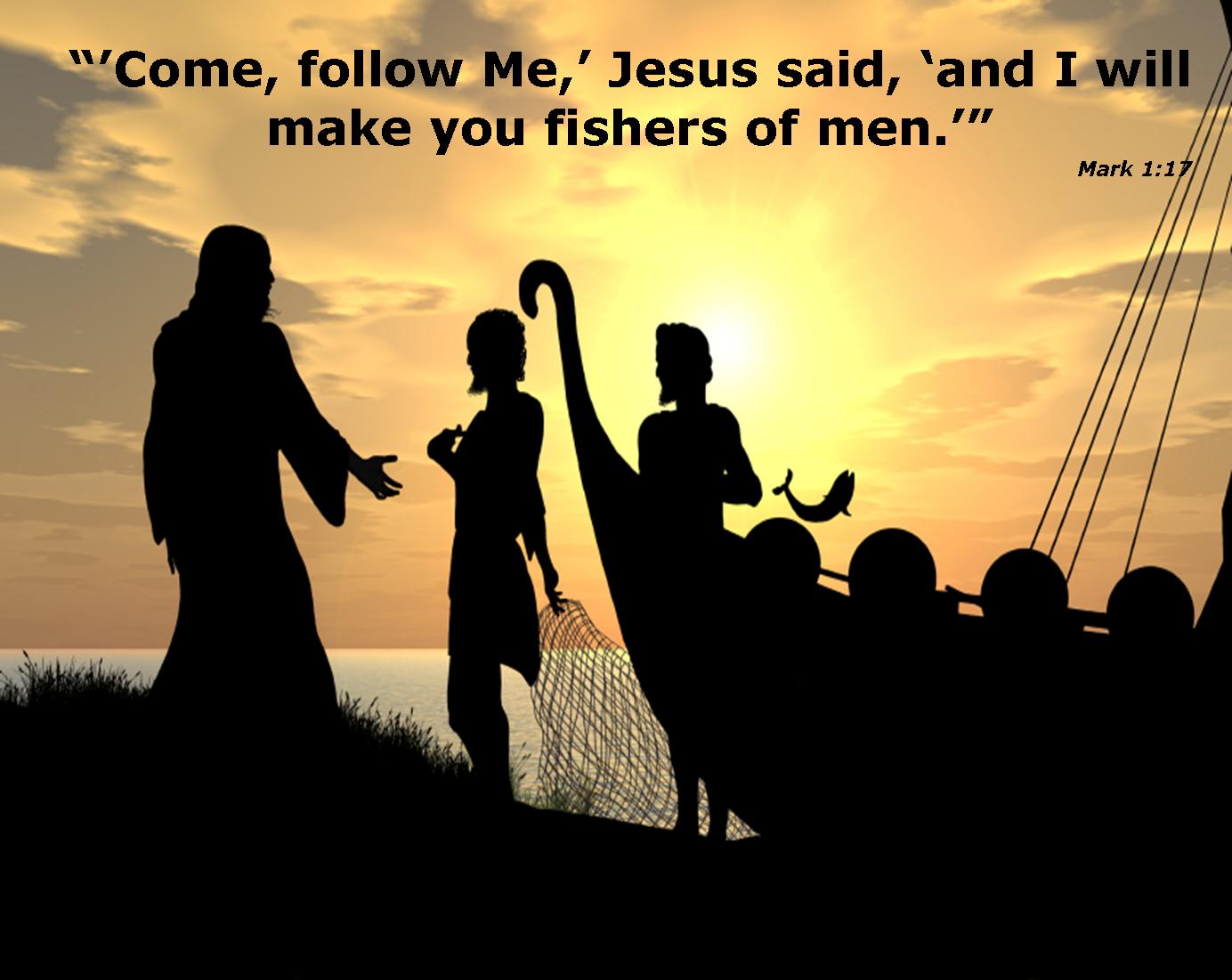
As I watched my old house being torn down a few years ago, so many memories came rushing in. The joy of bringing my first little girl home from the hospital, on a heart monitor because she had Gastro-esophageal reflux, which caused her to turn blue from losing her breath quite often. Or bringing her younger sister home a few short years later, and watching this very precocious girl, try to not only keep up with her older sister, but her older cousins, all of whom seemed to think our home was the fun place to be. Then so many years later, bringing home my granddaughter, and watching her take her first steps, being so afraid she would slip and fall on our hardwood floors. There are so many memories in this one house, that some would wonder why we (my family and I), would readily abandon it and seek somewhere else to live, to create new memories. But in Mark 1:14-20, this is exactly what Jesus is asking four young men to do, leave what they know, where they are comfortable, and have known all their lives, to follow Him and become something more.
“Now after John was arrested, Jesus came to Galilee, proclaiming the good news of God, and saying, “The time is fulfilled, and the kingdom of God has come near; repent, and believe in the good news.” As Jesus passed along the Sea of Galilee, he saw Simon and his brother Andrew casting a net into the sea–for they were fishermen. And Jesus said to them, “Follow me and I will make you fish for people.” And immediately they left their nets and followed him. As He went a little farther, He saw James son of Zebedee and his brother John, who were in their boat mending the nets. Immediately He called them; and they left their father Zebedee in the boat with the hired men, and followed him.”
As Jesus walked by the Sea of Galilee, He saw Simon, Andrew, James, and John. And called to them. There were no questions, no goodbyes. They just simply dropped their nets, and left to follow Jesus. Now if it were me, and I suspect most of you, I would be filled with questions. Like, “Where are we going? What will we do? How long will we be gone? What do I need to take? Where will we stay?” But this conversation doesn’t take place in today’s gospel. Jesus does not offer a map, an itinerary, or a destination, only an invitation. This is not the type of journey you can prepare for. It’s not about planning and organizing, making lists, or packing supplies. It’s just not that easy. If anything this journey is about leaving things behind……to leave behind our nets, our boats, and all that seems familiar. In Psalm 62:5-8 we are encouraged to put our trust and hope in God for this journey.
“For God alone my soul waits in silence, for my hope is from him. He alone is my rock and my salvation, my fortress; I shall not be shaken. On God rests my deliverance and my honor; my mighty rock, my refuge is in God. Trust in him at all times, O people; pour out your heart before him; God is a refuge for us. Selah.”
So Simon and Andrew were casting a net into the sea for they were fishermen. Day after day it was the same thing; the same sea, the same net, the same boat. Day after day it was wind, water, fish, sore muscles, and tired bodies. They probably grew up watching their dad and granddad fishing, watching their future life, and how they too would spend their time. Cast the net, and pull it in. If you are not casting the net, then you probably sat in the boat mending the net. That’s what James and John were doing. Casting and mending, always……casting and mending. You know about those days, right? How many of us go through our days on autopilot, feeling as if we are stuck in some time loop?
We may not fish for a living but we certainly know about casting and mending. Days that all seem the same, spent doing the same things every day to make a living, to feed our family, to pay the bills, to gain security and get to retirement, to hold our family together, make our marriage work, and to grow up our children. Casting and mending to gain the things we want; a house, a car, books, clothes, a vacation. Casting and mending to earn a reputation, gain approval, establish status. And to make our way through another day of loneliness, sadness, or illness. Casting and mending are realities of life. They are also the circumstances in which Jesus comes to us, the way in which we hear the call to new life, and the place where we are changed and the ordinary becomes the extraordinary.
Those future disciples of Jesus, Simon and Andrew, James and John, are not looking for Him. They are too busy with the nets. It is another day of casting and mending. They may not have even noticed Jesus but He not only sees them; He speaks to them. Jesus has a way of showing up in the ordinary places of life and interrupting our daily routines of casting and mending nets. That’s exactly what He did in the lives of these four gentleman. And that’s what He can do for your life and mine. “Follow me” is Jesus’ invitation to a new life. If these four fishermen accept the invitation, their lives will forever be different. They will be different. They will no longer catch just fish. They will “fish for people”. When Jesus says this, He is describing the transformation of their lives, not simply a job catching new members or followers. Whatever your life is, however you spend your time, there is in that life Jesus’ call to “Follow me.”
That’s the hard part for most of us. We’re pretty good at accumulating and clinging but not so good at letting go. More often than not our spiritual growth involves some kind of letting go. We never get anywhere new as long as we’re unwilling to leave where we are. We accept Jesus’ invitation to follow, not by packing up, but by letting go. “Follow me” is both the invitation to and the promise of new life. So what are the nets that entangle us? What are the little boats (or old houses) that contain our life? Who are the people from whom we seek identity, value, and approval? What do we need to let go of and leave behind, so that we might follow Him? Please don’t think this is simply about changing careers, disowning our family, or moving to a new town. It is about the freedom to be fully ourselves, and in so being, discover God’s plan for us. We need to let go so that our life may be changed, so that we can now travel in a new direction, so that we may be open to receive the beauty of God’s promises. When we let go, everything is transformed. That’s why Jesus could tell these four gentlemen they would still be fishermen. But now they would fish for people. They wouldn’t become something they weren’t already, but they would be changed. They would more authentically be who they already are – Fishers of men!
Margaret, the daughter of King Bela IV, and Queen Mary Lascaris of Hungary, was offered to God before her birth, in petition that the country would be delivered from the terrible scourge of the Tartars. The prayer having been answered in 1242, the king and queen made good their promise by placing the rich and beautiful three-year-old in the Dominican convent at Vesprim. Here, in company with other children of nobility, she was trained in the arts thought fitting for royalty.
Margaret was not content with simply living in the house of God; she demanded the religious habit–and received it–at the age of four. Furthermore, she took upon herself the austerities practiced by the other sisters–fasting, hairshirts, the discipline (scourge), and night vigils. She soon learned the Divine Office by heart and chanted it happily to herself as she went about her play. She chose the least attractive duties of the nuns for herself. She would starve herself to keep her spirit humble. No one but Margaret seemed to take seriously the idea that she would one day make profession and remain as a sister, for it would be of great advantage to her father if she were to make a wise marriage.
This question arose seriously when Margaret was 12. She responded in surprise. She said that she had been dedicated to God, even before her birth, and that she intended to remain faithful to that promise. Some years later her father built for her a convent on the island in the Danube between Buda and Pest. To settle the matter of her vocation, here she pronounced her vows to the master general of the order, Blessed Humbert of the Romans, in 1255, and took the veil in 1261.
Again, when Margaret was 18, her father made an attempt to sway her from her purpose, because King Ottokar of Bohemia, hearing of her beauty, had come seeking her hand. He even obtained a dispensation from the pope and approached Margaret with the permission. Margaret replied as she had previously, “I esteem infinitely more the King of Heaven and the inconceivable happiness of possessing Jesus Christ than the crown offered me by the King of Bohemia.” Having established that she was not interested in any throne but a heavenly one, she proceeded with great joy to live an even more fervent religious life than she had before.
Margaret’s royal parentage was, of course, a matter of discussion in the convent. But the princess managed to turn such conversation away from herself to the holy lives of the saints who were related to her by blood–King Saint Stephen, Saint Hedwig, Saint Elizabeth of Hungary, and several others. She did not glory in her wealth or parentage, but strove to imitate the saints in their holiness. She took her turn in the kitchen and laundry, seeking by choice much heavy work that her rank might have excused her from doing. She was especially welcome in the infirmary, which proves that she was not a sad-faced saint, and she made it her special duty to care for those who were too disagreeable for anyone else to tend.
Margaret’s austerities seem excessive to us of a weaker age. The mysteries of the Passion were very real to her and gave reason for her long fasts, severe scourgings, and other mortifications detailed in the depositions of witnesses taken seven years after her death (of which records are still in existence). Throughout Lent she scarcely ate or slept. She not only imitated the poverty- stricken in their manual labor and hunger, but also in their lack of cleanliness–a form of penance at that time. Some of her acts of self-immolation have been described as “horrifying” and verging on fanaticism, and there seems to have been an element of willfulness in her mortifications.
She had a tender devotion to Our Lady, and on the eve of her feasts, Margaret said a thousand Hail Marys. Unable to make the long pilgrimage to the Holy Land, to Rome, or to any of the other famous shrines of Christendom, the saint developed a plan by which she could go in spirit: she counted the miles that lay between herself and the desired shrine, and then said an Ave Maria for every mile there and back. On Good Friday she was so overcome at the thoughts of Our Lord’s Passion that she wept all day. She was frequently in ecstasy, and very embarrassed if anyone found her so and remarked on her holiness.
A number of miracles were performed during Margaret’s lifetime and many more after her death because Margaret had an implicit faith in the power and efficacy of prayer. The princess nun was only 28 when she died. Most of the particulars of her life are recorded in existing depositions of witnesses taken in 1277. Her friends and acquaintances petitioned for her to be acclaimed a saint almost immediately after her death. Among them was her own servant, Agnes, who rightly observed that this daughter of a monarch showed far more humility than any of the monastery’s maids. Although their testimony expressed Margaret’s overpowering desire to allow nothing to stand between her and God, the process of canonization was not complete until 1943. The island where her convent stood, called first the “Blessed Virgin’s Isle,” was called “Isle of Margaret” after the saint. She died 18 January 1271 at Budapest, Hungary. Her remains were given to the Poor Clares at Pozsony when the Dominican Order was dissolved, and most of her relics were destroyed in 1789, but portions are still preserved at Gran, Gyor, Pannonhalma.
She was beatified on 28 July 1789 by Pope Pius XII.
Born in 1187 at Vizella, in the diocese of Braga, Portugal, Gonsalvo de Amarante was a true son of the Middle Ages. In his boyhood Gonsalvo Pereira gave indications of his holiness. While still small, he was consecrated to study for the Church, and received his training in the household of the archbishop of Braga. After his ordination he was given charge of a wealthy parish.
There was no complaint with Gonsalvo’s governance of the parish of Saint Pelagius. He was penitential himself, but indulgent with everyone else. Revenues that he might have used for himself were used for the poor and the sick. The parish, in fact, was doing very well when he turned it over to his nephew, whom he had carefully trained as a priest, before making a pilgrimage to the Holy Land.
Gonsalvo would have remained his entire life in the Holy Land, but after 14 years his archbishop commanded him to return to Portugal. Upon his arrival, he was horrified to see that his nephew had not been the good shepherd that he had promised to be, the money left for the poor had gone to purchase a fine stable of thoroughbred horses and a pack of fine hounds. The nephew had told everyone that his old uncle was dead, and he had been appointed pastor in his place by an unsuspecting archbishop. When the uncle appeared on the scene, ragged and old, but very much alive, the nephew was not happy to see him. Gonsalvo seems to have been surprised as well as pained.
The ungrateful nephew settled the matter by turning the dogs on his inconvenient uncle. They would have torn him to pieces, but the servants called them off and allowed the ragged pilgrim to escape. Gonsalvo decided then that he had withstood enough parish life, and went out into the hills to a place called Amarante. Here he found a cave and other necessities for an eremitical life and lived in peace for several years, spending his time building a little chapel to the Blessed Virgin. He preached to those who came to him, and soon there was a steady stream of pilgrims seeking out his retreat.
Happy as he was, Golsalvo felt that this was not his sole mission in life, and he prayed for help to discern his real vocation. It is said that the Virgin Mary appeared to him one night as he prayed and told him to enter the order that had the custom of beginning the office with “Ave Maria gratia plena.” She told him that this order was very dear to her and under her special protection. Gonsalvo set out to learn what order she meant, and eventually came to the convent of the Dominicans. Here was the end of the quest, and he asked for the habit.
Blessed Peter Gonzales was the prior, and he gave the habit to the new aspirant. After Gonsalvo had gone through his novitiate, he was sent back to Amarante, with a companion, to begin a regular house of the order. The people of the neighborhood quickly spread the news that the hermit was back. They flocked to hear him preach, and begged him to heal their sick.
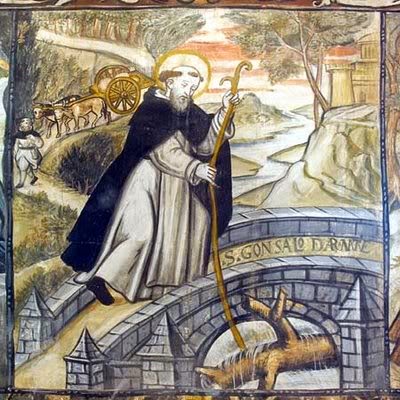
One of the miracles of Blessed Gonsalvo concerns the building of a bridge across a swift river that barred many people from reaching the hermitage in wintertime. It was not a good place to build a bridge, but Gonsalvo set about it and followed the heavenly directions he had received. Once, during the building of the bridge, he went out collecting, and a man who wanted to brush him off painlessly sent him away with a note for his wife.
Gonsalvo took the note to the man’s wife, and she laughed when she read it. “Give him as much gold as will balance with the note I send you,” said the message. Gonsalvo told her he thought she ought to obey her husband, so she got out the scales and put the paper in one balance. Then she put a tiny coin in the other balance, and another, and another–the paper still outweighed her gold–and she kept adding. There was a sizeable pile of coins before the balance with the paper in it swung upwards.
Gonsalvo died 10 January 1259, after prophesying the day of his death and promising his friends that he would still be able to help them after death. Pilgrimages began soon, and a series of miracles indicated that something should be done about his beatification. Forty years after his death he appeared to several people who were apprehensively watching a flood on the river. The water had arisen to a dangerous level, just below the bridge, when they saw a tree floating towards the bridge, and Gonsalvo was balancing capably on its rolling balk. The friar carefully guided the tree under the bridge, preserving the bridge from damage, and then disappeared. He was beatified by Pius IV in 1560.
The 17th century was a period of great missionary activity. Many martyrs shed their blood on distant shores. Dominicans and Jesuits contributed a great share to the blood of martyrs. Among this glorious company, the Dominican Francis de Capillas has become the type and exemplar of them.
Francis was born in 1608 in Old Castile, Spain. Nothing is known of his childhood. He entered the Dominicans at Valladolid at age 17. The Spain of his youth was still ringing with the missionary zeal of Saints Louis Bertrand, Philip de las Casas, and Francis Xavier; the report of the martyrdom of Alphonsus Navarette (June 1), in Japan, was news at the time. Perhaps the bravery of these men helped to fire the young Francis with apostolic longing, for he volunteered for the Philippine mission while he was a deacon. In 1631 at the age of 23, he left Spain and was ordained in Manila. Here, at the gateway to the Orient, the Dominicans had founded a university in 1611, and the city teemed with missionaries traveling throughout the Orient.
The young priest labored for 10 years in the province of Cagayan, the Philippines, where heat, insects, disease, and paganism made life very hard. But it was not hard enough for Francis. He begged for a mission field that was really difficult; perhaps, like many of the eager young apostles of that time, he was hoping for an assignment in Japan, where the great persecution was raging. He was sent to Fukien, China, where he worked uneventfully for some years. Then a Tartar invasion put his life in jeopardy. He was captured by a band of Tartars and imprisoned as a spy.
Francis was subjected to a mock trial. Civil, military, and religious officials questioned him, and they accused him of everything from political intrigue to witchcraft. He was charged with disregarding ancestor worship, and, finally, since they could “find no cause in him,” he was turned over to the torturers.
He endured the cruel treatment of these men with great courage. Seeing his calmness, the magistrates became curious about his doctrines. They offered him wealth, power, and freedom, if he would renounce his faith, but he amazed and annoyed them by choosing to suffer instead. They varied the tortures with imprisonment, and he profitably used the time to convert his jailor and fellow prisoners. Even the mandarin visited him in prison, asking Francis if he would renounce his faith or would he prefer to suffer more. Being told that he was glad to suffer for Christ, the mandarin furiously ordered that he be scourged again “so he would have even more to be glad about.”
Francis was finally condemned, and was beheaded on 15 January 1640. He was beatified on 2 May 1919 by Pope Pius X.








 The Order of Preachers, Independent
You must be logged in to post a comment.