Today, we find ourselves drawn into one of the most profound and moving stories our Lord ever told: the Parable of the Prodigal Son. It is a tale that, though ancient, resonates with the deepest currents of our human experience. We begin by noting that Jesus was being criticized for eating with tax collectors and sinners. The Pharisees and scribes grumbled, and Jesus responded with the parable. This setting is important. It shows us that Jesus’s heart is always oriented toward the lost.
“Now all the tax collectors and sinners were coming near to listen to him. And the Pharisees and the scribes were grumbling and saying, ‘This fellow welcomes sinners and eats with them.’” (Luke 15:1-2)
Think about that. Who do we grumble about? Who do we exclude? Who do we judge? Jesus shows us, we must welcome all.
Then we hear the story, a story of two sons, and a father. It is a story of rebellion, repentance, and above all, boundless, unconditional love.
The younger son, restless and foolish, demands his inheritance, as if to say, “Father, I wish you were already gone.” He takes his share and squanders it in a distant land, sinking into the depths of despair. He finds himself in a pigsty, a place of utter degradation.
But then, a glimmer of hope: “When he came to himself.” (Luke 15:17)
This is the moment of grace, the moment of recognition. He realizes the folly of his ways, and he turns his heart towards home. He prepares his plea, a plea of unworthiness, yet a plea, nonetheless.
And what does he find? A father, who has been watching, waiting, longing. A father who, upon seeing his son in the distance, runs to him, embraces him, and kisses him. The father does not wait for the son’s rehearsed speech; he interrupts it with the overwhelming outpouring of his love.
The father clothes him, restores his dignity, and throws a feast, a celebration of homecoming. This is not a reward for good behavior; it is a testament to the father’s immeasurable grace.
Then we have the older son, who stands outside, resentful and bitter. He represents those of us who, in our self-righteousness, forget the depth of our own need for mercy. He complains about justice, but he misses the point of love.
The father goes out to him as well, pleading, “Son, you are always with me, and all that is mine is yours. But we had to celebrate and rejoice, because this brother of yours was dead and has come to life; he was lost and has been found.” (Luke 15:31-32)
Folks, this parable is not just a story; it is a mirror. In which son do we see ourselves? Are we the prodigal, lost and found? Or are we the elder brother, consumed by resentment?
The Father in this story is God. God’s love is not something that is earned, it is freely given. Like the father in the story, God waits for us, longs for us, and runs to embrace us when we return.
As Dominicans, we are called to preach this message of mercy, this Gospel of grace. We are called to be instruments of reconciliation, to bring the lost back to the Father’s embrace. Let us, therefore, open our hearts to the boundless love of God, and let us extend that same love to all those who are lost and searching. Amen.
Today, on this third Sunday of Lent, we stand at a pivotal point in our Lenten journey. We have already walked through the wilderness of temptation, and we are now faced with the stark reality of God’s unwavering call to repentance. Our readings today, particularly the Gospel of Luke, illuminate the urgent need for conversion and the consequences of ignoring God’s persistent invitation to change.
In the Gospel, Jesus speaks of two tragic events: the Galileans whose blood Pilate mingled with their sacrifices, and the eighteen people upon whom the tower in Siloam fell. These events, though seemingly random, serve as a powerful reminder of our mortality and the unpredictable nature of life. Jesus’ response to these tragedies is not to offer philosophical explanations for suffering, but rather to issue a direct and uncompromising challenge: “Unless you repent, you will all perish as they did.”
This is not a threat, but a loving warning. It is a call to recognize that our lives are fragile, and that time is precious. Jesus is urging us to examine our hearts, to acknowledge our sins, and to turn away from the paths that lead us away from God. He uses these shocking examples to penetrate our complacency and shake us from our spiritual slumber.
The parable of the fig tree further emphasizes this theme. The owner of the vineyard, frustrated by the barren fig tree, orders it to be cut down. But the gardener, standing for Jesus, pleads for mercy and offers a chance for renewal. He promises to cultivate the soil, to fertilize the tree, and to give it one more year to bear fruit.
This parable is a powerful image of God’s patience and mercy. He does not wish the death of the sinner, but rather that we turn to Him and live. He gives us time, he gives us opportunities, he gives us grace. But this time is not infinite. We must respond to his love and cultivate the soil of our hearts, removing the weeds of sin and allowing the seeds of faith to flourish.
What does it mean to repent? It is not simply about feeling sorry for our sins. It is about a fundamental change of heart, a turning away from sin and a turning towards God. It is about acknowledging our need for his forgiveness and embracing his grace.
First, it means acknowledging our sins. We must be honest with ourselves and with God about the ways in which we have fallen short. We must examine our consciences and find the areas of our lives where we need to change.
Second, it means turning away from sin. This requires a conscious effort to avoid the temptations that lead us astray. It means making choices that are consistent with our faith and our commitment to Christ.
Third, it means turning towards God. This involves seeking his forgiveness through the sacrament of reconciliation, praying for his guidance, and striving to live a life that is pleasing to him.
Lent is a time of grace, a time of renewal. It is a time to cultivate the soil of our hearts, to remove the obstacles that prevent us from bearing fruit for God. Let us heed Jesus’ call to repentance and embrace the opportunity to turn to him with renewed faith and love.
Let us ask ourselves:
Are we listening to God’s call to repentance?
Are we taking advantage of the time he has given us?
Are we using the sacraments, prayer, and fasting to grow closer to God?
May this Lent be a time of true conversion for each of us, a time when we allow God to transform our hearts and make us fruitful branches in his vineyard. Amen.
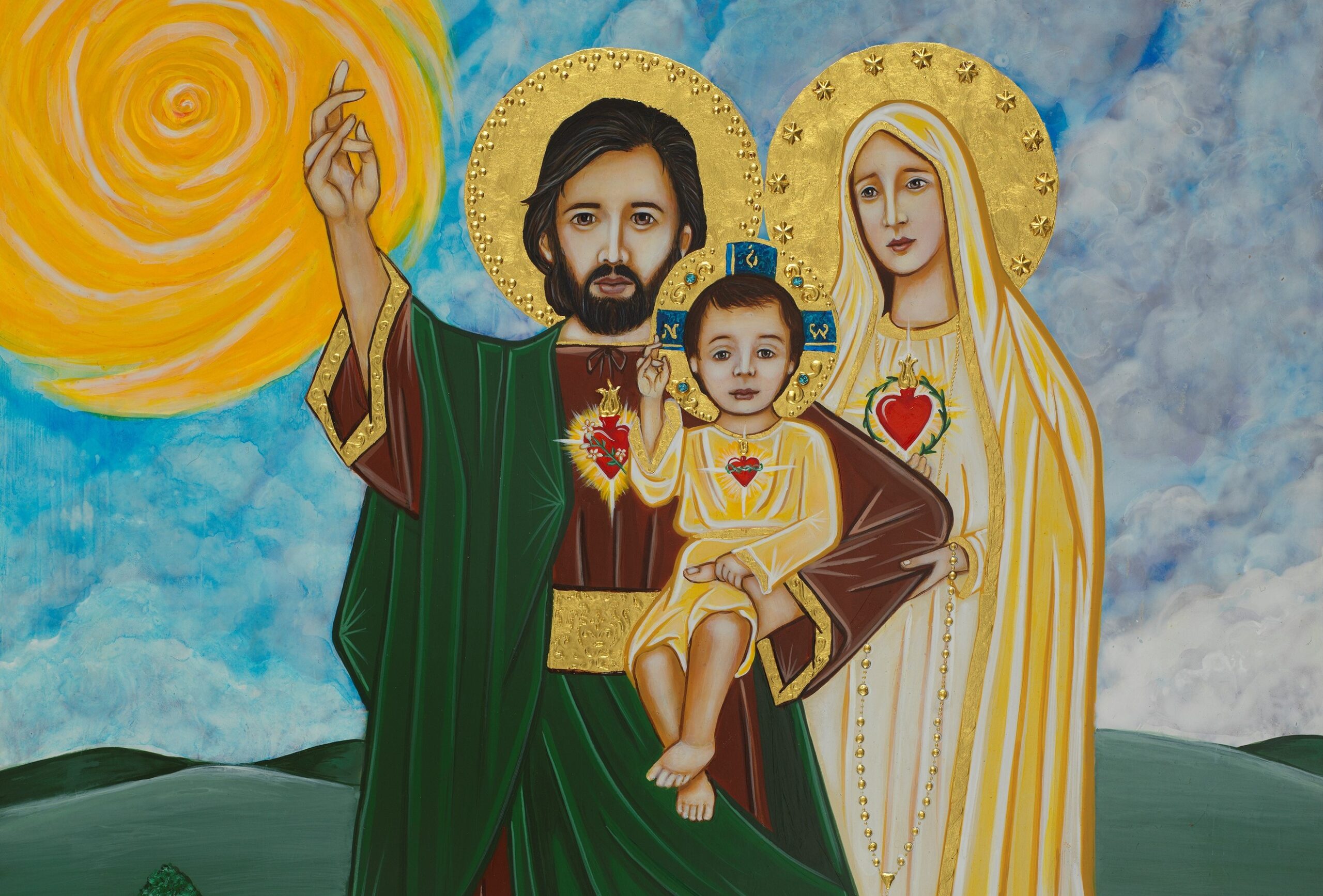
Today, we come together as the Church to commemorate St. Joseph, the Spouse of The Blessed Virgin Mary, and the foster Father of our Lord and Saviour,Jesus, when he became one of us here upon the Earth.
In the same way in which God, our Heavenly Father, who gives each of us as his children, unconditional love, care, stability and who sets us the standard with which we should strive to live our lives with his holy word in the scriptures, a true Father to each and every single one of us, who only ever wants the very best for all his children. St. Joseph follows our Father’s example, as both husband and foster father. He gives us examples which men should follow in their lives. Joseph cared for and provided for the Holy Household. There are many qualities that Joseph had which we could use to be the role model for Christian husbands and fathers. Joseph was a very compassionate man. We can see an example of this when he suspected his wife of infidelity; he planned to divorce her quietly rather than denounce her publicly and expose her to public shame and penalty.
Joseph was always obedient to God and did what he knew was God’s will without thought or hesitation. Examples of this are that he kept Mary as his wife; he protected and provided for his family when they had to flee to foreign lands to protect them from danger.
Joseph led a life of deep prayer and was in communion with God, and would always seek out that which was God’s will. God often told Joseph his will using dreams.
Joseph was a provider of care, When Jesus’s life was threatened, Joseph would take them out of danger. He took his family to Egypt and only returned when it was safe to do so, and when Jesus went missing at aged twelve, Joseph went searching for him because obviously, both parents were obviously extremely worried about Jesus’s safety.
Joseph also brought much more to Jesus’s life, he taught him his trade which Jesus worked in for about twenty years, he gave Jesus the love and stability he as any child needs, and was his earthly male role model, which was and still is vitally important for a good father to give any child.
He was a man with a firm faith in God coupled with a resilient personality, who did not complain and was not appalled nor distressed in the midst of trials and tribulations, St. Joseph knew how to face, carry and solve the burden of his vocation, of life’s difficulties and responsibilities with serenity, with complete faith and love, entrusting himself totally and unconditionally to God’s plans.
Sadly not all children are brought up in such a way today, but husbands and fathers truly should seek to follow this sincere man of God in the way they run their lives. Are you married? Do you give all the love, trust and respect to your spouse? Or with stresses and strains do you always argue or not truly make time for each other? If you have children, do you know where they are and if they are safe, or who they might be talking to online? Do you give emotional stability, patience and unconditional love? Do your children see you as the role model they need in a Father? We should always strive to be as our heavenly Father is to each of us, whether that be to our spouses, to our children, and in fact to all as our brothers and sisters.
While the Gospels do not shed much light on St. Joseph’s life, it is believed that he died before Jesus’ public ministry.
St. Joseph is the patron of fathers, spouses, priests and seminarians. But also, St. Joseph teaches us so much by his silent example of his life, and just how we should love God faithfully and obediently.
Let us pray:
Blessed St. Joseph, Spouse of The Blessed Virgin Mary,
“When Joseph awoke from sleep, he did as the angel of the Lord commanded.”
Today, we celebrate the Solemnity of Saint Joseph, the husband of Mary and the legal father of Jesus. As we reflect on the Gospel of Matthew, specifically Matthew 1:16, 18-21, 24a, we delve into the life of this remarkable yet humble man, whose quiet strength and unwavering faith played a pivotal role in the story of Jesus and of our salvation.
In Matthew 1:16, we reach the culmination of Jesus’ genealogy, where Joseph is established as a descendant of the house of David, fulfilling the old prophecies and underscoring Jesus’ rightful place as the Savior of Israel. It is here in Matthew where Joseph is named as the husband of Marcy, of who Jesus was born and is called the Messiah or Christ.
The birth of Jesus, as narrated in Matthew’s Gospel, is uniquely told through the eyes of Joseph. Here we come to find that Joseph is a righteous man. He is faced with a dilemma. He is engaged to Mary and discovers she is with child, not by him, but by the Holy Spirit. This is a society where such news could lead to public disgrace at best or even death for Mary. We find Joseph has a heart of compassion when he resolves to dismiss her quietly, again representing his deep care and righteousness.
The story in Matthew continues when God reveals a different plan to Joseph. Joseph thinks he has this figured out, but God intervenes. God sends an angel to appear to him in a dream and reveal the true and divine nature of Mary’s pregnancy. The angel instructs Joseph not to fear taking Mary as his wife, for the child she carries is conceived by the Holy Spirit. The angel tells him to name the child Jesus.
Joseph’s response to this divine message is immediate and faithful. Upon waking, he does as the angel commands, embracing his role in God’s plan with humility and obedience. Here, we witness faith in action—a testament to Joseph’s character and his willingness to trust in God’s will, even when it defies human understanding.
Saint Joseph’s story is a celebration of humble service and strength. Despite being an ordinary man—a carpenter promised to Mary—God chose him for an extraordinary purpose. Joseph’s life exemplifies how God often selects the ordinary to achieve the extraordinary. His example of humility, obedience, and unwavering faith serves as a model for us all.
As the patron saint of carpenters, the dying, and workers, Joseph’s legacy extends beyond his earthly life. With God’s grace, he responded to his call, reminding us that, like him, we too can respond to God’s direction with grace and faith, even when faced with difficult tasks.
In his apostolic letter on the 150th anniversary of the proclamation of St. Joseph as the patron of the universal Church, Pope Francis describes Joseph as a beloved, tender, and loving father—a creatively courageous father who worked in the shadows. This description encapsulates the essence of Joseph’s role in the life of Jesus and the Church.
Let us pray for St. Joseph’s intercession, asking him to watch over us and grant us the courage and strength to follow God’s will, just as he did. May we find inspiration in his example, allowing his humility and obedience to guide us in our own journeys of faith.
St. Joseph, watch over us today and every day. Amen.
Second Sunday of Lent is already upon us. Do you know where the word Lent comes from? In the old English world, the word “Lenten” meant “springtime”. And I think it is safe to say that, here in San Antonio, we are ready for some springtime! In Latin, Lent, however, means something altogether different. The word for this season is Quadragesima, denotes a season of preparation by fasting and prayer, to imitate the forty day example of Christ. A little historical fact, Lent used to begin on the first Sunday of Lent, also called Quadragesima Sunday after the Gospel reading for that weekend of Jesus fasting in the desert for forty days and ended as the Triduum began the evening of Holy Thursday. When we count the days from the first Sunday of Lent to Holy Thursday, it adds up to forty, including the Sundays. Over time, however, there was a discussion that the Sundays during Lent should not be fast days. When asked about fasting on the Sundays during Lent, tradition says, Solemnities, even during the Season of Lent, ought to still be seen as a feast days. Sundays are considered Solemnities after all, are the Lord’s Day, and a day of rest. Beginning the count for Lent on the first Sunday of Lent, and Sundays are not followed as days for fasting, this would equal fewer than forty days of fasting before Easter. In order to make the forty days as Jesus did, they allowed the Sundays to be removed as days of fast and we now start Lenten fasting on Ash Wednesday and when you do the Catholic math it remains the traditional forty days.
I mention this little bit of history since the second Sunday of Lent is also a good time to check in with ourselves on how we are doing with our Lenten promises. Did we eat the Filet-O-Fish instead of the Big Mac on Friday? Inquiring minds want to know. And how are we doing with what we gave up for Lent for that matter? Was it chocolate, alcohol, whatever? You see, as lightweight as our Lenten practices seem to be nowadays, I think it is helpful to consider what Quadragesima would have been like if you lived in medieval times. St. Thomas Aquinas proposed that no food would be allowed at all on Ash Wednesday and Good Friday. On the other days of Lent, food would only be allowed after 3 PM (the hour of our Lord’s death on the cross). And, no animal flesh was allowed at all, neither were eggs or dairy, and Sundays were not free days from the fast either. St. Thomas Aquinas believed in the most extreme fasting during Lent. I think for the people living in medieval times, the severity of this kind of fasting was meant to be life changing, life altering, helping Christians to embrace the seriousness of their baptismal identity as a People of God. Lent was supposed to be understood as a time for transformation. Someone who saw that kind of fast would certainly undergo a makeover by Easter Sunday, as well as their waist to say the least. I am not suggesting that we bring back that kind of Lenten fasting. Nevertheless, obviously though we see the season of Lent, the most important is the love we put into it in the first place.
If you think that fasting in medieval times was serious business, check out how covenants were made in the time of Abraham in our first reading from Genesis. Covenants were meant to be truly life-changing events as well. The Lord promises Abraham that his descendants would be like the number of stars in the heaven and offers the land before him as his possession.
Abraham wants to seal this deal and so God asks him to bring a three-year-old heifer, a three year-old she-goat, a three-year-old ram, a turtledove, and a young pigeon. Genesis says, “Abram brought him all these, split them in two, and placed each half opposite the other”. You see, that’s how the deals were done in those days, you would meet among the split animals to make the agreement which was a way of indicating, if I break my word may what happened to these animals happen to me. These kinds of covenants in those days were meant to be life altering events that helped move a person or tribe from one reality to a new reality based upon the agreement being made. These covenants were meant to be truly transformative. As we know, the Chosen People in the Old Testament broke one covenant after the other with God, which makes Jesus’ choice to die on the cross in atonement for our sins all the more remarkable.
All of these observations are meant to help us understand our Gospel reading from St. Luke about the transfiguration of Jesus. Here we are on Mount Tabor, Jesus is transfigured before Peter, John and James, foreshadowing the glory of the resurrection. Jesus is also seen conversing with Moses and Elijah, signifying to the disciples that Jesus is the fulfillment of both the Law and the Prophets. However, there’s something really unique about St. Luke’s version of the transfiguration. You see, in Luke’s Gospel it says, “And behold, two men were conversing with [Jesus], Moses and Elijah, who appeared in glory and spoke of his exodus that he was going to conduct in Jerusalem.” The reference to exodus here is unique to St. Luke’s Gospel and is meant to help us connect the exodus of the Jews from Egypt to the Promised Land, to what Jesus conducts for us by his passion, death and resurrection. You see the exodus from Egypt was a transformative event for the Chosen People. They went from a state of being slaves to inheriting the land God promised to Abraham. The process for that transformation took the Hebrews a lot longer than forty days. It took forty years for that transformation to unfold, and it took centuries more before God was ready to offer a new exodus to the human race through his only Son our Lord.
This new exodus presented to us, through the passion, death and resurrection of Jesus, offers us a path from the tyranny of sin and death to the glory of the resurrection and eternal life with God. This ultimate transformation that Christians seek is what St. Paul is referring to in our second reading from Philippians when he says, “Brothers and sisters: Our citizenship is in heaven”. Think about how radical St. Paul’s message is, “Our citizenship is heaven, and from it we also await a savior, the Lord Jesus Christ. He will change our humble body to conform with his glorified body by the power that enables him also to bring all things into obedience to himself.” (“Philippians 3:21)
My family, the second Sunday of Lent invites us to accept this season as time for a radical change. Our Lenten rituals of fasting, prayer, and almsgiving are meant to help us with this while we make our pilgrimage to Holy Week. We can ask ourselves this week, what areas in my life need radical transformation? In what ways can I allow this season of Lent to transform my heart to be more like Jesus? These are good questions to ask as we continue our pilgrimage into the desert with our Lord. During this season of Lent, the level of transformation God will bless us with will depend largely on our response.
When I read this passage in the Gospel of Luke, the cynical side of me can’t help but envision an exasperated, eye rolling Jesus saying to the Israelites (in the style of Southern comedian, Bill Engvall)… “Here’s your sign.”
We are a week in from Ash Wednesday, where we had the sign of the cross placed on our foreheads in ashes reminding us of our mortality, to turn away from our sins and turn to Christ, and also to be a sign to those around us that we are Christians. That is a powerful sign… but in this generation, did anyone “see” this sign? Did we?
In this passage, Luke links passages from verses 14-36. These are based on controversies about the source of Jesus’ kingdom power. In verse 16 preceding this text, the religious leaders ask for a sign from heaven to test him; though in reality they really didn’t care for any sign but simply wanted Jesus to submit to their signs and symbols of authority. They foolishly say they just need to see more but the truth is that they had already observed several miracles and did not believe.
Their demands are turned down flat, for the very Word of God, their Sign had come to them and they and showed how little they desired it. So Jesus contrasts the Jewish religious leadership with two examples; both of whom are pagan in origin and who were considered outsiders, but both of whom were able to read the signs of the time and accept the truth, unlike the Jewish authorities. Even though God had revealed so much to the chosen people of Israel, these who knew so little were the ones who were responsive.
The first is the example of Jonah. Jonah was an Old Testament prophet who lived nearly 800 years before Christ and was sent to the pagan people in Nineveh (adjoining the current city of Mosul in Iraq). Jesus is comparing and contrasting the people of Nineveh with the people of His generation.
Unlike the related passage in Matthew, where the focus is on Jonah in the belly of the whale, Luke’s focus has to do with Jonah’s preaching of God’s word as the sign of repentance that was preached to the people, which as a consequence led to repentance of the pagan people of Nineveh. The people of Jesus’ generation don’t and didn’t. repent. They weren’t showing hearts of receptivity but of resistance. It becomes clear that they weren’t looking for a reason to believe, they were, in reality, looking for a reason NOT to believe. They were flat out choosing not to see their Sign. How often do we see this in our generation today? How often do we even see this in our own lives at times?
The second example Jesus used is that of the Queen of the South, better known as the Queen Sheba. Sheba is believed to refer to an area of modern day Yemen in Arabia or Ethiopia in northern Africa. This queen of great education and wealth travelled from far away because she heard of the unusual wisdom of Solomon the King of Israel. When she met Solomon, she was blown away. She saw Solomon as the display of God’s justice, love, mercy, and righteousness in the world and she was amazed. This pagan queen praised God because of Solomon’s great wisdom.
Jesus is making a point. When the Queen of Sheba heard of King Solomon there was something in her that resonated, she recognized the wisdom that he had to offer, and she longed for that wisdom enough to travel with caravans and gifts from afar just to seek out such wisdom. She saw the Sign. Have we opened up the eyes of our hearts to see the signs God places before us every day? Have we responded to those signs?
Here in lies the condemnation of the people at the time of Jesus who rejected his message. Their condemnation would be all the more complete because their privileges were even more great as compared to the people of Nineveh or the Queen of Sheba. Their Sign, Jesus, was right before them and they chose to ignore and try to find reasons not to see and not to believe. Let us never forget that both privilege and responsibility go ever hand in hand. Let us remember, we are Christ’s hands and feet in this world. We are co-workers with Christ and called to be a sign of God’s love, mercy, justice, and grace to ALL people in this tired and hurting world. Let us go out into the world sharing and showing that we are seen, we are heard, we are loved.
So maybe it’s not so much of hearing, “Here’s your sign,” but more of realizing, “He’s your sign.”
In John Le Carré’s novel, The Secret Pilgrim, a young intelligence officer visits East Germany to meet a spy. Anxiously, he carries cards with spy network details, which go missing after the visit, likely having fallen out of his pocket. Shortly afterwards, the spy network is discovered, resulting in torture and loss of life. This leads to the young man having a mental crisis and confessing to his superior in the intelligence services what he had done. The superior in question is the narrator, and in the novel, there are these words about the narrator’s reaction to what he had just heard: “Then the appalling triviality of what the young man had told me got through to me: that you could lose a [spy] network as easily as you could lose a bunch of keys.”
Although sin involves free choice and decision, it often resembles careless, unthinking behavior, much like losing keys due to a lack of thought and care. World history is filled with sins that are significant, systematic, and destructive.
Sin renders us blind and insensitive; sin stops us from being truly free. When sin gets into the system, when our whole way of thinking is touched by it, we can find ourselves almost sleepwalking into sin, shoring up the patterns of sin. We can find ourselves almost sleepwalking into hurting others and hurting ourselves, thoughtlessly, committing all those acts of petty cruelty and betrayal, that despite their banality and carelessness leave a trail of hurt and damage in their wake.
People often focus on significant wrongdoings such as cruelty, tyranny, and hate. However, the origins of these issues might lie in smaller actions that infiltrate systems subtly, diminishing awareness and leading to destructive outcomes. This can occur quite easily due to desires for physical satisfaction, power, or psychological complexity, where individuals play mind games and seek quick gratification. In the desert, Jesus is tempted in these ways, revealing the nature of temptation.
While many of the temptations we encounter are likely to be relatively minor, it is crucial not to exaggerate their significance. It is also important to acknowledge that our desires often aim for things that are genuinely beneficial. We should strive to avoid excessive scrupulosity and anxiety, as these can have negative effects. Conversely, we must guard against complacency, which can also be detrimental, as it might lead us to inadvertently engage in actions that harm ourselves and others.
Christ being tempted by Satan shows us hope and true happiness. Jesus resists turning stones into bread, yet he also eats and drinks with his disciples. Perhaps one lesson to draw from this is that it is only the one who can eat his food with self-control and without greed who can enjoy it fully. Greedy people are too busy thinking about what they do not have to enjoy, what they already possess.
Sin is a complex business that stops us from living as we ought, and so Lent is a wonderful opportunity to ask ourselves hard but realistic questions about true human happiness, questions that involve reflecting on the role of sin in our lives. To take up this opportunity is to ask if we have been sleepwalking through life, sleepwalking into patterns of sin and destruction, perhaps not so much out of active malice or greed, but almost carelessly, unthinkingly, almost like losing a bunch of keys through lack of thought and care.
Lent serves as an opportunity to open our eyes and, through the grace of God, embrace life and love—precious gifts offered by God that are never acknowledged by Satan.
Y’all…..today is Ash Wednesday, and you’re prolly gonna see a bunch of folks running around with dirty foreheads today. Reckon wonder what’s that all about? Since you asked so nicely, I’ll tell ya!
Today, Ash Wednesday, marks the first day of Lent. You know, that season where “What are you giving up for Lent?” is an incredibly common question. It’s when we’re expected to give up something as a sacrifice, for us to use that sacrifice to remember what Jesus sacrificed for us. For most of us, Lent is the time of sometimes painful self-examination, during which we scrutinize our habits, our spiritual practice, and our very lives – hoping to make ourselves better, trying to make ourselves worthy of the love of God. We “step up” our prayer, fasting, and self-denial in order to remove worldly distractions from our lives.
On Ash Wednesday, we wear ashes, and not because we forgot to wash our faces. The spiritual practice of applying ashes on oneself as a sign of sincere repentance goes back thousands of years. Frequently in the days of the Old and the New Testament, when someone had sinned, he clothed his body with sackcloth and covered himself with ashes. [Jer. 6:26] The sacramental that we are observing today arises from that custom, the spiritual practice of observing public penitence. Church history tells us that the liturgical practice of applying ashes on one’s forehead during the Lenten Season goes back as far as the eighth century. This was accompanied by different forms of fasting, prayer, sacrifices, charity towards others, etc… The writings of St. Leo, around 461 A.D., tell us that during the Lenten Season, he exhorted the faithful to abstain from certain food to fulfill with their fasts the Apostolic institution of forty days. In the days of the Old Testament, many tore their clothing as a sign of repentance.
Today, we use the ashes as a reminder of who we are. The Bible tells us that we came from the dust and to the dust we shall return. The first human was formed out of the dust of the earth by God and then God breathed life into that dust. That is a powerful image. One that is meant to remind us that without the breath or Spirit of God moving in us, we are just like these ashes: lifeless – worthless.
So….what are you giving up for Lent? I have a suggestion or three. Instead of giving up chocolate, or sweets, or cola, or whatever other dear little thing we may indulge in, what about doing something that will actually make a difference, not only in your life, but in the lives of those around you? In this day and age, isn’t it time that we, as Christians, start putting Christ first, start putting his people first? Isn’t it time that we as true followers of the Jesus that we proclaim learn to treasure what we have been given? Work for justice. Work for peace. Work for understanding. Work to love the unlovable, the least, the lost, the forgotten.
Fred Kaan, the lyricist, has written a hymn that is especially meaningful for today:
Put peace into each other’s hand and like a treasure hold it;
protect it like a candle flame, with tenderness enfold it.
Put peace into each other’s hand with loving expectation;
be gentle in your words and ways, in touch with God’s creation.
Put peace into each other’s hand like bread we break for sharing;
look people warmly in the eye: Our life is meant for caring.
Give thanks for strong yet tender hands, held out in trust and blessing.
Where words fall short, let hands speak out, the heights of love expressing.
Put peace into each other’s hand he is love’s deepest measure;
in love make peace, give peace a chance and share it like a treasure.
Let us pray:
God, we pray that Your Spirit may rule over all things. May Your Spirit rule over kings and presidents, over prime ministers and generals, over CEOs and party bosses, over the legislatures and over the bureaucrats, over all citizens. May Your Spirit guide us on the way of peace on the way of honest dialogue on the way of reconciliation between peoples, on the way of disarmament and justice, on the way of freedom and life for all.
May Your Spirit lead us on the journey of blessings shared with all on the journey of educational opportunity for all our children on the adventure of research and study that helps all men and women, on the road to meaningful work for all people, on the path of solidarity and love between all our brothers and sisters.
May Your Spirit help us to speak up with courage to share what we have and what we are to challenge the powers that be to offer a message of liberation and life. May your Spirit help us to have a holy and meaningful Lent. We make this prayer through Christ, our Lord. Amen.
Do y’all get as tired as I do of the back and forth between conservative and liberal, Democrat and Republican, right vs. left, this religious denomination vs. that religious denomination back and forth, my way or the highway babble that goes on and on and on and on, ad infinitum?
Sometimes I just wanna scream STOP It! Other times it’s a quiet “Why can’t we all just get along?” More recently, my thoughts have been, “What the hell is wrong with you?” I find it exhausting, this push and pull and continuous descension, and I find myself wondering, “What if? Why? How can we stop this madness?”
Well, Imma tell ya. We can’t. We simply can’t stop folks from doing what they’re gonna do and being who they’ve shown to us they actually are. But, as he so often did, Jesus gives us a bit of direction that we can apply here. In Matthew 10, often called “The Great Commission,” Jesus is telling the twelve disciples what’s up, just how they’re supposed to proceed with the “actually being disciples thing,” and what they can expect. And in the middle of this oral handbook he’s delivering, he includes this little zinger: “Whoever will not receive you or listen to your words—go outside that house or town and shake the dust from your feet.” To put a more modern spin on it, in the film “Frozen,” Elsa sings, “Let It Go.”
Along those lines, a dear friend of mine sent me an article this week in which the “Let Them” theory is explained. He summed it up like this:
I used to tolerate a lot because I didn’t want to lose people. But I learned the hard way if they were really my people, they would never treat me poorly. Don’t make the mistake of being so understanding and forgiving that you overlook the fact that you’re being repeatedly disrespected. Let them be upset. Let them judge you. Let them misunderstand you. Let them gossip about you, let them ignore you. Let them be “right.” Let them doubt you. Let them not like you. Let them not speak to you. Let them run your name in the ground. Let them make you out to be the villain. Whatever it is that people want to say about you, let them! Kindly step aside and LET THEM. You can still be kind. You can even still love them deeply. But do it from the distance they created with their words and actions. Access to you is a privilege they have proven they can’t be trusted with. Let them go.
Now, having said all that, what are we left with? In the Gospel reading for today, Jesus tells us to make sure that we are the folks who need to “Let them go,” rather than being the folks who are let go: Jesus told his disciples a parable.
“Can a blind person guide a blind person? Will not both fall into a pit? No disciple is superior to the teacher; but when fully trained, every disciple will be like his teacher. Why do you notice the splinter in your brother’s eye, but do not perceive the wooden beam in your own? How can you say to your brother, ‘Brother, let me remove that splinter in your eye,’ when you do not even notice the wooden beam in your own eye? You hypocrite! Remove the wooden beam from your eye first; then you will see clearly to remove the splinter in your brother’s eye. “A good tree does not bear rotten fruit, nor does a rotten tree bear good fruit. For every tree is known by its own fruit. For people do not pick figs from thornbushes, nor do they gather grapes from brambles. A good person out of the store of goodness in his heart produces good, but an evil person out of a store of evil produces evil; for from the fullness of the heart the mouth speaks.”
So the bottom line here is, much like Glenda asking Dorothy, “Are you a good witch or a bad witch?” Are you letting go, or are you being let go? What kind of fruit are we bearing? Are we being Jesus for folks? Are we acting in love? Coz love is what Jesus teaches us we are supposed to do. Again from Matthew: When the Son of Man comes in his glory, and all the angels with him, he will sit on his glorious throne. All the nations will be gathered before him, and he will separate the people one from another as a shepherd separates the sheep from the goats. He will put the sheep on his right and the goats on his left.
“Then the King will say to those on his right, ‘Come, you who are blessed by my Father; take your inheritance, the kingdom prepared for you since the creation of the world. For I was hungry and you gave me something to eat, I was thirsty and you gave me something to drink, I was a stranger and you invited me in, I needed clothes and you clothed me, I was sick and you looked after me, I was in prison and you came to visit me.’
“Then the righteous will answer him, ‘Lord, when did we see you hungry and feed you, or thirsty and give you something to drink? When did we see you a stranger and invite you in, or needing clothes and clothe you? When did we see you sick or in prison and go to visit you?’
“The King will reply, ‘Truly I tell you, whatever you did for one of the least of these brothers and sisters of mine, you did for me.’
“Then he will say to those on his left, ‘Depart from me, you who are cursed, into the eternal fire prepared for the devil and his angels. For I was hungry and you gave me nothing to eat, I was thirsty and you gave me nothing to drink, I was a stranger and you did not invite me in, I needed clothes and you did not clothe me, I was sick and in prison and you did not look after me.’
“They also will answer, ‘Lord, when did we see you hungry or thirsty or a stranger or needing clothes or sick or in prison, and did not help you?’
“He will reply, ‘Truly I tell you, whatever you did not do for one of the least of these, you did not do for me.’
“Then they will go away to eternal punishment, but the righteous to eternal life.”
Notice there is no mention of race, gender identity, sexuality, citizenship or immigrant, religious preference or lack thereof, gender expression, or anything else that we today use to separate us into an “us versus them” mentality. Nothing except acting in love. There it is. Are you gonna be ‘let go’ like a goat, or loved like a sheep?
John Bell has written the hymn, “The Summons.”
Will you come and follow me if I but call your name?
Will you go where you don’t know and never be the same?
Will you let my love be shown? Will you let my Name be known?
Will you let my life be grown in you and you in me?
Will you leave your self behind if I but call your name?
Will you care for cruel and kind and never be the same?
Will you risk the hostile stare should your life attract or scare?
Will you let me answer prayer in you and you in me?
Will you let the blinded see if I but call your name?
Will you set the prisoner free and never be the same?
Will you kiss the leper clean, and do such as this unseen?
And admit to what I mean in you and you in me?
Will you love the ‘You’ you hide if I but call your name?
Will you quell the fear inside and never be the same?
Will you use the faith you’ve found to reshape the world around
through my sight and touch and sound in you and you in me?
Christ, your summons echoes true when you but call my name.
Let me turn and follow you and never be the same.
In your company I’ll go where your love and footsteps show,
thus I’ll move and live and grow in you and you in me?
Y’all….all few things…… Way, WAY back when I was but a teeny lad in the nursery and kindergarten at church, we were taught a song: Jesus loves the little children, all the children of the world…..
So yeah. ALL the children of the world. Now, Mr. Webster, that brilliant purveyor of dictionaries, defines “all” as this: “including everyone or everything without exception.”
And, Mr. Webster, in his brilliance, defines “the world” as: “the earth, together with all of its countries, peoples, and natural features.”
Ya put these two together, and there is a whole lot of loving we have to do. Reckon wonder how do we do that? Especially in today’s tumultuous world. Funny thing, tho. We have an answer for that. It’s not often that I quote directly from the Scriptures, but today? Yeah, Imma do that, coz today we have the answer for our “how do we do that” question straight from the mouth of Jesus:
Jesus said to his disciples:
“To you who hear I say, love your enemies, do good to those who hate you, bless those who curse you, pray for those who mistreat you.
To the person who strikes you on one cheek, offer the other one as well, and from the person who takes your cloak, do not withhold even your tunic.
Give to everyone who asks of you, and from the one who takes what is yours do not demand it back.
Do to others as you would have them do to you. For if you love those who love you, what credit is that to you? Even sinners love those who love them.
And if you do good to those who do good to you, what credit is that to you? Even sinners do the same.
If you lend money to those from whom you expect repayment, what credit is that to you? Even sinners lend to sinners, and get back the same amount.
But rather, love your enemies and do good to them, and lend expecting nothing back; then your reward will be great and you will be children of the Most High, for he himself is kind to the ungrateful and the wicked. Be merciful, just as your Father is merciful.
“Stop judging and you will not be judged. Stop condemning and you will not be condemned. Forgive and you will be forgiven. Give, and gifts will be given to you; a good measure, packed together, shaken down, and overflowing, will be poured into your lap. For the measure with which you measure will in return be measured out to you.” Luke 6:27-38
I’d say, based on this little nugget of scripture, we all of us, every single solitary one of us, has some work to do. Ya see, it seems to me that we let things divide us, we let our differences get in the way of what matters, and we, selfishly, want things to go our way and in doing so, we step on and over folks, and sometimes we just wanna knock them out of our way. But ya know what? Paul teaches us in Galatians that, “There is neither Jew nor Greek, slave or free, male nor female, for you are all one in Christ Jesus”. (Galatians 3:28) And again in Colossians, “Here there is not Greek and Jew, circumcised and uncircumcised, barbarian, Scythian, slave, free; but Christ is all, and in all.” (Colossians 3:11)
Oops? If this is the case, then we have some work to do. Y’all are smart enough to figure out how to apply what Jesus has said to your own lives without me telling ya, and you can certainly figure out what Paul was saying on your own. The trick here is to actually apply it. To live it.
Like I just said, we, all of us, have some work to do.









 The Order of Preachers, Independent
You must be logged in to post a comment.