Living for Jesus: The Vocational Life ~ Br. Igor Kalinski, OPI

maxresdefault

Are you willing to trust God with everything?

What steps can you take to develop a deeper trust in God’s provision?

As I look in the passage in today’s Gospel and Epistle, I put myself in the same position, how to react and what to do as Christian person who follows Christ.

As a friar living a life of vows, professed totally to God and my superior’s will, and offering prayers for the needs of those who needs me, I must take St. Paul as an example.   The Apostle St Paul tells us today in the Epistle to the Thessalonians that with his own hands he provided funding for his existence, for food and for his missions that he must accomplish and traveling to all of those places he must visit.

In following his example, I have prayed a lot for the last two years for a stable job, so I can finance my work within the Dominican Order and the Church, and God answered my prayers for the glory and proclamation of his Kingdom. We as Independent Old Catholic clergy and religious follow this example to supply what we need for our spiritual work, firstly with work that will provide us money so we can invest in those abandoned and marginalized people who often are forgotten from their dominant parishes in our cities and towns. In today’s Gospel we read about all these natural signs from one side and from another side all what occur in today’s world scene full of hatred, criminal benefit of business with weapons making wars, destroying countries, making millions of refugees scattered in every corner in the globe, destroying families and homes into ruins. This all must be fulfilled as a sign that our God will return in this world one more time to give His righteous judgement for all acts of evil to be put in end and give punishment or redemption to those that their names are written in the Book of Life or eternal separation from the light for those that have followed their evil deeds of the devil.

We go back in the old testament where the Prophet Malachi has written this:

“But for you who fear my name, there will arise the sun of justice with its healing rays”

That’s what God desires for us, not because he needs our money or time or whatever else we can offer him, instead, he doesn’t want us to miss the blessing that comes from giving as St Paul showed us. We don’t get paid for our work as clergy because it is not some kind of occupation but it is life of vocation, we don’t get paid by someone higher than us, but we work here or there to provide food for us and those that we take care of, and then after we get home in our oratories we put our habits as visible sign of our dedicated vowed life and we continue with our work in and at our ministry that we are called to serve.  This often reminds me that in the 21st century we yet live like in the time of St Apostle Paul.  We don’t live or work or ministry so we wait to be paid.  Our rewards and provisions come only from God. We are of those who must do our best to accommodate and help our neighbors in need, that is real ministry.

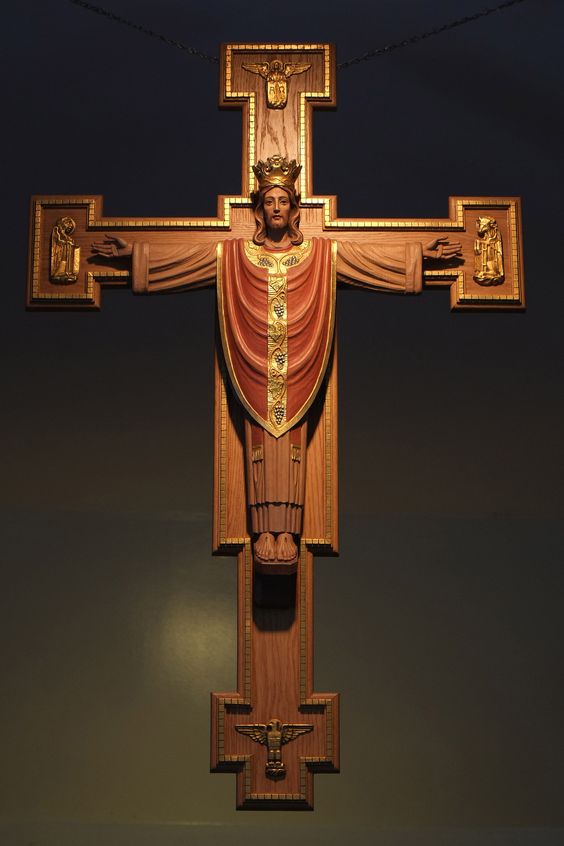
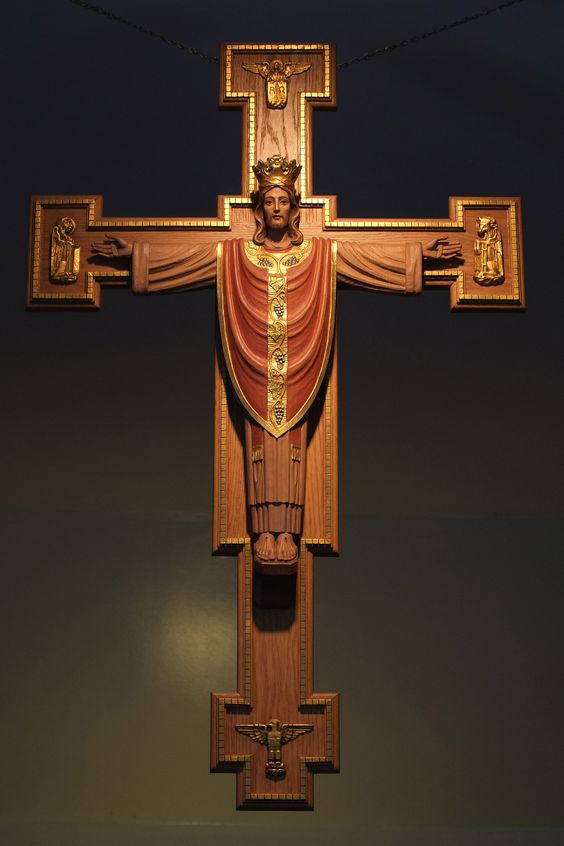
Let me compare another example, like that one when Jesus and his disciples decided to eat the Passover lamb, they payed someone for a rented room,  and there in that rented room,  we received our most important sacrament:   the gift of holy Eucharist, the first mass.  This, again, reminds me of my poor humble oratory with altar in the center, few candles, crucifix, one bed, few books.  This is how I work for Jesus.  There does not come a huge congregation, and I don’t stand up in a huge crowd of people.  We minister to those who need us, one or two or three persons at a time, and yet there in between stands Jesus giving us a clear statement that two or three gathered in His name, showing that he remains with us invisible with Holy Spirit or visible in the Altar under the sign of bread and wine.

But let us stand bold, do not get discouraged, having his name written in our hearts, baptized in his name, we belong to Him.  As he was seized, persecuted, we must realize that the same could occur to us as today we see how our brothers and sisters face persecutions and martyrdom in Syria, Iraq, Nigeria and many other places.

Praise the Lord for the peace this the places where live and support petitions for the persecuted brothers and sisters as many will be crowned as martyrs, let’s not get discouraged, or to live in fear that comes from the wicked devil, but rejoice, we will inherit Heaven!  Let us continue to share the good news to many, so all of us can enter there and share God’s love and eternal life.

As a friar in the Dominican Order, I am called to serve and live by the charism of our father St Dominic de Guzman as preacher of the Gospel and truth, not with preaching long sermons, but that what we share with others to correspond with the way of our life that we daily walk the path of thrones in this valley of tears.

We must not be afraid, but stay bold in Jesus, he is our doctor, physician, healer, our Lord and Redeemer.

I am reminded of the American hymn, “Living for Jesus”:

“Living for Jesus”
Thomas O. Chisholm
Living for Jesus a life that is true, striving to please him in all that I do,
yielding allegiance, glad-hearted and free, this is the pathway of blessing for me.

O Jesus, Lord and Savior, I give myself to thee, for thou, in thy atonement, didst give thyself for me;
I own no other master, my heart shall be thy throne, my life I give, henceforth to live,
O Christ, for thee alone.

Now take few minutes to imagine what Jesus would say about your Christian life to this point. What does he think about your faith, what does he think about your accomplishments for his kingdom, would he describe you as someone growing closer to him every day?

Amen.

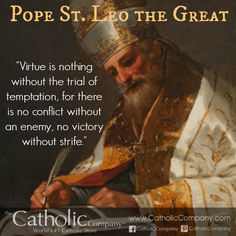
Oops! There It…Wait….. ~ Pope St. Leo the Great ~ Br. Chip Noon, Novice

45acb3bf55d91b382352209fce5f6809

“God moves in a mysterious way

His wonders to perform;

He plants His footsteps in the sea

And rides upon the storm.”

This poem by William Cowper, written in 1773, could be taken as a motto for our present time. And it is most certainly applicable to the Saint whom we venerate today, the day of his death over fifteen hundred years ago.

Saint Leo was a man of many contradictions from our vantage point all these years later. So it is important to remember the times in which he lived, and the chaos and turmoil which all Europeans faced.

Saint Leo became Pope, the Bishop of Rome, in 440. The Roman Empire was threatened and attacked on all sides by people who wanted what Rome had and was no longer willing to share as it once did. The Vandals, Goths, Visigoths, Ostrogoths, Huns, and other tribes invaded Roman lands either for plunder or because they were being pushed out of their own lands. Rome had been sacked in 410 and was under constant threat, while its legions were retreating back toward Italy.

The authority of the Roman State was palpably disintegrating and Christians, as both participants in the government and critics of it, were at everyone’s mercy.

So here comes Leo, from an aristocratic family and used to authority, in his thirties he was sufficiently powerful that he was honored with a dedication to a treatise against heresy and asked for political help by Cyril, the Patriarch of Alexandria. At the age of 40 he was elected Pope.

A man of deep learning and broad education, Leo was constantly working to explain and elucidate the theology surrounding the person of Jesus Christ and his role as mediator and savior. There was not a conflict among theologians of the Christian world that he was not privy to and willing to give his opinion about.

In his Christmas Day Sermon he preached:

Our Saviour, dearly-beloved, was born today: let us be glad. For there is no proper place for sadness, when we keep the birthday of the Life, which destroys the fear of mortality and brings to us the joy of promised eternity. No one is kept from sharing in this happiness. There is for all one common measure of joy, because as our Lord the destroyer of sin and death finds none free from charge, so is He come to free us all. Let the saint exult in that he draws near to victory. Let the sinner be glad in that he is invited to pardon. Let the gentile take courage in that he is called to life…

We find him ecumenical in his ideas and joyful in his message. And his other writings as well show a true man of God and shepherd of his flock.

But here we find this deacon of the church embroiled in geopolitics that rivaled almost anything we have today. Sent as a legate on a diplomatic mission, he was away from Rome when Pope Sixtus III died and he was unanimously elected Pope. As Pope, he worked diligently to consolidate the power of the Roman Church as the central repository of the mandate from Jesus through Peter, the singular head of all Christian churches. So his zeal in saving souls and bringing them joy through the Gospel was equaled by his zeal in building a powerful organization capable of withstanding the tempests of the time.

And this is where I had to step back and re-evaluate my initial assessment of Leo.

Who am I, I thought, to question his secular machinations? Who am I to judge him by today’s standards?

What I mean is, in Leo I saw a conniving, albeit compassionate power player, politician, diplomat, and shepherd. For example, when the Vandals sacked Rome in 455, he was instrumental in persuading them not to murder the population, which they were accustomed to doing after a victory. Before that, in 452, he had also persuaded Attila, leader of the Huns, to refrain from sacking the city. Attila and his army withdrew. These are examples of diplomacy of the highest and most significant level.

Could he have saved his flock had he not been such a powerful presence in the secular world?

All of which is a long way to get to today’s Gospel.

Asked by the Pharisees when the Kingdom of God would come,

Jesus said in reply,

“The coming of the Kingdom of God cannot be observed,

and no one will announce, ‘Look, here it is,’ or, ‘There it is.’

For behold, the Kingdom of God is among you.”

If the Kingdom of God was during Jesus’ time among the Pharisees, then it was certainly among the Romans and the Vandals and the Huns. Therefore, perhaps Leo was helping the church to bear much fruit, as we heard in the Alleluia of today’s Mass. Perhaps he was the lightning needed in the European sky to settle the darkness of constant warfare and terror of that time.

And perhaps Paul’s letter to Philemon can be seen as “God moving in a mysterious way” in Leo’s life as well. Paul is asking his friend Philemon to take back his slave, Onesimus, who is now a Christian and worker in Christ with Paul. What a transformation! How unlikely at the time that a master would see a slave as an equal and a brother in Christ. How unlikely that a bishop would be placed in the position of geopolitical power.

Therefore we do not know when the Son of Man will appear, or where, or how. We only know that the Holy Spirit is at work among the most unlikely, or sometimes most truly likely, people and situations. In today’s world it is harder and harder to trust our fellow men and women. Maybe we are entering the same chaos of 1500 years ago.

And if so, we can trust in the Lord, as it says in today’s Psalm.

The LORD secures justice for the oppressed,
gives food to the hungry.
The LORD sets captives free.
The LORD gives sight to the blind.
The LORD raises up those who were bowed down;
the LORD loves the just.
The LORD protects strangers.
The fatherless and the widow he sustains,
but the way of the wicked he thwarts.
The LORD shall reign forever;
your God, O Zion, through all generations. Alleluia.
Blessed is he whose help is the God of Jacob.

Lord, protect us in this time and for all time. Help us to remember that you are with us now and even to the end of time. Help us accept your love and do our best to pass it on to others. In Jesus’ name.

Amen.

The Feast Day of All Dominican Saints

dominicans at the cross

Blessed are the pure in heart, for they shall see God.”  (Mt. 5:8)

Why do we celebrate our Saints?

We come together as one Dominican Family today to celebrate not only Our Saints, but also our many Blesseds, Holy Friars, Nuns, sisters and Laity who have lived over the past 800 years.

We are so privileged to celebrate them as they provide us with an example by which we follow in our religious lives, by their wondrous fellowship in their communion and in their much needed aid to us by their intercessions to God on our behalf.

We include in our celebrations also all the “forgotten” saints because according to the General Chapter of Valencia in 1337, there were 13,370 martyrs between 1234 and 1335. There were another 26,000 in the 16th century alone. Martyrs, confessors, virgins, and holy men and women all have their place of honour in the Order. Friars, worn down through constant contemplation, study, and preaching; nuns who lived lives of great prayer, silence, and penance; sisters who educated 1000s of souls; and third order members who sanctified the world.

We celebrate our thanks to God on this important feast day for our Order and turn to the examples of our Saints, their lives and their intercessions for us so that they may guide us on our spiritual Dominican life’s journey.

Our Order’s Father, Saint Dominic left us a wonderous legacy of teaching and preaching by word and example of how we should live our lives.It is, then, joyous and encouraging that so many of our Dominican brothers and sisters have been beatified and canonized.

Let us pray then in the example we have been taught to ask our dear saints to intercede for us, and to thank our God for all the saints of our Dominican Order and for the fruits of our order to be pleasing in his sight…..

God, the heavenly Father have mercy on us.

God, the Son, Redeemer of the world have mercy on us.

God, the Holy Spirit have mercy on us.

Holy Trinity, one God have mercy on us.

Holy Mary

pray for us.

Holy Mother of God

pray for us.

Holy Virgin of Virgins

pray for us.

All you holy angels and archangels

pray for us.

All you holy Patriarchs and Prophets

pray for us.

All you holy Apostles and Evangelists

pray for us.

All you holy martyrs

pray for us.

All you holy virgins and widows

pray for us.

All you holy men and women

pray for us.

Saint Michael

pray for us.

Saint Gabriel

pray for us.

Saint Raphael

pray for us.

Saint Joseph

pray for us.

Saint John the Baptist

pray for us.

Saint Mary Magdalen

pray for us.

Holy Father Augustine

pray for us.

Holy Father Francis

pray for us.

Blessed Jane of Aza

pray for us.

Blessed Reginald

pray for us.

Holy Father Dominic

pray for us.

Holy Father Dominic

pray for us.

Blessed Bertrand

pray for us.

Blessed Mannes

pray for us.

Blessed Diana

pray for us.

Blessed Jordan of Saxony

pray for us.

Blessed John of Salerno

pray for us.

Blessed William and Companions

pray for us.

Blessed Ceslaus

pray for us.

Blessed Isnard

pray for us.

Blessed Guala

pray for us.

Blessed Peter Gonzalez

pray for us.

Saint Zdislava

pray for us.

Saint Peter of Verona

pray for us.

Blessed Nicholas

pray for us.

Saint Hyacinth

pray for us.

Blessed Gonsalvo

pray for us.

Blessed Sadoc and Companions

pray for us.

Blessed Giles

pray for us.

Saint Margaret of Hungary

pray for us.

Blessed Batholomew of Vincenza

pray for us.

Saint Thomas Aquinas

pray for us.

Saint Raymond of Penyafort

pray for us.

Blessed Innocent V

pray for us.

Blessed Albert of Bergamo

pray for us.

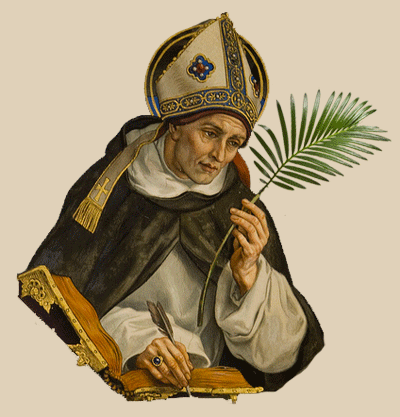
Saint Albert the Great

pray for us.

Blessed John of Vercelli

pray for us.

Blessed Ambrose

pray for us.

Blessed Cecilia

pray for us.

Blessed Benvenuta

pray for us.

Blessed James of Varazze

pray for us.

Blessed James of Bevagna

pray for us.

lessed Jane of Orvieto

pray for us.

Blessed Jordan of Pisa

pray for us.

Saint Emily

pray for us.

Blessed James Salomonio

pray for us.

Saint Agnes of Montepulciano

pray for us.

Blessed Simon

pray for us.

Blessed Margaret of Castello

pray for us.

Blessed Augustine Kazotic

pray for us.

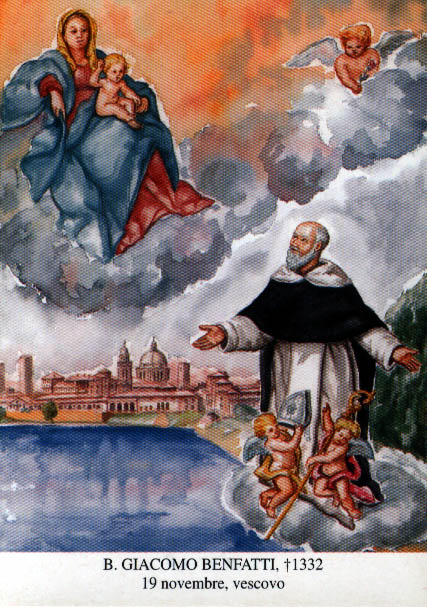
Blessed James Benefatti

pray for us.

Blessed Imelda

pray for us.

Blessed Dalmatius

pray for us.

Blessed Margaret Ebner

pray for us.

Blessed Villana

pray for us.

Blessed Peter Ruffia

pray for us.

Blessed Henry

pray for us.

Blessed Sibyllina

pray for us.

Blessed Anthony of Pavonio

pray for us.

Saint Catherine of Siena

pray for us.

Blessed Marcolino

pray for us.

Blessed Raymond of Capua

pray for us.

Blessed Andrew Franchi

pray for us.

Saint Vincent Ferrer

pray for us.

Blessed Clara

pray for us.

Blessed John Dominic

pray for us.

Blessed Alvarez

pray for us.

Blessed Maria

pray for us.

Blessed Peter of Castello

pray for us.

Blessed Andrew Abellon

pray for us.

Blessed Stephen

pray for us.

Blessed Peter Geremia

pray for us.

Blessed John of Fiesole

pray for us.

Blessed Lawrence of Ripafratta

pray for us.

Blessed Anthony della Chiesa

pray for us.

Saint Antoninus

pray for us.

Blessed Anthony Neyrot

pray for us.

Blessed Margaret of Savoy

pray for us.

Blessed Bartholomew of Cerverio

pray for us.

Blessed Matthew

pray for us.

Blessed Constantius

pray for us.

Blessed Christopher

pray for us.

Blessed Damian

pray for us.

Blessed Andrew of Peschiera

pray for us.

Blessed Bernard

pray for us.

Blessed Jane of Portugal

pray for us.

Blessed James of Ulm

pray for us.

Blessed Augustine of Biella

pray for us.

Blessed Aimo

pray for us.

Blessed Sebastian

pray for us.

Blessed Mark

pray for us.

Blessed Columba

pray for us.

Blessed Magdalen

pray for us.

Blessed Osanna of Mantua

pray for us.

Blessed John Liccio

pray for us.

Blessed Dominic Spadafora

pray for us.

Blessed Stephana

pray for us.

Saint Adrian

pray for us.

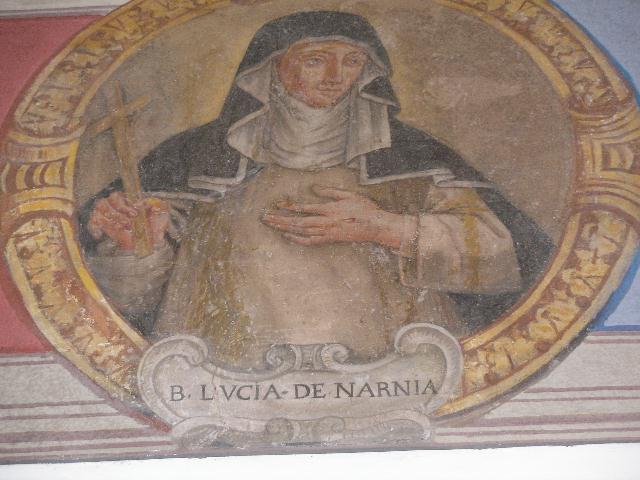
Blessed Lucy

pray for us.

Blessed Catherine Racconigi

pray for us.

Blessed Osanna of Kotor

pray for us.

Saint Pius V

pray for us.

Saint John of Cologne

pray for us.

Blessed Maria Bartholomew

pray for us.

Saint Louis Bertrand

pray for us.

Saint Catherine de Ricci

pray for us.

Blessed Robert

pray for us.

Blessed Alphonsus and Companions

pray for us.

Saint Rose

pray for us.

Saint Dominic Ibanez and Companions

pray for us.

Blessed Agnes of Jesus

pray for us.

Saint Lawrence Ruiz and Companions

pray for us.

Saint Martin de Porres

pray for us.

Blessed Peter Higgins

pray for us.

Blessed Francis de Capillas

pray for us.

Saint Juan Macias

pray for us.

Blessed Terence

pray for us.

Blessed Ann of the Angels

pray for us.

Blessed Francis de Posadas

pray for us.

Saint Louis de Montfort

pray for us.

Blessed Francis Gil

pray for us.

Saint Matteo

pray for us.

Blessed Peter Sanz and Companions

pray for us.

Saint Vincent Liem

pray for us.

Saint Hyacinth Castaneda

pray for us.

Blessed Marie

pray for us.

Blessed George

pray for us.

Blessed Catherine Jarrige

pray for us.

Saint Ignatius and Companions

pray for us.

Saint Dominic An-Kham and Companions

pray for us.

Saint Joseph Khang and Companions

pray for us.

Saint Francis Coll

pray for us.

Blessed Hyacinthe Cormier

pray for us.

Blessed Pier Giorgio

pray for us.

Blessed Bartolo

pray for us.

Blessed Michael Czartoryski

pray for us.

Blessed Julia Rodzinska

pray for us.

All holy Dominican brothers and sisters

pray for us.

Lamb of God, who takes away the sins of the world,

spare us, O Lord.

Lamb of God, who takes away the sins of the world,

graciously hear us, O Lord.

Lamb of God, who takes away the sins of the world,

have mercy on us.

Let us pray.–

God, source of all holiness, you have enriched your Church

with many gifts in the saints of the Order of Preachers.

By following the example of our brothers and sisters,

may we come to enjoy their company

for ever in the Kingdom of our Lord Jesus Christ,

Your Son, who lives and reigns with You

and the Holy Spirit, one God, for ever and ever.

Amen.


Blessed Jerome, Valentine, Francis, Hyacinth & Companions (Martyrs of Tonkin)

148px-martyrs_of_tonkin

Blessed Jerome, Valentine, Francis, Hyacinth & Companions (Martyrs of Tonkin)  Between the arrival of the first Portuguese missionary in 1533, through the Dominicans and then the Jesuit missions of the 17th century, the politically inspired persecutions of the 19th century, and the Communist-led terrors of the twentieth, there have been many thousands upon thousands murdered for their faith in Vietnam. Some were priests, some nuns or brothers, some lay people; some were foreign missionaries, but most were native Vietnamese killed by their own government and people.

Jerome Hermosilla, a Dominican missionary to Manila, Philippines, and a priest, he went as a missionary to Vietnam in 1828 where he was the Vicar Apostolic of Eastern Tonking, Vietnam and titular bishop of Miletopolis. H was martyred with Saint Valentin Faustino Berri Ochoa.

Valentin Faustinao Berri Ochoa. Born in the Basque country, and ordained on June 14, 1851, Valentin was a missionary to the Philippines and then to Vietnam.   He was appointed coadjutor vicar apostolic of Central Tonking, (the modern diocese of Bùi Chu) Vietnam and titular bishop of Centuria on December 25, 1857. He was martyred with Saint Jerome Hermosilla.

Francis Gil de Frederich was educated in Barcelona, Spain where he joined the Dominicans. He was a missionary to the Philippines first and then a missionary to Vietnam in 1732. He spent nine years in prison for his faith during which time he converted fellow prisoners and supervised evangelists on the outside.

Hyacinth Castaneda was a Dominican Priest and missionary to China.  He then was sent as a missionary to Vietnam. He was beheaded for his faith in 1773 in Vietnam

Blessed Simon Ballachi

simon

Blessed Simon Ballachi was born to the nobility in 1240, the son of Count Ballachi. His family had a close association with the Church clergy; two of his uncles became archbishops of Rimini, Italy, and a younger brother was a priest. Trained as a soldier and in administration, he was expected to take over the family estates. Against his family wishes, he joined the Dominicans as a lay brother at age 27.

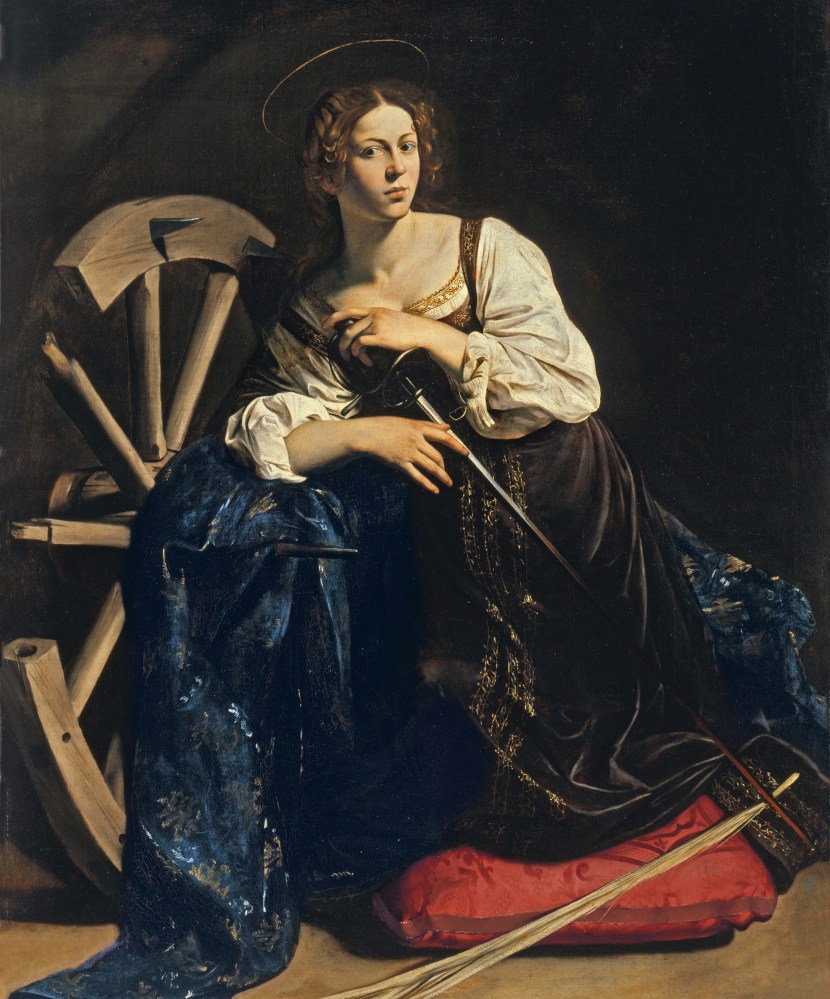
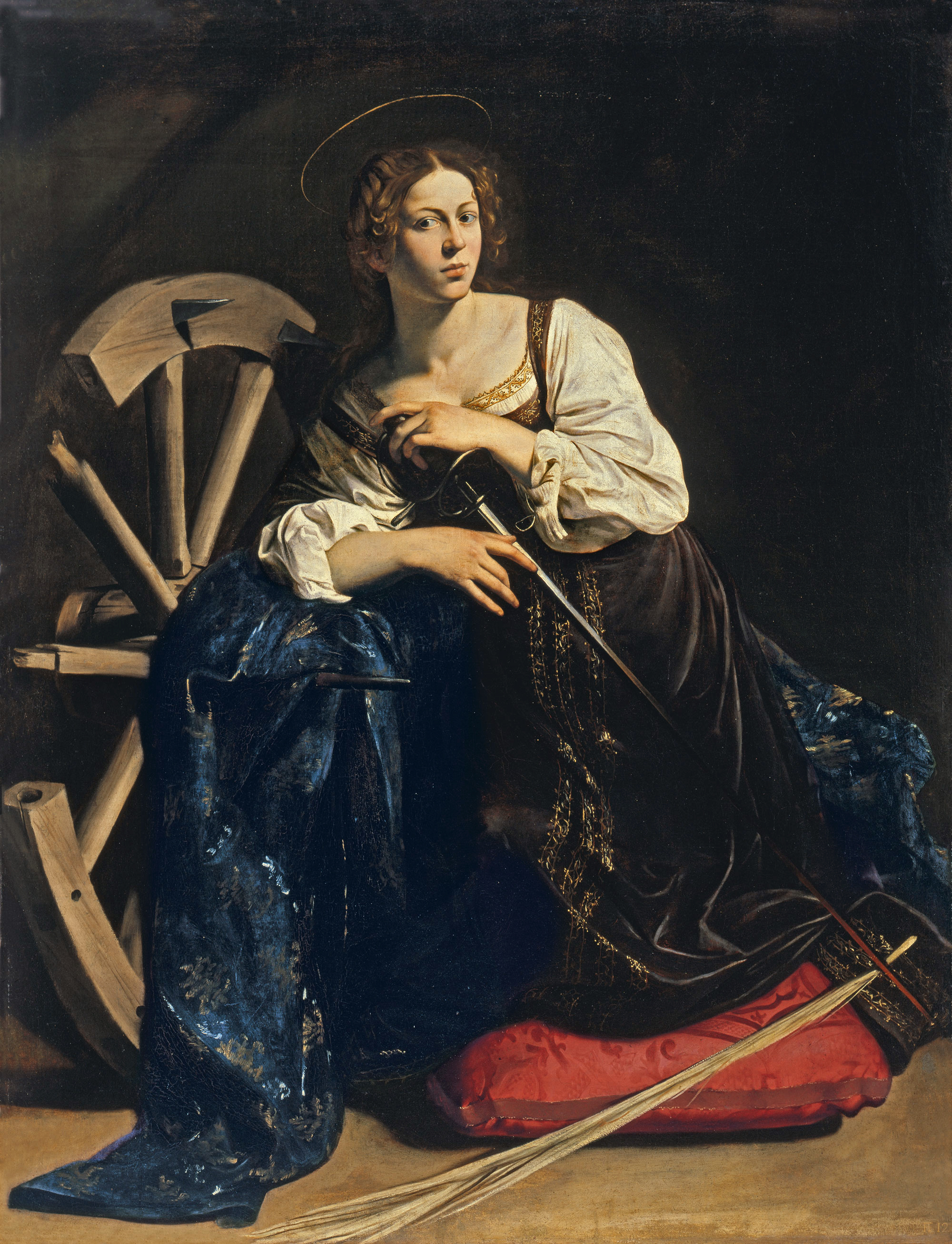
Assigned to work in the garden of his friary, something he knew nothing about but which he loved instantly. He saw God in everything, and prayed constantly as he worked. Noted for his simple life, his strict adherence to the Dominican Rule, and his excellent work as a catechist to children. A visionary, Simon was visited by the devil, by Saint Catherine of Alexandria, Saint Dominic de Guzman, Saint Peter Martyr, and the Blessed Virgin Mary; other brothers saw his cell glowing, and heard angelic voices. Blinded at age 57, he was nearly helpless during the last years of his life; he never despaired, and used the extra free time for prayer.  He died on 5 November in 1391.

Saint Martin de Porres

martin

Martin de Porres was born in the city of Lima, in the Viceroyalty of Peru, on December 9, 1579, the illegitimate son of a Spanish nobleman and a black former slave. He grew up in poverty; when his mother could not support him and his sister, Martin was confided to a primary school for two years, and then placed with a barber/surgeon to learn the medical arts. This caused him great joy, though he was only ten years old, for he could exercise charity to his neighbor while earning his living. Already he was spending hours of the night in prayer, a practice that increased rather than diminished as he grew older.

At the age of 15, he asked for admission to the Dominican Convent of the Rosary in Lima and was received first as a servant boy; as his duties grew, he was promoted to almoner. Eventually he felt the call to enter the Dominican Order, and was received as a tertiary. Years later, his piety and miraculous cures led his superiors to drop the racial limits on admission to the friars, and he was made a full Dominican. It is said that when his convent was in debt, he implored them: “I am only a poor mulatto, sell me.” Martin was deeply attached to the Blessed Sacrament, and he was praying in front of it one night when the step of the altar he was kneeling on caught fire. Throughout all the confusion and chaos that followed, he remained where he was, unaware of what was happening around him.

When he was 34, after he had been given the habit of a Coadjutor Brother, Martin was assigned to the infirmary, where he was placed in charge and would remain in service until his death at the age of sixty. His superiors saw in him the virtues necessary to exercise unfailing patience in this difficult role, and he never disappointed them. It was not long before miracles were attributed to him. Saint Martin also cared for the sick outside his convent, often bringing them healing with only a simple glass of water. He begged for alms to procure necessities the Convent could not provide, and Providence always supplied.

One day an aged beggar, covered with ulcers and almost naked, stretched out his hand, and Saint Martin, seeing the Divine Mendicant in him, took him to his own bed. One of his brethren reproved him. Saint Martin replied: “Compassion, my dear Brother, is preferable to cleanliness.”

When an epidemic struck Lima, there were in this single Convent of the Rosary sixty friars who were sick, many of them novices in a distant and locked section of the convent, separated from the professed. Saint Martin is said to have passed through the locked doors to care for them, a phenomenon which was reported in the residence more than once. The professed, too, saw him suddenly beside them without the doors having been opened. Martin continued to transport the sick to the convent until the provincial superior, alarmed by the contagion threatening the religious, forbade him to continue to do so. His sister, who lived in the country, offered her house to lodge those whom the residence of the religious could not hold. One day he found on the street a poor Indian, bleeding to death from a dagger wound, and took him to his own room until he could transport him to his sister’s hospice. The superior, when he heard of this, reprimanded his subject for disobedience. He was extremely edified by his reply: “Forgive my error, and please instruct me, for I did not know that the precept of obedience took precedence over that of charity.” The superior gave him liberty thereafter to follow his inspirations in the exercise of mercy.

Martin would not use any animal as food—he was a vegetarian.

In normal times, Saint Martin succeeded with his alms to feed 160 poor persons every day, and distributed a remarkable sum of money every week to the indigent. To Saint Martin the city of Lima owed a famous residence founded for orphans and abandoned children, where they were formed in piety for a creative Christian life. This lay brother had always wanted to be a missionary, but never left his native city; yet even during his lifetime he was seen elsewhere, in regions as far distant as Africa, China, Algeria and Japan. An African slave who had been in irons said he had known Martin when he came to relieve and console many like himself, telling them of heaven. When later the same slave saw him in Peru, he was very happy to meet him again and asked him if he had had a good voyage; only later did he learn that Saint Martin had never left Lima. A merchant from Lima was in Mexico and fell ill; he said aloud: “Oh, Brother Martin, if only you were here to care for me!” and immediately saw him enter his room. And again, this man did not know until later that he had never been in Mexico.

Martin was a friend of both Saint John de Massias and Saint Rose of Lima. When he died in Lima on November 3, 1639, Martin was known to the entire city. Word of his miracles had made him known as a saint throughout the region. As his body was displayed to allow the people of the city to pay their respects, each person snipped a tiny piece of his habit to keep as a relic. It is said that three habits were taken from the body. His body was then interred in the grounds of the monastery.

Pope Gregory XVI beatified Martin de Porres in 1837. Nearly one hundred and twenty-five years later, Blessed Martin was canonized in Rome by Pope John XXIII on May 6, 1962. His feast day is November 3. He is the Patron Saint of people of mixed race, innkeepers, barbers, public health and more besides.

In iconography, Martin de Porres is often depicted as a young mulatto friar (he was a Dominican brother, not a priest, as evidenced by the black scapular and capuce he wears, while priests of the Dominican order wear all white) with a broom, since he considered all work to be sacred no matter how menial. He is sometimes shown with a dog, a cat and a mouse eating in peace from the same dish.


The Feast of All Souls ~ The Rev. Dcn. Dollie Wilkinson, OPI

Worshiper Lighting Votive Candle on Altar

Worshiper Lighting Votive Candle on Altar

Is death the last sleep? No–it is the last and final awakening.
-Sir Walter Scott

We all have lost loved ones, some so early in their life, others who had been with us for a good long while. But for those left behind, the sense of loss can be almost too much to bear. Yet we know in our hearts that we shall see our loved ones again, that we will all be reunited with each other—in our heavenly Father’s kingdom. So until that time, we remember them with love, and offer up prayers for their soul.

Today, November 2nd, we celebrate the Feast of All Souls. On the day after All Saints, the Church reminds us of those who have not yet achieved the goal of their pilgrimage, the Kingdom of Heaven. As part of the communion of saints, they need our prayers. Today’s feast is an opportunity for us to pray in unity for our relatives and friends and for those who have no one to pray for them. All Soul’s Day (sometimes called the “Day of the Dead”) is always November 2 (November 3rd if the 2nd falls on a Sunday).

All Soul’s Day is a Roman Catholic day of remembrance for friends and loved ones who have passed away. This comes from the ancient Pagan Festival of the Dead, which celebrated the Pagan belief that the souls of the dead would return for a meal with the family. Candles in the window would guide the souls back home, and another place was set at the table. Children would come through the village, asking for food to be offered symbolically to the dead, then donated to feed the hungry.

The day purposely follows All Saint’s Day in order to shift the focus from those in heaven to those in purgatory. It is celebrated with Masses and festivities in honor of the dead. While the Feast of All Saints is a day to remember the glories of Heaven and those there, the Feast of All Souls reminds us of our obligations to live holy lives and that there will be purification of the souls of those destined for Heaven.

Upon death, it is believed that souls have not yet been cleansed of sin. Praying for souls of loved ones helps to remove the stain of sin, and allow the souls to enter the pearly gates of heaven. Through prayer and good works, living members of the church may help their departed friends and family. There are three Requiem Masses that are said by the clergy to assist the souls from Purgatory to Heaven: one for the celebrant, one for the departed, and one for the Pope. One such reading for the Mass is included in the Book of Wisdom:

The souls of the just are in the hand of God
and no torment shall touch them.
They seemed, in the view of the foolish, to be dead;
and their passing away was thought an affliction
and their going forth from us, utter destruction.
But they are in peace.
For if before men, indeed, they be punished,
yet is their hope full of immortality;
chastised a little, they shall be greatly blessed,
because God tried them
and found them worthy of himself.
As gold in the furnace, he proved them,
and as sacrificial offerings he took them to himself.
In the time of their visitation they shall shine,
and shall dart about as sparks through stubble;
they shall judge nations and rule over peoples,
and the Lord shall be their King forever.
Those who trust in him shall understand truth,
and the faithful shall abide with him in love:
because grace and mercy are with his holy ones,
and his care is with his elect.”


The traditions of the Feast of All Souls began independently of the Feast of All Saints. The Feast of All Souls owes its beginning to seventh century monks who decided to offer the mass on the day after Pentecost for their deceased community members. In the late tenth century, the Benedictine monastery in Cluny chose to move their Mass for their dead to November 2, the day after the Feast of all Saints. This custom spread and in the thirteenth century, Rome put the feast on the calendar of the entire Church. The date remained November 2 so that all in the Communion of the Saints might be celebrated together.

Other customs have arisen over time in the celebration of All Souls Day. The Dominicans in the 15th century instituted a custom of each priest offering three Masses on the Feast of All Souls. Pope Benedict XIV in 1748 approved this practice, and it rapidly spread throughout Spain, Portugal and Latin America. During World War I, Pope Benedict XV, recognizing the number of war dead and the numerous Masses that could not be fulfilled because of destroyed Churches, granted all priests the privilege of offering three Masses on All Souls Day: one for the particular intention, one for all of the faithful departed, and one for the intentions of the Holy Father.


Many more customs are associated with The Day of the Dead celebrations. In the home an altar is made with an offering of food upon it. It is believed that the dead partake of the food in spirit and the living eat it later. The offerings are beautifully arranged with flowers such as marigolds, which are the traditional flower of the dead. There is a candle placed for each dead soul, and they are adorned in some manner. Incense is also often used, and mementos, photos, and other remembrances of the dead also adorn the offerings. Traditional Catholics still honor customs related to the relief of the souls suffering in purgatory. One custom is for persons to pray six Our Fathers, Hail Mary’s and Glory Be’s for the intentions of the Pope in a church, and thereby, receive a plenary indulgence for a soul in purgatory. This action may be repeated for another soul, by leaving the church and re-entering it to repeat the prayers.


All Soul’s Day lives on today, particularly in Mexico, where All Hallows’ Eve, All Saint’s Day and All Soul’s Day are collectively observed as “Los Dias de los Muertos” (The Days of the Dead). First and foremost, the Days of the Dead is a time when families fondly remember the deceased. But it is also a time marked by festivities, including spectacular parades of skeletons and ghouls. In one notable tradition, revelers lead a mock funeral procession with a live person inside a coffin.

As we all know, death is never final. We will be reunited with our loved ones. And for those in purgatory, let us pray for their souls to be cleansed, so we shall all live again in our Father’s house.

A prayer for all our departed Brothers and Sisters:


Merciful Father,
hear our prayer
and console us.
As we renew
our faith in Your Son,
whom You raised from the dead,
strengthen our hope
that all our departed brothers and sisters
will share in His resurrection,
who lives and reigns
with You and the Holy Spirit,
one God, for ever and ever.

Amen

Invocation for the Souls in Purgatory:

My God,
bestow Thy blessings and Thy mercies
on all persons
and on those souls in Purgatory,

for whom I am in charity, gratitude, or friendship bound
and have the desire to pray.

Amen


Who Are These in White Robes: The Feast of All Saints ~ The Rt. Rev. Michael Beckett, OPI

the_144000

Today we celebrate the Solemnity of All Saints (also called All Saints Day).

All Saints’ Day, All Hallows Day, or Hallowmas is solemnly celebrated on 1 November by many Western Liturgical Churches to honor, literally, all the saints, known and unknown; those individuals who have attained Heaven; all the holy men and women who have lived their lives for God and for his church, who now have attained Beatific vision and their reward of Heaven.

In early Christian history it was usual to solemnize the anniversary of a Martyrs death for the Lord at the place of their martyrdom. Frequently there were multiple martyrs who would’ve suffered and died on the same day which led to multiple commemorations on the same day. Eventually, the numbers of martyrs became so great that it was impossible for a separate day to be assigned to each individually, but the church feeling that every martyr should be venerated, appointed a feast day to commemorate them all on the same day.

The origin of the festival of All Saints celebrated in the West dates to the month of May in the year 609 or 610, when Pope Boniface IV consecrated the Pantheon at Rome to the Blessed Virgin and all the martyrs.  In the 730’s Pope Gregory III moved the Feast of All Saints to 1 November when he founded an oratory in St. Peter’s for the relics of the holy apostles and of all saints, martyrs and confessors, of all the just made perfect who are at rest throughout the world.”

From our Readings today, we hear of the vision of St. John from the Book of Revelation:

After this I had a vision of a great multitude, which no one could count, from every nation, race, people, and tongue.  They stood before the throne and before the Lamb, wearing white robes and holding palm branches in their hands.  They cried out in a loud voice:

“Salvation comes from our God, who is seated on the throne, and from the Lamb.”

All the angels stood around the throne and around the elders and the four living creatures.  They prostrated themselves before the throne, worshiped God, and exclaimed:

“Amen. Blessing and glory, wisdom and thanksgiving, honor, power, and might be to our God forever and ever. Amen.”

Then one of the elders spoke up and said to me, “Who are these wearing white robes, and where did they come from?” I said to him, “My lord, you are the one who knows.” He said to me, “These are the ones who have survived the time of great distress; they have washed their robes and made them white in the Blood of the Lamb.”

Who are these nameless saints?  Their anonymity teaches us that sainthood is not reached through great achievements or rare acts of bravery.  Sainthood comes from simply loving God and doing our best to live our lives in a way consistent with Jesus’ commandment.  I would dare say that none of the saints actually set out to be saints.  They simply loved God and lived their lives to follow Him.

Revelation goes on to remind us that giving our lives over to God will not protect us or insulate us from hardship.  Living in, for, with, and through God, however, will make sure that we can and will endure whatever “great distress” comes our way.  In this passage of Revelation, John is speaking specifically of those who have given their lives for their faith.  Christians throughout the Middle East are being martyred by forces opposed to Christianity, but in reality, it is very unlikely that any of us will be called upon to sacrifice our lives for our faith.

Our challenge, then, is to live for Christ, rather than to die for Christ.  Jesus does ask to lay down our lives for Him. Peter said to the Lord, “I will lay down my life for Your sake,” and he meant it (John 13:37). Has the Lord ever asked you, “Will you lay down your life for My sake?” (John 13:38). It is much easier to die than to lay down your life day in and day out with the sense of the high calling of God. We are not made for the bright-shining moments of life, but we have to walk in the light of them in our everyday ways.  For thirty-three years Jesus laid down His life to do the will of His Father. “By this we know love, because He laid down His life for us. And we also ought to lay down our lives for the brethren” (1 John 3:16).

If we are true followers of Jesus, we must deliberately and carefully lay down our lives for Him. It is a difficult thing to do, and thank God that it is, for great is our reward.  Salvation is easy for us, however, because it cost God so much. But the exhibiting of salvation in our lives is difficult. God saves a person, fills him with the Holy Spirit, and then says, in effect, “Now you work it out in your life, and be faithful to Me, even though the nature of everything around you is to cause you to be unfaithful.” And Jesus says to us, “…I have called you friends….” Remain faithful to your Friend, and remember that His honor is at stake in your bodily life.  We are called to remain faithful, despite the reasons the world gives us to not, despite the “great distresses” in our lives.

Who are these dressed in white robes?  It is my prayer to be counted among them.  What about you?


Blessed Benvenuta Bojani

benvenutaboiani

Benvenuta was the last of seven daughters. Her parents, too, must have been amazing people in comparison with so many in our time. When the silence of the midwife proclaimed that her father had been disappointed once again in his desire for a son, he exclaimed, “She too shall be welcome!” Remembering this she was christened by her parents Benvenuta (“welcome”), although they had asked for a son. A vain older sister unsuccessfully tried to teach the pious little Benvenuta to dress in rich clothing and use the deceits of society. Benvenuta hid from such temptations in the church where she developed a tender devotion to the Blessed Virgin. By the age of 12, Benvenuta was wearing hairshirts and a rope girdle. As she grew the rope became embedded in her flesh. When she realized the rope must be removed, she couldn’t get it off, so she prayed and it fell to her feet. For this reason she is often pictured in art holding a length of rope in her hands.

Having become a Dominican tertiary at an early age, she added the penances practiced by the sisters to those she had appropriated for herself. All her disciplines, fasting, and lack of sleep soon caused her health to fail and she was confined to bed for five years. Thereafter, she was too weak to walk, so a kind older sibling carried her to church once a week for Compline (Night Prayer) in the Dominican church, her favorite liturgy after the Mass.

After evening prayer on the Vigil of the Feast of Saint Dominic, Dominic and Saint Peter Martyr appeared to Benvenuta. Dominic had a surprise for her. The prior was absent at the Salve procession, but at the beginning of Compline she saw Dominic in the prior’s place. He passed from brother to brother giving the kiss of peace, then went to his own altar and disappeared. At the Salve procession, the Blessed Virgin herself came down the aisle, blessing the fathers while holding the Infant Jesus in her arms.

Benvenuta spent her whole life at home in Cividale busy with her domestic duties, praying, and working miracles. She was often attacked by the devil, who sometimes left her close to discouragement and exhaustion. When someone protested against the death of a promising young child, Benvenuta commented, “It is much better to be young in paradise than to be old in hell.” The devil often appeared to her in horrifying forms but was banished when Benvenuta called upon the Virgin.

Benvenuta’s companions called her “the sweetest and most spiritual of contemplatives, so lovable in her holiness that her touch and presence inspired gladness and drove away temptations.” This is amazing in light of the severe penances that she imposed upon herself–and another sign of blessedness that she didn’t judge others by her standards for herself (Benedictines, Dorcy).

Born: May 4, 1254 at Cividale, Friuli, Italy

Died: October 30, 1292 at Cividale, Friuli, Italy of natural causes

Beatified: February 6, 1763 by Pope Clement XIV (cultus confirmed)

Name Meaning: welcome (from her father’s statement at her birth: “She too shall be welcome!”)

Representation: holding a length of rope


Moved By Mercy – 31st Sunday in Kingdomtide ~ Br. Michael Marshall, Novice

1483637961pizapw1404117872

There is a song by Matthew West titled, “Moved By Mercy” in which some lyrics are applicable to today’s readings.  In the song, Matthew West coveys that there is a dialogue between a young woman and Jesus, and he tells her that things of the past no longer have to haunt her because she has reached out and asked for mercy.  Her plea is stated as follows:

“Take me far away now
From this broken place now
Somewhere they can’t hurt me
I wanna be moved by mercy
Jesus, I can’t see You
I just know I need You
Help me start a new life
Let my heart be moved by mercy.”

Jesus responds by saying:

All the hurt that you hide behind that door
I’m not gonna let it hurt you anymore.

And so later in the song the woman says:

“For so long I felt so unworthy.”

Jesus again responds with:

“I’m the one who began a good work in you
And I’m the one who is gonna see it through,
I’ll see you through.”

As well as:

“But in My arms all your shame is moved by mercy
So here I stand, a child undeserving
Take My hand and let your heart
Be moved by mercy.”

Lyrics: Matthew West

© Sony/ATV Music Publishing LLC, Warner/Chappell Music, Inc.

We see in the Reading from the Book of Wisdom that the author writes:

“But you spare all things, because they are yours, O LORD and lover of souls, for your imperishable spirit is in all things!  Therefore you rebuke offenders little by little, warn them and remind them of the sins they are committing, that they may abandon their wickedness and believe in you, O LORD!”

And we see in the Gospel that Jesus looks up at Zacchaeus because he wants to establish a relationship while staying in his home.  Zacchaeus is a tax collector, who the town’s people see as a sinful person.  Even though it is not explicitly stated in the Gospel Reading, we understand that this relationship has more to do with ministry rather than needing a place to stay while in Jericho.  As the town’s people are upset because Jesus wants to stay in Zacchaeus’ home, Zacchaeus understands this purpose; which again is not explicitly stated.  Zacchaeus then asks for mercy for what he has committed against God and toward the town’s people by saying:

“Behold, half of my possessions, Lord, I shall give to the poor, and if I have extorted anything from anyone I shall repay it four times over.”

And Jesus shows mercy toward Zacchaeus by saying:  “Today salvation has come to this house because this man too is a descendant of Abraham.  For the Son of Man has come to seek and to save what was lost.”

How do the story of the young woman and the Readings apply to us??? Well, it is quite simple and straightforward!  Unlike Jesus, we were born into the world not free of sin.  That does not mean we sin the minute we come out of our mother’s womb, but rather we sometimes get caught up in things of this world which go against God.  We follow the bad example of others, even if we know it is wrong.  That is simply part of being human, as much as our baptism has washed away our sins.  But when we do sin, we go to the Sacrament of Reconciliation to ask for forgiveness.  But ultimately what this sermon is about is how we need to truly change our ways and not just ask for mercy, but to follow through with living a pure and holy life after asking for mercy.  Just because we ask for mercy, and receive it, does not mean we can go on living with the mentality of “Well, God will forgive me” and return to our old ways.  Because we asked for mercy, and we have been granted that mercy, we must strive to not turn back.  The priest even says to us, “Your sins have been pardoned, and therefore go forth and sin no more.”

Father, when we ask for mercy, may we truly remember to truly live a holy and pure life because we asked for the mercy.  This we ask through Christ, Our Lord. Amen.