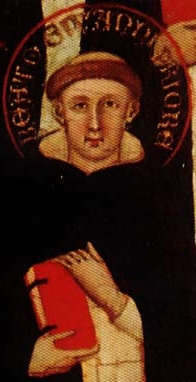
Blessed Ceslaus Odrowatz of Poland

SONY DSC

SONY DSC

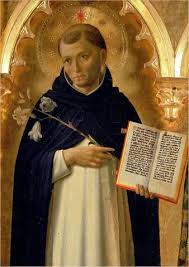
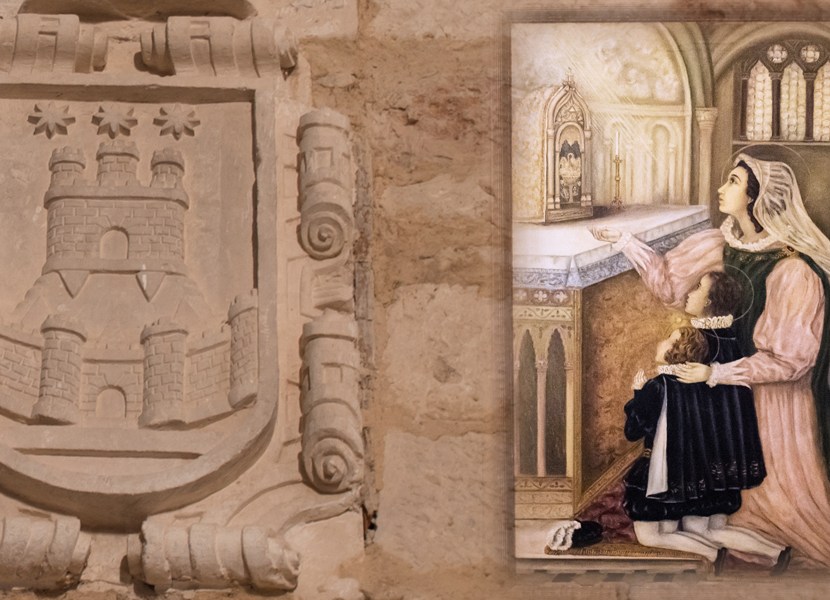
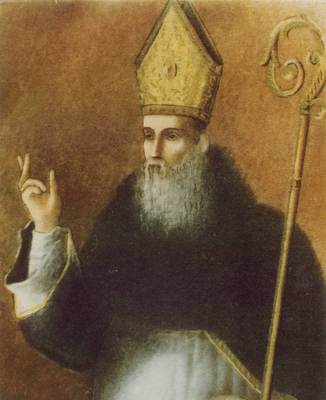
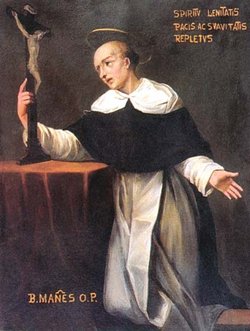
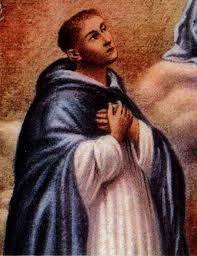
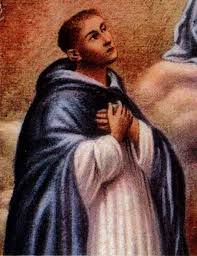
Ceslaus Odrowatz was a near relative, probably a brother, of Saint Hyacinth, and shared with him the apostolate of Northern Europe. Little is known of his youth. He was born in the ancestral castle and educated with Saint Hyacinth, by his uncle, a priest of Cracow.

Both young men became priests and, being well-known for their holiness, were chosen to be canons in the cathedral chapter in Cracow. When their uncle received an appointment as bishop of Cracow, the two young priests accompanied him on his trip to Rome, where he would be consecrated.

It was in Rome that the two zealous young priests first heard of the work of Saint Dominic. The order was then only four years old, and its eager members had penetrated to almost all parts of Christendom and were pushing into the lands of the Tartars and the Mohammedans.

The new bishop strongly desired that some of the friars should come to Poland. Since Saint Dominic was then in Rome, they went to him for missionaries. Dominic was deeply regretful that he had no friars who were able to speak the languages of the North. However, he was much drawn to the bishop’s two young nephews, and promised to make them Dominican apostles if they would remain with him.

After their novitiate training, Hyacinth and Ceslaus went home. Ceslaus went to Prague, and other parts of Bohemia, where he founded convents of Friar Preachers and also established a group of nuns. Then he went to Silesia, where he founded the convent of Breslau that was to become his center of activities. He also acted as the spiritual director for duchess Saint Hedwig of Poland.

The life of Blessed Ceslaus, like that of Saint Hyacinth, is a record of almost countless miracles, of unbelievable distances travelled on foot through wild and warlike countries, and of miracles of grace. He cured the sick and the maimed, raised the dead to life, and accomplished wonders in building convents. His most remarkable miracle was the raising to life of a boy who had been dead for eight days.

In 1241 the Tartars swooped down upon the Christian kingdoms and laid waste the labor of centuries. Blessed Ceslaus was in Breslau at the time the Tartars laid siege to the city. He and his community fasted and prayed incessantly that the city would be saved, and when the cause looked darkest, Ceslaus mounted the ramparts with a crucifix in his hand. While the Tartars gazed in astonishment, a huge ball of fire descended from heaven and settled above him. Arrows of fire shot out from the heavenly weapon, and the Tartars fled in terror, leaving the city unmolested.

Our Lady came to receive the soul of Blessed Ceslaus, who had been tireless in preaching her glories.

Born: c.1180 at Cracow, Poland

Died: July 16, 1242

Beatified: August 27, 1712 by Pope Clement XI (cultus confirmed)

Guest Post: Our Lady of Mt. Carmel ~ Maggie Brown

CARMEL-3

I was tasked with developing a sermon to educate people on Our Lady of Mt. Carmel. The task itself seems as large as Mt. Carmel itself. I will start at the beginning. Mount Carmel is a mountain line in Galilee between Tyre and Caesarea, which places it close to (about 20 miles from) Nazareth. That by itself gives you a clue as to its importance; it’s near the place where our Lord was raised. This mountain has been a holy place for longer than I can say, even in the old testament Elijah proves his faith in God on this mountain, “As the Lord of hosts lives, before whom I stand, I will surely show myself to him today” (I Kings 18:15). For some time the Carmelite order existed as an order that followed the teachings of Elijah and they weren’t called Carmelites. They lived a monastic life of prayer, penance and evangelization. However in 1215 Pope Innocent III decreed there were to be no new religious orders in the church and being that the Carmelite order wasn’t officially founded it made things confusing. Pope Honorius III followed Pope Innocent III and was to suppress the order that was growing around Mount Carmel. He was going to do so when he received a vision of the Blessed Virgin Mary who told him to take the Order of Carmel under his special protection, to honor and favor “her Order” and to confirm their rule. He then decreed on January 30, 1226 the approval of “The rule of Hermits of Mount Carmel”.  There was a lot of trouble in the order in its early years simply because of the location it was in and so it moved but trouble seemed to follow it. In 1251 St. Simon Stock whom was the Prior General (head of the order) at that time prayed fervently to Our Lady Mother for help “flower of Carmel, fruitful vine, splendor of Heaven, Mother of the Son of God.
Amiable Mother, ever Virgin, give to the children of Carmel the privilege of thy protection, star of the sea.”
A mother never ignores her children’s pleas for help, neither did she. At the end of this prayer she appeared to him holding the Brown Scapular in her hands and said to him “This will be the sign of the privilege that I have obtained for thee and for the children of Carmel; whoever dies clothed with this habit will be preserved from the eternal flames”. She had him send a deputation to the Holy Father (Pope Innocent IV) and said he wouldn’t fail to assist the order. Her constant protection of this order is what gave her the title “Our Lady of Mt. Carmel”. She asks for our devotion to her Immaculate Heart and teaches us how to conform out lives to total devotion to God.

I recently had a baby and he has learned to scoot where he wants to go. He goes all over the living room getting stuck and crying for help and I always get up, and help him get back to where he needs to be. My older son is 6 and I am constantly reminding him to pray, teaching him right from wrong, forgiving him for the bad things he does, worrying about him and protecting him even from himself.

The Blessed Virgin Mary, Our Lady of Mount Carmel, is our Mother, forever teaching, guiding, and stepping in when we need the extra help. The feast of Mt. Carmel is a celebration of all that our mother, The Blessed Virgin Mary, does for us and for all of her children.

O God, you have given us Mary as our Mother

and through the Order of Carmel

we learn to call her sister.

May we imitate her goodness and faith,

and be ever joyful in the wonderful things

you have done for us.

May Mary watch over and protect us

on our pilgrim way to your holy mountain,

Christ the Lord.

We make our prayer through the same Christ,

our Lord. Amen.


Sources:

http://www.motherofallpeoples.com/2009/08/our-lady-of-mount-carmel-history-the-scapular-a-marian-mediation/

http://www.carmelite.org/index.php?nuc=content&id=32

Memorial of Saint Kateri Tekakwitha ~ Br. Michael Marshall, Novice

frontpage-tab2

Saint Kateri Tekakwitha was a Native American from the Algonquin-Mohawk tribes.  She lived during a time when European colonists interacted with Native Americans in the fur trade.  The Dutch allied with the Mohawk, while the French allied with the Huron.  This led to conflict among the tribes, which made the living environment difficult for her people.  She contracted smallpox as a child.  This epidemic killed her family, and it left her face scarred.  At the age of 19, she converted to Catholicism and was baptized in honor of Saint Catherine of Sienna.  She did not marry, and moved to a Jesuit mission where she lived for the last 5 years of her life because many of her tribe shunned her for her decision to convert to Catholicism.  She took the vow of perpetual virginity.  Saint Kateri truly believed in the value of suffering as part of religious penance.  It is said that the scars on her face disappeared upon her death at the age of 24.  What led to her cause for sainthood were events of relics healing sick people.  She was beatified by John Paul II in 1980, and canonized by Benedict XVI on October 21, 2012.  She is the first Native American to be canonized.

 First Reading – Isaiah 26:7-9, 12, 16-19

 The way of the just is smooth;
the path of the just you make level.
Yes, for your way and your judgments, O LORD,
we look to you;
Your name and your title
are the desire of our souls.
My soul yearns for you in the night,
yes, my spirit within me keeps vigil for you;
When your judgment dawns upon the earth,
the world’s inhabitants learn justice.
O LORD, you mete out peace to us,
for it is you who have accomplished all we have done.

O LORD, oppressed by your punishment,
we cried out in anguish under your chastising.
As a woman about to give birth
writhes and cries out in her pains,
so were we in your presence, O LORD.
We conceived and writhed in pain,
giving birth to wind;
Salvation we have not achieved for the earth,
the inhabitants of the world cannot bring it forth.
But your dead shall live, their corpses shall rise;
awake and sing, you who lie in the dust.
For your dew is a dew of light,
and the land of shades gives birth.

Responsorial Psalm – Psalm 102:13-14AB and 15, 16-21

  1. From heaven the Lord looks down on the earth.
    You, O LORD, abide forever,
    and your name through all generations.
    You will arise and have mercy on Zion,
    for it is time to pity her.
    For her stones are dear to your servants,
    and her dust moves them to pity.
    R. From heaven the Lord looks down on the earth.
    The nations shall revere your name, O LORD,
    and all the kings of the earth your glory,
    When the LORD has rebuilt Zion
    and appeared in his glory;
    When he has regarded the prayer of the destitute,
    and not despised their prayer.
    R. From heaven the Lord looks down on the earth.
    Let this be written for the generation to come,
    and let his future creatures praise the LORD:
    “The LORD looked down from his holy height,
    from heaven he beheld the earth,
    To hear the groaning of the prisoners,
    to release those doomed to die.”
    R. From heaven the Lord looks down on the earth.

Gospel: Matthew 11:28-30

Jesus said:
“Come to me, all you who labor and are burdened,
and I will give you rest.
Take my yoke upon you and learn from me,
for I am meek and humble of heart;
and you will find rest for yourselves.
For my yoke is easy, and my burden light.”

We can see that Saint Kateri Tekakwitha had a very hard life, with many struggles of tribal conflict, an illness which significantly affected her physical appearance, and the death of her direct family; yet despite all of these situations, God rewarded her with glory upon and after her death.  Based upon the history that White people have with Native Americans due to prejudice, it might seem strange that we can look to Saint Kateri Tekakwitha as an example of how to overcome struggles in life, BUT her life is a clear illustration of what the readings for today are telling us.  When she converted to Catholicism and took the vow of perpetual virginity, she put all trust in God; even understanding that suffering is a form of penance for the greater glory of God.  The Gospel is exactly what this is all about.

In today’s context, we all have our own struggles in life which we can allow to overtake us, or we can choose to trust in God to overcome them; these challenges might be a disability, ongoing family conflict, financial troubles, or even a spiritual crisis.  It is just a matter of how we handle these situations.  Not everybody is able to overcome obstacles in life, and reach the point of throwing in the towel because the sight of God’s love and recognizing that the yoke is not as heavy as it may seem when trusting in God.  Ultimately, we have to ask ourselves if we will be like Saint Kateri Tekakwitha in turning to God,  hearing the words of Jesus:

“Come to me, all you who labor and are burdened,
and I will give you rest.
Take my yoke upon you and learn from me,
for I am meek and humble of heart;
and you will find rest for yourselves.
For my yoke is easy, and my burden light.”

Lord, help us to recognize when we need to turn to you in times of struggle, and allow the yoke to be lightened by turning to you.  May we follow the example of Saint Kateri Tekakwitha by trusting in you.  This we ask through Christ, Our Lord.  Amen.

Blessed James of Voragine

gus

James of Voragine has been beatified by the Church for the sanctity of his life. He lives in secular history for quite a different reason-he was a creative genius of his age. His so-called Golden Legends, which has enjoyed a circulation of nearly seven centuries, is only one of several projects which in his time, as in ours, are a tribute to the versatility of the man and the zeal of a saint.

Little is recorder of the childhood of James. He entered the order, in Genoa, and soon was known both for his virtue and for a singularly alert and practical mind. Tradition says that James was the first to translate the Bible into Italian. Whether this is true or not, it is ample evidence that he was a good scholar.

As Prior, provincial, and later Arch-Bishop, James gained a reputation for strict observance, heroic charity, and sound good sense. He was a builder where war had wrecked, a peace maker where others sowed trouble. He must of had a contagious zeal, for the wealthy gave to him as readily as the poor begged from him, and under his hand ruined churches and hospitals were built again, the sick and poor were cared for , and order was restored. He was a genius at getting things done; and , fortunately his whole heart was bent on doing for the glory of God.

Like others of his calling and training, James was first of all a preacher. For those many who could not read, one of the chief means of instruction was sermons which took their key note from the feast of the day. The saints, the stories of their live and examples of their virtues , became as much part of a Christians life as the people around him. The collection of stories – later called The Golden Legend – started as a series of sermons prepared by James for the various festival of the saints. Since he preached in Italian, rather than in Latin, his sermons had immense popular appeal, and they were rapidly copied by other preachers into all the languages of Europe. The Golden Legend was , next to the Bible, the most popular book of the middle ages.

James was rigorous in his observance of the Dominican Rule, which is of itself enough to canonize him. He had also the good sense to make use of changing trends to further the work of God. Today he would be using the radio, the press, the movies, and television; then he used what his century had to offer- sermons in the vernacular, religious drama, and music. How much present day drama and music owed to him, it would be impossible to say. There is an amusing story told of his efforts to fight fire with fire. He organized a troop of jugglers and acrobats from the student novices of San Eustorgio, in Milan, who were to mingle entertainment with doctrine in an effort to combat the indecency of the secular theater. This was one scheme which left no lasting effect on the order, but it does serve to show that James was a man of his times, alert to the changing needs of a fast moving world, and whole heartedly determined to win the world to the truth of the One Holy Catholic Faith by any honest means that came to hand.

Purity, poverty and charity were the outstanding virtues of this man whom the Church has seemed fit to enroll among Her blesseds. He will always be recognized in Dominican history as a man of many and peculiar gifts, who consecrated his talents to God, and, in trading with them , gained heaven.

Born: c.1230 at Varezze (modern Voragine), diocese of Savona, Italy (near Genoa)

Died: July 13, 1298

Beatified: 1816 by Pope Pius VII

Blessed Ignatius Delgado, Blessed Dominic Henares, O.P. & Companions,

tumblr_mwe874yl9z1sknvnko1_500

“This stranger, who was introduced clandestinely into the kingdom, spends his life in the study of things of the heart and in meditation on what is incomprehensible…(From the death sentence of Bishop Ignatius Delgado.)”

Continuing the saga of the martyrs of Tonkin, nearly a hundred years after the death of Blessed Peter Martyrs Sanz and companions, two more Dominicans bishops died for the faith . They were Bishop Ignatius Delgado and Bishop Dominic Henares. With them a tertiary catechist died, Francis Chien, and the group (beautified in 1900 by Pope Leo XIII) also includes a Spanish priest, Joseph Fernandez, Father Augustine Schoeffler of the Paris Foreign Mission Society, who was a Dominican Tertiary, and twenty-one native confraternity members.

Of the early years of these martyrs we know little. Both were born in Spain, Bishop Delgado in 1762 and Bishop Henares three years later. From the sentence of condemnation itself we learn that Bishop Delgado had labored for nearly fifty years in Tonkin, which argues that he must have been a resourceful man as well as a zealous one. In 1838 the two bishops and the catechist were captured, in a persecution recently stirred up by the mandarin. The prelates and a young priest had been hidden in the village of Kien-lao, and were accidentally betrayed by a little child who was cleverly questioned by a pagan teacher searching for the foreigners. Alarmed at the sudden activities, the captors of Bishop Delgado put him into a small cage which was locked around him, and then put into jail with criminals.

Communism had made us familiar with the type of questioning that Bishop Delgado had to face. A copy of his trial, which still existed a few years ago, showed that he answered truthfully and fearlessly where he himself was concerned, but that no amount of questioning or torture could make him reveal the whereabouts of his companions. A young priest in another place had taken to his heels when the alarm of the bishop’s arrest was heard, and was still at large. There was no proof that Bishop Henares had been caught, nor the catechists who worked with him. So Bishop Delgado, an old man of seventy six, endured the tortures rather than give any clue as to where they might be found.

The death sentence was passed on Bishop Delgado, and he was left in the open cage under the summer sun, to exist in misery until it should please the mandarin to kill him. Pagans jeered at him and threw waste in his face, and he was deprived of even the simplest necessities. Worn out by suffering but still silent as to his companions’ whereabouts, he died of dysentery before the mandarin was ready to behead him. The enraged solders cut off his head when they found that he had died, and threw the remains into a swift river. Fisherman promptly set about the dangerous business of rescuing the relics.

Bishop Henares was captured with a companion at the same time as Bishop Delgado. He had hidden himself in a boat, and the nervousness of the boatmen gave him away. Five hundred soldiers were detached to bring in the two “dangerous” criminals, the bishop and his catechist, Francis Chien. They too were questioned endlessly, and kept apart from Bishop Delgado. Two weeks after the death of the first bishop, the second was led out and beheaded in company with this catechist.

The relics of all three martyrs were recovered in part, and were honorably buried by the next Dominicans to come on the scene- Bishop Hermosilla and his companions, who would, as they knew, also be the next to die.

We have no information of the twenty-one members of the Confraternity of the Rosary who was honored with the three martyrs of 1838, nor about the Spanish Father Fernandez. Father Augustine Schoeffler of the Paris Foreign Mission Society should likewise hold a place of honor among Dominicans, as he was a Tertiary. Many of the records of these brave men were lost or deliberately destroyed, and many of them- we hope- may still be found in various neglected spots which war and trouble have caused to be overlooked.

Born: Spain: Bishop Ignatius Delgado (November 23, 1761 at Villafeliche, Spain), Dominic Henares (December 19, 1765 at Baena, Spain)

Died: July 12, 1838 of hunger and exposure in Vietnam (Ignatius Delgado), beheaded on June 25, 1838 in Vietnam (Dominic Henares, Francis Chien), Companions- various dates and unknown causes

Beatified: May 27, 1900 by Pope Leo XIII


The Firstborn of All Creation ~ Br. Chip Noon, Novice

3d96392e6d7ce15cd3c00f3ff45f95fb

“Christ Jesus is the image of the invisible God, the firstborn of all creation.”

This first sentence of today’s second reading holds all things together in today’s readings, psalm, and Gospel. And it holds all things together in our lives and in our beliefs.

Let me explain.

In today’s first reading, Moses is instructing the people about the laws of God, and how they are to understand and obey them. They are finally approaching the Promised Land and he seems to be urgently trying one last time to impart the glory of God to this stiff-necked people. He has been giving a long and complicated sermon on their duties and responsibilities, then he stops and assures them that what he has been teaching is “not too mysterious and remote” for them. It is not up in the sky, nor across the sea, nor anywhere distant and hard to obtain. He says,

“No, it is something very near to you,
already in your mouths and in your hearts;
you have only to carry it out.”

Then, in the second reading the Apostle Paul is telling the Colossians that Christ Jesus is everything…everything around us, everything from the beginning to the end, everything that we are looking for and that is looking for us.

The third reading likewise gives a similar lesson: Love God and love your neighbor. And the legal scholar then asks, “And who is my neighbor?”

So just as Moses says, we don’t have to search for what is right and holy, it is already within us; and as Paul tells us everything that is can be found in Christ Jesus; so Jesus himself is saying we don’t have to look around and search for those whom we should love because everybody is worthy of this love.

“My task is easy and my burden is light” once again echoes in our ears from today’s readings.

“Christ Jesus is the image of the invisible God, the firstborn of all creation.”

Years ago, when I was questioning everything, believing nothing, wracking my brain for answers that always seemed to be too hard to grasp, especially the existence of God and my place in the scheme of things, my mother told me a story. She said that when she and her older sister were teenagers, they would have discussions about religion, God, the Church, the commandments…you know, everything that youngsters do to find their own place in the world. Her sister, my Aunt Mary, was always the one to be disputatious. She never let a moment go by when she wasn’t throwing doubt in my mother’s direction. She never seemed at peace, my Aunt Mary, and let everyone in the family know it. And it was after one of these contentious talks that my mother decided, without telling her sister, that she was through with questioning. She said she just decided to accept what she had been taught, and what she felt in her heart was right.

And from then on, that’s how she lived. She trusted in God, she trusted her fellow man, she trusted everything. I did ask her about the possibility of being taken in by unscrupulous people and she told me that happened very seldom. She was not naïve about life, but she put her energy into the positive things around her: We don’t need to search for God and the commandments of God.  Jesus is the image of God and is always with us, and every single person is someone to love and be kind to.

She could disarm the most hostile store clerk with a simple, “Gosh, you must be having a really bad day.” And peace would descend. It was amazing to watch!

So why is it that I, and I suspect you too, have to remind myself every day of these lessons? Maybe that’s the way I’m built…just a little thicker in the skull than I should be. But one thing I do know, that when I finally wake up after wrestling with a problem and realize that the solution is right there, it is God whom I have invoked, either subconsciously or consciously. And I know, from years of experience, that calling on God, on Jesus, on the Holy Spirit may not solve that problem, but it certainly allows me to put it in perspective and return to a measure of serenity.

One more thing: in today’s Responsorial Psalm from the daily readings of the USCCB which I use for my sermons, the response is written: “Turn to the Lord in your need, and you will live.”

See, an easy task and a light burden!

Lord, help us today and every day to turn first to you in our need. Help us all to know that you are here in our hearts, and that all of our neighbors carry you within their hearts Help us to love our neighbors, even those who persecute us, as you love us all. In Jesus’ name we ask this.

Amen.

Saint John of Cologne & Companions

st_john_of_cologne

The Reformation gained its foothold in the Netherlands in opposition to the Catholicism of the Spanish princes of the country–not primarily for religious, but rather for political reasons. Anti-Spanish and Calvinist soldiers banded together into lawless armies of pirates, and, unpaid and disillusioned, foraged for themselves in the seaports, looking for plunder.

Reproached by the clergy, they turned on the Church and one band of pirates led by the Gueux laid siege to the city of Gorkum, capturing it in June 26, 1572 after a struggle. For reprisal– because of the city’s determined defense–they gathered all members of the clergy in Gorkum into one miserable prison and set about taking revenge on the priests for their own grievances against the Spanish crown.

The priests were tortured, subjected to all kinds of indignities, and offered their freedom if they would abjure Catholic teaching on the Eucharist and the primacy of the pope. Angered by the endurance of the priests, the Calvinist increased their abuses. Some of the religious were very old and infirm, but one and all, even to an aged Augustinian who was so weak he could barely stand, they bore their martyrdom with patience and sweetness for ten terrible days.

They were repeatedly asked to deny the Real Presence, and just as repeatedly refused, which brought on more and more dreadful tortures. When they continued to refuse, despite a letter from Prince William of Orange ordering their release and protests from the magistrates of Gorkum, they were thrown half-naked into the hold of a ship on July 6, and taken to another city to be killed in the presence of a Protestant nobleman, Admiral Luney, a man noted for his hatred of Catholicism.

After being exhibited to the curious townspeople (who paid to see the spectacle) and subjected to every type of torture, the 19 priests and religious were hanged in an old barn at deserted Ruggen Monastery on the outskirts of Briel. Stripped of their habits and made, like their Master, “the reproach of men and the outcast of the people,” they benefited by their Christ-like sufferings and deaths. Their bodies, mutilated before or after death, were callously thrown into a ditch. The 19 martyrs included eleven Franciscans (called Recollects), two Premonstratensians, one Dominican, one canon regular of Saint Augustine, and four secular priests.

Two of those who died had led less than holy lives, but by their heroic constancy in the hour of trial blotted out the stains that might otherwise have kept them out of heaven. Sadly, there should have been 20 martyrs of Gorkum. One, who weakened and was released after he had denied the Real Presence, lived but 24 hours to enjoy his wretched freedom.

The other 19 gloriously went to heaven. The scene of the martyrdom soon became a place of pilgrimage, where all the Christian world reverenced the men who were so courageously obedient until death. Accounts of several miracles, performed by their intercession and relics, were used for their beatification and published by the Bollandists. Most of their relics are kept in the Franciscan church at Brussels to which they were secretly conveyed from Briel in 1616.

St. John’s companions were:

* Adrian Beanus, O. Praem.

* Adrian van Hilvarenbeek

* Fr. Andrew Wouters, OFM, was a priest at Heinot near Dortrecht. He led a scandalous life, but when the Calvinists tried to compel him to renounce the Catholic faith, he expiated his past by a brave confession, was imprisoned at Briel with the others and hanged.

* Fr. Antony van Hoornaer, OFM

* Fr. Antony van Weert, OFM

* Fr. Antony van Willehad, OFM, from Denmark

* Cornelius van Wyk (near Utrecht), OFM, was born at Dorestat near Utrecht. He took the Franciscan habit at Gorkum as a lay brother.

* Fr. Godefried of Mervel, OFM, was a painter and the custos of the Franciscan house at Gorkum.

* Fr. Godrey van Duynsen, native of Gorkum, was captured with Leonard Vechel and Nicholas Jannsen in Gorkum and sent to Briel, the Netherlands, where they were hanged. Previously, he had been the rector of a school in Paris.

James Lacops, O. Praem., was a native of Oudenarden, Flanders. He was a Norbertine at Middelburg and in 1566 apostatized, wrote, and preached against the Church. Then he repented, returned to his abbey, and was martyred by the Calvinists.

* Fr. Jerome Weerden, OFM, was born in Werden, the Netherlands, in 1522. He spent several years in Palestine as a Franciscan missionary. Jerome was a powerful preacher against Calvinism and at the time of his capture was the vicar of the friary of Gorkum under Saint Nicholas of Pieck.

* Fr. John van Hoornaer, OFM

* John van Oosterwyk, OSA, was a native of the Netherlands who joined the Augustinians at Briel. He was the director and confessor of a community of Augustinian nuns at Gorkum when the town was taken by the Calvinists.

* John of Cologne, OP, was a Dominican religious of his convent in Cologne, Germany who performed the duties of a parish priest in Horner, the Netherlands. When he heard of the plight of the poor priests captured in Gorkum, he left the relative safety of his parish and entered Gorkum in disguise to render whatever assistance he could. Several times he entered the city to dispense the sacraments, and to bring consolation to the priests who were being cruelly tortured. Eventually, he also was taken prisoner and subjected to torture.

* Leonard Vechel (Veehel, Wegel, Wichel), the elder pastor at Gorkum, was born in Bois-le-Duc, Holland. He studied in Louvain, where he earned a great reputation in his theological studies under the celebrated Ruard Tapper, was ordained, and became a parish priest at Gorkum known for his uncommon zeal, piety, eloquence, and learning. He had a remarkable ability to solve difficult problems. He tenderly cared for the poor, especially those that were sick, giving of himself as well as of his substance. He reproved vice without respect of persons, but his meekness and patience disarmed many who had been long deaf to remonstrations. He was in active opposition to Calvinism. He and his assistant Nicholas Jannsen Poppel of Welde, Belgium, were among those seized by a Calvinist mob at Gorkum.

* Fr. Nicholas Janssen Poppel (van Heeze), OFM, a native of Heeze, Brabant, from which he derived the name Nicasius van Heeze, was an associate pastor to Vechel. He was captured with his pastor, Leonard Vechel, and Godrey van Duynsen.

* Fr. Nicholas Pieck–Nicholas was the guardian of the Observant Franciscan house at Gorkum. This eminent, 38-year-old preacher was a native of the Netherlands who studied at Louvain and made missionary activities among the Calvinists his life’s work. He had an intense zeal for holy poverty and mortification, yet his constant cheerfulness rendered piety and penance itself amiable. He is known for repeating, “We must always serve God with cheerfulness.” Fr. Pieck had often expressed an earnest desire for martyrdom, but considered himself unworthy for that honor. He and four other priests were among the first seized when Calvinist forces opposed to the Spanish rule seized the town in June.

* Peter of Assche, OFM, from near Brussels, Belgium, was a Franciscan lay brother at Gorkum.

* Fr. Theodore van der Eem, OFM, from Amersfoort.

Born: Born in Germany in the 16th century

Died: burned, beaten, hanged and mutilated in 1572 at Gorkum, Holland

Canonized: Pope Pius IX canonized them in 1867.

Representation: elevating the Eucharist as he wears a rope around his neck

Blessed Pope Benedict XI

z13

Nicholas Boccasini was born into a poor family of which we know little else, though there are several different traditions concerning it. One claims that his father was a poor shepherd. Another that he was an impoverished nobleman. Whichever he was, he died when Nicholas was very small, and the little boy was put in the care of an uncle, a priest at Treviso.

The child proved to be very intelligent, so his uncle had him trained in Latin and other clerical subjects. When Nicholas was ten, his uncle got him a position as tutor to some noble children. He followed this vocation until he was old enough to enter the Dominican community at Venice in 1254. Here, and in various parts of Italy, Nicholas spent the next 14 years, completing his education. It is quite probable that he had Saint Thomas Aquinas for one of his teachers.

Nicholas was pre-eminently a teacher at Venice and Bologna. He did his work well according to several sources, including a testimonial from Saint Antoninus, who said that he had “a vast store of knowledge, a prodigious memory, a penetrating genius, and (that) everything about him endeared him to all.” In 1295, he received the degree of master of theology.

The administrative career of Nicholas Boccasini began with his election as prior general of Lombardy and then as the ninth master general of the Order of Preachers in 1296. His work in this office came to the notice of the pope, who, after Nicholas had completed a delicate piece of diplomacy in Flanders, appointed him cardinal in 1298.

The Dominicans hurried to Rome to protest that he should not be given the dignity of a cardinal, only to receive from the pope the mystifying prophecy that God had reserved an even heavier burden for Nicholas. As papal legate Nicholas traveled to Hungary to try to settle a civil war there.

Boniface VIII did not always agree with the man he had appointed cardinal-bishop of Ostia and dean of the sacred college. But they respected one another, and in the tragic affair that was shaping up with Philip the Fair of France, Cardinal Boccasini was to be one of only two cardinals who defended the Holy Father, even to the point of offering his life.

Philip the Fair, like several other monarchs, discovered that his interests clashed with those of the papacy. His action was particularly odious in an age when the papal power had not yet been separated completely from temporal concerns.

The French monarch, who bitterly hated Boniface, besieged the pope in the Castle of Anagni, where he had taken refuge, and demanded that he resign the papacy. His soldiers even broke into the house and were met by the pope, dressed in full pontifical vestments and attended by two cardinals, one of whom was Cardinal Boccasini. For a short time it looked as though the soldiers, led by Philip’s councilor William Nogaret, might kill all three of them, but they refrained from such a terrible crime and finally withdrew after Nicholas rallied the papal forces and rescued Boniface from Anagni.

Cardinal Boccasini set about the difficult task of swinging public opinion to the favor of the pope. Successful at this, he stood sorrowfully by when the pontiff died, broken-hearted by his treatment at the hands of the French soldiers. On October 22, 1303, at the conclave following the death of Boniface, the prophesied burden fell upon the shoulders of the cardinal-bishop of Ostia, who took the name Benedict XI.

The reign of Benedict XI was too short to give him time to work out any of his excellent plans for settling the troubles of the Church. Most of his reign was taken up with undoing the damage done by Philip the Fair. He lifted the interdict on the French people that had been laid down by his predecessor and made an uneasy peace with Philip. He worked to reconcile warring parties in Europe and the Church and to increase spirituality. His reign, short though it was, was noted for its leniency and kindness.

There are few personal anecdotes regarding Benedict, but at least one worth telling. Once, during his pontificate, his mother came to the papal court to see him. The court attendants decided that she was too poorly dressed to appear in the presence of the Holy Father, so they dressed her up in unaccustomed finery before allowing her to see her son. Benedict, sensing what had happened, told them he did not recognize this wealthy woman, and he asked them where was the little widow, pious and poorly dressed, whom he loved so dearly.

Benedict XI died suddenly in 1304. He had continued to the end with his religious observances and penances. Some people believed that he had been poisoned, but there has never been any evidence that this was the case. Many miracles were performed at his tomb, and there were several cures even before his burial.


Born: Born in Treviso, Italy, 1240

Papal Ascension: 1303

Died: died in Perugia, Italy, April 25, 1304

Beatified: beatified by Pope Clement XII in 1736

Representation: In art, Pope Benedict wears a Dominican habit and papal tiara, while holding the keys. He is venerated in Perugia.

Finding Faith in the Midst of Flooding ~ The Rev. Dcn. Dollie Wilkinson, OPI

13439059_10206783663085711_3950932096778812337_n

A few years ago, areas of my home state, West Virginia, faced a severe water crisis. Due to the carelessness of a company tasked with storing chemicals in huge tanks, our water became contaminated. Not only was it not safe to drink, but we could not even use it to bathe or wash clothes. What we all took for granted on a daily basis, became a precious resource that was very scarce. Businesses shut down, schools were canceled and store shelves became bare pretty quickly. But people came together to help each other. Neighbors shared bottled water, people and companies from out of state sent tankers of water and other items to help WV residents cope with this crisis. After about ten days, the water was deemed safe to use, and life began to return to normal.

Last week, West Virginia faced another water crisis. But this one was not caused by the careless actions of man, but by nature. Torrential rains and storms swept through parts of the state, causing so much damage, devastation, and even loss of life. Here are some facts about West Virginia’s devastating weekend flooding:

The National Weather Service classified West Virginia’s flooding as a “one-in-a-thousand-year-event.”

As of Sunday, 25 lives had been lost.

44 of 55 counties in West Virginia were under a state of emergency, mostly in the southeastern area.

Greenbrier, Kanawha, and Nicholas counties’ residents qualify for Federal Emergency Management Agency aid after West Virginia was declared a federal disaster area.

In Kanawha County, a temporary gravel road was built to rescue 500 people trapped when the bridge crossing was destroyed by flooding on Thursday.

Thousands were without power, and more than 60 secondary roads were still closed days afterwards.

An estimated 8-10 inches of rain led to the massive flooding.

The Greenbrier Resort, largest employer in Greenbrier County, is closed to the public until further notice but has opened its doors to flood victims and is offering extensive help for its neighbors.

These bare facts cannot give a clear picture of the tragedy and devastation faced by those impacted by the flood waters. As the flood waters recede, the clean-up will last days, weeks, months, and perhaps years. As we watch the news, showing images of towns underwater, mud-caked homes, homes forced off foundations, the twisted metal of vehicles and buildings wrapped around trees, and even a video of a burning house floating downstream, it almost seems surreal. As if this couldn’t possibly happen to us. But it did. I believe one eye witness in Rupert, WV, Davina Agee, best described the scope of the devastation:

Children were missing parents today, parents were also missing children. One lady escaped her flooding home and slept in her car with two infants and when rescued today, she did not even have shoes. Children were being loaded onto the national guard trucks with people saying, “We don’t know who these children belong to.”There are still people stranded in homes awaiting rescue. People have been without food or water for over 24 hours now. Many are displaced without important medications. Some have lost everything and have yet to even find their loved ones. But our little communities have come together like no other.

Police officers and fireman have been working tirelessly for 36 hours straight. We are feeding the hungry, clothing those that we can, checking on each other and helping as best we can. This is not about a delayed golf game. It’s not about the loss of cars or trucks. It’s not even about the homes or buildings anymore. It’s about the people! The human beings. Who can we save and how can we care for them?! Let’s survive this and help as many as we can.”

When we look at the particulars of this tragedy – 25 lives lost, hundreds of homes destroyed, an entire town under water, it would be easy to seek blame. Though an act of nature, we naturally want to put the blame on someone. And who do we look to blame – God. But this is wrong in so many ways. Our Heavenly Father did not cause the flood. We only have to go back to the first major flood, and the Lord’s response, to see this is true.

Genesis 6:5-22 7:1-17 (KJV)

“And God saw that the wickedness of man was great in the earth, and that every imagination of the thoughts of his heart was only evil continually. And it repented the Lord that he had made man on the earth, and it grieved him at his heart. And the Lord said, I will destroy man whom I have created from the face of the earth; both man, and beast, and the creeping thing, and the fowls of the air; for it repenteth me that I have made them. But Noah found grace in the eyes of the Lord. These are the generations of Noah: Noah was a just man and perfect in his generations, and Noah walked with God. And Noah begat three sons, Shem, Ham, and Japheth. The earth also was corrupt before God, and the earth was filled with violence. And God looked upon the earth, and, behold, it was corrupt; for all flesh had corrupted his way upon the earth. And God said unto Noah, The end of all flesh is come before me; for the earth is filled with violence through them; and, behold, I will destroy them with the earth. Make thee an ark of gopher wood; rooms shalt thou make in the ark, and shalt pitch it within and without with pitch. And this is the fashion which thou shalt make it of: The length of the ark shall be three hundred cubits, the breadth of it fifty cubits, and the height of it thirty cubits. A window shalt thou make to the ark, and in a cubit shalt thou finish it above; and the door of the ark shalt thou set in the side thereof; with lower, second, and third stories shalt thou make it. And, behold, I, even I, do bring a flood of waters upon the earth, to destroy all flesh, wherein is the breath of life, from under heaven; and every thing that is in the earth shall die. But with thee will I establish my covenant; and thou shalt come into the ark, thou, and thy sons, and thy wife, and thy sons’ wives with thee. And of every living thing of all flesh, two of every sort shalt thou bring into the ark, to keep them alive with thee; they shall be male and female. Of fowls after their kind, and of cattle after their kind, of every creeping thing of the earth after his kind, two of every sort shall come unto thee, to keep them alive. And take thou unto thee of all food that is eaten, and thou shalt gather it to thee; and it shall be for food for thee, and for them. Thus did Noah; according to all that God commanded him, so did he. And the Lord said unto Noah, Come thou and all thy house into the ark; for thee have I seen righteous before me in this generation. Of every clean beast thou shalt take to thee by sevens, the male and his female: and of beasts that are not clean by two, the male and his female. Of fowls also of the air by sevens, the male and the female; to keep seed alive upon the face of all the earth. For yet seven days, and I will cause it to rain upon the earth forty days and forty nights; and every living substance that I have made will I destroy from off the face of the earth. And Noah did according unto all that the Lord commanded him. And Noah was six hundred years old when the flood of waters was upon the earth. And Noah went in, and his sons, and his wife, and his sons’ wives with him, into the ark, because of the waters of the flood. Of clean beasts, and of beasts that are not clean, and of fowls, and of every thing that creepeth upon the earth, There went in two and two unto Noah into the ark, the male and the female, as God had commanded Noah. And it came to pass after seven days, that the waters of the flood were upon the earth. In the six hundredth year of Noah’s life, in the second month, the seventeenth day of the month, the same day were all the fountains of the great deep broken up, and the windows of heaven were opened. And the rain was upon the earth forty days and forty nights. In the selfsame day entered Noah, and Shem, and Ham, and Japheth, the sons of Noah, and Noah’s wife, and the three wives of his sons with them, into the ark; They, and every beast after his kind, and all the cattle after their kind, and every creeping thing that creepeth upon the earth after his kind, and every fowl after his kind, every bird of every sort. And they went in unto Noah into the ark, two and two of all flesh, wherein is the breath of life. And they that went in, went in male and female of all flesh, as God had commanded him: and the Lord shut him in. And the flood was forty days upon the earth; and the waters increased, and bare up the ark, and it was lift up above the earth.”

We know the rest of the story. The flood waters came, everything on earth was wiped out, and Noah, his family, and all the animals on the ark were spared the devastation. Eventually the flood waters receded, and everyone was able to step on to dry land.

Genesis 8:1-5 (KJV)

And God remembered Noah, and every living thing, and all the cattle that was with him in the ark: and God made a wind to pass over the earth, and the waters assuaged; The fountains also of the deep and the windows of heaven were stopped, and the rain from heaven was restrained; And the waters returned from off the earth continually: and after the end of the hundred and fifty days the waters were abated. And the ark rested in the seventh month, on the seventeenth day of the month, upon the mountains of Ararat. And the waters decreased continually until the tenth month: in the tenth month, on the first day of the month, were the tops of the mountains seen.”

So, now you ask – God did it once, why wouldn’t He do it again (such as the recent flooding in WV)? God doesn’t work that way. The flood detailed in the Bible happened for a reason, “And God saw that the wickedness of man was great in the earth,”. But He later goes on to explain why He will not allow that to happen again.

Genesis 8:21 (KJV)

And the Lord smelled a sweet savour; and the Lord said in his heart, I will not again curse the ground any more for man’s sake; for the imagination of man’s heart is evil from his youth; neither will I again smite any more every thing living, as I have done.”

So while it may be easy to blame the Lord, we now know He only wants to help us, comfort us, be our strength during difficult times. What surprises me, well really it doesn’t, is how so many different people, from all over the state, and across the country, have come together to help those impacted by the flooding in West Virginia. Again, Mrs. Agee says it best:

People are sending me an overwhelming amount of messages and they all say “thank you for what you’re doing.” Just for the record, I am not to be thanked. I am doing what any red blooded, God fearing, West Virginia girl would be doing at a time like this! I just happen to have resources to tap into and awesome people to help me. I am not alone. God has sent me dozens, if not hundreds, of wonderful people and helpers that are the ones making everything possible. I love my home town and I love the people. I am doing what I love. HELPING PEOPLE! I don’t need to be thanked. The real heroes are the ones that swam in freezing water to save lives; the ones who searched and rescued humans; the ones who got up today and shoveled their lives into trash bags and began to start over; the ones who are grieving loved ones and the ones that still haven’t been rescued yet. Those are the heroes, the ones that are to be recognized and thanked! To God be the glory for all the rescue and relief effort! Thank you to all those helping and recovering. I love you all!”

As we begin the long process of recovering from the recent flood, as we mourn the loss of so many lives, as we strive to rebuild what has been torn apart, we must always look to the Lord, our Heavenly Father, for strength. He will provide for our needs (by sending resources to those who lost everything). He will comfort those who not only lost their homes, but family and friends. And, He will always be there, when all hope seems gone.