
Category: Article
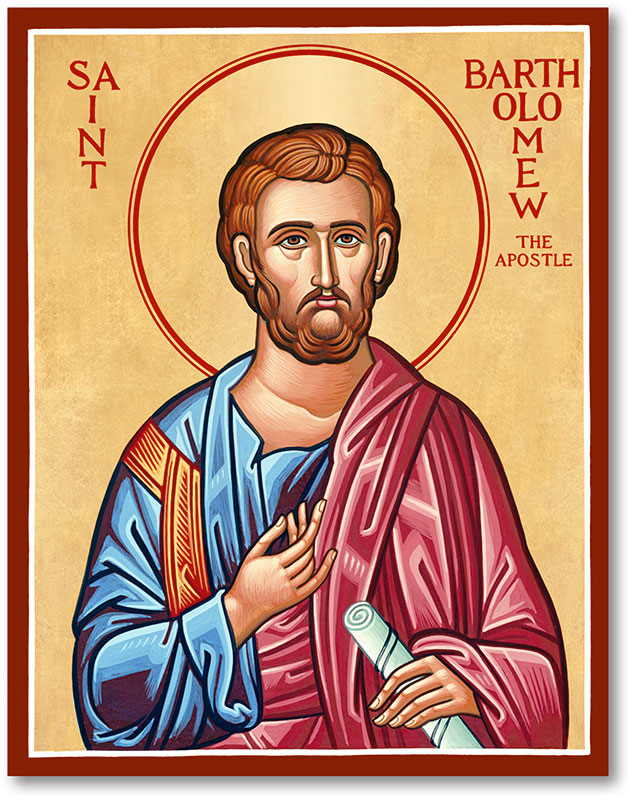
The Feast of St. Bartholomew-The Anonymous Apostle~The Very Rev Lady Sherwood, OPI
My dearest brothers and sisters -in-Christ:
Today, we come together as the Church to commemorate the Feast Day of St Bartholomew the apostle. Bartholomew is a relatively difficult saint to commemorate because we hardly know anything much truly about him. There are some who may believe that Bartholomew is the same person as Nathaniel –but scholars have been known to argue about the truth or otherwise of this. What we do know is that In the Gospels of Matthew, Mark and Luke, that Bartholomew is listed as being one of the twelve Apostles called by Our Lord Jesus Christ.
Ancient writers on the history of the Christian faith have written that Bartholomew was an apostle to India – possibly in the region of Mumbai (Bombay). Along with his fellow apostle Jude, Bartholomew is reputed to have brought Christianity to Armenia in the 1st century. According to church tradition, Bartholomew is said to have been flayed alive, before being crucified upside down, thus becoming the patron saint of Leather-workers. In art paintings and in sculpture form, Bartholomew is often represented as holding a knife, with his own skin neatly draped over his arm. Bartholomew has also always been associated with healing, so there are a number of hospitals which have been named after him because of this
Bartholomew is also believed to have been associated with the small Italian Island of Lipari, where it is thought that he may have been buried. During World War II, the regime looked for ways to finance its activities, and ordered that a silver statue of Saint Bartholomew from the cathedral in Lipari was to be melted down. But when the statue was weighed, it was found to only actually weigh just a few grams so it was returned to its place in the Cathedral of Lipari. However, In reality, this same statue is made wholly of solid silver and therefore should indeed be very heavy in weight. This is a fairly recent miracle that has been associated with St Bartholomew.
About Bartholomew himself we know almost nothing, except that he was an Apostle of Jesus. Far from being a negative thing, I think this is the most important thing about this rather mysterious and anonymous apostle. For this teaches us that the call to serve is not really anything whatsoever to do with worldly status or fame. If we Look around us today, we will see much evidence of the reign of ego and of worldly fame, perhaps it is media stars and celebrities which tend to be the best known for this. An increasing number of children, when asked what they want to do when they grow up, say that they want to be famous, to be a celebrity or a star– and that the goal of reaching fame has become for them their vocation. Some of our politicians can also seem rather the same way. But the church isn’t entirely exempt either: we see evangelists on religious tv stations, pastors of megachurches, and, unfortunately, some bishops and clergy who just love being in the spotlight, have who love self-publicity. I once heard someone say that their church was OK but it was hard to see God because the Vicar always got in the way. It’s a temptation clergy are aware of and must always resist – our job is to point people to God, not towards ourselves.
So Bartholomew’s anonymity shows us ‘it’s not all about us’. Our job as Christians is to get out of the way and to enable people to catch a glimpse of the God and Father whom we serve. We also know, from the life of this mysterious and anonymous apostle, that we actually don’t need worldly fame, because God loves us, and that is all we need – we ought to need no other adulation than that!!
Each and every one of us eventually will join the ranks of anonymous Christians who have served God throughout the ages. In 2000 years’ time – and most likely long before that – we will all have been forgotten, except perhaps by the odd ancestor hunter who might still be digging our names out of archives and searching church registers to find historical information.
This might seem rather disheartening, but it definitely needn’t be such, because we know we are each p of God’s creation and of his redeeming: we are each loved by God more than we could ever hope imagine! Part of our job as Christians, is to try to discover more of this love as we go about living our lives. When we truly understand even a little bit of this love that God our Father and our creator, truly has for us, our anxieties about worldly status, worldly importance and worldly fame, begin to lose their hold over us. In God’s love we truly have everything we need.
So often we see the lives of the rich and famous descend into tragedy or disaster. Worldly riches and fame often don’t bring true and lasting happiness. The ordinariness of our lives is something which we as Christians should celebrate, if, like Bartholomew, our lives are built on the rock of faith and we have the knowledge of God’s true and eternal love, like a hidden jewel, burning deep inside of us.
So Bartholomew is one of us: he is a follower, a disciple, and a servant of Our Lord Jesus Christ. An anonymous, unshowy person who gave of his best. Bartholomew may well be Someone we don’t know all that much about, but we do know that his soul is now residing with God where that great love will, at last, be fully known.
That is all that is needed. All that truly matters. Amen
Two Minute Mendicant~Br. Christian Ventura, OPI

What’s in a name?
Brothers can be friars, monks, or simply just religious brothers. Friars can be monks, but this isn’t always the case, and the terms aren’t exactly interchangeable. Likewise, in new monasticism and mostly outside of the Roman Catholic Church, sisters are not always professed nuns.
Unlike what many people think, “Brother/Sister” is customarily not an honorific title commensurate with Doctor, Reverend, Professor, etc. rather, in our priory at least, it is intentionally supposed to signify the opposite. The goal is to radically disrupt inherent power dynamics, and sincerely invite another person into a loving siblingship. It is a reminder that at the end of the day, we are simply beloved siblings who make up the Body of Christ. In my experience, most have no preference if you call them by their first name or Br./Sr., but this depends on the person and local customs. I have no preference, although I know some who do, and it is always perfectly fine to ask! Because of tradition within the Roman Catholic Church, Br./Sr. has been shaped across history as an ecclesiastical title. In the new monasticism of today, many monastics are trying hard to change the meaning from a pseudo-honorific back to an earnest invitation.
Mendicant generally refers to one of the four main mendicant orders: Franciscans, Carmelites, Dominicans, and Augustinians. there are other mendicant orders, and there are also formerly mendicant orders, such as the jesuits (SJ) who are now considered “clerics regular”
~ br c
Two Minute Mendicant~Br. Christian Ventura, OPI
On Preaching: Part I
Historically, when Dominicans are taught to preach, we are *generally* told not to view Holy Scripture as historical documents that necessitate eloquent interpretation. Likewise, we are not supposed to read the Holy Gospels with the intention of discovering a hidden meaning or a novel theological epiphany that hasn’t already been debated by biblical scholars and theolo-gicians throughout the ages. While at first glance this might appear seemingly contrary to the very nature of preaching, it calls us to be attentive to the text in a rather mystically intimate way.
When we prepare to preach at the pulpit, our heart is set on discerning how the living Word is speaking to us in the context of today. We ought not to be surprised if an ancient parable helps inform how we see gun violence, or if the Beatitudes can teach us a thing or two about the ongoing climate crisis.
The Spirit kindles our heart, and our heart informs our mind to articulate aspects of the divine essence in human words. This is the same Spirit that bestowed the gift of speaking the language of the people on the day of Pentecost. The Dominican is first called to contemplate, and then consequently, has a responsibility to share the fruits of our contemplation for the salvation of souls.
Our siblings at the United Church of Christ do an excellent job of nurturing this truth that “God is still speaking”. Furthermore, not only do we interact with the living Word, we believe every Christian has an apostolic call to bear witness to how God authors the Gospel in our everyday life as an extension of our shared priesthood that is gifted to us at baptism. In that same sentiment, if we do not strive with our whole heart to preach the Gospel with our everyday actions— the words that come out of our mouth mean nothing.
~ br c
Faithfulness and Bearing Fruit: The Feast of St. Dominic~The Rev. Frank Bellino, OPI
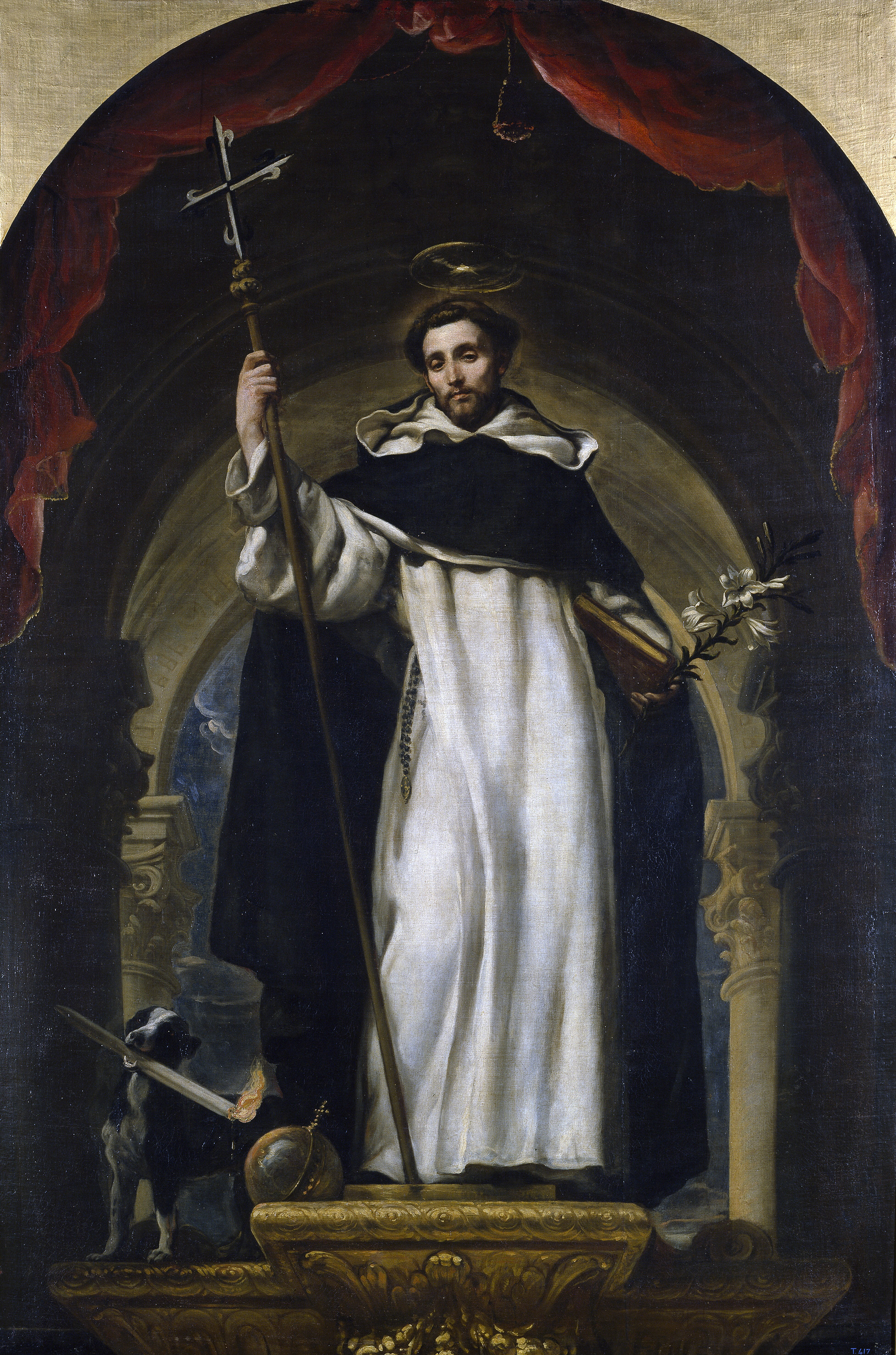
Today is the Feast of St Dominic, the founder of the Order of Preachers. When he was dying, St. Dominic told his brothers that he wanted to be buried in such a manner that the future friars could walk over him.
In the Middle Ages it was the custom to bury people in the abbey. St Dominic did not want to be recognized in a special way. He wanted to rest waiting for the resurrection with his brethren. For him fraternity stretched into heaven.
But St Dominic also wanted to be used.
Every night at the end of Compline, I pray the O Lumen:
O light of the Church, teacher of truth, rose of patience, ivory of chastity, you have freely poured out the waters of wisdom: preacher of grace, unite us to the blessed.
This prayer concludes with:
Pray for us, holy father Dominic. That we may be made worthy of the promises of Christ.
In reciting this prayer, I am reminded that I am a son of St. Dominic. Around the world, thousands of friars, sisters, nuns and lay Dominicans call St. Dominic their holy father, and after 800 years, St. Dominic still continues to bear fruit.
Now the shining example of St. Dominic’s fruitfulness is not something we should simply admire, but it is also something we need to imitate in a way that is proper to our state of life. Indeed, all Christians are called to be fruitful. Sadly, however, many in the Church have deeply failed in this regard. It is very sad that there are many examples of those in Holy Orders who have abandoned their resolve to remain pure for the sake of the kingdom. How many Catholics have become disillusioned with their faith because of such behavior? How many vocations to the priesthood and religious life have been lost? Sexual infidelity is definitely not compatible with Christian fruitfulness.
It is in moments like this, when we struggle with the sin and infidelity that afflicts our Church and society, that we need to turn to the saints such as St. Dominic who exemplified true Christian fruitfulness. Throughout the Bible, fruitfulness is an expression of God’s favor. The very first thing God did after creating Adam and Eve was to bless them and say “be fruitful and multiply.” Likewise, God says to Abraham “I will indeed bless you, and I will multiply your descendants as the stars of heaven.” But these promises of fruitfulness have their true fulfillment in Christ’s life.
On many occasions, Jesus expresses the desire for His disciples to bear fruit. This fruitfulness is manifested in the sacramental life of the Church. Indeed, at the Last Supper, Jesus describes Himself as the true vine; He goes on to tell His disciples “I chose you and appointed you that you should go and bear fruit and that your fruit should abide.” These sayings from St. John’s Gospel account of the Last Supper express the true meaning of the Eucharist. It is in the Eucharist that Christ’s death on the cross is made present, and when we look to the cross, we are to make sense of it in terms of its fruitfulness. Indeed, in the moments before Christ died, with Mary, His mother and the beloved disciple, John, standing before Him, He said to His mother “Woman, behold your son,” and to His beloved disciple “Behold your mother.” Thus, the Virgin Mary who brought Christ to birth in the Incarnation now brings Christ to birth in the beloved disciple and all who see her as their mother. This is indeed the fruit that will stand for eternity.
I hardly believe that St. Dominic knew that his fruit would be still producing 800 years later, and through our faith it will be in heaven.
St. Thomas Aquinas, Memorial~Br. Milan Komadina, Novice
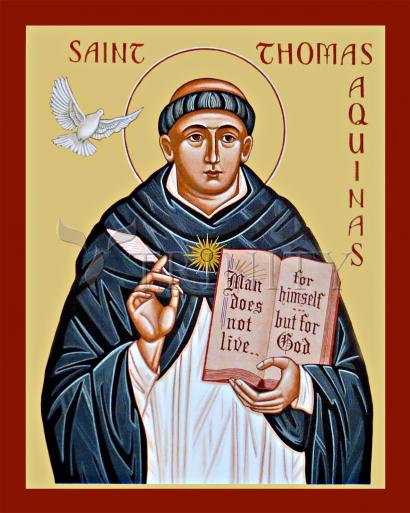
Today we commemorate Saint Thomas Aquinas. He was born in Italy in 1225 (only four years after Saint Dominic’s death). In 1244, he entered the Dominicans and in 1245, he moved to Paris (and later to Naples, Rome, and Cologne) to study, teach and write. Written toward the end of his life, Thomas Aquinas’s most noted work is the Summa Theologica, in which he posits five arguments for the existence of God. But, Saint Thomas’s genius is attributed to much more than a single work. He is honored as a Doctor of the Church, and is the patron saint of scholars, schools, and students. Nearly eight-hundred years after his death, his legacy continues to teach much about grappling with truth, learning, and how both are essential to faith.
Today we read in Hebrews 11 about the importance of having faith. In our everyday life we encounter many problems. These problems could be health issues, financial or job insecurity problems, having a bad relationship with some friends or family members and so on and so forth. However, there is one thing that we, as Christians share and it could help us a lot in those hardships. This is called Faith. Faith in God does not only mean that we believe that there is God who created us. It also means that we believe that God is still present everywhere and at any time in our life. He is timeless and he has no limitation in existing at the same time in the past in the present and in the future. Sometimes we see that in the present the things in our life are not as we would like them to be. We hope we deserve better and we feel that our cross might be a bit bigger that we could carry. In those situations it is good to remember Hebrew 11:8-19 saying about Abraham who trusted God and who had full faith which means that he know that all the hardships he was struggling with were there for some reason. He moved to the Promised Land even though he could not know what this new land would bring him. But he trusted that God is in control of the future and he trusted that God had a plan. This chapter reminds us that God also has a plan for every single person. Especially the verses 11 and 12 –
And by faith even Sarah, who was past childbearing age, was enabled to bear children because she considered him faithful who had made the promise. And so from this one man, and he as good as dead, came descendants as numerous as the stars in the sky and as countless as the sand on the seashore.
This is what we could call the Faith in Action. I guess that we all have struggles with having strong faith in absolutely every period of the life. Sometimes we feel unjust, or we feel hurt or we feel that we do not deserve the things that are happening to us. But still, it is important to remember also that Job was the most righteous man of his time and God allowed the devil to make many temptations, loss and hardship to his life. Yes we know the past, and sometimes it can be hard to remember it, yes, we also live our present and we could sometimes feel blue about it, but what we do not know is the future. God is in the future and he knows why we have certain hardships or temptations. But he gave us the Bible and he thought us that we will always have the cross that we can carry. He gave us the faith and he thought us through Abraham what having faith means. As a perfect example of faith is the readiness of Abraham to sacrifice his own son. As we read in verses 17, 18 and 19 –
By faith Abraham, when God tested him, offered Isaac as a sacrifice. He who had embraced the promises was about to sacrifice his one and only son,even though God had said to him, “It is through Isaac that your offspring will be reckoned.”Abraham reasoned that God could even raise the dead, and so in a manner of speaking he did receive Isaac back from death.
A God example of perfect faith is that Abraham knew that God could even get Isaac back from the death. The lesson about Abraham and the importance of strong faith is the lesson that we all should repeat in our everyday life. People tend to lose or minimize their faith in the moments of hardships. Many years after Abraham, Our Lord Jesus also experienced the lack of faith of his followers when he was sleeping on the boat while there was a storm coming. As we read in Mark 4:35-41. In verse 38 they asked –
“Teacher, don’t you care if we drown?”
This is the sentence we probably often ask when struggling with the storms of our everyday problems. We are not used to let us be guide by Jesus and trust him. But happy news are that we could always rely on Him because he was the one killing down the wind and calming the storm. And he wants us to be always reminded about the question he asked in verse 40 –
He said to his disciples, “Why are you so afraid? Do you still have no faith?”
My prayer for today is that we all could have the faith as Jesus thought us. The faith strong as the one that Abraham had. And to always remember that God is in control. Amen.
Mary, The Mother of God~The Rev. Frank Bellino, OPI
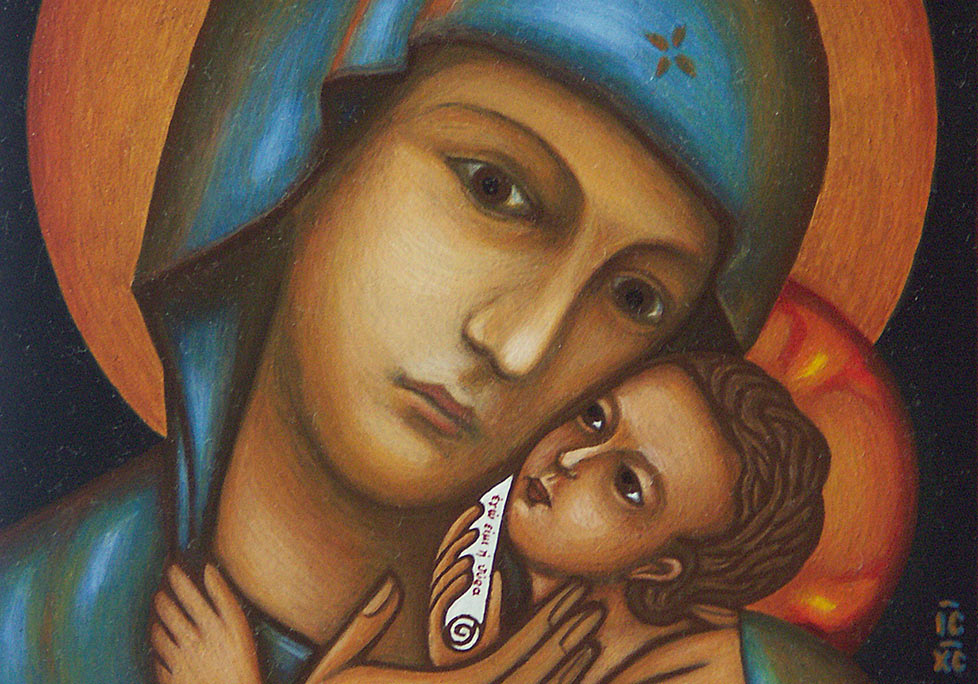
It’s quite common for parents to have unique influence in the lives of their children. Of course, that’s not always apparent while the children are growing up but once they become adults, even a word from a parent can have a significant effect. And the mother-son relationship is no exception to that.
Very often, a quiet word from a mother can have a remarkable impact on their child. It can produce a big change in behavior when all manner of alternatives has failed. And it can turn lukewarm interest or indifference on the part of the child into something approaching enthusiasm. Indeed, it’s not unknown for shrewd judges of human nature to approach a son’s mother in order to get her to persuade the son to do something for them. But if that is the case for even the most obstinate son, how much more effective will a mother’s word be in the case of a perfect son?
And that’s exactly what we find in the relationship between Christ and his mother Mary. Christ is the perfect son and Mary is his mother. And like any mother we can expect Mary to have a big influence on Christ her son. So today when we celebrate the solemnity of Mary the Mother of God, the Church affords us a good opportunity to think about that relationship and to give thanks to God for it. But here it gets a little more complicated because Christ is not just only human as we are, Christ is divine also, he is God: Christ is divine and human. And that is effective in the way Mary influences her son Christ.
But what difference? We have to be careful here. Being divine and human does not make Christ any less human than we are, it does not make Christ any less Mary’s son, and it does not make Mary any less Christ’s mother.
Being human is about being a person who possesses human nature; Christ is a person who possesses human nature, therefore Christ is human. Similarly, being a mother is about giving birth to a person who is human, Mary gave birth to a person who is human, therefore Mary is a mother. What distinguishes Christ from us is that from eternity Christ existed as a divine person while we do not. However, in time, through the Incarnation, Christ became human: so, Christ was a divine person who was human. But a divine person who is human, is a person who is human and as such a full and true human being, one who had a mother and was a son to her.
So how does Christ’s being divine and human make a difference in the way Mary influences her son? Well, when a mother tries to influence her son, it is quite likely that the son does not know how things will work out. Indeed, perhaps he does not even care how things will work out. And regardless of whether he cares or not, it is quite likely he can be persuaded to act one way or another. But that does not work in Christ’s case. Christ, as we saw, is divine and human. Christ is God and as such he cannot lack any knowledge and must know how things will work out.
However, God knows all, and God also governs creation providentially and there are no gaps in that destiny. So, we cannot say that God does not care how some things will turn out or is open to persuasion, pleading or any other such thing that we can think about. And thus, it is for God, so it is also for Christ.
But if that’s the case, what role is left for Mary to influence Christ her son? Not much it seems. Thankfully that is not the end of the story. In his wisdom God does bring some things about through our intercession. It’s not that he leaves a gap in his wisdom for us to have our free will. Rather we come to desire what God wants in particular situations, we ask for it and God brings it about.
However, for most of us what God brings about through our intercession is quite small, because we do not play a crucial role in salvation history. Mary on the other hand does play a crucial role in salvation history and so God in his providence does bring about many things through Mary’s intercession.
Hence a prayer offered to God through the intercession of his mother Mary stands a much better chance of being answered than one which is not offered through the intercession of Mary. And that is the way Mary can influence her son, just as we would expect a mother to be able to do.
Just a Shepherd~The Rt. Rev. Michael Beckett, OPI
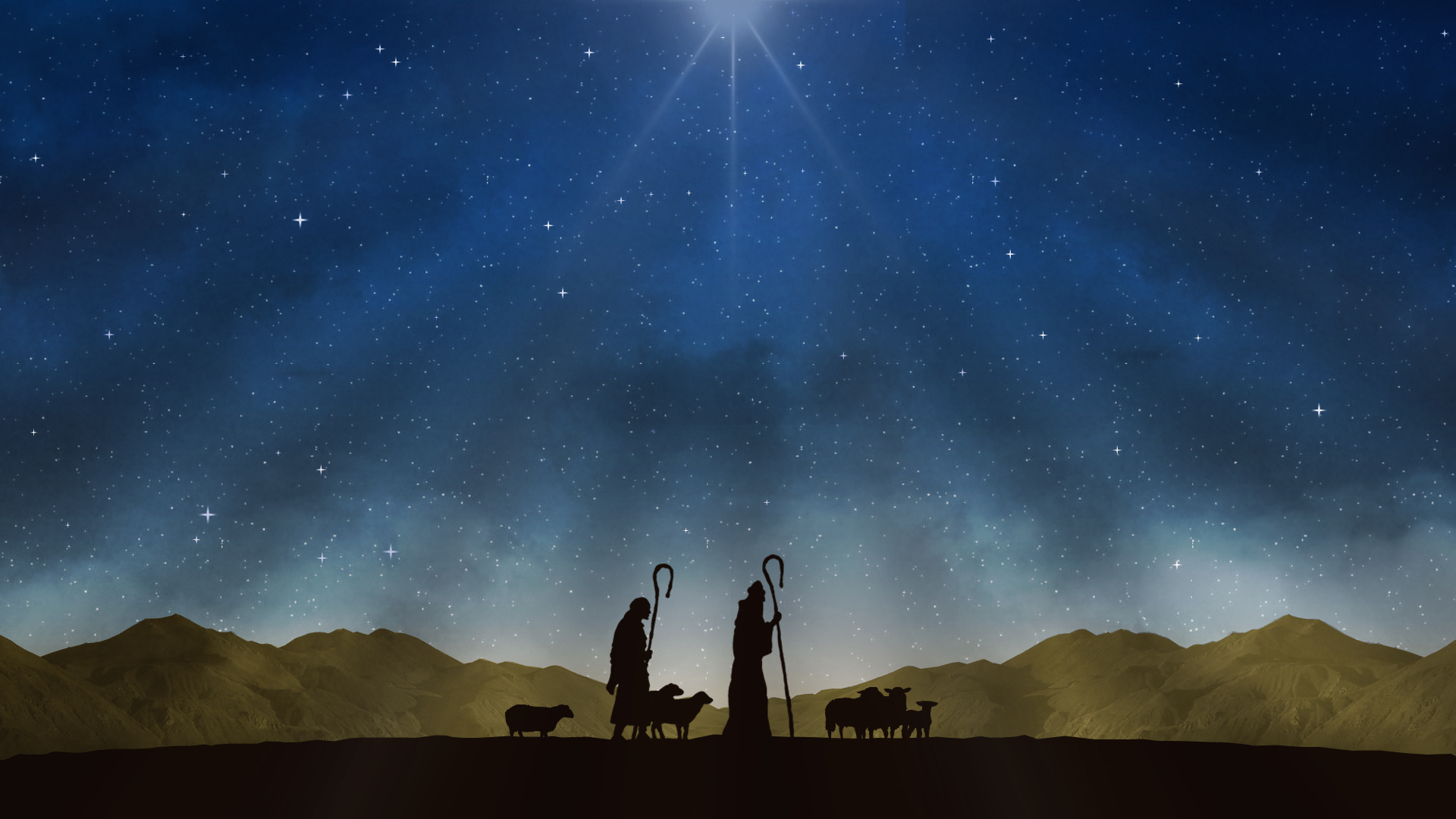
8And there were in the same country shepherds abiding in the field, keeping watch over their flock by night. 9And, lo, the angel of the Lord came upon them, and the glory of the Lord shone round about them: and they were sore afraid.
10And the angel said unto them, Fear not: for, behold, I bring you good tidings of great joy, which shall be to all people. 11For unto you is born this day in the city of David a Saviour, which is Christ the Lord.
12And this shall be a sign unto you; Ye shall find the babe wrapped in swaddling clothes, lying in a manger. 13And suddenly there was with the angel a multitude of the heavenly host praising God, and saying,
14Glory to God in the highest, and on earth peace, good will toward men.
15And it came to pass, as the angels were gone away from them into heaven, the shepherds said one to another, Let us now go even unto Bethlehem, and see this thing which is come to pass, which the Lord hath made known unto us. 16And they came with haste, and found Mary, and Joseph, and the babe lying in a manger.
17And when they had seen it, they made known abroad the saying which was told them concerning this child. 18And all they that heard it wondered at those things which were told them by the shepherds.
19But Mary kept all these things, and pondered them in her heart. 20And the shepherds returned, glorifying and praising God for all the things that they had heard and seen, as it was told unto them. Luke 2:8-20 King James Version (KJV)
After 2000 years of Christmas sermons, in hundreds of languages, in different countries throughout the world, and by way of innumerable faith traditions, is there anything new or original left to be said about Christmas, and what it means, that hasn’t been said before? Perhaps not. However, like re-reading that favorite book for the 17th time, or watching that favorite movie or television show for the 358th time, even when you know exactly what comes next, what the very next word is going to be, often we find a new meaning or a new slant on something that is as tried and true as Christmas itself.
And so it is with me this year. The Gospel reading for today recalls the story of the angels bringing the news of Christ’s birth to the shepherds. Now, we all know that story. We’ve heard it many times over, and those of us who cherish “A Charlie Brown Christmas” will always, in some ways, hear Linus quoting from Luke, no matter who is reading that passage of the Bible to us. We know the story. We SEE the story in every Nativity scene we pass by. There is almost always a shepherd near the manger carrying a lamb on his shoulders and another lamb or sheep to be seen somewhere hanging around. It’s always seemed to me that the sheep and the shepherds were just THERE, minor players in a Christmas play, the “extras” assigned to the kids who didn’t quite measure up to the roles of Mary or Joseph; they enter stage left, ooh and aah over the baby, and exit stage right, singing “Go tell it on the mountain”, singularly unimportant and taking secondary roles to the more illustrious wise men (who in reality weren’t there at all) and most definitely playing supporting roles to the Holy Family, or just standing around as so much scenery, contributing to the mood and filling up the bare spots in the Nativity scene. I overheard a conversation recently that made me really think about the shepherds. While visiting some friends, their cat jumped into the midst of the family crèche and knocked over the obligatory shepherd. It was chipped. The younger daughter of the family was somewhat distressed, and to make the little girl feel better, the mother said to her, “Don’t worry about it, Honey. It’s just the shepherd. He’s not all that important.” I didn’t think much about it at the time, but when reading the Scripture appointed for today, it struck me. Not all that important? But weren’t they? Who WERE these shepherds? Why were they there in the first place? Why did THEY get the news of Christ’s birth in such a spectacular way? Who were they that they should be eyewitnesses of God’s glory and receive history’s greatest birth announcement?
In Christ’s day, shepherds stood on the bottom rung of the Palestinian social ladder. They shared the same unenviable status as tax collectors and dung sweepers. Only Luke mentions them. When the twelve tribes of Israel migrated to Egypt, they encountered a lifestyle foreign to them. The Egyptians were agriculturalists. As farmers, they despised shepherding because sheep and goats meant death to crops. Battles between farmers and shepherds are as old as they are fierce. The first murder in history erupted from a farmer’s resentment of a shepherd. Smug religious leaders maintained a strict caste system at the expense of shepherds and other common folk. Shepherds were officially labeled “sinners”—a technical term for a class of despised people.
Into this social context of religious snobbery and class prejudice, God’s Son stepped forth. How surprising and significant that God the Father handpicked lowly, unpretentious shepherds to be the first to hear the joyous news: “It’s a boy, and He’s the Messiah!” What an affront to the religious leaders who were so conspicuously absent from the divine mailing list. Even from birth, Christ moved among the lowly. It was the sinners, not the self-righteous, He came to save. So is it really all that surprising that the first announcement of Christ’s birth was to the lowly shepherds on Bethlehem’s hillsides?
Consider the events leading up to Christ’s birth. Mary was barely 15. Christ was born to an unwed mother, Mary, a servant girl; Mary the young woman who delivered while only betrothed to Joseph. He was born in a stable, a cave! A holy God being born to a couple no different than immigrants, far from home and in a strange city, in a place where animals were kept. A couple who couldn’t even find a place to stay, turned out of every inn! It’s all too bizarre.
Yet this is the God we experience. This is our claim; This is the meaning of his very name: Immanuel, meaning “God with us” — with us not just in nice times, but most especially in the times of our lives when we are in the caves, and stables of our lives, when we are turned out of the places we’d like to be, when we are at the lowest of low points, when we are out in the dark, and in the cold like the shepherds.
Our God, the God who comes to us in the person of Jesus Christ, is the God of the oppressed, the repressed, the depressed; the God of the sad, the grieving, the sorrowful; the God of the lonely, the lowly, the poor, the God of the Shepherds; the God of the despised, the destitute, the dejected. Our God is the God of Abraham, Isaac, and Jacob, the God who stood with the enslaved Hebrews in Egypt, who led them out of Egypt to a promised land of freedom. Our God is the God of widows and orphans and stranded travelers. Our God is the God who doesn’t stay neat and tidy and spotless, but comes and stands beside us in our times of deepest need, who comes among us as the child in the dirty manger and the God of the shepherds on the hillside. The God we’re speaking of dares to join the unsuccessful, the failures, the dispossessed, and the downtrodden; the God of the Shepherds.
Wherever there is suffering, our God is there. He stands with Zacchaeus, the despised tax collector, and with Bartimaeus, the blind beggar. He is with us when we face cancer, chemotherapy, and radiation treatments. He is with us when we face amputations, operations, loneliness, the loss of a loved one, or even death itself. The God of the manger and the Shepherd is Immanuel, God with us. At our deepest times of loss and need, in the dirtiest and most embarrassing parts of our lives, God is with us, His rod and His staff, they comfort us. It is God who glues us back together when we become, like that figure in my friends’ Nativity scene, chipped, flawed, and much less than perfect.
And it is up to us, to demonstrate the love of God, the God of the lowly, the downtrodden, to the world. We, like the shepherds in the Christmas story, are to be the ones who are to proclaim the good news “which shall be to all people” to all the people of the world. It is our responsibility as Christians to be the instruments through which God can work in this world. As was most famously stated more than four centuries ago by Saint Theresa of Avila:
Christ has no body but yours,
no hands, no feet on earth but yours,
Yours are the eyes with which he looks with compassion on this world,
Yours are the feet with which he walks to do good,
Yours are the hands, with which he blesses all the world.
Yours are the hands, yours are the feet,
Yours are the eyes, you are his body.
Christ has no body now but yours, no hands, no feet on earth but yours,
Yours are the eyes with which he looks with compassion on this world.
Christ has no body now on earth but yours.
My very favorite Christmas carol, “In the Bleak Midwinter,” includes the lines, “What, then, shall I bring him, empty as I am? If I were a shepherd, I would bring a lamb. If I were a wise man I would do my part. What can I give Him? I can give Him my heart.”
Won’t you, this Christmas, give Him your heart? Won’t you, like the shepherds in the children’s plays of the Christmas story, be one to “go tell it on the mountain, over the fields and everywhere” that Jesus Christ is born? Amen.
Getting Ready~The Rt. Rev. Michael Beckett, OPI
Our trees are up, our halls are decked, and the house is relatively clean. I mean, maybe we’re not quite ready for Charles and Camilla to visit, but I’d not be embarrassed if, say, William and Catherine or Joe and Jill popped in. For all practical purposes, we are ready for Christmas.
What about y’all? Shopping done? Decorating finished? Parties planned? What does “being ready for Christmas” really mean?
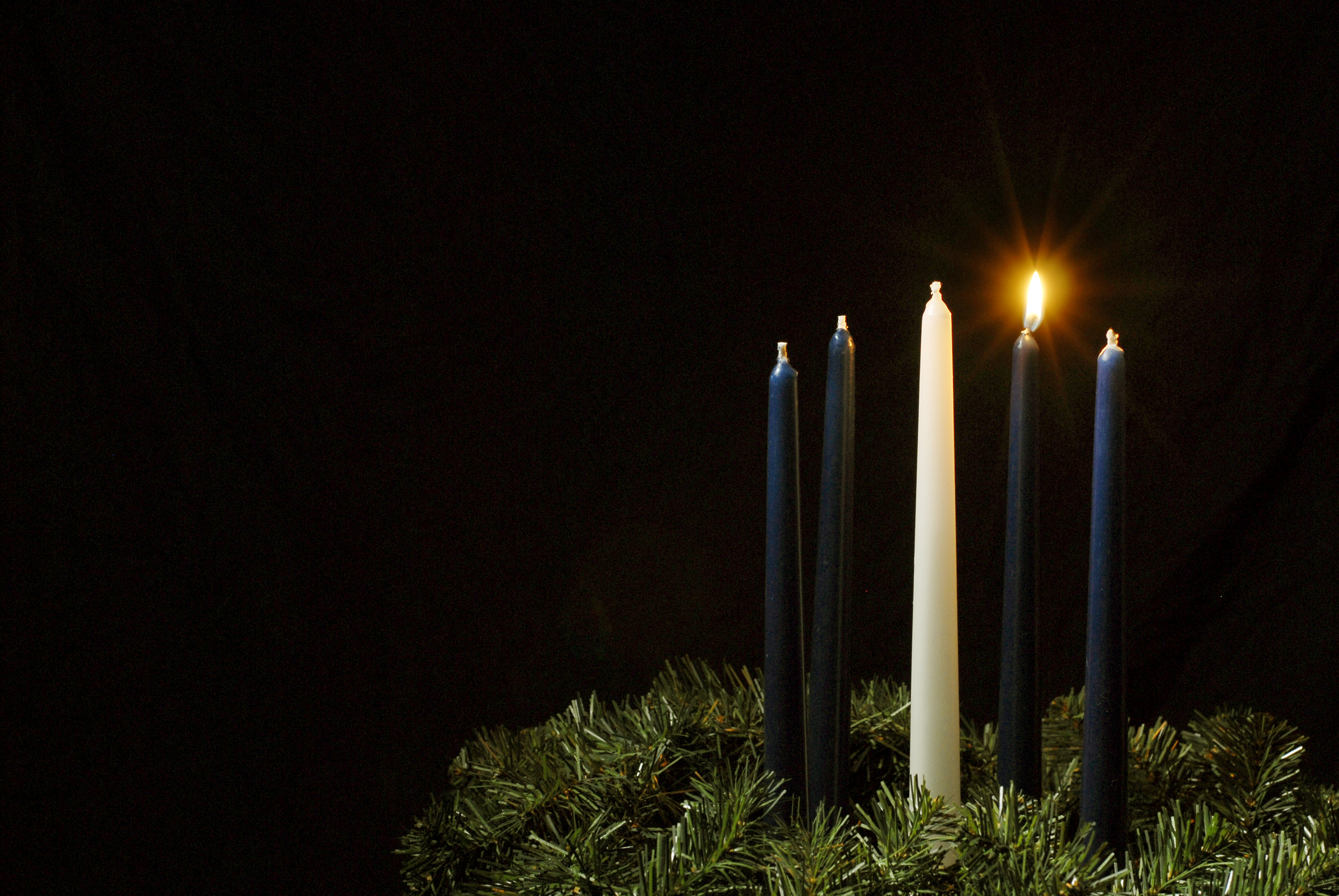
Today is the First Sunday in Advent. I’m about certain that every one of us has seen an “Advent Calendar.” Those cute little things that count down until Christmas. Whilst they can be fun and exciting, they really have nothing to do with “Advent” though. Not really even close. So, one might ask, “What is Advent?” And, as is my custom, I’m gonna tell ya.
Since the 900s, Advent has marked the beginning of the church year, and is a season of great anticipation, preparation, and excitement, traditionally focusing on the Nativity of the Christ Child, when Jesus came as our Savior. During Advent, we as Christians also direct our thoughts to His second coming as judge.
The word Advent is from the Latin adventus, meaning coming,” and is celebrated during the four weeks of preparation for Christmas. Advent always contains four Sundays, beginning on the Sunday nearest the feast of St. Andrew the Apostle, (November 30) and continuing until December 24. It blends together a penitential spirit, very similar to Lent, a liturgical theme of preparation for the Second and Final Coming of the Lord, called the Parousia, and a joyful theme of getting ready for the Bethlehem event.
Advent is a time of preparation that is marked by prayer. Advent’s prayers are prayers of humble devotion and commitment, prayers of submission, prayers for deliverance, prayers from those walking in darkness who are awaiting and anticipating a great light (Isaiah 9).
So whilst we are preparing our homes for Christmas, should we not also be preparing our hearts and minds? We all of us know that Christmas is on 25 December, and that’s when we celebrate Jesus’s birth. What we don’t know, however, is when Jesus is coming back.
In the Gospel appointed for today, Jesus says to his disciples:
“As it was in the days of Noah, so it will be at the coming of the Son of Man. In those days before the flood, they were eating and drinking,
marrying and giving in marriage, up to the day that Noah entered the ark. They did not know until the flood came and carried them all away.
So will it be also at the coming of the Son of Man. Two men will be out in the field; one will be taken, and one will be left. Two women will be grinding at the mill; one will be taken, and one will be left. Therefore, stay awake! For you do not know on which day your Lord will come.
Be sure of this: if the master of the house had known the hour of night when the thief was coming, he would have stayed awake and not let his house be broken into. So too, you also must be prepared, for at an hour you do not expect, the Son of Man will come.”
As we go about “getting ready” for Christmas, let us not forget what we are really ‘getting ready” for. I invite each of you to have a most blessed, holy, and prayerful Advent. Amen.
The Feast of All Dominican Saints~The Rev. Dcn. Scott Brown, OPI
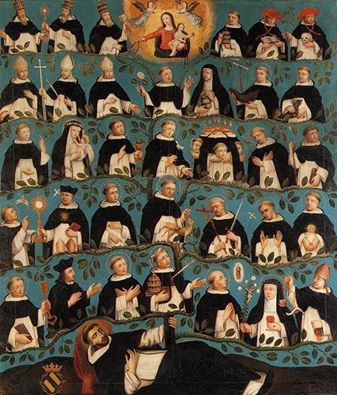
Blessed are the pure in heart, for they shall see God. Mt 5:8
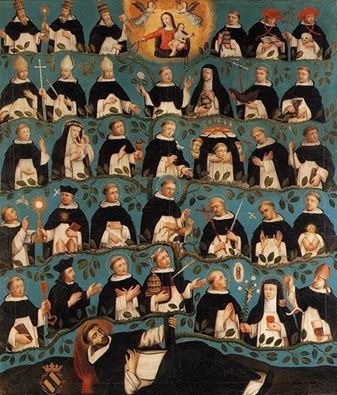
Today we celebrate the Feast of All the Saints of the Dominican Order.
We come together as one Dominican Family today to celebrate not only Our Saints, but also our many Blesseds, Holy Friars, Nuns, Sisters, and Laity who have lived over the past 800 or so years.
We are so privileged to celebrate them as they provide us with an example by which we follow in our religious lives, by their wonderous fellowship in their communion and in their much-needed aid to us by their intercessions to God on our behalf. We celebrate all of those Dominicans who were faithful in their lives lived with great prayer, silence, and penance, those who have educated thousands of souls, and Third Order members who have sanctified the world.
We celebrate in thanks to God on this important feast day for our Order and turn to the examples of our Saints, their lives, and their intercessions for us to that they may guide us on our spiritual journey.
Our Spiritual Father, Saint Dominic left us a wonderous legacy of teaching and preaching by word and example of how we should live our lives. It is, then, joyous and encouraging that so many of our Dominican brothers and sisters have been beatified and canonized.
How fitting that the Gospel appointed for today includes these words spoken by Our Lord:
…..but those who are deemed worthy to attain to the coming age
and to the resurrection of the dead neither marry nor are given in marriage. They can no longer die, for they are like angels; and they are the children of God because they are the ones who will rise. That the dead will rise even Moses made known in the passage about the bush,
when he called out ‘Lord,’ the God of Abraham, the God of Isaac, and the God of Jacob; and he is not God of the dead, but of the living,
for to him all are alive.” (Lk 24: 34-38)
Let us pray then in the example we have been taught to ask our dear saints to intercede for us, and to thank our God for all the saints of our Dominican Order and for the fruits of our order to be pleasing in his sight by joining in the Dominican Order Litany of Saints:
God, the heavenly Father have mercy on us.
God, the Son, Redeemer of the world have mercy on us.
God, the Holy Spirit have mercy on us.
Holy Trinity, one God have mercy on us.
Holy Mary pray for us.
Saint Mary Magdalen pray for us.
Holy Father Dominic pray for us.
Holy Father Dominic pray for us.
Holy Father Augustine pray for us.
Holy Father Francis pray for us.
Blessed Jane of Aza pray for us.
Blessed Reginald pray for us.
Blessed Bertrand pray for us.
Blessed Mannes pray for us.
Blessed Diana pray for us.
Blessed Jordan of Saxony pray for us.
Blessed John of Salerno pray for us.
Blessed William and Companions pray for us.
Blessed Ceslaus pray for us.
Blessed Isnard pray for us.
Blessed Guala pray for us.
Blessed Peter Gonzalezpray for us.
Saint Zdislava pray for us.
Saint Peter of Verona pray for us.
Blessed Nicholas pray for us.
Saint Hyacinth pray for us.
Blessed Gonsalvo pray for us.
Blessed Sadoc and Companions pray for us.
Blessed Giles pray for us.
Saint Margaret of Hungary pray for us.
Blessed Batholomew of Vincenza pray for us.
Saint Thomas Aquinas pray for us.
Saint Raymond of Penyafort pray for us.
Blessed Innocent V pray for us.
Blessed Albert of Bergamo pray for us.
Saint Albert the Great pray for us.
Blessed John of Vercelli pray for us.
Blessed Ambrose pray for us.
Blessed Cecilia pray for us.
Blessed Benvenuta pray for us.
Blessed James of Varazze pray for us.
Blessed James of Bevagna pray for us.
Blessed Jane of Orvieto pray for us.
Blessed Jordan of Pisa pray for us.
Saint Emily pray for us.
Blessed James Salomonio pray for us.
Saint Agnes of Montepulciano pray for us.
Blessed Simon pray for us.
Blessed Margaret of Castello pray for us.
Blessed Augustine Kazotic pray for us.
Blessed James Benefatti pray for us.
Blessed Imelda pray for us.
Blessed Dalmatius pray for us.
Blessed Margaret Ebner pray for us.
Blessed Villana pray for us.
Blessed Peter Ruffia pray for us.
Blessed Henry pray for us.
Blessed Sibyllina pray for us.
Blessed Anthony of Pavonio pray for us.
Saint Catherine of Siena pray for us.
Blessed Marcolino pray for us.
Blessed Raymond of Capua pray for us.
Blessed Andrew Franchi pray for us.
Saint Vincent Ferrer pray for us.
Blessed Clara pray for us.
Blessed John Dominic pray for us.
Blessed Alvarez pray for us.
Blessed Maria pray for us.
Blessed Peter of Castello pray for us.
Blessed Andrew Abellon pray for us.
Blessed Stephen pray for us.
Blessed Peter Geremia pray for us.
Blessed John of Fiesole pray for us.
Blessed Lawrence of Ripafratta pray for us.
Blessed Anthony della Chiesa pray for us.
Saint Antoninus pray for us.
Blessed Anthony Neyrot pray for us.
Blessed Margaret of Savoy pray for us.
Blessed Bartholomew of Cerverio pray for us.
Blessed Matthew pray for us.
Blessed Constantius pray for us.
Blessed Christopher pray for us.
Blessed Damian pray for us.
Blessed Andrew of Peschiera pray for us.
Blessed Bernard pray for us.
Blessed Jane of Portugal pray for us.
Blessed James of Ulm pray for us.
Blessed Augustine of Biella pray for us.
Blessed Aimo pray for us.
Blessed Sebastian pray for us.
Blessed Mark pray for us.
Blessed Columba pray for us.
Blessed Magdalen pray for us.
Blessed Osanna of Mantua pray for us.
Blessed John Liccio pray for us.
Blessed Dominic Spadafora pray for us.
Blessed Stephana pray for us.
Saint Adrian pray for us.
Blessed Lucy pray for us.
Blessed Catherine Racconigi pray for us.
Blessed Osanna of Kotor pray for us.
Saint Pius V pray for us.
Saint John of Cologne pray for us.
Blessed Maria Bartholomew pray for us.
Saint Louis Bertrand pray for us.
Saint Catherine de Ricci pray for us.
Blessed Robert pray for us.
Blessed Alphonsus and Companions pray for us.
Saint Rose pray for us.
Saint Dominic Ibanez and Companions pray for us.
Blessed Agnes of Jesus pray for us.
Saint Lawrence Ruiz and Companions pray for us.
Saint Martin de Porres pray for us.
Blessed Peter Higgins pray for us.
Blessed Francis de Capillas pray for us.
Saint Juan Macias pray for us.
Blessed Terence pray for us.
Blessed Ann of the Angels pray for us.
Blessed Francis de Posadas pray for us.
Saint Louis de Montfort pray for us.
Blessed Francis Gil pray for us.
Saint Matteo pray for us.
Blessed Peter Sanz and Companions pray for us.
Saint Vincent Liem pray for us.
Saint Hyacinth Castaneda pray for us.
Blessed Marie pray for us.
Blessed George pray for us.
Blessed Catherine Jarrige pray for us.
Saint Ignatius and Companions pray for us.
Saint Dominic An-Kham and Companions pray for us.
Saint Joseph Khang and Companions pray for us.
Saint Francis Coll pray for us.
Blessed Hyacinthe Cormier pray for us.
Blessed Pier Giorgio pray for us.
Blessed Bartolo pray for us.
Blessed Michael Czartoryski pray for us.
Blessed Julia Rodzinska pray for us.
Sister Dollie Wilkinson, pray for us.
All holy Dominican brothers and sisters pray for us.
Lamb of God, who takes away the sins of the world, spare us, O Lord.
Lamb of God, who takes away the sins of the world, graciously hear us, O Lord.
Lamb of God, who takes away the sins of the world, have mercy on us.
Let us pray.–
God, source of all holiness, you have enriched your Church
with many gifts in the saints of the Order of Preachers.
By following the example of our brothers and sisters,
may we come to enjoy their company
for ever in the Kingdom of our Lord Jesus Christ,
Your Son, who lives and reigns with You
and the Holy Spirit, one God, for ever and ever.
Amen.
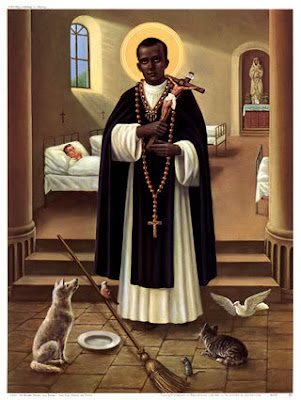
St Martin De Porres-A Saint of Humility for All~The Very Rev. Lady Sherwood, OPI
My dearest brothers and sisters in Christ,
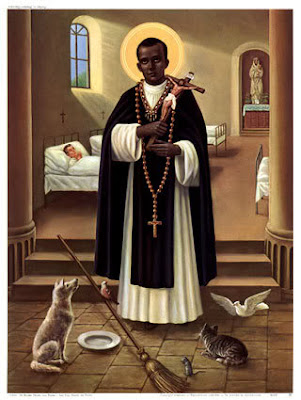
Today, we commemorate a saint who was a simple man of prayer who did many menial tasks such as sweeping floors in a Dominican friary.
There are stories that this man had the ability to be in two places at the once, levitating and exuding light whilst praying, and of having the ability to walk through locked doors, as well as having powers as a healer.
This Saint went on to become the patron saint of hairdressers, race relations, innkeepers, African-Americans, public schools, interracial harmony, Peru, people of mixed race, social justice and more.
This gifted man is non other than St. Martin de Porres, and it is his feast day which we commemorate as the church today.
Let us take a look at the life of this Saint:
St. Martin de Porres was born in Lima, Peru, in 1579 to a Spanish father and a freed black slave.
“His father rejected St. Martin for his dark skin and because of that, his childhood was one of poverty. He experienced everything the poor went through— he suffered hunger, starvation, rejection, and abandonment.
“Most who grow in poverty can become bitter with the world, but God had graced St. Martin at an early age. He allowed Christ’s love to change his heart. His poor background enabled him to relate to others. Even as a child, he would give his scarce resources to beggars whom he saw as less fortunate than himself.
“He reflected Christ the humble servant, Christ who came to serve and not to be served. That is what made St. Martin de Porres unique. His whole life was an attitude of humility.”
He was apprenticed to a barber at age 12.
“At that time, being a barber meant not just cutting hair, It also meant medicine, doctoring, treating wounds and fractures, prescribing medicine, like a doctor and pharmacist would do.
Martin became so good that people left his master and went to him instead. He became very successful and made great wealth, but he gave it all to the poor.”
In his mid-teens, St. Martin felt the call to religious life with the Dominicans, but did not deem himself worthy of becoming a priest or a brother.
He joined the Dominicans as a third order lay person, performing menial tasks, like sweeping and cleaning.
“It wasn’t long before the Dominicans realised the person they had in their midst, and St. Martin was asked by the Dominicans to join the order.
“St. Martin de Porres surrendered to God with complete humility. When you surrender to God, when you are humble, you allow divine providence to provide the means to become holy.”
After decades of serving with the Dominicans in various capacities, St. Martin de Porres died on Nov. 3, 1639.
Let us pray:
Oh God Our Father, Who has given us in Thy Humble Son, our Lord Jesus Christ, the model of all virtue and perfection, grant to us the virtue of humility. We think so little of Thee because we are so full of self. We cannot love Thee more until humility shows us our own nothingness and makes us rejoice in our complete dependence upon Thee.
You have given to the world a glorious apostle of humility, St Martin de Porres. Guide us by his example and strengthen us through his intercessions in our efforts to conform our hearts to the humble Heart of Thy Crucified Son.
Renew, O Lord, in these days, when pride and forgetfulness of Thee are so widespread, the wonders which You performed through Thy humble servant, Martin de Porres, during his lifetime. We pray that all the world may know of St Martin and of the surpassing value of the virtue of humility. Through the same Christ our Lord. Amen.
 The Order of Preachers, Independent
You must be logged in to post a comment.