
Category: Dominican Life

Render to Caesar…~ Br. Jake Vogel, Aspirant
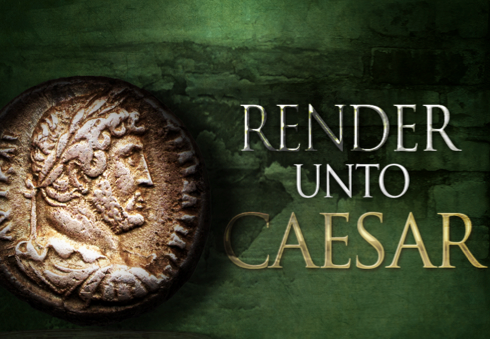
When I first set out to write this sermon I was a little overwhelmed as at first it seemed to me to be one of the more difficult Gospel readings to write about and so I did what I always do when I’m stressed or worried about something; I prayed. It was then that the message itself began to be clearer to me and through the things that I have been going through at work lately, I began to understand What Jesus meant when he said. “Render to Caesar’s the things that are Caesar’s.” This reading began to have very profound meanings for me firstly, that we should only give to those not of our family (Christians) that which they rightfully deserve nothing more and nothing less because as said in Proverbs, “Do not weary yourself to gain wealth, Cease from your consideration of it.” (Proverbs 23:4) We as Christians and as Dominicans should do what we must to satisfy our means to survive in the secular world as we are members of this realm in life, but we should not over exert ourselves to satisfy those of this world because one day this world will cease to exist. We should instead work to do what satisfies the will of our Father through his son Jesus and not let ourselves to be lead astray by the Pharisees of the world.
In this gospel reading the Pharisees are asking Jesus a question about paying taxes to catch him thinking he will either say yes to paying taxes which would not only put doubt on his allegiance to Israel but also could be considered breaking the second commandment as the money (Denarius) used to pay taxes not only had the head of Caesar but also called him ‘Divine’ there by committing idolatry; or that he would say not to pay taxes there by undermining the Roman government which could lead to his arrest. Not only does Jesus immediately sense their intent and scolds them saying, “Why are you testing me, you hypocrites?
Show me the coin that pays the census tax.” He then gives them a lesson of their own by stating in the simple sentence, “…render to Caesar what belongs to Caesar and to God what belongs to God.” (Matthew 22:18-21)
Through Jesus’ scolding of the Pharisees, we learn that we should not question or doubt the will of the Father and to do so is hypocritical because God always does what is right and just and so to question our Father’s will is to put us on the same rank as the Israelites who because, “the Lord’s anger burned against [them], He made them wander in the wilderness forty years, until the entire generation of those who had done evil in the sight of the LORD was destroyed.” (Numbers 23:13) We are shown that if we disobey Him however, that he will further teach us ways to understand his will so that we may reconcile ourselves to him.
Jesus then reminds us that we should not,
“…store up for yourselves treasures on earth, where moth and rust destroy, and where thieves break in and steal. But store up for yourselves treasures in heaven, where moth and rust do not destroy, and where thieves do not break in and steal. For where your treasure is, there your heart will be also.” (Matthew 6:19-21)
In making sure that we only have what we must to survive in the temporal realm and that we obey the law of the land by, ‘rendering to Caesar what is Caesar’s’ we will be able to better serve Him and build up our treasures in heaven rather than trying to cling to that which belongs to Caesar.
We are further reminded that if we want to follow Him we should, “… go, sell [our] possessions and give to the poor… Then come, follow Me.” (Matthew 19:21) As Jesus further explains in Luke if we sell our, “…possessions and give to the poor. [we] Provide [ourselves] with purses that will not wear out, an inexhaustible treasure in heaven, where no thief approaches and no moth destroys.” (Luke 12:33) Through, ‘giving to God’s what is God’s’ we are reminded to not only pay taxes (because it is giving those of this realm the things they are due) but also if possible to be as little involved with earthly riches and wealth as possible as we are reminded in Job that,
“They [who] shut themselves up by day; They do not know the light. For the morning is the same to him as thick darkness, For he is familiar with the terrors of thick darkness. They are insignificant on the surface of the water; Their portion is cursed on the earth… Drought and heat consume the snow waters, So does Sheol [for] those who have sinned.” (Job 24:16-9)
We should however not be discouraged or fear the Wrath of God for all will be forgiven in the end if we,
“deny [ourselves] and take up [our] cross and follow [Him]. For whoever would save his life will lose it, but whoever loses his life for my sake will find it. For what will it profit a man if he gains the whole world and forfeits his soul? Or what shall a man give in return for his soul? For the Son of Man is going to come with his angels in the glory of his Father, and then he will repay each person according to what he has done.” (Matthew 16:24-8)
Heavenly Father,
Continue to guide us in ways that help us denounce those who try to entrap us and lead us in the ways in which we can leave our earthly possessions behind to take up our cross and follow you.
We ask that the power of the Holy Spirit Guide us so that we may be claimed as heirs to your heavenly treasures and Eternal Kingdom by our redemption through your son our savior Jesus Christ.
Amen.

The Lord is My Shepherd!~Rev. Deacon Sister Dollie Wilkinson

Recently, I was talking to a dear friend of mine about a mutual friend of ours who was soon to meet our Lord. I expressed confusion, and doubts, as to why God would call this dear soul home so soon. But mostly, I was angry! It seems here lately too many people, whether casual friends, or those dear to me, are dying or have left us way too soon. Between natural disasters such as hurricanes and earthquakes, to violence inflicted on so many who woke up never realizing today was their last day on earth, the overwhelming emotion I believe many of us are experiencing, besides sadness……is outright anger.
While is would be easy to blame God, for all the tragedy and suffering that seems to be prevelant in the world today. We are cautioned in Ecclesiastes 9:12 (NKJV) ” For man also does not know his time: Like fish taken in a cruel net, Like birds caught in a snare, So the sons of men are snared in an evil time, When it falls suddenly upon them.”
In Exodus 32:1-14 we are also reminded that anger isn’t only a human emotion. Even our Lord expressed anger at His people, yet was reminded of His promise. And, I think it’s this sacred promise we need to remember during these turbulent times.
“When the people saw that Moses delayed to come down from the mountain, the people gathered around Aaron, and said to him, “Come, make gods for us, who shall go before us; as for this Moses, the man who brought us up out of the land of Egypt, we do not know what has become of him.” Aaron said to them, “Take off the gold rings that are on the ears of your wives, your sons, and your daughters, and bring them to me.” So all the people took off the gold rings from their ears, and brought them to Aaron. He took the gold from them, formed it in a mold, and cast an image of a calf; and they said, “These are your gods, O Israel, who brought you up out of the land of Egypt!” When Aaron saw this, he built an altar before it; and Aaron made proclamation and said, “Tomorrow shall be a festival to the LORD.” They rose early the next day, and offered burnt offerings and brought sacrifices of well-being; and the people sat down to eat and drink, and rose up to revel. The LORD said to Moses, “Go down at once! Your people, whom you brought up out of the land of Egypt, have acted perversely; they have been quick to turn aside from the way that I commanded them; they have cast for themselves an image of a calf, and have worshiped it and sacrificed to it, and said, ‘These are your gods, O Israel, who brought you up out of the land of Egypt!'” The LORD said to Moses, “I have seen this people, how stiff-necked they are. Now let me alone, so that my wrath may burn hot against them and I may consume them; and of you I will make a great nation.” But Moses implored the LORD his God, and said, “O LORD, why does your wrath burn hot against your people, whom you brought out of the land of Egypt with great power and with a mighty hand? Why should the Egyptians say, ‘It was with evil intent that he brought them out to kill them in the mountains, and to consume them from the face of the earth’? Turn from your fierce wrath; change your mind and do not bring disaster on your people. Remember Abraham, Isaac, and Israel, your servants, how you swore to them by your own self, saying to them, ‘I will multiply your descendants like the stars of heaven, and all this land that I have promised I will give to your descendants, and they shall inherit it forever.'” And the LORD changed his mind about the disaster that he planned to bring on his people.”
So, during these turbulent times, as natural disasters, senseless shootings, random violence, and political quarrels divide not only our nation, but our world, I think its crucial we pray daily, and reflect on Psalm 23. For in this well known Psalm, there is a never ending source of comfort, peace, and abundant promises.
“The LORD is my shepherd, I shall not want. He makes me lie down in green pastures; he leads me beside still waters; he restores my soul. He leads me in right paths for his name’s sake. Even though I walk through the darkest valley, I fear no evil; for you are with me; your rod and your staff– they comfort me. You prepare a table before me in the presence of my enemies; you anoint my head with oil; my cup overflows. Surely goodness and mercy shall follow me all the days of my life, and I shall dwell in the house of the LORD my whole life long.”
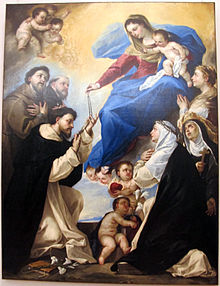
The Feast of Our Lady of the Rosary ~ Br. Shawn Gisewhite
Gospel: Luke 10:17-24
In the Name of God; +Father, Son and Holy Spirit. Amen.
On October 7th, 1571, Pope Saint Pious V sent a coalition of Christian forces to rescue the Christian outposts in Cyprus that were taken by the Muslims. This small group faced almost certain death when compared to the large Muslin Navy. In response, the Pope called for all of Europe to pray the Rosary for their victory and led a Rosary procession in Rome. After about 5 hours of intense sea battle, the Christian forces were able to stop the Ottoman Navy and prevent the Sultan from invading and capturing Rome. This great victory was attributed to the Virgin Mary. October 7th became the Feast of Our Lady of Victory, now known as Our Lady of the Rosary.
Although a simple string of beads used to help us count our prayers, the Rosary has long been a weapon against the forces of darkness and a shield of protection from harm.
The following inspiring episode from World War II, written by Sr. Mary Sheila O’Neil and reported in the October-December, 1979 issue of Garabandal Magazine illustrates the power of the Rosary:
It was a busy day in March. As a teacher-principal in the 1950’s, I had to make sure that each day provided the time for the two separate roles. On that March fourth, an incident between a teacher and a parent had kept me out of my class for almost an hour that morning, so for the rest of the day, I was desperately trying to make up class time. Hence, the knock on my door at 2:00 p.m. was not welcome.
With relief, I found it was only a salesman who needed my signature and even produced his pen. As he did so, his Rosary had caught onto the pen’s clip and came out as well. I signed as I said indifferently, “So, you are a Catholic.” “Oh no,” he said, “but a lot of us owe our lives to Our Lady, and I promised Her I would always keep my Rosary with me and say it every day.”
Twenty minutes later, I was still at the door listening, fascinated, to the account of one of the wonderful experiences a group of airmen had had with Our Lady. My visitor hesitated to start, for he had noticed my “non welcome” opening of the door. But eager now to hear his story, I assured him that the class was doing an exercise, and I begged him to proceed. He continued:
It was May, 1940, and we had joined the Air Force in late September. At Halifax, we were given an intensive training course, because they needed us overseas, and to us young lads, the whole program was exciting.
We were grouped into squadrons, each of which consisted of six to ten planes, and each was trained to maneuver as a unit. Therefore about thirty to fifty men made up a squadron, along with the squadron leader who gave all the orders and kept the group functioning in unity.
In May, our squadron was told we were going overseas and would be in action at once. We would work on nightly missions over enemy territory until the war was over. We were waiting for our new squadron leader, due to arrive in two days on a 9:00 p.m. air-force flight. Being an officer, he would, we thought, go at once to the officers’ quarters.
We watched the plane, glimpsed him from the distance, and resigned ourselves to waiting until the next day to “size him up.” A couple of hours later, this squadron leader, Stan Fulton, in full uniform, entered our bunk house.
“Well men, we’re going to spend some dangerous hours together, but let’s hope we all meet back here when it’s over. Ah, there’s a free bunk and I am tired! I’ll meet each of you tomorrow.”
With that, he threw his bag on an upper bunk. Our squadron leader, an officer, sleeping here with us! We liked him at once and our liking and our admiration grew each day.
That first night he knelt on the floor and prayed his Rosary in silence. Astounded, we were struck dumb. When he finished, he looked at us with his friendly smile and said, “I hope you guys don’t mind a fellow saying some prayers because where we’re going, we’re going to need them.”
The next day our maneuver practice, under his command, assured us that Fulton was not just our military leader, but our friend. He was one of us; he never tried to intimidate us with his rank.
That night, he repeated his prayer session. Although our group had trained together for six months at least, I had never seen anyone kneel in prayer, and had no idea that any of our group was Catholic; but the third night three of our companions joined Fulton in saying the Rosary. The rest of us did not understand but we kept a respectful silence.
A few nights later — we were quick learners — we all answered the Hail Marys and Our Fathers. Fulton looked pleased, and thus we ended each day in prayer.
On June 1, 1940, we were to leave Halifax to begin a series of night raids from England over Germany. The evening before, Fulton gave each of us a Rosary.
“We shall be in some tight situations, but then, if you agree, we’ll say the Rosary. If you will promise to keep the Rosary with you always throughout your life and to say it, I can promise you that Our Lady will bring you all back safe to Canada.”
We answered, “Sure thing.” Little did we dream we would be in action for four years, many times in dreadful danger with fire all around us. At such times, Fulton’s voice would ring through each plane, “Hail Mary…” How reverently and sincerely did we respond! How many hundreds of Rosaries we must have said.
After two years, it was noted that ours was the only squadron that had not lost a plane nor a single life. We said nothing, but we knew.
Finally, the terrible war was over. During those years, we lost all sense of excitement and adventure. All that concerned us was survival! We did survive, too. All returned to Canada in 1945, fully convinced that Our Lady had taken care of us.
So I never forget to keep my Rosary with me and say it every day although I am not a Catholic. When I change my trousers, the first thing I transfer, even before my wallet, is my rosary.
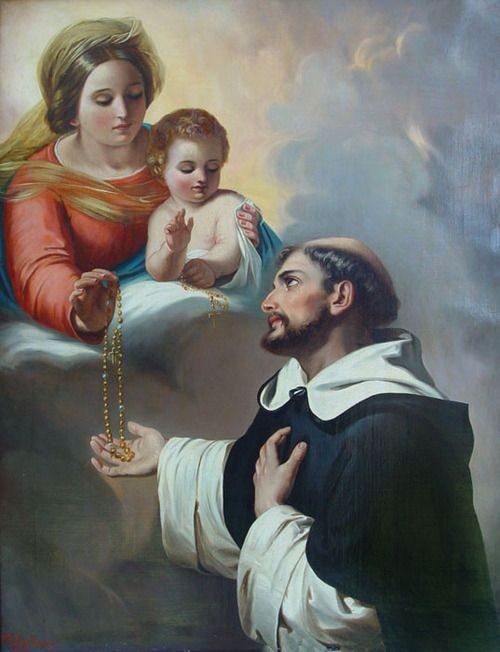
This Feast day is a special one for me as a Dominican. Tradition holds that the Virgin Mary gave the Rosary to St. Dominic. As a Dominican, my devotion to both Our Lady and the Rosary helps shape who I am as a Christian.
Today as I stand before you a newly ordained Priest in the Church of God, I can’t help but think of all I’ve been through. The hurdles that I had to jump. The mountains I had to climb. The fights I had to fight. Life has not been easy up to this point and I suspect it won’t become any easier now that I have been set apart for service in the Church.
I first felt a call to ordained ministry as a small child…..a calling that I have strived to answer throughout most of my life. No easy task! A Bishop once told me that the closer I get to serving God and serving the Church, the more Satan will up his attacks on me. At first I thought he was a little crazy, but it’s very true indeed. Life has presented me with many challenges. Challenges that most people would not be able to deal with. How did I deal emotionally and spiritually with these many challenges? Where did I turn for a spiritual booster shot? To the Rosary! Well, to my set of Anglican Prayer Beads to be exact, but don’t hold that against me. LOL
Raised Anabaptist, worship aids such as prayer beads were seen as Romish and evil. Prayers to Mary were idol worship. I don’t know why, but I was always drawn to the use of prayer beads and to a deeper relationship with our Heavenly Queen. I explain it as I did not choose her, rather she chose me! Somehow she spoke to me. Spoke to my heart in a way I can not begin to describe. For the longest time, just like the pilot in the story earlier, all I did was carry those beads around with me. I didn’t know how to use them for prayer. I was too afraid to search how to pray the Rosary online for fear that my uber Protestant parents would spaz on me! Although I never used them for prayer, those beads provided me with strength and with comfort. It was as if the love of Mary and of her Son Jesus were in those beads and every time I clutched them in my hand it was as if I was being held in their loving embrace.
After my mother passed in 2011, my relationship with our Holy Mother grew stronger. It was at that time I actually began to use my Rosary with the assigned prayers. And oh what joy it brought to my soul! Whenever I was sad, downtrodden, scared, stressed, worried, or lonely I turned to my Rosary for comfort and encouragement. Through life’s many battles, this little string of beads helped me to win the victory; just as the Christian forces over the Muslim Navy.
In today’s Gospel the Lord tells his disciples that He has given them the power of the enemy. I say this is true in the power of the Rosary. A gift….a spiritual weapon against the forces of evil….given to us by the Mother of God. Through our faith in Jesus, through the intercession of the most blessed Virgin Mary, through the power of the Rosary, we have power and dominion over the forces of darkness.
Amen.
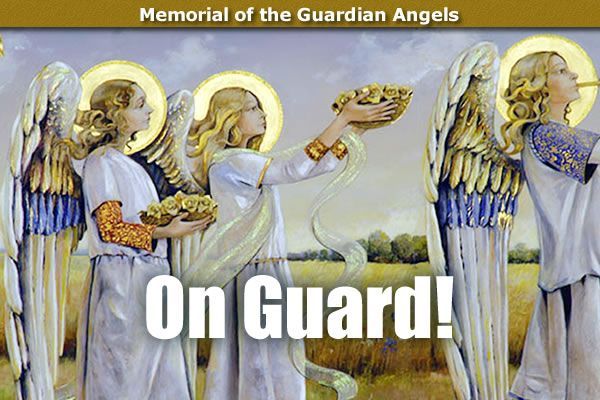
Feast of the Guardian Angels~ The Rev. Dcn. Dollie Wilkinson, OPI
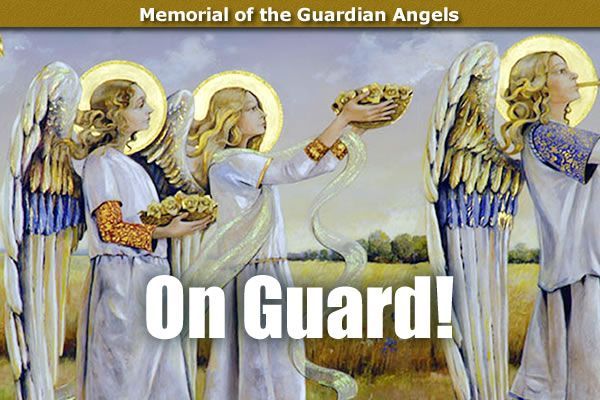
We often think of guardian angels as a special angel only for children, but the truth is that we all have a guardian angel for our entire lives. Our angels are a gift from God. They watch over us, aid us in prayer, enlighten us, guide us and protect us. Angels are mentioned in both the Old and New Testament and many saints have had visions of their guardian angels. We can hope that our Guardian Angel will help us during our journey to eternal happiness in Heaven. The Feast of the Guardian Angels is celebrated on October 2nd. Although Guardian Angels have been venerated since the early days of the Church, it wasn’t until the 17th century that Pope Clement X extended the feast day to the universal Church. It comes just two days after the Feast of the Archangels Gabriel, Michael, and Raphael.
On this Feast of the Guardian Angels in 2011, Pope Benedict XVI said,
“Dear friends, the Lord is always near and active in human history, and follows us with the unique presence of His angels, that today the Church venerates as ‘Guardian,’ in other words those who minister God’s care for every man. From the beginning until death human life is surrounded by their constant protection.”
It is an established Catholic belief that each individual person has their own guardian angel assigned to watch over their soul. There are three important verses in the Catholic Bible from which this belief is drawn:
Psalm 90:11: “For he shall give his angels charge over thee, to keep thee in all thy ways.”
Matthew 18:10: “See that ye despise not one of these little ones; for I say unto you, that in heaven their angels do always behold the face of my Father which is in heaven.”
Hebrews 1:14: “Are they not all ministering spirits, sent forth to do service for the sake of them that shall inherit salvation?”
These verses have led St. Jerome, one of our early Church Fathers, to conclude, “How great the dignity of the soul, since each one has from his birth an angel commissioned to guard it.” Many others wrote about our guardian angels, including St. John Chrysostom, St. Basil, and St. Thomas Aquinas. According to Aquinas, our guardian angels have a good influence over us, but they cannot control our free will. Guardian angels influence or guide us by acting upon our intellect through our senses and our imagination. When they do this, they are influencing our will to do good and avoid evil. So really, their job is to help you get to heaven. Thus guardian angels do not control us by any means, but they do greatly assist us in finding and doing God’s will. Our guardian angels are also able to protect us from danger as well as assist us in prayer and meditation on the divine things of God.
We don’t only have the Scriptures and the Early Fathers of the Church who tell us about our Guardian Angels. We also have the saints, some of which actually witnessed their guardian angel in action. In many cases their Guardian Angel was visible to them. These include St. Padre Pio, who could see his guardian angel, which would often send him on special missions; St. Faustina Kowalska, whose Guardian Angel accompanied her to observe the pains of the Holy Souls in Purgatory; and St. Gemma Galgani, to name a few. St. Gemma Galgani wrote much about her Guardian Angel in her autobiography, including this account:
“One evening, when I was suffering more than usual, I was complaining to Jesus and telling him that I would not have prayed so much if I had known that He was not going to cure me, and I asked Him why I had to be sick this way. My angel answered me as follows: ‘If Jesus afflicts you in your body, it is always to purify you in your soul. Be good.’”
Ask yourself this question today: How is my relationship with my guardian angel? Do I listen to him? Do I say good morning to him in the morning? Do I ask him: Watch over me when I sleep?’ Do I speak with him? Do I ask his advice? He is by my side. We can answer this question today, each of us: How is our relationship with this angel that the Lord has sent to watch over me and accompany me on my journey, and who always sees the face of the Father who is in heaven?” So, today is the day to tell your guardian angel “Thank You” for their daily guidance, and to show gratitude to God for assigning a powerful heavenly protector for your personal care. It is also a good time to make the resolution to pray to your Guardian Angel daily as our Holy Father admonishes us.
As St. Bernard of Clairvoux plainly states in his sermon:
“‘He has given his angels charge over you to guard you in all your ways’. These words should fill you with respect, inspire devotion and instill confidence; respect for the presence of angels, devotion because of their loving service, and confidence because of their protection. And so the angels are here; they are at your side, they are with you, present on your behalf. They are here to protect you and to serve you.
But even if it is God who has given them this charge, we must nonetheless be grateful to them for the great love with which they obey and come to help us in our great need. So let us be devoted and grateful to such great protectors; let us return their love and honor them as much as we can and should. Yet all our love and honor must go to Him, for it is from Him that they receive all that makes them worthy of our love and respect. Even though we are children and have a long, a very long and dangerous way to go, with such protectors what have we to fear? They who keep us in all our ways cannot be overpowered or led astray, much less lead us astray. They are always loyal, prudent, and powerful.
Guardian Angel Novena:
Loving God, you are so good that you gave me a Guardian Angel to protect my body and my soul. Help me to know and follow my angel so that, with their guidance, I will be worthy of being in Heaven with You!
My sweet Guardian Angel, you are my defender every day of my life. Protect me from sin and bodily harm. Help me to learn to defend and protect myself so that I can be the person that God is calling me to be.
You are with me all the time so you already know these my intentions that I ask you to deliver to the Lord. (Mention your intentions here…)
My guardian angel, my defender, protect me!
Amen.

Can’t We All Get Along? A How To Guide ~ The Rev. Dcn. Scott Brown, OPI

Brothers and sisters:
If there is any encouragement in Christ,
any solace in love,
any participation in the Spirit,
any compassion and mercy,
complete my joy by being of the same mind, with the same love,
united in heart, thinking one thing.
Do nothing out of selfishness or out of vainglory;
rather, humbly regard others as more important than yourselves,
each looking out not for his own interests,
but also for those of others.
Have in you the same attitude
that is also in Christ Jesus.
Well you heard it here first, we are told to get along with each other, not fight bicker and quarrel. Lets give this a try and see what happens. I suspect that if everyone gave this a shot we could solve most all of the words problems quickly and easily.
When it comes to getting along with other Christians, the Bible doesn’t waste words. If we’re going to really get along, we’ll have to model the sacrifice of Christ.
We’re about to read a passage that uses the word “if” several times. This tiny Greek word, however, is synonymous with “since.” It’s a “conditional particle,” and it works like this. You might think, “If I’m going to church today, I’d better get out of bed and get dressed.” You’re really saying, “Since I’m going to church today and since the clock tells me I’m already 15 minutes late, I’d better get out of bed and get dressed for church.” Or even more realistic, “If I’m going to be happily married to my wife, I’d better take the garbage out today.” Since you probably want to be happily married, “if” is the same as “since.” And you can replace the word “if” with “since” in any of these opening statements from Philippians 2.
How can you practice unity in an imperfect church? How can it possibly work?
- Eliminate selfishness
What a powerful instruction: “Do nothing out of rivalry or conceit, but in humility consider others as more important than yourselves.” (2:3)
We live in a land that preaches a “Look-out-for-number-1” gospel. The climb up career ladder is so focused, business ethics are often left wanting. The entire nation suffers, at times, from selfish-driven, corporate stock market scandals. Countless individuals suffer in smaller offices, where some career ladders are placed squarely on the backs of fellow employees.
How opposite a message the church proclaims! Our greatest leaders are our greatest servants. We’ve even named our key lay-leaders – deacons – after the Greek word for “servants.” The “diakonos” in the Greek world was the lowest servant on the social totem pole.
- Be subject to Christ
There is more to getting along with one another than simply putting aside selfishness. We must all put aside our personal desires and personal standards, and reach for a higher mark. When we have “fellowship with” or are “united with” Christ (2:1), we find that higher standard. When we are united with Christ, we will be united with the Word of God. Having a sound theology, a sound understanding of what it is to follow Christ, is critically important.
Without a higher standard, each one of us is left to determine the standard of morality on our own. Another phrase for such a lifestyle might be “cultural anarchy,” since there would be no authoritative voice of truth. The church is the last point of reference for ultimate truth in any culture. Armed with the never-changing truth from the Bible, the church has been charged with proclaiming that message without apology.
III. Serve others
Instead of selfish ambition, there is humility (2:3). Instead of vain conceit, there is service to others (2:3-4). It all leads to unity in the entire church, for Christians who forsake selfishness, submit to the authority of Christ, and serve one another will be quickly “focusing on one goal.” (2:2).
What an unusual savior we have. He gave up everything to become nothing. The one who should have been served came to serve. We should have died for him, but he died for us. As a result of his willingness to serve, Jesus was exalted to the highest place in all of creation.
When Christians elect to serve others, they too are exalted. As Jesus promised, the first become last, but the last become first. The greatest leaders? Servants, all of them.
We already know that success and servanthood go hand in hand. Bill Gates became the richest man in America because he developed a software program of “windows” that turned the computer into a servant for millions of people. The most successful companies in America consistently put the customer first, with either their products, their services, their assistance, or both. If excellence in the business world is tied to servanthood, how much more so is it true in the church?
Heavenly Father, give us the ability to love one another, get along with each other, and forgive each other as you have commanded. Help us to put aside selfishness and serve each other as the deacons you desire us to be. Amen
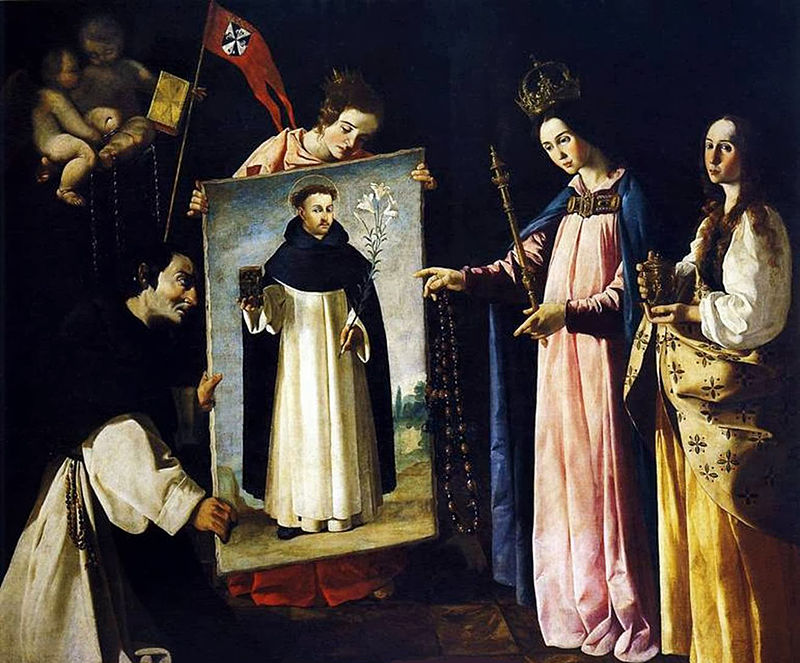
The event commemorated in this festival is the appearance in the Dominican Convent of Soriano, in the extreme south of Italy, of a miraculous picture of Saint Dominic, which is still preserved, and is held in the utmost veneration even in our own day. A certain Father Vincent of Catanzara in Calabria, in the year 1510, was thrice commanded by Saint Dominic in vision to found a Convent of the Order at Soriano, a work which he accomplished in spite of considerable obstacles which were not overcome without miraculous intervention. It had been decided that the Convent should be built on the plain, but the cross which had been planted to mark the destined site was found to have been mysteriously removed in the night to the hill on which the building was eventually erected, and where it still stands. Several years later, on September 15, A.D. 1530, just as the religious were assembling to chant Matins at midnight, the Sacristan suddenly beheld three ladies of majestic aspect enter the church, which he knew he had left locked before retiring to rest. One of them addressed him, asking to whom the church was dedicated and whether it contained a picture of its patron. The Friar replied that the church was dedicated to Saint Dominic, but that, owing to the great poverty of the Community, only a badly painted fresco of the Saint was to be found upon its walls. Then the unknown lady put into his hands a roll of canvas, which till then she had carried in her hand, and bade him take it to his Superior, who bore the title of Vicar, the little Convent not having yet been erected into a Priory. The Vicar, astonished at the sight of the picture, which proved to be a portrait of Saint Dominic, hastened to the church to thank the giver, but all three mysterious visitors had disappeared, though the outer doors still remained locked. The following night Saint Catharine of Alexandria appeared to one of the Fathers, who had a great devotion to her, and told him, in answer to his prayers, that the donor of the picture was no other than the Blessed Virgin, and that the two who had accompanied her were the patronesses of the Order, Saint Mary Magdalen and herself.
In obedience to the express command given by Our Lady to the Sacristan when bestowing the picture, it was placed over the High Altar; but, as the wall against which it hung was extremely damp, the Fathers afterwards decided on removing it to another altar, near the door of the church. The following morning, however, the picture was again found hanging over the High Altar. The Vicar, believing that it had been removed thither by the Sacristan from a desire to execute to the letter the orders given him by the Mother of God, severely reproved him, and had the picture carried back to the altar agreed upon. The next day, it once more appeared over the High Altar. Again the Sacristan was charged with obstinacy and disobedience. In vain he protested that he had never touched the picture. The Vicar ordered it to be replaced near the door, and on the following night locked the church himself and kept the keys in his own possession. Nevertheless on the third morning it was again discovered over the High Altar. Convinced at length that its removal was the work of no human hand, the Vicar allowed it to remain in the spot which Our Lady had chosen for it, and where it has ever since remained, miraculously preserved from being injured by the damp.
When the picture was exposed to public veneration, a multitude of prodigies took place, the account of which fills volumes. No less than sixteen hundred of these miracles, juridically attested, took place within the space of seventy-eight years. Pope Innocent XII., in the year 1644, granted a festival in commemoration of this event and of the vast number of miracles vouchsafed before the holy picture. On September 15,1870, just five days before the sacrilegious occupation of Rome by the troops of Victor Emmanuel, a new prodigy took place at Soriano. A wooden statue of our holy Father, Saint Dominic, of life-size, had been exposed in the sanctuary on occasion of the festival, and was to be carried in procession in the evening. This statue was suddenly seen to move like a preacher in the pulpit ; it advanced and drew back ; the right arm rose and fell; the countenance became animated, sometimes assuming a severe and threatening aspect, at other times appearing sad, or again full of sweetness and reverence as it turned towards the picture of our Lady of the Rosary. This extraordinary spectacle lasted for an hour and a half, and was witnessed by about two thousand persons. Some of the bystanders, to satisfy themselves that there was no trickery in the matter, removed all the surroundings of the statue and completely stripped the table on which it was standing. These measures only served to place the miraculous nature of the occurrence beyond the possibility of a doubt. A juridical inquiry was held by order of the Bishop of Mileto, in whose diocese Soriano is situated, and the extraordinary event was announced to the Order in a circular letter by the Most Reverend Father Alexander Vincent Jandel, who was then General. In a private letter written by his Paternity shortly afterwards he says : ” I think our holy Father, Saint Dominic, meant to warn us of the impending scourges, and to summon us to do penance; but this warning is in itself an act of mercy on the part of Him who strikes only to heal.”
Prayer
O God, who hast vouchsafed to enlighten Thy Church by the merits and teachings of Thy blessed Confessor, our holy Father, Saint Dominic, grant at his intercession that it may never be destitute of temporal help, and may always increase in spiritual growth. Through Christ our Lord. Amen.
Commemorations
First Vespers:
Ant. O great Father, Saint Dominic, at the hour of death take us to thyself and while here regard us always graciously.
- Pray for us Blessed Dominic,
- That we may be made worthy of the promises of Christ.
Lauds:
Ant. The body of a virgin, the mind of a martyr, the labors of an apostle, have at the end of thy course purchased for thee, O Mendicant of Christ, the reward of life.
- The just man shall blossom like the lily.
- And shall flourish forever before the Lord.
Second Vespers:
Ant. O light of the Church, doctor of patience, ivory of chasity, freely hast thou dispensed the water of wisdom: herald of grace, unite us to the blessed.
- Pray for us Blessed Dominic,
- That we may be made worthy of the promises of Christ.
Prayer:
Let us Pray: O God, who didst vouchsafe to enlighten Thy Church by the merits and teachings of Blessed Dominic, Thy Confessor and our Father, grant through his intercession, that it may never be destitute of temporal help, and may always increase in spiritual growth. through Christ our Lord. Amen.
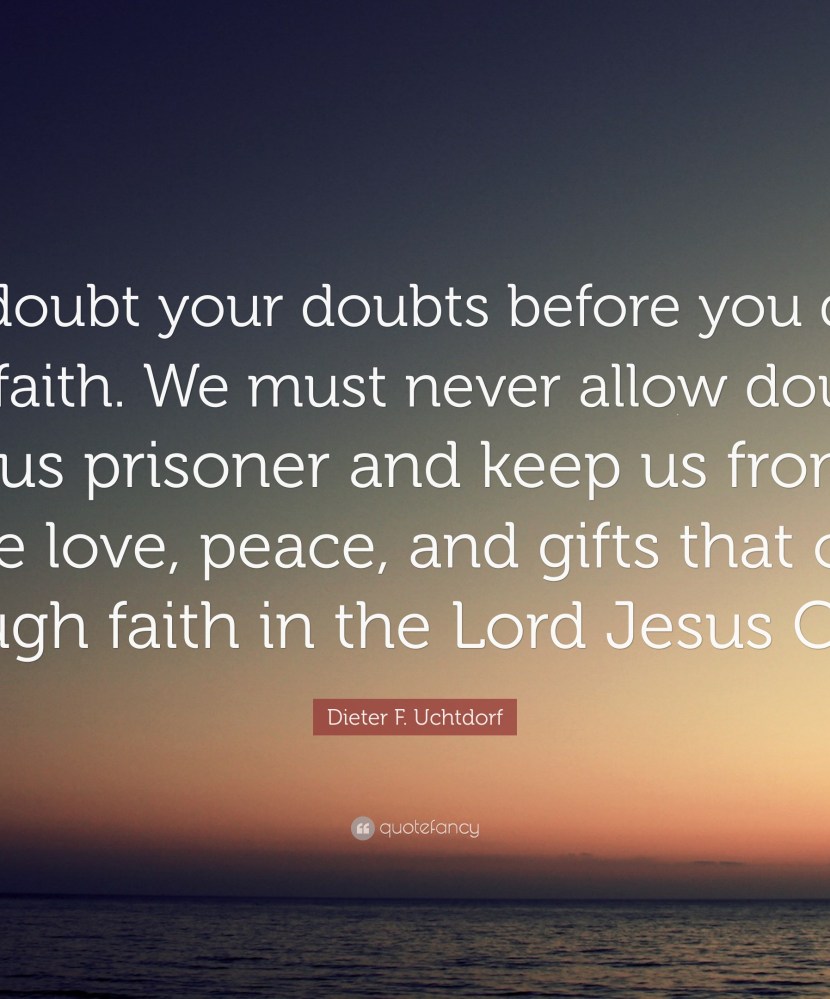
Faith, Doubt, Tiny Voices, and Peace ~ Br. Chip Noon, Novice
“There was a tiny whispering sound.”
“I will hear what God Proclaims; the Lord – for he proclaims peace.”
“…and from them, according to the flesh, is the Christ, who is over all, God blessed forever. Amen.”
“…my soul waits for his word. Alleluia, alleluia.”
“O you of little faith, why did you doubt?”
These snippets from today’s readings speak to me. Do they speak to you?
And a calm descended…that is what I feel as I hear these words spoken in today’s Mass. A calm that passeth all understanding.
Well, that is fine for all of the readings but the Gospel. There, we are told of a storm, a near drowning, a helping hand at the last moment. None of us who have been in a life-threatening situation feels calm afterwards. The adrenaline rush takes over and we are at the height of our senses. Life-threatening events evoke strong and heavy winds crushing rocks, and earthquakes, and fire.
But Jesus lays his hand on us and all is calm. Is that the tiny whispering sound?
This week, as I am wont to do, I pondered my role as a Dominican. “The Order of Preachers.” First, “Order” and second, “Preachers.” In my mind, that used to mean getting up on a soap box and spouting off to all who would listen. Winning souls to Christ.
But in Jesus’s teachings, do we ever find the concept of a battle to make others believe…or to help them believe? Don’t we just find Jesus speaking from the heart to our hearts?
“O, you of little faith, why did you doubt?”
An exhortation to arms? A call to battle? No, simply a question: can’t you already see that God is at hand? Right here, right now?
Of course, when we are in a calm place, a quiet retreat, we can hear the tiny voice. We can imagine and experience the calm. But what about when we are actually in the maelstrom? How easy it is to focus on that, on the danger, on the problems. We make plans, build barriers, put on the armor we need to fight the battle.
But then, as is also common with me…and maybe you…here comes St. Paul speaking to the Romans, and to me:
“…my conscience joins with the Holy Spirit in bearing me witness that I have great sorrow and constant anguish in my heart.”
So how did the prophet, experiencing hunger, chains, prison, beatings, how did he keep hold of that tiny voice? Perhaps it was his direct experience with the Risen Christ. Surely it was his deep understanding of and attachment to the message of Jesus. Whatever it was, that tiny voice was all he needed to get him through his many trials.
“My yoke is easy and my burden is light.”
So back to my “order” and “preacher” idea: There is nothing stern, no fire and brimstone, no mountains rending nor earth erupting. There is the simple message of Jesus inviting us to listen to the tiny voice that he says is already at work in us.
And although it is wrongly attributed to St. Francis, I still like the admonition: “Preach the Gospel always. When necessary, use words.” Which is to say, how I live my life is as much an act of preaching the Gospel as going from village to village proclaiming the Good News.
But it is not only to our role as Preachers that these readings speak. They also tell us that within ourselves, when we are in distress for whatever reason, there is comfort in knowing that the peace we seek is already within us, if only we could put aside the anxiety for a while and listen. And even if we begin to sink into the depths of despair, Jesus is there with his hand to hold us up, just as he held up St. Peter on the stormy waters.
Lord, open our ears that we may hear you calling to us. Help us to listen to your tiny voice amidst the noise and clamor of this world. Let us take comfort in receiving your benefits that are ours for the taking. In Jesus name, Amen.

The Christian’s Hope ~ Br. Shawn Gisewhite, Novice
John 14:1-3
In the Name of God; Father, Son and Holy Spirit. Amen.
In the Scriptures, the word Hope is used over 200 times. But hope in the Bible is not the same as the word “hope” in our modern English dictionary. We use the word “hope” to describe our wants, desires and dreams. We hope that it will rain… We hope that the weather cools off soon… We hope this soon to be Deacon isn’t longwinded today! But as Christians we have another kind of hope. In fact, we have a better kind of hope. The hope that I speak of is not wishful thinking, rather it is a firm assurance of things to come. Hope is faith in the future tense. When faith looks to the future, it’s called hope.
The reason that we can have full assurance of what is to come, is because of the source of our hope. Our hope comes from the Lord. God alone has the right to promise hope and the power to keep the promise. I would like to take some time today and examine the hope that we possess in Christ and preach on “Hopes of the Christian.”
There are many things that we can have full assurance thanks to our relationship with Christ. I would like to start in verse 1 and see that as Christians:
- WE HAVE THE HOPE OF A REFUGE – v1
A refuge is a place of shelter, a place of protection, a place that we can run when the storms of life begin to rage. This was exactly what the Lord’s disciples needed at this very moment in their lives. In the previous chapter, Jesus told them that He would soon die. They also learned that one of them (Judas) would betray Christ. Peter was told that he would deny Jesus 3 times before the rooster crowed. Their lives had just taken a devastating turn and their hearts were greatly troubled.
Jesus knew how devastated they were and He was concerned about their “troubled hearts”. He said, “Let not your heart be troubled: believe in God, believe also in me”. He spoke words of comfort to them and He encouraged them to trust in Him.
In this life, we will face times of great trouble. Problems will come and as a result we will possess “troubled hearts”. Maybe you are at that point as we speak. I want to remind you of the hope you possess as a child of God. You have a refuge… When trouble comes…TURN TO JESUS!
Jesus made it clear that His followers would face trouble. But HE also reminds us that HE has the power over any circumstance that we face. John 16:33 “In the world you shall have tribulation: but be of good cheer; I have overcome the world”. If you heart is troubled today… you have a refuge and His name is Jesus!
Not only do we have the hope of a refuge… Jesus tells us in verse 2 that:
- WE HAVE THE HOPE OF A RESIDENCE – v2 “In my Father’s house are many mansions: if it were not so, I would have told you.”
Though the Disciples were facing the toughest time of their lives, Jesus promised them of a better day and a better place. As His followers, we can cling to that same promise today. We are given a glimpse into that residence in Revelation 21. There we are told of Golden streets, Jasper walls, Gates of pearl and a crystal river. The foundation of that city is made up of precious gemstones.
The beauty of our Heavenly Home is literally indescribable. Our finite minds cannot comprehend the brief glimpse of this place provided in the scriptures. The indescribable beauty of Heaven is summed up in the story of A little girl who was taking an evening walk with her father. Wonderingly, she looked up at the stars and exclaimed; “Oh, Daddy, if the wrong side of heaven is so beautiful, what must the right side be!” (Source: Charles L. Allen in Home Fires.)
Dear brothers and sisters, you may live in a home that creaks and leaks, rust and rot may have taken its toll, but you can rest assured that there is a home waiting for you on the other side!
Some of you may never own a home of your own in this life, but if you have been born again, YOU HOLD A CLEAR TITLE TO A MANSION! No landlord will ever bother you for the rent. There will be no mortgage to pay and no one will ever foreclose on the home that is waiting for you. The Bible also tells us that we have the hope of rest in the residence that is waiting for us. Revelation 21:4 “And God shall wipe away all tears from their eyes; and there shall be no more death, neither sorrow, nor crying, neither shall there be any more pain: for the former things are passed away.” What is not going to be in that land is just as exciting as what is going to be there!
I am looking forward to that wonderful residence that Jesus has waiting for us in Heaven. Jesus also tells us in verse 1 that:
III. WE HAVE THE HOPE OF REDEMPTION – v2 “I go to prepare a place for you.”
This is one of the most popular passages of scripture in the Bible, but it is also one of the most misunderstood. Jesus was not telling His followers that He was going to “build them a mansion”. He just asserted the fact that the mansions are already there. “In my Father’s house ARE many mansions” We are also told in scripture that when Jesus ascended, He SAT DOWN in His rightful place at the right hand of the Father. Hebrews 1:3 “When he had by himself purged our sins, sat down on the right hand of the Majesty on high.”
When Jesus said, “I go to prepare a place” He was saying I am going to make a way for you. He was referencing the Cross. Our entrance into Heaven was secured by Christ on the Cross at Calvary. He was telling His disciples that HE was going to do what we could not do. Jesus went to Calvary, shed His blood and gave His life as a sacrifice for you and me. Because of His finished work there on the Cross we have the hope of redemption. Without redemption, we would not have hope of the residence or refuge that we have already considered.
– Also, seen in this verse is the fact that:
- WE HAVE THE HOPE OF A RELATIONSHIP – v3 “And if I go and prepare a place for you, I will come again.”
This is a very personal promise. Jesus was saying “what I am about to do, I am doing for you”. What He did for Peter, James, John, Andrew, Matthew and the others… HE DID FOR YOU!
– Luke 19:10 Jesus said in Luke 19:10 that He came “to seek and to save that which was lost”.
– Romans 5:8 also tells us that “God commended his love toward us, in that, while we were yet sinners, Christ died for us”.
Because of Jesus’ work on the Cross we have the blessed privilege of having a personal relationship with Almighty God. And we don’t have to wait for Heaven for this to occur. You can have a personal relationship with Jesus HERE and NOW! Those that have this relationship will tell you that there is nothing any sweeter than communing with the Savior of the World!
– We are also promised that there is coming a day when Jesus will return for His own. This means that:
- WE HAVE THE HOPE OF A RETURN – v3 “And if I go and prepare a place for you, I will come again.”
Jesus told His Disciples that though He may go away for a time, HE WILL COME AGAIN! Jesus has ascended…. He is in Heaven as we speak. But soon and very soon He will split the eastern sky and come for His Children. This is one of the most prominent promises in the Bible. 1 Thessalonians 4:16 “For the Lord himself shall descend from heaven with a shout, with the voice of the archangel, and with the trump of God: and the dead in Christ shall rise first: 17 Then we which are alive and remain shall be caught up together with them in the clouds, to meet the Lord in the air: and so shall we ever be with the Lord. 18 Wherefore comfort one another with these words.”
As Christians, we are to be “Looking for that blessed hope, and the glorious appearing of the great God and our Saviour Jesus Christ.” (Titus 2:13)
Jesus is coming back, this is not wishful thinking on our part, this is our hope… this is a firm assurance of things to come. And when Jesus returns there will be a great reunion. Consider:
- WE HAVE THE HOPE OF A REUNION – v3 “I will come again, and receive you unto myself; that where I am, there ye may be also.”
There is going to be a reunion one day that is beyond anything we can imagine. All those heroes of the faith that we read about on the pages of God’s Word will be there. (Noah, Moses, Abraham, David, Elijah, John, Peter, Paul etc.)
Some of you have parents waiting for you there. Others have spouses who have already gone on. Some have children in that wonderful land. We all have family and friends that have already stepped out into eternity. We are assured that we will see them again and we long for that blessed reunion.
We are all excited about the beauty of Heaven, we are all excited about the residents of Heaven and we look forward to seeing loved ones who have gone on. But greater than the reunion with our loved ones is the fact that one day we will stand face to face with our Heavenly Father. Revelation 22:3 “The throne of God and of the Lamb shall be in it; and his servants shall serve him: 4 And they shall see his face.”
We will spend eternity in the presence of our Heavenly Father. On top of this fact, we are also longing for the day when our Savior wraps His arms around us and welcomes us to our eternal home. We will see our Savior face to face. We will see the scars on His brow, His hands and His feet. We will be reminded that He is the only reason that we made it to that place. On that day, we will shout for joy and we will humbly bow at His precious feet and we will worship Him for making a way for us to enter that promised land.
There is much hope for those who have been born again but for those who are lost, things are much different. Instead of hope, they are living in despair.
One of the most devastating things you will ever hear in this life is “there is no hope”. I am here to tell you, if you are not a child of God you have NO HOPE! You can claim none of the promises that we have examined today.
But I have good news, THERE IS HOPE FOR YOU, and that hope is only found in the Lord and Savior Jesus Christ! If you will surrender to Him and accept his offer of eternal life, then you too can have hope!
1) You can have the Hope of a Refuge
2) You can have the hope of a Residence
3) You can have the hope of Redemption
4) You can have the hope of a Return
5) You can have hope of a Reunion
These are just a few of the facts concerning “The Christian’s Hope”. I pray that you have that hope today. If not, pray now with me.
Oh Lord, for too long I have hoped for the wrong things in this life. I now put my hope fully in You. I hope for a refuge when life is rough, for redemption for all my sins, for your return that I may be taken with You, for a reunion with all those who I have loved and lost, and for a residence in Your Heavenly Kingdom. For all my sins Lord I am sorry. Forgive me Lord, forgive me. Create in me a clean heart oh Lord, and fill me with hope everlasting. Amen.

Believe! ~ Br. Chip Noon, Novice

Last week, during the Mass of Easter Sunday, we learned that Mary Magdalene came to the tomb where Jesus was buried and found it empty. She went and told Simon Peter and John and returned with them to the tomb. After they left, she stayed behind weeping. She looked again into the tomb and saw two angels who asked her why she was weeping. “They have taken my Lord and I don’t know where they laid him. Then, seeing a person whom she thought was the gardener, she said, “Sir, if you carried him away, tell me where you laid him, and I will take him.”
“Jesus said to her, “Mary!” She turned and said to him in Hebrew, “Rabbouni,” which means Teacher.
“Jesus said to her, “Stop holding on to me, for I have not yet ascended to the Father. But go to my brothers and sisters and tell them, ‘I am going to my Father and your Father, to my God and your God.’”
Mary Magdalene tells the disciples, “I have seen the Lord” and what he told her.
What was their reaction?
They went into a room and locked the door!
Mary was the first person to proclaim the resurrection and she was not believed, even by those who had been told by Jesus what would happen in these times.
What’s with us? Why do we need proof? Why do we always need proof?
Now in this week’s Gospel, Jesus himself comes into the room where the disciples were cowering and says, “Peace be with you” and shows them his hands and his side. Then the disciples rejoiced. Jesus makes no mention that we know of about their fear and hiding, but instead breaths the Holy Spirit upon them and exhorts them to their mission as ministers of the Word. In John’s Gospel, this is all quite matter of fact.
So let me ask you, did they all believe at that time? We know that Thomas didn’t since he wasn’t present on that day and since he was a no-nonsense and fatalistic kind of guy anyway. (Remember when Jesus was going to Judea to raise Lazarus, Thomas says “Let us also go, that we may die with him.”) But what about the others? Don’t we all know some people, who, when presented with the facts, say, “Well, maybe it’s true, but probably not…” I’m thinking specifically about some people and current scientific knowledge.
But back to the disciples…my guess is that it took Thomas to challenge the Lord, the physical Lord, to come and show him his wounds for some of those disciples to come around. “Show it to me in black and white!” How many of us base our beliefs on evidence, like these disciples?
And here is Thomas. This is a comforting person, in my mind. You always know where you stand with him. In the Gospels, he’s always jumping right in and telling you what he thinks. No beating about the bush.
Proof? I’ll give you proof!
And then he believes. Remember that movie that had the line “show me the money!”? That’s Thomas. And unlike those of us, myself included, who hang back, once he is shown the money, he’s off and running. What a gift that must be, to have all your doubts cast aside and then immediately to go out and get on with the job.
So let me ask you about Mary Magdalene. All she has to hear is Jesus speak her name and she knows what’s up. She proclaims the faith, the risen Lord, and does so fearlessly. In the Gospels, she is mentioned more than many of the Apostles. She was a person of some means, since we are told she is one of the women to provide for Jesus and his disciples. And unlike Thomas, she doesn’t demand anything. She simply sees, believes, and acts.
Why isn’t she one of the bigger names in the Bible? Why isn’t she one of the leaders?
Let’s go back to today’s second reading where Peter is proclaiming the new faith. He is talking about Mary Magdalene. Simple, committed, rejoicing, willing to accept trials, and rejoicing with an indescribable and glorious joy.
And the Responsorial Psalm. Mary has recognized Jesus from the beginning as the cornerstone.
And the first reading from Acts. Who provided all the meals and needs of the Apostles and disciples from the beginning, to the time when they set out to preach the good news? Mary Magdalene.
Thomas and Mary Magdalene.
Which one are we imitating? Which one do we resemble? Is it one or the other? Or is it both? Or neither?
I’ll be glad to have either’s way of thinking, because it is plain to see. Plain both before we believe, and plain after we believe. It is a direction. There’s no middle ground.
As someone once told me, being a Dominican Friar is not a matter of taking it up when you think about it. It’s not a matter of study during the week. It’s not a matter of prayer or meditation. It’s everything you do. There’s no time off.
And I believe that person was telling me that to be a Christian, to believe in the death and resurrection of our Lord, Jesus Christ, you must live it every moment. Not in big ways, not in momentous acts, not in fiery exhortations, not in anything that looks like some big deal. Just in the simple day to day experience of knowing that we are attaining the goal of our faith, the salvation of our souls.
We are true brothers and sisters of Jesus who will go with him to his Father and to our Father. And as brothers and sisters today, we say “Rabbouni!”
Lord, teach us today the simple pleasure of membership in your family. Teach us the true meaning of your death, burial, and resurrection. And make us worthy of the coming of the Paraclete so that we may also be comforters to our earthly brothers and sisters.
Amen.
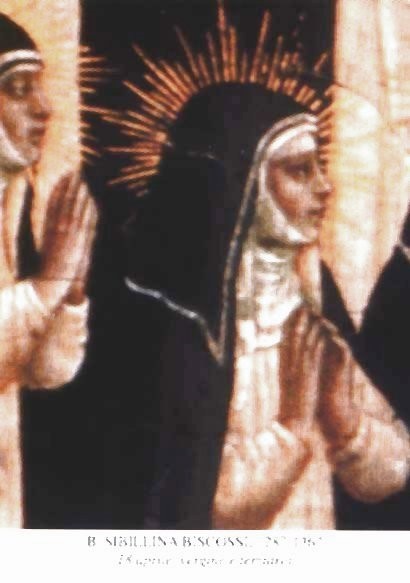
Blessed Sybil Biscossis
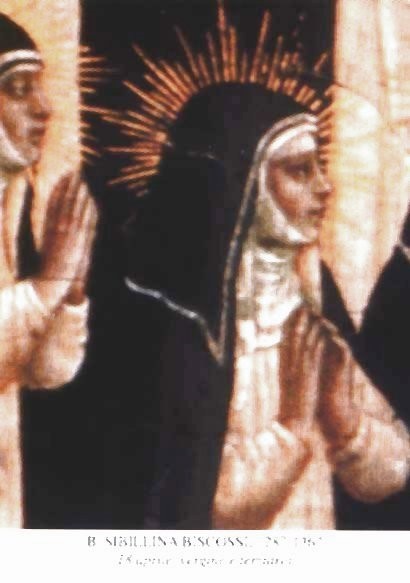
Sybillina’s parents died when she was tiny and as soon as she was old enough to be of use to anyone, the neighbors, who had taken her in at the time she was orphaned, put her out to work. She must have been very young when she started to work, because at the age of 12, when she became blind and could not work any more, she already had several years of work behind her.
The cause of her blindness is unknown, but the child was left doubly destitute with the loss of her sight. The local chapter of the Dominican tertiary sisters took compassion on the child and brought her home to live with them. After a little while of experiencing their kind help, she wanted to join them. They accepted her, young though she was, more out of pity than in any hope of her being able to carry on their busy and varied apostolate.
They were soon agreeably surprised to find out how much she could do. She learned to chant the Office quickly and sweetly, and to absorb their teaching about mental prayer as though she had been born for it. She imposed great obligations of prayer on herself, since she could not help them in other ways. Her greatest devotion was to Saint Dominic, and it was to him she addressed herself when she finally became convinced that she simply must have her sight back so that she could help the sisters with their work.
Praying earnestly for this intention, Sybillina waited for his feast day. Then, she was certain, he would cure her. Matins came and went with no miracle; little hours, Vespers–and she was still blind. With a sinking heart, Sybillina knelt before Saint Dominic’s statue and begged him to help her. Kneeling there, she was rapt in ecstasy, and she saw him come out of the darkness and take her by the hand.
He took her to a dark tunnel entrance, and she went into the blackness at his word. Terrified, but still clinging to his hand, she advanced past invisible horrors, still guided and protected by his presence. Dawn came gradually, and then light, then a blaze of glory. “In eternity, dear child,” he said. “Here, you must suffer darkness so that you may one day behold eternal light.”
Sybillina, the eager child, was replaced by a mature and thoughtful Sybillina who knew that there would be no cure for her, that she must work her way to heaven through the darkness. She decided to become a anchorite, and obtained the necessary permission. In 1302, at the age of 15, she was sealed into a tiny cell next to the Dominican church at Pavia. At first she had a companion, but her fellow recluse soon gave up the life. Sybillina remained, now alone, as well as blind.
The first seven years were the worst, she later admitted. The cold was intense, and she never permitted herself a fire. The church, of course, was not heated, and she wore the same clothes winter and summer. In the winter there was only one way to keep from freezing–keep moving–so she genuflected, and gave herself the discipline. She slept on a board and ate practically nothing. To the tiny window, that was her only communication with the outside world, came the troubled and the sinful and the sick, all begging for her help. She prayed for all of them, and worked many miracles in the lives of the people of Pavia.
One of the more amusing requests came from a woman who was terrified of the dark. Sybillina was praying for her when she saw her in a vision, and observed that the woman–who thought she was hearing things–put on a fur hood to shut out the noise. The next day the woman came to see her, and Sybillina laughed gaily. “You were really scared last night, weren’t you?” she asked. “I laughed when I saw you pull that hood over your ears.” The legend reports that the woman was never frightened again.
Sybillina had a lively sense of the Real Presence and a deep devotion to the Blessed Sacrament. One day a priest was going past her window with Viaticum for the sick; she knew that the host was not consecrated, and told him so. He investigated, and found he had indeed taken a host from the wrong container.
Sybillina lived as a recluse for 67 years. She followed all the Masses and Offices in the church, spending what few spare minutes she had working with her hands to earn a few alms for the poor (Attwater2, Benedictines, Dorcy).
Born: 1287 at Pavia, Lombardy, Italy
Died: 1367 of Natural Causes: Her body remains Incorrupt
Beatified: 1853 (Cultus confirmed); 1854 beautified
Patronage: Children whose parents are not married, illegitimacy, loss of parents
Quick Facts
- Orphaned when very young.
- Uneducated.
- Worked as a domestic servant by age 10.
- Blind by age 12; the cause of her blindness has not come down to us.
- Adopted by a community of Dominican tertiaries at Pavia.
- Developed a devotion to Saint Dominic in hopes that his intervention would return her sight; when it didn’t she came to accept it as her lot in life.
- Received a vision of Saint Dominic as confirmation of her desire to join the order.
- At age 15 she became a recluse, living in a walled up cell.
- She spent her time in prayer and devotion, and her cell soon became a point of pilgrimage for Pavians seeking advice and healing; she lived there for over 60 years, doing penance, performing miracles, and spreading devotion to the Holy Spirit.
- Sybillina could sense the Presence in the Blessed Sacrament.
- Once a priest passed her window on his way to a sick call.
- She told him that the host was not consecrated; he checked and found he had taken a host from the wrong container.
Incorruptable
 The Order of Preachers, Independent
You must be logged in to post a comment.