
Category: Dominican Saints
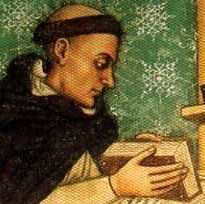
BLESSED ISNARD OF CHIAMPO
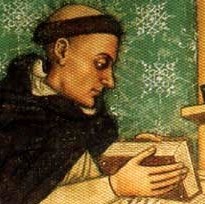
Blessed Isnard is another very distinguished and saintly first disciple of Saint Dominic whom Father Touron somehow overlooked. Of Isnard’s life up to the time he entered the Order practically nothing is known with certainty; whilst some of the statements anent his debut as a Friar Preacher are irreconcilable among themselves, and contrary to facts which have been ascertained in later years. Chiampo, a small town not far from Vicenza, Italy, was most likely the place of his birth; yet there are those who give the latter city this honor. Some think he was born of poor parents, and spent his youth in poverty. Others suggest that he belonged to a wealthy family by the name of Isnardi, which has been long extinct.(1)
It is beyond doubt that the future wonder-worker received the habit in Bologna, from Saint Dominic, in 1219; for this is a point on which nearly all the early authors are in accord. This truth seems certainly to prove that he was a student at the university there, and far advanced in his studies, At that time only such applicants were accepted; and this fact is a strong proof that his parents were well-to-do, for only the sons of this kind were given a higher education. Without exception the writers tell us of his singular purity of heart and religious disposition. His mind had been carefully guarded against the evils of the day, and in Bologna he proved faithful to the lessons of his earlier youth. Association with the holy man from Caleruega quickened his efforts for holiness of life and the salvation of souls.
For ten years after he entered the Order of Saint Dominic, we have no positive knowledge of where Isnard made his home. Yet the indications are that he spent this time between Bologna and Milan. In which case, of course, he labored energetically in those parts of Italy. Although a quite corpulent man, we are told, he was endowed with extraordinary energy, and was very gracious in action as well as in word. San Eustorgio, Milan, was most likely his convent for the greater part of this decade. So at least thinks Rudolph Majocchi, Blessed Isnard’s latest hagiographer.(2)
In more than one of our sketches, but especially in that of Saint Peter of Verona, we have seen how the Albigenses and kindred sects overran northern Italy at that date. Milan was one of the centers of Dominican activity against them; and it was from Milan that the convent of the Order in Pavia was founded. At Pavia the heretics were long in the ascendancy. The city was also a stronghold of Frederic II, whose Ghibellines, always opposed to the Holy See, constantly persecuted those who favored the authority of the Church. When, in 1230, zealous Rodobald Cipolla became bishop of Pavia, he found religion in a sad plight in his diocese, and began at once to seek means for a reformation.
Blessed Isnard’s reputation for holiness of life, zeal, eloquence, power over the souls of others, and fearlessness was broadcast. Most likely he had already preached in the Diocese of Pavia — perhaps many times; for the Friars Preacher of Milan carried their work in every direction. Possibly, too, he and Bishop Cipolla, himself an energetic character, had become friends at a prior date. Anyway, one of the new prelate’s first steps for the spiritual betterment of his flock was to invite the subject of our narrative from Milan, that he might establish a house of the Order at Pavia. This was in 1231; and before the close of the year we find the fathers actively engaged in their apostolate under the leadership of the man of God from Chiampo.(3)
The convent, which Rodobald Cipolla generously helped to erect, stood in the little village of Ticino, a short distance outside the walls of Pavia, and was given the name of Saint Mary of Nazareth. Throughout Italy the Friars Preacher were known as an effective aid to the hierarchy against the evils of the day. Thus Bishop Cipolla felt that, at least under Isnard, they would be an immense help to him in putting an end to the inroads of the enemy, and in freeing his diocese from the many ills in which it was enmeshed. He had not long to wait before he saw that his choice of auxiliaries was no mistake.
However, the task proved difficult, trying, and full of danger. On the one hand, the faithful, through long bad associations, had become so cold, careless, and wayward in the practice of their religious duties that it was exceeding hard to arouse them to a sense of their obligations. On the other, the Ghibellines and sectarians, ever of stubborn mood as well as violent in their methods, were even less subject to management. These possessed little or no faith. Besides they were loath to change their views, to amend their lives, or to part with the earthly goods which they had obtained by robbery or dishonesty.
As is ever the case in such conditions, the Friar Preacher’s success began with the poor and the laboring classes. For these he had a special love. He gathered them around him at the conventual church, instructed them in their religion, and inspired them with a love of its practice. Although he met with much opposition at first, it was not long before he had completely changed their lives. Reports of the good thus effected soon spread near and far. Meanwhile, he and his confrères preached throughout the City of Pavia and its environments — in churches, public squares, market places, or wherever they could find a space large enough for an audience. Gradually the wealthier Guelfs, and even not a few of the Ghibellines, began to harken to the call of grace and to receive the sacraments.
Among the little band of missioners Isnard shone with special brilliancy for his saintliness, zeal, and eloquence. The influence which he soon began to wield over the people caused the leaders of the heretics to single him out for their hatred. They mocked and ridiculed him, publicly spurned him, laughed at his corpulent figure, defamed him, threatened him, did everything in their power either to bring him into disrepute or to make him desist from his tireless apostolate. All was in vain. His sermons were incessant. He challenged his enemies wherever he met them. If they undertook to answer him, his inexorable logic put them to shame, or reduced them to silence. Never was he known to be ill natured, or to lose his patience; yet he showed the fire of divine love that glowed within his breast.
No doubt as much to demonstrate the holiness of His faithful servant as for the benefit of those to whom he preached, God blessed Isnard with the gift of miracles. The early writers mention many wrought by him both before and after his death.(4) These, quite naturally, quickened and strengthened the faith of the Catholics. They also gradually undermined the influence and broke the spirit of the heretics, many of whom were brought into the Church. By the time of the holy man’s death, the Diocese of Pavia was free from attacks by Albigenses, Catharists, and similar sects. They bad gone to other parts, been converted, or held their peace. No one could be found who would profess their principles. It was a glorious apostolate brought to a successful termination.
The Ghibellines, or adherents of Emperor Frederic II, gave Christ’s ambassador no end of worry and trouble. These were the rich who were not guided by their consciences in the acquisition of wealth; politicians without scruples; and soldiers of fortune, whose restless spirits ever led them into the service in which they might expect the greatest booty, license, and excitement. The machinations of the German monarch helped to keep them in keen antagonism to ecclesiastical authority and the interests of religion; which, of course, rendered them less responsive to our blessed’s impelling eloquence or the strong influence of his holiness and miracles. We may judge of the contempt of these friends of Frederic for the Holy See from the fact that their acts more than once led to a papal interdict on Pavia.
Still these men, who could laugh at an excommunication and interdict from the highest authority in the Church, perforce loved and admired Father Isnard. His charity, his zeal, his gentle goodness, his purity of heart, his constant efforts for the right, which they witnessed day by day, simply wrung respect from them. His dealings with Frederic II must have been much like those of John of Wildeshausen. Even when Bishop Cipolla was driven into exile, Isnard and his band of missionaries were left to continue their fruitful labors. In the absence of the ordinary, the clergy who still remained in the diocese seem to have gathered around the subject of our sketch for guidance. Possibly the saintly prelate, at the time of his departure, placed him in charge of his spiritual vineyard.(5)
Despite the turbulence and the anti-ecclesiastical spirit of the day, the holy Friar Preacher from Chiampo effected untold good even among this class of citizens. Documents which have escaped the ravages of time show that some, who deferred conversion until on their deathbeds, made him the instrument of their restitution. Others entrusted him with their charity and benefactions. Historians call him an apostle of Pavia, and largely attribute the preservation of the faith in the city to his zeal.
Another proof of the respect and confidence which Isnard enjoyed among all classes, as well as of his reputation abroad, is found in the incident which we have now to tell. From early times the Diocese of Tours, France, possessed landed estates in and around Pavia. Because of the political disturbances and the Ghibelline spirit, to which we have referred, the canons of the Tours cathedral found it impossible to collect their rents. In this dilemma, they appointed our Friar Preacher their agent; for they felt that he was the only man in northern Italy who either could obtain their dues for them, or would dare undertake the task. This was in 1240, the year after the historic excommunication of Frederic 11 by Gregory IX. The affair shows bow wisely Isnard steered his course, how all venerated him at home, and how well his courage and prudence were known even in France.(6)
Like a number of the early disciples of Saint Dominic whose lives we have outlined, the apostle and reformer of Pavia did not feel that he had done his all for the benefit of religion until he established a community of Dominican Sisters. These he placed in the immediate vicinity of his own convent, that he might the better look after their spiritual welfare. Their house bore the same name as that of the fathers — Saint Mary of Nazareth. Although he had perhaps never seen Prouille, his double institution at Pavia must have been much like that with which the Order started in southern France. The dowries of many of these sisters indicate that he founded them, in part, so that wealthy worldly dames, whom he had converted, might have a place in which they could more completely give themselves to the service of God. Saint Dominic, it will be recalled, established the community of Prouille principally with women converted from Albigensianism. When, some years after our blessed’s death, the fathers moved into the city proper, the original Saint Mary of Nazareth was turned over to the sisters.
Isnard had a profound devotion towards the Mother of God. He perpetually preached her protection over the faithful. In every way he propagated love and veneration for her. Father Majocchi thinks that this apostolate was of immense aid to him in his work of reformation; for no other piety seems to be more congenital to the affectionate Italian character. He labored zealously on almost to the very last. At least the Lives of the Brethren (Vitae Fratrum) say his final sickness was a matter of only a few days. The manuscript annals, or chronicles, of the old Friar-Preacher convent at Pavia tell us that he surrendered his pure soul to God on March 19, 1244. He knew that the end was near, prepared for it, and died as holily as he had lived.(7)
We have no account of the funeral of the man of God. Yet the great love and admiration in which he was held justify one in the belief that the Pavians attended it in immense numbers. Perhaps the sad event plunged the city in no less grief than his own community. He was buried in the Church of Saint Mary of Nazareth, where his tomb became at once a place of pilgrimage for the city and province of Pavia. Not a few miracles were wrought in answer to prayers to him. The name Isnard was often given to children at their baptism.
Later, for various reasons, the fathers moved into the city proper. First (1281), they took possession of San Marino, but gave up this place the next year for Saint Andrew’s. There they remained until 1302, when they exchanged Saint Andrew’s for Saint Thomas’, which was better suited to their purposes. At this last location they at once began a splendid temple of prayer, which was completed between 1320 and 1330. The body of Blessed Isnard, which had been brought from the extra-urban Church of Saint Mary of Nazareth to Saint Andrew’s, while the fathers lived in the latter convent, was again translated and enshrined in a marble sarcophagus built for the purpose in a chapel of the new Saint Thomas’ Church. The devotion of the people followed his relies to both of these places of rest. Nor is it any stretch of fancy to imagine that the two translations were times of great fervor for all Pavia.
Unfortunately, in a spirit of zeal and friendship, the fathers gave the use of Blessed Isnard’s Chapel, as it was called, to the University of Pavia for religious functions. Although its walls were afterwards decorated with paintings commemorative of the chief events in his life, these academic associations tended rather to decrease veneration for the saintly Friar Preacher. The misfortunes of Pavia during the Spanish-Austrian reigns of Charles V and Philip III, which lasted almost throughout the sixteenth century, well-nigh caused him (or rather his final resting-place) to be forgotten even by some members of his own Order, and his relies to be scattered to the winds. Happily the researches of Pavian historians helped to avert such a disaster.
In spite of the most thorough identification, however, and to the great sorrow of the fathers, the rector and senate of the university, though without authority in the matter, later compelled our blessed’s sarcophagus to be taken from the chapel and destroyed. This was in 1763. But, before its removal, the community reverently gathered up his relies and placed them in a wooden chest. All this was done in the presence of Cardinal Charles Francis Durini, who then closed the box, and fastened it with his seal. Thence until the suppression of Saint Thomas’ Convent by Emperor Joseph II, in 1785, Isnard’s relies were carefully preserved in the archives. The fathers then took the chest, with its precious contents, to Saint Peter’s. When, in 1799, they were also forced to leave this abode, they gave their spiritual treasure to Bishop Joseph Bertieri, O. S. A. This prelate, after an official examination, not only entrusted Isnard’s relies to the Church of Saints Gervasius and Protasius, but even ordered them to be exposed for public veneration.
It looks providential that, under all these changes and difficulties, popular devotion for Saint Dominic’s early disciple did not completely die out. That it continued to exist shows the unalterable love in which the Pavians held him. Bishop Bertieri’s act gave it new life. In 1850 portions of his relies were given to Chiampo and Vicenza. Old paintings of him here and there, which represented him as a saint, also helped the cause. In 1907 the diocesan authorities of Pavia approved of his cult, and requested the Holy See to accept their decision. The late Benedict XV, of happy memory, after a thorough investigation by the Sacred Congregation of Rites (that is, in 1919), granted his office and mass to the Friars Preacher and the Diocese of Pavia. March 22 was appointed as his feast day.
Isnard is the last of the original disciples of Dominic to be accorded the honors of the altar. The late date of his beatification affords the hope that several others of them may yet he similarly dignified by the Church.
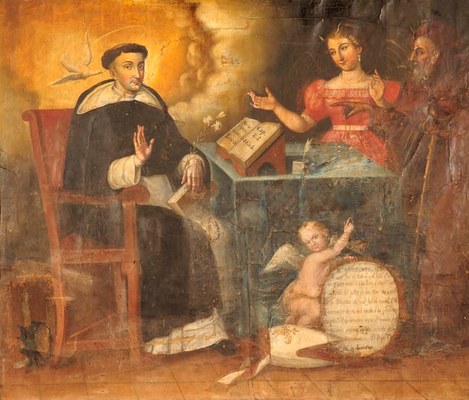
Ambrose of Siena
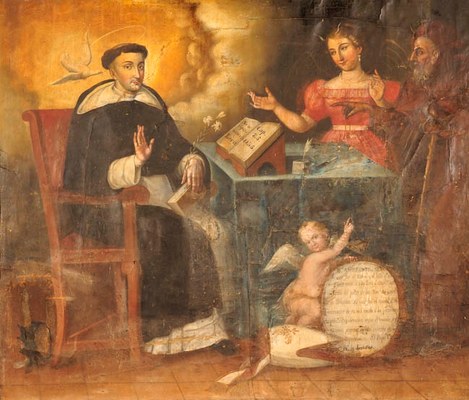
Ambrose was born at Siena on 16 April 1220, of the noble family of Sansedoni. When about one year old, Ambrose was cured of a congenital deformity, in the Dominican church of St. Mary Magdalene. As a child and youth he was noted for his love of charity, exercised especially towards pilgrims, the sick in hospitals, and prisoners. He entered the novitiate of the Dominican convent in his native city at the age of seventeen, was sent to Paris to continue his philosophical and theological studies under Albert the Great and had for a fellow-student there, St. Thomas Aquinas.
In 1248 he was sent with St. Thomas to Cologne where he taught in the Dominican schools. In 1260 he was one of the band of missionaries who evangelized Hungary. In 1266 Sienna was put under an interdict for having espoused the cause of the Emperor Frederick II, then at enmity with the Holy See. The Siennese petitioned Ambrose to plead their cause before the Sovereign Pontiff, and so successfully did he do this that he obtained for his native city full pardon and a renewal of all her privileges. The Siennese soon cast off their allegiance; a second time Ambrose obtained pardon for them. He brought about a reconciliation between King Conradin of Germany and Pope Clement IV.
About this time he was chosen bishop of his native city, but he declined the office. For a time, he devoted himself to preaching the Eighth Crusade; and later, at the request of Pope Gregory X, caused the studies which the late wars had practically suspended to be resumed in the Dominican convent at Rome. After the death of Pope Gregory X he retired to one of the convents of his order, whence he was summoned by Innocent V and sent as papal legate to Tuscany. He restored peace there between Florence and Pisa and also between the dogal republics of Venice and Genoa, another pair of commercial rivals within Italy.
He died at Sienna, in 1286. His name was inserted in the Roman Martyrology in 1577. His biographers exhibit his life as one of perfect humility. He loved poetry, and many legends are told of victories over carnal temptations.
He was renowned as a preacher. His oratory, simple rather than elegant, was most convincing and effective. His sermons, although once collected, are not extant
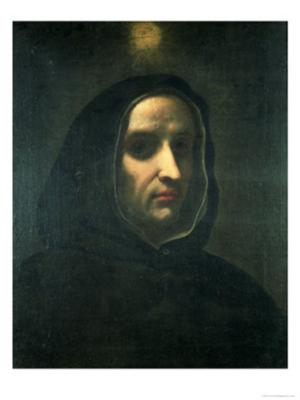
Fra Angelico
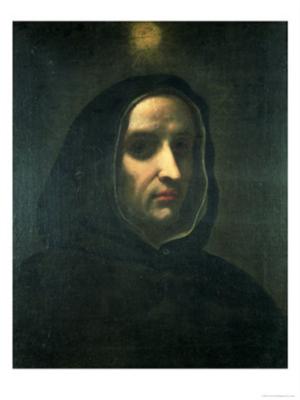
Fra Angelico (c. 1395 – February 18, 1455), born Guido di Pietro, was an Early Italian Renaissance painter described by Vasari in his Lives of the Artists as having “a rare and perfect talent”. He was known to his contemporaries as Fra Giovanni da Fiesole (Brother John from Fiesole) and by Vasari as Fra Giovanni Angelico (Brother John the Angelic One).
Fra Angelico is known in Italy as il Beato Angelico, the term “Il Beato” (“Blessed One”) being already in use during his lifetime or shortly thereafter, in reference to his skills in painting religious subjects. In 1982 Pope John Paul II conferred beatification, in recognition of the holiness of his life, thereby making this title official. Fiesole is sometimes misinterpreted as being part of his formal name, but it was merely the name of the town where he took his vows as a Dominican friar, and was used by contemporaries to separate him from other Fra Giovannis. He is listed in the Roman Martyrology as Beatus Ioannes Faesulanus, cognomento Angelicus—”Blessed Giovanni of Fiesole, nicknamed Angelico”.
Vasari wrote of Fra Angelico: But it is impossible to bestow too much praise on this holy father, who was so humble and modest in all that he did and said and whose pictures were painted with such facility and piety.
Early life, 1395–1436
Fra Angelico was born Guido di Pietro at Rupecanina,[7] in the Tuscan area of Mugello, near Fiesole towards the end of the 14th century and died in Rome in 1455. Nothing is known of his parents. He was baptized Guido or Guidolino. The earliest recorded document concerning Fra Angelico dates from October 17, 1417 when he joined a religious confraternity at the Carmine Church, still under the name of Guido di Pietro. This record also reveals that he was already a painter, a fact that is subsequently confirmed by two records of payment to Guido di Pietro in January and February 1418 for work done in the church of Santo Stefano del Ponte. The first record of Angelico as a friar dates from 1423, when he is first referred to as Fra Giovanni, following the custom of those entering a religious order of taking a new name. He was a member of the Dominican community at Fiesole. Fra, an abbreviation of frate (from the Latin frater), is a conventional title for a friar or brother.
According to Vasari, Fra Angelico initially received training as an illuminator, possibly working with his older brother Benedetto who was also a Dominican and an illuminator. San Marco in Florence holds several manuscripts that are thought to be entirely or partly by his hand. The painter Lorenzo Monaco may have contributed to his art training, and the influence of the Sienese school is discernible in his work. He had several important charges in the convents he lived in, but this did not limit his art, which very soon became famous. According to Vasari, the first paintings of this artist were an altarpiece and a painted screen for the Carthusian Monastery of Florence; none such exist there now.[2]
From 1408 to 1418 Fra Angelico was at the Dominican friary of Cortona where he painted frescoes, now destroyed, in the Dominican Church and may have been assistant to or follower of Gherardo Starnina. Between 1418 and 1436 he was at the convent of Fiesole where he also executed a number of frescoes for the church, and the Altarpiece, deteriorated but restored. A predella of the Altarpiece remains intact in the National Gallery, London which is a superb example of Fra Angelico’s ability. It shows Christ in Glory, surrounded by more than 250 figures, including beatified Dominicans.
San Marco, Florence, 1436–1445
In 1436 Fra Angelico was one of a number of the friars from Fiesole who moved to the newly-built Friary of San Marco in Florence. This was an important move which put him in the centre of artistic activity of the region and brought about the patronage of one of the wealthiest and most powerful members of the city’s Signoria, Cosimo de’ Medici, who had a large cell (later occupied by Savonarola) reserved for himself at the friary in order that he might retreat from the world. It was, according to Vasari, at Cosimo’s urging that Fra Angelico set about the task of decorating the monastery, including the magnificent Chapter House fresco, the often-reproduced Annunciation at the top of the stairs to the cells, the Maesta with Saints and the many smaller devotional frescoes depicting aspects of the Life of Christ that adorn the walls of each cell.
In 1439 he completed one of his most famous works, the Altarpiece for St. Marco’s, Florence. The result was unusual for its times. Images of the enthroned Madonna and Child surrounded by saints were common, but they usually depicted a setting that was clearly heavenlike, in which saints and angels hovered about as divine presences rather than people. But in this instance, the saints stand squarely within the space, grouped in a natural way as if they were able to converse about the shared experience of witnessing the Virgin in glory. Paintings such as this, known as Sacred Conversations, were to become the major commissions of Giovanni Bellini, Perugino and Raphael.
The Vatican, 1445–1455
In 1445 Pope Eugenius IV summoned him to Rome to paint the frescoes of the Chapel of the Holy Sacrament at St Peter’s, later demolished by Pope Paul III. Vasari claims that at this time Fra Angelico was offered by Pope Nicholas V the Archbishopric of Florence, and that he refused it, recommending another friar for the position. While the story seems possible and even likely, if Vasari’s date is correct, then the pope must have been Eugenius and not Nicholas. In 1447 Fra Angelico was in Orvieto with his pupil, Benozzo Gozzoli, executing works for the Cathedral. Among his other pupils were Zanobi Strozzi.
From 1447 to 1449 he was back at the Vatican, designing the frescoes for the Niccoline Chapel for Nicholas V. The scenes from the lives of the two martyred deacons of the Early Christian Church, St. Stephen and St. Lawrence may have been executed wholly or in part by assistants. The small chapel, with its brightly frescoed walls and gold leaf decorations gives the impression of a jewel box. From 1449 until 1452, Fra Angelico was back at his old convent of Fiesole, where he was the Prior.
Death and beatification
In 1455 Fra Angelico died while staying at a Dominican Convent in Rome, perhaps in order to work on Pope Nicholas’ Chapel. He was buried in the church of Santa Maria sopra Minerva.
When singing my praise, don’t liken my talents to those of Apelles.
Say, rather, that, in the name of Christ, I gave all I had to the poor.
The deeds that count on Earth are not the ones that count in Heaven.
I, Giovanni, am the flower of Tuscany.
—Translation of epitaph
Pope John Paul II beatified Fra Angelico on October 3, 1982 and in 1984 declared him patron of Catholic artists.
Angelico was reported to say “He who does Christ’s work must stay with Christ always”. This motto earned him the epithet “Blessed Angelico”, because of the perfect integrity of his life and the almost divine beauty of the images he painted, to a superlative extent those of the Blessed Virgin Mary.
From various accounts of Fra Angelico’s life, it is possible to gain some sense of why he was deserving of canonization. He led the devout and ascetic life of a Dominican friar, and never rose above that rank; he followed the dictates of the order in caring for the poor; he was always good-humored. All of his many paintings were of divine subjects, and it seems that he never altered or retouched them, perhaps from a religious conviction that, because his paintings were divinely inspired, they should retain their original form. He was wont to say that he who illustrates the acts of Christ should be with Christ. It is averred that he never handled a brush without fervent prayer and he wept when he painted a Crucifixion. The Last Judgment and the Annunciation were two of the subjects he most frequently treated.
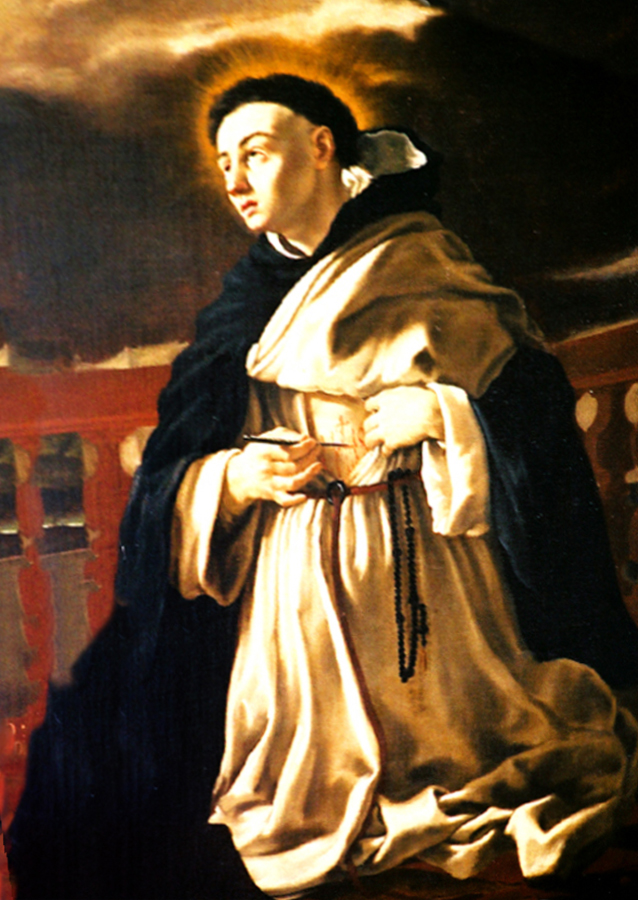
Blessed Henry of Suso
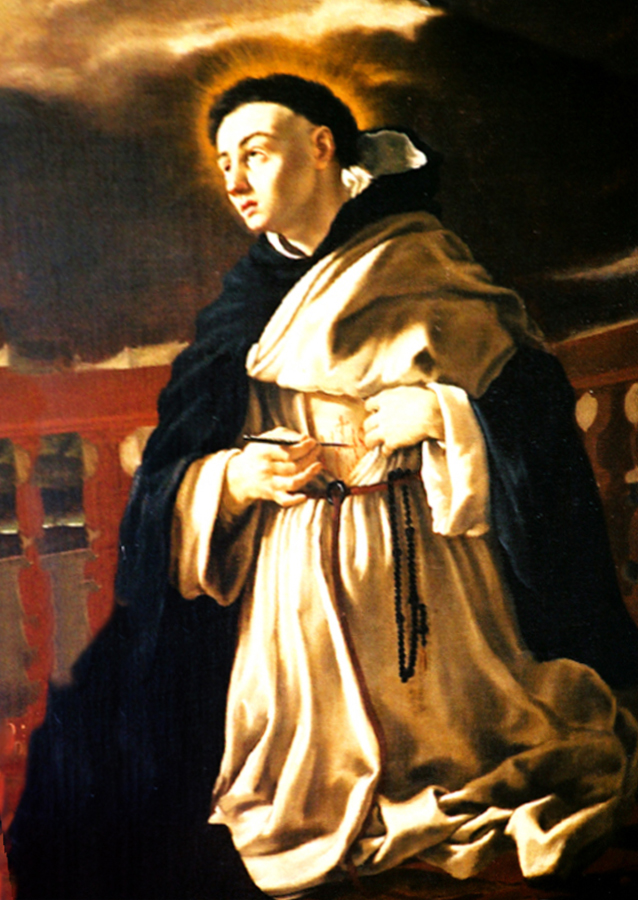
His father belonged to the noble family of Berg; his mother, a holy woman from whom he took his name, to a family of Sus (or Süs). When thirteen years of age he entered the Dominican convent at Constance, where he made his preparatory, philosophical, and theological studies.
From 1324 to 1327 he took a supplementary course in theology in the Dominican studium generale at Cologne, where he sat at the feet of Johann Eckhart, “the Master”, and probably at the side of Tauler, both celebrated mystics. Returning to Constance, he was appointed to the office of lector, from which he seems to have been removed some time between 1329 and 1334. In the latter year he began his apostolic career. About 1343 he was elected prior of a convent, probably at Diessenhofen. Five years later he was sent from Constance to Ulrn where he remained until his death.
Suso’s life as a mystic began in his eighteenth year, when giving up his careless habits of the five preceding years, he made himself “the Servant of the Eternal Wisdom”, which he identified with the Divine essence and, in a concrete form, with the personal Eternal Wisdom made man. Henceforth a burning love for the Eternal Wisdom dominated his thoughts and controlled his actions. He had frequent visions and ecstasies, practised severe austerities (which he prudently moderated in maturer years), and bore with rare patience corporal afflictions, bitter persecutions and grievous calumnies.
He became foremost among the Friends of God in the work of restoring religious observance in the cloisters. His influence was especially strong in many convents of women, particularly in the Dominican convent of Katherinenthal, a famous nursery of mysticism in the thirteenth and fourteenth centuries, and in that of Toss, where lived the mystic Elsbeth Stagel, who turned some of his Latin into German, collected and preserved most of his extant letters, and drew from him the history of his life which he himself afterwards developed and published.
In the world he was esteemed as a preacher, and was heard in the cities and towns of Swabia, Switzerland, Alsace, and the Netherlands. His apostolate, however, was not with the masses, but rather with individuals of all classes who were drawn to him by his singularly attractive personality, and to whom he became a personal director in the spiritual life.
It has often been incorrectly said that he established among the Friends of God a society which he called the Brotherhood of the Eternal Wisdom. The so-called Rule of the Brotherhood of the Eternal Wisdom is but a free translation of a chapter of his “Horologium Sapientiae”, and did not make its appearance until the fifteenth century.
HIS WRITINGS
The first writing from the pen of Suso was the “Büchlein der Wahrheit”, which he issued while a student at Cologne. Its doctrine was unfavourably criticized in some circles — very probably on account of its author’s close relations with Eckhart, who had just been called upon to explain or to reject certain propositions — but it was found to be entirely orthodox.
As in this, so in his other writings Suso, while betraying Eckhart’s influence, always avoided the errors of “the Master”. The book was really written in part against the pantheistic teachings of the Beghards, and against the libertine teachings of the Brethren of the Free Spirit. Father Denifle considers it the most difficult “little book” among the writings of the German mystics.
Whereas in this book Suso speaks as a contemplative and to the intellect, in his next, “Das Büchlein der ewigen Weisheit”, published early in 1328, he is eminently practical and speaks out of the fullness of his heart to “simple men who still have imperfections to be put off”. Bihlmeyer accepts Denifle’s judgment that it is the “most beautiful fruit of German mysticism”, and places it next to the “Homilies” of St. Bernard, and the “Imitation of Christ” by Thomas à Kempis. In the second half of the fourteenth and in the fifteenth century there was no more widely read meditation book m the German language.
In 1334 Suso translated this work into Latin, but in doing so added considerably to its contents, and made of it an almost entirely new book, to which he gave the name “Horologium Sapientiae”. Even more elevating than the original, finished in language, rich in figure, rhythmic in movement, it became a favourite book in the cloisters at the close of the Middle Ages, not only in Germany, but also in the Netherlands, France, Italy, and England.
To the same period of Suso’s literary activity may belong “Das Minnebüchlein” but its authenticity is doubtful.
After retiring to Ulm Suso wrote the story of his inner life (“Vita” or “Leben Seuses”), revised the “Büchlein der Wahrheit”, and the “Büchlein der ewigen Weisheit”, all of which, together with eleven of his letters (the “Briefbüchlein”), and a prologue, he formed into one book known as the “Exemplar Seuses”.
Suso is called by Wackernagel and others a “Minnesinger in prose and in the spiritual order.” The mutual love of God and man which is his principal theme gives warmth and colour to his style. He used the full and flexible Alamannian idiom with rare skill, and contributed much to the formation of good German prose, especially by giving new shades of meaning to words employed to describe inner sensations. His intellectual equipment was characteristic of the schoolmen of his age. In his doctrine there was never the least trace of an unorthodox tendency.
For centuries he exercised an influence upon spiritual writers. Among his readers and admirers were Thomas à Kempis and Bl. Peter Canisius.
The Catholic Encyclopedia, Volume VII
Nihil Obstat, June 1, 1910, Remy Lafort, S.T.D., Censor
Imprimatur. +John Cardinal Farley, Archbishop of Ne
Born: March 21, 1295 at Uberlingen, Germany as Heinrich von Berg
Died: January 25, 1361 at Ulm, Germany
Beatified: 1831 by Pope Gregory XVI
Representation: Dominican with the Holy Name on his chest
Works: Book of the Eternal Wisdom, The Thirst of God
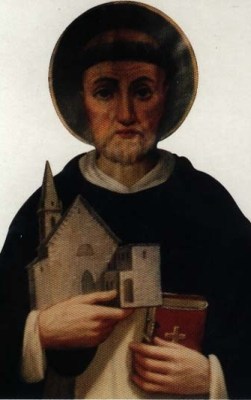
Blessed Christopher of Milan
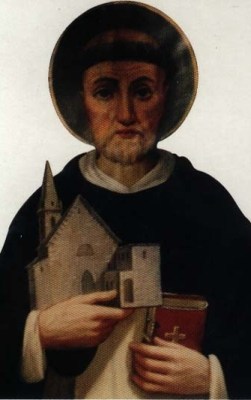
Nothing is known of the early years of Blessed Christopher. He received the Dominican habit in the convent of San Eustorgio in Milan, Italy, in the early 15th century. He is recorded as being “holy and abstemious, humble and studious”–the ordinary virtues that we have come to take for granted among the beati; there is nothing to indicate the type of person Christopher was, or what peculiar circumstances might have led him to the Dominicans. He is noted especially for his preaching and for his gift of prophecy.
The age in which Christopher lived was a rough and dangerous one, and a time for prophets and penitents to thrive. He was himself an apostolic preacher throughout Liguria and the Milanese, famous for the impact of his sermons on sinners. He had a vivid power of description and this, coupled with his gift of prophecy, made his sermons unforgettable.
Christopher worked in many parts of Italy, but his name is particularly venerated in Taggia, where he spent many years. As a result of his preaching, the people of Taggia built a monastery and church dedicated to Our Lady of Mercy and Christopher became its first abbot. A great wave of spiritual revival was felt in Taggia during his tenure, but he was not optimistic about the future.
In a vision he saw that most of the population would be carried off by plague. Twenty years before anyone was paying any attention to the Turks, he told the people of Taggia that Turks would invade the city, and they did, as he had prophesied. A disastrous flood swept the area, fulfilling another of his prophesies. He wrote four volumes of sermon aids, containing scriptural examples and quotations from the Fathers of the Church.
In 1484, when he was absent from Taggia preaching a mission, Christopher fell ill and knew that he was about to die. He insisted on returning to his own monastery at Taggia. There he received the last sacraments and immediately died (Benedictines, Dorcy).
Born: In the early part of the 15th century
Died: 1484 at Our Lady of Mercy convent, Taggia, Italy of natural causes
Beatified: 1875 by Pope Pius IX
Blessed Villana, Matron
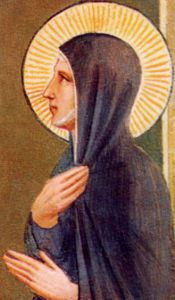
Blessed Villana was the daughter of Andrew de’Botti, a Florentine merchant, and was born in 1332. When she was thirteen she ran away from home to enter a convent but her attempts were unsuccessful and she was forced to return. To prevent any repetition of her flight, her father shortly afterwards gave her in marriage to Rosso di Piero. After her marriage she appeared completely changed; she gave herself up to pleasure and dissipation and lived a wholly idle and worldly life. One day, as she was about to start for an entertainment clad in a gorgeous dress adorned with pearls and precious stones, she looked at herself in a mirror. To her dismay, the reflection that met her eyes was that of a hideous demon. A second and a third mirror showed the same ugly form.
Thoroughly alarmed and recognizing in the reflection the image of herself sin-stained soul, she tore off her fine attire and, clad in the simplest clothes she could find, she betook herself weeping to the Dominican Fathers at Santa Maria Novella to make a full confession and to ask absolution and help. This proved the turning point of her life, and she never again fell away. Before long Villana was admitted to the Third Order of St. Dominic, and after this she advanced rapidly in the spiritual life. Fulfilling all her duties as a married woman, she spent all her available time in prayer and reading. She particularly loved to read St. Paul’s Epistles and the lives of the saints. At one time, in a self-abasement and in her love for the poor, she would have gone begging for them from door to door had not her husband and parents interposed. So completely did she give herself up to God that she was often rapt in ecstacy, particularly during Mass or at spiritual conferences; but she had to pass through a period of persecution when she was cruelly calumniated and her honor was assailed.
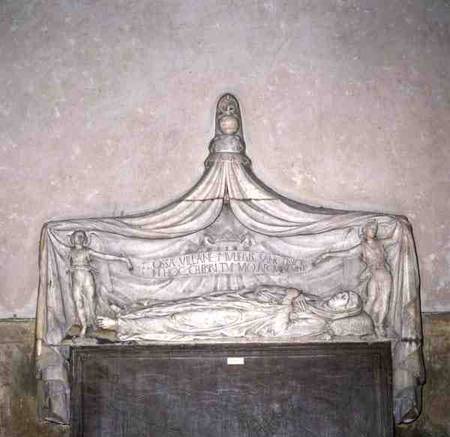
Her soul was also purified by strong pains and by great bodily weakness. However, she passed unscathed through all these trials and was rewarded by wonderful visions and olloquies with our Lady and other saints. Occasionally the room in which she dwelt was filled with supernatural light, and she was also endowed with the gift of prophecy. As she lay on her deathbed, she asked that the Passion should be read to her, and at the words “He bowed His head and gave up the ghost”, she crossed her hands on her breast and passed away. Her body was taken to Santa Maria Novella, where it became such an object of veneration that for over a month it was impossible to proceed with the funeral.
People struggled to obtain shreds of her clothing, and she was honored as a saint from the day of her death. Her bereaved husband use to say that, when he felt discouraged and depressed, he found strength by visiting the room in which his beloved wife had died.
Born: 1332 in Florence, Italy
Died: December of 1360 of natural causes; body taken to Santa Maria Novella; the Fathers were unable to bury her for a month due to the constant crowd of mourners
Beatified: March 27 1824 (cultus confirmed) by Pope Leo XII
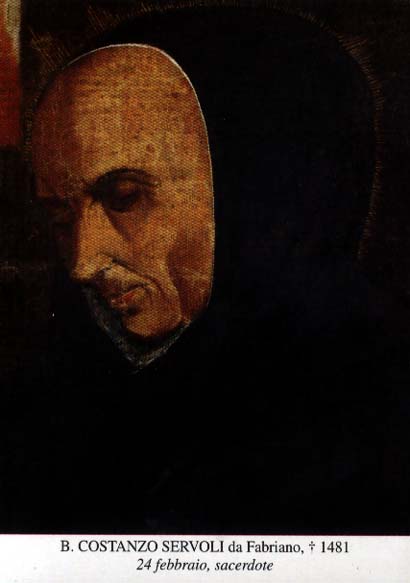
Blessed Constantius
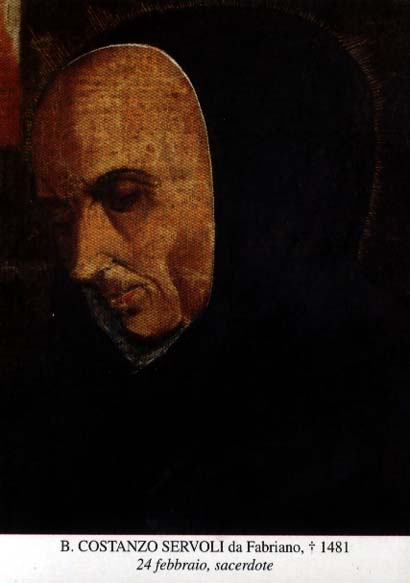
Constantius Bernocchi is as close to a ‘sad saint’ as it’s possible for a Dominican to get; he is said to have had the gift of tears. However, that is not his only claim to fame. Constantius had a remarkable childhood, not only for the usual signs of precocious piety, but also for a miracle that he worked when he was a little boy. Constantius had a sister who had been bedridden most of her nine years of life. One day, the little boy brought his parents in to her bedside and made them pray with him. The little girl rose up, cured, and she remained well for a long and happy life. Naturally, the parents were amazed, and they were quite sure it had not been their prayers that effected the cure, but those of their little son.
Constantius entered the Dominicans at age 15, and had as his masters Blessed Conradin and Saint Antoninus. He did well in his studies and wrote a commentary on Aristotle. His special forte was Scripture, and he studied it avidly. After his ordination, he was sent to teach in various schools in Italy, arriving eventually at the convent of San Marco in Florence, which had been erected as a house of strict observance. Constantius was eventually appointed prior of this friary that was a leading light in the reform movement. This was a work dear to his heart, and he himself became closely identified with the movement.
Several miracles and prophecies are related about Constantius during his stay in Florence. He one day told a student not to go swimming, because he would surely drown if he did. The student, of course, dismissed the warning and drowned. One day, Constantius came upon a man lying in the middle of the road. The man had been thrown by his horse and was badly injured; he had a broken leg and a broken arm. All he asked was to be taken to some place where care could be given him, but Constantius did better than that–he cured the man and left him, healed and astonished.
Constantius was made prior of Perugia, where he lived a strictly penitential life. Perhaps the things that he saw in visions were responsible for his perpetual sadness, for he foresaw many of the terrible things that would befall Italy in the next few years. He predicted the sack of Fabriano, which occurred in 1517. At the death of Saint Antoninus, he saw the saint going up to heaven, a vision which was recounted in the canonization process.
Blessed Constantius is said to have recited the Office of the Dead every day, and often the whole 150 Psalms, which he knew by heart, and used for examples on every occasion. He also said that he had never been refused any favor for which he had recited the whole psalter. He wrote a number of books; these, for the most part, were sermon material, and some were the lives of the blesseds of the order.
On the day of Constantius’s death, little children of the town ran through the streets crying out, “The holy prior is dead! The holy prior is dead!” On hearing of his death, the city council met and stated that it was a public calamity.
The relics of Blessed Constantius have suffered from war and invasion. After the Dominicans were driven from the convent where he was buried, his tomb was all but forgotten for a long time. Then one of the fathers put the relics in the keeping of Camaldolese monks in a nearby monastery, where they still remain (Benedictines, Dorcy, Encyclopedia).
Born: Born in the early part of the 15th century in Fabriano, Marches of Ancona, Italy
Died: 1481 of natural causes; the local senate and council assembled at the news of his death, proclaimed it a “public calamity”, and voted to pay for the funeral
Beatified: 1821 (cultus confirmed) by Pope Pius VII
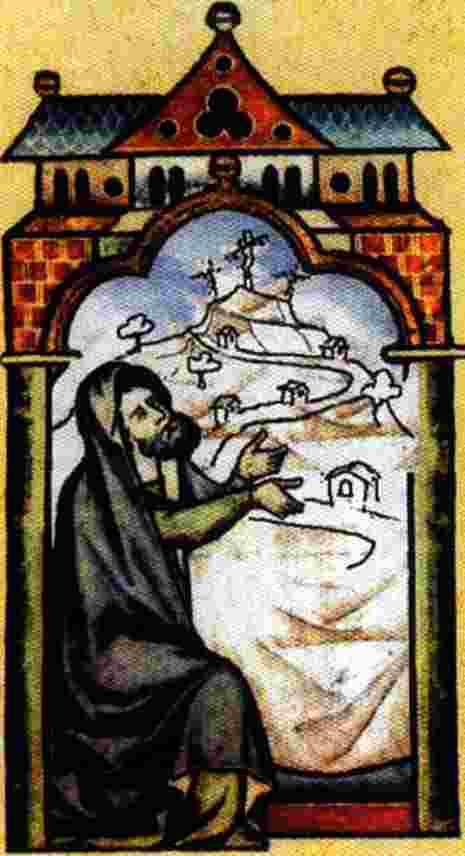
Blessed Alvarez of Cordova
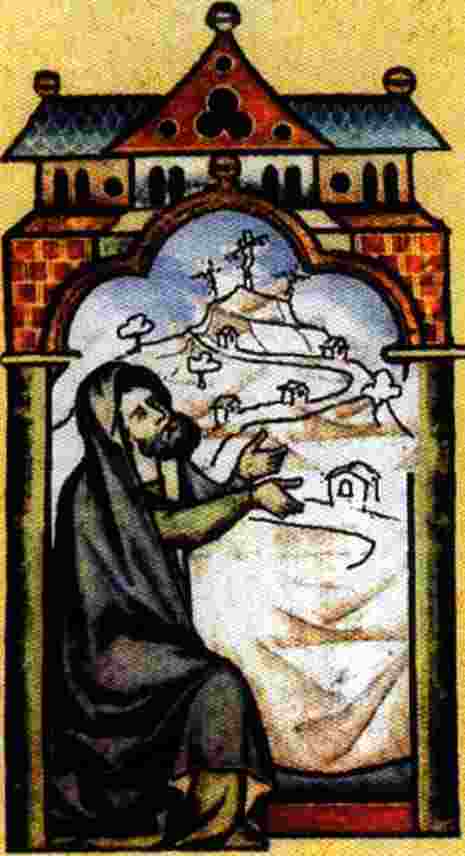
Blessed Alvarez is claimed by both Spain and Portugal. He received the habit in the convent of Saint Paul in Cordova in 1368, and had been preaching there for some time in Castile and Andalusia when Saint Vincent Ferrer began preaching in Catalonia. Having gone to Italy and the Holy Land on a pilgrimage, Alvarez returned to Castile and preached the crusade against the infidels. He was spiritual advisor to the queen-mother of Spain, Catherine daughter of John of Gaunt, and tutor to her son John II. Alvarez had the work of preparing the people spiritually for the desperate effort to banish the Moors from Spain. He also opposed the Avignon pope Peter de Luna.
Blessed Alvarez is probably best remembered as a builder of churches and convents, an activity which was symbolic of the work he did in the souls of those among whom he preached. He founded, in one place, a convent to shelter a famous image of Our Lady, which had been discovered in a miraculous manner. Near Cordova he built the famous convent of Scala Coeli, a haven of regular observance. It had great influence for many years. His building enterprises were often aided by the angels, who, during the night, carried wood and stones to spots convenient for the workmen.
The austerities of Alvarez were all the more remarkable in that they were not performed by a hermit, but by a man of action. He spent the night in prayer, as Saint Dominic had done; he wore a hairshirt and a penitential chain; and he begged alms in the streets of Cordova for the building of his churches, despite the fact that he had great favor at court and could have obtained all the money he needed from the queen. He had a deep devotion to the Passion, and had scenes of the Lord’s sufferings made into small oratories in the garden of Scala Coeli.
On one occasion, when there was no food for the community but one head of lettuce left from the night before, Blessed Alvarez called the community together in the refectory, said the customary prayers, and sent the porter to the gate. There the astonished brother found a stranger, leading a mule; the mule was loaded with bread, fish, wine, and all things needed for a good meal. The porter turned to thank the benefactor and found that he had disappeared.
At another time, Blessed Alvarez was overcome with pity at a dying man who lay untended in the street. Wrapping the man in his mantle, he started home with the sufferer, and one of the brothers asked what he was carrying. “A poor sick man,” replied Alvarez. But when they opened the mantle, there was only a large crucifix in his arms. This crucifix is still preserved at Scala Coeli.
Blessed Alvarez died and was buried at Scala Coeli. An attempt was made later to remove the relics to Cordova, but it could not be done, because violent storms began each time the journey was resumed, and stopped when the body was returned to its original resting place.
Founded Escalaceli (Ladder of Heaven), a Dominican house of strict observance in the mountains around Cordova; it became a well known center of piety and learning. Alvarez spent his days there preaching, teaching, begging alms in the street, and spending his nights in prayer. In the gardens of the house he set up a series of oratories with images of the Holy Lands and Passion, similar to modern Stations of the Cross.
A bell in the chapel of Blessed Alvarez, in the convent of Cordova, rings of itself when anyone in the convent, or of special not in the order, is about to die (Benedictines, Dorcy).
There are many wonderful stories attached to Alvarez, which include:
|
||
|
||
|
||
|
||
|
Born: Born about the middle of the 14th century in Cordova, Spain
Died: 1420
Beatified: Cultus confirmed September 22 by Benedict XIV in 1741
Blessed Reginald of Orleans
In calling the subject of this sketch Reginald of Saint Gilles, as he himself admits, Father Touron only follows the custom of his day, which was established by Anthony of Sienna, a native of Guimaraens, Portugal, Anthony stated in his Chronicles that Reginald was born at Saint Gilles, a small town in the Department of Gard, southern France. Most later writers think this honor more probably belongs to Orleans, and therefore give our blessed the name of Reginald of Orleans. In so designating him, we follow these authors rather than Touron, who also says that some are of the opinion that the early Friar Preacher first saw the light of day at Orleans. Mortier (I, 96) gives the year 1183 as the date of his birth.(1)
Few of the early members of the Order are mentioned so often, or in terms of such high praise, as Blessed Reginald. No doubt the historians take their cue from Blessed Jordan of Saxony, who knew him personally. Albeit, it is certain that he was one of the most distinguished among Saint Dominic’s first disciples. He sanctified his great learning and rare talent by prayer and an insatiable zeal for the salvation of his fellowman. Renowned canonist and forceful, eloquent preacher though he was, he gloried only in being an ambassador of Christ and a harvester of souls. Doubtless these qualities helped to bring Reginald and Dominic together so quickly and to unite them so closely.
Our future Friar Preacher was sent to the University of Paris in early manhood, where he not only met with signal success in his studies, but also (in 1206) obtained the doctor’s degree with applause. Then he taught canon law for some five years in his alma mater, being considered one of the bright lights of the institution. The high esteem which all showed him did not cause him to be any the less a man of God. His great devotion to the Blessed Virgin stood him in good stead; for, we are told, it acted as a safeguard against the snares of pride, luxury, and ambition. He gave much time to meditation on things divine. One of his pronounced traits was love for the poor; another was humility. Whilst kind to others, he practised great austerity with himself. Thus we are not surprised to learn that his progress in virtue was as rapid as that which he made in knowledge; or that, when the post of dean for the canons at Saint Aignan’s, Orleans, became vacant, all eyes were turned towards the model professor as the best man for the place.
The canons elected Reginald their dean without delay. One of the things which specially recommended him for the position was the fact that he did not desire it. Just when he received this promotion we do not know. But (on page 82 of his Antiquities of the Church and Diocese of Orleans — Antiquities de 1’Eglise et Diocese d’Orleans) Francis Lemaire says that the subject of our sketch was dean of Saint Aignan’s in 1212. Here he found himself bound to the service of God and His altar by new bonds, which gave a fresh impulse to his zeal to walk in the path of justice and to carry on his good works.
History tells us that the life of our dean was most edifying. It was hidden, as the apostle expresses it, in that of Christ our Lord. His charity towards those in need was almost boundless. He showed himself a model in all things. Yet he felt that something more was demanded of him. He feared the malediction which our Lord placed on the rich, reflected on the number of those who die impenitent after lives spent in sin, or without a knowledge of God’s justice, and trembled lest he should be condemned for burying the talent given him. Without any suspicion of the designs of heaven on him, the holy man longed to dispose of all he possessed and to go about the world poor and preaching Christ crucified. This he believed was his vocation; and he doubled his prayers and penances that he might learn the divine will.
At this juncture, providence came to Reginald’s assistance. The Right Rev. Manasses de Seignelay, bishop of Orleans, determined to visit Rome and the Holy Land. As the prelate was a close friend of the young dean, and enjoyed his enlightened conversation, he requested Reginald to accompany him on this journey. The subject of our sketch readily accepted the invitation, for it would give him an opportunity of satisfying his devotion at the places rendered sacred by the tread of our Lord and the blood of His martyrs.
The two travelers arrived in the Eternal City shortly before Easter, or in April, 1218. In a conversation with Cardinal Ugolino di Segni Reginald spoke of his ardent desire to imitate the apostles, and to go from place to place as a poor ambassador of Christ preaching the Gospel. As yet, however, he did not know how he was to put his wish into execution. His eminence (later Gregory IX) then proceeded to tell the pious dean that the way was already open to him; that a new religious order had just been instituted for that very purpose; and that its founder, who was renowned for his miracles, was actually in Rome, where he preached every day with marvelous effect. Filled with joy at the prospect of realizing his design in the near future, Reginald made haste to meet the harvester of souls, of whom he had been told. Charmed with Dominic’s personality and sermons, he determined to become one of his disciples without delay.
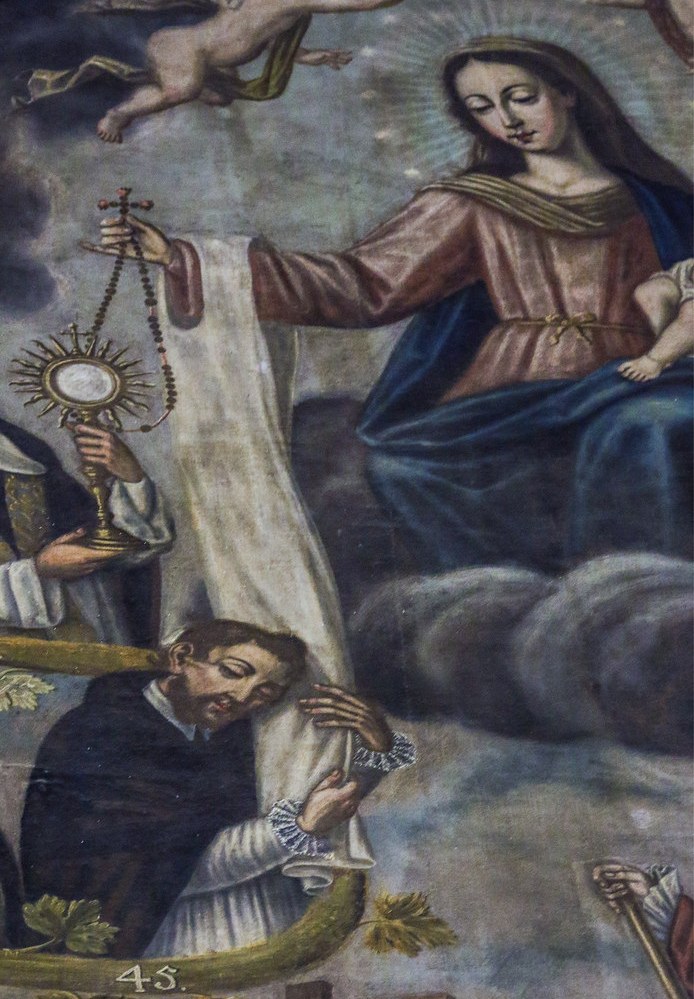
Indeed, the attraction between the two holy men was mutual. Meantime, however, Reginald became so ill that the physicians despaired of his life. In this extremity Dominic had recourse to his usual remedy, prayer; and in a few days his new friend was again in perfect health. In their piety both attributed the miraculous cure to the intercession of the Mother of God. Jordan of Saxony assures us that the Blessed Virgin appeared to Reginald in his sickness, told him to enter the new Order, and showed him the distinctive habit which the Friars Preacher should wear. Until this time they had dressed like the Canons Regular of Osma, of whom Dominic had been a member. Practically all the historians tell us that, in consequence of Reginald’s vision, the saint now adopted the garb which his followers have worn ever since, and that the former dean of Saint Aignan’s was the first to receive it from his hands.
Reginald was clothed in the religious habit immediately after the recovery of his health. At the same time, or very shortly afterwards, he made his profession to Dominic. However, this new allegiance did not prevent his journey to the Holy Land; for the saint permitted him to continue his way with Bishop de Seignelay. On his return to Italy from Jerusalem, perhaps in the middle fall of 1218, Dominic, who was still at Rome, sent the former dean to Bologna, which he reached in December. The high opinion which the patriarch had conceived of Reginald is shown by the fact that he appointed him his vicar (some say prior) over the incipient convent in that university city.
More than one thing evidently contributed to this immediate promotion to leadership. The house in Bologna had been started in the spring of the same year. While the first fathers stationed there were very cordially received, and were given Santa Maria della. Mascarella for a convent by Bishop Henry di Fratta, they found it hard to make the rapid headway which both they and Dominic evidently desired to see in the noted educational center. Reginald’s reputation, ability, eloquence, and experience at the University of Paris, it was felt, would combine with his rare virtue to bring about this desideratum. Nor were these expectations disappointed.
Hardly, indeed, had the former dean of Saint Aignan’s arrived at his destination, before the entire city was flocking to hear him preach. The effect of his sermons was marvellous. Hardened sinners gave up their evil ways; inveterate enemies buried their differences of long standing; the religion and moral tone of the people changed notably for the better. None seemed able to resist the attraction of the orator’s personality, or the persuasion of his burning eloquence. All felt that a new Elias had come among them. He held the place, as it were, in the palm of his hand. No one could doubt but that he had found his vocation.
Reginald drew the clergy as well as the laity; those of the university, whether professors or students, as well as the citizens. His example quickened the zeal of his confrères, for he preached every day-sometimes twice or even thrice. Vocations to the Order were so frequent that, within a few weeks, Santa Maria della Mascarella was overcrowded. They came from every walk in life. The university contributed a large number of both students and masters, some of whom were among the brightest lights of the institution with worldwide fame.
Bishop di Fratta and the papal legate, Cardinal Ugolino di Segni, were so pleased with the good effected by Reginald and his Friars Preacher that they gave him the Church of Saint Nicholas of the Vines, in order to enable him to receive more subjects. This was in the spring of 1219. Here a much larger convent was built at once. Rudolph of Faenza, the zealous pastor of Saint Nicholas, not content with surrendering his church to the Order, also received the habit from our blessed Reginald that he might join in the harvest of souls. He helped to erect the Convent of Saint Nicholas, now known as Saint Dominic’s, to which the community was transferred as soon as ready for occupation.
In his government of the large Bolognese community Blessed Reginald combined great charity and gentleness with a wise strictness. He did not suffer even slight transgressions to go uncorrected. Yet he was so skillful in his management of men and in his administration of punishment that his confrères, for they knew he ever acted for their good, held him in even greater affection than those not of the Order. All regarded him as a true man of God seeking to lead them to heaven. His every word, his very silence, bespoke virtue. With profound humility and a rare spirit of recollection he joined an extreme personal austerity.
The days the holy man spent in preaching to the people and spiritual conferences to his religious. The nights he gave largely to prayer. God blessed his efforts. Scarcely nine months had he been superior. Within that brief time Saint Nicholas’ had become not merely a large community; it was a famed sanctuary of prayer, the zeal of whose members recalled that of the apostles. Far and wide they bore the message of salvation with wonderful effect.
Such was the status, in point of size, discipline, and labors, in which Saint Dominic found the Bolognese institution on his arrival in the city, after his return from Spain, via Prouille, Toulouse, and Paris. This was late in the summer of 1219. The patriarch’s heart rejoiced at the sight of what had been accomplished. At Paris, owing to a strong opposition, the crooked paths had not yet been straightened, nor the rough ways made smooth. If, thought Dominic, Reginald had done so well in Bologna, why would he not be invaluable to Matthew of France in ironing out the difficulties at Paris. Besides, the saint had determined to make the Italian city the center of his own spiritual activities. So off to the French capital the subject of this sketch now went. His departure was keenly regretted by the community which he had governed so happily. But the voice of God spoke through the Order’s founder, and all bowed in humble submission. To Reginald’s brief sojourn in those far-flung days is due, in no small measure, the bond of regard that has ever since existed between the citizens of Bologna and the Friars Preacher.
Reginald’s arrival in Paris was a source of great joy to his confrères there — especially to the superior, Matthew of France. The newcomer bad been one of the university’s most beloved professors, and had had the only Friar-Preacher abbot as a pupil. Much was expected of his virtue, personality, and eloquence. Unfortunately, these hopes were realized only in part. As he had done in Bologna, so in Paris he began to preach incessantly. Together with this apostolate, he taught at the Convent of Saint James, whilst he relaxed not in the least his penances, or his nightly vigils.
Zeal for the salvation of souls, all the writers assure us, simply consumed the holy man. Enormous numbers flocked to his sermons. Vocations to the Order increased. Many came from among the students at the university. But such labors and mortification were too much for his strength. His health began to fail, and kindly Matthew of France ventured to warn him that he should be more moderate. Yet, as no positive order was given, the relaxation was not sufficient. http://www.willingshepherds.org/Dominican Saint February.html – 8 Possibly Matthew afterwards intervened more sternly. However, it was too late. The fire of life had burned out, and Reginald surrendered his pure soul to God in the first days of February, 1220. In his death the Friars Preacher nearly everywhere mourned the loss of one whom they considered, next to its founder, the strongest support of their new Order.
Had he lived, Reginald would most likely have succeeded Saint Dominic as Master General. In the language of Jordan of Saxony, Reginald lived a long life in the span of a few years. He spent less than two years in the Order; yet he left a memory that still seems fresh after a lapse of more than seven centuries. One of the things which continued to be denied the fathers by the ecclesiastical circles of Paris, at the time of his death, was the right of burial for the community in their Church of Saint James. Accordingly, his remains were laid to rest in that of Our Lady of the Fields (Notre Dame des Champs). The faithful soon began to visit and pray at his grave. Several miracles were reported. When, between 1605 and 1608, his body was taken up to be placed in a shrine, it was found to be incorrupt. This served to increase the devotion towards the man of God.
A few years later (1614), Our Lady of the Fields became the property of the Carmelite Sisters. Thus the tomb of Saint Dominic’s early disciple, because in their cloistered church, ceased to be visited by the people at large, who had been accustomed to seek his intercession for nearly four hundred years. The holy sisters, however, held him in the deepest veneration, and poured out their hearts in prayer before his sacred remains. In 1645, they had Father John Francis Senault, general of the Oratorians, write his life. His relics remained in this secluded place, ever an object of devotion for Christ’s cloistered spouses, until they were desecrated and destroyed by the villains of the terrible French Revolution.
Fortunately, as is proved in the process of his beatification, devotion to Reginald had become too deeply rooted to be annihilated by even such a catastrophe. This was particularly the case in the Order of Preachers, whose members had ever cherished an undying affection and veneration for him. In 1875, Pius IX, after a thorough examination of the matter by the Sacred Congregation of Rites, approved his cult, and granted the divine office and mass of Reginald to the Friars Preacher and the dioceses of Paris and Orleans. http://www.willingshepherds.org/Dominican Saint February.html – 9 February 12 was set aside as his feast, but in late years it has been transferred to the seventeenth day of the same month.
Born: at Saint-Gilles, Languedoc, France, c. 1183
Died: 1220
Canonized: Pius IX confirmed his cult in 1875.
Blessed Nicholas Palea
Born of a noble Neapolitan family, Nicholas was named for the great wonder-worker who had once lived in the kingdom. At 8 he was already practicing austerities. He would not eat meat, even on feast days, because he had been favored by a vision of a young man of great majesty who told him to prepare for a lifetime of mortifications in an order that kept perpetual abstinence.
Sent to Bologna for his studies, he met Saint Dominic and was won by him to the new order. He was the companion of Saint Dominic on several of the founder’s journeys to Italy, and warmed his heart at the very source of the new fire which was to mean resurrection to so many souls.
Saint Nicholas of Bari had been noted for his astounding miracles, and his young namesake began following in his footsteps while yet a novice. When on a journey with several companions, he met a woman with a withered arm. Making the Sign of the Cross over her, he cured her of the affliction.
At one time, as he entered his native Bari, he found a woman weeping beside the body of her child, who had been drowned in a well. He asked the woman the name of the child, and being told it was Andrew, he replied, “After this, it’s Nicholas. Nicholas, in the name of our Lord Jesus Christ, arise!” The little one revived, alive and well. The child of his sister Colette, mute from birth, brought her famous uncle a basket of bread. “Who sent the bread, child?” Nicholas asked her. “My mother,” she replied, and from then on she was cured.
As provincial of the Roman province, Nicholas was wise, prudent, and kind. He established priories in Perugia in 1233 and Trani in 1254. He received many novices and did much of his work among the young religious. Once he was called to the assistance of a novice who had been deceived by the devil and would not go to confession. He showed the young man the true state of his soul and undid the work of the evil one.
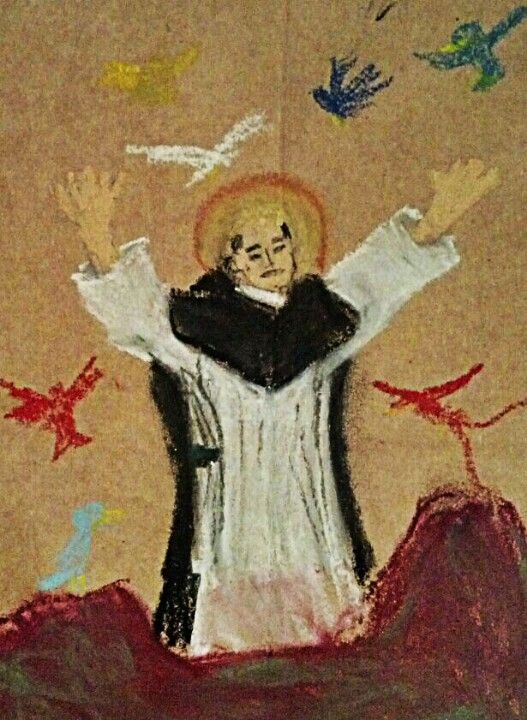
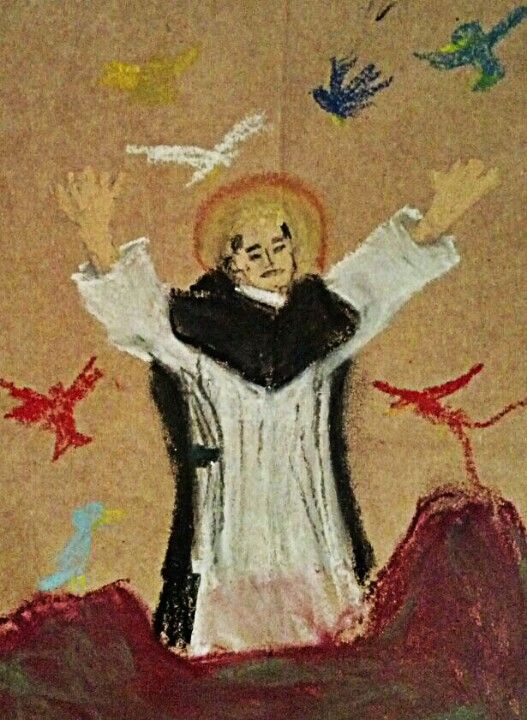
Nicholas earned great fame as a preacher. On one occasion, when he was preaching in the cathedral of Brescia, two irreverent young men began disturbing the congregation and soon made such a commotion that Nicholas could not make himself heard. Nicholas left the cathedral to a neighboring hill and there called to the birds to come to listen to him. Like the birds in the similar story of Saint Francis, flocks of feathered creatures fluttered down at his feet and listened attentively while he preached. At the end of the sermon they flew away singing.
After a lifetime of preaching and miracles, Nicholas, forewarned of is death by a visit from a brother who had been dead many years, went happily to receive the reward of the faithful. Miracles continued to occur at his tomb and through his intercession. Among these was the miracle by which life was given to a baby born dead. His parents had promised to name the baby Nicholas if the favor were granted, and to their great joy their child lived (Benedictines, Dorcy).
Born: Giovinazzo near Bari, Naples (year unknown)
Died: died in Perugia, Italy, in 1255
Beatified: Leo XII confirmed his cult in 1828
Representation: In art, Saint Nicholas is presented as a Dominican with a birch and a book (Roeder). He is venerated in Giovinazzo and Perugia, Italy (Roeder).


You must be logged in to post a comment.