
Category: Lesson
Be Jesus ~ The Rev. Frank Bellino, Novice
In the Gospel today, we hear about two miracles done by Jesus:
o First Jesus raises the daughter of a man named Jairus from the dead. And then a woman is healed from a hemorrhage.
o At Notre Dame, I learned the idea that when Jesus came among us, in his ministry in Israel…his miracles of healing and even raising people from the dead were a taste of what would happen when he returned at the end of time. If you look at the Old Testament and then what Jesus says in the New Testament there is this ongoing prediction that at the end of time, as the Old Testament says, or when Jesus returns, as Jesus puts it….there will be no more sickness and death….and Jesus’s time among us was a taste of that future time when there would be a physical resurrection of the dead and we would live close to God.
***I have used this story before, a few years ago, but figured I would use it again, for fun:
The Pope goes to New York, and he is picked up at the airport by a limousine. He looks at the beautiful car and says to the driver, “You know, I hardly ever get to drive. Would you please let me?”
The driver is understandably hesitant and says, “I’m sorry, but I don’t think I’m supposed to do that.”
But the Pope persists, “Please?” The driver finally lets up. “Oh, all right, I can’t really say no to the Pope.”
So the Pope takes the wheel, and boy, is he a speed demon! He hits the gas and goes around 100 mph in a 45 zone. A policeman notices and pulls him over.
The cop walks up and asks the Pope to roll down the window. Startled and surprised, the young officer asks the Pope to wait a minute. He goes back to his patrol car and radios the Supervisor.
Cop: Sergeant, I have a problem.
Sergeant: What sort of problem?
Cop: Well, you see, I pulled over this guy for driving way over the speed limit but it’s someone really important.
Sergeant: Important like the mayor?
Cop: No, no, much more important than that.
Sergeant: Important like the governor?
Cop: Wayyyyyy more important than that.
Sergeant: Like the president?
Cop: More.
Sergeant: Who’s more important than the president?
Cop: I do not know, but he has got the Pope driving for him! Oh well. The Pope. Just for fun.
For the sermon today, I was thinking about a friend of mine. He is a priest. And a way back I was as with him and a young priest came by to see him who used to work with my priest friend, but now works at another parish. And the young priest immediately came over to my priest friend and gave him a big hug and said, “I miss you.” I guess he does not like his new pastor!! Ha ha. But anyway, priest friend has had so much good impact in so many ways for many years in his diocese: A wonderful and kind priest.
But I remember, 20 years ago, when he was a little younger than I am now….he had said to me one day, out of nowhere, “Maybe it’s time for me to throw in the towel.” And that means to quit. He was frustrated with things in his life and his ministry as a priest at the time. But he did not throw in the towel: He stuck with it. And I thought of all the good he did by trying to follow Jesus in the way that he felt he had been called even though he had hit some rough spots in his life he didn’t like.
And that, just as Jesus came among us and brought healing into the world and brought people back to life through his time among us…so also, my priest friend, through sticking with it and trying to follow God in his own way, had also brought healing to other people, and brought God’s love to other people….
And that just as Jesus put up with being criticized by the religious leadership of his time, and put up with being rejected by his hometown of Nazareth, and just as he had to tolerate all but one of his disciples running away or rejecting him when he was in trouble….and just as Jesus had to face suffering and the cross….. so, I also I thought of my friend who stuck with his call-in life even though he faced challenges.
Now, I know that you and I want to be happy….and we want our kids to be happy….and I know my priest friend takes vacations and laughs and thinks about getting out with friends. And I know that part of being able to KEEP commitments like marriages or being a priest or a nun is that we can have hobbies and to have fun and to set limits to how much work we do….
BUT, still, when we think of the wonderful things Jesus did in healing the woman who had been bleeding for 12 years or raising the young lady from the dead….these things happened because Jesus was willing to make a sacrifice….and because God the Father was willing to make a sacrifice….and that Jesus was willing, sometimes, to suffer….
And that’s the same with us: yes it’s good, sometimes, to go to the beach, to get rest, to have a hobby, to laugh as much as possible in life….BUT ALSO, it is good, sometimes, for the sake of the love of Jesus, to be willing to sacrifice and suffer a bit….. Because then we sometimes can become vehicles for God’s healing and new life to come into the world.
And indeed, when Jesus COMMISSIONED THE DISCIPLES to go baptize all nations….. he gave them AND US a JOB TO DO.
For he started the Church, just like St. Michaels a year ago, and he gave us the Holy Spirit so that he could WORK THROUGH US to heal people and bring them hope until he returns to take away all sin and sickness and death.
That’s why Jesus started the Church…and that’s why he gave us the Holy Spirit….to help us keep on bringing the healing of God into the world until he returns in glory.
And that’s why we Catholics stubbornly hold onto the notion that the Church is important….for all the foolishness and foibles and worth of some of its members…..because Jesus believed it was a good thing for there to be a Church THROUGH WHICH he would minister….THROUGH US….until he returned in glory – or else Jesus wouldn’t have started the Church.
And so, we now, in the Church, are the hands and feet and voice of Christ. Indeed, WE REPRESENT CHRIST when we visit a nursing home. Or help the homeless or welcome a parishioner at the door as a greeter or help with coffee and donuts or help with a Bible study or go to the sacrament of confession or of anointing.
YES, IN DOING THOSE SIMPLE THINGS, WE REPRESENT CHRIST…and CHRIST TRULY WORKS THOURHG US….to heal a broken world….and Jesus told us that OUR CHURCH WOULD BE HOW HE WOULD MINISTER TO THE WORLD UNTIL HE RETURNED IN GLORY.
Indeed, as he told Peter in Matt 16:18 –
And I tell you that you are Peter, and on this rock, I will build my church, and the gates of Hell will not prevail against it. And so just like JESUS WITHSTOOD FROM GLORY IN HEAVEN TO BECOMING A SON OF A POOR YOUNG MOM IN BACKWATER GALILEE…AND LATER SPAT UPON AND LOOKED DOWN UPON BY MANY OF THE RELIGIOUS LEADERS OF HIS DAY, and so also sometimes, while we also need to make choices in order to be happy – like to reach out to friends and exercise and to be with people who help us to laugh….we also are called, at times, to imitate Jesus and to pick up our cross in order to HELP OTHERS IN THIS LIFE, and IN ORDER THAT JESUS CAN WORK THROUGH US IN THE WORLD TODAY.
So that just as Jesus healed the woman today who had been hemorrhaging for 12 years….and just as Jesus raised a young lady from the dead in the Gospel today….which he never would have done if he had stayed in glory with the Father….
So we too need to leave our comfort zone to get out there to help others as well in our world today. For in the world where we have the shooting at the Alamo and so many people who could really use a kind word or a bit of our time….let’s push ourselves a bit to be people who bring Jesus to the world today.
Jesus really is depending on us to do that….I assure you of that. And if we step out to help others in our life….God will be immediately ready to use our help in transforming the world today….so that we comfort the afflicted and bring healing to the hurting and give new hope to those who are struggling.
The Nativity of St. John the Baptist, Milan Komadina, Novice
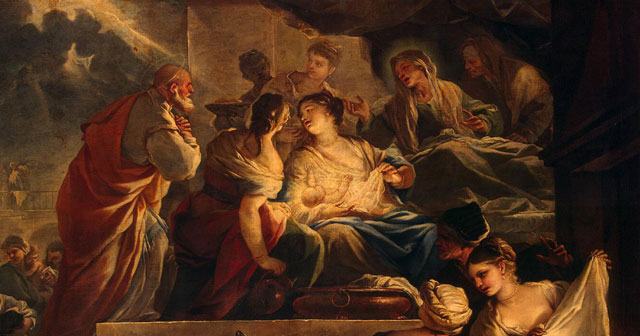
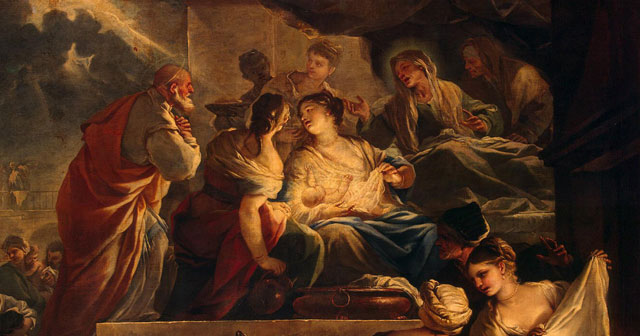
Dear sisters and brothers, today our Holy Church commemorates birthday of Saint John, the Baptist. At the beginning of this sermon let us pray and read how God foretold the nativity of this Saint.
Jeremiah 1:4-10
The Birth of John the Baptist Foretold
5 In the time of Herod king of Judea there was a priest named Zechariah, who belonged to the priestly division of Abijah; his wife Elizabeth was also a descendant of Aaron. 6 Both of them were righteous in the sight of God, observing all the Lord’s commands and decrees blamelessly. 7 But they were childless because Elizabeth was not able to conceive, and they were both very old.
8 Once when Zechariah’s division was on duty and he was serving as priest before God, 9 he was chosen by lot, according to the custom of the priesthood, to go into the temple of the Lord and burn incense. 10 And when the time for the burning of incense came, all the assembled worshipers were praying outside.
11 Then an angel of the Lord appeared to him, standing at the right side of the altar of incense. 12 When Zechariah saw him, he was startled and was gripped with fear. 13 But the angel said to him: “Do not be afraid, Zechariah; your prayer has been heard. Your wife Elizabeth will bear you a son, and you are to call him John. 14 He will be a joy and delight to you, and many will rejoice because of his birth, 15 for he will be great in the sight of the Lord. He is never to take wine or other fermented drink, and he will be filled with the Holy Spirit even before he is born. 16 He will bring back many of the people of Israel to the Lord their God. 17 And he will go on before the Lord, in the spirit and power of Elijah, to turn the hearts of the parents to their children and the disobedient to the wisdom of the righteous—to make ready a people prepared for the Lord.”
What I personally find interesting when I think about Christian commemoration of the saints is that we most often commemorate the day of one saint`s death. Only if a Saint was a very big and special saint we celebrate his or her birthday. We celebrate Jesus` birthday, birthday of St. Mary, mother of God and birthday of St. John. St. Mary`s birthday is commemorated as she was the one participating God`s plan for the Son of Man to be born. On the other hand Saint John was the one participating in God`s plan for the Son of God to start His heavenly mission. Before meeting John and before being baptized Jesus didn`t start his heavenly work. Two key roles of Jesus were played with the help of Mary and John. And so, the Church commemorates two more birthdays along with the Birthday of Our Lord Jesus.
The same thing happens in life of every Christian. When we are born by our mothers we are born for this world. We are material sons and daughters of human. But what happens when we are baptized. After being baptized we start our spiritual journey through this life. We start something that should have been called – heavenly path. This path is not easy. We may have daily struggling with many things and temptations. Laziness, anger, stress, lack of time, negative thoughts, excessive sexual desire and imagination, bad mood, injustice that we see every day… all those can be factors that would lead us away from God over and over again. But we should always at least do our sign of cross and say “God, I know you are here, glory be to you always“. Doing cross sign is what reminds us on our baptism. Since we were baptized in the name of the Father, the Son and the Holy Spirit. Doing our sign of cross is like we are sealed with the Holy Spirit. We remember that we are on our way of passion as Jesus was. And we all have our own cross.
Today we will talk mostly about the nativity of Saint John but as I said at the beginning of this text, it is interesting that not many nativities are commemorated by the Church. What we do commemorate is – death! This looks scary, right? Well, it might only look that way but it is interesting to make correlation between death and baptism. When we die we are buried under ground. There is a symbolic burying under the water when a person is baptized. Baptism is also symbol of death. But when we, Christians, say the word “death“ we should refer it to being dead for the sin and for the evil acts. We are washed, spiritually purified, justified by faith, saved by grace and dead for the sin and should be jumping out of the water of baptism as a new man. Born for the life, born for the love and born for God. Often when I think about saints, commemorations and Christian holidays I try to think how we can use and apply what we learn from these commemorations in our everyday life. When I think about the water of baptism I like to think that our blanket on our bed may be also a good reminder of who we are in Christ. When we lay in bed to sleep it is like laying in the tomb of baptism. When you wake up in the morning and you remove your cover and stand up remember that Jesus raised you up for this day. Christianity is full of beautiful symbols everywhere. Be thankful and pray or at least do your sign of the cross. Do it with faith and love. See how blessed you are. If you have time read your Bible. Make a habit to practice it every day. Here I would like to share a part from the Bible to see more about Nativity of John the Baptist.
Luke 1:57-66
The Birth of John the Baptist
57 When it was time for Elizabeth to have her baby, she gave birth to a son. 58 Her neighbors and relatives heard that the Lord had shown her great mercy, and they shared her joy.
59 On the eighth day they came to circumcise the child, and they were going to name him after his father Zechariah, 60 but his mother spoke up and said, “No! He is to be called John.”
61 They said to her, “There is no one among your relatives who has that name.”
62 Then they made signs to his father, to find out what he would like to name the child. 63 He asked for a writing tablet, and to everyone’s astonishment he wrote, “His name is John.” 64 Immediately his mouth was opened and his tongue set free, and he began to speak, praising God. 65 All the neighbors were filled with awe, and throughout the hill country of Judea people were talking about all these things. 66 Everyone who heard this wondered about it, asking, “What then is this child going to be?” For the Lord’s hand was with him.
80 And the child grew and became strong in spirit[d]; and he lived in the wilderness until he appeared publicly to Israel.
As we are remembering the importance of the baptism, and meditate on what we have read from the Bible. As we practice gratefulness for all the blessings may we pray today to Saint John and give glory to our God for ever. Amen.
Calming the Storm ~ Fr. Frank Bellino, Novice
Before I talk of our Heavenly Father, I want to share about “Father’s Day.” Far from a “Hallmark holiday,” Father’s Day has its origins in medieval Europe, when Catholics dedicated a day to honoring fathers, fatherhood, and all paternal relationships. Fast forward a couple hundred years, and it is now a holiday held all over the world — a testament to how important fathers and father figures are in societies everywhere. However, be careful. The date fluctuates around the world. In Spain, for example, it is held on March 19, while in New Zealand, it is the first Sunday in September. Keep this in mind if you are traveling, or have family living overseas. There are few things more upsetting than a disappointed dad.
Father’s Day in America has a rich history dating back to the turn of the 20th century. But to really understand Father’s Day we must go back to the post-civil war reconstruction era of the 1860s and a day that celebrates the other half of the parenting duo, mothers.
The idea of celebrating parents has its roots in one woman: Ann Reeves Jarvis. Shortly after the Civil War, Jarvis sought to soothe the wounds created over four years of bitter conflict in one divided West Virginia town by choosing a day to celebrate mothers of both confederate and Union soldiers. Known as “Mother’s Workdays” Jarvis hoped that during the newly installed era of peace and reconciliation that previous enemies could begin to sow unity again by celebrating one thing they all had in common.
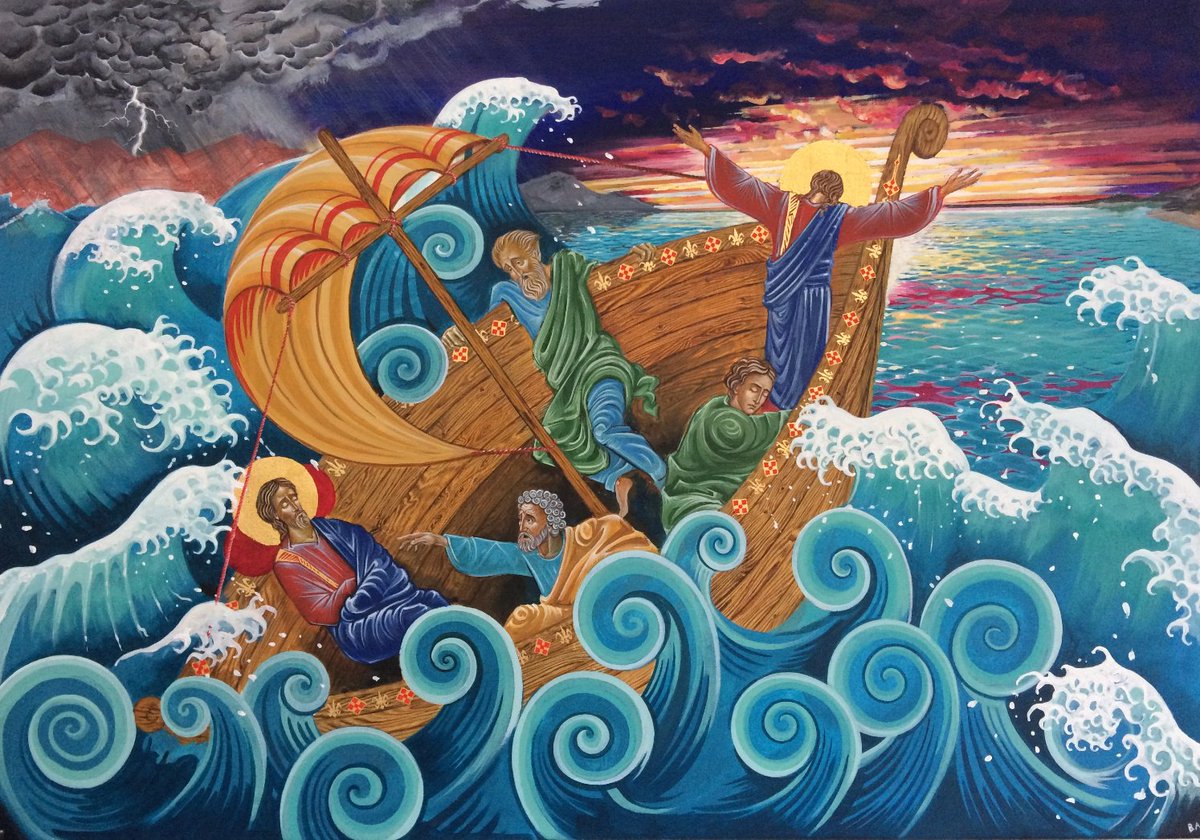
At the end of the Book of Job, God addressed Job out of a storm and asked him if he was present when God created the world. In today’s first reading God speaks about the creation and confining of the sea. In the Gospel, Jesus quiets a storm, and the disciples ask, “Who is this whom even the wind and sea obey?”
Insurance companies use a term to describe an uncontrollable natural force. They call this an act of God. That is an unfortunate term. It assumes that God causes nature to do harm to people. God does not do evil things to people. People do evil things to people. Pope Francis in the encyclical Lauate Si, On the Care for our Common Home, directs us to discover and prevent any catastrophe that could rightly be called an Act of Man.
Natural catastrophes are events that we are very much aware of here in Texas. We are always keeping an eye on the weather and how it will affect the roads and creek and river waters around us. We must have a lot of respect for stormy weather, particularly when a hurricane or hail threatens. Here at St. Michael’s, we do not either have hurricane windows, or wood or metal doors and windows to protect the Church and all our building, as it is unlikely that a hurricane will strike us. But now rain is a different story, we must utilize our intellect to determine what protection we must take. Hopefully, you have all made provisions to protect your homes also.
As careful as people must be with their property that is on land, they must be far more careful with that which is on the water. Boats have got to be secured. Trying to stay afloat during a major storm is foolish unless you are in a large ship.
The ancients also had a healthy respect for the sea and for storms out on the sea. The ancients saw the sea as one of the most powerful forces in the world. They also saw the sea as a source of beauty. Life itself came from the sea. Food comes from the sea. Peace and serenity come from looking at the sea. If you do not believe me than you have not gone out to see the sunset on Medina Lake recently.
Even though it was such a powerful force, the ancients knew that God could control the sea. In the Book of Job, Job’s pains lead him to question God’s wisdom and power. God challenges Job with the simple statement found in the first reading for this Sunday: “I closed up the sea.” God has even more power than the sea.
The fear of a storm at sea was too much for Jesus’ disciples in the today’s Gospel reading. Many of them were fishermen. They were terrorized when they saw the storm coming. When Jesus quieted the sea and the winds, they recognized the power of God working through him. Their question: “Who is this that calms the storm and the winds?” was similar to asking, “Who is the King of Glory?”
First, though, their faith was tried. Remember, when the storm came up, Jesus was asleep in the boat. It appeared that He was not concerned with their plight. It seemed that they had to ride out this storm alone. The fear that the disciples had is the same fear that we all have when we are confronted with a crisis. We find out that we have a serious illness, and we become fearful for our lives and for our loved ones. We learn a terrible truth about one of our relatives or friends, and we fear that their lives and even our own reputations will be shattered. We often must accept a change in our lives. Even changes as routine as moving from Middle School to High School, or High School to college, or college to independent life as a young adult can be frightening. We consider marriage and our responsibilities to a person we love, and then we consider our responsibilities to those people that we bring into the world, and we fear that we might not be up to the challenges of life. We fear that we are alone. But we are not alone. God sees. God knows. He is there in the boat of life with us as the storms rage. He challenges us as Jesus challenged his disciples, “Why are you afraid? Where is your faith?” Our all-loving God is also an all-powerful God. He will calm the sea for us if we trust in Him. God does not forget us, even if we think He is sleeping.
Perhaps today’s readings are not about nature after all. They are about God, Our Father, the One who created the universe and cares for each one of us as an only child. He calls upon us to have faith that conqueror of the seas and of all chaos will help us grow closer to Him through all the challenges of our lives.

Solemnity of Most Sacred Heart of Jesus ~ The Very Rev. Lady Sherwood, OPI
Liturgical colour: White.
Reading I: Hos 11:1, 3-4, 8c-9
Responsorial Psalm: Is 12:2-3, 4, 5-6.
Reading II: Eph 3:8-12, 14-19
Gospel: Jn 19:31-37
My dear brothers and sisters in Christ, today, we come together to celebrate the Solemnity of The Sacred Heart of Our Lord and Saviour, Jesus Christ.
Let us first look at today’s Holy Gospel Reading of Jn 19:31-37 (NIV):
31 Now it was the day of Preparation, and the next day was to be a special Sabbath. Because the Jewish leaders did not want the bodies left on the crosses during the Sabbath, they asked Pilate to have the legs broken and the bodies taken down. 32 The soldiers therefore came and broke the legs of the first man who had been crucified with Jesus, and then those of the other. 33 But when they came to Jesus and found that he was already dead, they did not break his legs. 34 Instead, one of the soldiers pierced Jesus’ side with a spear, bringing a sudden flow of blood and water. 35 The man who saw it has given testimony, and his testimony is true. He knows that he tells the truth, and he testifies so that you also may believe. 36 These things happened so that the scripture would be fulfilled: “Not one of his bones will be broken,” 37 and, as another scripture says, “They will look on the one they have pierced.”
So what are we being told today?
The scene in our Gospel Reading today is immediately after Jesus’ death. Jesus’ body is still hung upon the cross. However, since the Sabbath was upon them, the bodies of Jesus and the two men crucified alongside him needed to be taken down and buried. John tells us that the Jews asked Pilate to break the legs of Jesus and also of the two men who were crucified with him. However, when the soldiers came to Jesus’ body, he clearly was already dead so they decided not to break his legs. Rather they chose to pierce his side with a lance! And as we know blood and water flowed out. This fulfilled the prophecy in Exodus 12: “Not one of his bones will be broken.” Thus, Jesus fulfilled the prophecies of the Messiah. Jesus truly was indeed the “Lamb of God” who had been sacrificed for each and every one of us!!
Do we truly appreciate what Jesus did for every single one of us? Is Jesus’ passion, death and resurrection personal to us as indeed it truly ought to be? Or do we simply think of it merely as a historical story? Do we truly and deeply appreciate Jesus’ willingness to sacrifice his own life for us so that we can live fully?
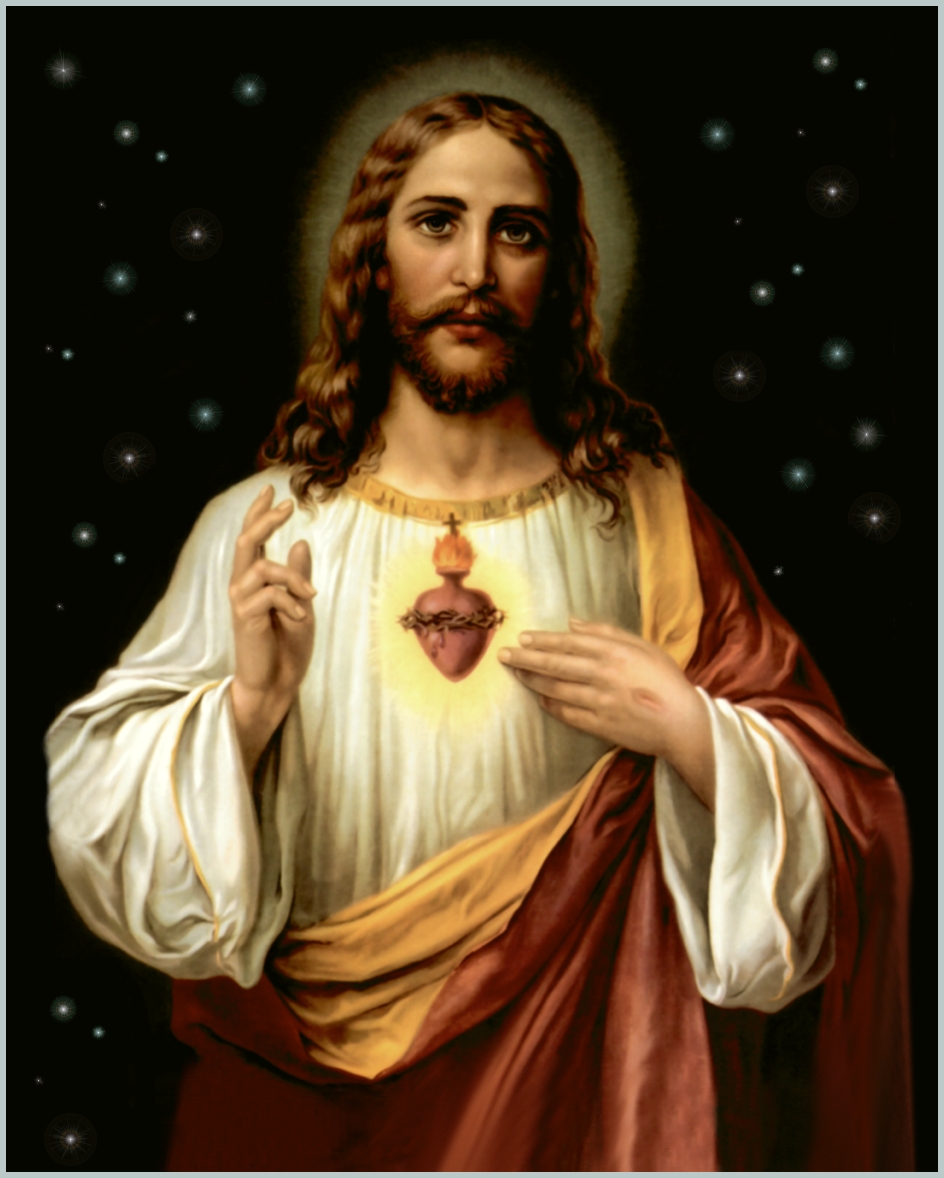
Today’s Solemnity of the Sacred Heart of Jesus gives us the vital opportunity to ponder on all that Jesus freely chose to do for everyone, yes indeed, for you and for me! Do we realize how much Jesus continues to grace us within our lives today? Whether we are aware of it or not, we live deep within Jesus’ own heart. Truly there is no greater love than the love which Our Lord Jesus has for us!
Today I invite you to sit quietly with Jesus for a period of time. To take the time to truly thank Jesus for the depth and the tenderness of his love for us. What a wondrous and enduring gift He continually gives to us! Today may we truly celebrate Our Lord’s sacred and loving heart.
Let us pray:
O Sacred Heart of Jesus, font of love and mercy, and source of every blessing,
Pour out your love upon our wounded human hearts.
O Sacred Heart of Jesus, burning with the fire of charity for every soul,
Purify our hearts and draw us ever closer to your divine embrace.
O Sacred Heart of Jesus, wounded by our own sins, and familiar with all suffering,
Forgive us of our sins and restore us to life.
O Sacred Heart of Jesus, through which every heart finds solace and refuge,
Be our strength, our courage, our fortress, and our defender.
O Sacred Heart of Jesus, proof of the Father’s love and desire for us,
We place all our trust in you. Amen.
Corpus Christi ~ The Rev Dcn Scott Brown, OPI
Mk 14:12-16, 22-26
On the first day of the Feast of Unleavened Bread,
when they sacrificed the Passover lamb,
Jesus’ disciples said to him,
“Where do you want us to go
and prepare for you to eat the Passover?”
He sent two of his disciples and said to them,
“Go into the city and a man will meet you,
carrying a jar of water.
Follow him.
Wherever he enters, say to the master of the house,
‘The Teacher says, “Where is my guest room
where I may eat the Passover with my disciples?”‘
Then he will show you a large upper room furnished and ready.
Make the preparations for us there.”
The disciples then went off, entered the city,
and found it just as he had told them;
and they prepared the Passover.
While they were eating,
he took bread, said the blessing,
broke it, gave it to them, and said,
“Take it; this is my body.”
Then he took a cup, gave thanks, and gave it to them,
and they all drank from it.
He said to them,
“This is my blood of the covenant,
which will be shed for many.
Amen, I say to you,
I shall not drink again the fruit of the vine
until the day when I drink it new in the kingdom of God.”
Then, after singing a hymn,
they went out to the Mount of Olives.
The Passover was a tradition for the Jewish people that God had commanded them to follow. It was a special meal that was to help them remember how He saved them after hundreds of years of slavery in Egypt. And the Lord told the Israelites to have the Passover meal every year so that they wouldn’t forget who He was and who they were.
In Mark 14:12, it was time for the Passover. So the disciples asked Jesus, “Where will you have us go and prepare for you to eat the Passover?” And in the next few verses, Jesus tells them where to go and what to do (vv. 13-15).
About the Passover Meal
The Passover was not just a festive occasion to get together and eat stuff. You had to have some very specific things for the meal, each thing having a very specific symbolic purpose. It was precisely tailored to help people remember what God had done for them. So the disciples followed Jesus’ instructions and “they prepared the Passover” (v. 16).
I’m not going to go into detail for verses 17-21, but just note that the Passover had a regimented process to it. And by this time, Jesus and His disciples were going through this process
At the end of the Passover meal, the remainder of unleavened bread would be eaten. This is probably where they were in verse 22.
“And as they were eating, [Jesus] took bread, and after blessing it broke it and gave it to them, and said, ‘Take; this is my body.’”
What the Passover Points To
“Take; this is my body.” We’ve heard those words many times over the years. But we need to realize that Jesus was redirecting this powerful, long-held symbolism of the Passover. Jesus was saying, “This bread isn’t only meant to point you back to God’s faithfulness in the Exodus – it’s meant to point you to me. My body is about to be broken.” For us.
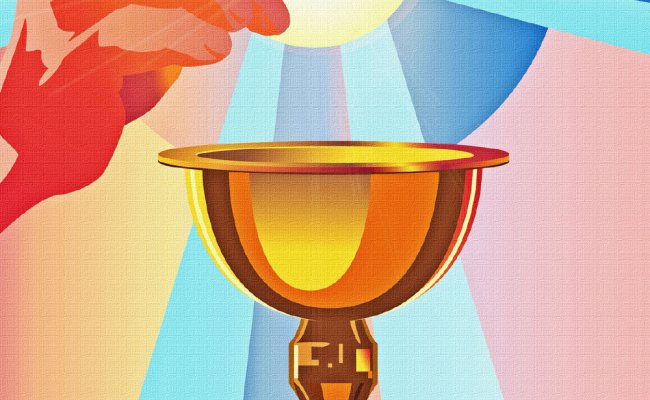
After Jesus passes the cup, He says, “This is my blood of the covenant, which is poured out for many” (v. 24). Here again the cup had always pointed back to the Exodus, but now Jesus tells us that it points to Himself. He just redefines the entire Passover tradition. No average person would dare to do this, but Jesus did – He had the authority to.
The evening would probably have closed with singing. This is what we see in verse 36: “And when they had sung a hymn, they went out to the Mount of Olives.” And that ends Mark’s account of the Lord’s Supper.
Why is the Lord’s Supper Important?
Ever since that night, Christians have regularly observed the Lord’s Supper. Different churches may do it different ways, but the question is: why is the Lord’s Supper so important?
As we read the Bible, we see that it’s all about memory. God’s people have always struggled with a sort of spiritual Alzheimer’s, forgetting who God was and who they were. This is one of the reasons He set up the Passover – so that His people would remember.
If we don’t hear about Jesus over and over again, we’ll forget He’s our Savior. We’ll forget He’s our Lord. And when we forget:
- We start to worry, to be afraid of everything, to feel like we are all alone in the world.
- We will start to go our own way, as though we are the lord of our own life, making prayerless decisions and depending on our own strength.
- We begin to live the way we did before we were made new through Christ. Sin starts to settle into our hearts and habits, and we become vulnerable to temptation. We seek satisfaction and comfort in broken cisterns of the world, forgetting that we have rivers of life-giving water available to us.
- We begin to forget our purpose, devoting ourselves to lesser purposes and trying to cobble together some kind of identity apart from Christ.
- Our priorities start to match our non-Christian neighbors, and soon there’s nothing distinctive about us.
So when you partake in the Lord’s Supper, remember Jesus. It’s not magic bread or magic juice, but the Body and Blood of our Lord. And what they are is so powerful. Remember who Jesus is and who you are. Then ask yourself, “What will be different now that I remember Jesus is my Savior and Lord?”
Heavenly father thank you for the sacrifice of your son Jesus Christ. Let us remember through the sacrament, your sacrifice because of Your love for us. Let us be mindful each time we receive the bread and wine that we are receiving the body and blood of Your only son who died on the cross for our sins. Amen.
I Don’t Get It ~ The Rt. Rev. Michael Beckett, OPI
There are a few things about which I could not be more certain: Scott loves me truly, madly, deeply (I really like that song.) My Daddy was the wisest man on the planet. My Momma was the bestest woman to ever draw breath. Jesus loves me and my salvation is secure.
And, conversely, there are things in life that I will never, never fully grasp. Like, why do some people think it’s OK to wear stripes and plaid together? Pi or upper-level mathematics? How things travel a zillion miles a minute in space?
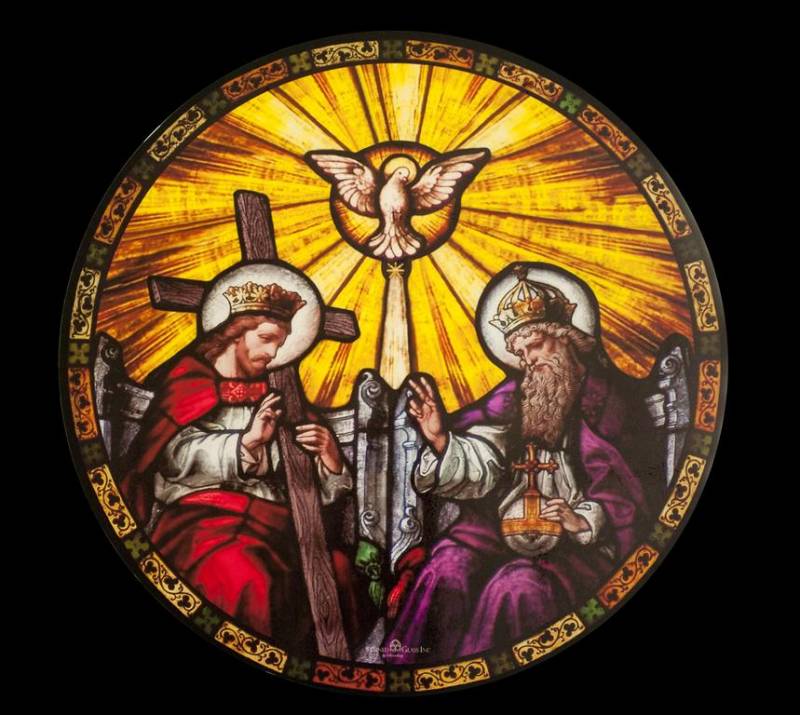
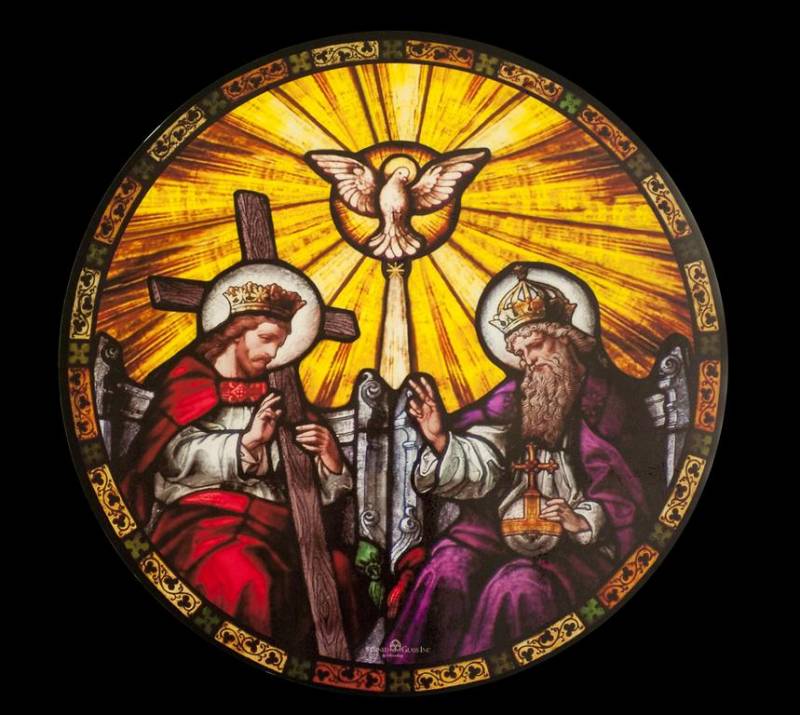
And the Holy Trinity is a mystery that we will never fully understand. The God of the Bible is one God. God has one essence – one substance. In other words, one “stuffness.” However, God exists in three Persons: the Father, the Son, and the Holy Spirit. Each Person in the Trinity (or the Godhead) is fully God and fully a Person. They are equally eternal, powerful, sovereign, and worthy of worship. But they are one God.
Got that? Me, neither, but it is central to our faith.
Many theologians and holy men and women of God have attempted to explain just how this Trinity Thing works. One God, Three Persons. Three in one and one in three. They have, of course, failed. It has been said that if you try to explain the Trinity, you will lose your mind. But if you deny it, you will lose your soul. There are several popular analogies often used to explain the Trinity, but, they don’t work and in reality are heresies. (Uh oh!) Here they are:
God is like water. Now, we know that water can be in three different forms: Liquid, Ice, and Vapor. But this doesn’t work and this particular heresy is called “modalism.” Modalism expresses the belief that God is not, in fact three separate persons, but one God expressed in three different forms. Now, if this were the case, then and the Trinity really is like water, then the story of Jesus (the Son) praying to the Father all those times in the Bible, is just Jesus talking to Himself. This belief denies something central to God that makes Him God. So comparing God to water isn’t really as helpful as one might think.
It’s also been said that The Trinity is like a man: A father, who is a son, who is a husband. Nope. Same as modalism. Won’t work.
Then there is the age-old story-legend-myth of St. Patrick using the shamrock. Or the more modernized versions using an egg or an apple. The shamrock has 3 leaves to make one whole plant, the yolk, shell, and white make up one egg, or the peel, flesh, and core of an apple make up one fruit. Umm…no. Won’t work, because any of these three things that make up one thing will not stand on their own to be a complete thing? Know what I mean? The egg yolk, shamrock leaf, and apple peel don’t make one complete whole. And this particular heresy is called Partialism. Sigh……
Moving on…
The sun has been used to explain the Trinity. This example says that the Father is like the sun. The Son is like the light rays that visibly reveal the sun, as Jesus is the visible image of the invisible God. The Holy Spirit is like the heat that emanates from the sun, unseen yet powerful and effective in making the sun felt. This makes sense, right??? Nope. Sorry. This explanation is fatally flawed in that is describes the Son and Spirit as creations of the Father. This is the error of Arianism (not to be confused with Aryanism, which is also bad). In Arianism, the Son is not eternally equal with the Father, but was the Father’s first and best creation. This would make Jesus something less than fully God. This little gem of heresy is called Subordinationism and was first espoused by Arius who lived in the late 200s/early 300s, and whose modern-day followers are now known as Jehovah’s Witnesses.
A couple more illustrations of the Trinity that aren’t quite so bad, but aren’t great either are these:
American Christian pastor, speaker, author, and widely syndicated radio and television broadcaster in the United States, Tony Evans, has said that the pretzel is a good illustration because it consists of one piece of dough with three holes. Take away any one of the holes and the pretzel isn’t really a pretzel anymore. (According to some people, the pretzel was actually invented in Europe several hundred years ago by a monk who wanted to illustrate the Trinity to the children of his village, so he took some dough, looped into the familiar three-hour shape, based it, and gave it to the children as an edible object lesson.)
Or this from noted scientist Dr. Henry Morris. He notes that the entire universe is trinitarian by design. The universe consists of three things: matter, space, and time. Take away any one of those three and the universe would cease to exist. But each one of those is itself a trinity.
Matter = mass + energy + motion
Space = length + height + breadth
Time = past + present + future
Are we having fun yet? No? OK, I’ll bring this to a close. In so doing I’m gonna end where I started. The Trinity is a doctrine that all Christians believe but no one really understands. That much should be clear from this message. If you try to explain the Trinity, you will lose your mind. But if you deny it, you will lose your soul.
Someone asked Daniel Webster, who happened to be a fervent Christian, “How can a man of your intellect believe in the Trinity?” He said, “I do not pretend fully to understand the arithmetic of heaven now,” he replied. How kewl is that little phrase??? “The arithmetic of heaven.”
The Trinity should cause us to bow in humble adoration before a God who is greater than our minds could ever comprehend.
Today, the Feast of the Holy Trinity, we rejoice that we have a Triune God who has provided for a Trinitarian salvation. When we were lost in sin, our God acted in every Person of his being to save us. The Father gave the Son, the Son offered himself on the Cross, and the Holy Spirit brought us to Jesus. We were so lost that it took every member of the Godhead to save us.
In 1774 a man named Ignaz Franz wrote a hymn of praise to the Trinity: Holy God, We Praise Your Name. This is the fourth verse:
“Holy Father, Holy Son, Holy Spirit, Three we name you;
While in essence only one, undivided God we claim you.
Then, adoring, bend the knee, and confess the mystery.”
Let us pray.
Holy God, above us, among us, within us: we rejoice this day that while you might have chosen to be unknown to us, you have revealed yourself in many ways. Each encounter with you calls us to return blessings with worship, compassion, and service. As we worship you today, we do so in gratitude for all your parental care for us through your creation. As we worship you today , we do so because, in love, you gave us Christ, that through him we might find eternal life. As we worship you today your Spirit leads your church to reach out in compassion, mercy, and grace to all your children everywhere. In gratitude, we celebrate you, three and yet one. Amen.
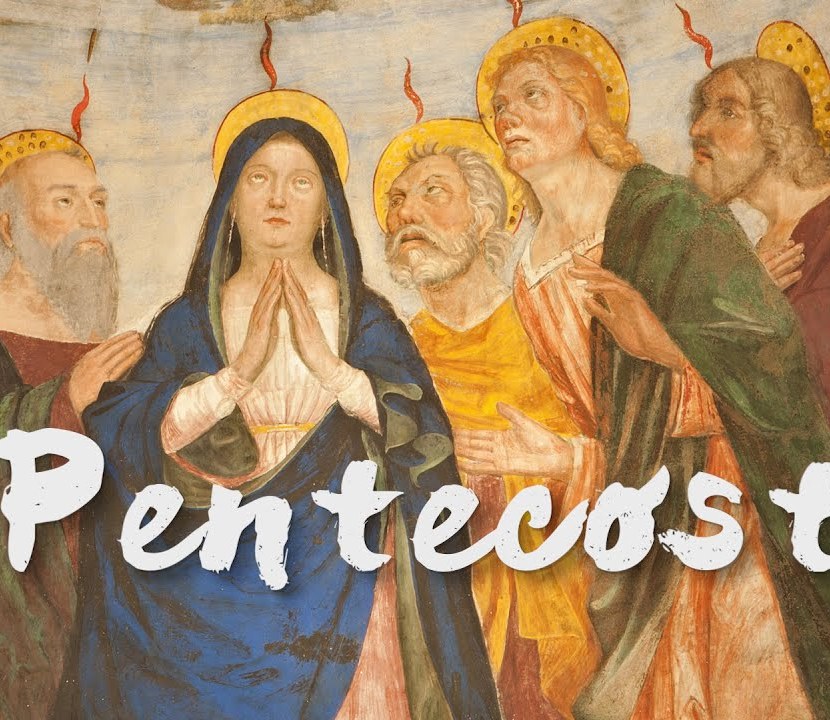
PENTECOST from the Dominican Hermitage & Oratory of St’s Sebastian and Peregrine in Gevgelija, MACEDONIA ~ The Rev Dcn. Igor Kalinski, OPI
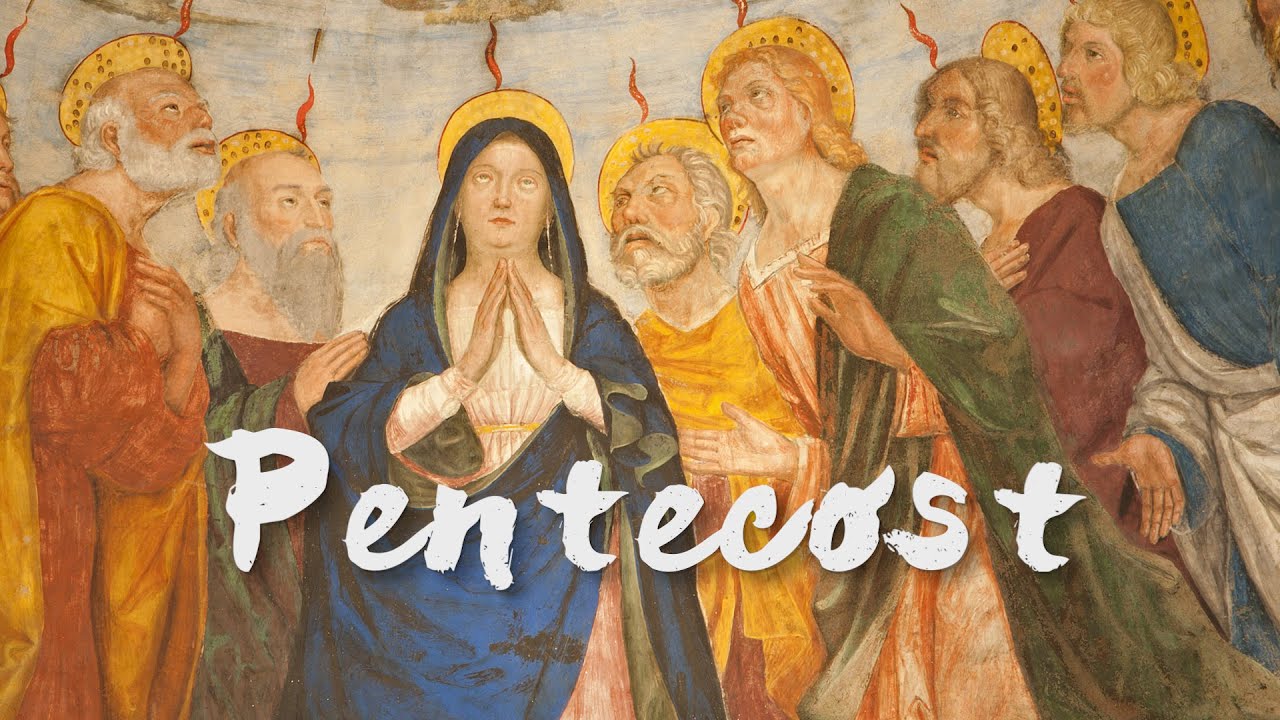
The time of the Church has begun. It is a time of our responsibility to witness in the world what Jesus taught us. Walk the way of the gospel and bring the Good News to others. This task is difficult because we are only human, and yet Jesus is the Son of God. We need help, we need the power of the Spirit of God to stir our hearts and enlighten our steps. That is why those present see it as glowing tongues that shine and warm. They feel it as the force of the wind pushing forward and giving strength in the path of good. It is up to us to develop the sails and direct our boat on this sea of life.
Thus the frightened apostles became zealous heralds of the cross and resurrection, of faith in God and of love for every man. And people, gathered in that square and all over the world, united by the Spirit, understand each other better and forgive more easily. It is these gifts that our families and parishes, the Church and society need most: To understand means to forgive!
The Church received her mission in this world from Jesus: You will be my witnesses! Thus all of us baptized, as its children and members, are called to be apostles of hope and witnesses of love. That is our calling and our mission, our mission.
We certainly strive for friendly, family, business and civic duties. We can call this the horizontal of our existence. Something like the foundations of a future house. But the walls must already be visible in the foundations. The foundations are there only to carry a horizontal that rises upward, toward heaven and God.
Sometimes we Christians lose sight of our spiritual mission, and we do not even know the meaning of this daily rush in which we are involved. More and more work is being done, earnings are never enough, the voids of the heart are too deep when they want to be filled only with earthly things. Here is the Holy Spirit and his seven gifts. He is a support to the mission of the Church, to explain the truth to us, to strengthen our decisions, so that our love does not cool down…
God’s call is often repeated in the Bible: Arise and go! Jesus says of himself: I am the way… So our human and religious life is a permanent journey. The complete truth is up there, we always discover it a little bit, the beauty of its flowering never ceases.
The Holy Spirit makes us free and creative, encourages us to row towards the open sea of life and God’s history. Man was not created to just keep the past, something acquired, old habits… It is our vocation to discover new seas of life. It is our task to spread the sails and the Holy Spirit will give us the strength of a suitable wind.
The Ascension of the Lord ~ The Rev. Frank Bellino, Postulant
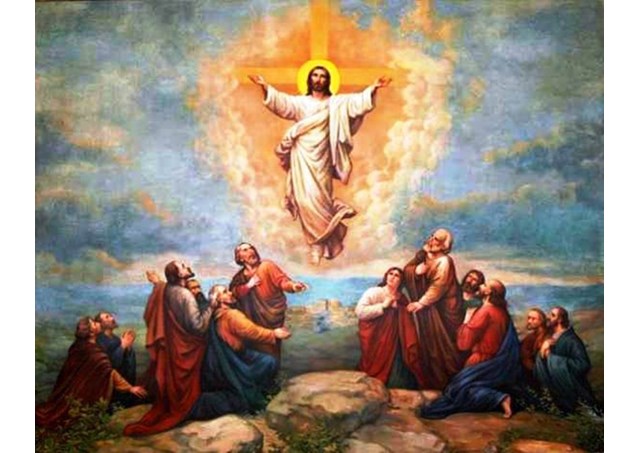
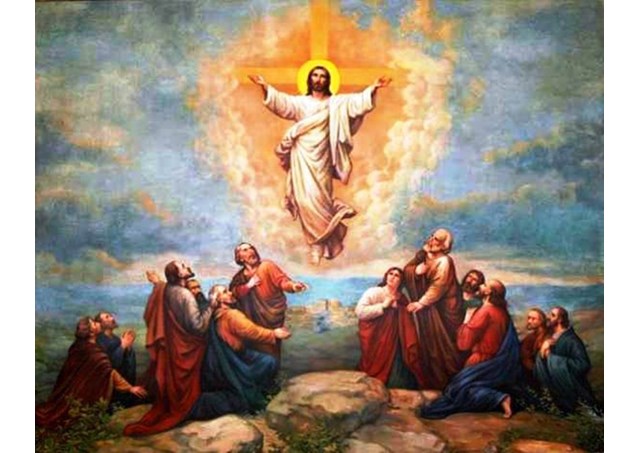
The Liturgical year of the Catholic Church is divided into six seasons – Advent, Christmas, Lent, Holy Week, Easter, and Ordinary Time. In addition, the Church observes memorials, feasts, and solemnities. The Solemnity of the Ascension of the Lord is one of the great solemnities. It occurs on the fortieth day after Easter Sunday, which always falls on a Thursday, and often passes unnoticed by most Christians. So, many churches move the Ascension Day to the following Sunday to ensure more people participate in the celebration.
What is the meaning and importance of the ascension of Jesus Christ?
Today’s readings, from the Book of Acts (1:9-11), the Gospel of Mark (16:15-20) and the Gospel of Luke (24:50-53) give a detailed account of Jesus’ ascension.
You may remember since Easter Sunday we have been reading several familiar stories of Jesus’ post resurrection appearances to his disciples. During his appearances Jesus greeted them with peace and talked to them. He walked with them to Emmaus and explained the scriptures to them. He showed them his wounds and asked them to touch him. He shared a meal with them. He dispelled their doubts and fears and proved to them that he is alive. He instructed them not to leave Jerusalem until they had received power from the Holy Spirit.
On the fortieth day, while the disciples had gathered in Jerusalem, Jesus appeared before them for the last time. They asked him whether he was going to “restore the kingdom of Israel” at the time. Jesus said to them that “it is not for them to know the times or seasons that the Father has established by His own authority but that they would be filled with the power of the Holy Spirit and bear witness to the gospel”. He then charged them to “go out into the whole world and proclaim the gospel to everyone, to heal the sick, to cast out demons and told them that no deadly or poisonous thing will harm them”.
Jesus’ appearance ended with him being “taken up into heaven and seated at the right hand of God” in their sight. After Jesus had ascended to heaven, the disciples received the Holy Spirit, as Jesus had promised, and then they went everywhere preaching the gospel of Jesus, healing people and working many signs and wonders with the help of the Holy Spirit. This is the event we commemorate today.
The Ascension of the Lord is important for two reasons.
- With the Ascension Jesus decisively ended his time on Earth and entered God’s heavenly domain, so that his own words should be fulfilled. He had told his disciples, “No one has gone up to heaven except the one who came down from heaven, the Son of Man”, John (3:13). He had said to Mary Magdalene at the tomb, “Do not hold on to me, for I have not yet ascended to the Father. Go instead to my brothers and tell them, I am ascending to my Father and your Father, to my God and your God”, John (20:17). Jesus had descended from heaven in the Incarnation and returned to heaven in the ascension.
However, he ascended to heaven not only to return to where he came from but also to prepare a place for those who believe in him. He said, “In my Father’s house there are many rooms. If it were not so, I would have told you. I am going to prepare a place for you”, John (14:2). Yes, the Ascension of the Lord is a great consolation to all who are afraid of death or afraid of dying. Let us, therefore, encourage one another to remember that Jesus descended, died, resurrected, and ascended into heaven for us. Let us believe and live in the hope of one day being with him in God’s kingdom forever.
- Jesus Christ, having entered heaven once again, intercedes constantly for us for the power of the Holy Spirit which is very essential to the life of faith in Christ. Jesus said, “Nevertheless I tell you the truth: It is to your advantage that I go away, for if I don’t go away the Holy Spirit won’t come to you. But If I go, I will send him to you”, John (16:7). Jesus has not promised to restore to us our health, family, relationships, work, fortunes, and finances according to our own times, ways, thoughts, plans and desires but in God’s time. Meanwhile he has promised us the power of the Holy Spirit so that we can courageously preach his gospel, minister healing in his name, wisely deal with difficult people and take on evil and win.
Let us today, therefore, earnestly pray for ourselves and our Church that we may be blessed with all joy and peace in believing in the ascension of the Lord and continue to seek the gifts of the Holy Spirit – the fear of God, piety, knowledge, fortitude, counsel, understanding and wisdom.
Amen.
God Bless You!
The Ascension of the Lord ~ The Very Rev. Lady Sherwood, OPI
Reading I: Acts 1:1-11
Responsorial Psalm: Ps 47:2-3, 6-7, 8-9
Reading II: Eph 1:17-23
Gospel: Mk 16:15-20
Liturgical colour: White.
The Ascension=Being witnesses of Christ
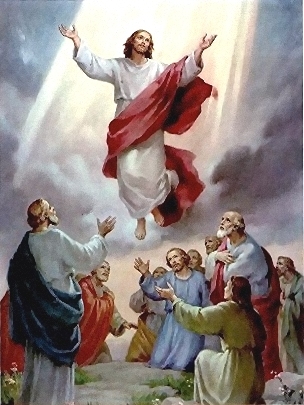
Today we celebrate the Ascension of The Lord. This is when Our Lord and Saviour, after finishing his ministry here on earth, until he comes again in glory, returned to His Father in Heaven. Let us look at what God’s word of The Holy Gospel is telling us today:
Mark 16:15-20 (NIV)
15 He said to them, “Go into all the world and preach the gospel to all creation. 16 Whoever believes and is baptized will be saved, but whoever does not believe will be condemned. 17 And these signs will accompany those who believe: In my name they will drive out demons; they will speak in new tongues; 18 they will pick up snakes with their hands; and when they drink deadly poison, it will not hurt them at all; they will place their hands on sick people, and they will get well.”
19 After the Lord Jesus had spoken to them, he was taken up into heaven and he sat at the right hand of God. 20 Then the disciples went out and preached everywhere, and the Lord worked with them and confirmed his word by the signs that accompanied it.
The Gospel today seems to be focused more upon the apostles going out and spreading his Holy Gospel, than it does about Jesus going up to The Father. As Jesus goes to his Father, the message is to that we all must take over the spreading of Our Lord’s gospel now, and that we need to be witnesses to him. We are all called to share that which we have received, and to speak of what we have seen and heard.
We witness to Jesus in our lived in many ways. This includes by prayer, by reading and spreading the gospel and in our service of others in Christ’s love. Prayer is our time to be in personal touch with God who is constantly reaching out to us. The gospel is what feeds our souls, our minds, and our spirits, it is a daily opening to the true words and deeds of Jesus, Our Lord and Saviour. Our service in The Love of Christ to others, brings us to witness in the true way, the care of God as we give and receive care to each other.
NEW PRESENCE
This is what we give to our ascended Lord and is also what we receive from him. The word of God are the divine words of truth and
salvation, spoken in human words. All of our time with God is linking heaven and earth, and we are each sharers in his divinity as we are in Jesus and Jesus is also with us, he has shared in our humanity, . Far from being the absence of Jesus, it is his presence in a new way among us.
Indeed, Our Lord Jesus has gone back to The Father to make a heavenly place for us, and will return in Glory to bring us home. Until then, we are all called to continue our Lord’s ministry here upon the earth. We are the only Jesus that now can be seen, through our witnessing of him in our lives to others. Are you being a true witness of Christ in your life?
Let us pray:
Lord Jesus Christ, right before your Ascension into heaven you told your apostles to be your witnesses to the ends of the earth upon receiving the Holy Spirit. May we be similarly inspired to spread your Gospel message in word and deed, according to your will for us. And may we do so prudently and joyfully, with your help, your guidance, and your grace! And remembering this glorious event, help us to seek what is above, Heaven, where you are seated at the right hand of God the Father!
Amen.
I Hate People ~ The Rt. Rev. Michael Beckett, OPI
I have a really hard time with bigots. With ultra right folks. With folks who preach hate under the cover of their ‘christianity.’ I have a really hard time with child abusers, with spousal abusers. I have a really hard time with habitual criminals and crooked cops. Animal abusers. With politicians who say one thing and do another. And the list goes on. And on. And on.
I have a hard time with those who profess to be my friends, but prove themselves otherwise. With those who say they love me, but do whatever they can to denigrate those whom I love and prove themselves to be the antithesis of loving.
And sometimes I have a hard time with people in general. In the musical “Scrooge” by Leslie Bricusse, Scrooge sings, “I Hate People:”
Scavengers and sycophants and flatterers and fools
Pharisees and parasites and hypocrites and ghouls
Calculating swindlers, prevaricating frauds
Perpetrating evil as they roam the earth in hordes
Feeding on their fellow men
Reaping rich rewards
Contaminating everything they see
Corrupting honest me like me
Humbug! Poppycock! Balderdash! Bah!
I hate people! I hate people!
People are despicable creatures
Loathesome inexplicable creatures
Good-for-nothing kickable creatures
I hate people! I abhor them!
Sadly, I think we all of us feel that way about people at times.
But then, there’s this little quote that springs to mind:
You will never look into the eyes of someone God does not love.
Now, doesn’t that just knock the wind out of my sails and punch me right in the gut. In spite of everything, God loves those folks that we have a hard time with. God loves those whom we really, really have a hard time with. God loves those whom (gasp!) who don’t love US. Pretty humbling, huh?
The Scriptures appointed for today drive that point home. In our first reading today (Acts 10:25-26, 34-35, 44-48) we hear St. Peter teaching the Jewish Christians that the Gentiles are God’s people just as much as the Jewish ones. In our second reading, ( 1 Jn 4:7-10) St. John says to us “Beloved, let us love one another, because love is of God; everyone who loves is begotten by God and knows God. Whoever is without love does not know God, for God is love.” And in our Gospel reading for today, Jesus pulls no punches, spares no feelings, and takes no prisoners when he says, flat out: “This is my commandment: love one another as I love you.” Notice, not a suggestion. Not a subtle hint. A COMMANDMENT.
Oops.
SO, all those folks that I have a really hard time with? Love ‘em anyway. All those folks who have a hard time with me? Love ‘em anyway. Jesus teaches us to “Bless those who curse you. Pray for those who hurt you.” (Luke 6:28).
And it’s HARD. Living our lives as Jesus would have us to do ain’t no picnic at times. Not when we really and truly strive to be like Christ.
So, what IS this love? St. Paul teaches us in 1 Corinthians 13 that “Love is patient, love is kind. It does not envy, it does not boast, it is not proud. It does not dishonor others, it is not self-seeking, it is not easily angered, it keeps no record of wrongs. Love does not delight in evil but rejoices with the truth. It always protects, always trusts, always hopes, always perseveres.”
Oops again. More often than I want to admit, I fail at this. I seem to forget all about that “love” that I’m supposed to be showing. I don’t think Jesus, Paul, or Peter, expected us to be all buddy-buddy, welcome-to-my-inner-circle, be-my-best-friend with everyone, especially those folks with whom we have such a hard time. But what Jesus expects of us is to love everyone with that same love God loves us. And I’m not talking about that “love the sinner, hate the sin” crap. That, more often than not, is just an excuse for bigotry. What I AM talking about is this: We are called, as Christians, to love. Period.
Notice, I said “love,” not “like. There is a vast difference in the two. But what does it mean to love others? All too often, I’m afraid, we confuse liking someone with loving them. In other words, we think loving someone is similar to liking them, only much stronger. And this isn’t necessarily wrong, as far as it goes; a husband should genuinely like his wife and enjoy being in her company.
Does this mean we can’t love someone who’s difficult to like? No, it doesn’t, not if we understand the kind of love God has for us. God loves us not because we’re perfect, or even likeable, because we aren’t. We fall far short of what He wants us to be, yet the Bible says He still loves us.
So, reckon wonder, what do we do???? How do we love those folks we can’t stand?
Remember how much Jesus loves you. Read through the stories of his crucifixion and regain that sense of awe at all he gave up to secure your freedom.
Confess the limitations of your own love. Jesus knew none of us would measure up. That’s why he sent his Spirit to pour out his love in our hearts (Romans 5.5).
Surrender the difficult relationship to him. Place the person’s negative responses to you in his hands. Ask God to heal any emotional scarring you have from this person and enable you to totally forgive them.
Ask him to show you how to manifest his love to them. You don’t have what it takes, but he does. Trust that his Spirit will give you the words to say in times of conflict, and that he will show you what actions you can do to demonstrate his love.
And above all else, and perhaps the hardest to do is to:
Choose love. When pain and frustrations with this person surface, you need to choose to depend on the Spirit’s power to bless and not curse, to sacrifice your time and energy and not just retreat for self-preservation.
Choose love.
Let us pray.
Father, I have to thank You for looking beyond my faults and for loving me unconditionally. Forgive me when I fail to love others in the same way. Give me eyes to see the needs of the difficult people in my life, and show me how to meet those needs in a way that pleases You. Help me to love as you love. Help me to keep uppermost in my mind that we are, all of, your children. Help me to choose love. Amen.
 The Order of Preachers, Independent
You must be logged in to post a comment.