
Category: Lesson
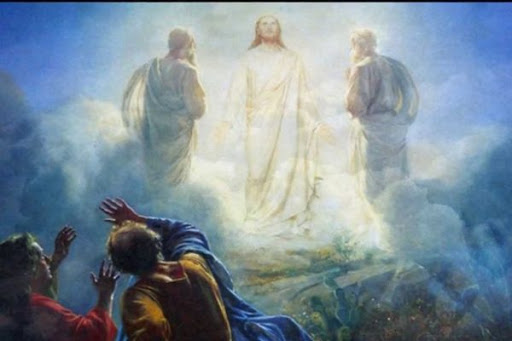
The Transfiguration of the Lord ~ The Very Rev. Lady Sherwood, OPI
Reading 1: DN 7:9-10, 13-14
Responsorial Psalm: 97:1-2, 5-6, 9
Reading 2: 2 PT 1:16-19
Gospel: MT 17:1-9
 In the Name of the Father +, and of the Son +, and of the Holy Spirit+!
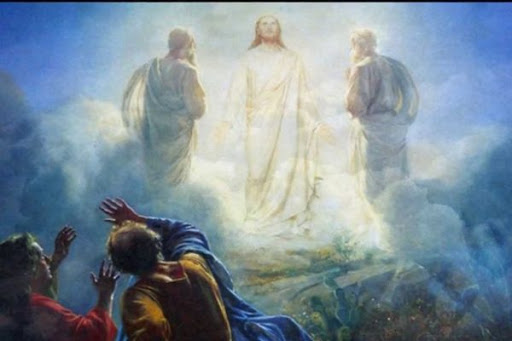
Today, my dearest brothers and sisters in Christ, we come together as the church to commemorate the miraculous occasion of when our Lord’s human nature was transfigured by the Holy Spirit, which proceeded from Our Heavenly Father.
This miraculous and wondrous occasion shows us firstly that both the human and the divine natures of Our dear Lord Jesus Christ are indeed both united in the One Person, secondly, it shows that therefore, there cannot possibly be any unity without the Holy Spirit, and thirdly that our Saviour and Lord, dominates over both Life and over Death, for prophet Moses, who died, and prophet Elijah, who did not die, both came to worship Him on the Mount, which was The Mount Tabor.
The tiniest of details of this miraculous and wondrous event is, indeed, full of a profound significance to us as Christians. Today, I would like to mention the aspect of this Feast which is very often overlooked: the symbolical meaning of Mount Tabor, the Mountain where the Transfiguration actually occurred. This Mount Tabor is for us a figure of repentance., but also one of hope. I note that, like for the disciples in biblical history, in order for us to see the transfiguration or to hope to be transfigured ourselves, we will first have to climb the Mountain, from our present condition. Otherwise any transfiguration or change for the better in our lives is impossible…
Our transfiguration and salvation is like Mount Tabor: however hard we try, we will not be guaranteed salvation through a fast, if strenuous, climb within a day, a week, a month or a year. . To climb our Mountain to Salvation takes a us our whole lifetime, it is an exceedingly long climb up an extremely long and ever upwards steep slope. Salvation is a long struggle which requires our determination, our perseverance, and patient longsuffering…
Our spiritual progress is not one of a sudden and dramatic nature. There are will be so many obstacles along our path within our daily life’s climb. At times, even to pick up our prayer books in the morning and again in the evening may be a struggle, and there are always those pesky hindrances in our lives such as having meals to prepare, or trains to catch, phones to answer or chores to do, or maybe even unpleasant appointments to do in our day. Our Christian life, is indeed made up of little sacrifices, and obstacles to overcome: there are prayers to be said, fasts to be kept, a donation to be made where we are able, the washing-up to be done, flowers to be bought, our homes to be cleaned, a job to go to, a vigil service to be attended, a hospital visit to do, a homeless or vulnerable person to help.
We may well ask ourselves what little sacrifices we have made since the Feast of Transfiguration last year? How far have we ascended on our journey to salvation climbing up our own individual Mount Tabor? How have we changed over the past year? What have we done to lead a better life since that of a year ago? How have we improved? What have we given to God that we had not given Him previously? It is this that we call progress: in what way are we a better Christian than we were a year ago?
In our faith we are called to struggle on a daily basis, whatever the rocks or pitfalls in our way: whether they be issues of pride or selfishness, maybe those of lust or of discouragement, maybe issues of envy or of being judgemental to others, – we have to struggle to ascend our personal Mount Tabor, we have to fight for our personal transfiguration.
We must constantly remember that it is possible to both climb up and also to climb down a slope. We can spiritually progress, but it is also possible to spiritually regress. We can continually stride forward so we will be transfigured by the love of God or we can let ourselves be disfigured and stranded by the love of worldly sin. And just as in making progress, regression also is not a sudden and dramatic thing, regression, too, is like a slope, indeed, it is a very slippery slope.
Let us, therefore, take heed and continually strive to climb our faith mountain to our salvation and transition, and give God what He really wants from us – our hearts and minds to be continually spiritually progressing.
May Our Lord and Saviour bless you!
Amen.
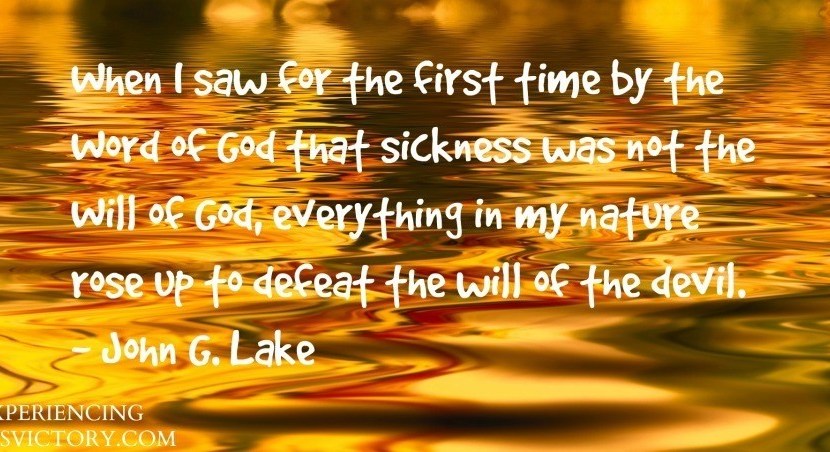
NOT the Will of God. ~ The Rt. Rev. Michael R. Beckett, OPI
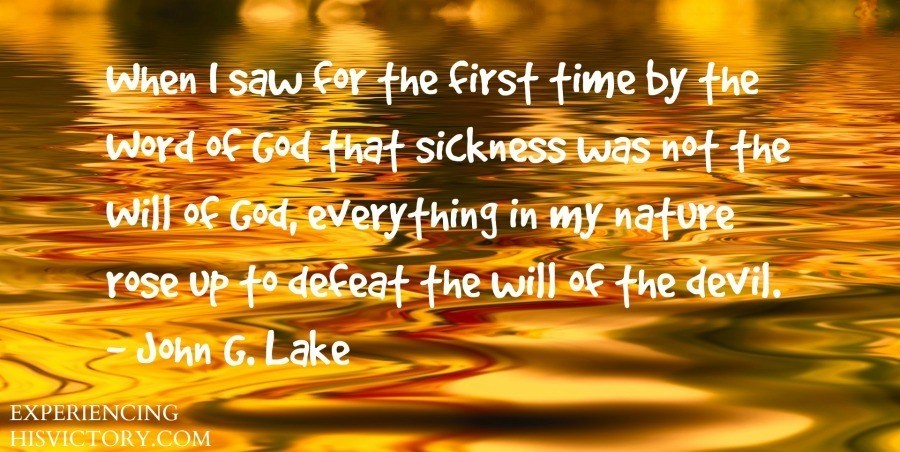
AAAAARRGGGHHHH! If I hear, one more time, “It’s God’s Will,” or “God’s gonna save me from this virus,” or “God is punishing this country,” or “God has abandoned us,” or …and this is the BIG one: “I can’t believe a loving God would let this happen,” or anything even vaguely related to those things, I may just have to……….well…….I dunno…..do something. It makes me crazy….craziER???
I’m gonna say it one more time for those folks in the back who seem to have difficulty getting the message: We are not puppets. God does not control us.
How many times have we heard, “I’ve been through a lot this past year and I’ve always wanted to believe in God.. I’ve tried.. but I don’t understand why there’s so much suffering in the world.. why do people beg and plead and pray to God to not let loved ones die.. and they die anyway? What kind of God would allow that? The horrific things people go through and see while praying to God for help.. I don’t get it and saying it’s a part of God’s plan or you just have to have faith doesn’t work for me either.. I’ve prayed about it and listened and tried to understand but I just don’t.. I’m an open-minded person and I respect everyone’s beliefs but I’m just not able to accept that a loving God would let good people suffer.”?
This question is as old as humanity. First of all, God does not ‘give’ us the terrible, horrible, no good, very bad things that happen in our lives. Life happens. Crap happens. People make poor choices. Natural disasters occur. We get sick. Nowhere does Holy Writ support the claim that any of these things is God’s doing. What kind of God would we worship if he, indeed, sent us all the trials and tribulations and suffering and horror for which He is blamed?
Remember ‘The Church Lady’ and ‘The devil made me do it’ and her “Could it be…mmmm…. Sataaan?” Well, yeah, it very well COULD be Satan! We have to remember that, even though God is firmly in control, Satan has power and he fights against our Lord. Ephesians 2:2 says: “And you were dead in the trespasses and sins in which you once walked, following the course of this world, following the prince of the power of the air, the spirit that is now at work in the sons of disobedience.” In this text the apostle Paul describes Satan first as a “prince” with power, because he has authentic power in the world (1 John 5:19). This power has been given him by God (Luke 4:6). Satan has power over some illnesses (Luke 13:16; see also 2 Corinthians 12:7—it’s unknown if Paul’s “thorn” was an illness or something else). In some sense, Satan has power over death (Hebrew 2:14). The reason Satan is called a prince rather than a king is because there is only one King—Jesus Christ (1 Timothy 6:15).
So yeah, Satan also has power over some people. The “sons of disobedience” referred to in Ephesians 2:2 are those who have not trusted Christ as Lord and Savior (cf. Acts 26:18; 2 Corinthians 4:4; Revelation 13:12). The demons are also under the rule of Satan (Matthew 12:24), and one of his titles is “prince of demons” (Matthew 9:34). Satan has a kingdom (Matthew 12:26) and a throne (Revelation 2:13). Satan is called a prince because he is a ruler and possesses power to manifest evil in the world through influencing people and commanding demons.
“The air” in Ephesians 2:2 may refer to the invisible realm above the earth where Satan and his demons move and exist. This space, of course, is the location of the earth’s atmosphere or “air.” In Ephesians 6:12, Paul writes, “We do not wrestle against flesh and blood, but against the rulers, against the authorities, against the cosmic powers over this present darkness, against the spiritual forces of evil in the heavenly places.” This evil realm called the “air” could be an actual locality, but it could also be synonymous with the “world” of John 12:31. This whole world is Satan’s domain (Matthew 4:8–9).
Although Satan has power and authority in the current world system in which we exist, his power is limited, always under the sovereign control of God (Job 1:12), and it is temporary (Romans 16:20). God has not revealed all of the why’s and when’s concerning Satan’s rule, but He has made it clear that there is only one way to escape the power of Satan’s dominion, and that is through His Son, Jesus (Acts 26:18; Colossians 1:13–14). It is Jesus who, speaking of the impending cross, declared victory: “Now the prince of this world will be driven out” (John 12:31).
Now, when Satan has so much power, what are we left with? The Bible DOES say that he will, when we are suffering temptation provide a way of escape (1 Cor. 10:13). But never does it say that God will not give us more pain and suffering than we can handle.
Many Christians have suffered to the point of death at the hands of executioners, (consider the Holy Martyrs.) Many suffer to the point of death at their own hands. All we can say is that “the sufferings of this present time are not worth comparing with the glory that is to be revealed to us” (Romans 8:18). This may not solve our depression, but it does give us perspective. Even if our depression has caused us enormous doubt, this can be helpful.
When “bad” things happen to any of God’s children, God is grieved and suffers with us, and this was experienced most vividly in the hurt and suffering of Jesus Christ for all humanity. Any “bad” thing which happens is never the last word. Rather, God is the deepest and last word, and that word is love and eternal life with God.
The Bible clearly teaches that God does not cause us to suffer. For example, the Bible says that when we go through trials, it would be a mistake to say: “I am being tried by God.” Why? Because “with evil things God cannot be tried, nor does he himself try anyone.” (James 1:13) In other words, God never causes the trials we face or the suffering that follows. To do so would be wicked, but “God does not act wickedly.” (Job 34:12.)
If God does not cause us to suffer, then who or what does? Sadly, humans are often victimized by other imperfect humans. (Ecclesiastes 8:9) Additionally, we may face calamities because of “unexpected events”—that is, because of simply being in the wrong place at the wrong time. (Ecclesiastes 9:11) The Bible teaches that ultimately “the ruler of this world,” Satan the Devil, is responsible for human suffering, for “the whole world is lying in the power of the wicked one.” (John 12:31; 1 John 5:19) It is Satan—not God—who causes people to suffer.
God is aware of our suffering. From the very start of human suffering, not a single teardrop has gone unnoticed by our loving Father, whose “watchful eyes” see everything. (Psalm 11:4; 56:8) For example, when his worshippers in ancient times were being oppressed, God said: “I have certainly seen the affliction of my people.” But was he only vaguely aware of their pain? No, for he added: “I well know the pains they suffer.” (Exodus 3:7) Many people have found comfort in that truth alone—the thought that God is aware of everything we suffer, even the trials that we or others may not be aware of or fully understand. (Psalm 31:7; Proverbs 14:10.)
God feels for us when we suffer. Our Heavenly Father is not only aware of human suffering but also deeply moved by it. For example, God was sincerely troubled when his ancient worshippers faced trials. “During all their distress it was distressing to him,” says the Bible. (Isaiah 63:9) Although God is vastly superior to humans, he feels empathy for those who suffer—as if their pain were in his heart! Indeed, “Our Heavenly Father is very compassionate and merciful.” (James 5:11) Additionally, Our Heavenly Father helps us to bear our suffering. (Philippians 4:12, 13.)
We must also remember that our Lord Jesus knows what it is to suffer, to mourn. He wept at the grave of Lazarus, he wept over Jerusalem, and he suffered horrifically during His Passion.
And perhaps, most importantly, is our reading from Romans today:
Brothers and sisters: What will separate us from the love of Christ? Will anguish, or distress, or persecution, or famine, or nakedness, or peril, or the sword? No, in all these things we conquer overwhelmingly through him who loved us. For I am convinced that neither death, nor life, nor angels, nor principalities, nor present things, nor future things, nor powers, nor height, nor depth, nor any other creature will be able to separate us from the love of God in Christ Jesus our Lord. (ROM 8:35, 37-39)
Nothing. Nothing can separate us from the love of God in Jesus Christ. Not Corona virus. Not cancer. Not politics. Not social unrest. Jesus loves you. Jesus will help you get through whatever it is from which you are suffering. He gives us strength. He gives us perseverance. He gives us patience. He gives us his love. Won’t you accept that love?
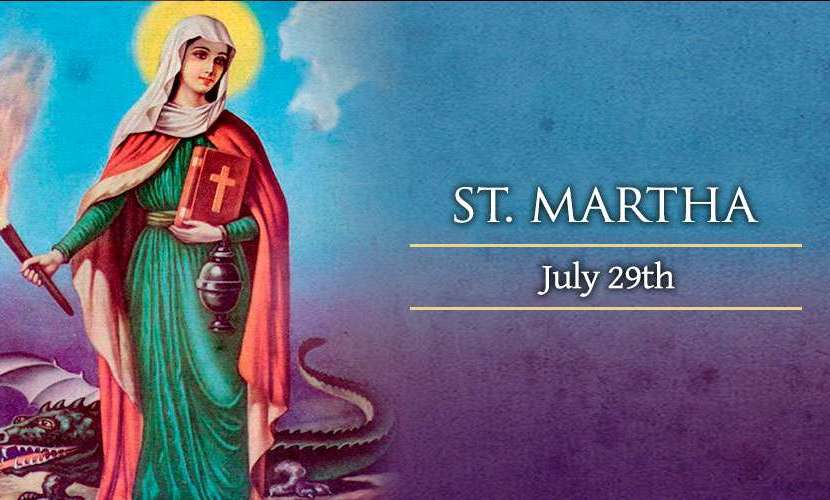
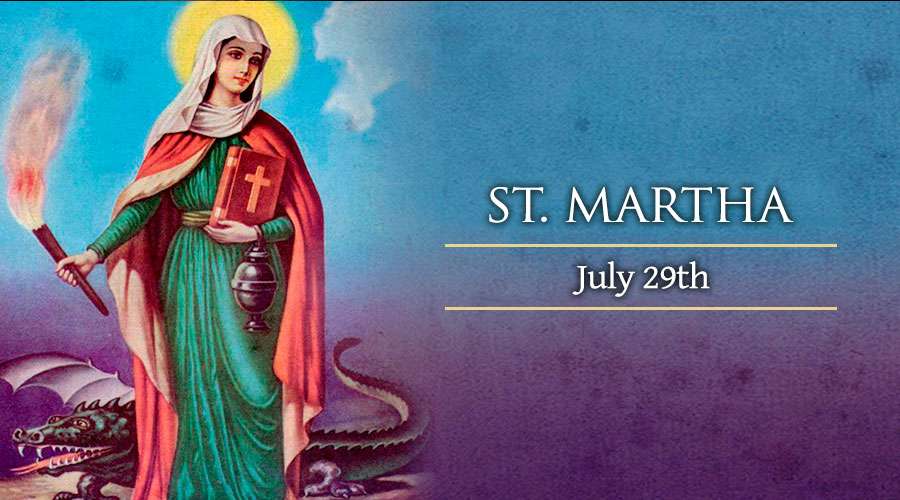
The Feast of St. Martha ~ The Very Rev. Lady Sherwood, OPI
Reading 1: JER 15:10, 16-21
Responsorial Psalm: 59:2-3, 4, 10-11, 17, 18
Gospel: JN 11:19-27
Liturgical colour: White.
Today, we come together to celebrate The Memorial of St Martha.
Let us begin by looking at what the Holy Gospel is telling us today?
JN 11:19-27
Many of the Jews had come to Martha and Mary
to comfort them about their brother [Lazarus, who had died].
When Martha heard that Jesus was coming,
she went to meet him;
but Mary sat at home.
Martha said to Jesus,
“Lord, if you had been here,
my brother would not have died.
But even now I know that whatever you ask of God,
God will give you.”
Jesus said to her,
“Your brother will rise.”
Martha said to him,
“I know he will rise,
in the resurrection on the last day.”
Jesus told her,
“I am the resurrection and the life;
whoever believes in me, even if he dies, will live,
and anyone who lives and believes in me will never die.
Do you believe this?”
She said to him, “Yes, Lord.
I have come to believe that you are the Christ, the Son of God,
the one who is coming into the world.”
The feeling of Sorrow and grief is that dark feeling of trauma and distress that comes to us all after experiencing a loss or tragedy. Such an experience can often be all consuming. As children of God, our hearts ought to be filled with a genuine sense of compassion and care for our troubled brother or sister in their times of suffering and pain. We ought to love them (Rom. 12:10), cry with them (Rom. 12:15) and pray for them (James 5:13).
We have all felt this grief of loss of a dear loved one at some point in our lives. I personally have experienced it so many times. So, we can imagine exactly how Mary and Martha were feeling and the painful heavy grief atmosphere that they were experiencing within their family home. We can also understand their deep yearning that their dear brother would’ve been cured of his illness before it came to the point of his death.
In today’s Holy Gospel, we can clearly see a demonstration of the care Jesus showed toward Mary and Martha in the midst of their grief. When it comes to the death of God’s people the Bible says, “Precious in the sight of the LORD is the death of His saints” (Psalm 116:15).
The loss of a loved one naturally produces much grief and anguish within our hearts. When Martha, the sister of Lazarus and a close friend of Jesus, heard that Jesus was coming to pay his respects for the loss of Lazarus who had by then been dead for 4 days, she immediately went out to meet him before he could get to her house. What was it which compelled Martha to leave their home where Lazarus lay in death in order to seek Jesus out? I personally believe the reason could well have been two=fold in nature. I believe the companionship and consolation of her dear friend who also loved her brother deeply was one reason, as was that Martha recognized in Jesus the hope that God would restore life.
Martha, like many Jews, believed in the eternal life to come. The loss of her brother did not diminish her hope in the resurrection in the least. She even gently chides Jesus for not coming soon enough to save her brother Lazarus from his untimely death. Jesus does something unexpected and remarkable with the intention of both strengthening her faith and hope in the life to come and also to give her a sign of what he was to accomplish through his own death and resurrection. Jesus gave to her belief a new and profound meaning: He came from the Father to defeat all sin and death for us and to restore life to all who believe in him.
Jesus states unequivocally that he himself is the Resurrection and the Life. The life he offers is abundant – life which comes from God the Father himself. And also gives everlasting life – the fullness of life which is without end. Do we truly seek that abundant and eternal life which Jesus offers to all who believe in him?
“Lord Jesus, you are the Resurrection and the Life. Strengthen our faith and hope in your promises that we may radiate the joy of the Gospel to others.”
Psalm 126:1-6 NIV
1 When the Lord restored the fortunes of Sion,
we were like those who dreamed.
2 Our mouths were filled with laughter,
our tongues with songs of joy.
Then it was said among the nations,
“The Lord has done great things for them.”
3 The Lord has done great things for us,
and we are filled with joy.
4 Restore our fortunes, Lord,
like streams in the Negev.
5 Those who sow with tears
will reap with songs of joy.
6 Those who go out weeping,
carrying seed to sow,
will return with songs of joy,
carrying sheaves with them.
Let me finish with The voice of life and joy that awakens the dead, by Athanasius of Alexandria (295-373 AD):
“I am the voice of life that wakens the dead. I am the good odor that takes away the foul odor. I am the voice of joy that takes away sorrow and grief.… I am the comfort of those who are in grief. Those who belong to me are given joy by me. I am the joy of the whole world. I gladden all my friends and rejoice with them. I am the bread of life”

Wisdom and Who Matters ~ The Rt. Rev. Michael R. Beckett, OPI

Long ago in a galaxy far away….no. Wait! I mean…..Long ago in a COUNTRY far away….yeah, that’s better… there was a young king. And said young king, (we’ll call him Sol, coz that was his name) wasn’t really sure about this king-business. He was a good and responsible young man, but he just wasn’t sure he had what it took to do king stuff, you know, like run a country, protect his people, all that stuff. He lost sleep over it. One night, he actually managed to get to sleep and he had this dream……and in this dream, God appeared to him and said, “Solomon, ask for anything you want, and I will give it to you.”
Now, Sol, like we said, wasn’t really sure about his king-stuff he had goin’ on, and he recognized that this was his chance to be able to handle it, so he said, “Lord God, I’m your servant, and you’ve made me king in my father’s place. But I’m very young and know so little about being a leader. And now I must rule your chosen people, even though there are too many of them to count. Please make me wise and teach me the difference between right and wrong. Then I will know how to rule your people. If you don’t, there is no way I could rule this great nation of yours.
God said: DUDE!!!!! I’m pleased that you asked for this. You could have asked to live a long time or to be rich. Or you could have asked for your enemies to be destroyed. Instead, you asked for wisdom to make right decisions. So I’ll make you wiser than anyone who has ever lived or ever will live. 1 Kings 3:5;7-12 (the Bible translation according to me)
So….We have the leader of a great nation who has asked for and been granted wisdom. Solomon, also called Jedidiah, was, according to the Hebrew Bible (The Old Testament), Quran, and Hadiths, a fabulously wealthy and wise king of the United Kingdom of Israel who succeeded his father, King David. The conventional dates of Solomon’s reign are about 970 to 931 BCE. According to the Talmud, Solomon is one of the 48 prophets. In the Quran, he’s considered a major prophet, and Muslims generally refer to him by the Arabic variant Sulayman, son of David. The Hebrew Bible (Old Testament) identifies him as the builder of the First Temple in Jerusalem, beginning in the fourth year of his reign, using the vast wealth he and his father had accumulated. He dedicated the temple to Yahweh, the God of Israel. He is portrayed as great in wisdom, wealth and power beyond either of the previous kings of the country.
We all know the saying, “As wise as Solomon.” So, what is wisdom? According to the dictionary, wisdom is the quality of having experience, knowledge, and good judgment. The whole of Proverbs 8, tells us what wisdom is and it is Wisdom (Jesus) who speaks to us. Verses 12 and 13 (especially 13) are especially important: 12 “I, wisdom, dwell together with prudence; I possess knowledge and discretion. 13 To fear the Lord is to hate evil; I hate pride and arrogance, evil behavior and perverse speech.
Hate pride and arrogance, evil behavior, and perverse speech. Isn’t that, yet again, a paraphrase of The Golden Rule? Lemme repeat that for ya: Do unto others as you would have them do unto you. Treat others the way you want to be treated. (Matthew 7:12) And again in Matthew 22:37-40: “You shall love the Lord your God with all your heart and with all your soul and with all your mind. This is the great and first commandment. And a second is like it: You shall love your neighbor as yourself. On these two commandments depend all the Law and the Prophets.” (Matt. 22:37-40) That, my friends, is wisdom according to Jesus.
When we live out the golden rule, and truly love others, we are a witness for the gospel because we live in a way the world doesn’t because the world doesn’t give without getting. The world doesn’t really care. According to the world, NO lives matter. We must live our lives and be a witness to the power of the gospel. When we live out the Golden Rule, we also promote peace and societal flourishing. In other words, we make the world a better place, and give others a glimpse of what the world to come will look like simple by doing unto others what we would have them do to us. Live so that every person with whom you come into contact realizes that they matter, regardless of who they are. Prove to the world that we believe what Jesus said. Throughout his earthly ministry:
Jesus said, “Samaritan lives matter.”
Jesus said, “Children’s lives matter.”
Jesus said, “Gentile lives matter.”
Jesus said, “Jewish lives matter.”
Jesus said, “Women’s lives matter.”
Jesus said, “Lepers’ lives matter.”
Prove to the world that we, as followers of Jesus, are wise enough to believe that:
Black lives matter.
Gay lives matter.
Indian lives matter.
Trans lives matter.
Homeless lives matter.
Republican lives matter.
Democrats lives matter.
Police lives matter.
Protesters lives matter.
Jesus died for all of us. Jesus died for you. Shouldn’t we, in all wisdom, act accordingly?
Amen.
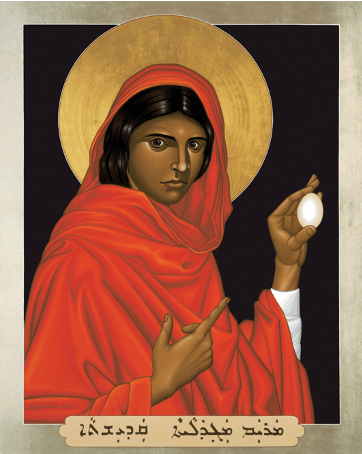
Unity: The Feast of St. Mary Magdalene ~ The Rev. Dcn. Igor Kalinski, OPI
Hello my dear family and friends. You know I am witnessing and living my vocation serving The Old Catholic Unified community in my town Gevgelija and all around Macedonia, serving as a Dominican friar to the poor, marginalized and LGBTQ communities.
As a Dominican friar I want to share that today we celebrate the legacy, the life and the ministry with her example of serving of this holy mother Mary Magdalene, equal to the apostle.
Many centuries ago, the General Chapter of our Order Dominican declared her as a Defender and Protector of our order.
Me living in such a conservative and anti LGBTQ society makes me motivated through her example and intercessions for all of us as a very close friend of Jesus.
She faced daily struggles of rejection, not acceptance and bigotry, because she was honored to be the very first human creation to see the empty tomb and our risen Lord Jesus.
She was the first ever to talk to Jesus on the resurrection morning.
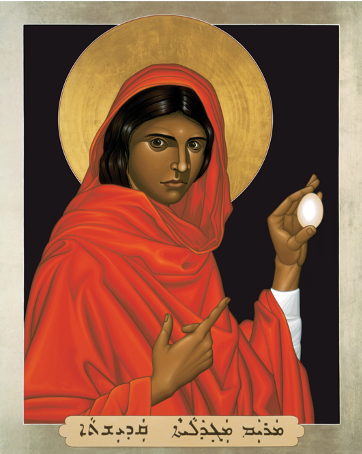
While the humanity in that age treated the woman badly, Jesu embraced her, accepted her, blessed her and gave her authority to preach the gospel even in Rome to the emperor. In the eastern European tradition, she was the first lady to paint a red egg and to announce the resurrection gospel to the world. (Red represents the blood of Christ and it’s the most important color when painting eggs.)
Do you think it was easy in that time? Certainly not easy. It was very difficult, and there was much suffering because of the gender inequality with which she struggle. Even the apostles laughed at her and did not believe her when she told them what she sow and with whom she talked.
Are we not the same today? Racial hatred, LGBTQ phobia, divisions in the nations? This is not t God’s agenda.
Our goal and our agenda is acceptance, integrity, equality and integration.
I have learned a lot through her example and suffering.
I fight daily for improving of this marginalized people toward equality for everyone.
Its still the same today like in that time, people still want us to be put in box, just because they have built themselves to hate. Is that correct?
Is that the Gospel of Jesus?
NO!
Our goal and ministry is to be fully integrated, regardless of gender, sexuality, races. We are taught in Galatians 3:28 that there is “There is neither Jew nor Gentile, neither slave nor free, nor is there male and female, for we are all one in Christ Jesus. We are all equal in Gods eyes.
By the way, Mary Magdalene is considered to be the first woman priest in Christian. This is only a part of the legacy of this great woman who fought hatred in the ancient times. We are called to do the same.
But for God, all genders are equal, and we have to work to be improved this for the better common life. Jesus wants us before we go in heaven, to build heaven in our hearts and our societies.
If we heal division and embrace diversity, and love all our neighbors we can improve all of our common and private lives.
So I pray through her intercession about these divisions, Its time for us to live as true Christians. We are only one human race, and we are all equal. If the church does not preach this is a dead church.
I will never stop fighting for this people, that’s why I’m a Dominican.
St Mary Magdalene pray for us.
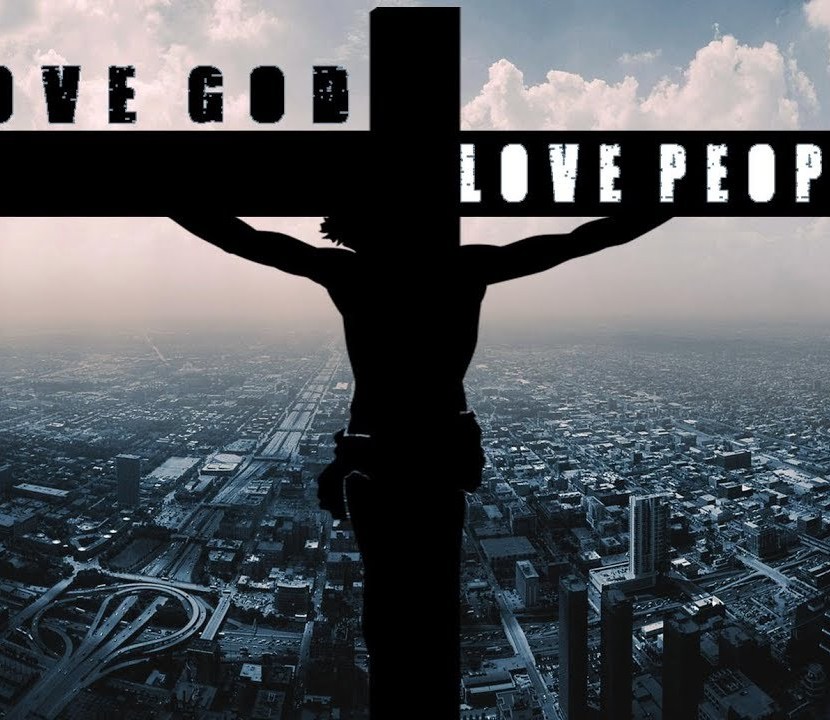
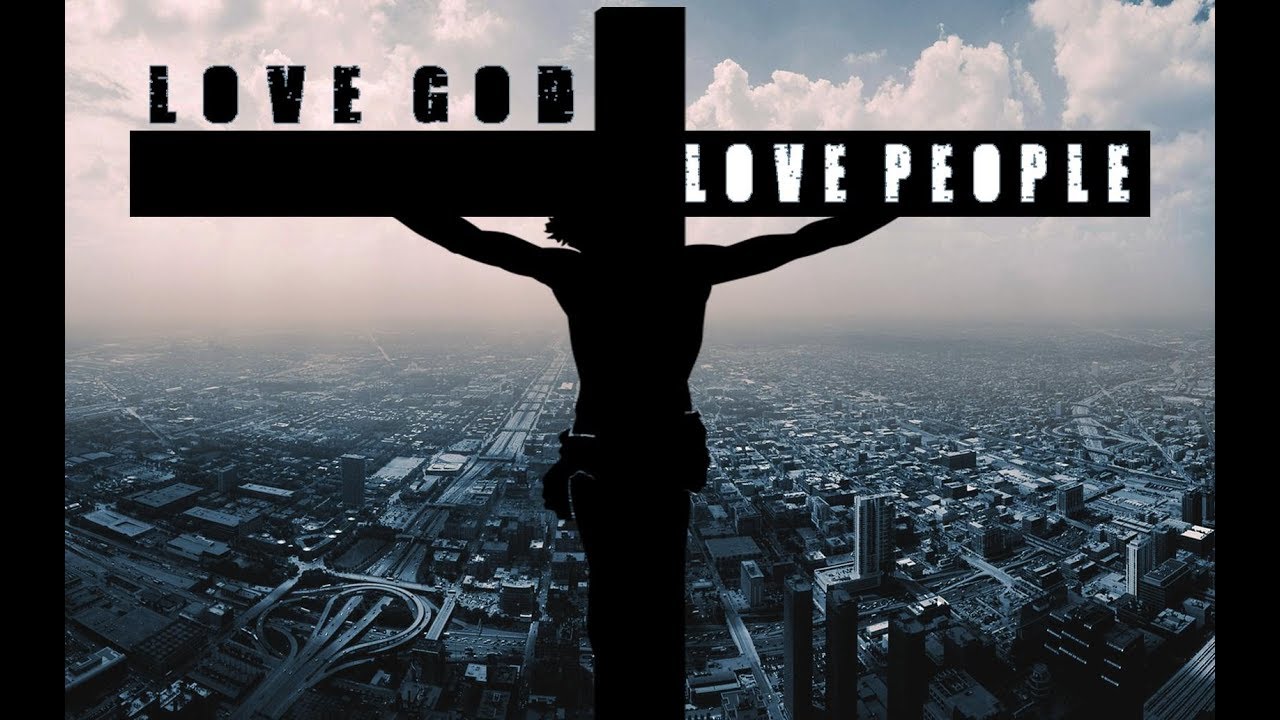
Love God. Love People. Say What? ~ The Rt. Rev. Michael R Beckett, OPI
Our Old Testament Reading today comes from the book of Wisdom, or as some call it, The Wisdom of Solomon. Now, most scholars agree that King Solomon, did not, in fact, write this book, but say that it was written in honor of him, using things he did write and things he said. During the Reformation, Martin Luther discarded this book of the Bible, along with others, whilst the more Liturgical churches retained them. Melito of Sardis in the 2nd century AD, Augustine (c. 397 AD) and Pope Innocent I (405 AD) considered Wisdom of Solomon as part of the Old Testament. Athanasius writes that the Book of Wisdom along with three other deuterocanonical books, while not being part of the Canon, “were appointed by the Fathers to be read”. In Matthew 12 Jesus quotes from this book. SO….having said all that, this is today’s reading:
There is no god besides you who have the care of all, that you need show you have not unjustly condemned. For your might is the source of justice; your mastery over all things makes you lenient to all. For you show your might when the perfection of your power is disbelieved; and in those who know you, you rebuke temerity. But though you are master of might, you judge with clemency, and with much lenience you govern us; for power, whenever you will, attends you. And you taught your people, by these deeds, that those who are just must be kind; and you gave your children good ground for hope that you would permit repentance for their sins. WIS 12:13, 16-19
At the risk of being accused of “cherry picking,” I want to focus on these verses: For your might is the source of justice, you judge with clemency, and with much lenience you govern us; And you taught your people, by these deeds, that those who are just must be kind;
So let’s think about that. The author(s) of the Book of Wisdom, in praising God have said that God judges with clemency, he judges with leniency, and has taught us that those who are just must be kind.
Well now…….Three key words: clemency, leniency, kindness. Clemency is defined as “mercy.” Leniency is defined as “quality of being more merciful or tolerant than expected.” Kindness is defined as “the quality of being friendly, generous, and considerate.”
How many times must it be repeated? Be merciful. Be kind. Show love. It’s pretty much one of the key recurring factors of Jesus’s ministry. Love God. Love people. Love God. Love people.
Jesus tells us in John 13:34-35, “A new commandment I give to you, that you love one another: just as I have loved you, you also are to love one another. By this all people will know that you are my disciples, if you have love for one another.” How do we show that love? Again, Jesus tell us, and again, very specifically in Matthew 25:35-45: For I was hungry and you gave me something to eat, I was thirsty and you gave me something to drink, I was a stranger and you invited me in, I needed clothes and you clothed me, I was sick and you looked after me, I was in prison and you came to visit me.’ “Then the righteous will answer him, ‘Lord, when did we see you hungry and feed you, or thirsty and give you something to drink? When did we see you a stranger and invite you in, or needing clothes and clothe you? When did we see you sick or in prison and go to visit you?’ “The King will reply, ‘Truly I tell you, whatever you did for one of the least of these brothers and sisters of mine, you did for me.’ “Then he will say to those on his left, ‘Depart from me, you who are cursed, into the eternal fire prepared for the devil and his angels. For I was hungry and you gave me nothing to eat, I was thirsty and you gave me nothing to drink, I was a stranger and you did not invite me in, I needed clothes and you did not clothe me, I was sick and in prison and you did not look after me.’ “They also will answer, ‘Lord, when did we see you hungry or thirsty or a stranger or needing clothes or sick or in prison, and did not help you?’
45 “He will reply, ‘Truly I tell you, whatever you did not do for one of the least of these, you did not do for me.’
The least of these….who then, are ‘the least of these’ in today’s society? Probably those who make many of us uncomfortable. The homeless? People who are a different color? People who are of a different color? Sexual orientation? Ethnicity? Who are “the least of these” to you?
Stephen Mattson writes:
Throughout his ministry, Jesus showed that he did, indeed, love everyone, even to the point of dying for their sins, but you know, he went out of his way to intentionally help specific groups of people — the alienated, mistreated, and those facing injustice. Throughout his earthly ministry:
Jesus said, “Samaritan lives matter.”
Jesus said, “Children’s lives matter.”
Jesus said, “Gentile lives matter.”
Jesus said, “Jewish lives matter.”
Jesus said, “Women’s lives matter.”
Jesus said, “Lepers’ lives matter.”
Christians must recognize that our society today is filled with numerous groups and communities facing systemic oppression, and we must act. We must be willing to admit and address the complex realities within our world that create such problems, and avoid the spiritual laziness that tempts us to rely on generic excuses and solutions.
Christians do a disservice to the gospel message by removing the cultural context from Jesus’s ministry and watering down his message to one of religious platitudes. We like to generalize the words of Jesus and transform his life into a one-size-fits-all model that can apply to all of humanity. He intentionally, purposefully, and passionately addressed very specific causes. He radically addressed the diverse and complicated conflicts of the time and shattered the status quo. Are we, as Christians, not called to do the same? By addressing racism, immigration, gender equality, and a litany of other issues, we are following in the steps of Jesus.
Justice. Mercy. Kindness. Love God. Love people.
Amen.
Faith and Doubt: The Feast of St. Thomas ~ The Very Rev. Lady Sherwood, OPI
Reading 1: EPH 2:19=22
R psalm: Mark 6:15
Gospel: JN 20:24=29
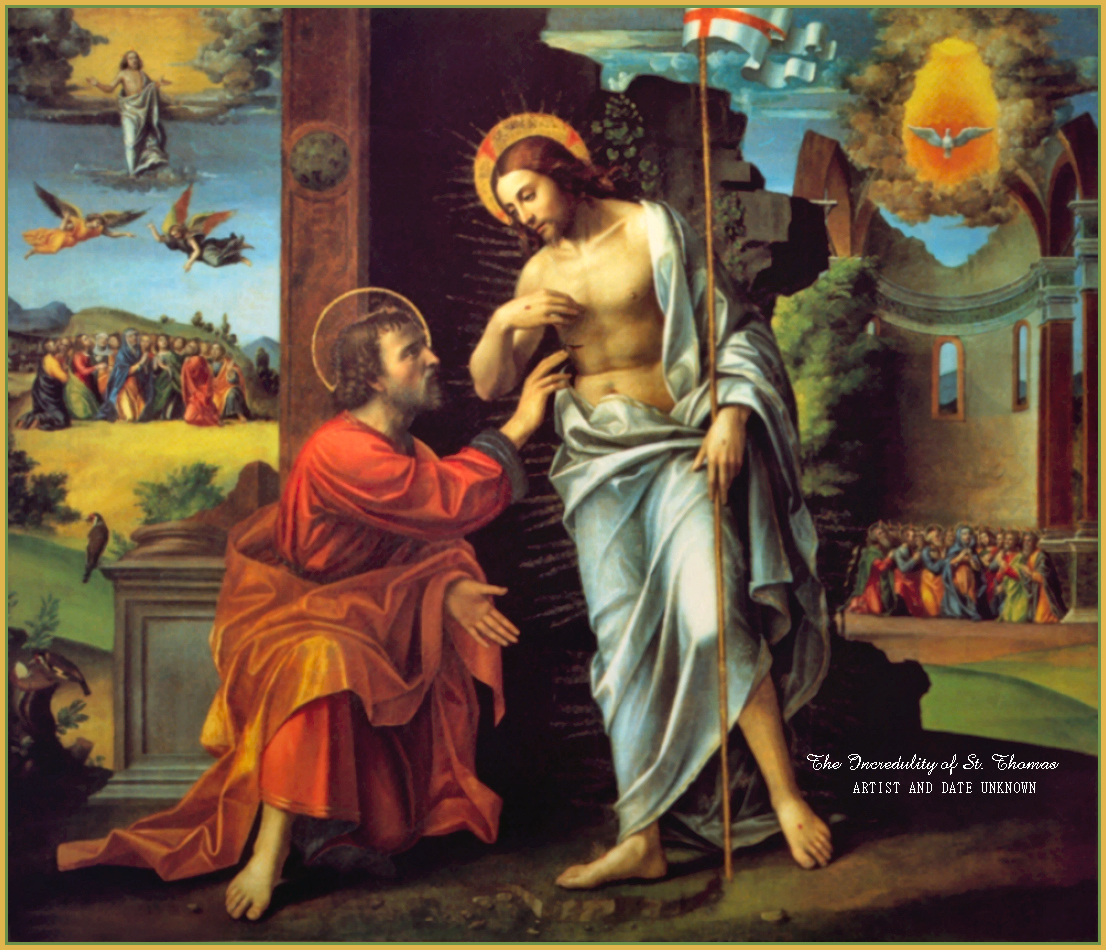
Today’s we come together to commemorate the Feast of St Thomas the Apostle, often nicknamed ‘Doubting Thomas’,because on Easter Sunday after Mary had seen Jesus, he went to the room where the disciples were and suddenly appears to them despite locked doors and they could clearly see the wounds to His hands and side. Jesus tells them, “Peace be with you”. The disciples believed.
Thomas however, wasn’t with the other Apostles when Jesus had appeared to them, and when Thomas arrived after Jesus had left them, the other disciples told Thomas about Jesus visiting them, but Thomas didn’t believe, he told them, “Unless I see Jesus for myself, and can touch His wounds, I won’t believe.” I can easily imagine that Thomas may have thought the other apostles were teasing him; or why wouldn’t Jesus have stayed long enough until he had managed to arrive?
The next week however, the disciples are gathered together again, this time Thomas was with them. Jesus suddenly appeared and told Thomas to put his hands on His and to feel his wounds. Thomas does so, and Jesus asked Thomas, “Do you believe because you have seen me?” and he tells him, “Blessed are those who do not see yet believe.”
Can you imagine what it would be like to be mainly remembered by many because of our greatest moment of doubt? Haven’t we all doubted at one time or another? I can tell you that I have once or twice. Thomas therefore, is the disciple to whom all of us can relate. Most of us have experienced what it is to live between faith and doubt at some point.
Most people tend to think that Faith and doubt are opposites, but in true fact, it is often a part of our faith journey. It is a stop, or a bump in the road that most of us would’ve made more than once on our journey. This doesn’t make us bad Christians or believers. Indeed, rather, it can be seen as a sign that we take our relationship with God seriously that we allow ourselves to walk the journey of faith without knowing for certain through what we will be travelling.
Christian tradition tells us that Thomas set sail for India and indeed was the first to spread Christianity there. He is the Patron Saint of India.
The doubt that Thomas previously had, was what brought him faith and that faith was such that he brought the message of Christ to many.
We all have times of doubt, at least all of us that see faith as a true journey, not a one=time stop gap. Doubt can actually propel us to faith, and can be what gives us the shake up we may at times need. It can be what sends us out of our comfort zones and into a new and better world. Doubt can act like a ticket that starts us truly on our journey to a whole new life of faith. It can be a sign of not the absence of God as many may think, but rather of God working within us to do something new.
Let us pray:
O Glorious St Thomas, your grief for Jesus was such that it wouldn’t allow you to to believe that he had risen until you saw him and touched his wounds. But your love for Jesus was equally great and it led you to give up your life for Him.
Pray for us, that we may grieve for our sins which were the cause of Christ’s sufferings. Help us to spend our lives in His service and so to be Blessed, which Our Lord Jesus applied to those who would believe in Him without seeing Him.
Amen.
The Feast of Sts. Peter and Paul: We Can Be Saints, Too! ~ The Rev. Deacon Igor Kalinski, OPI
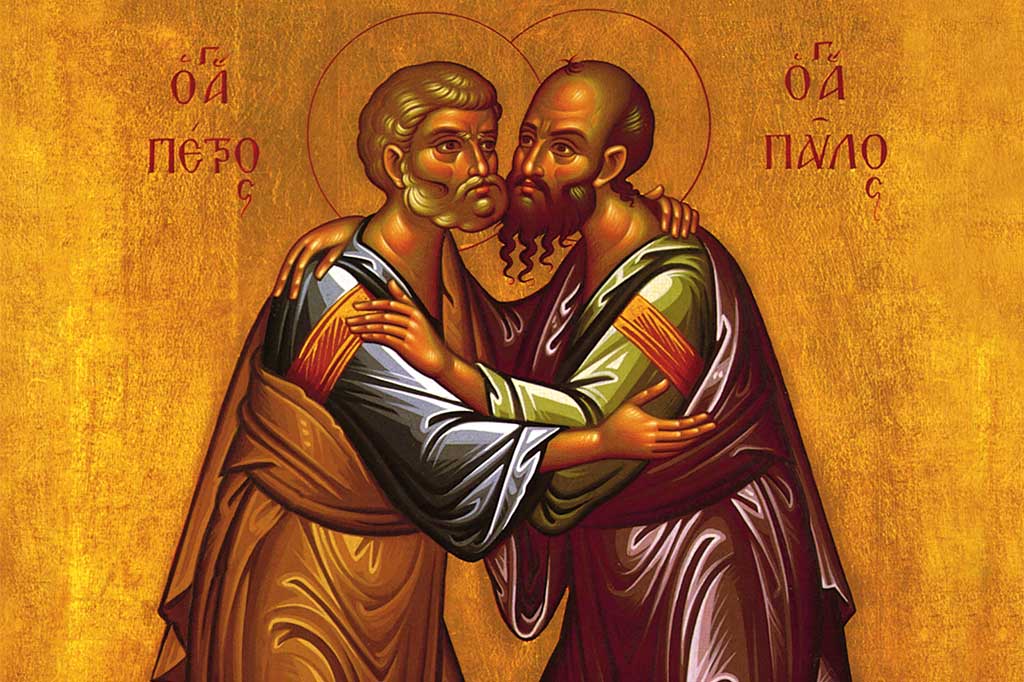
During this month June, in this very difficult year for all the humanity, I have realized how miserable, hypocrite, unfaithful to myself after all that I have passed during this life in a very conservative environment, and above all I found again Jesus , the ultimate love, and that is impossible to please God, if you don’t support all groups of people that share and endure daily struggle of acceptance, bigotry, and the rejection of some leading churches towards liberty and freedom of all people regardless , their color skin, sexual identity.
I realized that is not only that you should stick to the tradition, so that we can worship our heavenly Father, forgetting that “mercy I seek not holocaust” if God is love, and indeed He is, lets follow the example of these greatest among apostles and martyrs for Christ, Saints Peter and Paul.
How many hardships, beatings, arresting, assassinations attempts had occurred to them?
How many time Peter failed?
Paul was training over Christians.
But God revealed to Him in full power and might, in His majesty, then he became blind.
How many times Peter denied Jesus?
Believe me, I am worst sadly of failures, daily denials, and above all not having love for the people as they did all love and lately payed with their lives.
Let us preach the Gospel of the love, the gospel of acceptance, lets strive to bear one another these hardships and struggles, bold as Peter and steady as St Paul.
The bible has many holy books written from St Paul. We can nourish ourselves daily in his epistles, to study and pray, that’s pure Dominican charism, study and later preach from the fruits of your study.
Let us be penitent like St Peter that after he denied Christ and have the repentance and meek heart of Paul, that after sinful evil way of having been a religious fanatic, to become brave barefoot preacher of the nations.
St Peter and Paul apostles pray for us. Amen
Who Comes First?~ The Rt. Rev. Michael R. Beckett, OPI
Saint Dominic carried the Gospel of Matthew with him wherever he went. That is the reason that we see a book in most of the representations of St. Dominic, both in statue and paintings. Our Gospel today comes from the Gospel According to St. Matthew:
Jesus said to his apostles: “Whoever loves father or mother more than me is not worthy of me,
and whoever loves son or daughter more than me is not worthy of me; and whoever does not take up his cross and follow after me is not worthy of me. Whoever finds his life will lose it, and whoever loses his life for my sake will find it.
“Whoever receives you receives me, and whoever receives me receives the one who sent me. Whoever receives a prophet because he is a prophet will receive a prophet’s reward, and whoever receives a righteous man because he is a righteous man will receive a righteous man’s reward. And whoever gives only a cup of cold water to one of these little ones to drink because the little one is a disciple—amen, I say to you, he will surely not lose his reward.” Matthew 10:37-42
So, just what is Jesus saying here? When you get right down to it and boil it down to its most simple terms, Our Lord is saying what he says in Matthew 22:36-40:
“You shall love the Lord your God with all your heart and with all your soul and with all your mind. This is the great and first commandment. And a second is like it: You shall love your neighbor as yourself.
There you have it. Put God first. Love people. It kind of reminds me of that old comedy skit, “Whose On First?” Only now, the question tends to be, “Who do you serve first?” Sounds simple, right? God first, right? Then people. Umm…not so much. In today’s world, with a global pandemic, racial tensions and protests, what are we doing to show who we love best? God? Our politics? Our nation? What people believe our Constitution says? What we want to believe? Or, again, does our God come first?
Again, Our Lord speaks to us in Matthew 25:
34 “Then the King will say to those on his right, ‘Come, you who are blessed by my Father; take your inheritance, the kingdom prepared for you since the creation of the world. 35 For I was hungry and you gave me something to eat, I was thirsty and you gave me something to drink, I was a stranger and you invited me in, 36 I needed clothes and you clothed me, I was sick and you looked after me, I was in prison and you came to visit me.’ 37 “Then the righteous will answer him, ‘Lord, when did we see you hungry and feed you, or thirsty and give you something to drink? 38 When did we see you a stranger and invite you in, or needing clothes and clothe you? 39 When did we see you sick or in prison and go to visit you?’ 40 “The King will reply, ‘Truly I tell you, whatever you did for one of the least of these brothers and sisters of mine, you did for me.’ 41 “Then he will say to those on his left, ‘Depart from me, you who are cursed, into the eternal fire prepared for the devil and his angels. 42 For I was hungry and you gave me nothing to eat, I was thirsty and you gave me nothing to drink, 43 I was a stranger and you did not invite me in, I needed clothes and you did not clothe me, I was sick and in prison and you did not look after me.’ 44 “They also will answer, ‘Lord, when did we see you hungry or thirsty or a stranger or needing clothes or sick or in prison, and did not help you?’ 45 “He will reply, ‘Truly I tell you, whatever you did not do for one of the least of these, you did not do for me.’ 46 “Then they will go away to eternal punishment, but the righteous to eternal life.”
Can we not apply these words to what is going on in our country today? Perhaps if Jesus were in the middle of us here, he would be saying, “You saw me oppressed and discriminated against and did nothing. You saw me vulnerable and refused to follow health guidelines”
We were, all of us, created with that pesky little thing called ‘free will,’ that allows us to choose how to behave, how to act. God is not going to force any of us to do anything, just as He does not force us to believe in Him, worship Him, or follow Him. It is time to stop giving lip service to our faith and actually live it. If we truly believe that God comes first in our lives, then it is time for us to, as they say, “put up or shut up.” It is up to each of us to conduct ourselves in a manner fitting our faith. We cannot profess to be a Christian and then sit back and do nothing to heal our nation, our society, and our brothers and sisters.
How, you ask?
Lobby for changes to discriminatory laws. Actively seek out social justice. Keep the conversation going. Educate yourself. Make your voice heard. Donate. Protest. Don’t avoid the discomfort you’re feeling. The past few weeks have been uncomfortable. We are supposed to be uncomfortable. Recognize that the ability to quickly move past the feelings that have been brought up in response to the things happening in our country and world is an absolute privilege, one that many people don’t have. The people who move past them are those who don’t harbor continual fear over the same thing happening to themselves or to their loved ones. Systematic injustices can only become invisible if they don’t affect you. Sit with the discomfort you’re feeling instead of ignoring it. Reflect on your own privilege and how you can do better for ALL people in the future. And then decide which actions you’re going to take going forward.
Ask yourself, what comes first, your politics, your race, your nationalism, your guns, or your God?
“But,” you say, “if I do those things, what if I make some people mad? What if I lose friends?” Again, I will refer you to what our Lord says: “Whoever loves father or mother more than me is not worthy of me, and whoever loves son or daughter more than me is not worthy of me; and whoever does not take up his cross and follow after me is not worthy of me. Whoever finds his life will lose it, and whoever loses his life for my sake will find it. “
Isn’t it time that we, as Christians, start putting Christ first, start putting his people first? Isn’t it time that we as true followers of the Jesus that we proclaim learn to treasure what we have been given? Work for justice. Work for peace. Work for understanding. Fred Kaan, the lyricist, has written a hymn that is especially meaningful for today:
Put peace into each other’s hand and like a treasure hold it;
protect it like a candle flame, with tenderness enfold it.
Put peace into each other’s hand with loving expectation;
be gentle in your words and ways, in touch with God’s creation.
Put peace into each other’s hand like bread we break for sharing;
look people warmly in the eye: Our life is meant for caring.
Give thanks for strong yet tender hands, held out in trust and blessing.
Where words fall short, let hands speak out, the heights of love expressing.
Put peace into each other’s hand he is love’s deepest measure;
in love make peace, give peace a chance and share it like a treasure.
Let us pray:
God, we pray that Your Spirit may rule over all things. May Your Spirit rule over kings and presidents over prime ministers and generals over CEOs and party bosses over the legislature and over the bureaucrats over all citizens. May Your Spirit guide us on the way of peace on the way of honest dialogue on the way of reconciliation between peoples on the way of disarmament and justice on the way of freedom and life for all.
May Your Spirit lead us on the journey of blessings shared with all on the journey of educational opportunity for all our children on the adventure of research and study that helps all men and women on the road to meaningful work for all people on the path of solidarity and love between all our brothers and sisters.
May Your Spirit help us to speak up with courage to share what we have and what we are to challenge the powers that be to offer a message of liberation and life. We make this prayer through Christ, our Lord. Amen
The Nativity of St. John the Baptist ~ The Very Rev Lady Sherwood, OPI
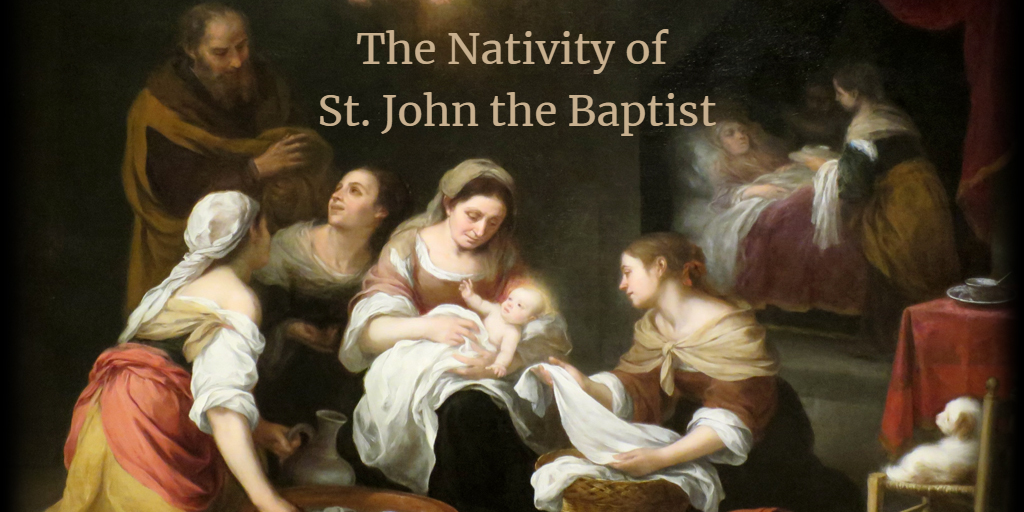
Reading 1: IS 49:1-6
Responsorial Psalm: 139:1B-3, 13-14AB, 14C-15
Reading 2: ACTS 13:22-26
Gospel: LK 1:57-66, 80
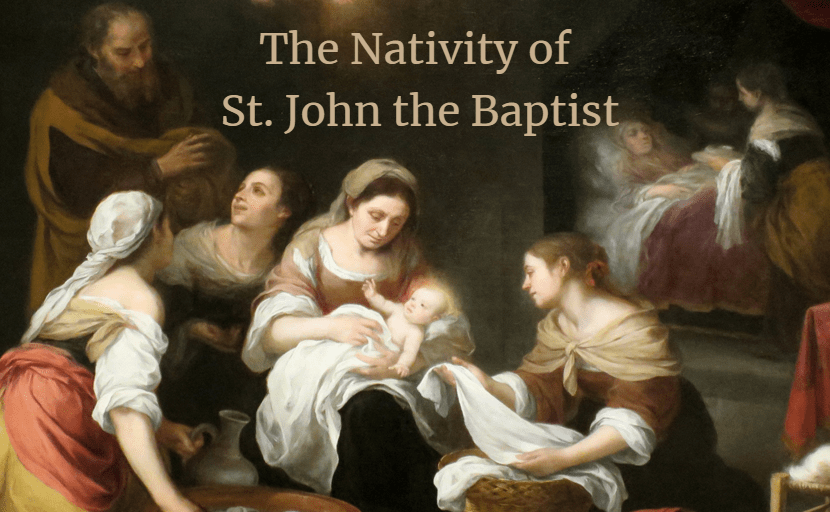
Today, we as a church come together to commemorate the birth of St John the Baptist, often called the ‘Forerunner’.
John was the son of Zechariah and Elizabeth. In the Gospel of Luke, we are told that Zechariah was told beforehand about the birth, and that he was to be named John. The name John means “God is Gracious” (LK 1 :8=2:3).
John whilst still within his mother’s womb, instantly recognised the presence of Our Lord Jesus, who was also still in his mother’s womb, when Mary went to visit her cousin Elizabeth (LK 1 :41). John leapt for joy in Elizabeth’s womb as soon as Mary and Elizabeth met, and this is when John was cleansed of original sin. This came to pass just as the Angel Gabriel had previously promised Zechariah in LK 1 :15.
When John was older, he left the home of his parents and went to live his life in the desert. He wore only a garment made from camel skin and only had Locusts and wild honey to eat. John would preach in the desert (MK 1:6; Matt 3:4).
John went about preaching and proclaiming about the Kingdom of God and of a time of upcoming judgement. He invited those who wanted to repent, to allow him to baptise them as a sign of their repentance.
John, just like the prophets, disturbed the comfortable and gave much comfort to the disturbed. The message of John soon spread far and wide. The Gospel of Mark tells us that all peoples of both Jerusalem and Judea travelled to him to confess their sins as John baptised them in the river Jordan (MK 1:5).
John shows his humility clearly to us because he never wanted any attention for himself, he always directed people to Jesus. Some wondered if John was the Messiah, but John reassured them that indeed he wasn’t the messiah, and he declared that his ministry was merely a preparation for the coming of the Messiah. John said, “I have baptised you with water, but He will baptise you with the Holy Spirit.” (MK 1:8)
Then Jesus himself came to John to be baptised and John immediately recognised Jesus as the Messiah and he declared, “This is the Lamb of God who takes away the sins of the world”. (JN 1 :29). This statement from John is still used in Mass prayer today, when the Priest holds up the sacred Host as we prepare for the Holy Eucharist, as the Priest says, “This is the Lamb of God who takes away the sins of the world…”.
It was after being baptised by John, that our Lord Jesus began his Earthly ministry. When John had been baptised by John, John again showed his humility as again, he turned his attention to Jesus, declaring, “He must increase, I must decrease”(JN 3:30).
St John the Baptist is an excellent example that we as Christians should take much notice of within our lives of faith. Just as John always showed his humility by turning his attention away from himself and towards our Lord Jesus, we too, also need to show this same humility if we are truly to serve and follow the Lord. We also, must turn attention away from ourselves and towards Jesus. Just as John himself declared, “He must increase, I must decrease”.
Let us pray:
O glorious St John the Baptist, greatest prophet among those born of woman, although you were sanctified in your mother’s womb and lived a most innocent life, nevertheless, it was your will to live in the wilderness of the desert, there to devote yourself to the practice of austerity, penance and humility;
Obtain for us by your intercession, the grace of the Lord to be wholly detached within our hearts, from earthly goods and self attention. Increasing our humility and service, by making ourselves far lesser and in the never ending increasing, to be ever greater within our hearts and lives.
Amen.
 The Order of Preachers, Independent
You must be logged in to post a comment.