
Category: Lesson
Gratitude~The Rev Frank Bellino,OPI
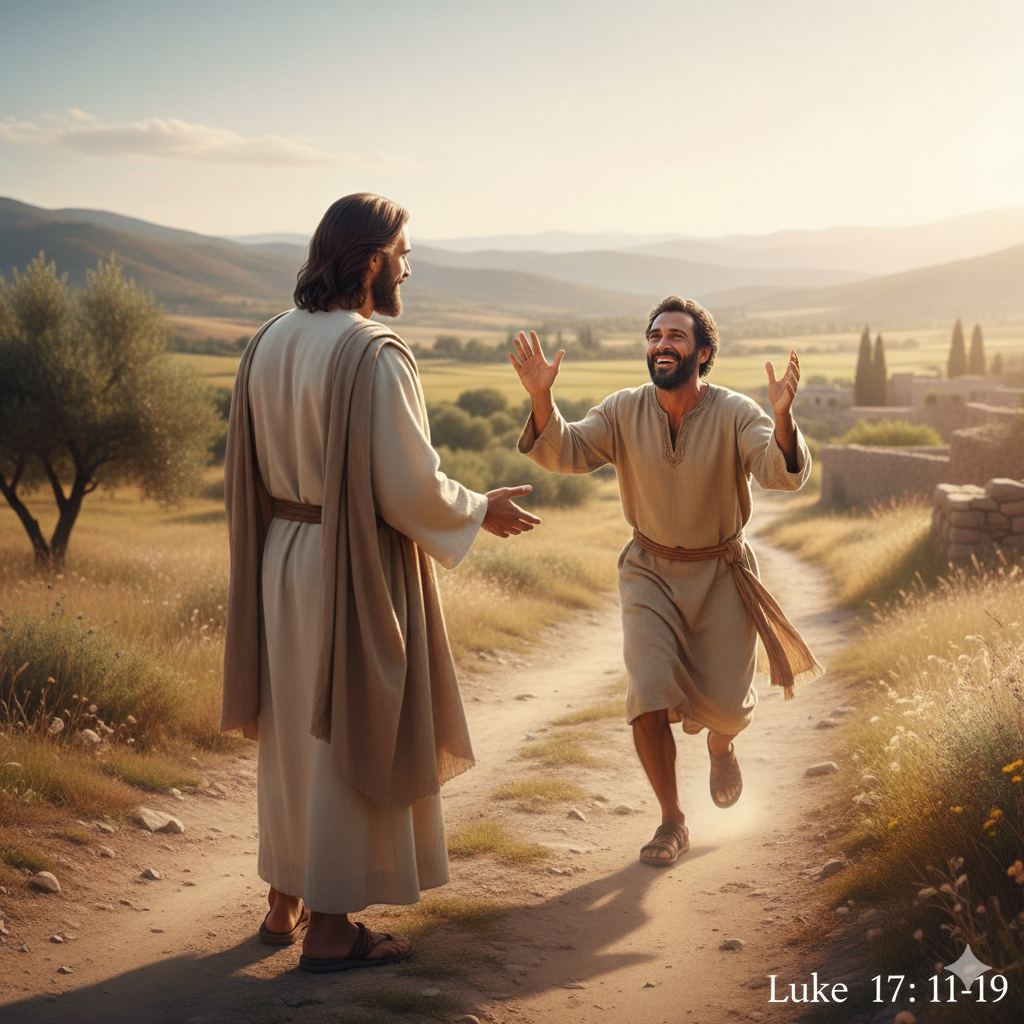
My brothers and sisters in Christ, we hear today a familiar story—the healing of the ten lepers. A quick reading might tempt us to see this as a simple lesson in good manners: nine men were rude, and one was polite. But this Gospel, proclaimed today as we journey through Ordinary Time, is far more than an etiquette lesson. It is a profound instruction on what it means to be saved.
The Cry for Mercy
The story begins with ten men—Jew and Samaritan, united only by their tragic isolation. They are lepers, standing apart, forced by law and disease to shout their misery. Their shared cry is simple and desperate: “Jesus, Master! Have pity on us!” They are the living embodiment of our own spiritual condition. Like them, we stand at a distance, afflicted by the contagion of sin, separated from God and one another.
Jesus’s response is immediate, but it requires an act of faith. He tells them, “Go show yourselves to the priests.” The healing is not instantaneous. They are asked to obey, to walk toward the required ritual, while still diseased. It is only as they went that they were cleansed. Their healing was a gift, given not because of their perfect understanding, but because of their active obedience in faith.
The Missing Nine vs. The Returning One
All ten received the miracle; all ten had their lives restored. But only one stopped short of his destination—the priest—and turned back. And who was this one? St. Luke, ever mindful of the outcast, tells us: He was a Samaritan, a social, religious, and political enemy of the other nine.
The nine, understandably, rushed toward the re-entry—to family, to home, to work, to society. They got the gift, and they ran off to enjoy it. They received the physical blessing. But their hurry, their spiritual amnesia, caused them to miss the Giver in favor of the gift.
The Samaritan, the “foreigner,” does something different. He returns, glorifying God in a loud voice, and falls prostrate at Jesus’s feet, giving thanks. This is not mere gratitude; this is worship.
And here is the crucial moment, the point of the whole passage: Jesus asks, “Ten were cleansed, were not? Where are the other nine? Has none but this foreigner returned to give thanks to God?” Then, to the Samaritan, He says, “Stand up and go; your faith has saved you.”
Gratitude as True Salvation
My friends, the nine were healed; the one was saved.
The Greek word Jesus uses for the Samaritan’s action is related to Eucharist—the very act of thanksgiving we celebrate right now. It is the recognition that gratitude is the highest form of faith.
In our world today, we are often like the nine. We are consumers of grace. We pray in distress, God answers with a blessing—health, a job, safety, the forgiveness of sin—and we race off to enjoy the restored life. We treat God like an ATM: we make a withdrawal when we need it, and then we forget the Source.
This Gospel calls us to be the Samaritan. It calls us to the counter-cultural, transformative act of intentional gratitude in an age of entitlement.
When you rush through your morning, do you pause to acknowledge the gift of the new day?
When a prayer is answered, do you take the time to return to the altar, in prayer and deed, to glorify the Giver?
When you look at your life, do you recognize that everything—your breath, your talent, your very existence—is an unearned grace?
The Samaritan was saved because his gratitude was a posture of the soul. It was his complete acknowledgment of dependence on Jesus, which deepened his relationship with God far more than his physical cleansing.
Furthermore, his identity as a foreigner reminds us that true faith is often found on the margins. We must look for Christ in the places we least expect—in the faces of the poor, the marginalized, and those whom society, or even our own prejudices, would label as “outsiders.”
So let us, as we approach the altar to receive the Eucharist—the ultimate act of thanksgiving—resolve to return to the Lord not just in moments of petition, but in a lifelong act of radical, humble gratitude. May our faith be the faith of thanksgiving, so that we too may hear Christ’s voice saying, “Go; your faith has saved you.” Amen.
Faith, Duty, and the Humble Heart~The Rev Frank Bellino,OPI

My Brothers and Sisters in Christ, grace and peace be with you.
Today, on this 27th Sunday in Ordinary Time, we hear a challenging and profound Gospel from Luke (17:5-10). It is a teaching from our Lord that speaks directly to the demands of Christian discipleship in any age, including our own. This passage gives us two key lessons: a lesson on the power of faith and a difficult lesson on the true meaning of humility in service.
The Power of a Mustard Seed
The Gospel opens with the Apostles, feeling overwhelmed by Jesus’s recent teaching—especially the radical command to forgive a brother who wrongs us seven times in a single day. They respond with an honest cry: “Lord, increase our faith!” (Luke 17:5).
They felt inadequate. They thought they needed a super-sized faith to handle such a monumental task.
Jesus’s reply is a masterful re-orientation. He uses the image of the tiny mustard seed and the uprooting of a deeply-rooted mulberry tree. He is telling them, and us: You don’t need more faith; you need to trust the power of the small faith you already possess.
The issue isn’t the quantity of your belief; the issue is the quality of the object of your belief. The power lies not in the size of the seed, but in the power of the soil and the God who makes it grow.
For Today’s Society
In our modern world, we often feel like the Apostles. We look at the great “mulberry trees” of our time—the deep roots of violence, division, injustice, and personal sin—and we cry out, “I don’t have enough faith to change this!”
Jesus’s message to us is to stop waiting for a heroic, once-in-a-lifetime burst of spiritual power. Start acting with the small, genuine faith you have right now. The call of a disciple today is to:
Forgive the person who hurt you yesterday.
Serve that one neighbor who needs a helping hand.
Pray that one consistent prayer for justice or peace.
That is the mustard seed in action. Don’t worry about moving the mountain; worry about using the faith God has already given you to take the next faithful step.
The Humility of the Unprofitable Servant
Jesus immediately follows the lesson on faith with the challenging parable of the slave returning from the field. After a long day, the master does not thank him or release him to eat; he orders the servant to prepare dinner and wait on him first. Jesus asks: “Does he thank the servant for doing what was commanded?” (Luke 17:9). The implied answer is no.
The lesson ends with this difficult line: “So should it be with you. When you have done all you have been commanded, say, ‘We are unprofitable servants; we have done what we were obliged to do.” (Luke 17:10).
This is not a teaching about poor labor practices. It is a teaching about attitude and discipleship.
For Today’s Society
This parable is a powerful counter-cultural message to a world obsessed with merit, recognition, and reward. It is a necessary check against spiritual pride.
Service is Not a Transaction: God owes us nothing for our obedience. Our service is not a transaction for which we earn a bigger heavenly paycheck or special thanks. It is simply the expected duty of a child of God, a creature responding to the goodness of the Creator.
The Mark of Humility: As Christians, whether we are a priest, a parent, a teacher, or a travel advisor, we must resist the temptation to believe God needs us or that our good works somehow make us superior. When we serve, when we give, when we forgive—even when we do mighty things in Christ’s name—our final word must be, “I only did my duty.”
This humility sets us free. It frees us from the need for external praise, it frees us from becoming resentful when our work goes unnoticed, and it frees us to be what we are truly called to be: faithful, humble instruments in God’s hands.
So let us pray today for the grace to use the small, powerful faith we have, and the humility to be tireless, yet joyful, servants of the Lord.
Amen.
A Call to See, to Act~The Rev Frank Bellino,OPI
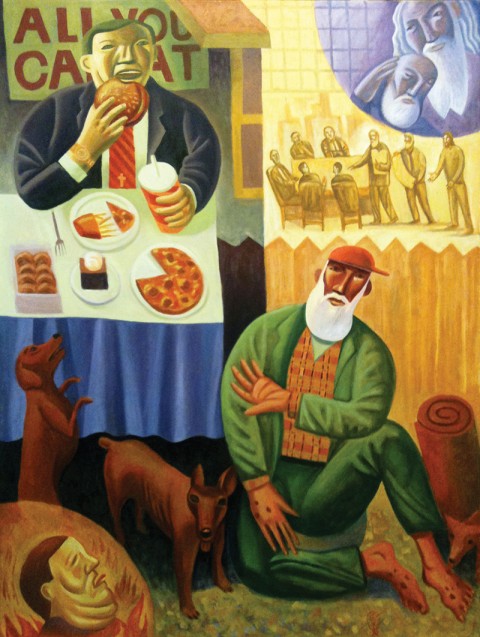
Today’s Gospel, Luke 16:19-31, presents us with the stark parable of the rich man and Lazarus. We have the rich man, dressed in purple and fine linen, feasting sumptuously every day. Outside his gate lies Lazarus, a poor man covered with sores, who longs for the scraps that fall from the rich man’s table. Dogs even come to lick his sores. Both men die. Lazarus is carried by angels to the bosom of Abraham, while the rich man finds himself in torment.
This parable is not a simple story about a rich man going to hell and a poor man going to heaven. It’s a profound challenge to our priorities and our responsibilities. The rich man’s sin was not his wealth itself, but his indifference. He saw Lazarus every day. He knew his suffering. Yet, he did nothing. Lazarus was not a person to him; he was part of the scenery, a problem he chose to ignore.
How does this apply to us today? We live in a world of unprecedented wealth and connectivity. We are surrounded by information about suffering, both near and far. The modern-day Lazarus is not just a person at our gate. He is the person sleeping on the street corner we drive past, the family struggling with food insecurity in our own community, the victims of natural disasters and war we see on our screens every day.
The parable calls us to see. To move from a state of indifference to one of compassion and action. It’s about recognizing the dignity of every human being, especially those who are suffering, and understanding that their well-being is our responsibility. We are called to be our brother’s and sister’s keeper, not just through prayer, but through tangible acts of charity and justice.
The rich man’s plea for Lazarus to dip his finger in water to cool his tongue, and later to warn his brothers, shows a final, desperate recognition of the reality he ignored in life. But it’s too late. The message from Abraham is clear: “They have Moses and the prophets; let them listen to them.” This means the truth is already available to us. We have the Gospel. We have the teachings of the Church. We have the call to love God and love our neighbor as ourselves. We don’t need a sign from the dead to tell us what we already know.
As Dominicans, our mission is to preach the truth. The truth of this parable is that our salvation is tied to our charity. Let us not be so preoccupied with our own lives that we fail to see the Lazarus at our gate. Let us open our hearts and our hands to those in need, so that when our time comes, we may be found worthy to be carried by the angels to the bosom of Abraham.
Serve God? Or Mammon?~The Rt Rev Michael Beckett,OPI
Y’all…..Interesting times we’re living, right? Now, I’m no expert, and frequently, I’m not real bright, but it’s becoming more and more apparent that a bunch of folks have their priorities mixed up and they have forgotten just who they are supposed to be serving and how they should be conducting themselves. God forbid I try to “control” anyone or be anyone’s “thought police.” But some things need to be said and so this is a (maybe not so gentle) reminder…..
In the scriptures appointed for today, there is a lot of talk about how to treat the poor, folks’ attitudes toward the poor, and, conversely, about those who have the power over the poor. So here we go. From the prophet Amos we have God talking to some rich folks who are planning on cheating the poor: Hear this, you who trample upon the needy and destroy the poor of the land! “When will the new moon be over,” you ask, “that we may sell our grain, and the sabbath, that we may display the wheat? We will diminish the ephah, add to the shekel, and fix our scales for cheating! We will buy the lowly for silver, and the poor for a pair of sandals; even the refuse of the wheat we will sell!” The LORD has sworn by the pride of Jacob:
Never will I forget a thing they have done!
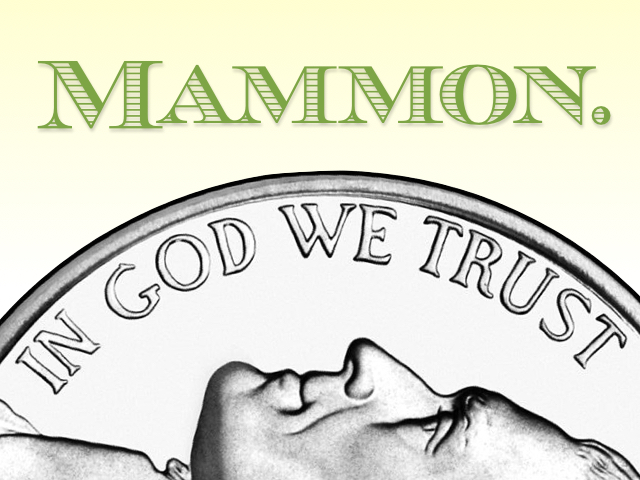
And Jesus had his own commentary in Luke 16:13: No servant can serve two masters. He will either hate one and love the other, or be devoted to one and despise the other. You cannot serve both God and mammon.”
That “mammon” thing? It’s not just money. Nope. We’re talkin’ the immense power derived from wealth, influence, and material possessions. The term, originally from Aramaic for wealth, evolved to personify avarice and the greedy pursuit of money, later becoming a demonic lord of greed in Christian demonology. In a broader sense, the “Gospel of Mammonism” refers to the excessive materialistic power of capitalist institutions and the overwhelming influence of wealth on individuals and societies. Think of the power wielded by those billionaires who influence our laws and policies. Think of those billionaires who have meddled in politics. Think of those other folks who cater to those billionaires. See what I mean?
And then, think of the sway those folks have on the “little people,” those who, like you and I, certainly aren’t worth zillions of dollars, but who can be, and are, influenced by those who consider themselves our ‘betters.’ Those who try to talk a good game and try to teach us that because they use the name of Jesus a lot, they are good people. These are the self-same folks who God was talking about when he said, “Thou shalt not take my name in vain.” The folks who follow policies and procedures who are the antithesis of what our Lord has taught us. These are also the people who advocate for oppressive legislation — rooted in far-right religious beliefs — that strip away equal rights from LGBTQ folks, non-Christians, women, people of color, and immigrants, among others.
They cry, “It’s a baby!” and then do their best to take food out of babies’ mouths, refuse them health care, or any care at all. They demand the 10 Commandments be posted in classrooms but shun The Sermon on the Mount as being woke. They cry to “teach religion in our schools,” but only that bit of religion with which they agree (most of which comes from the holiness codes in the Hebrew Scriptures) but refuse to practice. And heaven forbid any other religion but theirs be even mentioned in schools.
We are taught in Galatians 3:28 that “There is neither Jew nor Greek, there is neither slave nor free, there is no male and female, for you are all one in Christ Jesus.” That also means, by extension, no race, no nationality. Isn’t it time we act like it? Isn’t it time that we hold those in power accountable if this is what we wish? We are taught in the book of James to “ show no partiality as you hold the faith in our Lord Jesus Christ, the Lord of glory. For if a man wearing a gold ring and fine clothing comes into your assembly, and a poor man in shabby clothing also comes in, and if you pay attention to the one who wears the fine clothing and say, “You sit here in a good place,” while you say to the poor man, “You stand over there,” or, “Sit down at my feet,” have you not then made distinctions among yourselves and become judges with evil thoughts?” James 2:1-26 Further, we are taught, again in James, that faith without works is dead. In other words, if the faith inside of us doesn’t get expression through our actions and words, it will no longer be alive. If we don’t use it, we will lose it, so to speak. We have to step out in faith in order to keep faith alive. (James 2:26: For as the body apart from the spirit is dead, so also faith apart from works is dead. But be doers of the word, and not hearers only, deceiving yourselves.)
As Christians, have we lost our focus of what is truly important? Regardless of politics, of whether we are ‘blue’ or ‘red’ or ‘rainbow,’ we are to remain focused on the one thing that really matters in this world and the next: Spreading and sharing the love of and for our Lord and Savior Jesus Christ. No matter who sits in the Oval Office, our job, our mission, our focus, has not changed and will not change: We are called to love and to serve the Lord with gladness and singleness of heart. We are called to care of each other, regardless of our politics. We are commanded to ‘bless those who persecute us’ and we are called to ‘pray for our enemies.’ We are called to feed the hungry, clothe the naked, house the homeless. (Matthew 25:31-46).
The hymnist, Eleanor H. Hull writes,
Be thou my vision, O Lord of my heart;
Naught be all else to me save that thou art.
Thou my best thought by day and by night;
Waking or sleeping, thy presence my light.
Riches I heed not, nor vain, empty praise;
Thou mine inheritance, now and always.
Thou and thou only, first in my heart,
High King of Heaven, my treasure thou art.
May we, all of us, be reminded to keep our eyes, our souls, focused on the One True Light.
Amen.
Love Jesus More~The Rt Rev Michael Beckett,OPI

Y’all…..I’m about certain that many of you have seen posts and memes and pictures and comments ad infinitum about “we should all get along” and “but they’re your family” and “when people show you who they are, believe them.” And here lately, families are split, friendships have fallen apart, and there has been a great distancing between people who were formerly close. And the reasons for this? Here lately, the bottom cause is political and the basic beliefs behind those political opinions.
But wait. What if, just what if this great distancing was, bottom line, about actually being who and what Jesus expects of us? Coz according to the Gospel reading appointed for today, Jesus told us it was gonna happen. Here:
Great crowds were traveling with Jesus, and he turned and addressed them, “If anyone comes to me without hating his father and mother, wife and children, brothers and sisters, and even his own life, he cannot be my disciple. Whoever does not carry his own cross and come after me cannot be my disciple. (Luke 14:25-27)
Say what? Whatever does this mean? You say to me, you say, “But Jesus taught us to love and respect and honor our parents! It’s even one of the Ten Commandments!” And I’d say right back to you, “Yep.”
So what gives with this? I believe that what Jesus is saying to us is this: If we are going to walk with Jesus, we have a price to pay. Sacrifice and suffering and making difficult choices are part of the journey.
Earlier, Jesus has warned His disciples that He had come to bring a sword of division to Israel. This wasn’t a reference to violence or revolution, but to the separations that the gospel can cause. Those who refuse to accept Christ and his message of love and acceptance will hate and persecute those who believe (John 15:18–21). The division will take place even between immediate family members. Fathers and sons will turn on each other, as well mothers and daughters. The issue will be belief in Jesus Himself. Is He the Messiah, the Son of God? Is what he says right and true and good? Those who refuse to acknowledge Him will reject those of their own family, who put their faith in Jesus and begin to follow His ways (1 Peter 4:3–4).
Jesus is demanding His rightful place in the hearts of His people. Us. We must love Him more than all others and demonstrate that this is true, especially if we are forced to make a choice. This does not change Scripture’s demand that children honor their parents (Ephesians 6:2) and that parents provide for their children (Ephesians 6:4; 1 Timothy 5:8). Jesus does not say “do not love” those other people—what He says is that we ought to love God more. And in so loving God more, in following his path, will folks be willing to lose connection to their family members, friends, or political party in order to continue to follow Jesus and acknowledge to others that He is the Christ?
Loving others is the second greatest commandment, but it is behind the first: to love God with everything we have (Matthew 22:34–40). In making this statement, Jesus continues to make the claim that He is God. Love and obedience to Him must come before obedience to any other person or group (Acts 5:29).
And how do we show that love? That willingness to sacrifice it all for Jesus? Be merciful. Be kind. Show love. It’s pretty much one of the key recurring factors of Jesus’s ministry. Love God. Love people. Love God. Love people.
Jesus tells us in John 13:34-35, “A new commandment I give to you, that you love one another: just as I have loved you, you also are to love one another. By this all people will know that you are my disciples, if you have love for one another.” How do we show that love? Again, Jesus tell us, and again, very specifically in Matthew 25:35-45: For I was hungry and you gave me something to eat, I was thirsty and you gave me something to drink, I was a stranger and you invited me in, I needed clothes and you clothed me, I was sick and you looked after me, I was in prison and you came to visit me.’ “Then the righteous will answer him, ‘Lord, when did we see you hungry and feed you, or thirsty and give you something to drink? When did we see you a stranger and invite you in, or needing clothes and clothe you? When did we see you sick or in prison and go to visit you?’ “The King will reply, ‘Truly I tell you, whatever you did for one of the least of these brothers and sisters of mine, you did for me.’ “Then he will say to those on his left, ‘Depart from me, you who are cursed, into the eternal fire prepared for the devil and his angels. For I was hungry and you gave me nothing to eat, I was thirsty and you gave me nothing to drink, I was a stranger and you did not invite me in, I needed clothes and you did not clothe me, I was sick and in prison and you did not look after me.’ “They also will answer, ‘Lord, when did we see you hungry or thirsty or a stranger or needing clothes or sick or in prison, and did not help you?’
45 “He will reply, ‘Truly I tell you, whatever you did not do for one of the least of these, you did not do for me.’
The least of these….who then, are ‘the least of these’ in today’s society? Probably those who make many of us uncomfortable. The homeless? People who are of a different color? Sexual orientation? Gender identity? Ethnicity? Who are “the least of these” to you?
Throughout his ministry, Jesus showed that he did, indeed, love everyone, even to the point of dying for their sins, but you know, he went out of his way to intentionally help specific groups of people — the alienated, mistreated, and those facing injustice.
We as Christians must recognize that our society today is filled with numerous groups and communities facing systemic oppression, and we must act. We must be willing to admit and address the complex realities within our world that create such problems, and avoid the spiritual laziness that tempts us to rely on generic excuses and solutions. Loving as Jesus loved us is hard. Loving Jesus more than anything and anyone is harder.
Christians do a disservice to the gospel message by removing the cultural context from Jesus’s ministry and watering down his message to one of religious platitudes. We like to generalize the words of Jesus and transform his life into a one-size-fits-all model that can apply to all of humanity. He intentionally, purposefully, and passionately addressed very specific causes. He radically addressed the diverse and complicated conflicts of the time and shattered the status quo. Are we, as Christians, not called to do the same? By addressing racism, immigration, gender equality, gender expression, and a litany of other issues, we are following in the steps of Jesus.
Fred Kaan, the lyricist, has written a hymn that is especially meaningful for today:
Put peace into each other’s hand and like a treasure hold it;
protect it like a candle flame, with tenderness enfold it.
Put peace into each other’s hand with loving expectation;
be gentle in your words and ways, in touch with God’s creation.
Put peace into each other’s hand like bread we break for sharing;
look people warmly in the eye: Our life is meant for caring.
Give thanks for strong yet tender hands, held out in trust and blessing.
Where words fall short, let hands speak out, the heights of love expressing.
Put peace into each other’s hand he is love’s deepest measure;
in love make peace, give peace a chance and share it like a treasure.
Let us pray:
God, we pray that Your Spirit may rule over all things. May Your Spirit rule over kings and presidents over prime ministers and generals over CEOs and party bosses over the legislature and over the bureaucrats over all citizens. May Your Spirit guide us on the way of peace on the way of honest dialogue on the way of reconciliation between peoples on the way of disarmament and justice on the way of freedom and life for all.
May Your Spirit lead us on the journey of blessings shared with all on the journey of educational opportunity for all our children on the adventure of research and study that helps all men and women on the road to meaningful work for all people on the path of solidarity and love between all our brothers and sisters.
May Your Spirit help us to speak up with courage to share what we have and what we are to challenge the powers that be to offer a message of liberation and life. We make this prayer through Christ, our Lord. Amen.
Quid Pro NO~The Rev Frank Bellino,OPI
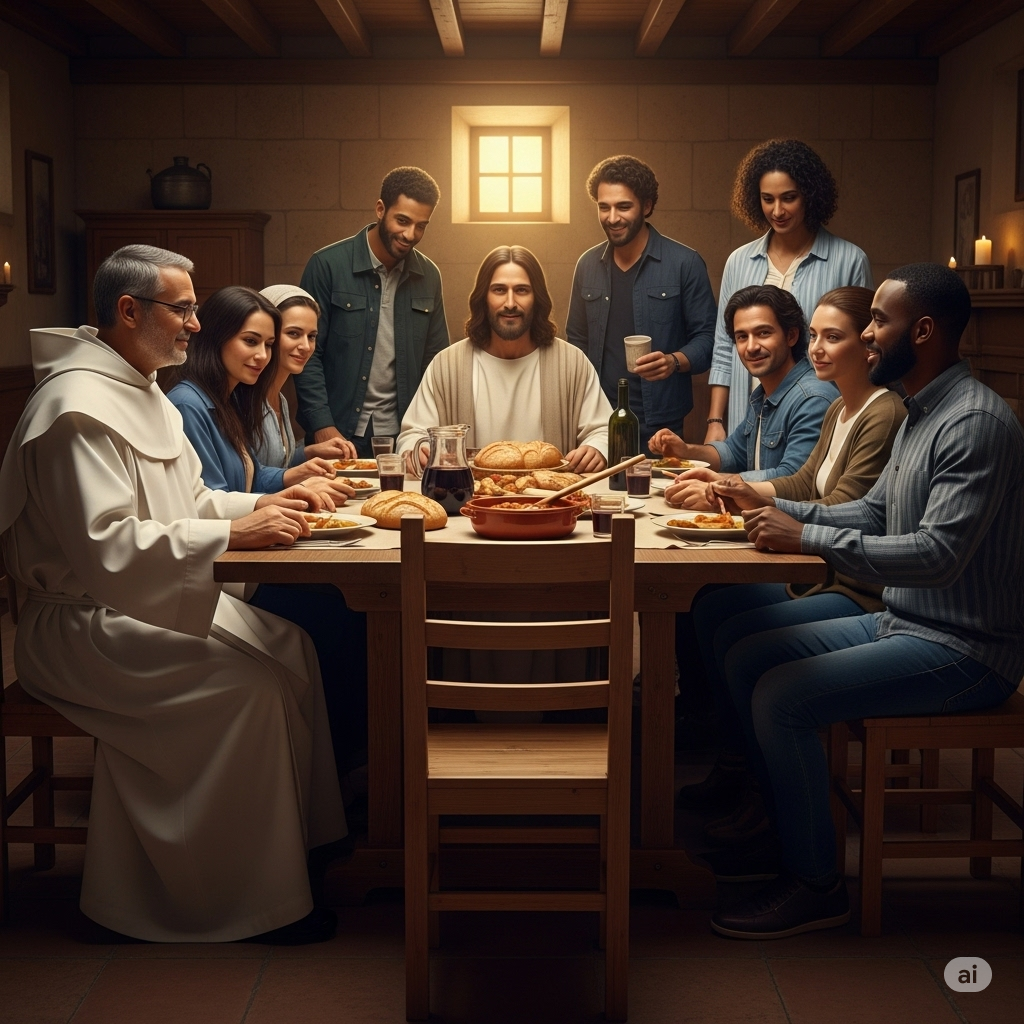
Today’s Gospel, from Luke’s fourteenth chapter, is a classic Jesus story. It’s not about a big miracle or a grand sermon. It’s a snapshot of an everyday moment: Jesus is having dinner at the home of a leading Pharisee. But as always, Jesus turns a simple social gathering into a profound spiritual lesson.
He’s watching the guests, and he notices something we’ve all seen, and probably even done. They’re all jockeying for the best seats. They’re trying to figure out who’s the most important person in the room so they can sit next to them. This isn’t just about finding a place to eat; it’s about social status, about being seen, about proving your worth. Doesn’t that sound familiar?
We might not be fighting for the best seat at a banquet table, but we do it all the time. We chase after likes on social media, we seek promotions at work for the title, we want to be seen with the “right” people. We want to be the one who’s honored, to be praised and recognized.
But Jesus tells us, “Do not recline at table in the place of honor.” He’s warning us that a prideful heart can lead to public shame. Instead, he says, take the lowest place. Humble yourself, and if you are to be exalted, let it be by the host—let it be by God. After he gives this advice to the guests, he turns to the host and gives him an even more radical challenge. The host, like all hosts, invited his friends, his relatives, his rich neighbors. He invited people who could repay him with a reciprocal invitation.
It’s the way the world works—a transactional relationship. “I scratch your back, you scratch mine.” But Jesus tells him, “When you hold a banquet, invite the poor, the crippled, the lame, the blind.” And here’s the kicker: “You will be blessed, because they have no way of repaying you.”
Brothers and sisters, this is the core of our faith. This is the radical hospitality of Jesus Christ. He’s not just giving a lesson on manners. He is calling us to fundamentally change our way of living. We’re all hosts in some way, whether we’re hosting a party, or simply opening our hearts and our communities to others. Who is on our guest list?
Are we only inviting people who look like us, talk like us, or can benefit us? Jesus wants us to break that cycle. He wants us to be like God, who pours out his love on us not because we’ve earned it or can repay it, but simply because he is love.
We are all here at this Mass, at this table, as invited guests. We don’t deserve this great banquet, yet here we are. This is a gift, and a call to action.
So, as we prepare to receive our Lord in the Eucharist, let’s ask ourselves: Where are we seeking honor in our lives? And how can we better embody the humility of Christ by serving those who have no way of repaying us? Let us pray for the grace to not only open our homes but to open our hearts to the poor, the marginalized, and the forgotten.
Faith and Ministry:The Passion of St John the Baptist~The Very Rev Lady Sherwood,OPI
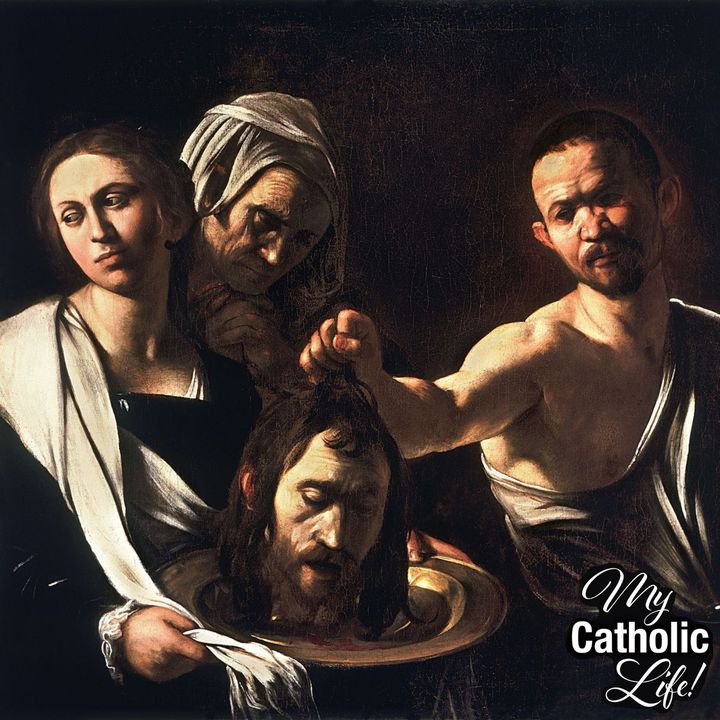
Dearest brothers and sisters in Christ, Today we come together to honour the Passion of St John the Baptist. The life of St. John the Baptist was indeed a very dramatic and eventful one. It definitely could never have been classed as boring or mundane that’s for sure!! Even in his mother’s womb, he leapt with joy when Mary greeted Elizabeth on the occasion of the Visitation. At John’s birth, there was an amazing occasion= that being of the choosing of his name which was that which restored the power of speech of his father Zechariah, and which also left the astonished local people wondering who he would he grow up to be. John’s appearances at the river Jordan preaching repentance and baptising people earned him the reputation of “the Baptist” and he was even the one who baptised our Lord Jesus himself in the River Jordan.
John indeed had an extremely illustrious ministry. Yet in essence, he was a prophet and his greatest action as a prophet was to point out to all that Jesus was indeed the Lamb of God. And as a prophet, he had fulfilled his ministry mission by proclaiming the ways of the Lord to all, and pointing out to them, their sin and their evil ways, and calling for their repentance and for their conversion. St. John the Baptist paid the consequence for pointing out Herod’s sin, as for doing this, he was captured and was imprisoned in Herod’s fortress and was beheaded. If the life of John the Baptist was dramatic and illustrious, his death was equally extremely dramatic, and it was also a death which was extremely gruesome in it’s nature.
John’s death by being beheaded, reveals the true character of the person of Herod, of Herodias, of her daughter, and also of all the guests that were present, as they did nothing and said nothing to stop the heinous act. For a great prophet like St. John the Baptist who had such a dramatic and illustrious life and ministry, his death was so humiliating, yet indeed, so terrible of nature.
Yet, today, we the Church come to honour him. Over and above all else, we honour him for his faithfulness to God and also for his great courage in the acceptance and fulfilment of his mission of being God’s prophet. Even for us, in all the drama of our lives, whether in times of spills and thrills, or whether in times of being mundane and monotonous, what counts for us will be our faithfulness to God. Because in the end, it will be the depth and strength of our faithfulness to God that mattered. This mattered to St. John the Baptist. It also matters to God and it should indeed be what matters to us!
The life and ministry of John the Baptist, and his willingness to die for his faith and devout service to God, is an excellent example of how our lives as Christians, and as children of God should be. There is much we can take from John the Baptist and can and should, live by such within our own lives.
Let us pray:
O God, who willed that St John the Baptist
should go ahead of Your Son
both in his birth and in his death,
grant that, as he died a Martyr for truth and justice,
we, too, may fight hard
for the confession of what You teach.
Through our Lord Jesus Christ, Your Son,
who lives and reigns with You
in the unity of the Holy Spirit,
one God, for ever and ever.
Amen.
The Fire of Faith and the Cost of Discipleship~The Rev Frank Bellino,OPI
Brothers and Sisters in Christ,
In the Gospel of Luke, Jesus delivers a message that can be startling to our modern ears: “I have come to cast fire upon the earth, and how I wish it were already kindled!” and “Do you think that I have come to give peace on earth? No, I tell you, but rather division.”
These words challenge the comfortable, domesticated image of Jesus we sometimes hold. This fire is not a fire of worldly war, but the transformative and purifying fire of the Holy Spirit. It is a fire that tests our faith, burns away our apathy, and demands a radical commitment to God’s kingdom. It is a divine fire meant to refine us, not to destroy us.
The division Jesus speaks of is a natural consequence of this fire. When we embrace the Gospel, we are choosing a path that may lead us away from the values and priorities of the world, and sometimes, even from those closest to us. Our faith can create a schism—not because we seek to divide, but because our convictions are so profound that they set us apart.
As Dominicans, our call is to be both bearers and kindlers of this fire. We are the Order of Preachers, commissioned to proclaim the Truth of the Gospel with our lives and our words. This is a profound and serious responsibility. We are called to be beacons of light in a world that can be steeped in darkness, and that often means standing for truth, justice, and love even when it is unpopular.
This commitment can, and often does, cause a quiet division. We may find ourselves at odds with our families, our colleagues, or our friends over matters of faith and morals. It is in these moments that we must remember the words of our Lord. Our primary allegiance is to Him. Our peace is not the absence of conflict, but the unwavering certainty of being in His presence.
This passage is a powerful reminder that our faith is not a passive or private affair. It is an active, public, and sometimes disruptive force that demands a choice. Let us pray for the courage to embrace this fire, to live our faith so authentically that it becomes a light for the world, and to find our ultimate peace in Christ alone.
Are You Ready?~The Rev Frank Bellino,OPI
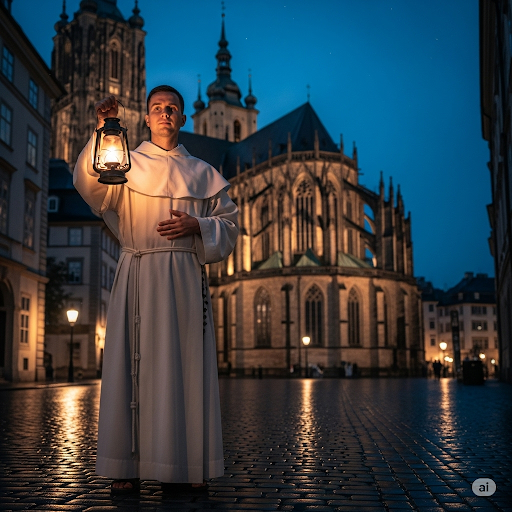
Our Gospel reading today from Luke 12:35-40 echoes with an urgency that cuts through the noise of our 21st-century lives: “Let your loins be girt and your lamps burning; and be like men who are waiting for their master to come home from the marriage feast, so that they may open to him at once when he comes and knocks.”
As Dominicans, preachers of the Word and seekers of Truth, we are compelled to ask: How do these ancient words speak to us, here and now, in a world shaped by algorithms, instant gratification, and perpetual distraction?
“Let your loins be girt.” In an age where we are constantly “logged on” but often disengaged, this command takes on new meaning. To gird our loins today means to discipline our digital lives, to resist the constant pull of the ephemeral, the superficial, and the sensational. Are we so engrossed in endless scrolling, virtual worlds, and digital debates that we become spiritually flabby, unready for the real challenges and opportunities God places before us? Girding our loins means setting boundaries, cultivating silence, and intentionally seeking wisdom in a world saturated with information but starved for truth. It means being prepared for genuine engagement – with God, with our families, with our neighbors – rather than passively consuming.
“And your lamps burning.” What are our lamps today? They are our faith, hope, and charity, yes, but also our critical thinking in an era of misinformation, our compassion in a polarized society, and our courage to speak truth in a culture that often shies away from difficult conversations. Are our lamps burning brightly, fueled by prayer and study, so that we can discern truth from falsehood in a news cycle that often blurs the lines? Are they shining forth as beacons of Christ’s love in a world too often marked by division, cynicism, and despair? Or are our lamps dim, obscured by our own anxieties, consumerism, or simply the sheer overwhelming nature of modern life? A truly burning lamp in today’s world means being a source of light, not just passively absorbing it.
Jesus speaks of servants waiting for their master from a wedding feast. Consider our society’s obsession with instant gratification. We expect immediate responses, express delivery, and always-on connectivity. Yet, spiritual readiness is about patient vigilance, a sustained posture of expectation and faithful living, even when the “master seems delayed.” This patience is a profound counter-cultural virtue. It challenges the anxiety of always needing to be “doing something” and calls us to a deeper, more abiding presence to God’s ongoing work in the world.
And then, the stark warning: “But know this, that if the householder had known at what hour the thief was coming, he would not have left his house to be broken into. You also must be ready; for the Son of man is coming at an unexpected hour.” In our world, where threats can emerge from anywhere – be it a cybersecurity breach, a global pandemic, or a sudden economic downturn – we are acutely aware of vulnerability. Jesus’ warning isn’t about fearmongering; it’s a call to spiritual cybersecurity. It’s a reminder that we must not allow the “thief” of apathy, materialism, or spiritual complacency to break into our souls and rob us of the precious grace God offers.
So, for us, as Catholics living in this contemporary society, what does it mean to be “ready”?
It means being intentional in our faith, actively choosing Christ amidst a sea of competing ideologies and fleeting pleasures. It means using our intellects, sharpened by Dominican study, to engage with the pressing issues of our time – justice, charity, peace – not shying away from them, but bringing the light of the Gospel to bear.
It means fostering genuine community, resisting the isolation that digital life can foster, and truly being present to one another in our parishes, our families, and our neighborhoods. Our communal life becomes a witness to a world starved for authentic connection.
And above all, it means cultivating a deep prayer life that grounds us in the timeless truth of God’s love, enabling us to be vigilant and active, prepared for whatever God calls us to, knowing that ultimately, He will serve us at the eternal banquet.
Let us not be caught off guard. Let us not allow the distractions of this age to extinguish the flame of our faith. Instead, let us, with girt loins and brightly burning lamps, live lives of expectant vigilance, witnessing to the coming Kingdom, and radiating Christ’s light in every corner of our modern world.
Amen.
The Feast of our Holy Father, St. Dominic~The Rev Frank Bellino,OPI
My dear brothers and sisters in Christ,
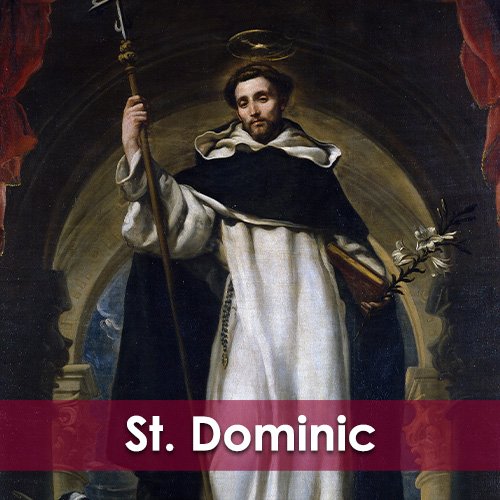
Today, as we gather, our hearts and minds turn to a towering figure in our Church’s history: Saint Dominic de Guzman, whose feast we celebrate. Born in 12th-century Spain, Dominic lived in a time of great intellectual ferment and spiritual challenge, much like our own. He was a man consumed by a singular passion: the salvation of souls and the proclamation of God’s truth. As we reflect on his life and virtues, we will discover that St. Dominic is not merely a historical figure, but a profound inspiration and a relevant guide for us in today’s complex world.
Who was this remarkable saint? Dominic was a canon regular who, on a journey through southern France, encountered the widespread Albigensian heresy. This dualistic belief system denied the goodness of creation, the Incarnation of Christ, and the value of human life. Dominic quickly realized that the prevailing methods of combating this error were ineffective. He saw that the heretics, though misguided, lived lives of apparent austerity, which contrasted sharply with the often-wealthy lifestyle of some Church leaders.
Inspired by the apostolic life, Dominic chose a radical path: to preach the Gospel with intellectual rigor, profound poverty, and fervent prayer. He gathered a small band of followers, and with papal approval, founded the Order of Preachers – the Dominicans – a mendicant order dedicated to Veritas, to Truth, and to the salvation of souls through preaching.
Let us consider some of the virtues that shone so brightly in St. Dominic, and how they speak to us today:
First, and perhaps most central, was his zeal for souls and his unwavering commitment to Truth. Dominic literally wept for sinners, driven by an ardent desire for everyone to know and embrace the saving truth of Christ. In an age rife with misinformation, relativism, and competing narratives, Dominic’s passion for Veritas is a powerful beacon. He understood that true freedom and authentic human flourishing are found only in the truth. Today, we are called to be seekers and proclaimers of truth, not with arrogance or condemnation, but with the same compassionate zeal that characterized Dominic, engaging in dialogue and persuasion, just as he did with the innkeeper who became his first convert.
Second, Dominic embodied profound poverty and simplicity. He sold his precious, hand-annotated books to feed the starving, famously declaring that he could not study on “dead skins” when people were dying of hunger. He traveled barefoot, embraced austerity, and insisted that his friars live simply, depending on God’s providence. In our consumer-driven society, where material possessions often define worth and happiness, Dominic’s radical detachment challenges us. His example reminds us that true richness lies not in what we accumulate, but in our relationship with God and our solidarity with the poor. His spirit calls us to examine our own priorities and to live with greater freedom from worldly attachments, advocating for justice for the marginalized, as Dominicans continue to do today on issues of economic inequality, racism, and human dignity.
Third, St. Dominic placed immense emphasis on study and intellectual formation. He established houses of study near the great universities of his time, like Paris and Bologna, ensuring that his preachers were not only fervent but also well-educated in theology and contemporary issues. In our rapidly changing and intellectually diverse world, an informed faith is more crucial than ever. Dominic teaches us that faith and reason are not opposed but balancing. We are called to deepen our understanding of our faith, to engage with the world’s questions, and to articulate the Gospel message intelligently and persuasively.
Finally, Dominic’s life was rooted in deep prayer and contemplation. He famously said he would “speak only of God or with God.” His active ministry flowed from his profound union with Christ in prayer. He spent countless hours in vigil, often weeping, interceding for the world. In our fast-paced, often noisy lives, Dominic reminds us of the indispensable need for quiet contemplation. It is in prayer that we encounter the living God, receive strength, and discern His will. From this wellspring of prayer, we are then empowered to “pass on the fruits of contemplation” (contemplata tradere) to a world desperately in need of Christ’s light.
My brothers and sisters, St. Dominic’s legacy is not confined to the pages of history. His virtues – zeal for truth, radical poverty, intellectual pursuit, and profound prayer – are not relics of a bygone era. They are urgent calls to action for us, here and now.
May we, like St. Dominic, be consumed by a passion for the salvation of souls, courageously proclaiming the truth of Christ in word and deed. May we embrace simplicity and work for justice in a world fractured by inequality. May we dedicate ourselves to lifelong learning, deepening our faith with both heart and mind. And above all, may our lives be rooted in constant prayer, so that, like Dominic, we may truly be “hounds of the Lord,” setting the world ablaze with the fire of God’s love.
St. Dominic, pray for us. Amen.
 The Order of Preachers, Independent
You must be logged in to post a comment.