
Category: Member Posts
Got Fruit? ~ Br. Chip Noon, Novice
“We must obey God rather than men.”
This sentence, spoken by Peter to the Sanhedrin in today’s first reading from Acts, gives us pause and makes us feel proud to be Christians who speak truth to power. We admire Peter’s courage, knowing that he had acted in a cowardly way before Jesus was crucified, and knowing that this was the same Sanhedrin, Jerusalem’s Supreme Court of the time, that could sentence him to death for blasphemy. In fact, they had already put him and some other disciples in prison for preaching “in his name.”
Yet we also remember that there have been many who have used God as the justification for their actions. So with this first reading on the Third Sunday of Easter, we are firmly set down in a conundrum that has perplexed the whole world, probably from the beginning.
Whom do we follow? And how do we know if they are truthful? And how do we know that what they are teaching and preaching is the truth?
Let’s take a look at the very next verses from this chapter of Acts:
33 When they heard this, they were furious and wanted to put them to death. 34 But a Pharisee named Gamaliel, a teacher of the law, who was honored by all the people, stood up in the Sanhedrin and ordered that the men be put outside for a little while. 35 Then he addressed the Sanhedrin: “Men of Israel, consider carefully what you intend to do to these men. 36 Some time ago Theudas appeared, claiming to be somebody, and about four hundred men rallied to him. He was killed, all his followers were dispersed, and it all came to nothing. 37 After him, Judas the Galilean appeared in the days of the census and led a band of people in revolt. He too was killed, and all his followers were scattered. 38 Therefore, in the present case I advise you: Leave these men alone! Let them go! For if their purpose or activity is of human origin, it will fail. 39 But if it is from God, you will not be able to stop these men; you will only find yourselves fighting against God.”
As Christians, we can look back on over 2,000 years of our history. Not many human enterprises last this long…nowhere near this long. So we must acknowledge the work of the Holy Spirit over this time; yes, even during the darkest days of the Inquisition, the subjugation of untold numbers of “unbelievers,” the holy wars fought against other Christians and Muslims and Jews. Somehow, the Holy Spirit has guided the righteous, in spite of the wicked, so that we can agree with Gamaliel that we cannot fight against the teachings of Jesus. God…and good…has always prevailed.
So let us look at the world today. Many religions, sects, causes, parties, and factions are using God as their justification for dubious and even despicable actions. What are we to do? Shouldn’t we oppose them?
Or then, are we to take the words of Gamaliel and “let them go”? Doesn’t that condone evil?
OK, let’s put that aside for a moment and look at today’s Gospel. The disciples were fishing and catching nothing. Jesus tells them where to throw the net. They catch so much they can’t pull the net into the boat. Peter, hearing from John that the person on the shore who told them where to fling their net is the Lord, puts on his clothes and jumps out of the boat and into the water. Peter gets to shore before the boat and greets the disciples, even helping to drag the net ashore.
And then…
They have breakfast and Jesus asks Peter if he loves him. Three times he answers yes, the third time, perhaps, with some unease that Jesus asks him three times.
And the Lord’s reply to Peter’s affirmation is to take care of his sheep and feed them.
Now let’s go back to the Sanhedrin and Gamaliel advice. What to do in the face of unquestioning belief and the preaching of this belief to the masses?
I think that today’s Gospel is teaching us how to respond to leaders – or would-be leaders, or factions that ask our allegiance and obedience.
We are told by Luke in the Gospel passage that we may be judged by our actions in following someone. We see the most enthusiastic follower, Peter, who jumps out of the boat to get to Jesus as fast as he can. He is a true believer. And at some times in our lives we are all true believers…to the point of hasty, maybe even foolish actions, like jumping into the Sea of Galilee. We see the evidence of our belief since we are rewarded: honor, position, power, so many fish we can’t ship them. And we all get together and have a feast with the leadership who feeds us.
But the Holy Spirit is teaching us through Gamaliel: Leave them alone. “For if their purpose or activity is of human origin, it will fail. But if it is from God, you will not be able to stop these men; you will only find yourselves fighting against God.”
But what is the proof of that? The answer is found in Jesus’ command to Peter: Feed my lambs; tend my sheep; feed my sheep. Take care of all of humanity, even those not of the present sheepfold, as Jesus tells us in John 10:16.
Our question then, to any leader, party, faction, group? Are you feeding and tending to all the sheep and the lambs? Or are you selecting just the special ones whom you want to be with? Does the leader, party, faction, or group make breakfast just for a few people, or for the whole world?
Feed the lambs. Tend the sheep. Feed the sheep.
Ye shall know them by their fruits.
Let us pray. Lord, help us today and every day to have the enthusiasm to jump into our own Seas of Galilee and make haste to feed the lambs of the world. Help us to gather the fruit of Jesus and share it with all we meet. In his name, Amen.

Got Doubts? ~ The Rev. Dcn. Michael Scott Brown, OPI

After the resurrection Jesus appears to his disciples, but Thomas was not there. When he does join his fellow disciples, they tell him that they have seen Jesus, yet Thomas has reservations about what they have told him. “Unless I see the nail holes and put my hands into his wounds I will not believe.” Jesus did not reappear to the disciples for another week; this time Thomas is with them. The week between Jesus’ appearances brands Thomas as a doubter and a skeptic. This wasn’t altogether fair to Thomas since Peter and John did not believe Jesus had been resurrected, and had to see the empty tomb for themselves. Perhaps Thomas just wanted to see if Jesus was true to his word, or maybe he wanted to prove his friends wrong. So he waited in the darkness of his own disbelief.
Maybe we have Thomas all wrong, maybe we should label him as Thomas the Bold, or Thomas the Brave, because earlier in John’s gospel Thomas is the only one to speak up and agree that Jesus should return to Bethany to mourn the death of his friend Lazarus. The other disciples were afraid that doing so would result in the death of them all. Thomas stands with Jesus and says: “Let us go with him so that we may die with him.” Are these the words of a doubter? These are the words of a believer and follower of Christ. Whenever Jesus speaks of his coming death, his disciples try to talk him out of it, and one time Jesus rebukes Peter and calls him “not the rock upon whom the church was built, but his adversary. “Get behind me Satan” Jesus says to Peter. In any event. Thomas’ willingness to die for Jesus casts his doubts in a different light.
So Thomas chose to sit in a room full of believers with a head full of doubt. Maybe we should be just a little bit more like Thomas from time to time. Perhaps if we just believed in what the Lord wants us to believe, teach what the Lord wants us to teach, and go where the Lord wants us to go as Thomas did, our faith would grow stronger. Jesus was not upset that Thomas had doubts about the resurrection, Jesus simply allowed Thomas to do what was necessary to prove to Thomas that he was the Christ and that he had come back from the dead. Jesus did not love Thomas less because he had doubts, Jesus simply took away those doubts that were filling Thomas’ head. Jesus will not condemn you for having doubts either. Just open your hearts and allow Jesus to take away those doubts and fears, He will if you just give him the chance to just like Thomas did.
Most merciful Lord, take away our doubts as you did Thomas’ doubts, guide us and lead us with our sins forgiven so that we may stand with you as Thomas did. Keep us under your loving grace, and show us the path you want us to follow. We believe in you, we love you, and we praise you for your mercy and patience with us. In Jesus’ name we pray. Amen.
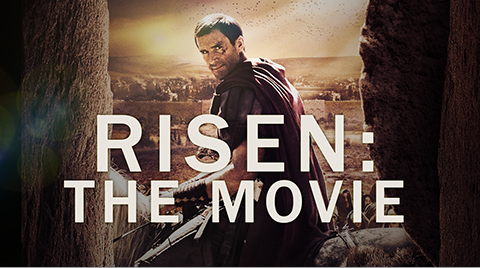
Movie Review: RISEN ~ The Rev L.S.T. Sherwood & The Rt. Rev. M.R. Beckett
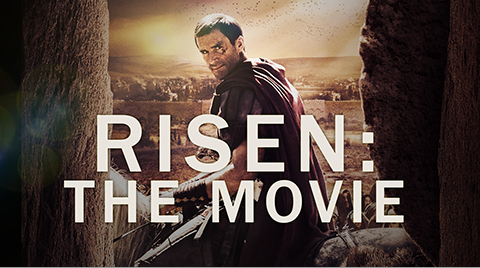
Risen is a 2016 American biblical drama film directed by Kevin Reynolds, and written by Reynolds and Paul Aiello. The film stars Joseph Fiennes, Tom Felton, Peter Firth, and Cliff Curtis, and was released by Columbia Pictures on February 19, 2016.
This is an excellent movie telling the Easter story from the sideways perspective not usually seen in movies and as such gives it a fresh and interesting perspective: through the faith journey of a Roman Officer, the Tribune, Clavius. The movie begins at an inn where the innkeeper, noticing Clavius` ring, brings Clavius to recount this story to him. Clavius starts the moving story at the crucifixion scene with Jesus accompanied on either side by the thieves who are already on the crosses being crucified with Jesus.
Jesus`s mother, Mary was there among the large gathered crowd which consisted mostly of women. Clavius ordered the Roman Centurion at the scene to break the legs of the thieves but upon seeing Mary, Clavius decides to pierce Jesus through his side piercing his heart and lungs by himself instead. After Jesus and the thieves had succumbed to death, the bodies of the thieves were taken down and dragged to a pit where they were left to rot. In the film, I could almost imagine being stood there as the effects of the swarms of flies etc. made it appear very realistic.
Joseph of Arimathea, who was a secret disciple of Jesus, had sought and received permission from Pilate to take down Jesus` body and to place his body in a new family tomb he had. He took the letter of permission to Clavius and the body was given to Joseph. The scribes however, were still very concerned about the stories going around told by Jesus` followers, namely that Jesus would rise again in three days. They took it the Sanhedrin where they managed to get the Roman seal placed on the stone of Jesus` tomb and two Roman Guards were placed there to keep watch.
The Roman Guards had not slept in two days and had some wine with them which they drank and fell asleep, to be awakened by the noise of the ropes of the tomb blasting apart and the stone of the tomb rolling open. The guards saw Jesus in the body and panicked due to the fact that they, having fallen asleep, meant death by Roman law. They fled to the sanctuary of the Jewish leaders who paid the only one who would speak to tell Clavius that the disciples of Jesus had stolen the body. Clavius was ordered to search for the body of Jesus, and if necessary to find a body that could be identified as Jesus, so as to quash the rumors of Jesus’ resurrection. All the recently executed dead were scrutinised to see if any could Jesus. None of the bodies that were looked would do.
Desperate to solve this riddle, Clavius hunted down first Mary Magdalen who had been seen near the tomb, then the other disciples. Clavius finally found the disciples all gathered together and Jesus was there amongst them. This part brought a smile to my heart, as this is where Clavius finally comes to believe and follows the disciples to Galilee where Jesus had stated they would see him again. The total change of heart and new found faith of Clavius was very realistically captured and was an extremely moving experience.
The disciples, together with Clavius, travelled to Galilee where they decided to do some fishing whilst waiting for Jesus but not one fish was caught. Then first thing in the morning, Peter saw someone walking along the beach and heard him tell them to try the right side, so out of faith Peter and the other disciples lowered the net as Jesus had instructed and the nets were over full with fish. When they came to the shore, they sat with Jesus and then watched as Jesus performed a miracle of healing on a man who was being kicked by others because he was a leper. After this, Jesus went to prepare a place for his disciples in his Fathers kingdom and he left the disciples the message that we still are told today, ”Go and tell tbe Gospel to all the world and to all nations”.
This film captured our hearts with the sheer beauty of the Lord’s love for us and what we should be doing today in his name for others. We are the disciples of today and are charged to do his works until his glorious return. An inspiring story of faith, a fantastic movie, with the message given in a fresh and interesting perspective, we consider Risen to be a very moving and definiately worth watching film. We give it 5 stars!!!!
The Lord is Risen! Alleluia! But…umm…Why? ~ The Rev. Jay Van Lieshout, OPI
The Lord is Risen! Alleluia!
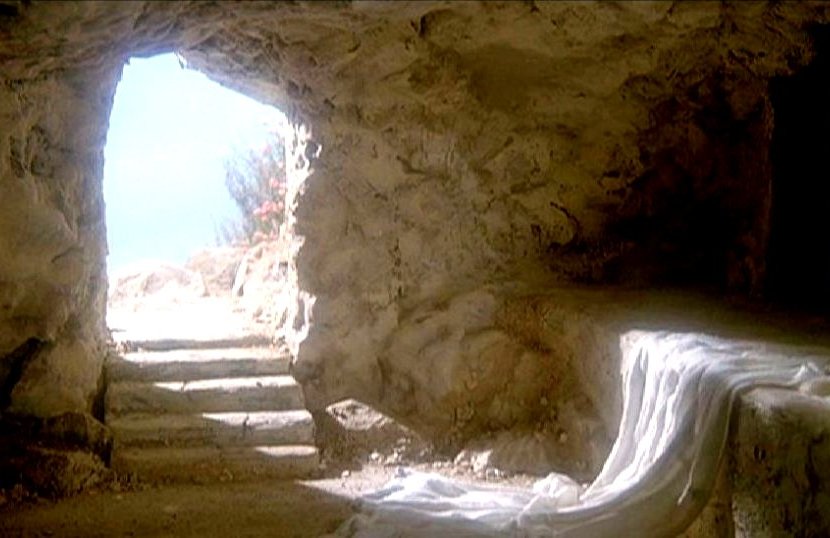
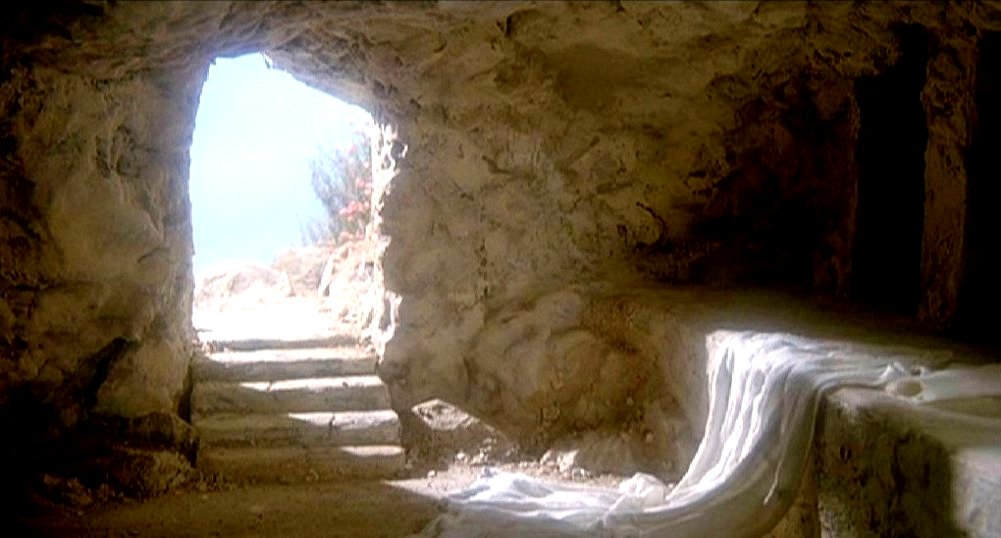
Today we celebrate the anniversary of our Lord’s resurrection; we commemorate the victory of Christ over the bonds of death and joyously proclaim His return to us and to the world so that we, too, can all be renewed, reawakened from our own spiritual slumber, and be raised up into the loving arms of our Father just as Jesus did nearly 2 millennia ago. And while we remember and give thanks for this auspicious event each and every Sunday, today we open ourselves up to the bewilderment and the overwhelming emotions felt by Mary as she saw the stone moved from the opening of the tomb and, bending down to look in, finding it empty. And Peter and all the other disciples who looked in to only find burial linens heaped on the floor, and the soudarion, the face cloth, neatly rolled off to the side. And then the joy and spiritual ecstasy when they see and finally recognize Jesus right there, in front of them, alive! Oh what elation their hearts must have felt!
Oh it must have been a marvelous and great joy to have Jesus back with them; and we know He is with us here, now, each and every day— not only just in spirit but in the flesh. But have you ever asked yourself why; why did the son of man need to return in flesh? The return manifested in spirit alone would have rocked the world and brought joy and salvation to the world; so why resurrect the frail flesh only to have it ascend into heaven and be gone once again? Of course, the prophesies and Jesus Himself foretold this, but WHY?
The answer is surprisingly simple: while you can destroy the temple, destroy the ark, destroy the tablets and even destroy the written Word of God in the Torah, the Word, this Logos of God, can never die or be destroyed for it is emblazoned on the hearts of the faithful, it lives in the words of our mouth and the actions of our hands. It is in everything we see around us from the light of the sun, to the fish in the sea. It can be twisted and beaten, ripped and bathed in the blood of innocents, it can be dragged in the dust of the streets and soaked with the sweat of the oppressed, it can be nailed up, burned by the rays of the sun, stiffened, faded and crumbled back into dust, but it cannot be erased, it cannot be changed, it cannot die. It is a Living Word of a Living God, a word made into the flesh of the Son of Man, and as the Word made flesh, this flesh cannot be erased or destroyed, for even if it is tangled in the chains of death, it breaks free and is resurrected to live again.
Our God is a Living and Loving God! The God of our ancestors is not found in statues made of clay or fine metal, He doesn’t reside locked in a shrine or temple; nor does He have a name, for names are static nouns and stagnant adjectives. When Moses asked “who shall I say sent me”, the reply was a VERB, the state of being: “I am”. How profound, our God exists in time and space, our God moves and can be seen in actions! He is a creator, a life sustainer, one who moves in our lives but not as pagan gods who played with humans as one plays with dolls or as pawns in some game, but as a parent, a caregiver, as one who gives life, nurtures it and envelops it in love. Our Creator lives in us and we are alive through Him; He is our parent and we are His children. We are brought into life by sacrament of living water of baptism. Living water which flows and bubbles and gurgles, like a great river which runs over barren ground and brings forth new life and new beginnings, it fills the soil with nutrients, it protects the crops from withering and provides for a bountiful harvest. Our God is a creator and His Word is the Word of creation, of truth, of LIFE and of LOVE.
Our Lord, the Son of Man, was the physical embodiment of God’s Word, a living testament to God’s promise to His people, a living example of what God wishes in return for all that we have been given, the light of truth in a world of lies and darkness. Jesus came to show us how to forgive, so that we may be forgiven, how to love so that we may be loved, how to be faithful so that we might be living examples of the Gospel, the good news, the TRUTH in the Word of God. Jesus forgave His detractors, His prosecutors, His false judges and His executioners. In a final act of altruism and faith He willingly gave Himself to be sacrificed as a benevolent example of God’s love for us and desire to for us to be a part of His kingdom.
Jesus died so that we might be spared the pain and suffering brought by arrogance, self-righteousness and ignorance such as the prodigal son had to endure before he opened his eyes to the truth and was able walk the path of humility and repentance and return home to his father’s embrace. Jesus was resurrected to show the world that our God lives and His Word lives as an eternal flame of truth and a balm of salvation, and even when made manifest in the frailty of mortal flesh, it cannot be dimmed or suppressed or destroyed, not by time, not by man and not even by death!
Yes, today we celebrate Christ’s resurrection from death’s grip, we celebrate His return to us, we celebrate the fulfillment of the scriptures and yes, we even celebrate the renewal God brings us each Sunday and especially on this Sunday in springtime. But Christ’s resurrection brings more blessings to light than just these. It bears evidence to our living God’s eternal and unchanging promise. It reveals His being moved by even the smallest of needs of His creation whether it be a breeze to carry the downy seeds of a dandelion to fertile soil, nectar for a hungry butterfly, dew on the blades of grass to quench the thirst of a lamb or the feeling of a warm embrace for those who mourn the loss of a loved one. Yes, even the simple needs of His creation move the Living God. Psalm 91 tells us “He will order his angels to protect you wherever you go. They will hold you up with their hands so you won’t even hurt your foot on a stone. [He] will rescue those who love Him, protect those who trust in His name. When they call on me, I will answer; I will be with them in trouble. I will rescue and honor them. I will reward them with a long life and give them my salvation.”
Today we celebrate the Father’s promise of forgiveness, compassion and love which is so beyond our comprehension that His son gave His very own life so that we might see the truth, forgo the suffering of the prodigal son and directly walk path of the faithful straight into the arms of our loving Father and forever LIVE as His beloved children.
What Now? ~ The Rt. Rev. Michael Beckett, OPI
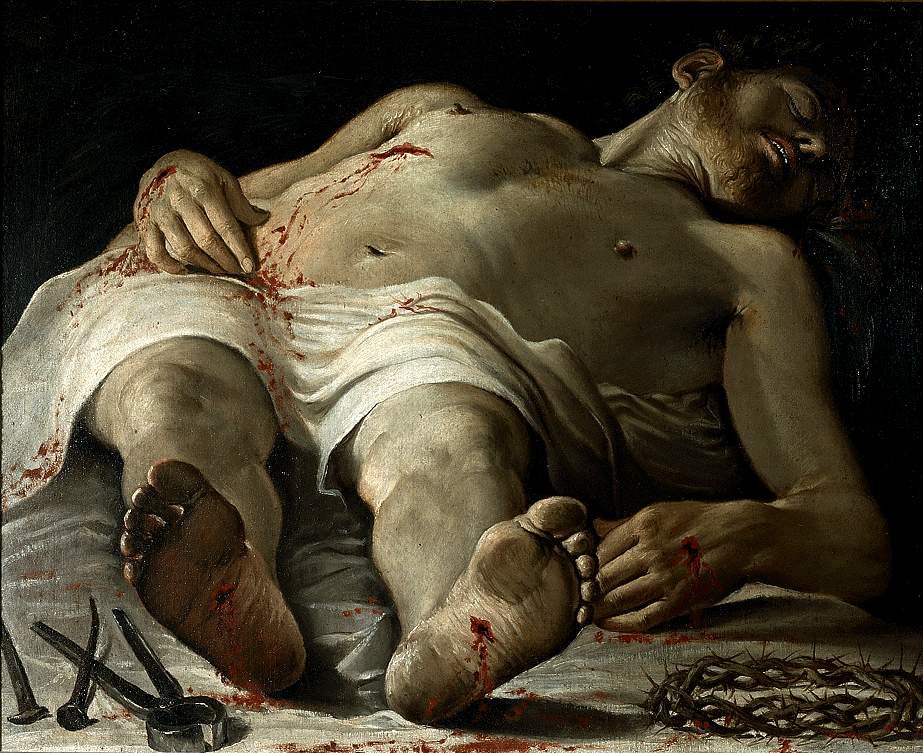
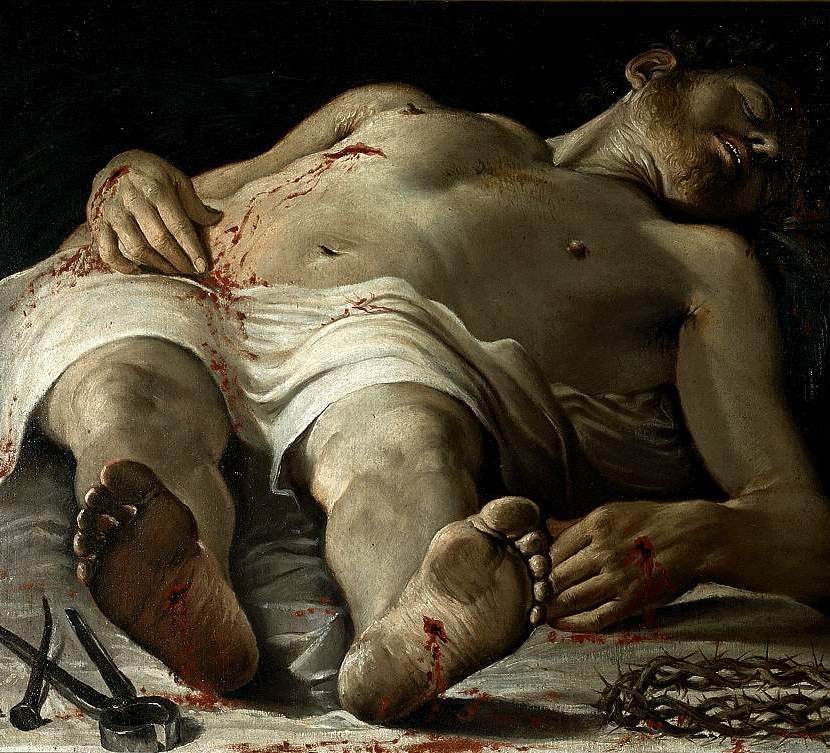
When it was evening, there came a rich man from Arimathea, named Joseph, who was also a disciple of Jesus. He went to Pilate and asked for the body of Jesus; then Pilate ordered it to be given to him. So Joseph took the body and wrapped it in a clean linen cloth and laid it in his own new tomb, which he had hewn in the rock. He then rolled a great stone to the door of the tomb and went away. Mary Magdalene and the other Mary were there, sitting opposite the tomb. The next day, that is, after the day of Preparation, the chief priests and the Pharisees gathered before Pilate and said, “Sir, we remember what that impostor said while he was still alive, ‘After three days I will rise again.’ Therefore command the tomb to be made secure until the third day; otherwise his disciples may go and steal him away, and tell the people, ‘He has been raised from the dead,’ and the last deception would be worse than the first.” Pilate said to them, “You have a guard of soldiers; go, make it as secure as you can.” So they went with the guard and made the tomb secure by sealing the stone. (Matthew 27: 57-66_
I went back to the cemetery the day after Daddy was buried and just sat on the ground beside his grave, trying to absorb the enormity of what had happened. He was gone. This man who had been so strong, so faith filled, so always there to make things better, whose piercing blue eyes communicated for than his voice ever did. He was gone. The man who held the reins in our family, our rock, our hero. Could this have really happened? How could this man die? We thought he was invincible. What now?
How much more so did the Disciples feel, those men and women whose lives had been totally centered around Jesus? How could this have happened? In spite of raising the dead, in spite of healing lepers and changing water into wine and feeding thousands of people with a couple of fish, in spite of the belief that he was the Messiah, that he was believed to be the son of God, that he was supposed to be invincible, he was gone…
Emptiness.
Confusion.
Fear.
Emptiness.
And this is where we are today. All of us have experienced “Holy Saturdays” in our lives.
Holy Saturday is the in between time. The tragedy of the crucifixion is past but the glories of the resurrection are not yet here. We are neither here nor there. We are stuck in the middle. What was is no more and what will be is not yet clear or known. It feels as if there is nowhere to go and nothing to do.
Holy Saturday comes to us in many ways but it always seems to involve death; the death of Jesus, the death of a loved one, the death of a relationship, the death of hopes and dreams. In the church calendar Holy Saturday is only one dreaded day a year. Not so in life. Those of you us who have suffered the death of a loved one know that you do not move from Good Friday to Easter Sunday in just one day. Holy Saturday can last months, years, even a lifetime. Holy Saturday calls us to the tomb. Where else is there to go?
That’s where Mary Magdalene and the other Mary are today. Joseph of Arimathea took Jesus’ body wrapped it in a clean linen cloth, laid it in the tomb, rolled a great stone to the door of the tomb, and went away. He left. Some will do that in the Holy Saturday of life. They will close up the tomb and walk away as if there is nothing there, no possibilities for anything new. The two women, however, Mary Magdalene and the other Mary, are sitting opposite the tomb. They are silent. There is not much to say on Holy Saturday. What can be said? There are no answers.
Emptiness.
Confusion.
Fear.
Emptiness.
Holy Saturday is a day of silence and stillness, waiting and wondering, remembering and hoping. Perhaps that is what faithfulness looks like on Holy Saturday. There is not much to do except be present to what is, to sit beside the tomb.
“Media vita in morte sumus ; quem quaerimus adjutorem, nisi te Domine, qui pro peccatis nostris juste irasceris? Sancte Deus, sancte fortis, sancte et misericors Salvator, amarae morti ne tradas nos.”
“In the midst of life we are in death: of whom may we seek for succour, but of thee, O Lord, who for our sins art justly displeased? Yet, O Lord God most holy, O Lord most mighty, O holy and most merciful Saviour, deliver us not into the bitter pains of eternal death.”
Holy Saturday is a difficult day. We so much want joy to replace sorrow. That’s not what Jesus does. Instead, sorrow is transformed into joy, the tomb becomes a womb, and death gives birth to new life. Christ’s triumph is not apart from death but within death. Christ is trampling down death by death and giving life to those in the tombs.
The two women of Holy Saturday will become the first people Jesus greets on Easter Sunday. So trust the silence and the waiting. Be still. Remember, wonder, hope. Pray. It is Holy Saturday and your Lord who loves you is at work.
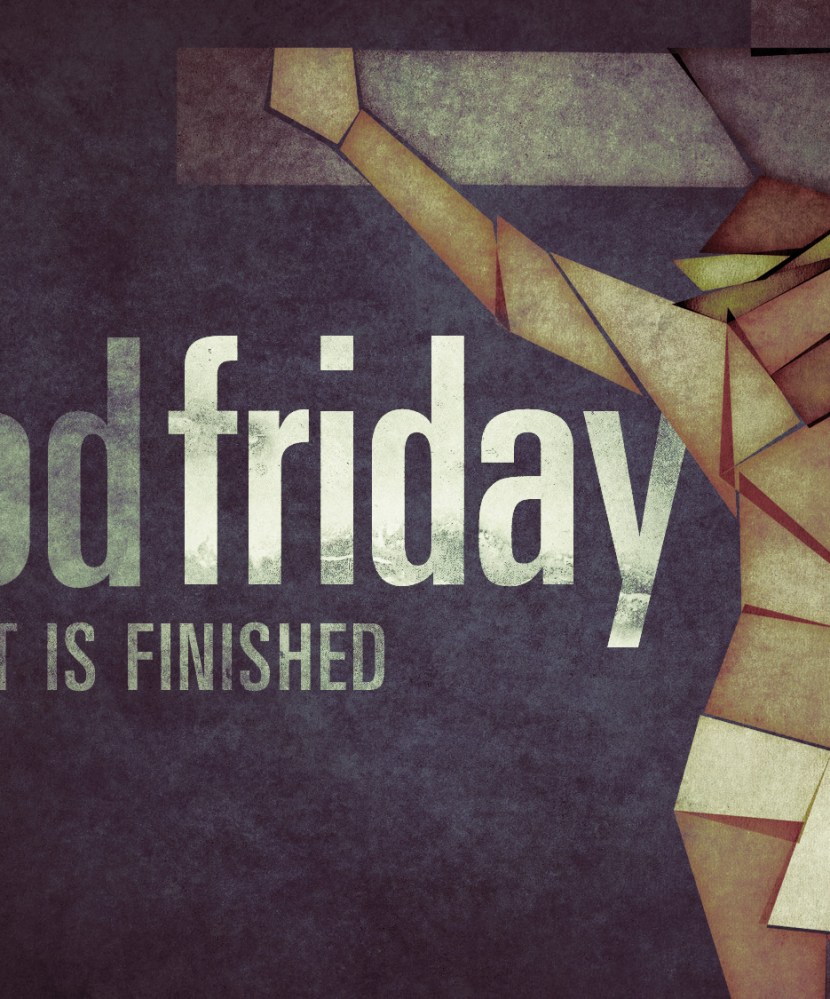
Good Friday: The Day Death Died ~ The Rev. Lady Sherwood, OPI

Today`s readings:
1st Reading: Isaiah 52:13-53:12
Responsorial Psalm: 31: 2,6,12-13,15-16,17, 25
2nd Reading: Hebrews 4: 14-16, 5:7-9
Gospel Reading: JN 18:1-19:42
Today we are called to remember the Passion of our dear Lord Jesus Christ. Today, he took the sins of the whole world upon his shoulders and out of his love for each and every one of us, he gave himself willing as the ultimate sacrifice. Our dear Lord suffered beyond our human comprehension. He was totured by scourging and beating, he was spat upon, mocked and humiliated, he had a crown of thorns pushed deep into his head and he suffered death nailed upon the cross so that our sins may be forgiven and that we may have the chance of eternal life.
Let us now spiritually accompany our Lord on this his sacrifice of ultimate love.
Jesus Is Tried by the Sanhedrin:
After Jesus was betrayed by Judas in the Garden of Gethsemane, he was taken to the house of the High priest Caiaphas. Even though Peter had vowed to Jesus that he would never desert him, Jesus said to him, “Before the rooster crows you will deny me three times.” When Jesus was arrested and taken to the house of the High priest,all the disciples fled in fear except for Peter, who followed to the courtyard at a distance. It was there that three people recognised him as one of Jesus` disciples, but each time Peter strongly denied the fact. Then a rooster crowed, and Peter remembered what Jesus had told him. Peter felt very ashamed of what he had done and he began to cry.
The High priest, together with the chief priests, the elders and the scribes were at the High priests house waiting. This was a meeting of the Jewish ruling council-the Sanhedrin-which had been called to put Jesus on trial. The trial was to be anything but a fair trial as the religious leaders had the agenda of looking for evidence to justify sentencing Jesus to death. However hard they tried, the leaders were unable to find any evidence against Jesus and although many witnesses were called to testify against Jesus,none of them were able to agree with each other.
Eventually the High priest demanded to Jesus, “Tell us if you are the Messiah, the Son of God.” To this Jesus replied, “I am, and you will see me, the Son of Man, sitting at God`s right hand and coming back on clouds of heaven.” To this response the High priest said, “You have just heard this blasphemy! why do we need anymore witnesses?” He asked the leaders for their verdict and they all shouted, “He deserves death!” Then they spat on Jesus` face and beat him.
Jesus is Tried by Pilate:
In their mockery of a trial, the religious leaders had agreed that Jesus should be put to death. However under Roman law, they did not have the authority to put anyone to death so they took Jesus to the Roman Governor, Pontius Pilate. To Pontius Pilate, the leaders falsely accused Jesus of treason against the Roman Empire for claiming to be the King of the Jews and for urging people not to pay their taxes. Pilate could see that Jesus was innocent of any crime and wanted to release him but he didnt want any problems with the religious leaders so he asked Jesus, “Are you the King of the Jews?” Jesus replied, “My kingdom is not of this world. If it were, my followers would have fought to prevent my arrest by the Jewish leaders. But my kingdom is from another place.”
At that time, it was the governor`s custom to release one prisoner at the Passover Feast-anyone the people chose to be released. The Jewish religious leaders knew this, so they had persuaded the gathered people to demand the release of Barabbas and to demand the crucifixion of Jesus. Pilate asked the crowd of people who they wanted to be released and this was answered by shouts for Barabbas. Pilate then asked the crowd what he should do with Jesus and this was met with yells of “Crucify him, crucify him!” So Pilate ordered the Roman soldiers to crucify Jesus.
Jesus is crucified:
Crucifixion was a very cruel form of execution reserved both for criminals and for slaves. First Jesus was beaten and scourged by the Roman soldiers and he had a crown of the sharpest thorns forced around his head. Then weak from his scourging and from hunger, he was made to carry his own cross to the place of his crucifixion. Jesus was obviously far too weak from the scourging and beatings to carry the cross all the way himself, and after Jesus fell several times on the journey to his death, the soldiers forced a man named Simon of Cyrene to carry it the rest of the way. Jesus`s cross was placed between two convicted criminals who were also to be crucified alongside him. The soldiers nailed Jesus to the cross and left him hanging there to die. They put a sign on the cross to mock Jesus that said, “Jesus of Nazareth, the King of the Jews.”
Around noon, darkness came over the land for three hours. Then finally, Jesus cried out, “Father, into your hands I commend my Spirit”, and with that Jesus died.
One of Jesus` followers, a man from Arimathea named Joseph, went to Pilate and asked for the body of Jesus. He took Jesus`body and hastily placed it in a new tomb carved out of rock and he rolled a large stone into the opening to seal it. Jesus` death was an essential part of God`s plan for our salvation. Jesus was the ultimate sacrifice to atone for the sins of all people.
Through the death of Jesus, we are freed from the deadly grip of sin and from death.
Without the death of Jesus upon the cross for our sins, no-one would have eternal life. “No one comes to the Father except through me”(JN 14:6).
In this statement, Jesus is telling us the reason for his birth, death and resurrection-to provide the way to heaven for sinful mankind, who could never manage to get their by themselves.
As a result of our past sins, all mankind is subject to both physical and eternal death by virtue of our sinful nature. But Jesus came and willingly died to become the ultimate perfect and unblemished sacrifice for our sins (Col 1:22, 1 peter1:19). Through him, the promise of eternal life with God becomes effective through faith to all who believe in Jesus.
“So that what was promised, being given to those who believe”(Gal 3:22). It is through our believing in the shed blood of Christ for our sins that death is forever banished and that we receive eternal life.
Let us pray:
Remember your mercies, O Lord, and with your eternal protection sanctify your servants for whom Christ your Son, by shedding of his Blood, established the Paschal Mystery.
Who lives and reigns for ever and ever.
Amen.
The King is Dead. Long Live the King! ~ Br. Michael Marshall, Novice
Gospel during Procession: Luke 19:28-40
First Reading: Isaiah 50:4-7
Second Reading: Philippians 2:6-11
Gospel: Luke:22:14-23:56
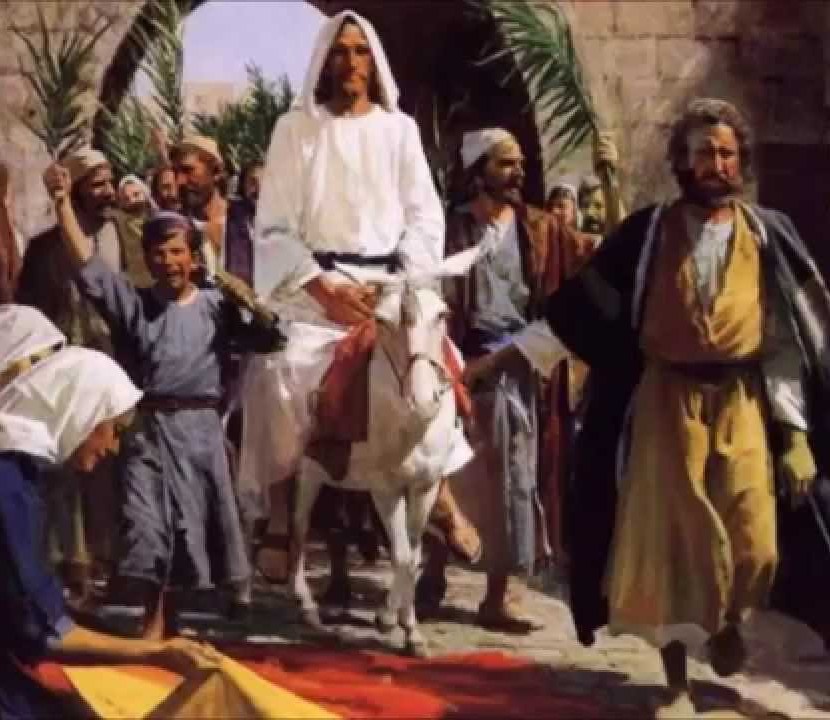
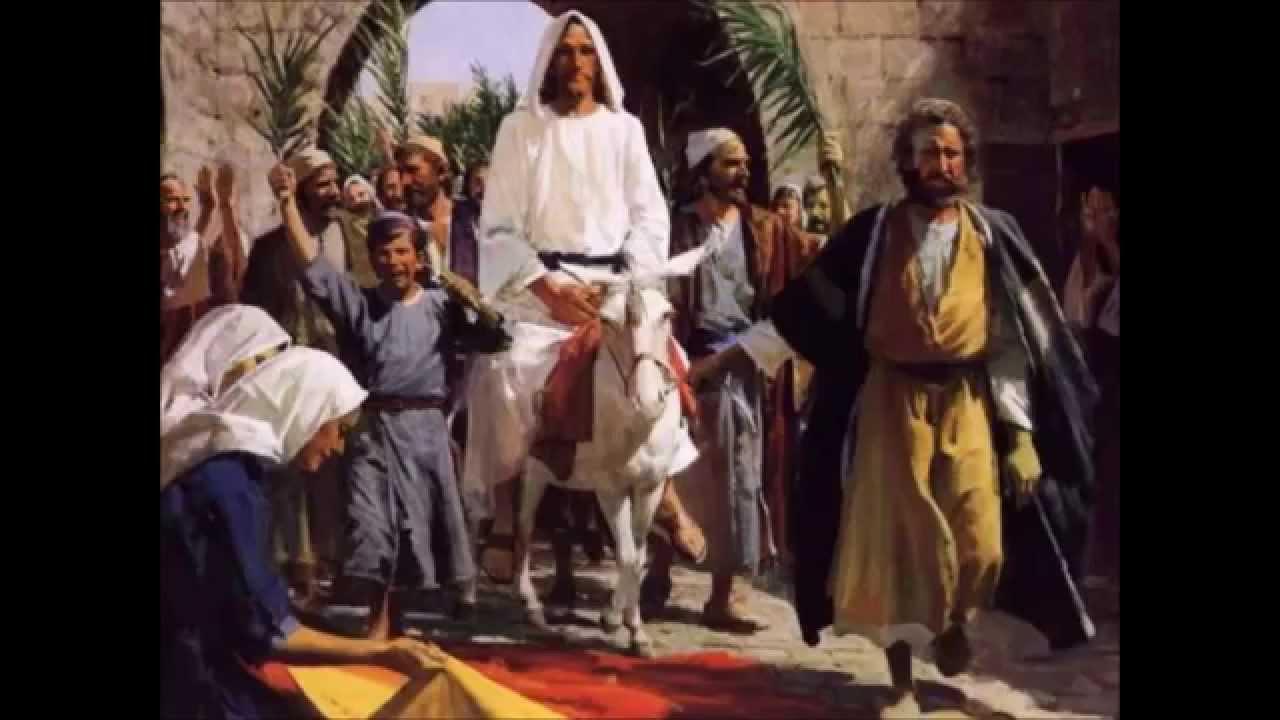
Do you remember your high school or college homecoming? Remember the parade through campus with the homecoming king and queen wearing sashes and riding on the back of a convertible while people are cheering for them? When I listen to the Procession Gospel on Palm Sunday, this image is what comes to mind when I think of Jesus riding on the back of the donkey as he is arriving into Jerusalem. I envision this arrival as more than people laying cloaks down and exclaiming “Blessed is the king who comes in the name of the Lord.” It is a parade of fanfare people acknowledging Jesus as king. But there is a difference between these two celebrations. The homecoming king and queen are elected then appointed to represent the homecoming court, while Jesus’ parade occurs before his passion and resurrection. There is also another major significant difference; when homecoming weekend concludes, the man and woman no longer hold the titles of king and queen, YET Jesus’ kingship lives on forever after his death on the cross.
This theme of kingship after the passion and resurrection carries through into the other readings for today. In the Letter to the Philippians, Paul shares that because Jesus was obedient to the point of death by the cross, “God greatly exalted him and bestowed on him the name which is above every name, that at the name of Jesus every knee should bend, of those in heaven and on earth and under the earth, and every tongue confess that Jesus Christ is Lord, to the glory of God the Father.” In the Gospel after the Second Reading, we read that during Jesus’ passion, the scribes and Pharisees take Jesus before Pilate to be condemned, and the reason was because of the issue regarding whether Jesus was the King of the Jews. Pilate even questions Jesus about this: then we later read that Jesus was mocked by having a crown of thorns placed on his head, and the inscription on the cross stated, “Jesus, King of the Jews.” So in one regard, he was acknowledged as king and praised by the people, yet in another regard condemned to death over the issue by others who felt threatened by him. But we know the victory of eternal kingship is his because of his resurrection.
What does this mean for us today at this current time 2000 years later? Just as Paul stated, “at the name of Jesus every knee should bend, of those in heaven and on earth and under the earth, and every tongue confess that Jesus Christ is Lord, to the glory of God the Father.” it is important to spread that message to others in our daily lives and the various ministries in which we participate. During Jesus’ passion, Judas betrays him and Peter denies knowing him three times, so the thought for us to examine is whether we are really going to spread the Gospel and tell the world that Jesus is king, or whether we will betray or deny knowing Jesus through our negative actions. What are you going to do???
Lent and Noah and Reflections ~ The Rev. Jay Van Lieshout

Lent, a time according to the church where we fast, pray, focus on works of love and charity all as a solemn remembrance of the time Jesus spent alone in the wilderness. A time where we are to prepare ourselves for the ministry of God’s Word and where we prepare ourselves to not only preach the Gospels but to live the Gospels just as Jesus did some 2000 years ago. For me, lent this year has been less about the fasting, or the prayer, or the contemplative repentance and loving charity and more a wandering in my own wilderness of emotions, changes and preparation of ministry.
My 2015 was a year of dynamic change, growth, accomplishments, tragic losses, grief and renewal. I began my life as a transitional deacon and my ministry to others and was ordained to priesthood later in the year. I also progressed from postulate to novice and finally to brother in the Dominican Order. I watched my partner and soul mate deteriorate both physical and mentally as he lost his battle with mortality. I cared for my mother as she lay bedridden, her mind becoming confused and spending more and more time in the past until she suddenly and unexpectantly left this plain without saying good bye. I lost one church family, then another only to renew the prior again. I sat lonely, grieving losses, to paralyzed to move forward and rebuild, to hurt to let anyone else in. In the end, I found strength in new beginnings, God gave me someone new to heal my hurt and strength to grow again. This is all what I have reflected on, relived, grieved and celebrated this Lenten season.
As I ponder my Lenten journey, I do not feel as if I have missed the meaning of or failed to journey “the path” to renewal in the death and resurrection of Jesus. In fact, I believe I have walked the path that is the essence of the Lenten journey! Life, like nature’s seasons, is cyclic. The renewal of spring, the growth, hard work and joy of summer, the bounty of the harvest and celebrations of fall, and winter’s waning of life, ending of festivals and hope of spring’s renewal. The end of winter is cold, dark, and dreary. The bounties of the harvest dwindle, holidays are fewer, we hunker down in our homes, nesting in the darkness and think of the past as we wait for the break of spring. Late winter and so too Lent about “me time”; a time to process all that has happen in the previous months, a time to heal, a time to focus on those around us in our nest and a time to plan and change for the new season of growth.
We are told Jesus spent 40 days alone in the wilderness of the desert. It is hard to say if He was truly alone in the “wasteland” of the desert or if he was perhaps just wandering unknown cities, with unknown people, without His friends, family or support network. In either case He was alone with His thoughts, alone with His God, alone with His memories, His knowledge, His experiences, His losses, His wins, His experiences and His emotions. So much learned, so much seen, so many questions, so much hard work to get ready for His ministry; He was baptized and it was time to begin His work, but what did it all mean?
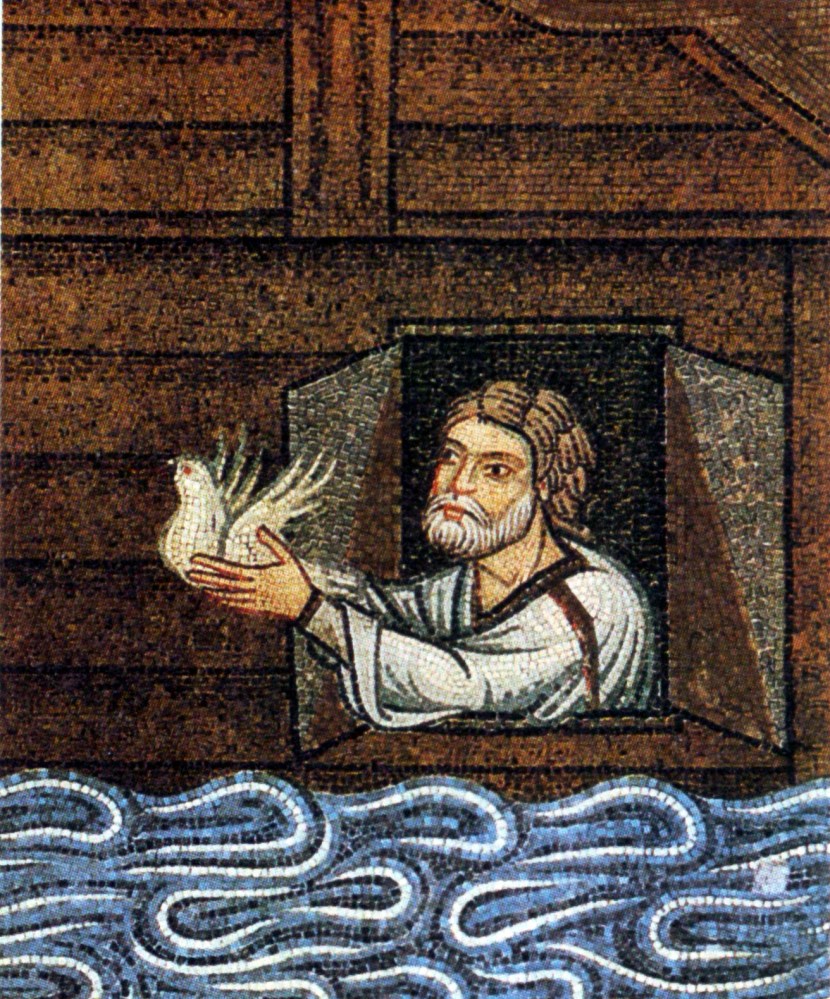
I wonder if Jesus looked to Noah for inspiration. Here was a man with a similarly daunting call from the Creator: “Noah, I want you to build a huge ark, the biggest thing ever build by a human. It must be designed so as to hold a pair of each of the creatures on Earth. You will have to build it with little help while others mock you and think you are crazy. You are to give your life to Me for through you I will save many and renew the Earth.” What torment Noah (and his family) went through to do God’s will, how they must have been derided by others, seen as crazy, trouble makers and even feared by those in power. The agony Noah must have endured as he closed up ship and watch everyone and everything he knew disappear in the chaotic waters. The fear and struggles his family faced as they floated on the vast waters, subject to the winds and currents with no control over their journey and no idea of their destination. The loss of hope as hours became days, days turned into weeks, and weeks extended beyond a month. The wear of daily drudgeries in caring for the ship, the animals, each other and the ever growing “cabin fever”. Will we ever reach land? What will it be like? How will we restart everything? Maybe we are just crazy, perhaps God has forgotten us and will end up just dying alone on this ship. 40 days alone, to think, to exist, to possibly loose hope or loose oneself in the darkness of our own souls.
I wonder if Jesus felt akin to Noah as He walked alone in the confusion of His own journey of questioning, growing and establishing His own faith in God. 40 days of struggling, thinking, arguing, looking temptation and despair in the eye over and over again. Looking out over the chaotic waters of His baptism into the Ministry of God’s word, looking for the simple sign of peace and hope carried in on the wings of the Holy Spirit. 40 long and lonely days and there, on the horizon, hope comes, the sign that God is with Him and His new life is about to begin. The seeds are ready to plant, the work is ready to be done and the harvest will indeed be the reward. It will not be easy, life rarely is, but there is hope, purpose and God will take care of the rest.
This is the truth in Lent. We all struggle, our candle flames flicker in the storms of life, the light seemingly dims as if about to go out but soon flashs back to full brilliance. Like the seasons, our lives wax and wane and wax again; it is an integral part of being human and no one can escape the ebb and flow of the chaotic waters. Noah lived it, the Son of Man lived it and we live it; but just like Noah and Jesus, we are never truly alone. God is always with us, guiding us, caring for us, providing us with people who love us and with whom we can share our lives and who give us hope for the new beginnings. This is the truth in our Lenten journey, it is the hope given us in the word of God, it is the message written in seasonal changes, and is the significance of our liturgical year.
If It Weren’t for Bad Luck… ~ The Rev. Jay Van Lieshout, OPI
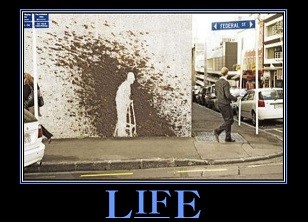
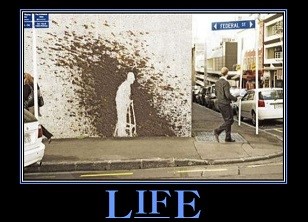
“If it weren’t for bad luck, I’d have no luck at all!” Who has not cried this out in a fit of despair at one time or another? How many of us may even be thinking such a thought at this very moment? Feeling at times as if we are plagued by misfortune is really part of being human. Things sometimes just go wrong and, though events sometimes go without a hitch ending on a happy note, we as humans tend to focus on and hold tight to those events that are less than perfect events in our lives. Remembering when our actions produced undesirable results can be a good thing; it is how we learn what to avoid, what not to do or to say, etc; in fact, failures can often lead to successful and rewarding outcomes. Yes, we view our failures as bad luck or feel we are cursed in spite of all the good we have in our lives. Being raised in a Calvinist family I was taught if something goes wrong it was because I was a sinner and God was punishing me. The larger the mishap, the more dreadful a child I was, for what you sow is what you reap. From the smallest paper cut to being in pain with kidney stones, it was all part of God’s plan to punish my wickedness; God was vengeful and mean because of our sins and Jesus came to point that out to us. What a horrible teaching for a child, and what a horrible teaching that still continues today in too many a “Christian” denomination or church.
Such misconceptions of God are not new to modern times; Luke tells us Jesus dealt with similar misguided thoughts and teachings. When asked about Pilate’s slaughter of some Galileans as they were conducting ritual sacrifices (the implication being they might have been guilty in the eyes of God), Jesus asked if they thought the victims were “greater sinners” than the all other Galileans? Without delay, Jesus rebuked them saying “I say to you no! But I tell you, if you do not repent, you will all perish as they did!” (Luke 13:2-3) Similarly, Jesus asked if the deaths of the 18 killed when the tower of Siloam collapsed was the result of the victims indebtedness exceeding that of the rest of the men in Jerusalem? Again without delay, Jesus rebuked them saying “I say to you no! But I tell you, if you do not repent, you will all perish as they did!” (Luke 13:4-5) Two horrendous events: one the murder of innocent people as a result of hate and bigotry, another, the tragic loss of innocent lives as the result of an accident; in neither was God punishing the victims (and Jesus would know if He was), both were just random tragedies, examples of “crap happens”. Yet both revealed the delicate and fleeting nature of human life as well as how easily one can suffer a spiritual death over mundane worldly things; Jesus warns to repent now, for tomorrow may not come.
So is all lost? If we stumble and then quickly die before we can repent and ask for forgiveness, is there no hope? To quote Jesus, “I say to you no!” God is our father, and though He can be stern, His love for us in unchanging, unending and boundless. Luke continues with Jesus telling a parable in which a fig tree has failed to yield fruit for 3 years. The owner has no patience and instructs the gardener to cut it down. The gardener knows that sometimes “crap happens” and offers to tend to the tree for a year using a little manure, a little extra attention and, hence, he is giving the tree another chance to bear fruit (with a little help). This is how God works us in His garden, he sent the Son of Man to be our gardener, to spare us from the saw, to intercede for us, nurture us with the Word of the Creator, cultivate our souls and help us turn the “crap” that happens in life into fruit for the Father’s Harvest.
Yes, bad things happen to me, to you, to everyone. Part of being human and being alive is “crap happens”; this is a fundamental fact of life. What we all must realize is this is not God punishing us, it is not some divine retribution, and it surely is not a canonical license to condemn others or withhold compassion to those suffering “because they are sinners and deserve their misfortune”. I say to you nobody is undeserving of our compassion and forgiveness. In fact, many of those who have suffered some of the most horrendous crap life can muster, have turn out to be our most beloved and respected saints-and one even died so that all of humanity could, in turn, live! So the next time you feel you are getting more than your share of manure just remember, the only difference between a saint and a sinner is a saint will not sling the manure at others, but instead, they use it as fertilizer for the tree of Jesse so that it might bare the largest and sweetest of fruit.

Shhhhh!!! ~ Br. Chip Noon, Novice


“Filled with the Holy Spirit, Jesus returned from the Jordan
and was led by the Spirit into the desert for forty days…”
In today’s Gospel, Jesus has just been baptized in the Jordan River by John. Next, he goes into the desert to fast and pray. These are two very visible actions, which all can see. They are meant for public observation. They are symbols of piety and faith.
But then, Jesus goes alone into the desert.
How then do we reconcile the first reading, bringing the first fruits and presenting them publicly in the Temple, with our Lord’s teaching:
“Whenever you fast, do not look dismal, like the hypocrites, for they disfigure their faces so as to show others that they are fasting.” (Mt. 6:16)
And:
“So when you give to the needy, do not announce it with trumpets, as the hypocrites do in the synagogues and on the streets, to be honored by men. I tell you the truth, they have received their reward in full.”
And:
And when you pray, do not be like the hypocrites, for they love to pray standing in the synagogues and on the street corners to be seen by men. I tell you the truth, they have received their reward in full. But when you pray, go into your room, close the door and pray to your Father, who is unseen. Then your Father, who sees what is done in secret, will reward you.
There is a time for everything under the heaven, we are told, but the time that we spend in Lent should be between us and our Lord. And the prayer, fasting, and almsgiving that we are taught to perform are to help us to learn to speak more directly, more honestly with God. It is not just a period of giving something up or performing certain acts, but a time when we can learn to hear the word of God.
And as the Quakers say, the word of God is a still, small voice within…and sometimes we are being spoken to but cannot hear because of the intrusions of the world.
In the second reading, Paul tells us that “the word is near you, in your mouth and in your heart.” Again, a solitary state of being…us and God. And what do we have to do to be saved and justified? Confess with our mouths and believe with our hearts. Alone, meaning with no one around; and alone, meaning that’s all that’s necessary.
During this Lenten season we can take up the time-honored practices and abstain, give, and pray. These are disciplines that are done in preparation. Practices that resemble an athlete’s muscle-memory exercises to train the body to strive more completely.
But we can also stop, concentrate, focus, and search for that still, small voice within that is the voice of God.
For that is what Lent is about in one sense: teaching us how to be athletes of our Lord, able to bear hardships, pain, trials and tribulations so that we can win the laurel wreath of peace and salvation. For hardships do and will come and our time in the desert of these 40 days will train our souls, our bodies, our minds to persevere even unto death as we await the blessed hope and the coming of our Savior, Jesus Christ.
Today Lord, help us to train ourselves for your resurrection, that we can experience it with all the joy that your followers knew when they saw the fulfillment of your promise on the Sunday of Easter. Amen.
 The Order of Preachers, Independent
You must be logged in to post a comment.