
Category: Member Posts

New Year Resolutions, Earthly or Holy?? ~ The Rev. Lady Sherwood, OPI

So as we enter the brand new year of 2016, we have the gift from God of another clean chapter in our lives and in our relationship with our heavenly Father and also with each other. A crisp new page in our life and faith story ready for us to write upon.
So what should we do? We could follow the footsteps of many who decide to make earthly resolutions. How about deciding to lose weight? How about stopping smoking? Maybe keeping more fit this year? Well these earthly resolutions are fine, but these tend to sadly be forgotten far too easily.
How about seeing this New year as a completely new chance, a blessing of a new beginning in which we can focus ourselves on that fuller and closer relationship with the Father and with our brothers and sisters.
We can use this new beginning to look closely at our relationships and how to apply them even more fully into our lives.
Do we truly love the Lord our God with all our being? Do we truly follow the Commandments about loving God and our neighbours? When we are wronged, do we totally forgive out of love of Christ as we ought? None of us is perfect, each and every single one of us falls down in our faith and with our relationships both with God and with each other, so we can all use this new year as a new start to further become more as our lord wants us to be by looking at these things within ourselves and improving upon them.
So instead of making an earthly resolution this year, myself and my house will serve the Lord. My resolutions will be holy rather than earthly and will be to gain more fully that true relationship both with God and with each of you, no matter where in the world you may happen to be as true love and faith have no earthly boundaries.
So will it be weight loss? Smoking? Keep fit? Will your resolutions this year be earthly or holy? I will be focusing on what truly matters. Will you join me?
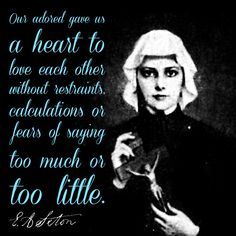
Memorial of St. Elizabeth Ann Seton

Elizabeth was born Elizabeth Ann Bayley in New York in 1774 and was the second daughter of the distinguished Dr. Richard Bayley and Catherine Charlton.
Her father was the chief medical officer for the port of New York and he attended to the immigrants disembarking from ships onto Staten Island and he also cared for New Yorkers during the Yellow fever outbreak which broke out in the city in 1795, which killed seven hundred people in four months. He later went on to become the first Professor of Anatomy at College.
Elizabeth’s mother, Catherine was the daughter of a Church of England priest and she died when Elizabeth was only three years old.
Elizabeth’s father remarried to Charlotte Amelia Barclay. The new Mrs Bayley was active in her church’s social ministry and would take Elizabeth with her on her charitable rounds, visiting the poor in their homes distributing food and other needed items.
Elizabeth devoted a good deal of her time to working among the poor and in 1797, she joined Isabella M Graham and others in founding the first charitable institution in New York City, the Society for the Relief of Poor Widows who had small children and she also served as their treasurer for seven years.
In 1794,Elizabeth married William M. Seton who was a wealthy in the business trade. Together they had five children, although for much of their married life, William suffered from Tuberculosis and in 1800 because of this William went bankrupt and due to this and his failing health, in 1803 they with their five children travelled to Italy where William died in December that year.
Elizabeth returned to New York City and because of what she had experienced and heard whilst in Italy, she converted to the Roman faith and joined the Roman Catholic Church in 1805. She found it difficult to earn a living because many of her friends and relatives, including her stepmother had shunned her after her conversion.
For a while Elizabeth operated a small school for boys. In 1808, she accepted an invitation from the Reverend William Doubourg, president of St. Mary’s College in Baltimore, Maryland, to open a school in the city for Catholic girls. Several young women joined her in her work and in 1809, she founded a religious community and she together with her companions took vows before Archbishop John Carroll and became sisters of St. Joseph, the first American=based Catholic sisterhood.
Because of her work, Elizabeth was known as Mother Seton and a few months after forming this Catholic sisterhood, Mother Seton and the sisters moved their school and their home to Emmitsburg, Maryland, where they provided free education for the girls of the parish.
In 1812, the order became the sisters of charity of St. Joseph under a modification of the rule of the Sisters of Charity of St. Vincent de Paul. In 1814, houses of the order were opened in Philadelphia and in New York City in 1817.
Mother Seton continued to teach and to work for her community until her death from Tuberculosis on January 4th 1821. By the time of Elizabeth’s death, the order had 20 communities.
In 1856, Seton Hall College (now a university) was named after her.
Elizabeth was beatified by Pope John XXIII on March 17th, 1963 and was Canonized by Pope Paul VI on September 14th, 1975, in a ceremony in St. Peter’s Square.
Where Is He? ~ The Rt. Rev. Michael Beckett, OPI
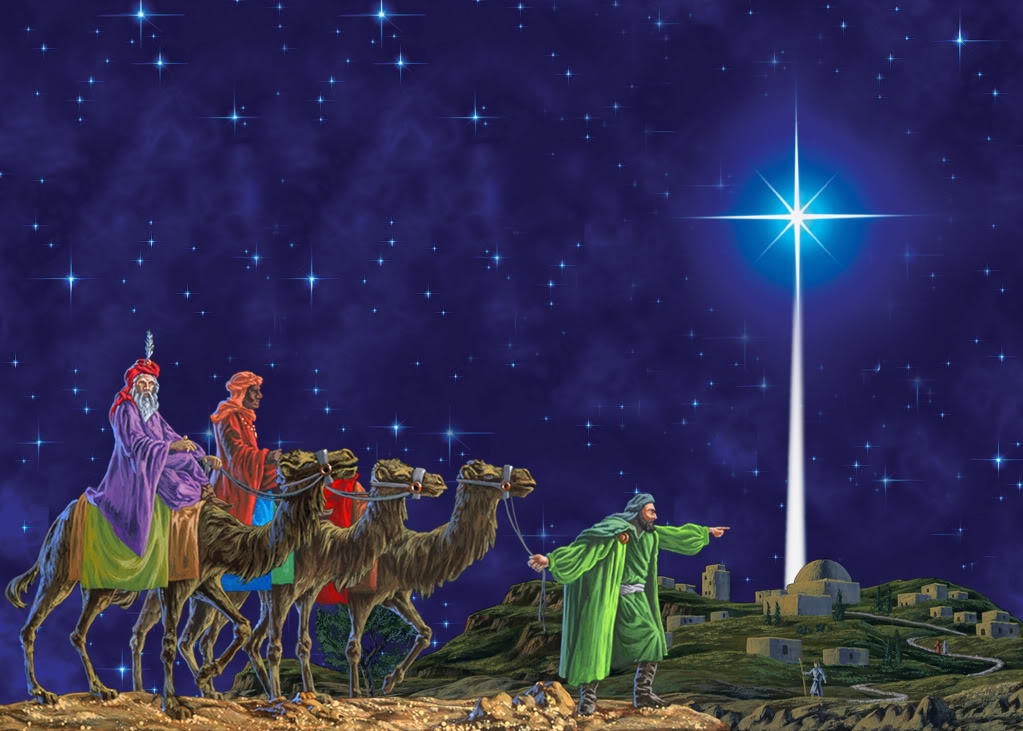
In the time of King Herod, after Jesus was born in Bethlehem of Judea, wise men from the East came to Jerusalem, asking, “Where is the child who has been born king of the Jews? For we observed his star at its rising, and have come to pay him homage.” When King Herod heard this, he was frightened, and all Jerusalem with him; and calling together all the chief priests and scribes of the people, he inquired of them where the Messiah was to be born. They told him, “In Bethlehem of Judea; for so it has been written by the prophet: ‘And you, Bethlehem, in the land of Judah, are by no means least among the rulers of Judah; for from you shall come a ruler who is to shepherd my people Israel.'” Then Herod secretly called for the wise men and learned from them the exact time when the star had appeared. Then he sent them to Bethlehem, saying, “Go and search diligently for the child; and when you have found him, bring me word so that I may also go and pay him homage.” When they had heard the king, they set out; and there, ahead of them, went the star that they had seen at its rising, until it stopped over the place where the child was. When they saw that the star had stopped, they were overwhelmed with joy. On entering the house, they saw the child with Mary his mother; and they knelt down and paid him homage. Then, opening their treasure chests, they offered him gifts of gold, frankincense, and myrrh. And having been warned in a dream not to return to Herod, they left for their own country by another road. Matthew 2:1-12 (NIV)
Today we mark the end of the Christmas season – the Day of Epiphany. We celebrate this day to reflect on the visit of the Magi – the wise men – to Jesus and the giving of their gifts. We reflect on the meaning of this visit of those wise ones to see Jesus.
Epiphany is about Jesus and his message being available and relevant to people of every age and race. Jesus isn’t just a Jewish prophet with an exciting message, but God made present amongst us and available to all of us to worship and follow. God’s love reaches beyond the everyday barriers of race and class; something the Magi didn’t quite get at first.
So Who Were the Magi?
We don’t know much about the Magi from Scripture. All Saint Matthew tells us is that they were “Magi from the East”. Some translations have “Wise men from the East”. The word in Greek refers to priests of the Zoroastrian religion. They came from Persia, the countries now known as Iran and Iraq, and they saw meaning in the movement of the stars. Their visit fits an Eastern pattern of great births being accompanied by momentous events in the sky. Certainly we know of a comet in 11BCE in Gemini with its head towards Leo, seen by many as a symbol of Judah. We also know of planetary conjunctions in both 7 BCE and 6 BCE which would have added to a sense that momentous happenings were on the way. The Magi would have noticed these things and taken them seriously. But who were they?
One commentator, Brian Stoffregen puts it like this;
“Originally in Persia, Magi were dream- interpreters. By Jesus’ time, the term referred to astronomers, fortune-tellers, or star-gazers. They were horoscope fanatics – a practice condemned by Jewish standards. We might compare them to people in fortune – telling booths, or people on the “psychic hotline” or other “occupations” that foretell the future by stars, tea leaves, Tarot cards etc. They were magicians, astronomers, star-gazers, pseudo-scientists, fortune tellers…”
Another writer, Nathan Nettleton, puts it like this;
“They were the speakers of the sacred words at the pagan sacrifices. At worst, the term referred to a magician or sorcerer, or even a deceiver. Magi were people whose activities were repeatedly condemned and prohibited throughout the scriptures and were completely anathema to the people of Israel.”
Whilst in English we get the words “magic” and “magician” from Magi, the Zoroastrian religion forbade sorcery. They clearly were looking for a new king and had found meaning in the movement of the planets and stars which led them to come to Israel to greet the new-born king. They journeyed from their homes in Persia to Bethlehem in search of this baby. Instead of angels and visions, we have the image of the Magi following a sign in the skies – in nature – and for a long period of time. The magi see the intentions of God in the skies. This is not new: Psalm 19 tells us that the heavens themselves declare who God is, and that his handiwork is seen in created nature. “We observed his star at its rising”. The magi know that there is something significant happening.
When did they come?
The Gospel of Saint Luke doesn’t mention the Magi and holds that the Holy Family returned to Nazareth after the presentation of Jesus at the Temple where he was circumcised. It’s probable that Saint Luke didn’t know of this episode in Jesus’ early life. Saint Matthew seems to place the visit of the Magi some time after Jesus’ birth. The Holy Family are in a “house” not in the stable of the inn. Herod kills all the newborn boys under the age of two years. So it’s likely that the Holy Family had stayed for some time in Bethlehem and the Magi came some time after Jesus’ birth, perhaps as long as two years after.
WHY did they come?
Clearly, the Magi were searching. The Magi recognized much of the truth of Jesus, who he was and what he would become. The Magi had a general idea of this God and this King of the Jews, but they didn’t really know who or what they were looking for. Bono and U2 were criticized some years ago by some supposedly orthodox Christians when they produced a song entitled, “I Still Haven’t Found What I’m Looking For,” which is about searching for fulfillment. You see, the example of the Magi was that they were searchers, not really knowing what or who they were looking for. They didn’t claim to have it all but they saw their lives as a journey of discovery. And in that they are an example to us. We don’t know it all. But if we, like them, are prepared to be diligent seekers, then, like them, we may be graced by God’s light, by our own Epiphany. When the wise men finally found Jesus, we are told that their first response was joy – “they were overwhelmed with joy”. That is what happens when we find Jesus. This is what awaits us at the end of the journey. Next, they paid him homage – they worshiped him and acknowledged Him as King. After the joy comes the worship. That means acknowledging Jesus as King. Jesus as the center. Jesus as Lord. And then, after joy and after worship, comes offering of their gifts. In response to who Jesus is and the joy He gives, we offer ourselves and our gifts to Him.
So my message for today is to dare, like them, to take the risk of seeking, and God may well bless us with our own Epiphanies which transform us, as doubtless the Magi were transformed by what must have been a surprising experience for them as they knelt before the infant Jesus.
So how do you find Jesus? Maybe you can start out like the Magi – with a general idea of God, and a general idea that He is guiding you. Like the Magi, we need to turn to the scriptures. If you don’t read them, you will never really get the specific directions that God is trying to give you. Approach them with the right spirit, the right purpose. Ask for help along the way – the church, we, God’s people, are meant to help you along that way. The wise men knew when they needed to ask someone else for help. And pray. Ask God. When you find Jesus, rejoice. After all, He is God. Put Him in the center of your life. Ask yourself whether what you are doing honors him a King. Offer to him what you have, who you are.
Where can this Jesus be found? He is with you now. Won’t you seek Him? Won’t you recognize Him? Won’t you let Him fill YOUR life with joy? Amen.
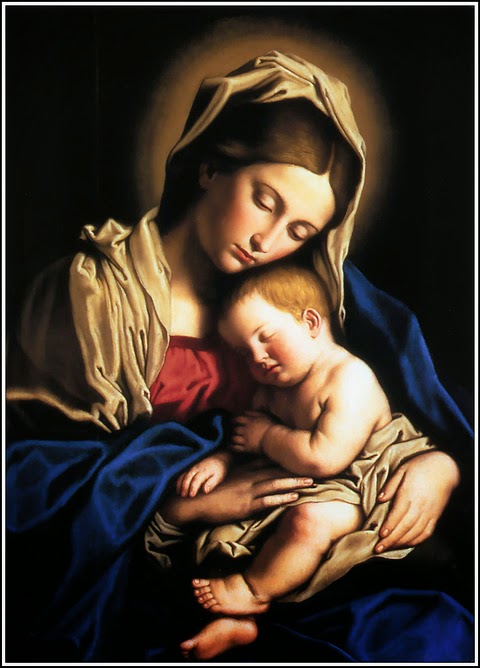
The Solemnity of the Blessed Virgin ~ Br. John Carson, Postulant
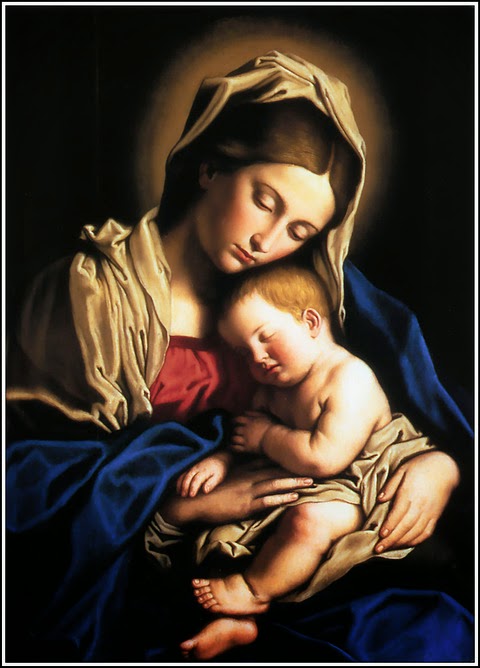
The shepherds went in haste to Bethlehem and found Mary and Joseph, and the infant lying in the manger. When they saw this, they made know the message that they had been told them about this child. All who heard it were amazed by what had been told them by the shepherds. And Mary kept all these things, reflecting on them in her heart. Then the shepherds returned, glorifying and praising God for all they had heard and see, just as it had been told to them.
In the Gospel reading today we read that the shepherds came to pay homage to the Child Jesus and they told Mary and Joseph of the message the angels told them, after paying homage they returned glorifying and praising God.
What can we give to the Child Jesus in our personal homage, a homage that we can give him every day?
We can be angels spreading the message of Christ to those who want to listen to us.
We are also shepherds who give Jesus our homage. We can give Jesus homage in many different ways, by our example, by our way of live and the way we talk and by being true followers of Christ and let Christ take control of our lives, because that is the best homage we can give, our whole self’s.
When Jesus takes control of our lives we can do anything even those things we think is impossible to do.
In the second reading, we read at God sent His son, born of a woman, born under the Law, to ransom those under the law.
Sometimes we are blinded by manmade rules and we forget the laws of Christ, and we are so busy following manmade laws and the law of the Church that we forget to live for God, and worship him with all our hearts.
Churches have so much gold and magnificent statues and pictures and other things, and I keep saying too many churches, that in the simplicity of things God is also glorified.
Some church families are so wrapped up with rules that they do not worship God with their whole being.
As a religious order we have to follow he rule of Holy Father Dominic, but this rule is a simple rule and it can help us to be true followers of Christ.
I would like to finish this sermons with the words of the first reading.
The Lord bless you and keep you.
The Lord let his face shine upon you, and be gracious to you.
The Lord look upon you kindly and give you peace. Amen.
Feast of the Holy Innocents ~ The Rev. Dcn Dollie Wilkinson, OPI
Imagine, if you will, that you are a young couple, who, like most young people your age, find out that you are expecting your first child. Whether you have tried to have children, or this is an unexpected gift, doesn’t matter. Just the fact that you will soon welcome a blessed addition to your family, should fill your heart with joy. I have a niece who was told she would never have children, who now has suddenly discovered she is pregnant. I cannot imagine the joy, and fear, this young soon-to-be (hopefully) mother must feel. Yet, I can. After the birth of my first daughter, I suffered a miscarriage. I was blessed to have another child, a daughter, just a couple years later. But I will always remember the loss of my second child, even if I never gazed upon his (or her) sweet face. This is a tragedy that wounds a mother deeply.
But there is another loss that is even more heart-breaking. I know my niece will welcome her baby boy (or girl) with gratitude and love. Sadly, if this dear child is a boy, he will be taken from her arms before his second birthday. Or he would have, if he had lived during the time of King Herod. Losing a child from miscarriage is hard. But to give birth to a child, then have this precious one snatched away from you, whether by illness, tragedy, or in the case of Jesus’ time, by the decree of a tyrannical king, is almost too terrible to imagine. Yet, it happened to many new parents of this time.
Today, dearhearts, we celebrate the feast day of those children who were snatched from their Mothers’ arms, as the Gospel tells us, by the very cruel king, Herod. According to Mathew 2:1-18, Herod was “greatly troubled” when astrologers from the east came asking the whereabouts of “the newborn king of the Jews,” whose star they had seen. They were told that the Jewish Scriptures named Bethlehem as the place where the Messiah would be born. Herod cunningly told them to report back to him so that he could also “do him homage.” The Magi found Jesus, offered him their gifts but warned by an angel, avoided Herod on their way home. As detailed in Matthew 2:16, King Herod then ordered all young boys in Bethlehem, who were two years old and under, to be executed in an attempt to kill the baby Jesus. However, an angel warned Jesus’ parents and they fled to safety in Egypt.
“Then when Herod saw that he had been tricked by the magi, he became very enraged, and sent and slew all the male children who were in Bethlehem and all its vicinity, from two years old and under, according to the time which he had determined from the magi.”
Some believe that the children who were killed were the first Christian martyrs. Today, the Feast of the Holy Innocents is celebrated in churches worldwide. It is also called The Innocents’ Day or Childermas or Children’s Mass.
Today, we offer prayer for those innocent children who were slaughtered. By no fault of their own, by the fact that they were born male, and because a cruel man decided this must be done, these young souls were taken from their parents way too soon. I am thankful every single day for the blessed gift of my daughters. To have a child, whether boy or girl, but to then have someone decree they must be put to death, well I cannot imagine the heartbreak their parents must have experienced. Let us today, and always, remember these young children, the Holy Innocents.
“Blessed are you, Bethlehem in the land of Judah! You suffered the inhumanity of King Herod in the murder of your babes and thereby have become worthy to offer to the Lord a pure host of infants. In full right do we celebrate the heavenly birthday of these children whom the world caused to be born unto an eternally blessed life rather than that from their mothers’ womb, for they attained the grace of everlasting life before the enjoyment of the present. The precious death of any martyr deserves high praise because of his heroic confession; the death of these children is precious in the sight of God because of the beatitude they gained so quickly. For already at the beginning of their lives they pass on. The end of the present life is for them the beginning of glory. These then, whom Herod’s cruelty tore as sucklings from their mothers’ bosom, are justly hailed as “infant martyr flowers”; they were the Church’s first blossoms, matured by the frost of persecution during the cold winter of unbelief.
St. Augustine
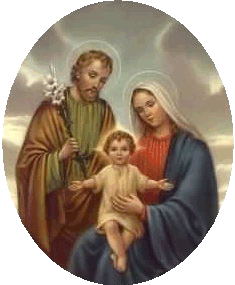
Looking for Jesus ~ Feast of the Holy Family ~ Br. John Carson, Postulant
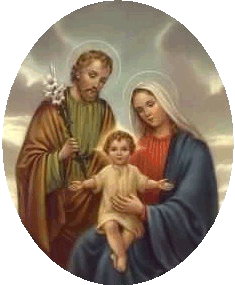
The Gospel for today:
Each year Jesus’ parents went up to Jerusalem for the feast of Passover, and when he was twelve years old, they went up according to festival custom. After they had completed its days, as they were returning, the boy Jesus remained behind in Jerusalem, but his parents did not know it. Thinking that he was in the caravan, they journeyed for a day and looking for him among their relatives and acquaintances, but not finding him, they returned to Jerusalem to look for him. After three days they found him in the temple, sitting in the midst of the teachers, listening to them and asking them questions, and all who heard him were astounded at his understanding and his answers. When his parents saw him, they were astonished, and his mother said to him, “Son, why have you done this to us? Your father and I have been looking for you with great anxiety”. And he said to them, “Why where you looking for me? Did you not know that I must be in my Father’s house?” But they did not understand what he said to them. He went down with them and came to Nazareth, and he was obedient to them; and his mother kept all these things in her heart. And Jesus advanced in wisdom and age and favour before God and man. Amen.
Today we read in the Gospel the familiar story about the Holy family going to Jerusalem for the Passover. The Gospel tells us that after the Passover, the Holy Family were on their way back to Nazareth, but the Child Jesus stayed behind without his parents knowing, when his parents found that Jesus was not with their relatives or acquaintances, they looked everywhere for him and they found him in the Temple three days later. Mary said to Jesus that they have been looking for him and Jesus replies, “Did you not know that I was must in my Father’s house,”
How do we fit this story into our daily lives?
We are on a journey where our Jesus is to celebrate the Passover in heaven with the whole company of heaven, with the Holy Family at the right hand of God.
We are also sometimes nowhere to be found when Jesus looks for us and sometimes we close the door so Jesus can’t get through. We are sometimes the ones searching for something and sometimes it is Jesus himself that we are look for.
We find Jesus everywhere, but especially in the Father House, the Church. And also in the Sacraments.
Are we going to be found in our Father’s house or as some Bibles say “dealing with my Father’s affairs?” are we like Jesus, are we dealing with our Father’s affairs, we as Dominican’s are dealing with our Father’s affairs every time we are doing our ministry, every time we say Mass, preaching, helping the poor, visiting the sick and also praying for the needs of the world.
Our Father’s house is everywhere we do our ministry.
At the end of the Gospel we read that Jesus went back to Nazareth, and was obedient to them.
And that is what we are called to do, be obedient unto death.
Finally, let us pray for each other in the world that we live in, and by the example of the Holy Family and the Child Jesus, be obedient to the teaching of the Church and the our Dominican Rule and our Superiors. Amen.
Unto Us a Child is Born

The Gospel According to St. Luke
2 And it came to pass in those days, that there went out a decree from Caesar Augustus that all the world should be taxed. 2 (And this taxing was first made when Cyrenius was governor of Syria.) 3 And all went to be taxed, every one into his own city. 4 And Joseph also went up from Galilee, out of the city of Nazareth, into Judaea, unto the city of David, which is called Bethlehem; (because he was of the house and lineage of David:) 5 To be taxed with Mary his espoused wife, being great with child.
6 And so it was, that, while they were there, the days were accomplished that she should be delivered. 7 And she brought forth her firstborn son, and wrapped him in swaddling clothes, and laid him in a manger; because there was no room for them in the inn. 8 And there were in the same country shepherds abiding in the field, keeping watch over their flock by night.
9 And, lo, the angel of the Lord came upon them, and the glory of the Lord shone round about them: and they were sore afraid. 10 And the angel said unto them, Fear not: for, behold, I bring you good tidings of great joy, which shall be to all people. 11 For unto you is born this day in the city of David a Saviour, which is Christ the Lord.
12 And this shall be a sign unto you; Ye shall find the babe wrapped in swaddling clothes, lying in a manger.
13 And suddenly there was with the angel a multitude of the heavenly host praising God, and saying, 14 Glory to God in the highest, and on earth peace, good will toward men. 15 And it came to pass, as the angels were gone away from them into heaven, the shepherds said one to another, Let us now go even unto Bethlehem, and see this thing which is come to pass, which the Lord hath made known unto us.
16 And they came with haste, and found Mary, and Joseph, and the babe lying in a manger. 17 And when they had seen it, they made known abroad the saying which was told them concerning this child. 18 And all they that heard it wondered at those things which were told them by the shepherds. 19 But Mary kept all these things, and pondered them in her heart. 20 And the shepherds returned, glorifying and praising God for all the things that they had heard and seen, as it was told unto them.
The Order of Preachers, Independent, wishes you a most blessed Christmas.
Peace, Peace ~ Br. Chip Noon, Novice

“In the tender compassion of our God
the dawn from on high shall break upon us,
to shine on those who dwell in darkness and the shadow of death,
and to guide our feet into the way of peace.”
Years ago, I was sitting with my mother in her assisted living apartment, reading the Liturgy of the Hours. My mother, who was the most spiritual and “faithful” person I’ve ever known, wanted to hear what I was reading. So I read Zecharaiah’s canticle, “Blessed be the Lord, the God of Israel…”
When I finished she said, “That is beautiful.”
I had never thought of it like that. Leave it to mothers to show us the way!
In my memory, Christmas Eve is a calm, comfortable, warm…perfect night. From the time I was a young child, quivering in anticipation, through my youth, until now in my old age, Christmas Eve has always…well, almost always…had this aura for me. Cozy, some would call it.
O Holy Night! The stars are brightly shining,
It is the night of the dear Saviour’s birth.
Long lay the world in sin and error pining.
Till He appeared and the soul felt its worth.
A thrill of hope the weary world rejoices,
For yonder breaks a new and glorious morn.
Fall on your knees! Oh, hear the angel voices!
O night divine, o night when Christ was born;
O night, O Holy Night, O night divine!
O night, O Holy Night, O night divine!
Except for one Christmas Eve.
That was not cozy…nor anything comforting.
I remember vividly, to this day, banging on the dining room window with a wooden block, the kind that had letters and numbers on it, banging so hard my mother was afraid I’d break the glass. I can see my father’s car pulling out of the driveway and going up the street, off to the bar, or the liquor store, or wherever he shouted that he was going. My mother, brother, sister, and I were alone on Christmas Eve. I was crying and bereft. And my mother was comforting us.
My father came back from the infantry in World War II a full-blown alcoholic, as my mother told it. And to tell the truth, Christmas Eve was not always calm, comfortable, warm, nor perfect. But as a child, I fell back on the blessings of the season and willed myself into a Currier and Ives depiction of what I wanted in my life.
I made it comfortable. Today I believe that the Holy Spirit helped us through those difficult times, those Christmas holidays that were so fraught with terror for little kids. Because my mother could see what was beautiful in the world around her. She made it comfortable for all of us.
What’s past is past. And as my wife recently said to me of difficult people, “One way to look at them is that they are just doing the best they can.”
As an aside here, it’s unnerving to think that you have married a woman just like your mother!
There’s a faith that can bring us peace. A faith in God, as with my mother, and a faith in humanity, as with my wife. Faith. We know that on Christmas Eve, the baby Jesus will be born again in all our minds. And that the promise we have heard will be fulfilled. And we know that our children, family, and friends will either be with us or thinking of us this night. And we know the thrill of hope in the new and glorious morn.
So we fall on our knees. We rejoice in the peace of God, which passeth all understanding. And we find comfort in the dark night, the sounds of the carols, the anticipation of friends, family, and the coming of the infant in the manger.
For no matter what we are facing, we can take comfort in the knowledge that God has said to us that we will have no burden that we cannot bear, that there is a calm in our souls, and that tomorrow will bring a new dawn of love and peace.
Merry Christmas!
Lord, thank you for coming to our help in our times of happiness and our times of sorrow. Thank you for giving us the splendor of your presence in the form of a little child. Thank you for the peace which passeth all understanding. Amen.
Rejoice! Rejoice! ~ The Rev. Lady Sherwood, OPI
Rejoice! Rejoice! Our Gift from God is Born!
The Christmas tree stands proudly and ladened with beautiful decorations. Christmas gifts of all shapes and sizes surround the tree, all prettily wrapped in fancy paper, tied with an array of colourful ribbons and bows.
The faces of happy children all aglow with excitement as they tear open these gifts on Christmas morning. Oh what Joy!
But the true gift which came from God Our Father, to every single one of us didn’t come wrapped in fancy paper, this precious gift was not fastened with ribbons and bows.
This true gift of pure love and salvation was born in a lowly stable in Bethlehem and his bed was a feeding trough for animals.
This perfect, wondrous and precious gift came down to us from the heavens to free us from the damnation of sin and to be our salvation.
All this he did for us because of the love Our heavenly Father has for us. Our dear Lord! Who left his throne on high to be born lowly on earth amongst us and who would love us to teach us the ways of righteousness. He loves us to the extent that this lowly yet heavenly babe would later give himself willingly up to death upon the cross to atone for our sins, he did this to save us!
Oh such a truly wonderful gift to us from Our Father, even though we are unworthy sinners! A Holy gift of such perfect love!
This is the true gift of Christmas! The gift of God to you, to me, to everyone.
Let us rejoice! Rejoice! Let us offer the Lord praise and thanksgiving!
Let us accept anew in our hearts and in our lives this wonderful and incomprehensible gift of pure love and let us with all the heavenly hosts-Rejoice!!

What’s in a Name? ~ Br. Chip Noon, Novice

Is his name Jesus or Emmanuel?
I always had this question growing up, and it fueled many other contradictory statements that I found in the Bible and the Gospels I heard at Mass.
Jesus? Emmanuel? And why is it sometimes spelled Immanuel? And why also is he Jesus Christ or Jesus or, as in Paul’s writings, Christ Jesus?
For a young child, and even for some of us adults, these name switches can be unnerving. (And for now, we’ll leave out all that bit about not having Joseph as his real father…some things are a little too much for kids.)
But wait. Now that I think of it, isn’t that the whole point of the differences between then and now, between good catechesis and the stuff some of us were served up in Sunday school and in homilies? These differences, and sometimes contradictions, confuse us if we are interpreting them from our present lives and experiences…and if we are not taught from an early age that the original language of the Bible was not English, or French, or even Latin.
Let me give an example for a minute: do you remember the exercise where there is a room full of people and one person is told a story. Then she must pass that story, in secret, to the next person, who in turn passes it on, until everyone is filled in. Then the last person tells the whole room the story out loud, and then the first does the same. Usually, there are two very different stories related, to much laughter and some embarrassment.
Now let’s go back to Jesus and Emmanuel.
First of all, his name was Yehoshua, which became Yeshua, which became Yesous in Greek, which became Jesus in English. And of course, there were many variations from the time of his birth to modern English. It means “God saves.” And the angel of the Lord said he should be named this “because he will save them from their sins.”
And then—Emmanuel. This means “God is with us” according to the Gospel for today. This is the same kind of name that we read in Isaiah: “And he will be called Wonderful, Counselor, Mighty God, Everlasting Father, Prince of Peace.
So what are we to do? Unlike in the example of the different stories I just mentioned, we have written records, translated and interpreted as they have been for two thousand years. What we call our Savior is not the issue, though, is it?
Just like children waiting for Christmas and the presents under the tree, the man’s name, the name of the holiday, the narrative, the celebration just gives us some touchstone to refer to when we really mean God will save us from our sins. And when we really mean on this day God came to live among us to show that he is with us.
As we hear in today’s Responsorial Psalm, this is the story we are being told, no matter how many translations there are:
For he shall rescue the poor when he cries out,
and the afflicted when he has no one to help him.
He shall have pity for the lowly and the poor;
the lives of the poor he shall save.
Much of our daily lives are taken up with the surface things. We skim over the underlying meanings because we have context through which to understand them. And sometimes it seems at this time of year we just skim over the “true meaning of Christmas.”
But isn’t this quite natural, since we grow up knowing that Christmas means presents and lots of food and wonderful music. Truly a magical time…for most of us, that is.
So while today is just a week away from Christmas Day, and while if we were kids we’d be looking forward to school recess and all those presents, let’s just take a moment to dig deeper. To think of the name the angel gave: God will save us from our sins. To think of the name Isaiah prophesied: God is with us.
Think of these names for a moment. Here are presents and celebrations enough to give us thought every day of our lives. Saved from our sins by God who is right here. The heavens don’t have to open for us to be in the company of angels and in the bosom of our Lord. We are already with them and he is in us and we are in him.
As the Lord lives, we have arrived and we know him as he is. It just takes the heart of a child.
Today Lord, help us in our anticipation to know that the wait is over and the fire is lit, the feast is on the table, and the candle is in the window.
 The Order of Preachers, Independent
You must be logged in to post a comment.