
Category: Sermon
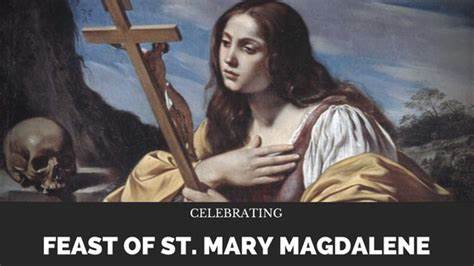
Lessons for Life: The Feast of St. Mary Magadlene~ The Very Rev.Lady Sherwood, OPI
Reading I: Sgs 3:1-4b OR: 2 Cor 5:14-17
Responsorial Psalm: Ps 63:2, 3-4, 5-6, 8-9
Gospel: Jn 20:1-2, 11-18
Liturgical colour: White.
My dearest brothers and sisters -in-Christ,
There are a many Marys within the Holy Scriptures —the New Testament mentions six altogether! The Mary we know as Mary Magdalene, whose memorial we celebrate today, draws her title from Magdala, the city of her origin. Luke tells us that Jesus cast seven demons out of her (Luke 8:2). Afterward, she became His disciple.
John’s Gospel tells us that she was one of the Marys present at the crucifixion of Our Lord Jesus:”Near the cross of Jesus stood his mother, his mother’s sister, Mary the wife of Clopas, and Mary Magdalene” (John 19:25, NIV).
And Mary Magdalene was also the very first witness to the Lord’s resurrection: Now Mary stood outside the tomb crying. As she wept, she bent over to look into the tomb and saw two angels in white, seated where Jesus’ body had been, one at the head and the other at the foot. They asked her, ‘Woman, why are you crying?’ ‘They have taken my Lord away,’ she said, ‘and I don’t know where they have put him.’ At this, she turned around and saw Jesus standing there, but she did not realize that it was Jesus. He asked her, ‘Woman, why are you crying? Who is it you are looking for?’ Thinking he was the gardener, she said, ‘Sir, if you have carried him away, tell me where you have put him, and I will get him.’ Jesus said to her, ‘Mary.’ She turned toward him and cried out in Aramaic, ‘Rabboni!’ (John 20:11–16, NIV).
Mary’s devotion to the Lord Jesus put her in the spotlight of several writings told to us within the Holy Gospels. The life and the faith of Mary Magdalene, both have such a lot to teach us about following Jesus. Here are three lessons we can learn from Mary Magdalene.
1. We don’t have to be defined by our past: There’s a lot of speculation about Mary’s background. Many People have tied Mary to the sinful woman in Luke 7:36–50. Many also assume that Mary was a prostitute or a woman of ill repute. But there truly isn’t any biblical evidence whatsoever for portraying Mary in that light.
As Luke tells us, Mary had seven demons cast out of her. Whatever her background had been before she met Jesus, as is also true for the rest of us even today, Mary isn’t defined by who she was before meeting the Lord. All that is important is who Mary became after discovering Him.
Like Mary, we don’t have to let our pasts dictate how we see ourselves, nor should dictate how others may see us. Paul explains it this way, “Therefore, if anyone is in Christ, the new creation has come: The old has gone, the new is here” (2 Corinthians 5:17, NIV)!
2. Jesus should be the center of our lives: After Mary’s first encounter with Our Lord Jesus, Luke tells us:
“After this, Jesus travelled about from one town and village to another, proclaiming the good news of the kingdom of God. The Twelve were with him, And also some women who had been cured of evil spirits and diseases: Mary (called Magdalene) from whom seven demons had come out; Joanna the wife of Chuza, the manager of Herod’s household; Susanna; and many others. These women were helping to support them out of their own means” (Luke 8:1–3, NIV).
Not only did Mary follow the Lord Jesus and His disciples from town to town, but she and some other women also helped to support Christ and the disciples financially. This role continued throughout His earthly ministry.
Matthew tells us that they were present at the crucifixion, and followed Jesus all the way to Galilee to take care of Him: “Many women were there, watching from a distance. They had followed Jesus from Galilee to care for his needs. Among them were Mary Magdalene, Mary the mother of James and Joseph, and the mother of Zebedee’s sons” (Matthew 27:55–56, NIV).
It’s no surprise then, that Mary Magdalene would find herself in a prominent position at the Lord’s resurrection, also.
We should live our lives by following Mary’s example. When we encounter Jesus, we shouldn’t return to the life we previously lived. Our Lord and Saviour changes everything! Our whole life ought to become about following and serving Him until—like Mary—our story becomes intertwined and indistinguishable from His own.
3. Jesus uses the weak things of the world to shame the strong: In his first letter to the Corinthians, Paul talks about the gospel as being foolishness. The world doesn’t understand it, so they discount and dismiss it.
According to Paul, God did that on purpose: “But God chose the foolish things of the world to shame the wise; God chose the weak things of the world to shame the strong. God chose the lowly things of this world and the despised things—and the things that are not—to nullify the things that are, so that no one may boast before him” (1 Corinthians 1:27–29).
We see a perfect example of this principle in Jesus’ relationship with Mary Magdalene. In a time when women were seen as second class citizens with no real authority, Jesus demonstrated a special tenderness and care for women. We see this in His choice to reveal Himself to Mary first after the resurrection.
This is the most critical event in history, and Jesus made a woman the first witness. He even encourages her to tell the disciples (John 20:17). The irony is that they didn’t believe Mary and the other women (Luke 24:11).
We need to be extremely careful in our lives, to ensure that we never dismiss things that don’t follow our human expectations, because Jesus doesn’t always do things in the way in which we may expect. Our Lord delights in working out His plan in the most wonderful, yet unlikeliest of ways. He did that through Mary, and if we let Him, He’ll do such through us, too!

Shepherds, Sheep, and Scary Stuff ~ The Rt. Rev. Michael Beckett, OPI

Momma had “that look” when we did something we probably shouldn’t have done. We sorta kinda knew we were in trouble. Oops! Now, Daddy had “THAT look,” which was different from Momma’s. Y’all know the one? The one that said, “You have done messed up, prepare to die.” I hated that look. It was scary! Speaking of ‘scary,’ in one of the Scriptures appointed for today, we find, to me, the scariest, most terrifying words in the Bible. Here ya go:
In Jeremiah 23:1-6m we have, to me, probably the most terrifying scripture in the whole of Holy Writ. “Woe to the shepherds who mislead and scatter the flock of my pasture, says the LORD. Therefore, thus says the LORD, the God of Israel, against the shepherds who shepherd my people:
You have scattered my sheep and driven them away. You have not cared for them, but I will take care to punish your evil deeds. I myself will gather the remnant of my flock from all the lands to which I have driven them and bring them back to their meadow; there they shall increase and multiply. I will appoint shepherds for them who will shepherd them so that they need no longer fear and tremble; and none shall be missing, says the LORD.”
Why is this so dreadfully frightening? Imma tell ya in a minute, but first we need to back up a bit and talk about shepherds. In our lives today, we don’t really understand how common and important shepherds and sheep were in ancient times. At that period in history, shepherds and sheep were as common as Wal-Mart, telephones, and convenience stores. So, what IS a shepherd?
Simply put, a shepherd is the man or woman who takes care of the sheep and goats. Easy enough. But what does this mean? What did it mean in Biblical times for a shepherd to care for his sheep? The duties of a shepherd in an unenclosed country like Palestine were very onerous. In early morning he led the flock from the fold, marching at its head to the spot where they were to be pastured. Here he watched them all day, taking care that none of the sheep strayed, and if any for a time did stray from his watch and wandered away from the rest, he would have to seek diligently till he found and brought it back. In those lands sheep require to be supplied regularly with water, and the shepherd for this purpose had to guide them either to some running stream or to wells dug in the wilderness or furnish them with troughs. At night he brought the flock home to the fold, counting them as they passed under the rod at the door to assure himself that none were missing. Nor did his labors always end with sunset. Often, he had to guard the fold through the dark hours from the attack of wild beasts, or the wily attempts of the prowling thief.
Shepherds in ancient Israel likely worked with, among others, the broadtail Syrian variety of sheep, which have large fatty tails and a thick fleece. The rams of this breed are horned, and the ewes are not. These docile animals are easily led and completely at the mercy of their environment and predators.
Shepherds also cared for goats. The goats were uniformly black or brown. Their long, flapping ears easily got torn on thorns and briar bushes as they clambered on rocky hillsides and grazed on shrubbery.
The shepherd faced the ongoing challenge of teaching the sheep and goats to obey his commands. Even so, good shepherds took tender care of the animals in their charge, even giving them names to which they would respond. —(John 10:14, 16.)
It was a tough job.
Great men such as Abraham, Moses, and King David were shepherds. The image of the shepherd as one who cares for flocks and people is one that is pretty easy to understand and runs deep in the imagery of ancient times. In Mesopotamia, the region along the Tigris and Euphrates rivers, the model for kings was the shepherd. The king-as-shepherd was to “rule kindly, counsel and protect the people,” and “guide them through every difficulty.” Babylon’s Hammurabi, credited with the world’s first written law code, was described as a shepherd of his people. In ancient Egypt, the shepherd’s crook was used “as an insignia of kings, princes, and chieftains.” In the Iliad and the Odyssey from ancient Greece, ship captains are called “shepherds of ships.” Plato uses the shepherd analogy to define justice in the Republic, and in the “Statesman” uses the shepherd to symbolize the work of a good ruler.
And of course, today, the shepherd’s crook is a symbol of our bishops, representing them as the shepherds of Christ’s flocks….
As a bishop, it’s my responsibility to take care of my flock. And ‘my flock’ consists of many of you who actually read my stuff and try to get some good out of it. Your soul, your spirituality, your eternity, becomes my responsibility. It’s my job to see that you have everything you need to live as Christ wants you to live. Heavy stuff, that! Sometimes we have to make really hard decisions, and sometimes we have to be more stern than we’d like to be. My daddy said, when I was little and having to be punished, “It hurts me more than it does you.” I was always skeptical of that, until I had to be more stern than I wanted to be with clergy. Sigh….Anyway, I digress…0
But, this not only applies to Bishops, but to any church leader, pastor, priest, deacon, or Christian. And I’m here to tell you that those Christian leaders who have turned people away from Christ will suffer for all of eternity. My heart breaks almost daily when I read or hear of so many of our LGBTQ brothers and sisters who have turned their backs on God because of the teachings of “the church.” And it’s not just LGBTQ folks. There are SO many who have been either led astray or sent away by church leaders who have twisted and cherry-picked scripture to meet their own agenda. Woe to them. Woe to those who have so muddled the message of Christ that people have decided that the church equals hate!
So, what about you? Now that we’ve had Sheep 101 and Bishop 101, what does this mean for each of you? I would bet that you never thought of yourself as a shepherd. But you are. You ARE! Think for a minute. Who is your flock? Who are those folks who look to you for advice, for guidance? Who is that that you influence? Your children? Your families? Co-workers? Neighbors? The kids you eat lunch with and have classes with? The folks on your sports team? Your golf buddies? What about those people who see you but don’t know you? Those folks in the line with you at the grocery store?
I have said it time and time and time again: YOU are the only Bible some folks will ever read. YOU are the only Jesus some folks will ever see. While it is true that it is the job of the clergy to lead the church, what about you? Saint Peter teaches us that “You also, as living stones, are being built up a spiritual house, a holy priesthood, to offer up spiritual sacrifices acceptable to God through Jesus Christ … But you are a chosen generation, a royal priesthood, a holy nation, His own special people, that you may proclaim the praises of Him who called you out of darkness into His marvelous light” (1 Peter 2:5-9).
Is this who you are? Who is your flock? Who are your sheep? What kind of shepherd are you? Do you, by your words and actions, reflect the Gospel? Where are you leading your sheep?
Let us pray: Gracious God, we welcome the presence of Jesus, our Good Shepherd and pray that you help us to accept the mission of Jesus, that we be good shepherds and bring the good news to the world. By our baptismal vows we have committed to living the Gospel. Inspire us to live our lives leading our own flocks to you. Through Jesus Christ our Lord. Amen.
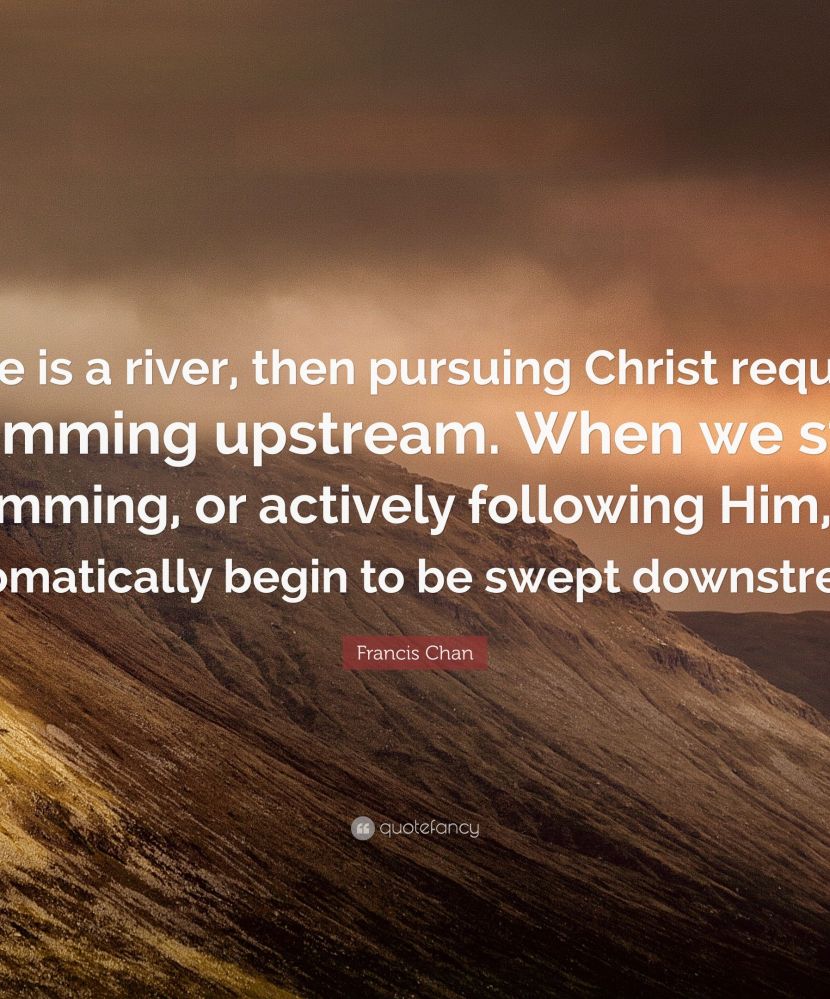
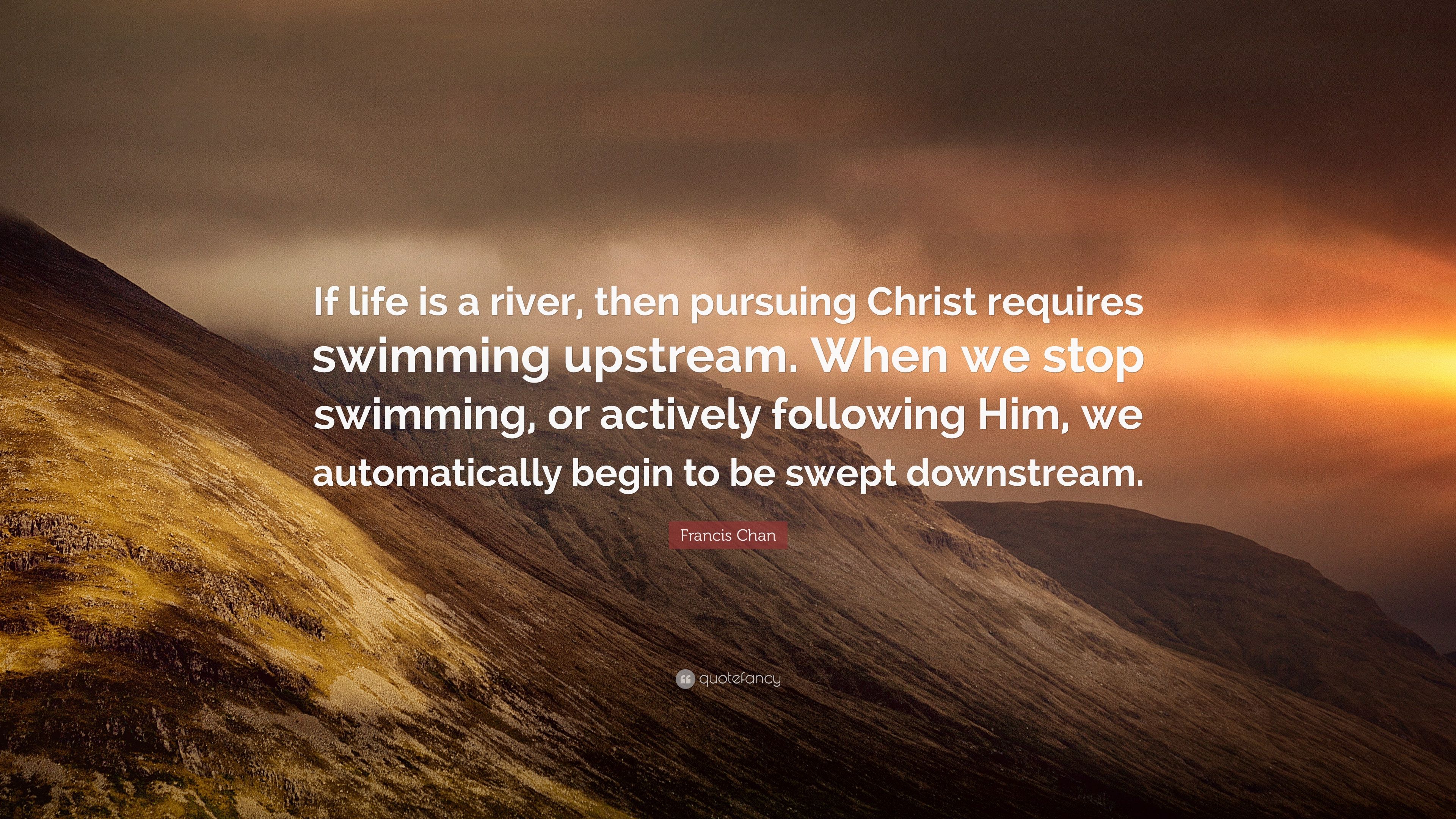
Swimming Upstream ~ The Rev. Dcn. Igor Kalinski, OPI
From the Dominican Hermitage & Oratory of St’s Peregrine and Sebastian in Gevgelija, region Bojmia, Republic of Macedonia, Europe and Translated from the Bulgarian 14th Week in Ordinary Time
And today we are called with Jesus to go to our Nazareth, our home and homeland, among our relatives. And it is here that we are called to be heralds of the gospel. In us and through us – us as a community of believers called the Church and us as individuals in the Church – God wants to act among those who are “ours”, and in this sense “ours” are those who are close to us, they above all, but they are “ours” and the whole of humanity, as well as all created reality. And we are called by these “ours” to be witnesses of the gospel of God’s love revealed to us in Jesus of Nazareth. It is important, however, that in fulfilling this mission of ours, we do not allow our time and our Nazareth to captivate us with their mentality in their mediocrity, but we need to be, even at the cost of non-acceptance and rejection, different. In this being different we must pay particular attention to two dangers that we can easily run into. The first danger is the fear of failure, of being different and of not being accepted because we are different. This is a problem faced by many, especially young Christians. Being a Christian in an authentic way – not in the way of that soothing Nazarene habit in which Jesus could do nothing and comparable to unbelief – is something that is not worth much today, something that many would rather be ashamed of their being Christians than something they are proud of. It is this fear that hinders and disables being what we are called to be. To resist this danger of fear, which we might call the fear of regard for those to whom we are sent, today’s liturgy with Ezekiel confronts us with what awaits us, but at the same time makes us aware that we have not chosen ourselves for the mission we have. The prophet never sends himself. The prophet is always sent by God: “Son of man, I send you to the rebellious people who have turned away from me. … I send you to your sons with stubborn looks and hardened hearts. And thou shalt say unto them, Thus saith the Lord GOD; Whether they will hear, or whether they will hear, whether they be rebellious or not, let them know that the prophet is among them. The second danger is arrogance because we are different, because we have not allowed ourselves to be overtaken by the current and carried where it carries all others, but like Jesus we swim upstream, the opposite of most. Pride prevents us from seeing Jesus as he truly is and from creating our own image of Jesus. And then it happens that, thinking we know him, we don’t actually recognize him at all. And instead of witnessing it to others, we become an obstacle to others meeting it. That is why Jesus is not and cannot be in pride. Jesus is present in humility. And only the humble can witness it. In order to protect us from pride, God helped us with St. Paul gave “a thorn in the flesh.” I do not know what that thorn was in the case of St. Paul. Perhaps it was this same thorn that exists in our case, and it is today the mentality of the society and time in which we live and which it does not consider to be Christ’s and with Christ desirable, but backward. But let’s not be afraid of that thorn. With him always comes from the Lord his “grace because strength is perfected in weakness.” Thanks to this we can discover experientially that true strength is not in strength, but that true strength is in weakness, that is, that the words are truly true: “For when I’m weak, then I’m strong. ” If we manage to resist these two temptations, the temptations of fear, and the temptations of pride, we will be able to continue our Christian witness despite all adversities. And to show everyone that God continues today to speak and act in what people least seek and see in him, in ordinary people, events, phenomena, but also in us if we live our daily lives simply and Christian consistently. And Jesus Christ will not then come and go unnoticed and with regret need to reaffirm: “He is not a prophet without honor except in his homeland, among his relatives and in his home.” We will then not be just his homeland, relatives and home. We will then be Himself, Jesus Christ, His living presence for all those with whom we live and to whom He sends us.
With Liberty and Justice for… Who? ~ The Rt. Rev. Michael Beckett, OPI
On Independence Day, USA

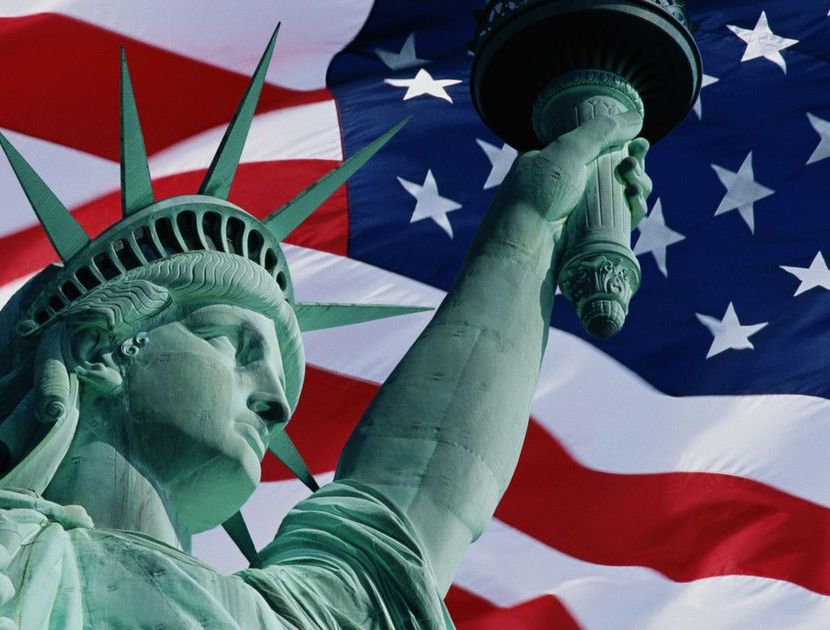
I love this country. There have been times when I’ve actually gotten teary looking at the flag and listening to the “The Star Spangled Banner.” Said ‘Star Spangled Banner’ has proudly waved on our house for years. Like many, dare I say ‘most’ of us, I know every word of “God Bless America” and Lee Greenwood’s “God Bless The USA.” For most of my adult life I taught the Pledge of Allegiance, even though it was not required. Yes, it was said every morning before school started and the kids knew the words, but they really didn’t know what they were saying, and so, being the Language Teacher I was, we had vocabulary lessons on the Pledge…..and that’s where the trouble began……
…..with liberty and justice for all. LIBERTY??? Umm…. According to the dictionary, the word “liberty is defined thusly:
lib·er·ty /ˈlibərtē/ 1. the state of being free within society from oppressive restrictions imposed by authority on one’s way of life, behavior, or political views.
…..with liberty and justice for all. JUSTICE???? Umm…… According to the dictionary, the word “justice” is defined thusly:
just/jəst/ adjective based on or behaving according to what is morally right and fair. Derivitive: jus·tice /ˈjəstəs/ noun 1. just behavior or treatment. “a concern for justice, peace, and genuine respect for people”
…..with liberty and justice for all. ALL???? Umm…… According to the dictionary, the word “all” is defined thusly:
All /ôl/ predeterminer · determiner · pronoun: used to refer to the whole quantity or extent of a particular group or thing.
Those three little words become problematic when we think of our history and our beloved country today. If “All” means ‘the whole quantity,’ then doesn’t it stand to reason that “with liberty and justice for all’ means just that? Everyone, all people, regardless of race, ethnicity, religious belief, socio economic status, or sexual orientation?
Would I fight to defend this country? Of course. I actually tried when I was a much younger man. But….. (Those of you who know me well know that there is always a ‘but’)…but I wasn’t allowed to do so…but for the history of this country, up until very recently, 10 December 2010 and the repeal of “Don’t Ask Don’t Tell” I would not have been allowed to do so.
That pesky word, “liberty?” That “free from oppressive restrictions” part? Scott and I were not allowed to get married until June of 2015. Mixed race marriages were illegal in parts of the United States until 1967 when the Supreme Court ruled in the Loving v. Virginia case. Where’s the “all” in that?
Now, justice. There’s a word for you. We teach our kids to be ‘just’ when we teach them to be fair. Pretty simple, right? Until someone starts asking, “fair for who?” Fair for the Native Americans to have to fight the government to keep the lands they have been promised? (The Department of the Interior surprised the Mashpee Wampanoag when it announced in March 2020 it was taking more than 300 acres of land.) Where is the justice when our Black brothers and sisters are persecuted for just being Black?
That little phrase, “liberty and justice for all.” Huh. Do we mean it? Really? If you love this country as much as I do, shouldn’t we then, all of us, continue to fight for what this country stands for? We cannot be content with the status quo. We cannot be content until there is truly liberty and justice for ALL people, regardless of race, ethnicity, religious belief, socio economic status, or sexual orientation. Native American. Black. Gay. Asian. Jew. Muslim, Christian.
Oh. Freedom for those groups? Umm…. Religion? Religion you say? “But this country was founded on the Christian religion!” you declare. Umm….not so much. In fact, no, it most certainly was not.
The U.S. Constitution is a wholly secular document. It contains no mention of Christianity or Jesus Christ. In fact, the Constitution refers to religion only twice in the First Amendment, which bars laws “respecting an establishment of religion or prohibiting the free exercise thereof,” and in Article VI, which prohibits “religious tests” for public office. Both of these provisions are evidence that the country was not founded as officially Christian.
The Constitution that we hold so dear and pledge to defend says this:
Congress shall make no law respecting an establishment of religion, or prohibiting the free exercise thereof; — First Amendment to the U.S. Constitution
And then there is the Treaty of Tripoli. The Treaty is often cited, in discussions regarding the role of religion in United States government, for a clause in Article 11 of the English language American version which states that “the Government of the United States of America is not, in any sense, founded on the Christian religion.
So there is that.
Now, speaking of religion….I dare say the biggest most of you reading this are Christians, coz, you know, the “friend” thing and the “Bishop thing” that I’ve got goin’ on here…..Let’s think a sec about what is said in the Bible about this “liberty and justice for all” thing….
“Proclaim liberty throughout the land unto all the inhabitants thereof…” These words are from Leviticus 25:10 and then: Verse 17: “Do not take advantage of each other, but fear your God.”
Let’s skip over to Matthew 5: Look at the fourth beatitude in verse 6: [6] Blessed are those who hunger and thirst for righteousness, for they will be filled.
The word “righteousness” often refers to uprightness, doing the right thing, obeying God’s rules. But the same word is also used for what in English we call “justice” and I believe that here that is exactly what Jesus has in mind.
And then there’s this little troublesome story:
Luke 4:14-30. 14 And Jesus returned to Galilee in the power of the Spirit, and news about Him spread through all the surrounding district. 15 And He began teaching in their synagogues and was praised by all. 16 And He came to Nazareth, where He had been brought up; and, as was His custom, He entered the synagogue on the Sabbath, and stood up to read.17 And the book of the prophet Isaiah was handed to Him. And He opened the book and found the place where it was written, 18 “The Spirit of the Lord is upon Me, Because He anointed Me to preach the gospel to the poor. He has sent Me to proclaim release to the captives, And recovery of sight to the blind, To set free those who are oppressed, 19 To proclaim the favorable year of the Lord.” 20 And He closed the book, gave it back to the attendant and sat down;
If we, as Christians, are to follow Christ, are we not also called to preach the gospel, to proclaim release to the captives and to set free those who are oppressed? As followers of Jesus Christ, you and I need to be advocates for those who have no voice, advocates for those whose race or religion or country of origin causes them to be treated like people who do not matter. We need to be advocates for those who are perceived to be different, other, who don’t fit the mold. For too long, these silent voices have suffered the pain of repressed indifference and that’s why they have broken out in protests of violence. Are they right to raise their voice in violence? Of course not, but when we who are privileged fail to ensure liberty and justice for all, the silent voices don’t know what else to do than to get some attention through violence. That’s why we need to be the voice of the silent. That’s why we need to advocate for those who are treated unjustly. When we advocate for those who are treated unjustly we don’t simply do something that’s politically correct. When we advocate for those who are treated unjustly, we reveal ourselves to be followers of Jesus Christ Kinda sounds like liberty and justice for all to me.
LIBERTY and JUSTICE for ALL. Think about it. Do we try to maintain the status quo? Or do we mean what we say and truly represent what this country stands for? Think about it.
I wish each of you a most blessed 4th of July.
The Solemnity of Sts Peter and Paul ~ The Rev. Lady Sherwood, OPI
Reading I: Acts 12:1-11
Responsorial Psalm: 34:2-3, 4-5, 6-7, 8-9
Reading II: 2 Tm 4:6-8, 17-18
Gospel: Mt 16:13-19
Liturgical colour: Red.
Let us first look at today’s Gospel Reading of MT 16:13=19:
When Jesus went into the region of Caesarea Philippi he asked his disciples, “Who do people say that the Son of Man is?” They replied, “Some say John the Baptist, others Elijah, still others Jeremiah or one of the prophets.” He said to them, “But who do you say that I am?” Simon Peter said in reply, “You are the Christ, the Son of the living God.” Jesus said to him in reply, “Blessed are you, Simon son of Jonah. For flesh and blood has not revealed this to you, but my heavenly Father. And so I say to you, you are Peter,and upon this rock I will build my Church,and the gates of the netherworld shall not prevail against it.I will give you the keys to the Kingdom of heaven. Whatever you bind on earth shall be bound in heaven;and whatever you loose on earth shall be loosed in heaven.”
My dear brothers and sisters in Christ,
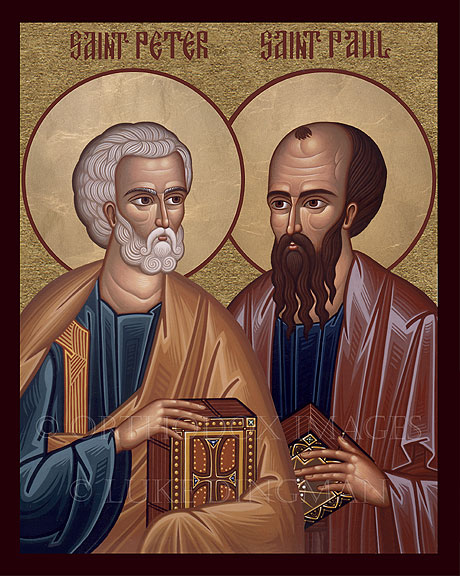
Today we celebrate the Solemnity of two of the great pillars of the church, those being the Apostles, Sts Peter and Paul. They both came from entirely different backgrounds. Peter worked as a fisherman and was from rural Galilee. Paul was a learned Pharisee from the university city of Tarsus. Peter’s first language was Aramaic; Paul’s first language was Greek. Peter knew Jesus from the time of Jesus’ baptism and was with Jesus until the time of Jesus’ passion and death; Paul only ever met the risen Lord, in the vicinity of Damascus. For all their differences, they had at least one thing in common. Both of these men found themselves at odds with the Lord. Peter denied Jesus publicly three times. Paul violently persecuted the followers of Jesus, and thereby persecuted Jesus himself. Yet, their resistance to the Lord did not prevent the Lord from working powerfully through them. Paul was chosen to be the great apostle to the pagans. We know from the letter to the Galatians that Peter and Paul had a serious disagreement at one point about the direction the church should be taking. They were very different people and the Lord worked through each of them in very different ways. They were certainly united in death. Very early tradition recalls that both were executed in Rome by the emperor Nero who blamed the Christians for the fire of Rome. Today’s feast reminds us that the way the Lord works through us is unique to each and every single one of us. The feast also reassures us that our many resistances to the Lord need not be a hindrance to the Lord working through us. Peter who denied the Lord and Paul who persecuted the Lord went on to become great servants of the Lord. Our failings do not define who we are. Paul would go on to say, ‘the Lord’s grace toward me has not been in vain’. Likewise, the Lord’s grace towards us in our weakness and frailty need never be in vain if we continue to open ourselves to the workings of that grace, just as Peter and Paul did.
Let us pray:
O God, who on the Solemnity
of the Apostles Peter and Paul,
give us the noble and holy joy of this day,
grant, we pray, that your Church
may in all things follow the teaching
of those through whom she received
the beginnings of the true religion.
Through our Lord Jesus Christ, your Son,
who lives and reigns with you
in the unity of the Holy Spirit,
one God, for ever and ever.
Amen.
Be Jesus ~ The Rev. Frank Bellino, Novice
In the Gospel today, we hear about two miracles done by Jesus:
o First Jesus raises the daughter of a man named Jairus from the dead. And then a woman is healed from a hemorrhage.
o At Notre Dame, I learned the idea that when Jesus came among us, in his ministry in Israel…his miracles of healing and even raising people from the dead were a taste of what would happen when he returned at the end of time. If you look at the Old Testament and then what Jesus says in the New Testament there is this ongoing prediction that at the end of time, as the Old Testament says, or when Jesus returns, as Jesus puts it….there will be no more sickness and death….and Jesus’s time among us was a taste of that future time when there would be a physical resurrection of the dead and we would live close to God.
***I have used this story before, a few years ago, but figured I would use it again, for fun:
The Pope goes to New York, and he is picked up at the airport by a limousine. He looks at the beautiful car and says to the driver, “You know, I hardly ever get to drive. Would you please let me?”
The driver is understandably hesitant and says, “I’m sorry, but I don’t think I’m supposed to do that.”
But the Pope persists, “Please?” The driver finally lets up. “Oh, all right, I can’t really say no to the Pope.”
So the Pope takes the wheel, and boy, is he a speed demon! He hits the gas and goes around 100 mph in a 45 zone. A policeman notices and pulls him over.
The cop walks up and asks the Pope to roll down the window. Startled and surprised, the young officer asks the Pope to wait a minute. He goes back to his patrol car and radios the Supervisor.
Cop: Sergeant, I have a problem.
Sergeant: What sort of problem?
Cop: Well, you see, I pulled over this guy for driving way over the speed limit but it’s someone really important.
Sergeant: Important like the mayor?
Cop: No, no, much more important than that.
Sergeant: Important like the governor?
Cop: Wayyyyyy more important than that.
Sergeant: Like the president?
Cop: More.
Sergeant: Who’s more important than the president?
Cop: I do not know, but he has got the Pope driving for him! Oh well. The Pope. Just for fun.
For the sermon today, I was thinking about a friend of mine. He is a priest. And a way back I was as with him and a young priest came by to see him who used to work with my priest friend, but now works at another parish. And the young priest immediately came over to my priest friend and gave him a big hug and said, “I miss you.” I guess he does not like his new pastor!! Ha ha. But anyway, priest friend has had so much good impact in so many ways for many years in his diocese: A wonderful and kind priest.
But I remember, 20 years ago, when he was a little younger than I am now….he had said to me one day, out of nowhere, “Maybe it’s time for me to throw in the towel.” And that means to quit. He was frustrated with things in his life and his ministry as a priest at the time. But he did not throw in the towel: He stuck with it. And I thought of all the good he did by trying to follow Jesus in the way that he felt he had been called even though he had hit some rough spots in his life he didn’t like.
And that, just as Jesus came among us and brought healing into the world and brought people back to life through his time among us…so also, my priest friend, through sticking with it and trying to follow God in his own way, had also brought healing to other people, and brought God’s love to other people….
And that just as Jesus put up with being criticized by the religious leadership of his time, and put up with being rejected by his hometown of Nazareth, and just as he had to tolerate all but one of his disciples running away or rejecting him when he was in trouble….and just as Jesus had to face suffering and the cross….. so, I also I thought of my friend who stuck with his call-in life even though he faced challenges.
Now, I know that you and I want to be happy….and we want our kids to be happy….and I know my priest friend takes vacations and laughs and thinks about getting out with friends. And I know that part of being able to KEEP commitments like marriages or being a priest or a nun is that we can have hobbies and to have fun and to set limits to how much work we do….
BUT, still, when we think of the wonderful things Jesus did in healing the woman who had been bleeding for 12 years or raising the young lady from the dead….these things happened because Jesus was willing to make a sacrifice….and because God the Father was willing to make a sacrifice….and that Jesus was willing, sometimes, to suffer….
And that’s the same with us: yes it’s good, sometimes, to go to the beach, to get rest, to have a hobby, to laugh as much as possible in life….BUT ALSO, it is good, sometimes, for the sake of the love of Jesus, to be willing to sacrifice and suffer a bit….. Because then we sometimes can become vehicles for God’s healing and new life to come into the world.
And indeed, when Jesus COMMISSIONED THE DISCIPLES to go baptize all nations….. he gave them AND US a JOB TO DO.
For he started the Church, just like St. Michaels a year ago, and he gave us the Holy Spirit so that he could WORK THROUGH US to heal people and bring them hope until he returns to take away all sin and sickness and death.
That’s why Jesus started the Church…and that’s why he gave us the Holy Spirit….to help us keep on bringing the healing of God into the world until he returns in glory.
And that’s why we Catholics stubbornly hold onto the notion that the Church is important….for all the foolishness and foibles and worth of some of its members…..because Jesus believed it was a good thing for there to be a Church THROUGH WHICH he would minister….THROUGH US….until he returned in glory – or else Jesus wouldn’t have started the Church.
And so, we now, in the Church, are the hands and feet and voice of Christ. Indeed, WE REPRESENT CHRIST when we visit a nursing home. Or help the homeless or welcome a parishioner at the door as a greeter or help with coffee and donuts or help with a Bible study or go to the sacrament of confession or of anointing.
YES, IN DOING THOSE SIMPLE THINGS, WE REPRESENT CHRIST…and CHRIST TRULY WORKS THOURHG US….to heal a broken world….and Jesus told us that OUR CHURCH WOULD BE HOW HE WOULD MINISTER TO THE WORLD UNTIL HE RETURNED IN GLORY.
Indeed, as he told Peter in Matt 16:18 –
And I tell you that you are Peter, and on this rock, I will build my church, and the gates of Hell will not prevail against it. And so just like JESUS WITHSTOOD FROM GLORY IN HEAVEN TO BECOMING A SON OF A POOR YOUNG MOM IN BACKWATER GALILEE…AND LATER SPAT UPON AND LOOKED DOWN UPON BY MANY OF THE RELIGIOUS LEADERS OF HIS DAY, and so also sometimes, while we also need to make choices in order to be happy – like to reach out to friends and exercise and to be with people who help us to laugh….we also are called, at times, to imitate Jesus and to pick up our cross in order to HELP OTHERS IN THIS LIFE, and IN ORDER THAT JESUS CAN WORK THROUGH US IN THE WORLD TODAY.
So that just as Jesus healed the woman today who had been hemorrhaging for 12 years….and just as Jesus raised a young lady from the dead in the Gospel today….which he never would have done if he had stayed in glory with the Father….
So we too need to leave our comfort zone to get out there to help others as well in our world today. For in the world where we have the shooting at the Alamo and so many people who could really use a kind word or a bit of our time….let’s push ourselves a bit to be people who bring Jesus to the world today.
Jesus really is depending on us to do that….I assure you of that. And if we step out to help others in our life….God will be immediately ready to use our help in transforming the world today….so that we comfort the afflicted and bring healing to the hurting and give new hope to those who are struggling.
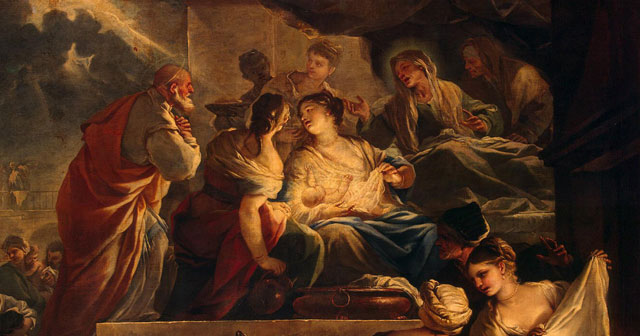
The Nativity of St. John the Baptist, Milan Komadina, Novice
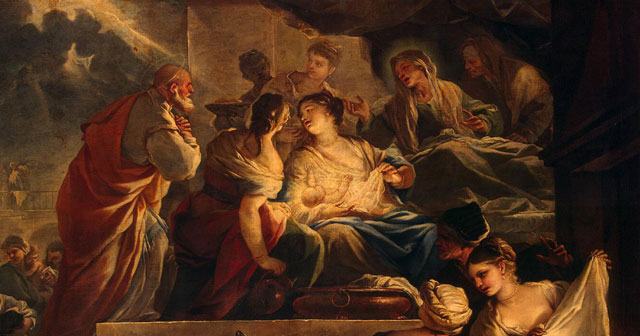
Dear sisters and brothers, today our Holy Church commemorates birthday of Saint John, the Baptist. At the beginning of this sermon let us pray and read how God foretold the nativity of this Saint.
Jeremiah 1:4-10
The Birth of John the Baptist Foretold
5 In the time of Herod king of Judea there was a priest named Zechariah, who belonged to the priestly division of Abijah; his wife Elizabeth was also a descendant of Aaron. 6 Both of them were righteous in the sight of God, observing all the Lord’s commands and decrees blamelessly. 7 But they were childless because Elizabeth was not able to conceive, and they were both very old.
8 Once when Zechariah’s division was on duty and he was serving as priest before God, 9 he was chosen by lot, according to the custom of the priesthood, to go into the temple of the Lord and burn incense. 10 And when the time for the burning of incense came, all the assembled worshipers were praying outside.
11 Then an angel of the Lord appeared to him, standing at the right side of the altar of incense. 12 When Zechariah saw him, he was startled and was gripped with fear. 13 But the angel said to him: “Do not be afraid, Zechariah; your prayer has been heard. Your wife Elizabeth will bear you a son, and you are to call him John. 14 He will be a joy and delight to you, and many will rejoice because of his birth, 15 for he will be great in the sight of the Lord. He is never to take wine or other fermented drink, and he will be filled with the Holy Spirit even before he is born. 16 He will bring back many of the people of Israel to the Lord their God. 17 And he will go on before the Lord, in the spirit and power of Elijah, to turn the hearts of the parents to their children and the disobedient to the wisdom of the righteous—to make ready a people prepared for the Lord.”
What I personally find interesting when I think about Christian commemoration of the saints is that we most often commemorate the day of one saint`s death. Only if a Saint was a very big and special saint we celebrate his or her birthday. We celebrate Jesus` birthday, birthday of St. Mary, mother of God and birthday of St. John. St. Mary`s birthday is commemorated as she was the one participating God`s plan for the Son of Man to be born. On the other hand Saint John was the one participating in God`s plan for the Son of God to start His heavenly mission. Before meeting John and before being baptized Jesus didn`t start his heavenly work. Two key roles of Jesus were played with the help of Mary and John. And so, the Church commemorates two more birthdays along with the Birthday of Our Lord Jesus.
The same thing happens in life of every Christian. When we are born by our mothers we are born for this world. We are material sons and daughters of human. But what happens when we are baptized. After being baptized we start our spiritual journey through this life. We start something that should have been called – heavenly path. This path is not easy. We may have daily struggling with many things and temptations. Laziness, anger, stress, lack of time, negative thoughts, excessive sexual desire and imagination, bad mood, injustice that we see every day… all those can be factors that would lead us away from God over and over again. But we should always at least do our sign of cross and say “God, I know you are here, glory be to you always“. Doing cross sign is what reminds us on our baptism. Since we were baptized in the name of the Father, the Son and the Holy Spirit. Doing our sign of cross is like we are sealed with the Holy Spirit. We remember that we are on our way of passion as Jesus was. And we all have our own cross.
Today we will talk mostly about the nativity of Saint John but as I said at the beginning of this text, it is interesting that not many nativities are commemorated by the Church. What we do commemorate is – death! This looks scary, right? Well, it might only look that way but it is interesting to make correlation between death and baptism. When we die we are buried under ground. There is a symbolic burying under the water when a person is baptized. Baptism is also symbol of death. But when we, Christians, say the word “death“ we should refer it to being dead for the sin and for the evil acts. We are washed, spiritually purified, justified by faith, saved by grace and dead for the sin and should be jumping out of the water of baptism as a new man. Born for the life, born for the love and born for God. Often when I think about saints, commemorations and Christian holidays I try to think how we can use and apply what we learn from these commemorations in our everyday life. When I think about the water of baptism I like to think that our blanket on our bed may be also a good reminder of who we are in Christ. When we lay in bed to sleep it is like laying in the tomb of baptism. When you wake up in the morning and you remove your cover and stand up remember that Jesus raised you up for this day. Christianity is full of beautiful symbols everywhere. Be thankful and pray or at least do your sign of the cross. Do it with faith and love. See how blessed you are. If you have time read your Bible. Make a habit to practice it every day. Here I would like to share a part from the Bible to see more about Nativity of John the Baptist.
Luke 1:57-66
The Birth of John the Baptist
57 When it was time for Elizabeth to have her baby, she gave birth to a son. 58 Her neighbors and relatives heard that the Lord had shown her great mercy, and they shared her joy.
59 On the eighth day they came to circumcise the child, and they were going to name him after his father Zechariah, 60 but his mother spoke up and said, “No! He is to be called John.”
61 They said to her, “There is no one among your relatives who has that name.”
62 Then they made signs to his father, to find out what he would like to name the child. 63 He asked for a writing tablet, and to everyone’s astonishment he wrote, “His name is John.” 64 Immediately his mouth was opened and his tongue set free, and he began to speak, praising God. 65 All the neighbors were filled with awe, and throughout the hill country of Judea people were talking about all these things. 66 Everyone who heard this wondered about it, asking, “What then is this child going to be?” For the Lord’s hand was with him.
80 And the child grew and became strong in spirit[d]; and he lived in the wilderness until he appeared publicly to Israel.
As we are remembering the importance of the baptism, and meditate on what we have read from the Bible. As we practice gratefulness for all the blessings may we pray today to Saint John and give glory to our God for ever. Amen.
Calming the Storm ~ Fr. Frank Bellino, Novice
Before I talk of our Heavenly Father, I want to share about “Father’s Day.” Far from a “Hallmark holiday,” Father’s Day has its origins in medieval Europe, when Catholics dedicated a day to honoring fathers, fatherhood, and all paternal relationships. Fast forward a couple hundred years, and it is now a holiday held all over the world — a testament to how important fathers and father figures are in societies everywhere. However, be careful. The date fluctuates around the world. In Spain, for example, it is held on March 19, while in New Zealand, it is the first Sunday in September. Keep this in mind if you are traveling, or have family living overseas. There are few things more upsetting than a disappointed dad.
Father’s Day in America has a rich history dating back to the turn of the 20th century. But to really understand Father’s Day we must go back to the post-civil war reconstruction era of the 1860s and a day that celebrates the other half of the parenting duo, mothers.
The idea of celebrating parents has its roots in one woman: Ann Reeves Jarvis. Shortly after the Civil War, Jarvis sought to soothe the wounds created over four years of bitter conflict in one divided West Virginia town by choosing a day to celebrate mothers of both confederate and Union soldiers. Known as “Mother’s Workdays” Jarvis hoped that during the newly installed era of peace and reconciliation that previous enemies could begin to sow unity again by celebrating one thing they all had in common.
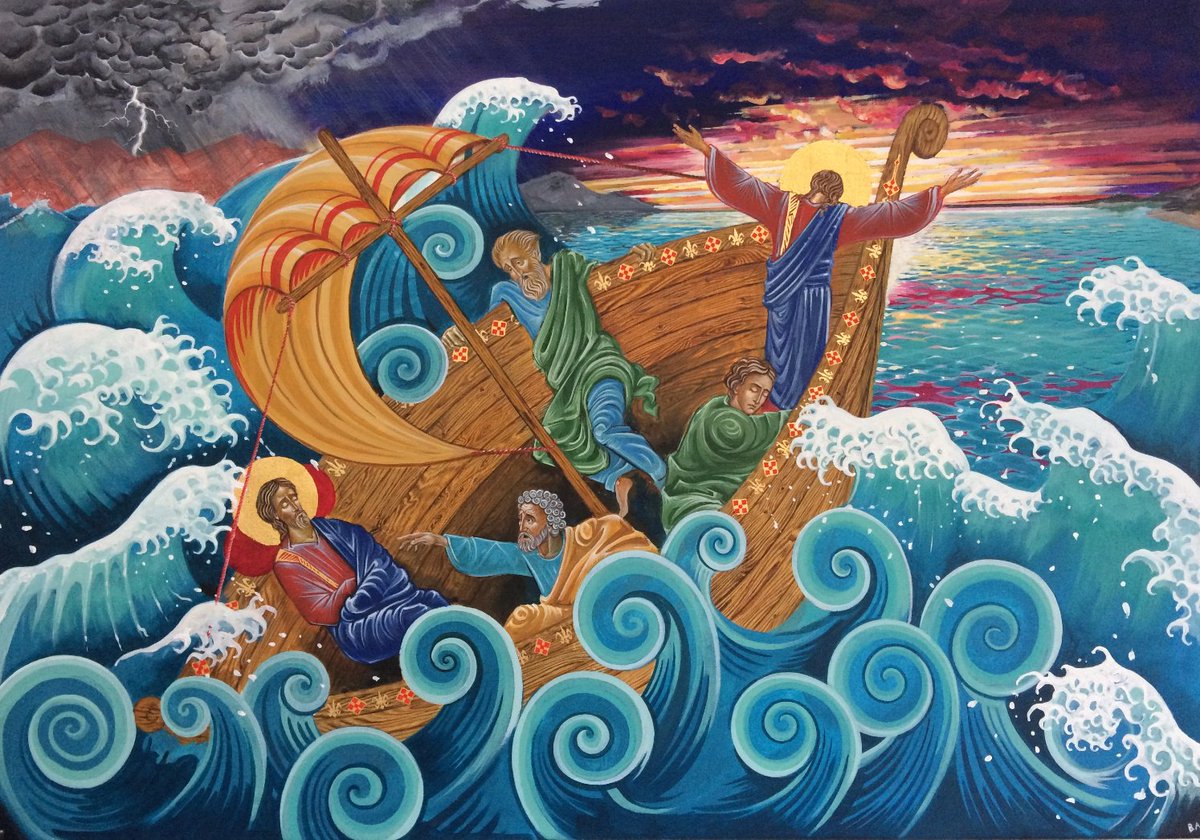
At the end of the Book of Job, God addressed Job out of a storm and asked him if he was present when God created the world. In today’s first reading God speaks about the creation and confining of the sea. In the Gospel, Jesus quiets a storm, and the disciples ask, “Who is this whom even the wind and sea obey?”
Insurance companies use a term to describe an uncontrollable natural force. They call this an act of God. That is an unfortunate term. It assumes that God causes nature to do harm to people. God does not do evil things to people. People do evil things to people. Pope Francis in the encyclical Lauate Si, On the Care for our Common Home, directs us to discover and prevent any catastrophe that could rightly be called an Act of Man.
Natural catastrophes are events that we are very much aware of here in Texas. We are always keeping an eye on the weather and how it will affect the roads and creek and river waters around us. We must have a lot of respect for stormy weather, particularly when a hurricane or hail threatens. Here at St. Michael’s, we do not either have hurricane windows, or wood or metal doors and windows to protect the Church and all our building, as it is unlikely that a hurricane will strike us. But now rain is a different story, we must utilize our intellect to determine what protection we must take. Hopefully, you have all made provisions to protect your homes also.
As careful as people must be with their property that is on land, they must be far more careful with that which is on the water. Boats have got to be secured. Trying to stay afloat during a major storm is foolish unless you are in a large ship.
The ancients also had a healthy respect for the sea and for storms out on the sea. The ancients saw the sea as one of the most powerful forces in the world. They also saw the sea as a source of beauty. Life itself came from the sea. Food comes from the sea. Peace and serenity come from looking at the sea. If you do not believe me than you have not gone out to see the sunset on Medina Lake recently.
Even though it was such a powerful force, the ancients knew that God could control the sea. In the Book of Job, Job’s pains lead him to question God’s wisdom and power. God challenges Job with the simple statement found in the first reading for this Sunday: “I closed up the sea.” God has even more power than the sea.
The fear of a storm at sea was too much for Jesus’ disciples in the today’s Gospel reading. Many of them were fishermen. They were terrorized when they saw the storm coming. When Jesus quieted the sea and the winds, they recognized the power of God working through him. Their question: “Who is this that calms the storm and the winds?” was similar to asking, “Who is the King of Glory?”
First, though, their faith was tried. Remember, when the storm came up, Jesus was asleep in the boat. It appeared that He was not concerned with their plight. It seemed that they had to ride out this storm alone. The fear that the disciples had is the same fear that we all have when we are confronted with a crisis. We find out that we have a serious illness, and we become fearful for our lives and for our loved ones. We learn a terrible truth about one of our relatives or friends, and we fear that their lives and even our own reputations will be shattered. We often must accept a change in our lives. Even changes as routine as moving from Middle School to High School, or High School to college, or college to independent life as a young adult can be frightening. We consider marriage and our responsibilities to a person we love, and then we consider our responsibilities to those people that we bring into the world, and we fear that we might not be up to the challenges of life. We fear that we are alone. But we are not alone. God sees. God knows. He is there in the boat of life with us as the storms rage. He challenges us as Jesus challenged his disciples, “Why are you afraid? Where is your faith?” Our all-loving God is also an all-powerful God. He will calm the sea for us if we trust in Him. God does not forget us, even if we think He is sleeping.
Perhaps today’s readings are not about nature after all. They are about God, Our Father, the One who created the universe and cares for each one of us as an only child. He calls upon us to have faith that conqueror of the seas and of all chaos will help us grow closer to Him through all the challenges of our lives.

Solemnity of Most Sacred Heart of Jesus ~ The Very Rev. Lady Sherwood, OPI
Liturgical colour: White.
Reading I: Hos 11:1, 3-4, 8c-9
Responsorial Psalm: Is 12:2-3, 4, 5-6.
Reading II: Eph 3:8-12, 14-19
Gospel: Jn 19:31-37
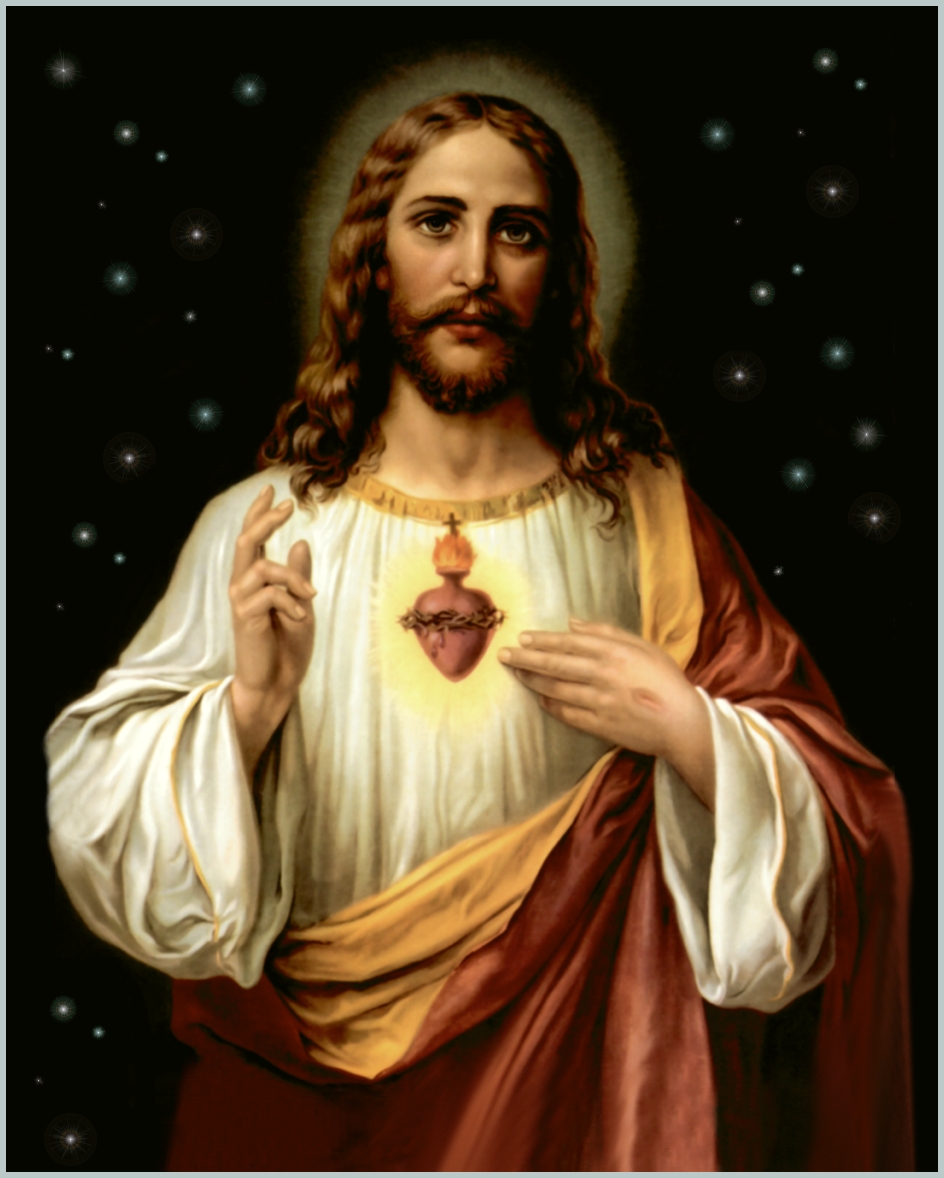
My dear brothers and sisters in Christ, today, we come together to celebrate the Solemnity of The Sacred Heart of Our Lord and Saviour, Jesus Christ.
Let us first look at today’s Holy Gospel Reading of Jn 19:31-37 (NIV):
31 Now it was the day of Preparation, and the next day was to be a special Sabbath. Because the Jewish leaders did not want the bodies left on the crosses during the Sabbath, they asked Pilate to have the legs broken and the bodies taken down. 32 The soldiers therefore came and broke the legs of the first man who had been crucified with Jesus, and then those of the other. 33 But when they came to Jesus and found that he was already dead, they did not break his legs. 34 Instead, one of the soldiers pierced Jesus’ side with a spear, bringing a sudden flow of blood and water. 35 The man who saw it has given testimony, and his testimony is true. He knows that he tells the truth, and he testifies so that you also may believe. 36 These things happened so that the scripture would be fulfilled: “Not one of his bones will be broken,” 37 and, as another scripture says, “They will look on the one they have pierced.”
So what are we being told today?
The scene in our Gospel Reading today is immediately after Jesus’ death. Jesus’ body is still hung upon the cross. However, since the Sabbath was upon them, the bodies of Jesus and the two men crucified alongside him needed to be taken down and buried. John tells us that the Jews asked Pilate to break the legs of Jesus and also of the two men who were crucified with him. However, when the soldiers came to Jesus’ body, he clearly was already dead so they decided not to break his legs. Rather they chose to pierce his side with a lance! And as we know blood and water flowed out. This fulfilled the prophecy in Exodus 12: “Not one of his bones will be broken.” Thus, Jesus fulfilled the prophecies of the Messiah. Jesus truly was indeed the “Lamb of God” who had been sacrificed for each and every one of us!!
Do we truly appreciate what Jesus did for every single one of us? Is Jesus’ passion, death and resurrection personal to us as indeed it truly ought to be? Or do we simply think of it merely as a historical story? Do we truly and deeply appreciate Jesus’ willingness to sacrifice his own life for us so that we can live fully?
Today’s Solemnity of the Sacred Heart of Jesus gives us the vital opportunity to ponder on all that Jesus freely chose to do for everyone, yes indeed, for you and for me! Do we realize how much Jesus continues to grace us within our lives today? Whether we are aware of it or not, we live deep within Jesus’ own heart. Truly there is no greater love than the love which Our Lord Jesus has for us!
Today I invite you to sit quietly with Jesus for a period of time. To take the time to truly thank Jesus for the depth and the tenderness of his love for us. What a wondrous and enduring gift He continually gives to us! Today may we truly celebrate Our Lord’s sacred and loving heart.
Let us pray:
O Sacred Heart of Jesus, font of love and mercy, and source of every blessing,
Pour out your love upon our wounded human hearts.
O Sacred Heart of Jesus, burning with the fire of charity for every soul,
Purify our hearts and draw us ever closer to your divine embrace.
O Sacred Heart of Jesus, wounded by our own sins, and familiar with all suffering,
Forgive us of our sins and restore us to life.
O Sacred Heart of Jesus, through which every heart finds solace and refuge,
Be our strength, our courage, our fortress, and our defender.
O Sacred Heart of Jesus, proof of the Father’s love and desire for us,
We place all our trust in you. Amen.
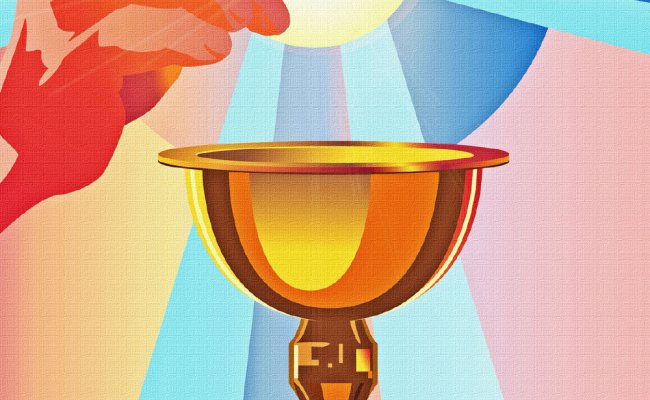
Corpus Christi ~ The Rev Dcn Scott Brown, OPI
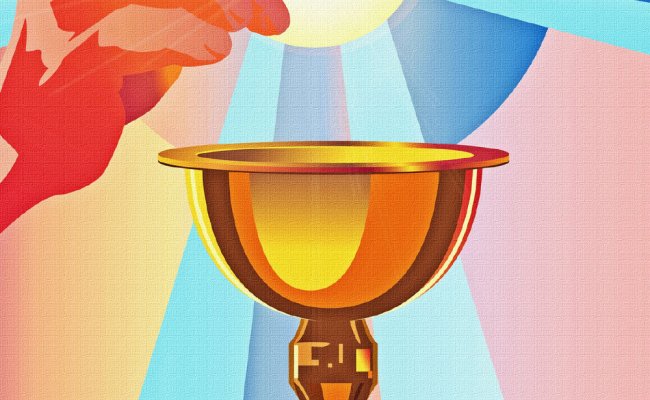
Mk 14:12-16, 22-26
On the first day of the Feast of Unleavened Bread,
when they sacrificed the Passover lamb,
Jesus’ disciples said to him,
“Where do you want us to go
and prepare for you to eat the Passover?”
He sent two of his disciples and said to them,
“Go into the city and a man will meet you,
carrying a jar of water.
Follow him.
Wherever he enters, say to the master of the house,
‘The Teacher says, “Where is my guest room
where I may eat the Passover with my disciples?”‘
Then he will show you a large upper room furnished and ready.
Make the preparations for us there.”
The disciples then went off, entered the city,
and found it just as he had told them;
and they prepared the Passover.
While they were eating,
he took bread, said the blessing,
broke it, gave it to them, and said,
“Take it; this is my body.”
Then he took a cup, gave thanks, and gave it to them,
and they all drank from it.
He said to them,
“This is my blood of the covenant,
which will be shed for many.
Amen, I say to you,
I shall not drink again the fruit of the vine
until the day when I drink it new in the kingdom of God.”
Then, after singing a hymn,
they went out to the Mount of Olives.
The Passover was a tradition for the Jewish people that God had commanded them to follow. It was a special meal that was to help them remember how He saved them after hundreds of years of slavery in Egypt. And the Lord told the Israelites to have the Passover meal every year so that they wouldn’t forget who He was and who they were.
In Mark 14:12, it was time for the Passover. So the disciples asked Jesus, “Where will you have us go and prepare for you to eat the Passover?” And in the next few verses, Jesus tells them where to go and what to do (vv. 13-15).
About the Passover Meal
The Passover was not just a festive occasion to get together and eat stuff. You had to have some very specific things for the meal, each thing having a very specific symbolic purpose. It was precisely tailored to help people remember what God had done for them. So the disciples followed Jesus’ instructions and “they prepared the Passover” (v. 16).
I’m not going to go into detail for verses 17-21, but just note that the Passover had a regimented process to it. And by this time, Jesus and His disciples were going through this process
At the end of the Passover meal, the remainder of unleavened bread would be eaten. This is probably where they were in verse 22.
“And as they were eating, [Jesus] took bread, and after blessing it broke it and gave it to them, and said, ‘Take; this is my body.’”
What the Passover Points To
“Take; this is my body.” We’ve heard those words many times over the years. But we need to realize that Jesus was redirecting this powerful, long-held symbolism of the Passover. Jesus was saying, “This bread isn’t only meant to point you back to God’s faithfulness in the Exodus – it’s meant to point you to me. My body is about to be broken.” For us.
After Jesus passes the cup, He says, “This is my blood of the covenant, which is poured out for many” (v. 24). Here again the cup had always pointed back to the Exodus, but now Jesus tells us that it points to Himself. He just redefines the entire Passover tradition. No average person would dare to do this, but Jesus did – He had the authority to.
The evening would probably have closed with singing. This is what we see in verse 36: “And when they had sung a hymn, they went out to the Mount of Olives.” And that ends Mark’s account of the Lord’s Supper.
Why is the Lord’s Supper Important?
Ever since that night, Christians have regularly observed the Lord’s Supper. Different churches may do it different ways, but the question is: why is the Lord’s Supper so important?
As we read the Bible, we see that it’s all about memory. God’s people have always struggled with a sort of spiritual Alzheimer’s, forgetting who God was and who they were. This is one of the reasons He set up the Passover – so that His people would remember.
If we don’t hear about Jesus over and over again, we’ll forget He’s our Savior. We’ll forget He’s our Lord. And when we forget:
- We start to worry, to be afraid of everything, to feel like we are all alone in the world.
- We will start to go our own way, as though we are the lord of our own life, making prayerless decisions and depending on our own strength.
- We begin to live the way we did before we were made new through Christ. Sin starts to settle into our hearts and habits, and we become vulnerable to temptation. We seek satisfaction and comfort in broken cisterns of the world, forgetting that we have rivers of life-giving water available to us.
- We begin to forget our purpose, devoting ourselves to lesser purposes and trying to cobble together some kind of identity apart from Christ.
- Our priorities start to match our non-Christian neighbors, and soon there’s nothing distinctive about us.
So when you partake in the Lord’s Supper, remember Jesus. It’s not magic bread or magic juice, but the Body and Blood of our Lord. And what they are is so powerful. Remember who Jesus is and who you are. Then ask yourself, “What will be different now that I remember Jesus is my Savior and Lord?”
Heavenly father thank you for the sacrifice of your son Jesus Christ. Let us remember through the sacrament, your sacrifice because of Your love for us. Let us be mindful each time we receive the bread and wine that we are receiving the body and blood of Your only son who died on the cross for our sins. Amen.
 The Order of Preachers, Independent
You must be logged in to post a comment.