
Category: Sermon

Love Them Anyway~The Very Rev. Lady Sherwood, OPI

Reading I: Acts 14:21-27
Responsorial Psalm: Ps 145:8-9, 10-11, 12-13
Reading II: Rev 21:1-5a
Alleluia: Jn 13:34
Gospel: Jn 13:31-33a, 34-35
Liturgical Colour: White
Love One Another as I have Loved You
My dearest brothers and sisters in Christ, firstly, let’s look at the Holy Gospel reading for today of Jn 13:31-33a, 34-35:
When Judas had left them, Jesus said, “Now is the Son of Man glorified, and God is glorified in him. If God is glorified in him, God will also glorify him in himself, and God will glorify him at once. My children, I will be with you only a little while longer. I give you a new commandment: love one another. As I have loved you, so you also should love one another. This is how all will know that you are my disciples, if you have love for one another.”
There are some people we as humans may find easier to love than others. This could be family members or maybe our friends, but we are being commanded to Love ALL people just as our Lord and Saviour loves us. That is not an easy thing to do. Some people may be very hard to love, but we must endeavour our utmost to love them anyway. The Apostles previously could see Jesus, so it was very easy to follow him. But now that our Lord and Saviour has returned to God The Father, until he returns again in Glory, which he will, we are charged to be the light and love of Christ until he returns.
This means we are to shine his love to all people just as Our Lord would if he could presently be seen upon the earth. We are Jesus’s hands and feet upon the earth, we are his representatives until He returns.
We need to love each and every single one of our brothers and sisters in Christ, no matter how hard it may be to do so. We are the only Lord Jesus that some people will ever see, all must be able to see Jesus through our love and through our actions. This is what we have been called to do..to Love one another.
We must see Jesus in every person we meet, no matter what the situation or the setting. Whether it be coming across a wealthy person in the finest of robes, or a naked person scrambling in the dust for titbits of food. We are to love all whether they live in large fancy mansions, to those living in the streets sleeping under torn pieces of cardboard. We are to love those who are kind to us, but we almost must love those who may may be unkind or whom may even hate us. Nobody is unloved by our Lord and Saviour and as such, nobody should be unloved by us either if we are truly doing what we have been called to do.
Only by our love and actions can our Lord Jesus Christ currently be seen upon the earth. We must be the love and light of our Lord to everyone, leaving out nobody from this love. By our love and our actions towards each other, is the way this world will know that we are truly the disciples of the Lord.
Are we truly loving others as we have been commanded to do? I think we as humans still have far to go in this area, especially with those whom it may be difficult to love. But we must strive ever harder to be the love of Christ throughout this world until Our Saviour returns as we have been commanded to do.
If someone is bad or hateful towards us, we must remember our Lord was hated by those he loved first, and like Him, we must love them regardless.
Let us pray:
Loving God, fill our hearts with the love that you freely give. Make love our first and last thoughts. May we love others and freely give to them. Make our spirit a spirit of joy, happiness, and love for both our friends and our enemies. Help us to love everyone as abundantly as you have loved us. Amen.

On Being a Sheep~The Rt. Rev. Michael Beckett, OPI

“Don’t be a sheep!” “Sheeple.” “Like lambs to the slaughter.” Geesh!
We have heard a lot about being ‘sheep’ lately. Wearing a mask, getting vaccinated, and any other ‘going along with the crowd’ type thing, etc. etc. etc. Sigh…..
So, let’s jump on that bandwagon, and talk about sheep.
We get wool from sheep. Female sheep are called ewes, male sheep are rams, and baby sheep are lambs and are cute. Lambs show up on cue in the spring around Easter time, and Jesus is the Lamb of God. One serves mint jelly when serving lamb. When someone is called a “lamb” it is considered to be a compliment. Sheep live in fields and herds and pens and are watched by a shepherd.
Sheep are gentle, quiet, animals and do not give their shepherds a lot of problems. They are not aggressive; they are very docile animals. The word “docile” as described in the Webster’s dictionary means, “easily managed or handled, readily trained or taught.” Sheep love to follow the shepherd and can often be quite affectionate.
So, what about the shepherd? The shepherd is the man or woman who takes care of the sheep and goats. It’s that simple. Christ as shepherd is a pretty easy analogy to understand. We are his flock, and he takes care of us. What I didn’t realize or know is that the analogy runs deep in the literature of the ancient world. In Mesopotamia, the region along the Tigris and Euphrates rivers, the model for kings was the shepherd. The king-as-shepherd was to “rule kindly, counsel and protect the people,” and “guide them through every difficulty.” Babylon’s Hammurabi, credited with the world’s first written law code, was described as a shepherd of his people. In ancient Egypt, the shepherd’s crook was used “as an insignia of kings, princes, and chieftains.” In the Iliad and the Odyssey from ancient Greece, ship captains are called “shepherds of ships.” Plato uses the shepherd analogy to define justice in the Republic, and in the “Statesman” uses the shepherd to symbolize the work of a good ruler. And of course today, the shepherd’s crook is a symbol of our bishops, representing them as the shepherds of Christ’s flocks.
So, there we are. Sheep and Shepherds 101.
Today’s Gospel, John 10:27-30 is a pretty simple one to understand: Jesus said:
“My sheep hear my voice; I know them, and they follow me. I give them eternal life, and they shall never perish. No one can take them out of my hand. My Father, who has given them to me, is greater than all, and no one can take them out of the Father’s hand. The Father and I are one.”
And reckon wonder, just how are we supposed to be those ‘sheep who know their shepherd?’ Jesus tells us in pretty no uncertain terms and more than once: Love. Dig this:
A new command I give you: Love one another. As I have loved you, so you must love one another. – John 13:34
This is my command: Love each other. – John 15:17
Love the Lord your God with all your heart and with all your soul and with all your mind and with all your strength. – Mark 12:30
But I tell you: Love your enemies and pray for those who persecute you – Matthew 5:44
My command is this: Love each other as I have loved you. – John 15:12
Greater love has no one than this, that he lay down his life for his friends. – John 15:13
But I tell you who hear me: Love your enemies, do good to those who hate you – Luke 6:27
By this all men will know that you are my disciples, if you love one another. – John 13:35
If you love me, you will obey what I command. – John 14:15
Pretty simple, right? Not so much. Sometimes loving is hard. What about those who disagree with your politically? Those who talk trash about you? Those who make your life crazy? Those folks who you really, really, REALLY can’t stand? Gotta love ‘em. No, we don’t have to like ‘em, but love ‘em we gotta. Just remember, you will never look into the eyes of someone God doesn’t love.
As I’ve said a zillion times, we are called to love and to serve the Lord with gladness and singleness of heart. We are called to tade care of each other, regardless of our politics and idealogies. We are commanded to ‘bless those who persecute us’ and we are called to ‘pray for our enemies.’ We are called to feed the hungry, clothe the naked, house the homeless. (Matthew 25:31-46).
I think we all of us are familiar with the song, “Let There Be Peace on Earth.” And what is the next line? Yep. “And let it begin with me.” Isn’t it time we lived up to that? What are we doing to bring about change? To bring about that healing the world so desperately needs?
It is up to each of us to conduct ourselves in a manner fitting our faith. Look at what you say. Look at what you post. Look at what you do. If you were accused of being a Christian, would your Facebook timeline bear witness to the fact?
So, having said all of the above, shouldn’t we, as Christians, as the sheep of His fields and the flocks of his pasture, do what we are called to do?
Love. In every word that we speak. Love. In every post that we make. Love. In every action we take. Love. Amen.

Be Bold! Be True!~The Rev. Dcn. Igor Kalinski, OPI

Third Sunday of Easter
Many fake teachings are cursed, with the letter without he Spirit, what is fake, there is not God’s leading, and there is not revival and repentance. Everything that is human teachings, religious rules made by men is a burden for people who seek and are thirst for God.
But where is God and His teaching, where is God’s commandments, there is also His blessing.
From today’s lection reading from the mass we learn something crucial for ourselves, for our neighbors and for all believers, that we have to be obedient of God’s word, and that He command us to proclaim to the world.
People will be saved if we give them the water from God’s spring, if in that water that is living water we put some drops of human teaching, or error, or spiritual poison, we make damage to the people who could of be saved, or not saved depending what kind of water we give them.
So what we shall do? Fearless bold and fulfilled with His spirit we say and proclaim to the mankind what have been commanded to do directly from the source of Jesus. Where is that living water? In religion? In the letter? Or in the Spirit? Well, the letter only kills, the religion gives burden and yoke who couldn’t bare the Pharisee teachers and leader, Jesus says that Spirit gives a life. I fear God and I will be obedient to preach and proclaim what have been told to me to do. How I know what I’ve been told to do? The answer and the spring of living water we find in the Holy Scripture, if we have healthy theology, we have the light the of Jesus, to be the light and the salt of this world. I am preacher of God Dominican, and I am telling you from the Bible, the tradition and religion of this world make people blind and can gain the salvation, it’s impossible with are dirty deeds to gain the salvation, but if we are faithful of His holy word, cos Jesus is the Word of God, if we read the Bible, and stick close to God and if we study like the church of Berea in the epistle of Thessalonians , when those early Christian fellows have been testing and investigating if what we heard is correct or not. In prayer and seeking God’s leadership through his Holy Spirit, we will not fear the people and we strictly say what have been commanded to us to do, in that case we can see the fruits of our working in the field. We will oppose not only Gamaliel leader of today’s world, the religious leaders of today’s organized religion, we have to be not different from today reading I Acts when the apostles have preached the truth ad only the truth. If we remain in God’s light, people will know we have His side of work. Let’s be Christians and servants and workers of God as the example of the Book of Acts, personally I won’t remain or pretend or stay in dead religion of spreading hate and yoke that nobody can handle.
God help us to be faithful to Your commandments, with our lifestyle, that’s the way for these thirsty and hungry people seeking only You, not the dead religion that so many people have hurt in human history.
CHRIST IS RISEN! He is alive, and we serve our living God. Amen.
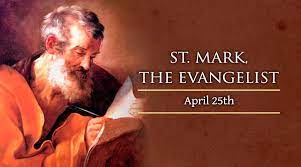
The Feast of St. Mark ~ The Very Rev. Lady Sherwood, OPI

Reading I: 1 Pt 5:5b-14
Responsorial Psalm: 89:2-3, 6-7, 16-17
Alleluia: 1 Cor 1:23a-24b
Gospel: Mk 16:15-20
Liturgical Colour: Red.
Feast of At Mark The Evangelist
My dearest brothers and sisters in Christ,
In the midst of our Church Easter season this year we now come together to commemorate the feast of Saint Mark the Evangelist. Mark was not actually one of the twelve apostles, but from the Acts of the Apostles, We know that he was a disciple of Saint Peter.
Saint Peter refers to Mark as “my son” in his first letter, which could mean that Mark had been baptized by Peter. Mark was not an eyewitness to the actions and teachings of Jesus; he learned the details of Jesus’ Ministry which he put into his Gospel from Peter. For this reason Saint Mark’s Gospel has sometimes been called the “Gospel of Peter”. Saint Mark’s Gospel can be read easily in a single sitting, as it is the shortest of the four Gospels. It wouldn’t be a bad thing for us all to read his Gospel again ourselves today.
Mark also accompanied Saint Paul on a mission to Cyprus, after going from Jerusalem to Antioch with Paul and Barnabas. Saint Paul even speaks of Mark as his coworker and his consoler during his imprisonment in Rome.
According to the historian Eusebius, Mark ended his days as bishop of Alexandria.
Saint Mark is the patron saint in Venice and his relics were brought there from Alexandria in the ninth century. Atop the basilica is the figure of a lion because the lion is the symbol for Saint Mark’s Gospel.
Mark is represented as a lion because his Gospel begins with the voice of John the Baptist crying out in the wilderness. The voice of one crying in the desert: Make ready the way of the Lord.
The Lion is also a symbol of courage, and Saint Mark courageously faced a martyr’s death. While he was celebrating Mass in Alexandria, his persecutors seized him, tied a rope around him and dragged him through the streets, then imprisoned and killed him.
We are today reminded of that which we were told by our Lord Christ in our Gospel reading today, that being to “Go out to the whole world, and preach the Gospel to all creation.”
May Saint Mark’s example and prayers help us all to carry out the Gospel of Christ throughout the world, proclaiming it to all creation, for the Glory of God and Salvation of souls.
Let us Pray:
O Glorious St Mark, through the grace of God our Father, you became a great Evangelist, preaching the Good News of Christ. May you help us to know Him well, so that we may faithfully live our lives as followers of Christ.
Amen.

Prove It!!! ~ The Rt. Rev. Michael Beckett, OPI

He’s Alive!!!!
In the gospel appointed for today, we read of Thomas’s doubt and insistence that this “He’s alive!” be proved. And lo and behold, Jesus popped in later and indeed proved Himself to Thomas.
Isn’t that awesome? But…….(And y’all who know me well know there is usually a ‘but’ coming….BUT, what about us today? Jesus ain’t just gonna pop in on the word to prove that He’s hanging around with us.
Or is He?
He’s Alive!!!!!!!!!
Really? Is he? How can we prove this to the world? In what way do our lives reflect this? It is so easy for us to celebrate the Easter Season, with all the accompanying fanfare, the music, the bunnies and chicks and eggs and ham….. We dress up in our best, go to church, and celebrate. And then what happens the next Monday and all the days after that??? We talk about how nice Easter was and go back to business as usual.
If Christ is alive as we proclaim he is, if Christ rose again from the grave to save us from our sins, to change our lives, then should our lives not reflect a profound change? One that is visible to all with whom we come into contact?
If Jesus Christ is the very God we claim, come in the flesh of humanity, if He is the Lord “through Whom all things were made,” as we recite in the Nicene Creed, it is up to us to proclaim this with all that we are, with all that we do. Think about those whom Jesus had following Him: sailors, insurgents, tax-farmers, prostitutes, widows, lepers, and, on occasion wealthy folks. Rulers, workers, and the dregs of society. Young and old. Their lives were changed in such a drastic measure that they died for their faith. Many of them left all that they had, the security of their homes, their jobs, their families, to follow Jesus. Would you? Our Christian brothers and sisters are under attack in the Mid East, in the Philippines, in Africa. Many of them have died in order to proclaim their faith. Would you do as much? Would you die for Christ?
If then, the answer is yes, would you not LIVE for Christ? You say to me, “Bishop Michael, how do you expect us to do that?” The answer to that was given to us by our Lord, Himself:
“As I have loved you, love one another.” He lived out the ultimate example of what this means. Then he said, “No greater love hath any man than this, that he lay down his life for his friends.” Then He did just that. But it was not only to save us from our sins, though it was most assuredly that. It was the sign, the seal, that proved He was Who He said He was and that His word was true.
If He really is risen, then we have an obligation one to another to serve our fellow man as He served us. And we have an obligation to share this Good News with our fellow man. We have to make the blessings we have gained available to every human. And we have an obligation to show that there really is truth to the old song, “And they’ll know we are Christians by our love, by our love. And they’ll know we are Christians by our love.” We have an obligation to reflect Christ’s goodness, His holiness, in our lives. By our speech, by our actions, by our very thoughts.
As you have heard me say a couple of zillion times, YOU are the only Jesus some folks will ever see. YOU are the only Bible some folks will ever read.
He is alive! Let us allow Him to live anew through our lives, reflecting His love and His promise in all that we do, in all that we say, in all that we are. He is alive!!!!! Amen.
Christ Is Risen~The Very Rev. Lady Sherwood, OPI
Reading I: Acts 10:34a, 37-43
Responsorial Psalm: Ps 118:1-2, 16-17, 22-23.
Reading II: Col 3:1-4
Gospel: Jn 20:1-9
Liturgical Colour: White.
Christ is Risen!!
My dearest brothers and sisters in Christ,
Halleluiah! Christ is Risen!!
A blessed and joyous Easter to you all!
Today, early in the morning, Mary Magdalene went to the tomb with absolutely no idea of the wonder which she was about to experience. She knew only that the very heart of her being had been ripped out with her grief. Jesus, who had loved her and believed in her like no one else, was dead (or so she thought!). So, when she got to the tomb, feeling totally grief-stricken and distraught, and saw that the stone has been rolled away, Mary panicked and, rather than first taking the time to look inside, she immediately ran to tell the others.
After Mary had found Peter and John, and informed them of the situation, Peter and John ran to the tomb, they felt very confused about what Mary had informed them. Of course, they felt true and deep love and grief, but I can imagine that Peter also felt ashamed and afraid – and the desperate need to put things right. I feel there was likely some feelings of doubt also about what Mary had told them, because they hadn’t yet got their heads around the fact that their dear Lord, Jesus had been killed. They’d been sure He was the Messiah, but the Messiah was meant to lead them to victory; not to die at the hands of others.
And so, they managed to reach the tomb and looked inside and saw that the linen cloths had been neatly lying there. They must’ve felt this was indeed extremely odd: for the most logical explanation for the missing body would’ve surely have been due to grave robbers. But grave robbers wouldn’t have tidied up after themselves; they certainly wouldn’t have wasted time unwinding all those linen cloths and then folding them again in a neat fashion! So – I can well imagine that they definitely had wondered what had been going on?
And so John and Peter after seeing what had happened with Lazarus raising from the tomb: maybe had an inkling somewhere in the back of their minds, that Jesus really has risen from the dead – not like Lazarus, who came back in his human body and will eventually die again. But maybe into a new kind of body – if that was in any way actually possible! But the mere fact that Peter and John see this and then simply return home and lock themselves in, suggests to me, they still needed time to process all that happened. They were more focused on what the religious authorities could’ve done to them rather than what Jesus would have had them do.
But Mary Magdalene stayed at the tomb because her only concern was for the Lord and what had happened to him. Mary didn’t care a hoot about what the authorities might have threatened. And so, she became the first person to see Jesus alive again – and the first to receive Christ’s commission to ‘share the good news’.
And this too is strange – because no-one wanting to persuade others of the truth of Jesus’ resurrection, would have written into the script a woman as witness! Women, like shepherds, weren’t deemed trustworthy enough to act as witnesses in the law courts in those times.
But unlike the others, Mary ‘gets it’. She knows deep in her being what Jesus tried to explain to the disciples through the foot-washing: that his compassionate unconditional love is the beginning and the end of his whole purpose, it is his life and his death. She knows it because she’s experienced it firsthand. Before she met Jesus, Mary was ostracized by society, but Jesus ignored all the social mores, and befriends, trusts, and loved her – not in a man-woman romantically linked way but still in way such that, as soon as he spoke her name, she knew without doubt that it was him. And her heart leapt for joy! For a name spoken in love has the power to change someone as it says in Isaiah:
“Do not be afraid, for I have redeemed you; I have called you by name: you are mine.”
And to me Mary’s not just Mary. Jesus’ relationship with Mary somehow echoes the stories of the Prodigal Son, the Good Samaritan, the two debtors, the woman caught in adultery, the foot-washing and so many others. So it’s no surprise to me that Mary is the first witness, chosen as the first evangelist. For she is the exemplar not just of all that Jesus came and lived and died for, but also of all that the resurrection was about.
It is indeed fascinating that for centuries people have been arguing over exactly what Mary and the other disciples had actually truly witnessed: Was it bodily resurrection or something else totally new and different of origin? But perhaps we don’t need to understand this. The Holy Scriptures simply tell us the story of what occurred and ask us to have faith – to take that same leap of faith that John took when he saw the linen wrappings ‘and believed’!
Perhaps all we need to know is that by coming through and overcoming death, Jesus offers us what St Paul calls a new creation, a new and better way of doing things. Perhaps here we can hear echoes of John’s Prologue: “In the beginning was the Word ….;” and Genesis, where ‘in the beginning’ Jesus, The Word, is co-creator.
But in the beginning, things went wrong because of Adam; and Jesus comes to put things right. So Easter marks the end of the old and the first day of the new creation. Victory over death!
Like Mary Magdalene, too, our past probably doesn’t bear close inspection, yet Jesus calls each of us by name, redeems our past mistakes and asks us to respond by living the good news. We don’t have to wait until we die for new life. It is here and now, simply waiting for us to respond!
Let us pray:
Our Lord, may we realise afresh today what Your death and resurrection mean for us. Forgiveness, freedom, and the ability to walk with You through this fallen world into eternity. May we always find our satisfaction in You and Your willingness to offer Yourself to us. In Jesus’ Name.
Amen.
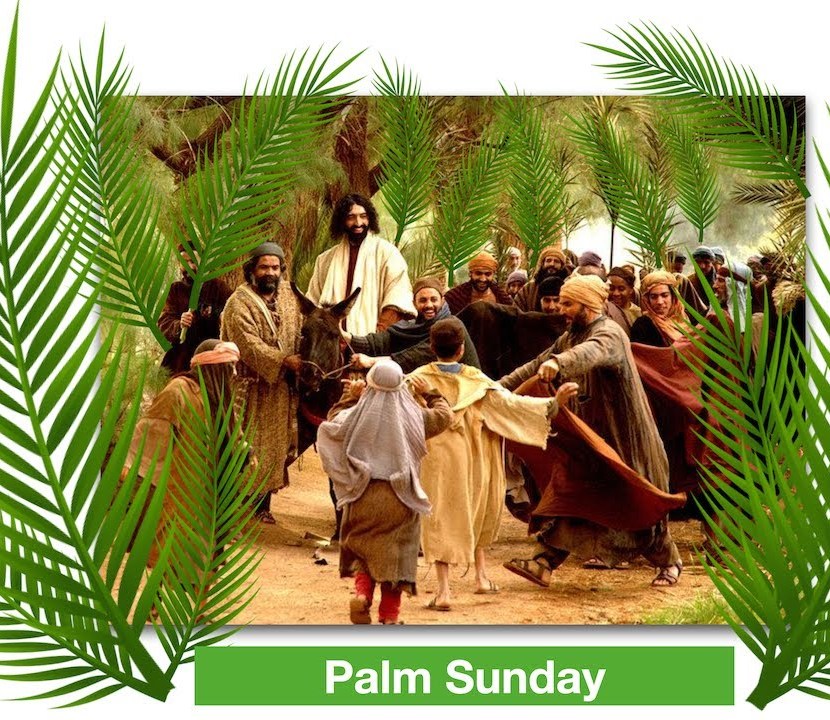
Holy Week and Us ~ The Rt. Rev. Michael Beckett, OPI
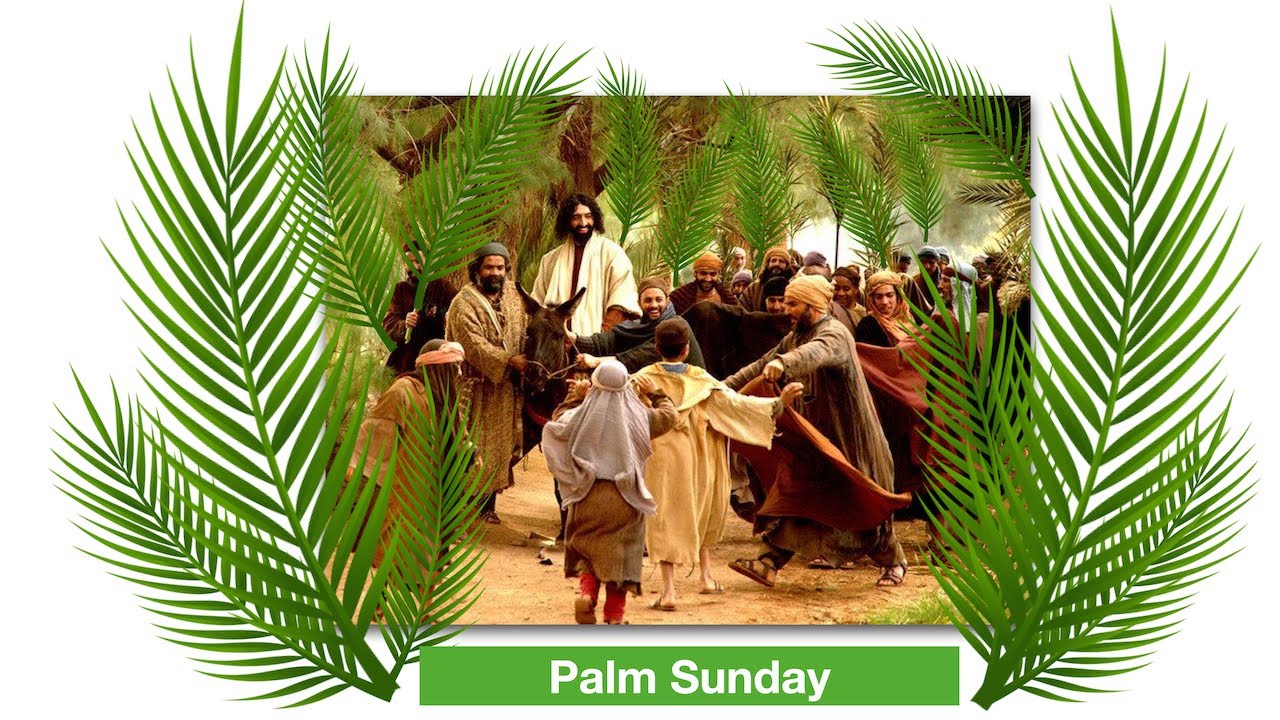
Funny, isn’t it? How Holy Week is kind of a mirror of our lives as Christians.
Today is Palm Sunday. Today we are all about welcoming Christ, waving our palm branches and shouting Hosanna! Today Jesus is king! Today Jesus is the best thing going since sliced bread! Today we are all about loving Jesus!
But Thursday and Friday are coming….
Jesus will be arrested, tried, convicted, and executed. And don’t we do the same? We proclaim Jesus, proclaim ourselves to be Christians, and then…. We, like the crowd before Pilate, scream for Jesus to be crucified. We fail to welcome the stranger. We fail to feed the hungry. We fail to house the homeless. We fail to love as He loved us. We, like Peter, deny Jesus. We, like the Roman soldiers, pound those nails into Jesus’s flesh, every time we fail to do what our Christ has taught us to do. Turn the other cheek??? Nope. Pound! Spread stories that are not true??? Yep. Pound! Make snide and cutting comments??? Yep. Pound! How often do we crucify Jesus, over and over and over again???
But Sunday is coming, just as assuredly as Thursday and Friday….
And Jesus will rise again.
We, as Christians, proclaim ourselves to be “Easter People,” all about resurrection. All about a new life in Christ. And we pray for forgiveness, humble ourselves, and start over again.
As Holy Week begins, let us remember that we reenact Jesus’s triumphal entry into Jerusalem every time we proclaim Christ. Let us remember that we reenact Jesus’s crucifixion every time we act in a manner that is in opposition to Christ. Let us remember and celebrate that Jesus died that we might be forgiven, and every time we are forgiven, Jesus reenacts our own personal Easter. Forgiven. Resurrected. Risen again.
I wish each of you a most blessed Holy Week, one in which you spend time reflecting on just what makes this week holy. What makes this week life-changing. And how we can, indeed make changes to our lives, in order to live as Christ has taught us to live. Amen.
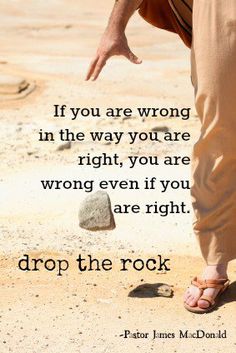
Are you Ms/Mr Perfect??? ~ The Rev. Frank Bellino
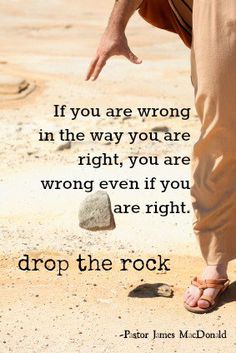
In our Gospel Reading today a bunch of self-righteous Scribes and Pharisees brought a woman to Jesus with the claim that she was “caught” in the act of adultery. Following the law of Moses, they were going to stone her to death. Where was the Man? We do not commit adultery alone. Only the woman was to be stoned to death. This is called gross injustice. If they were really just, why punish one of the partners and let the other just go free.
Only Jesus can say “Mom! Put that stone down”
This woman’s story makes us think of thousands of people who bear the guilt of others and who suffer. They suffer not for the fact that they sinned, but for the fact that they are the weak in the society. They have no money, they are children or women, they are not from a particular race or tribe etc. In effect some suffer because they cannot buy justice to their favor. They bear their own sins and those of others.
True enough these “law-abiding Scribes and Pharisees” wanted to set three traps for Jesus:
– Firstly, if Jesus agreed with them that the woman should be stoned to death, as laid down by Moses, then Jesus would lose His reputation of being a compassionate teacher;
– Secondly, Jesus would come in collusion with the Roman authorities because except the Romans no one had the right to condemn anyone to death. And
– Thirdly, if Jesus said that she should be forgiven then he was obviously teaching people to break the law of Moses concerning adultery.
Jesus overcomes their trap in two ways: First of all, by keeping silent and secondly by the question “If there is one of you who has not sinned, let him be the first to throw a stone at her”.
Did Jesus encourage the woman to go on sinning? A big no! He never condoned with her sin. He never told her “Go on sinning”. He instead told her to SIN NO MORE. This is charity and justice being put in place.
We are all sinners. John tells us sternly that “if we say ‘we have no sin’, we are deceiving ourselves, and the truth has no place in us. (1 John 1:8). Jesus will forgive you and me if we are willing to get up out of the mud and do our best to avoid the sins that threw us into the slime.
We are not Mr. or Ms. Perfect, and we are never encouraged to be Mr. or Ms. Perfect. God loves you and me for whom we are, with our blemishes. When we realize that we have behaved in a sinful way we must come back to Jesus and ask for Forgiveness. These Scribes and Pharisees in our Gospel text today were Mr. and Ms. Perfect who saw the sin in others. Jesus on the other hand is the refuge of sinners who is always kind and companionate.
Now let us decide: Are you Mr./Ms. Perfect or are you a refuge of sinners?
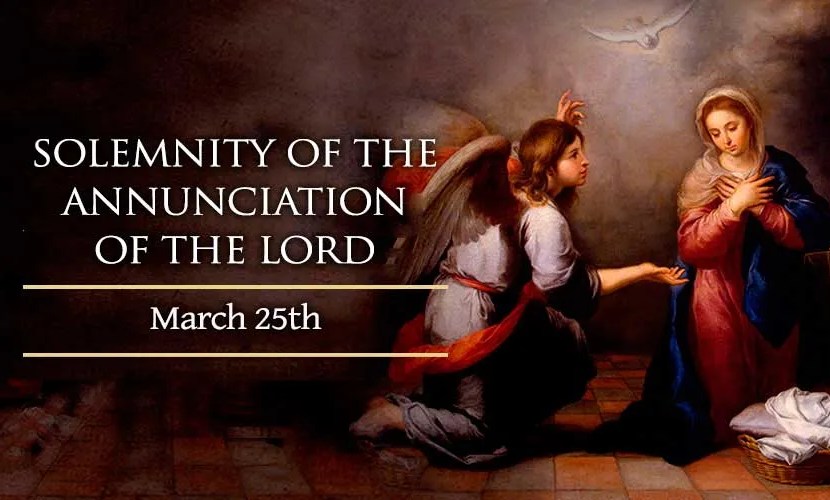
The Call of Life Vocation…The Solemnity of The Annunciation of The Lord ~ The Very Rev. Lady Sherwood, OPI
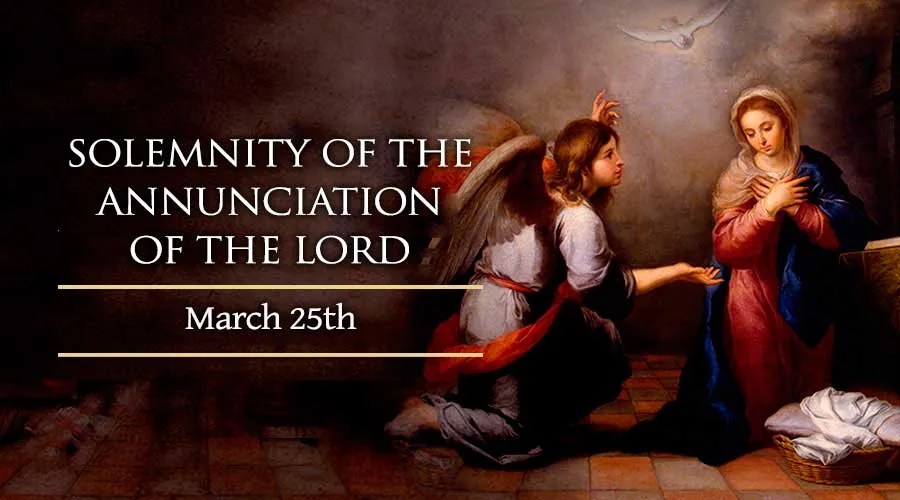
My dear brothers and sisters in Christ, Today we come together to commemorate the Annunciation of Our dear Lord and Saviour.. I feel today is an excellent opportunity for each and every single one of us to reflect upon our life vocations. Every single one of us, like Mary, has a predestined vocation in our life. This vocation is definitely not in our lives by chance, it was planned by God for us before we were even born. God has created each one of us here upon the Earth for a specific purpose, that purpose being to manifest His glory and to share His love, so that at the end of our temporary journey here on earth, we can share the fullness of eternal life with Him. And so, each of us, just as Mary did, must ensure we take the time to discern our vocation in life, take the time to find out exactly what it is which God is calling us to do with our lives. The way the Lord wants us to serve Him might change according to whatever is our situation in life. Therefore, we must endeavour to constantly be sensitive, like Mary indeed was, to the promptings of the Holy Spirit and how we should respond to God’s call. When Mary asked the angel, “But how can this come about, since I am a virgin?”, it was not with a similar response to that which was like Zechariah who asked in doubt. For Mary, she truly and devoutly wanted to know how the Lord would make use of her for the work of redemption.
So it is of vital importance to remind ourselves constantly within our lives, that we need to ask what exactly it is which the Lord is asking of us. Sadly, Many, unfortunately, instead of seeking their vocation, seek to do their own will, rather than the Will of God in their lives instead. When we do not consult God and are simply willful in going our own way, we will bring disaster not just to ourselves but also to those that God has placed under our care. Indeed, many of us, instead of discerning the will of God in whatever we do, turn to worldly answers instead.
Today, we actually come together to celebrate not just Mary alone in her Vocation, but we celebrate both our Lord Jesus and Mary for taking up their vocation in life. Originally, today was singly celebrated as the Annunciation of Mary only, but it the church changed this to the Annunciation of the Lord. The church amended this because it is in fact both our Lord Jesus’ and Mary’s vocations that are intertwined. Mary’s response to the call to be the Mother of God is what paved the way for our Lord and Saviour, Jesus, to be incarnated and for the work of redemption of humanity. Mary in saying “Yes” to God, considered herself as being “the handmaid of the Lord.”
Try to imagine the truthful immense scale of the decision of Mary to accept her vocation to be The mother of our Saviour. This certainly was anything but an easy decision, but Mary put her complete trust in the Will of the blessed vocation that God had willed for her. Let us consider the implications of her decision to be the mother of the Lord and saviour!. As any mother will know, it is not so difficult to give birth to a baby but to look after a baby for the rest of your life, that is a different matter altogether. Marriage is another example of a difficult decision because to get married is very easy but to remain faithful and loving to your spouse every day of your life requires tremendous sacrifices and sufferings. So when Mary gave her consent, she too consented to all that would follow after that big and fundamental “Yes.” So, this also applies, for all who chooses to follow the vocation God has willed for their life. Making our decision to follow the will of God for our lives, is truly only the beginning of a lifelong commitment. We accept God’s will for the entirety of our lives, So therefore, we should not complain and or have regret when we choose to be a priest, religious, a spouse or a church worker, or whatever vocation that God has willed for us to have in his service, because every vocation comes together with all its joys and sorrows. Quite often, when people face trials in their vocation, be it in their priestly or religious life, or in marriage and family life, they regret and complain. In accepting that vocation, it entails all the obligations and demands that flow from that commitment.
Both Jesus and Mary recognized that answering God’s call required total self-emptying. It is a sacrifice of oneself, the giving one’s mind, heart and body to God completely for His service.
That was exactly why Mary said to the angel, “Let what you have said be done to me.” She was totally disposed to the will of God. To do God’s will is to completely submit our lives to Him in obedience. It is to give ourselves wholly for the service of God and to empty our lives for humanity like both Jesus and Mary did. We are called to serve both justice and truth.
Let us pray:
Saying “Yes” to the vocation that God Wills for our lives is the only wise decision. This is what was predestinated by God for us before we were born. We ask Mary the Mother of Our Lord and Saviour, Jesus christ, to intercede for us with her prayers, so that, we, like she did, will have the courage and discipline to say “Yes” to God. We rejoice together with Mary that God’s will shall be done in our lives.
Amen.
Repentance and Forgiveness ~Br. Milan Komadina

In today’s sermon I would like to talk about the importance of repentance. When I think about sins and when I think about some shameful acts that I did in my life I am never despaired. I do repent, I do feel sorry and very sad because I know that God wants us to be the salt to this world and to be the light to this world as we are Jesus’ followers. Yet from time to time it can really be so hard. We are all people and we make mistakes. All of us have bad days and good days. Maybe we were quarrelling with a boss or a family member or maybe we were offended with something or even dared to offend another person. What we know from the Bible is that we all have this fallen human nature. We naturally tend to sin from time to time. We sin with our negative thoughts or even greedy ones about the other people. Also a sexual thoughts might be considered sinful if they are not directed to the one person. A person who we love and who loves us. There are many ways to sin through our thoughts. Another way of making a sin is through the words. They can be said or even written. Not many people question their online activity. I am also this kind of sinner and I feel sorry for this. Sometimes we quarrel even on social networking websites and we can say some bad things or even swear in our comments. But the words are like arrows. They can really offend someone and they can make someone feel bad because of what we said. The last one is of course – our acts. All the things we do can be sinful. So we should often think about those three things:
- Sinful thoughts
- Sinful words and in the end
- Sinful acts
As Christians we do have Holy Spirit who lives in us. And I believe that every time when we sin with our thought, words and deeds we make the Holy Spirit sad. This is why repentance is very important for a Christian life. In today’s Bible reading there was a paragraph that I would like to share with you.
Luke 13:1-9
Repent or Perish
13 Now there were some present at that time who told Jesus about the Galileans whose blood Pilate had mixed with their sacrifices. 2 Jesus answered, “Do you think that these Galileans were worse sinners than all the other Galileans because they suffered this way? 3 I tell you, no! But unless you repent, you too will all perish. 4 Or those eighteen who died when the tower in Siloam fell on them—do you think they were more guilty than all the others living in Jerusalem? 5 I tell you, no! But unless you repent, you too will all perish.”
6 Then he told this parable: “A man had a fig tree growing in his vineyard, and he went to look for fruit on it but did not find any. 7 So he said to the man who took care of the vineyard, ‘For three years now I’ve been coming to look for fruit on this fig tree and haven’t found any. Cut it down! Why should it use up the soil?’
8 “‘Sir,’ the man replied, ‘leave it alone for one more year, and I’ll dig around it and fertilize it. 9 If it bears fruit next year, fine! If not, then cut it down.’”
When I read this paragraph, the most important thing for me personally was the thing about a fig tree growing without giving fruits. I know that God loves us all and I know that He sent His only beloved Son to die for all of us. And yes we are saved by pure grace only as it is written. But still we should be always trying our best to be the best version of ourselves, to run away from every sin in order to praise our God who is in heaven. In today’s Bible reading we also read this paragraph:
Romans 5:1-2 and 5-8
5 Therefore, since we have been justified through faith, we have peace with God through our Lord Jesus Christ, 2 through whom we have gained access by faith into this grace in which we now stand. And we[b] boast in the hope of the glory of God.
5 And hope does not put us to shame, because God’s love has been poured out into our hearts through the Holy Spirit, who has been given to us.
6 You see, at just the right time, when we were still powerless, Christ died for the ungodly. 7 Very rarely will anyone die for a righteous person, though for a good person someone might possibly dare to die. 8 But God demonstrates his own love for us in this: While we were still sinners, Christ died for us.
This paragraph I consider as a very important instruction of how we should repent or what should we know while repenting. I see that many orthodox Christians in a country where I live have very unhealthy approach when repenting for their sins. They become so depressed and sometimes they feel that God is so far away from us and that He will never save them. There is a book issued with the blessing of local SPC (Serbian Orthodox Church) which is called MITARSTVA. This word means similar as Customs in English. And in this book it is written that we should earn our salvation with our good deeds. Many people believe in that. I used to believe in it also 12 years ago. And I remember that feeling. It really feels hopeless, it feels that sin is stronger than God and it feels that God will never save us. And this was all wrong! What I learnt (or better to say what God thought me) is that biblically we are saved by grace. And our salvation already happened when we accepted Jesus as our Savior, when we believed and additionally became baptized and reborn by the Holy Spirit. And this approach is what I call healthy repentance. That moment when we do not want to sin because we know that it is wrong, we feel that the Holy Spirit in us is sad if we are in a sin. We feel that we want to be better and we want to stop doing sin. But we are not in a deep depression. At the same moment of our fall we know that God is here, he is listening, he feels our struggle, he loves us. We are His and He is ours. And nothing can separate us, nothing can separate us from God`s love.
Let us all repent for our sins. Let us always try to do our best and to be just and righteous in our thoughts, words and acts and let us never forget how endless and how great is His love. Amen.


You must be logged in to post a comment.