
Category: Sermon
Dirty Foreheads, Clean Hearts ~ The Rt. Rev. Michael Beckett, OPI

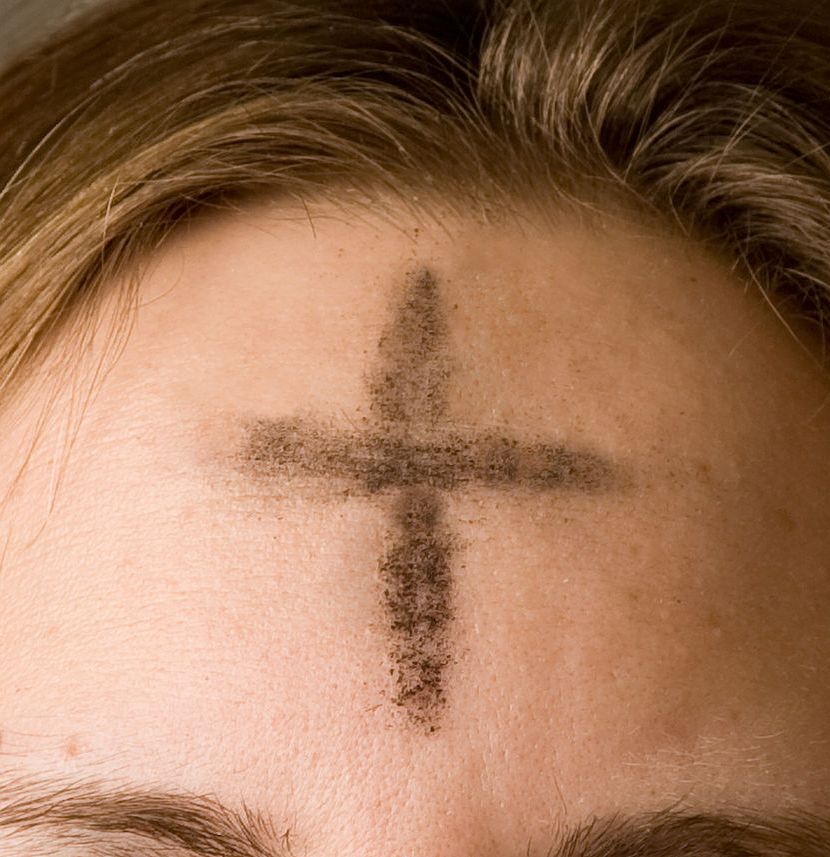
Fine, powdery, dark gray and black ashes, smudged onto our foreheads in the shape of a cross, for all the world to imagine what we’ve been doing, looking like we bumped our heads while cleaning out the fireplace, and forgot to wash that part of our faces…
Just a few ashes…symbolizing more than most of us realize as we go through the motions of Ash Wednesday. What do we say to people who ask us the obvious question: What IS that on your head? Why do you have black stuff on your face?
Why WILL we participate in this strange custom this evening? What DOES it mean? The spiritual practice of applying ashes on oneself as a sign of sincere repentance goes back thousands of years. Frequently in the days of the Old and the New Testament, when someone had sinned, he clothed his body with sackcloth and covered himself with ashes. [Jer. 6:26] The sacramental that we are observing today arises from that custom, the spiritual practice of observing public penitence. Church history tells us that the liturgical practice of applying ashes on one’s forehead during the Lenten Season goes back as far as the eighth century. This was accompanied by different forms of fasting, prayer, sacrifices, charity towards others, etc… The writings of St. Leo, around 461 A.D., tell us that during the Lenten Season, he exhorted the faithful to abstain from certain food to fulfill with their fasts the Apostolic institution of forty days. In the days of the Old Testament, many tore their clothing as a sign of repentance.
Today, we use the ashes as a reminder of who we are. The Bible tells us that we came from the dust and to the dust we shall return. The first human was formed out of the dust of the earth by God and then God breathed life into that dust. That is a powerful image. One that is meant to remind us that without the breath or Spirit of God moving in us, we are just like these ashes: lifeless – worthless. The ashes that many of us will wear tonight are meant to be for us symbols of our repentance and signs that we truly seek to follow in God’s path.
The people in the Biblical stories probably put the ashes on top of their heads – so why do we, instead of putting these ashes on our heads, put them in the sign of the cross on our foreheads?
We do so because it is a reminder of how we are sealed for Christ. In most churches when a baby is baptized the minister or priest uses oil to mark the child with the sign of the cross. The mark of the cross is a mark of ownership. These ashes tonight remind us that we are Christ’s – that he died so that we might live. These may be just a few ashes but they mean a lot. They are a symbol of our need for God. We are nothing but dust and ashes apart from God.
But what about Lent itself? What is it? Why do we have this season? Most of us were taught that the lengthy period of Lent was one of penitence and fasting, a time provided for those who were separated from the church by their sins, so they could be reconciled by acts of penitence and forgiveness.
For most of us, Lent is the time of sometimes painful self-examination, during which we scrutinize our habits, our spiritual practice, and our very lives – hoping to make ourselves better, trying to make ourselves worthy of the love of God. We “step up” our prayer, fasting, and self-denial in order to remove worldly distractions from our lives. And we take on Bible study, classes, and service projects in order to add meaning and depth to our existence. For some children, Lent means no sweets, for teenagers, less time on Facebook. For adults, it may be consuming less meat or alcohol, or attending that Lenten course offered by the Church.
However we go about it, the goal is pretty much the same: Lent makes us ready for Easter. Quite simply put, we are better able to appreciate Resurrection joys come Easter Day by enduring these Lenten disciplines now.
The Old Testament Lessons, the Psalm appointed for today, and today’s Gospel Reading all tell us the “how” and “why” of Lent. But then, there is Paul. Saint Paul tells is, right off the bat, in the very first verse of the Epistle for today, to “BE RECONCILED TO GOD.” Nowhere does he say, “Observe a Holy Lent, THEN be reconciled to God.” Not after enduring a forty-day fast. Not after lengthy Bible study. Not even after prayer, but now, here, today: Be reconciled to God. Paul not only invites us to be reconciled to God, he actually beseeches us. That is, he pleads, implores, presses, begs, and demands. “We beseech you on behalf of Christ, be reconciled to God. … Now is the acceptable time, now is the day of salvation.”
If we but recognize this, if we are but reconciled to our God NOW, and THEN work toward our Lenten goals of fasting, of prayer, and of penitence, if we seek to discipline ourselves during Lent, and make those disciplines into daily habits, we will not only most assuredly have the Holy Lent we all desire, but will come to live a more holy life in general. And isn’t that, really, what Lent is all about in the first place? Amen.
Not So Ordinary ~ The Rev. Dcn. Igor Kalinski, OPI
Dominican Hermitage/Oratorium Sancti Peregrin ad Sebastian; Marshal Tito 157; 1480 GEVGELIJA; North Macedonia
Homily for 23.II.2020 Sunday VII in Ordinary Time or Quinquegesima Sunday
This is very special season in the liturgical year, even though it is still called in some denominations as ordinary time, yet nothing seems so ordinary.
The Previous weekend the Sunday of Sexagesima, previous of that Seuptagesima, preparing us into Lent season, reflecting in the scripture of old testament historical events in the history of Israel, seventy years of Babylonian captivity, or the 400 years of slavery in Egypt.
This Sunday we reflect of this preparation to do our examination of soul, to repair, to heal, to sort it our relations with our subjects, neighbors, and especially to stand where we are at the moment and to ask God for his guidance and strengthening our souls and bodies to be ready for the banquet of the bridegroom’s wedding.
Let’s strive for the repentant and humble heart for reconciliation and peace and daily accept his bloody and body, to implore our life in faith, that to profess our faith and commitment to our Lord, let our daily moves, actions, in little kindness moments bring joy and love to the unhappy and lonely people that we might know.
Let’s put our broken heart with charity act and offer to those in need. Let’s preach this Gospel of showing love, affection and charity. Take a note, sign as much names of known and unknown that you want to petition to our Lord. Those little savings, buy some bread or give the money to the beggar, find time to become daily two or three hours of hermit. Read Scripture or the holy elders, pray and petition, but outside our words must be good charitable and voluntarily work for the sake of the poor. T=That is our commandment from God. This ultimate catch might be for some of our brothers including me as well, for the new preparation in our quinquagesima season, let’s examine all that separates us from God, so we can offer in our lent repair our relationship, to nourish in His merciful love of acceptance of us as prodigal sons, with or strongholds, to spent more time of reading, meditating, reflecting, silence of waiting of his word, lets learn to listen more as well., reading spiritual books such as St John the Ladder with The Ladder of the Imitations of Christ by St Thomas Kempis. To strive for that intimate moments, spending and reflecting daily more and more, to ask for guidance and restoration of our hearts, so the peace of our Lord find worth place to remain in us. Let’s seek that God’s wisdom daily and His peace because is it said from God through his wisdom speaker of Solomon, who find wisdom finds the happiness. Because Gods wisdom is love and a light of our path in this valley of tears. Now is the hour, let us grasp and take this special offering of worth preparation. Let’s cut and stop all that separate us from spending time for Gods daily spiritual food. We must trust Him as He is always faithful to our unfaithfulness, with him as the first always put himself to save us in our daily struggles. Without Him, we are lost. Now is the time, very near, the day for our hope to be reborn again, with clean heart and renewed strength.
In some events in our life, have caused us to as “God have forgotten me?” But regardless of storms intensity, you remain in the forefront of God’s thoughts, He’s thinking of you, sustaining you, comforting you, giving you strength.
Now is the season to foster a deeper and more constant trust in the reality that God is always present with us. He doesn’t mentally check out whatever challenge you’re facing isn’t the worst thing that could happen to you. The worst that could happen would be for God to forget about you. But He’s hasn’t yet, and he never will.
Let’s encourage one another or someone else to turn to Christ for a fresh start in this preparation season of quinquegesima Sunday. Our all life is about struggle, failings, pushdowns, so when we kneel before Christ, we kneel before one who can relate to our struggles, and hardships. He kneels before God alongside us to revitalize our energy, providing relief from our stress, set us free from sin and enable us to endure life’s storms. Then through his spirit he offers us a fresh start and new beginning.
As the prince of the preachers, the Venerable servant of God Charles Spurgeon I will end with his words: “Being a Christian is more than just an instantaneous conversion- it is a daily process whereby you grow to be more and more like Christ”
Let us catch this quinquegesima season week ordinary Sunday seventh to offer to God all that separates us of growing of His wisdom and His guidance who is Father, Son and Holy Ghost. Amen
18.II.2020 Gevgelija/North Macedonia
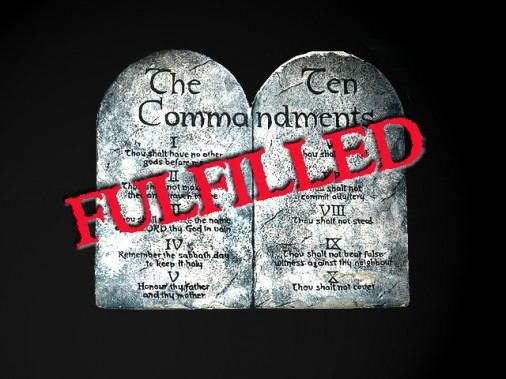
Jesus: Fulfillment of the Law ~ The Very Rev. Lady Sherwood, OPI
Liturgical colour: Green.
Reading 1:SIR 15:15-20
Responsorial Psalm:PS 119:1-2, 4-5, 17-18, 33-34
Reading 2:1 COR 2:6-10
Gospel: MT 5:17-37 OR 5:20-22A, 27-28, 33-34A, 37
Let’s first look at what the Gospel is telling us today:
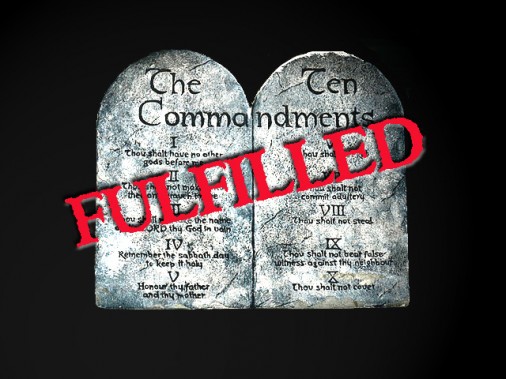
Jesus said to his disciples: “Do not think that I have come to abolish the law or the prophets. I have come not to abolish but to fulfill. Amen, I say to you, until heaven and earth pass away, not the smallest letter or the smallest part of a letter will pass from the law, until all things have taken place. Therefore, whoever breaks one of the least of these commandments and teaches others to do so will be called least in the kingdom of heaven. But whoever obeys and teaches these commandments will be called greatest in the kingdom of heaven. I tell you, unless your righteousness surpasses that of the scribes and Pharisees, you will not enter the kingdom of heaven. “You have heard that it was said to your ancestors, You shall not kill; and whoever kills will be liable to judgement. But I say to you, whoever is angry with his brother will be liable to judgement; and whoever says to his brother, ‘Raqa,’ will be answerable to the Sanhedrin; and whoever says, ‘You fool,’ will be liable to fiery Gehenna. Therefore, if you bring your gift to the altar, and there recall that your brother has anything against you, leave your gift there at the altar, go first and be reconciled with your brother, and then come and offer your gift. Settle with your opponent quickly while on the way to court. Otherwise your opponent will hand you over to the judge, and the judge will hand you over to the guard, and you will be thrown into prison. Amen, I say to you, you will not be released until you have paid the last penny.
“You have heard that it was said, You shall not commit adultery. But I say to you, everyone who looks at a woman with lust has already committed adultery with her in his heart. If your right eye causes you to sin, tear it out and throw it away. It is better for you to lose one of your members than to have your whole body thrown into Gehenna. And if your right hand causes you to sin, cut it off and throw it away. It is better for you to lose one of your members than to have your whole body go into Gehenna. “It was also said, Whoever divorces his wife must give her a bill of divorce. But I say to you, whoever divorces his wife – unless the marriage is unlawful – causes her to commit adultery, and whoever marries a divorced woman commits adultery.
“Again you have heard that it was said to your ancestors, Do not take a false oath, but make good to the Lord all that you vow. But I say to you, do not swear at all; not by heaven, for it is God’s throne; nor by the earth, for it is his footstool; nor by Jerusalem, for it is the city of the great King. Do not swear by your head, for you cannot make a single hair white or black. Let your ‘Yes’ mean ‘Yes,’ and your ‘No’ mean ‘No.’ Anything more is from the evil one.” (MT 5:17-37)
Though the Sermon on the Mount was in the beginning of Jesus’ ministry on earth, He had already begun His ministry earlier on. Prior to this sermon He was tempted in the desert by Satan, baptized in the Jordan by John the Baptist, healed many people, and had already preached to many crowds.
The people who were present at this sermon on the mount were His first disciples and I’m sure others who chose to follow Him.
This crowd was not shocked I’m sure that He was who He said He was (although some doubted), but they were shocked because it was a completely knew spin on His teaching.
Before He would preach His deity as well as the coming of the kingdom, but now He is saying He is the complete fulfillment of the law.
Our Lord Jesus fulfilled God’s law in every aspect of His life, let us take a look:
In His birth (Galatians 4:4)
But when the set time had fully come, God sent his Son, born of a woman, born under the law, In His teaching (Matthew 5:17) “Do not think that I have come to abolish the Law or the Prophets; I have not come to abolish them but to fulfill them.
Romans 10:4
Christ is the culmination of the law so that there may be righteousness for everyone who believes.
Galatians 3:23–25 NIV
Before the coming of this faith, we were held in custody under the law, locked up until the faith that was to come would be revealed. So the law was our guardian until Christ came that we might be justified by faith.
Now that this faith has come, we are no longer under a guardian.
Galatians 3:13 NIV
Christ redeemed us from the curse of the law by becoming a curse for us, for it is written: “Cursed is everyone who is hung on a pole.”
He set aside the Old Covenant and brought in the New Covenant
Simply put: Jesus did not destroy the law, He fulfilled it as was God’s plan all along. He ushered in God’s grace to save us from the demands and penalties of the law.
His disciples would not fully understand this until His death and resurrection was complete, when He said “it is finished”.
So, like Jesus, how can we fulfill God’s law in our lives: Through the Holy Spirit By dying to the law to live by the Holy Spirit
Romans 7:4-6
By loving God and loving others
Romans 13:8-10
By living for God & allowing Christ to live in us
Galatians 3:19-21
We can seek to do and teach God’s Law:
The law can serve as a mirror to guide our lives
1 Timothy 1:8–11 The Message
It’s true that moral guidance and counsel need to be given, but the way you say it and to whom you say it are as important as what you say.
It’s obvious, isn’t it, that the law code isn’t primarily for people who live responsibly, but for the irresponsible, who defy all authority, riding roughshod over God, life,
They are contemptuous of this great Message we have been put in charge of by this great God.
God’s Law shows the sin that keeps us from a relationship with Him.
But God’s law requires us to share the grace that comes through forgiveness.
God’s moral law has not changed.
9 of the 10 commandments were repeated and commanded in the NT
The “keeping of the Sabbath Day” was strictly given as a command to the people of Israel as a sign.
To summarize the law- we do not obey an external law because of fear, believers today obey this law because of love.
See when we focus on the law to slam people or shame and guilt them we often become no better than the Scribes or the Pharisees.
And when we continue to make ourselves a slave to the law and not fully give our hearts to the Lord, we become no better than the Scribes and Pharisees.
Not only that, if we can’t fulfill the whole law we still aren’t righteous according to it. It’s all or nothing if we judge by the law.
The Scribes and Pharisee’s failed to satisfy the heart and mind.
They were self righteous and glorified themselves, not God.
This was Jesus’ exact point. And that was Jesus’ exact warning to His followers on this hillside.
Matthew 11:28–30 NIV
“Come to me, all you who are weary and burdened, and I will give you rest.
Take my yoke upon you and learn from me, for I am gentle and humble in heart, and you will find rest for your souls.
For my yoke is easy and my burden is light.”
Jesus wants to take our burdens. He wanted to take the burdens of the Scribes and Pharisees, too.
He came so we didn’t have to live as slaves to the law but free in Him.
Only Jesus offers that freedom.
Matthew 5:20 NIV
For I tell you that unless your righteousness surpasses that of the Pharisees and the teachers of the law, you will certainly not enter the kingdom of heaven.
We can often get hung up on this verse ourselves and think we have fallen short of where we need to be.
But the good news is… Jesus came to save short people!
That’s me and it’s you.
So the question now is, “How do we know if we have the kind of righteousness that Jesus wants us to have?”
If we are judgmental, self seeking or prideful it’s probably a good time to turn over your heart to the Lord.
But Jesus does give us a clear answer but it won’t be quick.
This is what the whole sermon on the mount is.
Now that Jesus gets His audience’s attention, after shaking their religious beliefs to the core, he expands and over the next 27 verses defines God’s law- not on how people behave BUT in terms of who they really are. (5:21-48).
The Presentation of the Lord~ The Rev. Dcn. Igor Kalinsky, OPI (translated from the Macedonian)
Mal 3:1-4; Heb 2:14-18; Lk 2:22-40
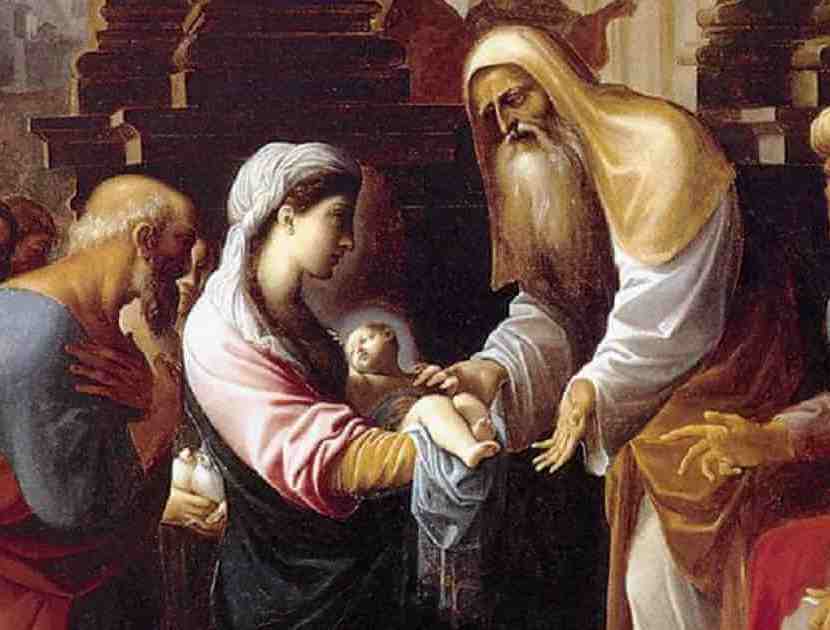
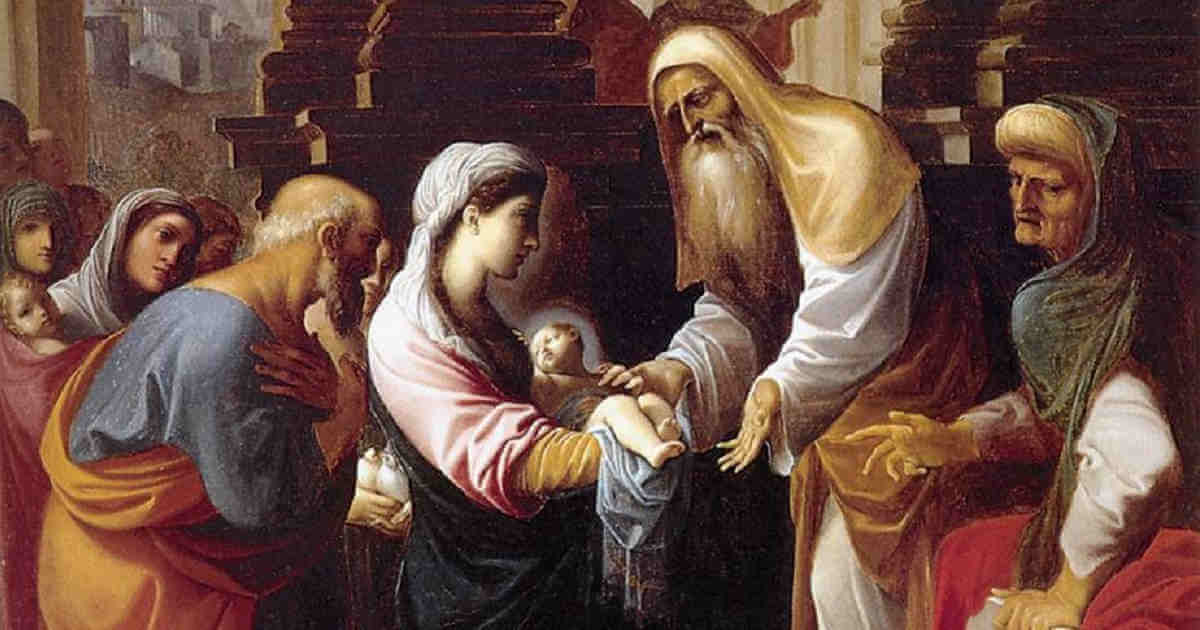
When I close my eyes and looking with my inner eyes the temple, the place of worship and prayer where Jewish people gather from all parts of Israel, beautiful temple, and Jesus was consecrated and offered to God in the temple, a little baby child, revealing his solemn entrance as he will be later be welcomed on Palm Thursday. This is very seen sign from the multitude as witness for the ends of times, that He is born in likeness of men, taking human body, been circumcised on eighth day and now the 40thies days by the law prescribed of Moses, all of this steps and path , he is doing to fulfill the scripture as Lord and perfect men.
What makes my heart melting is when I think about my anniversary of vocational discernment , sometimes I count the day of my simple vows or should I think from the perpetual vows, but every Presentation is an anniversary to myself and to all religious brothers and sisters in this world, as oblates, missionaries, hermits, monks, nuns all that encounter and dedicate whole body and soul to the temple, the higher even the mystical body, the bride of our Redeemer.
Very touching moment, great revelation for deliverance of Israel. Here was someone, an elder, rightful and just prophet Simeon and from the other part I can say a model of an oblate or a religious, a faithful in prayer and fast, the old widow Anna. Such a blessing from God to hold the infant Jesus. Holy Ghost have told to their hearts whom they shall see before they die.
This reveal to us, if we stay faithful to God, he will secure our life even when we become very old, Gods promises are fulfilled for people devoted totally to Him, depending of His mercy and grace. I am so touched from these two models for today’s life. St Simeon and St Anna, she is a model of faithfulness and dedicated devotionals, and the fasting. St Simeon revealed that our LORD as he took mortal flesh, he humbled himself, but we are encouraged that Savior is born, to save our fallen nature and sin, and make a new covenant, became one of us in every suffering, thirst, hunger, but not in sin. He is God, he was recognized in Simenon’s eyes .
Let us pray God to open our eyes, so we can recognize Him and accept him un the beggar , in the poor.
As we are about to embark on another new year, it seem appropriate that the words of St Simeon in the Gospel should ring in our ears. That this infant Jesus our Redeemer our LORD, He will be fall and rise of many. He is fall for those who reject Him, those who will accept, listen and follow His path and His words, He will be their heavenly delight.
When we hear those words spoken to the Holy Mother Theotokos, that She will suffer a lot. But reading I notice not despair scene, we see in the temple Simeon, Anna and the Holy Family, Mary Joseph and Jesus., and they do not lament or murmur, or be in depression or agony. This is accepted as will of the God, and they had joy in there hearts and souls, even is predicted difficulty that have to occur.
Sometimes at a great cost this world, and those who should know you better, will hate you, despise you, say all sorts of lies against you. Let this evil world of those wicked take the easy path and its glory in this life and you can say like St Simeone “Now let Your servant dismiss according to Your word in peace, because my eyes have seen the salvation which you have prepared before the face of all people. A light to the revelation of the gentiles, and the glory of Your people Israel”
True happiness is you’re your happiness to remain in Lords heart.
Dear devoted brothers and sisters who live vowed and consecrated life, lets have this memory in our hearts, as mutual feast that have to unite our parts, personalities and skills to continuation of living daily gospel through our simple and humble actions. Lets strive to take our daily remind or recommendation of the holy widow Anna, and the holy elder Simeon, how they served in Gods temple, let our priories, oratories, missions, chapels proclaim in honor of that temple and of hope for beter and eternal life within the New Jerusalem
Gevgelija 28.II.2020 on the feast of St Thomas Aquinas in the Gevgelian Oratory in Macedonia
Fishers of……People???? ~ Fr. Shawn Gisewhite, OPI
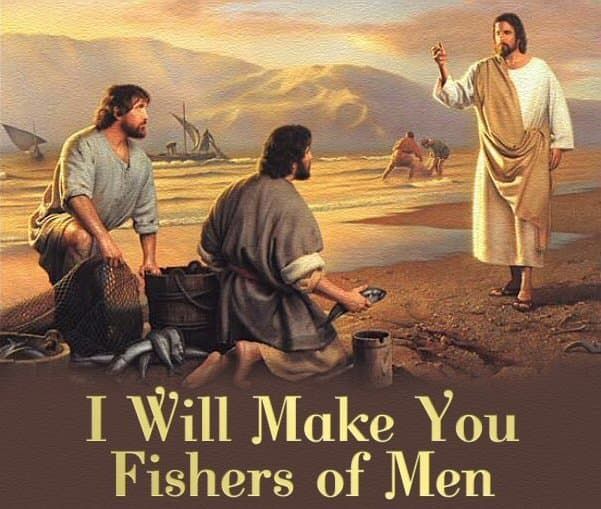
MT 4:12-23
Luke describes the first day of Jesus’ ministry; how Jesus went into the synagogue and took the scroll of Isaiah and read a portion of it and then announced that the Kingdom of God had come – that it was for the here and now: for today. Today, we are looking at Matthew’s version of the start of Jesus’ ministry. Not necessarily the first day of his ministry as Luke offers us, but certainly an insight into the early days and weeks of his ministry. The message that Luke puts on Jesus’ lips, and the message that Matthew puts on Jesus’ lips, may be worded differently: but it’s the same message. In Luke’s Gospel, Jesus says this: “The Spirit of the Lord is upon me, because he has chosen me to bring good news.” In Matthew’s Gospel, Jesus says this: “Turn away from your sins, because the Kingdom of heaven is near!” Now, these may sound very different, but actually the meaning of them is very similar.
Let’s think a bit more deeply about Matthew’s words here: “The Kingdom of heaven is near!”
This is quite a difficult verse, because what does the word ‘near’ actually mean? Does it mean that the kingdom of God is here, now (actually present among us) or that it is almost here, just over the horizon, as it were? If we take an honest look at the state of the world today, let alone 2000 years ago, it would be hard to argue that the kingdom of God is here in its totality, and yet we do want to believe that it is, in some sense, already here.
Perhaps Jesus is not announcing an actual time when the Kingdom of heaven has come, like an hour that can be read on a clock or a date that can be marked in a diary. Perhaps Jesus is instead alerting us to the possibility of encountering the kingdom of God at any given moment in historical time if we repent and believe. Whenever you repent, whenever you believe, the time has come for you, and the Kingdom of heaven has drawn near. That can be a one-off moment, a date marked on the calendar when you became a Christian – but it is also a continuous activity, that we may repeat many times each day, when we continually repent of our wrongdoings, when we continually struggle to believe. And, as we do, the Kingdom of heaven is fulfilled in us as we enter more deeply into the eternal truth of God.
So having proclaimed the essence of this eternal encounter, Jesus is now in a position to approach individuals and ask them to live out that call in their own lives. And so we see this first such encounter, in verse 18, with Simon and Andrew and then, in verse 21, with James and John.
In Matthew’s account of the call of the first disciples, we don’t really learn anything about these four men except that they are fishermen by trade. The social background of these four men is not important. All we see is four men being taken away from their personal and professional lives in response to the call of Jesus upon them.
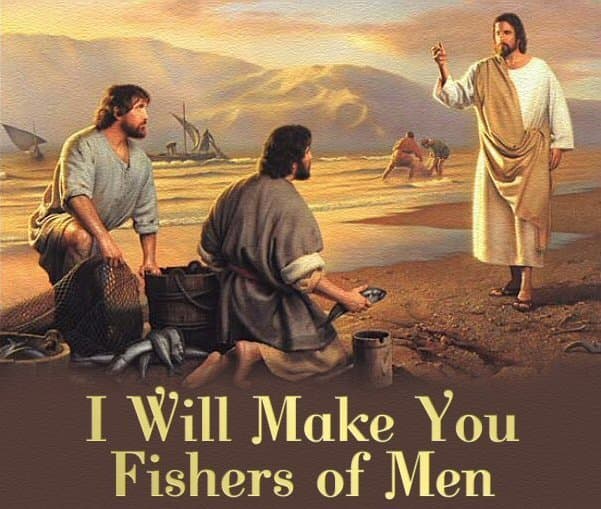
And what are they called to? Jesus uses a really odd metaphor here. “Follow me and I will make you fish for people.” The older versions of the Bible have it as “I will make you fishers of men”.
We are so used to this phrase, we don’t even think of it as a bit odd, but actually, I think it is…
There is a similar passage in Jeremiah 16:16 – “I am now sending for many fishermen, says the Lord, and they shall catch them”. But in that context, the fishermen are invading armies who will fish for the unfaithful people of Israel and destroy them!
Secondly, what happens to a fish when it is caught? It dies! Does our fishing for people result in their spiritual death? Is the church full of spiritually dead people?
Thirdly, a fish doesn’t want to be caught and is pulled on board the boat unwillingly. So are we to force people into church and force them into a relationship with God through which they will only encounter spiritual death?
When you break this metaphor down, it really is a bit odd and doesn’t really seem to speak of kindness and compassion in evangelism and mission! So let’s try and get below the skin of this call and try to read it with fresh eyes and without all the preconceptions that we bring to it about evangelism and mission. If we read it another way, I think we get a better insight into what follows throughout the Gospel stories.
These first disciples would probably have heard of Jesus: he was, after all, walking round Galilee proclaiming the kingdom of God and as Galilean fishermen, they would probably have either seen him action or at the very least have heard about him. Galilee was a small place and, undoubtedly, Jesus was making a name for himself, so it is very likely that these fishermen would have been aware of him.
They would also, perhaps, have heard of John the Baptist’s proclamation that Jesus was mightier than he was. And, as good Jews, they would probably have been aware of the Jeremiah 16:16 verse where spiritual fishing meant overcoming God’s enemies.
So what would have been going through their heads when they decided to leave all behind and follow this new, radical teacher who had come back to Galilee from out of the wilderness? Power and authority!
These fishermen were powerless men, fairly poor men, looking forward only to a life of daily grind to earn a living under the regime of the Roman Empire. These fishermen weren’t part of the social elite. They weren’t the movers and shakers in society who were able to exercise political power. They weren’t the type of people who had any authority in society whatsoever. And here was a man in their midst, a man declared by John as a mighty judge, now using a phrase that seems to indicate that those who follow him will share in his power and authority and right to judge others.
What an attractive proposition for these powerless fishermen who were grinding out a living under Roman occupation. Perhaps Peter and Andrew, James and John fundamentally misunderstood the call of Jesus. Perhaps they heard it in a completely different way than we read it in today. Perhaps they heard this, in the light of Jeremiah’s prophecy and John the Baptist’s ministry, as a call to a share in authority and believed it to be the way out of their poverty and powerlessness. Here was a call to a new life in which they would have power and authority and would be respected by everyone as a result.
They didn’t really know who Jesus was, and they didn’t understand the implications of his ministry, but they had a hunch that following him would be the way for them to achieve power, authority, glory and respect. And, of course, that was a fundamental misunderstanding that stayed with them throughout the rest of their time with Jesus, as recorded in the Gospels: fighting over who would be sitting on Jesus’ left and right in heaven; refusing to serve others but wanting to be served; not understanding that they had to die in order to live; shooing away the children from Jesus so they could have more time with him; enjoying the entry into Jerusalem on Palm Sunday; rejoicing at the turning over of the tables in the Temple…and then being utterly distraught at the crucifixion; running away from the authorities; refusing to stand with Jesus in his hour of need; going back to their fishing boats after the crucifixion.
Peter and Andrew, James and John were called by Jesus to fish for people and the ambiguity of that phrase led them to fundamentally misunderstand their call and that resulted in the spiritual struggles that they had to work through over the coming years.
I think we need to redeem this passage for what it is rather than just see in it a simplistic call to mission and evangelism, which is what we have turned it into in the modern-day church.
The call of Jesus on our lives is completely counter-cultural; it goes completely against our expectations of what it should be, it turns our whole world on its head. Following Jesus does not take us where we expect to go…
We might think that becoming a Christian or coming to church will result in one way of living, but when we truly give our lives over to Jesus, things often take a different turn altogether.
I don’t think it would be too much to say that there is a certain shock and emotional violence attached to Christian living; something that we see in the lives of so many biblical characters. Jesus is driven out into the wilderness, where he has to encounter emptiness and solitude caught in a space between the beasts and the angels. John the Baptist is violently taken out of the story, first imprisoned and then beheaded, so that Jesus can announce a moment of crisis for each one of us as we have to choose to engage with this moment of fulfillment in our lives that will ultimately turn our world upside down. Heaven and earth unite in the person of Jesus Christ. The heavens are ripped apart in a most unexpected way, just as the curtain in the temple will apart in the most unexpected way a few years later. And the same is true of the disciples, these first four fishermen, who started to follow Jesus because it would give them a share of power and authority.
But power and authority in the Christian life are never on the agenda. Of course, we all want to experience power and authority and be respected for who we are – but we will be taken the way of the cross instead and will be called to die in order to live.
Jesus said, “Follow me, and I will help you fish for people”. The church throughout history has taken this as a call to mission and evangelism – and so it is. But underlying it is the personal challenge that all of us face when we become Christians that Jesus will take us in a direction that we least expect.
This part of Matthew’s Gospel should leave us feeling a little uncomfortable about what it means to be a Christian. We are not called to an easy life, we are not called to power and authority – but to a tough life that will constantly surprise us and challenge us. Jesus constantly calls his disciples, constantly calls each one of us, to a new way of living – and the disciples constantly misunderstand what that means for themselves and perhaps we can be a bit guilty of the same misunderstanding.
And so we are called to constantly assess why we are followers of Christ and what it is that we want to get out of this lifestyle we have chosen.
Are we seeking honor and glory and power and authority and respect? Or are we prepared to walk the way of the cross and all that this will mean for us in our everyday lives?
Amen.
Am I Worthy? ~ Fr. Robert Paresi, Aspirant

There is a great deal of personal reflection that comes with being a priest. Amongst other reasons, this involves a healthy mind, honest and moral cleanliness through daily prayer and discernment. There is a great deal of worthiness that comes along with being a priest, which involves moral living and daily self-reflection through prayer. We were created in His image and we administer the Holy Sacraments of Our Lord and Savior. We are the voice of his word as we share the Good News through our ministry. To be in a position to administer the sacraments is a great honor and one of worth not to be taken lightly.
I am reminded of how John felt the day Christ asked to be baptized. I am reminded of how John saw this as an honor. But John thought of whether he was truly worthy enough. I can imagine John standing in front of Jesus saying. You want me to baptize you? While with that look of awe in his eyes.
Matthew 3: 13-14 Then Jesus came from Galilee to the Jordan to be baptized by John. But John tried to deter his, saying. “I need to be baptized by you, and do you come to me?” For if Jesus thought that John wasn’t worthy or capable, he would have gone to someone else. I mean after all, this was Jesus and he wanted John to baptize him, and John alone. Matthew 3: 15 Jesus replied, “Let us do so now; it is proper for us to do this and to fulfill all righteousness.” Then John consented.
The first time I administered the Sacrament of Holy Baptism was on my granddaughter. I thought for sure I had this. After all, it’s just my granddaughter, what could go wrong? As I began to prepare for this event, I prayed asking God for guidance and asking myself if I was worthy. I kept asking in prayer, do I uphold all of the duties to which I was ordained to uphold? Have I been a good and faithful servant to God and his people? I don’t mind saying that I began to break out into a cold sweat. All along I kept wondering, what’s the big deal behind baptism, or how stressful could it be? Up until this time I had officiated at multiple weddings and a few funerals, and had already celebrated mass, but something told me this was different. I’d be baptizing my granddaughter in the name of the Father and of the Son and of the Holy Spirit. I would anoint her as one of God’s own. Wow! what an undertaking! Me, blessing and anointing Alanna with the Holy Spirit. Me of all people! In the name of God, the Father? I should have been elated but I was scared, and I kept wondering if I was still worthy enough in mind and spirit to undertake something as close and dear to God as to bring one of his new followers into the word with water and oil.
I continued to pray; I continued to sweat; and I continued to shake. I continued to hear the words of John in my mind and I could almost feel his presence. John 1: 26-27 “I baptize you with water.” John replied,” but among you stands one you do not know. He is the one who comes after me, the thongs of whose sandals I am not worthy to untie.” How did John get through this? I finally realized he got through it through his faith. His belief in Christ and he did what he was asked to do. So after all of the worry, I too, did what I was asked to do, and baptized my granddaughter in the name of the Father, and of the Son, and of the Holy Spirit, with faith and assurance in Christ.
John 1: 29-34 the next day John saw Jesus coming toward him and said, “Look, the Lamb of God, who takes away the sin of the world! This is the one I meant when I said, A man who comes after me has surpassed me because he was before me. I myself did not know him, but the reason I came baptizing with water was that he might be revealed to Israel.”
Then John gave this testimony: “I saw the spirit come down from heaven as a dove and remain on him. I would not have known him, except that the one who sent me to baptize with water told me, The man on whom you see the spirit come down and remain is he who will baptize with the Holy Spirit, I have seen and I will testify that this is the Son of God.” In those words, John was assured of his worthiness and the strength of his faith.
- Jesus came to John the Baptist,
In Judea long ago,
And was baptized by immersion
In the River Jordan’s flow.
- “To fulfill the law,” said Jesus,
When the Baptist questioned why,
“And to enter with my Father
In the kingdom up on high.”
- Now we know that we must also
Witness faith in Jesus’ word,
Be baptized to show obedience,
As was Jesus Christ, our Lord.
Let us pray. Heavenly Father, we thank you that by water and the Holy Spirit you have bestowed upon these your servants the forgiveness of sin, and have raised them to the new life of grace. Sustain them, O Lord, in your Holy Spirit. Give them an inquiring and discerning heart, the courage to will and to persevere, a spirit to know and to love you, and the gift of joy and wonder in all your works. Amen
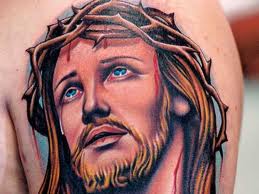
Wearing Your Faith Like a Tattoo ~ The Rev. Deacon Dollie Wilkinson, OPI

Though I barely remember it, I was baptized as a young girl. My Mother wasn’t very religious, but she saw Sunday church, or Vacation Bible school, as a way to get us out of her hair for a bit. The best thing I can remember is the cookies and cherry kool-aid. I’ve attended many churches since. And watched my daughter and nieces get baptized in the same church where I was married. As a Catholic, I have a greater understanding of baptism and how important it is to develop a stronger relationship with God. In Matthew we learn that though John understood his role in baptizing God’s people, but is vexed when Jesus comes to him to be baptized as well.
Matthew 3:13-17 (NIV) “Then Jesus came from Galilee to the Jordan to be baptized by John. But John tried to deter him, saying, “I need to be baptized by you, and do you come to me?” Jesus replied, “Let it be so now; it is proper for us to do this to fulfill all righteousness.” Then John consented. As soon as Jesus was baptized, he went up out of the water. At that moment heaven was opened, and he saw the Spirit of God descending like a dove and alighting on him. And a voice from heaven said, “This is my Son, whom I love; with him I am well pleased.”
Now, Jesus comes into that situation and John says to him, “I need to be baptized by you, and do you come to me (to be baptized)?” (Matthew 3:14). In other words, he makes crystal clear that Jesus does not need this baptism. He does not need to repent. He does not need to confess any sins. So John asks, “why are you here?”.
Jesus gives one sentence in answer, and it is massively important. He says, “Let it be so now, for thus it is fitting for us to fulfill all righteousness” (Matthew 3:15). It is fitting. That is why He is doing it. It is fitting. Well, what is fitting? Fulfilling all righteousness is fitting. Evidently, Jesus saw His life as the fulfillment of all righteousness. The fact that participating in a baptism of repentance even though He had no sins to repent of shows that the righteousness He wanted to fulfill was the righteousness required not of Himself, but of every sinful man.
Peter speaks on the good news of the Baptism of the Lord, and what it means for the salvation of God’s people.
Acts 10:34-38 (NIV)
“Then Peter began to speak: “I now realize how true it is that God does not show favoritism but accepts from every nation the one who fears him and does what is right. You know the message God sent to the people of Israel, announcing the good news of peace through Jesus Christ, who is Lord of all. You know what has happened throughout the province of Judea, beginning in Galilee after the baptism that John preached—how God anointed Jesus of Nazareth with the Holy Spirit and power, and how he went around doing good and healing all who were under the power of the devil, because God was with him.”
But what does baptism really mean? I’m sure most of us think of baptism as just being dunked in water, or having water being poured over our heads. But many Churches and christian denominations each have their own way of baptizing someone. In Christianity, baptism is the sacrament of admission to the church, symbolized by the pouring or sprinkling of water on the head or by immersion in water. The ceremony is usually accompanied by the words “I baptize you in the name of the Father, and of the Son, and of the Holy Spirit.” In the doctrine originated by St. Paul, it signifies the wiping away of past sins and the rebirth of the individual into a new life. Judaism practiced ritual purification by immersion, and the Gospels report that John the Baptist baptized Jesus. Baptism was an important ritual in the early church by the first century, and infant baptisms appeared later. Roman Catholic, Orthodox, and most Protestant churches practice infant baptism. The Anabaptist reformers insisted on adult baptism after a confession of faith; modern Baptists and the Disciples of Christ also practice adult baptism.
But there is also baptism by blood, usually reserved for martyrs who were not baptized before their death. But we can also think of baptism in another way. While I don’t have any tattoos, I know many who do, including my best friend and my oldest daughter. There are many reasons why people get them. Some represent a special person or place. Others might represent a loss of a loved one, or pet. I’ve seen many tattoos and I always wonder why that particular tattoo. But its for a very personal reason, yet shown usually on a spot on the body seen by anyone.
Which brings me back to the term “baptism”. Most people participate in a baptism to show to the world their acceptance of the Savior in their hearts. It is an outward sign reflecting their faith, and their rebirth. By accepting Christ in to their life, they are then covered by His mercy and grace. It is much like a tattoo. Just as a tattoo is an outward reflection of something meaningful in our lives, so is our baptism. Now we can show the world that we have been reborn in Christ and are covered by His love and grace.
Let us pray.
Father God, we come before you now, asking that you keep us ever mindful of your presence in our lives, and ask that you help us to wear our faith like a tattoo, ever present, ever a reminder of our baptism. We love you, Lord. Amen.
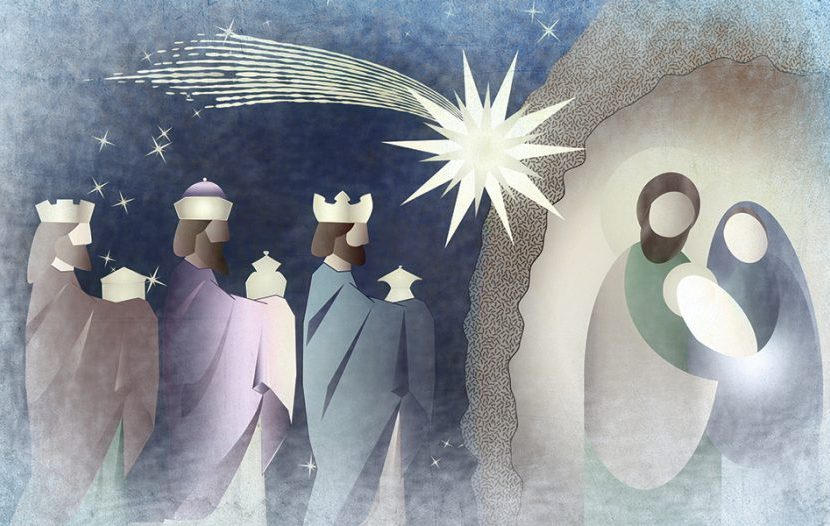
The Epiphany of the Lord ~ Fr. Mike Beatty, Aspirant
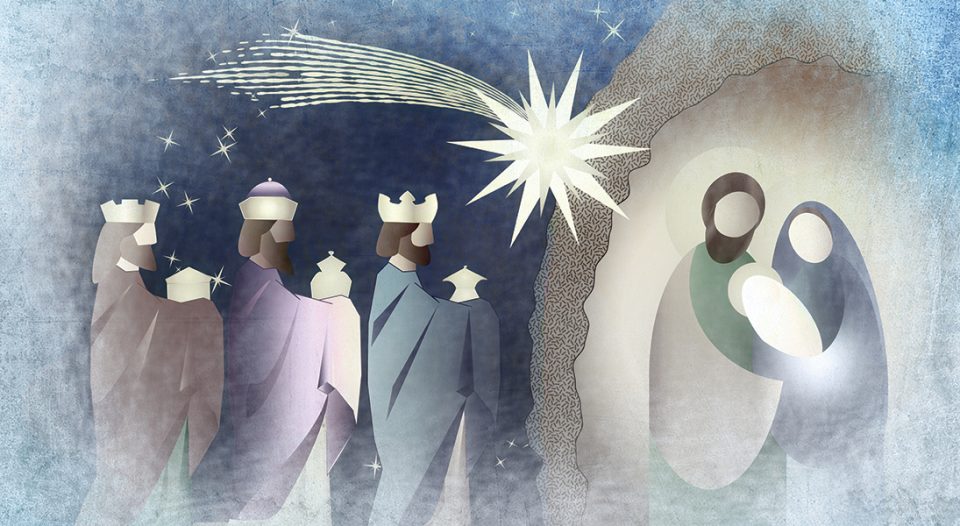
Sunday, January 5, 2020 – Solemnity of the Epiphany of the Lord
Is 60:1-6; Ps 72: 1-2, 7-8, 10-13; Ep 3:2-3a, 5-6; Mt 2:1-12
- Praised be Jesus Christ!
- Now and for ever. Amen.
Dear Brothers and Sisters,
We come today to the formal end of the Christmas season – hard to believe that it’s been 12 days already, eh? You may now throw out your Christmas tree – Father Bluenose says it’s okay. Christmas is over.
The Solemnity of the Epiphany celebrates the “revelation of the (All-)Highest”; that is, God-made-Man, Jesus Christ. Jesus, the Incarnate Word of God, the incarnate Second Person of the Most Holy Trinity, is “revealed” as the All-Highest by the arrival of potentates from the East, about whom I’ll say more in a moment. At the Epiphany, we come, also, to the conclusion of the sequence of revelations which have characterized Our Lord’s earthly ministry from before he was even born. There were three of them – a scripturally- and theologically-significant number! – and the order in which the revelations were made is significant for understanding the identity and ministry of Jesus.
First, He was revealed to Mary, his mother-to-be, in the message of an angel. We need not go over Luke’s majestic account of the Annunciation (Lk 1:26-38); it is one of the best-known passages of the New Testament. Next, He was revealed to Joseph, who was a righteous man (cf. Mt. 1:19) and, as such, a bit straitjacketed mentally. Not being privy to the Annunciation, he determined to be rid of his betrothed, who turned up pregnant without her husband having had the pleasure of impregnating her.
Scarcely had Joseph formed the intent to divorce Mary quietly, when he was visited in a dream by an angel, who basically repeated what the Angel Gabriel had told Mary: that the child Mary was carrying in her womb was the product of a supernatural, divinely-ordered union. Joseph believed, and, being a “righteous man” (we would say he was strengthened by Grace), stepped boldly into his role as the foster-father of Jesus. That is the two-part first revelation of Jesus as the All-Highest.
The second revelation was to the shepherds who were “living in the fields and keeping the night watch over their flock.” (Lk. 2:8) The shepherds represent the Children of Israel; that is, the Hebrew people. They were of the land; a land flowing with milk and honey; a land which God had promised to give to their ancestors, and did give to them. In the interim, their ancestors had displeased God and forfeited their inheritance from Him, been driven off the land, driven into exile, redeemed by a temporal ruler (King Cyrus II the Great of Persia) and prophesied to of a coming Messiah who would Israel to a right relationship with her God. The shepherds were not trained in the Law; they probably could not read at all. But they were humble children of Israel, doing what God had intended the children of Israel to do when He delivered them to the Promised Land: they had entered into and taken possession of the land, and were enjoying the fruits of their labor on that land. It is to them, humble shepherds who “bore the smell of their sheep” – not to the perfumed and powdered Pharisees and scribes, sleeping in comfortable beds in Jerusalem! – to whom the cacophonous, raucous celebration of celebration of Heaven at the Nativity of the Lord revealed, through the message of an angel, that “a child is born to you.”
The third revelation is what we commemorate today: the arrival of the pagan, animistic, non-Jewish world, represented by the three (or however many) kings (or whatever they were) bearing gold fit for a king, frankincense “which owns a deity nigh,” and myrrh, the “bitter perfume” that heralded the saving death that the All-Highest would die. These kings, or magicians, came to do homage to the Lord of Creation shortly after His entrance into Creation.
Who were these people? That they were not Jews is clear from the fact that when they arrived in Jerusalem, they asked, “Where is the newborn King of the Jews?” (Mt. 2:2) – not, “Where is our newborn king?” Matthew refers to them as “magi,” which suggests that they were capable of performing “magic” – that is, wonders based on advanced, or arcane knowledge. Other opinions say that they were astronomers, who had predicted the coming of a particularly-bright star, which would herald some great even on earth. Alternately, they have been described as “kings”; the term “magus” may be a corruption of the Latin “magister,” or master, indicating a person of authority. Again, “magi,” in the plural, has a certain relationship to the Arabic word “masjid,” or “majid,” meaning “market,” which suggests that the men were merchants – and, thus, wealthy and cosmopolitan, with ready access to the expensive gifts they brought to lay before the Child.
Whatever their background, whatever their status and role in life, the fact that they came from the East, as Matthew specifies (cf. Mt 2:1) is significant. If we accept the notion that I expressed earlier, that the Magi represent the pagan world coming to do Christ homage, then the journey of the Magi recapitulates, it traces the steps, that Abram (before he was Abraham) took when he came forth from “Ur of the Chaldees,” as the Proclamation of Christmas reminded us 12 days ago. In the same way that Abram, who was not yet the father of nations that he would become, came forth from the Fertile Crescent at the beginning of salvation history, so too do these latter-day devotees of the Living God come from the same area, representing the submission of the non-Jewish world to the King of the Jews.
The arrival of the Magi, the submission of the non-Jewish world to the King of the Jews, completes and perfects the Epiphany; that is, the revelation of the All-Highest. The co-equal and co-eternal Son of God, Jesus, had been revealed, successively, to the specially-graced (first Mary, then Joseph); to the “great unwashed” (the shepherds); and, finally, to the Gentiles. It is fitting and right that we conclude the season of Christmas, which celebrates the coming of the Messiah in the flesh, by celebrating the truth that the Gentile Magi taught: that Jesus is not merely the Son of God, but is God Himself.
What does this mean for us, more than 2,000 years after the fact? How should we respond to the declarations that the Magi made in bringing their gifts: that the Child is a King; that He is God; that He is Victim? We must make our way spiritually to the place where He lay, to receive His visitors. We must see this audience from both perspectives: of God receiving His supplicants, when we understand and share and emulate the adoration and worship that they offered to Him; and of supplicants approaching the Holy of Holies, falling down in worshipful adoration of Him Who above all others is worthy of worship. If we are willing to approach Our Lord and Master with the same humility and joy as the Magi, and to accept the welcome that He offers to us as He offered to them, then we will be able truly to complete and perfect, in our own hearts, the revelation of the All-Highest that is the fit culmination of the Christmas season.
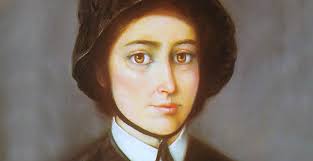
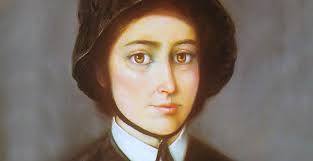
Suffering, Growing, Living in Faith ~ St. Elizabeth Ann Seton ~ The Very Rev. Lady Sherwood, OPI
Reading 1:1 JN 3:7-10
Responsorial Psalm: PS 98:1, 7-8, 9
Gospel: JN 1:35-42
Liturgical colour: White.
Today we come together as a church to commemorate the Memorial of St. Elizabeth Ann Seton who is my name saint within the Order of preachers Independent, due to our Prior (and Presiding Bishop) feeling there are similarities between the life of St. Elizabeth Ann Seton and that of my own.
Throughout Biblical history and even in current times, we sometimes come across people who have endured much within their lives and who, regardless of this, remain strong and devout within their faith. Today we remember St Elizabeth, whom is one such person from whose life, heart and devotion, we can take inspiration within our own spiritual life.
Elizabeth was the first native-born citizen of the United States to be Canonized to sainthood.
Elizabeth was born as Elizabeth Ann Bayley in New York city on the 28th August in the year 1774, and she was a child of the Revolutionary war. She was raised Episcopalian which was the faith of her parents.
Elizabeth married at the tender young age of only nineteen years old, to a man named William Magee Seton. He was a young but wealthy merchant and together they parented a total of five children.
Elizabeth had a very deep devout faith and concern for the poor even as a very young woman and she shared this devotion with her sister-in-law, who was Rebecca Seton, and with whom she became very close friends. Together, Elizabeth and Rebecca undertook various missions for the poor and for the needy of their region and they adopted the name of the ‘Protestant Sisters of Charity` for their mission works.
Elizabeth’s life changed after only the short time of four years of marriage and her life became rather burdensome in nature. Elizabeth and her husband were left with the responsibility for seven half-brothers and sisters of William’s father when he died in the year 1798.
Elizabeth suffered even further in the year 1801, when her own father with whom she had a very close relationship, especially since the loss of her mother at aged only three, himself passed into the care of the Lord.
Then yet again she suffered after only another two years, when both her husband’s business and his health failed. Filing for bankruptcy, Elizabeth and her husband sailed to Italy to help his health and to try to revive his business.
Whilst in Italy, Elizabeth suffered even further, as William’s condition worsened. He was quarantined and subsequently died of Tuberculosis in December of 1803. Elizabeth remained in Italy for several months after his death and during this time, was more fully exposed to the Catholic faith.
Elizabeth returned to New York city in June of 1804, only to suffer yet again with the loss of her dear friend and sister-in=law, Rebecca Seton, in the very next month.
At only the young thirty years of age, Elizabeth had endured the loss of so many who were close to her and she seemed to have the weight of the world upon her shoulders. Even so, throughout all this, Elizabeth still remained fervent in her faith.
The months ahead were life-changing for Elizabeth and she seemed ever more drawn to the Catholic faith and to the Mother Church, much to the horror of her friends and her remaining family who were firmly Protestant.
Elizabeth Ann Seton was received into the Catholic Church on the 4th March 1805. Her conversion cost her dearly in the areas of her friendships and in the support from her remaining family.
Elizabeth relocated to the Baltimore area and there she established a school for girls. She also founded a religious community along with two other young women and she took vows before the Archbishop Carroll as a member of the Sisters of Charity of St Joseph. From this time forward, Elizabeth was known as Mother Seton and she left a legacy of care and education for the poor. She even established the first free Catholic school of the nation.
In so many ways, the journey into the Catholic faith, helped Elizabeth to much more appreciate and to embrace her faith even more profoundly. Elizabeth was willing to endure all things to follow Christ. In her journal, she even wrote, ‘If I am right Thy grace impart still in the right to stay. If I am wrong Oh, teach my heart to find the better way’.
Many of us who have chosen the Catholic faith have experienced some setbacks and have had to endure issues with relationships, but for this brave and devout woman of faith, the cost was even greater.
Elizabeth died aged only 46 on January 4th 1821 from Tuberculosis and she was Canonized on September 14th 1975.
On this your special day, St Elizabeth Ann Seton, Pray for all of us who follow your pathway of faith. Pray that we likewise to yourself will say yes and will accept all that will come to us in the years ahead, and to allow our earthly endurance to further our faith in our Lord Jesus Christ.
Amen.
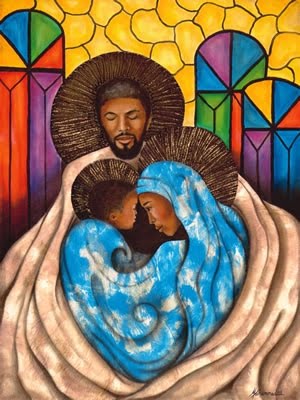
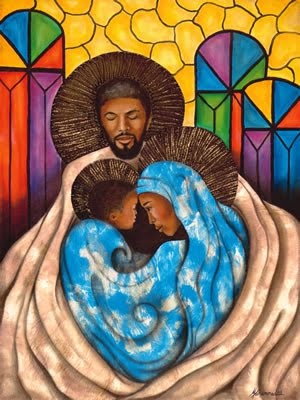
“Family Friendly?” ~ The Feast of the Holy Family ~ The Very Rev. Lady Sherwood, OPI
Reading 1: SIR 3:2-6, 12-14
Responsorial Psalm: PS 128:1-2, 3, 4-5
Reading 2: COL 3:12-21 or: COL 3:12-17
Gospel: MT 2:13-15, 19-23
Liturgical colour: White.
My Dearest brothers and sisters, Today, we come together as a church to celebrate the earthly family of Our Dear Lord and Saviour Jesus Christ. The Holy Family of Mary, Joseph, and of course, of Our Lord Jesus himself. This feast challenges us all to look at what it means to be family. And our eyes turn toward the Christmas nativity scene. During this time of Christmas, we tend to sentimentalize the Holy Family – they often tend become figures of plaster and paper, instead of being of true flesh and blood. But we forget: they weren’t all that different from how we are. They were holy, yes that’s true,. But they were also human just like us.
The life of the Holy Family is a life not always turning out the way in which they would’ve expected. It’s the life story of a teenage mother, who conceived a child before she was married. It’s the life story of an anxious father, who confronted this scandal, and who at first, was planning on divorce. It’s the life story of a family forced to become refugees, living as immigrants in the land that once held their ancestors as slaves. It’s the story of a missing child, and days of anxious worry, stress, and searching by his parents.
But there is even more. It’s the story of our Lord’s violent death by crucifixion – where his mother watched with helplessness and unimaginable sorrow. This family was holy. But it was also a human family. We need these reminders. Especially now.
The Church calendar shows us that the Christmas season is one of light – but it is also of shadow. The day immediately after Christmas day and the joy of the Lord’s birth, we celebrate the feast of the first martyr, St. Stephen. Then a couple days after this, we mark the feast of the Holy Innocents, all the children who were slaughtered by Herod. The joy of Christ’s birth is suddenly tempered by tragic reminders of what the Incarnation cost. And the Holy Family shared in that.
It is just a few steps here from the wood of the manger to the wood the cross. But in so many ways, the two singular events are inseparable. One led inevitably to the other. Joy and sorrow are almost side by side, linked by sacrifice, by faith, and by love. It is the story of our salvation. And it is the story of the Holy Family. he juxtaposition of those two images in this church, the crèche and the crucifix, serves as a powerful lesson for this feast. We realize that when we speak of the Holy Family, we speak of a family that struggled and suffered, like so many of us.
But: this family also knew profound hope. They trusted completely in God. They call all of us to that kind of trust. And they are with us. In our own time, they stand beside all who worry, who struggle, who search, who pray. The Holy Family stands beside parents anxious about their children, worrying for their welfare. They walk with immigrants and refugees separated from those they love. They comfort teenage mothers and single parents. They console the prisoner, the outcast, the bullied, the scorned—and the parents who love them. And they offer solace and compassion to any mother or father grieving over the loss of a child.
The Holy Family shares our burdens. But they also uplift us by their example. Jesus, Mary and Joseph were never alone. They endured through the grace of God. They prayed. They hoped. They trusted in God’s will. We might ask ourselves where we can find that kind of peace and purpose in our own families, in our own lives.
The Holy Family surely must’ve had moments in their life, when living those virtues which they had, when things seemed so desperately hard, or even impossible. But they did things most of us don’t. They listened to the angels who passed them the will of God. They dreamed.
And they gave themselves fully to God.
They made of their lives a prayer.
When we find ourselves overwhelmed, we need to remember where it is that we must focus on today for our guidance and to remember to look toward the Lord’s Nativity, and His Holy Family and their lives. There is our model for living: Jesus, Mary and Joseph. But we need to see them in full, also ensuring that we remember the closeness of the cross. That was their life and it’s our lives too. Yet, through all their hardships, in a time of anxieties, difficulties, of persecution and tragedy—a time to some extent like our own –they showed us how to be people of true faith, people of forgiveness, and people of love.
They show us, in other words, how to be holy in our lives.


You must be logged in to post a comment.