
Category: Sermon
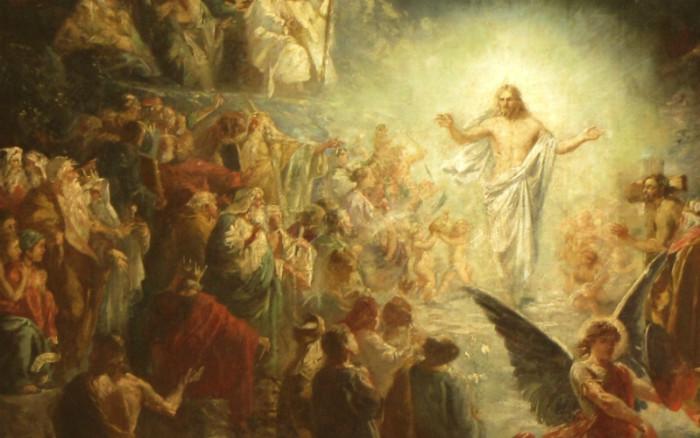
Hell, Vigils, and Lullabys ~ Br. Chip Noon, Novice

Holy Saturday. Sabbatum Sanctum. The day after Good Friday and the day before Easter.
As children, we were taught that on this day, Jesus went down to Hell. It is in the Creed as “He descended into Hell.” As a child myself, this day was one of sadness, fear, and anticipation.
In Sunday School (where we who did not attend a parochial school were forced to go), the nuns depicted this day to us as the time during which Jesus freed all the righteous people who had lived before his time from bondage in darkness and distance from God. We were told that everyone from Adam and Eve was unable to enter heaven because Jesus had not opened it for them.
You can imagine what went through my mind thinking about this day. The nuns in my parish did not always do a good job of explaining what was going on this day and how it affected people in hell. So we kids made up lots of interesting stories. I always thought back to the hymns that sang about our longing for Christ to save us from our sins and the “sins of the world.”
Still, what were those people doing in hell before Jesus came to free them? We were assured that they did not suffer the same fate as sinners, who were tormented by the devil and the fires of hell. Eternal hellfire. That was a pretty scary concept.
It was only later as a youth that I found out about the “harrowing of hell.” Growing up in rural Maryland, I knew what a harrow was. To me, it was always a disc harrow, a bunch of metal discs in a row used to break up clods of dirt after ploughing. And so Jesus used this instrument to open up the soil of hell to let the dead ascend, finally, into heaven. Of course, this was always done in a dark, murky atmosphere suitable to that part of hell that wasn’t on fire.
Holy Saturday…that was quite a fearsome day!
Back then, in the 1950’s, we either didn’t have Easter Vigil as we do today, or my parents never took us to it. Easter Sunday was always THE day for us and Mass was always THE most important ceremony of the year. So from Good Friday to Easter Sunday was a time of agitation.
Of course, the agitation and anticipation was all about the Easter Baskets with colored hard-boiled eggs, candy, and especially jelly beans. And the fact that the solemnity of Lent was at last gone, and maybe the nuns would let up on us…
What must have been going through the minds of the Apostles and the women disciples? I never heard this discussed growing up, but in my adult life, it became one of the things I thought about on Holy Saturday. We know it as anticipation. They experienced it as the utter destruction of their whole world.
Their Teacher was tortured and died a horrible death on a cross. Now what?
For all of the Apostles but John, there must have been intense shame. They had all deserted their Teacher and his mother and had gone into hiding. Imagine their feelings on this day.
What we know today was all taught to them, so there should have been no surprise. But we can say that from the distance of two millennia and the evidence of the empty tomb. This group of grieving souls had none of that.
“But these are written that you may believe that Jesus is the Messiah, the Son of God, and that by believing you may have life in his name.” John 20:31
Written many years after Holy Saturday.
Now what?
Although all of this was presented to them by Jesus, they really didn’t know what was happening.
They weren’t anticipating Easter eggs, baskets, jelly beans, the solemn joy of the Easter Sunday Mass.
They were deserted, bereft, scared, ashamed, and deeply sorrowful.
We get some or all of these feelings at times of crisis in our own lives. I’ve had them during and after a crisis, and believe me, the sinking feeling in my stomach is quite real and quite frightening.
But wait. We were told the Gospel stories so that we might believe that Jesus is the Messiah, the Christ, the Son of God. The disciples thought they had nothing. We have the Word. They had despair. We have triumphant anticipation.
It’s probably a good thing we were never taken to the Vigil. I can’t imagine I’d have done well sitting through all those readings. Seven readings, six psalms, an Epistle, the Gospel…it just goes on forever, doesn’t it?
“When I was a child, I spoke and thought and reasoned as a child.”
Now I know that the Vigil is actually the most calming lullaby God could ever sing to me. It tells our whole story, from the beginning of time to the Resurrection. Everyone is created, everyone goes through bad times, everyone sees glimmers of hope, everyone in some way gets through the troubles, everyone can pray these words from one of those psalms:
O LORD, my God, you are great indeed!
You are clothed with majesty and glory,
robed in light as with a cloak.
Because we know that while now we may shed tears, dawn will bring incomparable gladness.
We have Holy Saturday to teach us how to live through all our times of despair and fear. We have salvation history in all those readings, we have the stories of a small group of terrified disciples who on Sunday will experience that incomparable gladness. We have the anticipation we remember as children and the delight we see in our own children’s eyes on Sunday. And we have the words of John, the disciple who stayed with his Teacher through all the horror and who was told to care for the Blessed Mother:
“But the Advocate, the Holy Spirit, whom the Father will send in my name, will teach you all things and will remind you of everything I have said to you. Peace I leave with you; my peace I give you. I do not give to you as the world gives. Do not let your hearts be troubled and do not be afraid.”
We have come through the dark nights of our souls and we will be able, finally to say Alleluia.
Lord, help us to remember that your son suffered, died, and was buried for our sakes. Help us to remember that even as we face crisis and trouble, the next day will bring incomparable gladness if we trust in you. Help us to remember that Easter comes after Holy Saturday.
Amen.
He Died! The Great Redeemer Died ~ Br. Brenden Humberdross
Good Friday of the Lord’s Passion 2017 Reading: John 18:1 – 19:42
The Great Redeemer Died!
He died; the great Redeemer died,
And Israel’s daughters wept around;
A solemn darkness veiled the sky,
A sudden trembling shook the ground.
Come, saints, and drop a tear or two
For him who groaned beneath your load;
He shed a thousand drops for you,
A thousand drops of precious blood.
Here’s love and grief beyond degree,
The Lord of glory died for men:
(Isaac Watts)
Today, we stand at the centre of the holiest week in the Christian calendar, and of the most important event in human history. Today we remember not only the death of the man Jesus, not only humankind’s rejection of God, but of the opening of the way for all of humanity to a full relationship with God.
In less than 24 hours we have seen Jesus betrayed by one of his closest followers, interrogated, beaten and humiliated, and finally brutally murdered upon the cross of Calvary. At this point, the disciples would have been despairing; their master, who had seemed to promise so much, was gone. What were they to think of his message? Was he really the messiah or were they wrong? I’m sure that doubt and fear would have been at the forefront of their minds as they grieved for their spiritual leader. However, for us, with the hindsight that distance brings these events take on a different meaning. We should be able to see in the events of Good Friday a different message, not one of despair and fear, but one of hope.
On Thursday night, Jesus left the relative security of the Upper Room where the Eucharist had been instituted and went to the Garden of Gethsemane. The gospel reading today makes it clear to us that Judas, the betrayer, was well aware that this was a place that Jesus and His followers frequented, so why go there? This action is the start of a number of signs in today’s reading that point out for the keen observer that Jesus was totally in control of the events surrounding His passion.
Jesus knew very well that Judas would be able to find him and yet still went to the Garden. When the betrayer and the soldiers appeared Jesus didn’t run, He stood his ground. When approached He asked the mob who they were looking for, to which they responded “Jesus the Nazarene”; and it’s here that we see the first miracle of the Passion. Jesus responded with the words “I AM”. These words were so powerful that they caused the mob to turn away and fall to the ground; but why? Jesus was revealing to the mob, to His disciples and to us his true identity; I AM is the very name of God! When God appeared in the Burning Bush to talk to Moses what name did he give? I AM…Jesus was revealing through the power of His name that he was the Lord God and that no matter what was to follow we shouldn’t fear, but have confidence that all was in His control.
When the mob had recovered Jesus handed himself over to them and it was at this point that Peter leapt to his aide and cut off the ear of the servant; was Peter arrested with Jesus? Surely he should have been for such a violent crime? However, we know that he wasn’t; why? The answer is simple, the Lord of the Passion didn’t allow it. Before handing himself over Jesus said to the soldiers, “…so if you are looking for me, let these men go”; and instead of ignoring the “Nazarene criminal” the soldiers obeyed; the Lord of the Passion exerted His will to control the events.
If the Apostles and Disciples were able to see these events through our eyes their attitude towards what followed may have been totally different. Instead of seeing the acts of brutality performed against their friend, their Master, and their Messiah degrading Him and diminishing Him they may have been able to rest in the knowledge that Jesus has revealed himself as the Great I Am. They may have been able to stand firm knowing that He was in control of events and was truly Lord of all that was happening. They may have even had the foresight that in some way, the Messiah would overcome whatever seemingly earth shattering events were overtaking them.
And thus it should be for us; we should mourn, we should feel grief at the rejection of the Saviour of the whole human family however, we should also rest firm in the knowledge that Jesus is the Lord of the Passion and it is all part of the great plan for the redemption of humanity.
Maundy Thursday and Miracles ~ The Rev. Dcn Brett Whetstone

I received from the Lord what I also handed on to you, that the Lord Jesus on the night when he was betrayed took a loaf of bread, and when he had given thanks, he broke it and said, “This is my body that is for you. Do this in remembrance of me.” In the same way he took the cup also, after supper, saying, “This cup is the new covenant in my blood. Do this, as often as you drink it, in remembrance of me.” For as often as you eat this bread and drink the cup, you proclaim the Lord’s death until he comes.
Maundy Thursday is perhaps the worst day in church history. In fact it is probably the worst day in the history of all humanity. Maundy Thursday is the day that the embodiment of Gods perfect love came to us in the person of Jesus and we rejected him. It was on that last night that there was no hope left for Jesus. One of his best friends had just betrayed him for money, and another was about to deny him three times, and all the rest of his disciples would run away in fear for their lives. It was in a moment of hopelessness, that Jesus gave us a sign of hope , when he said “this is my body and I give it to you”. He was letting us know it would be ok, that he had a plan.
In the establishment of the Eucharist Jesus gave the church many things, but the most important thing he gave was the assurance that God had a plan.
I was listening to a sermon that was given by one of my favorite authors, a Roman Catholic Dominican Priest from England, and he was talking about this very moment in church history, and he asked the question: ” have you ever thought how odd it is, that every Sunday we gather to remember the moment that the community ran away, when they were dispersed?” He continued on to say that, “we gather in hope to remember the worst moment, because it is when it is darkest that God comes to us” or to rephrase that I like to say that it is when it is darkest that God comes to us and we start to see his plan.
Several years ago a friend of mine posted a cryptic post on Facebook. She and I had gone to Bible school together and had reconnected online. In her post she simply said, “If you pray I need you to pray.” So that evening I spent some time praying for her, and the next morning I woke up and checked Facebook as I do every morning and saw her post, she said that her husband’s cancer had returned and that it was going to take a miracle for him to make it. Several months later, at the age of 32 her husband had passed away.
So here is my friend, she and her husband fellow ministers doing exactly what God wants them to do and tragedy strikes. Where is God’s plan in all of this? That’s the question that I was asking, but not her. She said despite this being painful, and despite her feelings of sadness and anger, she knew that God had a plan, and she wanted everyone else to know this as well.
Time went on, as if does in these situations and I happened across another Facebook post from her several months later. This one caught me off guard. She had just announced that she was pregnant.
She had explained that they had trouble conceiving their first child and they sought out help from a fertility specialist. In doing so the specialist had fertilized several eggs, and as luck would have it the first egg was all they needed to have for a healthy pregnancy. Because they went to a Christian hospital for the procedure, the hospital froze he remaining fertilized eggs in case they needed them again in the future. Well the future arrived, and even though her husband had passed away she moved forward with getting pregnant again, because he wanted her too, and he time was right. She got pregnant and experienced a normal pregnancy.
After nine long pregnancy months, she gave birth to a beautiful baby girl. Baby and mom were healthy and sent home from the hospital and to a brother who was anxiously awaiting their arrival. But then after three shot days of being at home, the unthinkable happened. My friend’s newborn daughter spiked a high fever, and no amount of medicine was brining it down. They rushed to the emergency room, where dozens of tests were run. Then the news came. My friend’s daughter had somehow contracted meningitis. Her daughter was hooked up to breathing machines and all sorts of monitors. She was not expected to make it.
So there sat my friend who had just lost her husband a short time ago, about to lose her daughter. She was desperate and didn’t know what to do. Then faced with the decision that no parent should have to face, she made the decision to take her daughter off of the ventilator. She didn’t want to see her baby suffer any longer.
She removed her daughter from the ventilator and held her close to her, cuddling her, crying and praying. Then the unthinkable….the unexplainable happened. Her daughter, who just moments ago was not able to breath on her own took a breath. Then another, and another and then minutes turned into hours and hours turned into days. The miracle that she had prayed for was happening right before her eyes.
Through all of this she never lost hope, she pressed on knowing that no matter what, God had a plan, and that He was going to see her through it., and He did.
I believe that God had his hand in all of this, the entire time he was there with her giving her the strength that she needed to make it through the loss of her husband, and the near loss of her daughter, and now you can see the fruits of that plan, because she travels all over the country talking to groups large and small about grief and trusting in Gods plan. She has been interviewed by people magazine and has a best selling book. So when Jesus said those words 2000 years ago this is my body and I give it to you, it was Him letting us know that he had a plan, it was Him letting us know that He has us covered and that no matter what happens he will see us through it.
Let us pray:
Almighty Father, whose dear Son, on the night before he
suffered, instituted the Sacrament of his Body and Blood:
Mercifully grant that we may receive it thankfully in
remembrance of Jesus Christ our Lord, who in these holy
mysteries gives us a pledge of eternal life; and who now lives
and reigns with you and the Holy Spirit, one God, for ever
and ever. Amen.
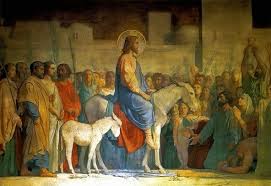
Salvation on a Donkey ~ The Rev. Dcn. Dollie Wilkinson, OPI
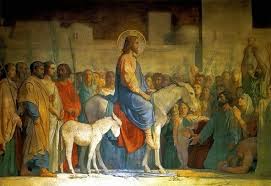
Today is Palm Sunday……but what does that really mean? Palm Sunday is the final Sunday of Lent, the beginning of Holy Week, and as told in Matthew 21:1-11, commemorates the triumphant arrival of Christ in Jerusalem, days before he was crucified.
“When they had come near Jerusalem and had reached Bethphage, at the Mount of Olives, Jesus sent two disciples, saying to them, “Go into the village ahead of you, and immediately you will find a donkey tied, and a colt with her; untie them and bring them to me. If anyone says anything to you, just say this, ‘The Lord needs them.’ And he will send them immediately.” This took place to fulfill what had been spoken through the prophet, saying, “Tell the daughter of Zion, Look, your king is coming to you, humble, and mounted on a donkey, and on a colt, the foal of a donkey.” The disciples went and did as Jesus had directed them; they brought the donkey and the colt, and put their cloaks on them, and he sat on them. A very large crowd spread their cloaks on the road, and others cut branches from the trees and spread them on the road. The crowds that went ahead of him and that followed were shouting, “Hosanna to the Son of David! Blessed is the one who comes in the name of the Lord! Hosanna in the highest heaven!” When he entered Jerusalem, the whole city was in turmoil, asking, “Who is this?” The crowds were saying, “This is the prophet Jesus from Nazareth in Galilee.” “
Palm Sunday is known as such because the faithful will often receive palm fronds which they use to participate in the reenactment of Christ’s arrival in Jerusalem. In the Gospels, Jesus entered Jerusalem riding a young donkey, and to the lavish praise of the townspeople who threw clothes, or possibly palms or small branches, in front of him as a sign of homage. This was a customary practice for people of great respect. Palm branches are widely recognized symbol of peace and victory, hence their preferred use on Palm Sunday.
So here we have Jesus, basically riding to His death, not in a carriage, or on a magnificent horse, but on an humble donkey. But this serves to remind us that even though He is the Son, our Savior, He chooses to come to us where we are, as a humble servant for His people. The use of a donkey instead of a horse is also highly symbolic, it represents the humble arrival of someone in peace, as opposed to arriving on a steed in war. A week later, Christ would rise from the dead on the first Easter.
During Palm Sunday Mass, palms are distributed to parishioners who carry them in a ritual procession into church. The palms are blessed and many people will fashion them into small crosses or other items of personal devotion. These may be returned to the church, or kept for the year. Because the palms are blessed, they may not be discarded as trash. Instead, they are appropriately gathered at the church and incinerated to create the ashes that will be used in the follow year’s Ash Wednesday observance. The colors of the Mass on Palm Sunday are red and white, symbolizing the redemption in blood that Christ paid for the world.
I love the picture represented in Matthew. Everyone around are taking off their coats, and laying it in front of Jesus, as He rides in on the donkey. Even those too poor to have a fine coat, gather branches or palms off the trees, to lay at Jesus” feet. This reminds me of a fairy tale prince, who discards his cloak, covering a puddle so the dainty princess may cross without getting her feet wet. Yet in Matthew, the people are clearly showing their support, and adoration, for the Lord, Jesus Christ. I wonder how many of them knew what was to happen just a few days later. But Jesus knew, and yet He didn’t enter the city under cover of darkness. He rode in on a donkey, an humble symbol of peace.
Palm Sunday Prayer:
Almighty God,
On this day, your Son Jesus Christ entered the holy city of Jerusalem and was proclaimed King by those who spread garments and palm branches along His way. Let those branches be for us signs of His victory, and grant that we who bear them in His name may ever hail Him as our Lord, and follow Him in the way that leads to eternal life.
In Jesus’ Name We Pray,
Amen.

Where’s the Proof? ~ Br. Chip Noon, Novice

Jesus wept.
He was human, after all. We can presume he laughed too, can’t we? He loved to have children around him, and they wouldn’t come to him if he were always glum. And casting out beams from our eyes to me is certainly humorous in a sardonic way.
And he “groaned within” or “groaned in the spirit” so we know he was capable of deep emotion.
But when we think of Jesus, we are guided by Isaiah—“he was a man of sorrows, and acquainted with grief.” Fasting, marathon praying, casting out evil spirits, admonishing his followers and others… we know this was a serious guy.
And we can presume he had one thing on his mind: our salvation. This man of sorrows wanted us to be joyful.
But in today’s readings and Gospel, we come up against a real stumbling block, one that dogs us even to this day. Our unbelief.
In fact, that’s a theme throughout the New Testament. Our unbelief.
“OK, you say all these things can happen. Give me some proof!” We doubt everything. We fear to trust. We cower in uncertainty, just as almost everyone in the Bible does at one time or another.
Jesus wept. He wept for his dead friend Lazarus. He wept for the unbelievers. He wept for the believers who would become backsliders. He wept for the condition of humankind then, before, and now.
“Give me proof.”
It is sad, isn’t it? We all need reassurance, proof, pats on the back.
What Jesus gave as proof was what we call miracles. He raised Lazarus from the dead. He turned water into wine. He cured lepers. He made the blind see. He cast out devils.
This is how he taught his followers and his doubters.
And in a few weeks, we will hear from the pulpit that when he showed himself to thousands after his death, they became believers too.
Why do we need these proofs? We certainly don’t get them today. We don’t see people raised from the dead. We don’t see the blind made to see. We don’t…we don’t…or do we?
What is a miracle? The Bible gives us healings, serpents, transfigurations, resurrections. But that was thousands of years ago. What do we have today?
Do you need to see your dead brother brought to life? Do you think it’s even possible? Do you need to see the cancer sufferer cured? Do you think it’s even possible? Do you need to see your life turned around? Do you think it’s even possible?
Let me tell you for a minute one of my own “miraculous” experiences. Eight years ago my son called me and told me that the sonographer could not detect a heartbeat in the baby in his wife’s womb. He was distraught. His wife was distraught. My wife and I were distraught. But Mike did tell me that the doctor wanted to wait a week and have the sonogram taken again.
That was a bad week. What did I do? Yes, I worried. Yes, I was distraught too. But then I thought, “I’ll pray to my mother in heaven and see if she can help.” Let me tell you now that I think my mother is truly a saint in heaven. And since I firmly believe in the communion of saints, I got right on the prayer train to her. Our Fathers, Hail Marys, Rosaries, lots of made up prayers and supplications.
Of course I included Jesus and Mary in the prayers, figuring I should go direct as well.
And the next week…they heard a heartbeat.
Do I know if this was a miracle? I have no idea…that is, I have no proof. But to me, that was a miracle and proof of God’s continuing presence in our lives.
Now I have quite a few friends who take all this as malarkey, and figuratively pat me on the head and say, “whatever makes you happy.” You know the comments. But even in my own doubt (Lord I believe. Help thou mine unbelief.) I figured that this was a true miracle and my mother had one in the win column. But you know it takes two miracles to make a saint, so a year later, there was a similar event that needed divine intervention. Down to the station, back on the prayer train, and more supplications to Jesus, Mary, and Doris, my mother.
Sure enough, another miracle, my sister recovered. Doris has had several more miracles over the years. Maybe I should call the Vatican…
But back to the sermon, the First and Second Readings and the Gospel are talking about life and death, and coming back to life and being alive in the spirit. These are our wishes. In fact, this is what we all hope will happen after we die. We believe there is no end, but a continuation in another realm.
However, let me call your attention back to Psalm 130 from this morning.
Out of the depths I cry to you, O Lord,
Lord, hear my voice!
O let your ears be attentive
to the voice of my pleading.
If you, O Lord, should mark our guilt,
Lord, who would survive?
But with you is found forgiveness:
for this we revere you.
My soul is waiting for the Lord,
I count on his word.
My soul is longing for the Lord
more than watchman for daybreak.
Let the watchman count on daybreak
and Israel on the Lord…
Here the psalmist is not asking for proof, miracles, signs. He knows that God will forgive us and he counts on the Lord. That’s the essence for today. We can ask for, we can rely on miracles, but if the Kingdom of Heaven is within us, do we need those signs?
I love them, actually. I firmly believe I have experienced miracles, but I also know that God speaks to us without signs and symbols. So the miracles for me are a comfort. But the daily comfort is there, if only I ask.
Amen.
Lord as you show us your miracles every day, hear us as we pray, Lord, we believe. Help thou our unbelief.
A Shepherd For the Lost! ~ The Rev. Dcn. Dollie Wilkinson, OPI
We all know the twenty-third Psalm, the Psalm of David. I imagine most of us can recite it almost word for word. But, have you ever thought about what it really means, what it is really saying? It seems with our fast paced, frantic world, people are feeling increasingly stressed, depressed, or lost. And while there are drugs, and therapy to help us deal with any issues we may face, there is also a very powerful tool, a special gift that our heavenly Father has given us – Psalm 23. Let’s take it line by line, and explore how just by reciting, and praying, on each part, it will provide us with a way to cope with the stresses of this world.
Psalm 23 (KJV)
“The Lord is my shepherd; I shall not want.”
What is the purpose of a shepherd? To guide his flock of sheep, to gather any little ones who wander astray. He also must make sure they are well fed, and cared for, to insure they live a long life, so their purpose is assured (the gift of their wool). Isn’t this exactly what God does? He provides us with all of our needs, even if we don’t realize at times what exactly we need. Even if we ask Him for nothing, He still provides. We can be assured that will shall never want. He is our Shepherd!
“He maketh me to lie down in green pastures”
I tend to go throughout my day as if it’s a race. I have a mental to-do list in my head, and on top of that I also care for my ailing husband, babysit my granddaughter once a week, and most days run errands, such as go to the store. So you can imagine, I get pretty tired and worn down. Though my best friend cautions me to rest, I don’t always listen. But just as a shepherd knows that his flock must rest at times, so too does our heavenly Father. I’ve noticed that sometimes it takes a major illness, or injury, to get us to stop, to get that much needed rest. And there should be no shame in slowing down at times, and allowing our body, and mind, to recuperate.
“he leadeth me beside the still waters.”
If you know anything about sheep, they are timid creatures. And just like all God’s creatures, they get thirsty. But, they are afraid of fast moving streams. So the shepherd will lead them to a calm pool of water. He doesn’t make fun of the sheep for being afraid, he doesn’t push them in to a place where they are not comfortable. Our Shepherd does the same for us. If we are afraid, He makes a way to calm our fears. He leads us in to the calm pool, and away from the rapids of life.
“He restoreth my soul”
I had a chaotic childhood. My parents divorced when I was little, my mother committed suicide, and now I care for my ailing husband. It has taken me many years to learn to trust people, and to trust myself. When a shepherd takes his flock out for the day, when they pause to rest, I imagine the sheep wander close to the shepherd, maybe for a snack, but I also believe for just a simple ear scratch, or to be petted. This makes the sheep feel loved and cherished, it makes them happy. We cannot be happy all the time, because life has a way of knocking us down. Our soul can feel crushed in the midst of all life’s troubles. But just like the sheep who come to the shepherd for love and care, so too can we go to our Father. He will help restore what has been broken in us.
“he leadeth me in the paths of righteousness for his name’s sake.”
Imagine a flock of sheep, on a farm, beside a busy street. What would happen if there were no shepherd? Sheep tend to wander off, if left on their own. Well aren’t we the same? How many times have you made a decision, that on looking back, you realized that was not the best decision at the time. But we have a Shepherd, just like the sheep, who will lead us down the right path.
“Yea, though I walk through the valley of the shadow of death, I will fear no evil: for thou art with me”
This one line provides so much comfort, if you will only hear the message. Talking to many people who suffer from depression, or other mental illness, they almost always describe their illness as a black hole, a dark place. And don’t we always fear the dark, the night, at times? I imagine sheep are the same way. But think of the shepherd’s light, which guide the sheep at night, as God’s love and protection, leading us out of the darkness. When you feel darkness, gloom, the bad stuff, all around you, recite this simple prayer. And know, you are never alone in that darkness, because He is always near.
“thy rod and thy staff they comfort me.”
I love the pictures of baby sheep (lambs)! They are so cute, but also so helpless. When we see pictures of shepherds, usually they carry a staff. Have you ever wonder why it is curved at the top? When the sheep, or lamb, has wondered off, possibly fallen down a hill, the curved end of a shepherd’s staff allows him to grasp the lamb who is out of arm’s reach. And bring it to safety. Our Father carries a rod and staff, so to speak. The rod is to protect us against harm, the staff is used to rescue us when we stray.
“Thou preparest a table before me in the presence of mine enemies”
How does the shepherd know where the best grasses are, to graze for his flock? What would happen if he wasn’t as vigilant, and they became poisoned by something? We are not always as careful as we should be, in where we go, what we eat, who we meet, etc. As parents, we always, always try to guard our children from the dangers of life. This isn’t always easy. But, because we have a constant Shepherd who goes before us, preparing a way which is safe from our enemies, we, and our children, can continue to come to no harm.
“thou anointest my head with oil; my cup runneth over.”
At the end of the day, I imagine as the shepherd brought his herd inside the barn, he checked each one for any cuts or scrapes. My granddaughter will be the first to tell you if she has a boo-boo. She then demanded I kiss it first, as if that had some magical healing properties. Then the offending cut was anointed with medicine, and bandaged. Just as I imagine the shepherd does for any hurt ones in his flock. Like the sheep, and my granddaughter, we all need medicine when we are sick. But we also need the anointing grace of our loving God. Only then are we healed, and our cup of blessings will overflow.
“Surely goodness and mercy shall follow me all the days of my life”
I’m a worry-wart! I can take a mole hill, and make it a huge mountain. Does what I picture in my mind, actually happen? Most days the answer is NO. But it doesn’t stop me from worrying. We all carry pictures in our head of what we think may happen. For some reason, we always picture the worse. But in this humble verse, we are reminded that God’s goodness and mercy is always with us. It does not leave us…..so when you feel yourself picturing the worse that could happen, remember you are promised His love and mercy, for “all the days of your life”.
“and I will dwell in the house of the Lord for ever.”
I love this simple declaration by David. He doesn’t say maybe I will, or I hope I will. He declares, “I will”! He gets it, he knows who his shepherd is. Just as the sheep put their absolute trust in the shepherd, so does David put his trust in the Lord. As we should do also, because like sheep in the field, we would be lost without our Shepherd.
Be Prepared for a Life of Miracles! ~ Br. Brenden Humberdross, Novice
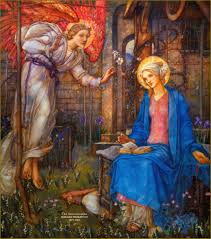
Feast of the Annunciation 2017 Reading: Luke 1:26-38
May the words of my mouth and the meditations of our hearts be always acceptable to you O Lord, our God and our Redeemer.
Today is a most blessed day for those of us who find ourselves with the Catholic branch of the Christian family; on this day Churches of both the East and the West celebrate the Feast of the Annunciation. Today, all of the Catholic work can forget the divisions amongst us and come together to celebrate the visit of the Archangel to the Blessed Virgin Mary and her humble submission to God’s will.
I’ve heard many a sermon preached on this day over the years and many of them have focussed on what, for many, seems like the obvious message of today’s Gospel but I’m going to take us on a little bit of a different track. However, first for those of you who may not have heard a “traditional” Annunciation sermon I will highlight the usual points.
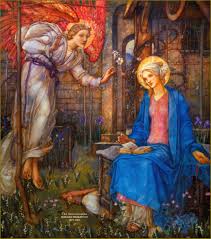
Tradition tells us that Mary was but a young girl at the time that these events took place and from scripture we know that she was unmarried but betrothed (think of it as engaged), it’s stated clearly twice and implied another time in today’s reading that she was a Virgin. Can you imagine for a second that you’re a young girl, engaged to an older man, in a society with a strict moral code and a penchant for stoning harlots to death and someone tells you (albeit an angel) that you are going to fall pregnant? What would you do? I can tell you what I would do…after changing my soiled clothes I’d either pack up and get out of there or run away screaming thinking I’d lost my mind (and from Gospel stories we know how the mad were treated!). But is that what Mary did? She didn’t, to her credit she appears to have listened calmly to the message, maybe she played it over in her mind and she replied with a resounding “May it be done to me according to your word”.
The traditional Annunciation sermon will often branch of now to talk about how we must all strive to have the faith of Mary; how we too must be ready to answer the call when God comes knocking. Now don’t get me wrong, this is a lovely idea for a sermon and it is one message that can be taken from this event in the life of the Blessed Virgin and our Saviour, however there is a much deeper message to be found within the words of today’s gospel that goes right to the heart of what it is that we believe as Christians and it is this that I want to draw out today.
There are two truths that the Archangel Gabriel’s message highlights in today’s reading; one is that Mary will conceive in her womb, she will find herself with child, and the second is that the child she will bear will not be that of her future husbands but will instead be the very son of God. Now I know right now you’re all thinking I’m a bit loopy, we all know that the reading says that, we all heard it and we all believe it, but it really hasn’t always been the case.
In the days of the early Church there was a Bishop called Nestorius who was Patriarch of Constantinople one of the great leadership roles in the early Church. Nestorius however, did not believe that Jesus was born the Son of God. Nestorius taught that when Jesus was conceived in the womb he was a man human, like you and I; it wasn’t until later that the Son of God, something divine, came down from heaven and joined with the human Jesus. Now, to the rational of mind this might sound more rational, Jesus was born the normal way and then he got a super spiritual hit of Holy Ghost from God to become our Saviour, no need to reject what we know about human conception. However, is this what the scriptures tell us? Is this the faith that the Apostles and Early Christians bled and died for? It most certainly is not!
The Archangel said to Mary, “”The Holy Spirit will come upon you, and the power of the Most High will overshadow you. Therefore the child to be born will be called holy, the Son of God.” The Archangel did not call Jesus the Son of Joseph, nowhere in the accepted teaching of the Church has this ever been the case. The child that was conceived in the womb of Mary was a miracle, the product of God’s divine intervention in this world. As Christians we need to not be afraid of standing up for this long held and defended belief.
Some of you may know that amongst other things, I am a science teacher, and as someone with a love for the natural sciences we need to not be afraid of saying things that seem “odd” not everything in the world can be explained by Science. In fact, take the idea of the Big Bang, do you know that it was first suggested by a Catholic Priest of the Roman Church? His name was Georges Lemaitre and Einstein thought his physics was atrocious though now many accept his work as truths.
It may shock some of you to know that I have actually heard clergy deny the idea of the Virgin Birth, that it was even possible. It seems to me that we are all too quick to try and explain the miraculous away with rationalism. Nowhere in the Scriptures and words of Christ are we told that our God is a rational God who only works according to our finite understanding of the universe! Instead, we see evidence of a God that is bigger than us all, a God who stands outside of the realms of our finite minds and is the author of the laws of this Universe. I’m most sure that when we stand before his throne we will be amazed at the natural laws that exist that we have no idea about.
So there are two things that I want you to take away from today’s celebration of the Annunciation to the Blessed Virgin Mary. The first is that it was indeed a real event, that the Church has always taught it and that if we are to be true to our Christian heritage we too must accept it and keep teaching it. The second is to always be open to the miraculous, Mary knew that her faith in God could not be limit by her finite understandings, she didn’t need to question the miraculous, she understood that all our finite minds can do is say yes to God and be prepared for the life of miracles that is sure to follow.
In the name of the Father, and of the Son and the Holy Spirit. Amen.
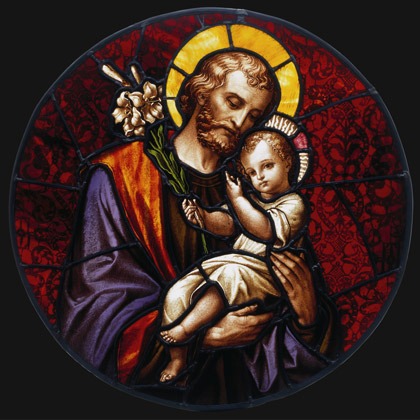
Solemnity of Saint Joseph, husband of the Blessed Virgin Mary ~ The Very Rev. Lady Sherwood, OPI
R 1: 2 SM 7:4-5A, 12-14A, 16
R Psalm: PS 89:2-3, 4-5, 27 & 29
R 2: ROM 4:13, 16-18, 22
Gospel: MT 1:16, 18-21, 24A
St Joseph, the husband of the Blessed Virgin Mary, whom we commemorate today, was a very humble and a Holy man. He was chosen by God our heavenly Father, to be the earthly step-father, guardian and protector, alongside Mary, of his only Begotten Son, our Lord Jesus Christ.
Although we know little about the life of Joseph, we know that by occupation that he was a carpenter, for it tells us in Matt 13.55, about people asking of Jesus, “Is this not the carpenter’s Son?”
Both the Gospels of Matthew and Luke, tell us that Joseph’s ancestry was of David. (Matt 1:1=16 and LK 3:23-38).
Joseph supported Mary when he found out she was pregnant. He did not wish to disgrace her, so decided to divorce her quietly, but he had a dream from an Angel who reassured him about Mary’s pregnancy and that she was pregnant by the Holy Spirit, and the child would be the Son of God. Joseph accepted the news from the angel and accepted both Mary and the then Unborn baby and after Jesus was born, Joseph brought him up as his own
Joseph was the embodiment of true faith and without question he was obedient to all that the heavenly Father asked of him.
When an angel visited Joseph a second time after the birth of Jesus, to tell him of the danger his family was in, he immediately obeyed, left everything he owned and took his family to the strange land of Egypt, where they remained until an angel visited a third time to tell Joseph it was safe for the family to return. (Matt 2:12=23).
Can you imagine when in LK 2:41=52, when Jesus was found in the Temple after going missing, how anxious and worried Joseph (as well as Mary), must truly have been? Here was Joseph, who had spent many years moving his family and hiding them to keep Jesus safe, only to suddenly find him missing on an annual Passover? I can well imagine very mixed feelings upon finding him, relief, and joy to name just two!!
Joseph represents the true meaning of faith, of integrity, obedience, and of the vital role of fatherhood that God had entrusted to him.
As Joseph is not mentioned in the Holy Word of God during Jesus’ public ministry, we can only assume that Joseph had died prior to this time. We don’t know when Joseph was born or died, but we do know about his character :”He was a righteous man” (Matt 1:18).
Joseph is a perfect example of fatherhood and there is much we can learn from him about how to bring up our children in a righteous way, as well as learning in our lives from his examples of faith and obedience.
Joseph is the Patron Saint of Fathers, carpenters and Social justice, he is also classed as the Father of the Universal church, and the Patron Saint of the dying.
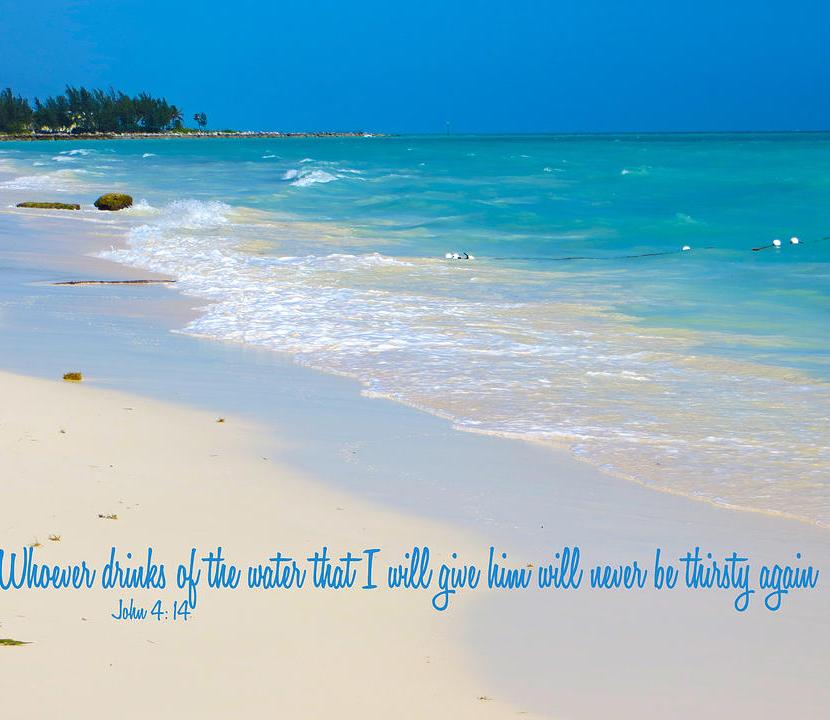
Thirst No More ~ Br. Michael Marshall, Novice

First Reading: Exodus 17:3-7
In those days, in their thirst for water,
the people grumbled against Moses,
saying, “Why did you ever make us leave Egypt?
Was it just to have us die here of thirst
with our children and our livestock?”
So Moses cried out to the LORD,
“What shall I do with this people?
a little more and they will stone me!”
The LORD answered Moses,
“Go over there in front of the people,
along with some of the elders of Israel,
holding in your hand, as you go,
the staff with which you struck the river.
I will be standing there in front of you on the rock in Horeb.
Strike the rock, and the water will flow from it
for the people to drink.”
This Moses did, in the presence of the elders of Israel.
The place was called Massah and Meribah,
because the Israelites quarreled there
and tested the LORD, saying,
“Is the LORD in our midst or not?”
Responsorial Psalm: Psalm 95:1-2, 6-7, 8-9
- (8) If today you hear his voice, harden not your hearts.
Come, let us sing joyfully to the LORD;
let us acclaim the Rock of our salvation.
Let us come into his presence with thanksgiving;
let us joyfully sing psalms to him.
R. If today you hear his voice, harden not your hearts.
Come, let us bow down in worship;
let us kneel before the LORD who made us.
For he is our God,
and we are the people he shepherds, the flock he guides.
R. If today you hear his voice, harden not your hearts.
Oh, that today you would hear his voice:
“Harden not your hearts as at Meribah,
as in the day of Massah in the desert,
Where your fathers tempted me;
they tested me though they had seen my works.”
R. If today you hear his voice, harden not your hearts.
Second Reading: Romans 5:1-2, 5-8
Brothers and sisters:
Since we have been justified by faith,
we have peace with God through our Lord Jesus Christ,
through whom we have gained access by faith
to this grace in which we stand,
and we boast in hope of the glory of God.
And hope does not disappoint,
because the love of God has been poured out into our hearts
through the Holy Spirit who has been given to us.
For Christ, while we were still helpless,
died at the appointed time for the ungodly.
Indeed, only with difficulty does one die for a just person,
though perhaps for a good person one might even find courage to die.
But God proves his love for us
in that while we were still sinners Christ died for us.
Gospel: John 4:5-42
Jesus came to a town of Samaria called Sychar,
near the plot of land that Jacob had given to his son Joseph.
Jacob’s well was there.
Jesus, tired from his journey, sat down there at the well.
It was about noon.
A woman of Samaria came to draw water.
Jesus said to her,
“Give me a drink.”
His disciples had gone into the town to buy food.
The Samaritan woman said to him,
“How can you, a Jew, ask me, a Samaritan woman, for a drink?”
—For Jews use nothing in common with Samaritans.—
Jesus answered and said to her,
“If you knew the gift of God
and who is saying to you, ‘Give me a drink, ‘
you would have asked him
and he would have given you living water.”
The woman said to him,
“Sir, you do not even have a bucket and the cistern is deep;
where then can you get this living water?
Are you greater than our father Jacob,
who gave us this cistern and drank from it himself
with his children and his flocks?”
Jesus answered and said to her,
“Everyone who drinks this water will be thirsty again;
but whoever drinks the water I shall give will never thirst;
the water I shall give will become in him
a spring of water welling up to eternal life.”
The woman said to him,
“Sir, give me this water, so that I may not be thirsty
or have to keep coming here to draw water.”
Jesus said to her,
“Go call your husband and come back.”
The woman answered and said to him,
“I do not have a husband.”
Jesus answered her,
“You are right in saying, ‘I do not have a husband.’
For you have had five husbands,
and the one you have now is not your husband.
What you have said is true.”
The woman said to him,
“Sir, I can see that you are a prophet.
Our ancestors worshiped on this mountain;
but you people say that the place to worship is in Jerusalem.”
Jesus said to her,
“Believe me, woman, the hour is coming
when you will worship the Father
neither on this mountain nor in Jerusalem.
You people worship what you do not understand;
we worship what we understand,
because salvation is from the Jews.
But the hour is coming, and is now here,
when true worshipers will worship the Father in Spirit and truth;
and indeed the Father seeks such people to worship him.
God is Spirit, and those who worship him
must worship in Spirit and truth.”
The woman said to him,
“I know that the Messiah is coming, the one called the Christ;
when he comes, he will tell us everything.”
Jesus said to her,
“I am he, the one speaking with you.”
At that moment his disciples returned,
and were amazed that he was talking with a woman,
but still no one said, “What are you looking for?”
or “Why are you talking with her?”
The woman left her water jar
and went into the town and said to the people,
“Come see a man who told me everything I have done.
Could he possibly be the Christ?”
They went out of the town and came to him.
Meanwhile, the disciples urged him, “Rabbi, eat.”
But he said to them,
“I have food to eat of which you do not know.”
So the disciples said to one another,
“Could someone have brought him something to eat?”
Jesus said to them,
“My food is to do the will of the one who sent me
and to finish his work.
Do you not say, ‘In four months the harvest will be here’?
I tell you, look up and see the fields ripe for the harvest.
The reaper is already receiving payment
and gathering crops for eternal life,
so that the sower and reaper can rejoice together.
For here the saying is verified that ‘One sows and another reaps.’
I sent you to reap what you have not worked for;
others have done the work,
and you are sharing the fruits of their work.”
Many of the Samaritans of that town began to believe in him
because of the word of the woman who testified,
“He told me everything I have done.”
When the Samaritans came to him,
they invited him to stay with them;
and he stayed there two days.
Many more began to believe in him because of his word,
and they said to the woman,
“We no longer believe because of your word;
for we have heard for ourselves,
and we know that this is truly the savior of the world.”
As we have come to the third Sunday in Lent, we are half way through of this journey in the desert. The desert is not a pleasant place to be because the lack of water and one can die of lack of hydration really fast without water. I personally have not seen one while traveling through the desert of the Southwest, but I have heard of an oasis existing in deserts – an isolated source of water in the middle of desert. Travelers who are dying of thirst only pray they come across an oasis.
As we read in the First Reading, we see the Israelites have been led into the desert by Moses. Their journey through the desert has an end objective of being free of slavery and a journey back home to their own land, which this journey has taken a toll on them. They begin to lament to Moses as to why they have been led into the desert; extremely concerned that they and their livestock will die of thirst unless they soon find water. This lamenting is like someone praying they find an oasis. Moses turns to God seeking help in order to find water, and God provides the life-sustaining water by instructing Moses to strike the rock. This striking of the rock parallels with a significant event during the Passion; the parallel is the piercing of Jesus’ side during the Passion. Yet we do not need to get too far ahead of ourselves because we are still in this season of Lent.
In the Gospel, we read the story of Jesus meeting the Samaritan woman at the well seeking water. This story contains themes on various levels; the issue of there should not be interaction between two different cultures is the most obvious, but I am going to discuss another theme. The theme I am going to discuss is how the interaction between Jesus and the Samaritan woman at the well is another parallel to God providing water to the Israelites while out in the desert.
We see in the Gospels Jesus referring to himself as the Bread of Life many times, but we read Jesus referring to himself in a different way in this story from the Gospel of John. In the dialogue between Jesus and the woman, he refers to himself as the Living Water. This conversation leads to the belief that Jesus is the Messiah.
Our forty day journey through Lent is not an easy one, but it is a journey in which we eventually come to find the Living Water at Easter, after being in the desert. God provides us, just as he provided the Israelites if we choose to believe and follow the message of Jesus like the woman and Samaritans did.
We have heard it over and over regarding Lent being a time of preparation and conversion, but it cannot be expressed too many times. Just because we eventually come to find the Living Water at the end of these forty days does not mean we can turn back to our own ways, but rather we have to take Lent seriously to continue remain changed, or we will continue to remain thirsty.
Father, as we continue our Lenten journey, may we be reminded that this journey is a time to grow and change. It may be a hard journey in the desert, but help us recognize that you gave us Living Water, and that we may always believe in this Living Water to spread the message of Jesus. This we ask through Christ, Our Lord. Amen.
Called to Transfigured Service ~ The Rev. Dcn. Mark G. Dickson-Patrick, Novice

Reading 1 – Genesis 12:1-4A
The LORD said to Abram:
“Go forth from the land of your kinsfolk and from your father’s house to a land that I will show you. “I will make of you a great nation,
and I will bless you; I will make your name great, so that you will be a blessing. I will bless those who bless you and curse those who curse you. All the communities of the earth shall find blessing in you.” Abram went as the LORD directed him.
Responsorial Psalm – Psalm 33:4-5, 18-19, 20, 22
- (22) Lord, let your mercy be on us, as we place our trust in you.
Upright is the word of the LORD, and all his works are trustworthy. He loves justice and right; of the kindness of the LORD the earth is full.
R. Lord, let your mercy be on us, as we place our trust in you.
See, the eyes of the LORD are upon those who fear him, upon those who hope for his kindness, To deliver them from death
and preserve them in spite of famine.
R. Lord, let your mercy be on us, as we place our trust in you.
Our soul waits for the LORD, who is our help and our shield. May your kindness, O LORD, be upon us who have put our hope in you.
R. Lord, let your mercy be on us, as we place our trust in you.
Reading 2 – 2 Timothy 1:8B-10
Beloved: Bear your share of hardship for the gospel with the strength that comes from God. He saved us and called us to a holy life,
not according to our works ut according to his own design and the grace bestowed on us in Christ Jesus before time began, but now made manifest through the appearance of our savior Christ Jesus, who destroyed death and brought life and immortality to light through the gospel.
Gospel – Matthew 17:1-9
Jesus took Peter, James, and John his brother, and led them up a high mountain by themselves. And he was transfigured before them;
his face shone like the sun and his clothes became white as light. And behold, Moses and Elijah appeared to them, conversing with him.
Then Peter said to Jesus in reply, “Lord, it is good that we are here. If you wish, I will make three tents here, one for you, one for Moses, and one for Elijah.” While he was still speaking, behold, a bright cloud cast a shadow over them, then from the cloud came a voice that said,
“This is my beloved Son, with whom I am well pleased; listen to him.” When the disciples heard this, they fell prostrate and were very much afraid. But Jesus came and touched them, saying, “Rise, and do not be afraid.” And when the disciples raised their eyes, they saw no one else but Jesus alone.
As they were coming down from the mountain, Jesus charged them, “Do not tell the vision to anyone until the Son of Man has been raised from the dead.”
St. Mother Teresa of Calcutta, the great foundress of the Missionaries of Charity who ministered to the sick, the poor, and the dying in the streets of Calcutta, India, has inspired thousands of people through her life of service to the outcast. Many have been inspired to take up her mantle and continue her work as a member of her order or through their own acts of charity and outreach to the poor, the marginalized, and the oppressed. Many thought that her good works were done in order to help people, that she was called to help people. To this claim, the great saint said, “Many people mistake our work for our vocation. Our vocation is the love of Jesus.” This saint who experienced spiritual darkness for a vast majority of her religious life, and yet still devoted her life and the life of her community to aiding the poor stated that her vocation is “the love of Jesus,” her whole being and calling in life was geared to the love of Jesus alone. How beautiful!
To what are we called? What is our vocation? In our readings today, we are given a good visualization to help us to evaluate our own personal individual calls, our vocations, and how they are lining up with what we are doing in our lives. Are we doing what God is calling us to do? In our first reading, we hear the calling of Abraham, previously known as Abram, as God tells him “I will make your name great, so that you will be a blessing.” Abraham’s calling was to be a great nation, a blessing to all the world. Called to be a Dominican deacon on the road to priesthood, I am called to prayer, study, preaching, and teaching in the spirit of St. Dominic de Guzman.
St. Paul tells Timothy in our second reading that we are to “bear your share of hardship for the gospel with the strength that comes from God.” Because of our salvation, our Lord calls us to a life of particular service to the Kingdom of God. How do we discern this? This is something that my husband, Alex, struggled with particularly as he got involved with the local Church. Through prayer and invitation of the Holy Spirit, he has discovered that he really loves teaching little kids in Sunday school. That is where he finds his inspiration, his niche for the growth of the Kingdom of God. Praise God!
Whatever our calling, whether it be to the priesthood, diaconate, religious life, teaching, lay reader, preaching, or any other form of service to the Kingdom of God, I propose today that we are called to live a life of transfigured service. In our Gospel reading, our Lord takes Peter, James, and John atop the mountain and is there transfigured before them, gleaming white and giving them a foretaste of His resurrection and life after the resurrection. In doing so, our Lord called them and so too calls us, to life of transfigured service, transfigured by His grace and His love and bringing that gift to all people.
Let us ask the Lord to daily transfigure us by His goodness, love, mercy and grace, that we might discover and fully live out the duties of our callings in this life, that we might enter our heavenly reward having accomplished all that the Lord has put before us and we are welcomed home, as the Lord says, “Well done, good and faithful servant. Enter into your rest, prepared for you from before the foundation of the world.”
 The Order of Preachers, Independent
You must be logged in to post a comment.