
Category: Sermon
St. Clare, Virgin, Foundress of the Poor Clares ~ The Rev. Dcn Dollie Wilkinson, OPI

The Lady Clare, “shining in name, more shining in life,” was born in the town of Assisi about the year 1193. Her mother was to become Blessed Ortolana di Fiumi. Her father is said to have been Favorino Scifi, Count of Sasso-Rosso, though whether he came of that noble branch of the Scifi family is not certain. Concerning Clare’s childhood we have no reliable information. She was eighteen years old when St. Francis, preaching the Lenten sermons at the church of St. George in Assisi, influenced her to change the whole course of her life. It is likely that a marriage not to her liking had been proposed; at any rate, she went secretly to see Friar Francis and asked him to help her to live “after the manner of the Holy Gospel.” Talking with him strengthened her desire to leave all worldly things behind and live for Christ. On Palm Sunday of that year, 1212, she came to the cathedral of Assisi for the blessing of palms, but when the others went up to the altar-rails to receive their branch of green, a sudden shyness kept Clare back. The bishop saw it and came down from the altar and gave her a branch.
The following evening she slipped away from her home and hurried through the woods to the chapel of the Portiuncula, where Francis was then living with his small community. He and his brethren had been at prayers before the altar and met her at the door with lighted tapers in their hands. Before the Blessed Virgin’s altar Clare laid off her fine cloak, Francis sheared her hair, and gave her his own penitential habit, a tunic of coarse cloth tied with a cord. Then, since as yet he had no nunnery, he took her at once for safety to the Benedictine convent of St. Paul, where she was affectionately welcomed.
When it was known at home what Clare had done, relatives and friends came to rescue her. She resisted valiantly when they tried to drag her away, clinging to the convent altar so firmly as to pull the cloths half off. Baring her shorn head, she declared that Christ had called her to His service, she would have no other spouse, and the more they continued their persecutions the more steadfast she would become. Francis had her removed to the nunnery of Sant’ Angelo di Panzo, where her sister Agnes, a child of fourteen, joined her. This meant more difficulty for them both, but Agnes’ constancy too was victorious, and in spite of her youth Francis gave her the habit. Later he placed them in a small and humble house, adjacent to his beloved church of St. Damian, on the outskirts of Assisi, and in 1215, when Clare was about twenty-two, he appointed her superior and gave her his rule to live by. She was soon joined by her mother and several other women, to the number of sixteen. They had all felt the strong appeal of poverty and sackcloth, and without regret gave up their titles and estates to become Clare’s humble disciples. Within a few years similar convents were founded in the Italian cities of Perugia, Padua, Rome, Venice, Mantua, Bologna, Milan, Siena, and Pisa, and also in various parts of France and Germany. Agnes, daughter of the King of Bohemia, established a nunnery of this order in Prague, and took the habit herself.
The “Poor Clares,” as they came to be known, practiced austerities which until then were unusual among women. They went barefoot, slept on the ground, observed a perpetual abstinence from meat, and spoke only when obliged to do so by necessity or charity. Clare herself considered this silence desirable as a means of avoiding the innumerable sins of the tongue, and for keeping the mind steadily fixed on God. Not content with the fasts and other mortifications required by the rule, she wore next her skin a rough shirt of hair, fasted on vigils and every day in Lent on bread and water, and on some days ate nothing. Francis or the bishop of Assisi sometimes had to command her to lie on a mattress and to take a little nourishment every day.
Discretion, came with years, and much later Clare wrote this sound advice to Agnes of Bohemia: “Since our bodies are not of brass and our strength is not the strength of stone, but instead we are weak and subject to corporal infirmities, I implore you vehemently in the Lord to refrain from the exceeding rigor of abstinence which I know you practice, so that living and hoping in the Lord you may offer Him a reasonable service and a sacrifice seasoned with the salt of prudence.”
Francis, as we know, had forbidden his order ever to possess revenues or lands or other property, even when held in common. The brothers were to subsist on daily contributions from the people about them. Clare also followed this way of life. When she left home she had given what she had to the poor, retaining nothing for her own needs or those of the convent. Pope Gregory IX proposed to mitigate the requirement of absolute poverty and offered to settle a yearly income on the Poor Ladies of St. Damien. Clare, eloquent in her determination never to break her vows to Christ and Francis, got permission to continue as they had begun. “I need,” she said, “to be absolved from my sins, but I do not wish to be absolved from my obligation to follow Jesus Christ.” In 1228, therefore, two years after Francis’ death, the Pope granted the Assisi sisterhood a Privilegium paupertatis, or Privilege of Poverty, that they might not be constrained by anyone to accept possessions. “He who feeds the birds of the air and gives raiment and nourishment to the lilies of the field will not leave you in want of clothing or of food until He come Himself to minister to you for eternity.” The convents in Perugia and Florence asked for and received this privilege; other convents thought it more prudent to moderate their poverty. Thus began the two observances which have ever since been perpetuated among the Poor Clares, as they later came to be called. The houses of the mitigated rule are called Urbanist, from the concession granted them in 1263 by Pope Urban IV. But as early as 1247 Pope Innocent IV had published a revised form of the rule, providing for the holding of community property. Clare, the very embodiment of the spirit and tradition of Francis, drew up another rule stating that the sisters should possess no property, whether as individuals or as a community. Two days before she died this was approved by Pope Innocent for the convent of St. Damian.
Clare governed the convent continuously from the day when Francis appointed her abbess until her death, a period of nearly forty years. Yet it was her desire always to be beneath all the rest, serving at table, tending the sick, washing and kissing the feet of the lay sisters when they returned footsore from begging. Her modesty and humility were such that after caring for the sick and praying for them, she often had other sisters give them further care, that their recovery might not be imputed to any prayers or merits of hers. Clare’s hands were forever willing to do whatever there was of woman’s work that could help Francis and his friars. “Dispose of me as you please,” she would say. “I am yours, since I have given my will to God. It is no longer my own.” She would be the first to rise, ring the bell in the choir, and light the candles; she would come away from prayer with radiant face.
During her life and after her death there was disagreement at intervals between the Poor Clares and the Brothers Minor as to their correct relations. The nuns maintained that the friars were under obligation to serve their needs in things both spiritual and temporal. When in 1230 Pope Gregory IX forbade the friars to visit the convents of the nuns without special license, Clare feared the edict might lead to a complete severing of the ties established by Francis. She thereupon dismissed every man attached to her convent, those who served their material needs as well as those who served them spiritually; if she could not have the one, she would not have the other. The Pope wisely referred the matter to the minister general of the Brothers Minor to adjust. After long years of sickness borne with sublime patience, Clare’s life neared its end in the summer of 1253. Pope Innocent IV came to Assisi to give her absolution, remarking, “Would to God I had so little need of it!” To her nuns she said, “Praise the Lord, beloved daughters, for on this most blessed day both Jesus Christ and his vicar have deigned to visit me.” Prelates and cardinals gathered round, and many people were convinced that the dying woman was truly a saint. Her sister Agnes was with her, as well as three of the early companions of Francis-Leo, Angelo, and Juniper. They read aloud the Passion according to St. John, as they had read it at the death-bed of Francis twenty-seven years before. Someone exhorted Clare to patience and she replied, “Dear brother, ever since through His servant Francis I have known the grace of our Lord Jesus Christ, I have never in my whole life found any pain or sickness that could trouble me.” To herself she was heard to say, “Go forth without fear, Christian soul, for you have a good guide for your journey. Go forth without fear, for He that created you has sanctified you, has always protected you, and loves you as a mother.”
Pope Innocent IV and his cardinals assisted at the funeral of the abbess. The Pope would have had her canonized immediately had not the cardinals present advised against it. His successor, Alexander IV, canonized her after two years, in 1255, at Anagni. Her body, which lay first in the church of St. George in Assisi, was translated to a stately church built to receive it in 1260. Nearly six hundred years later, in 1850, it was discovered, embalmed and intact, deep down beneath the high altar, and subsequently removed to a new shrine in the crypt, where, lying in a glass case, it may still be seen. In 1804 a change was made in the rule of the Poor Clares, originally a contemplative order, permitting these religious to take part in active work. Today there are houses of the order in North and South America, Palestine, Ireland, England, as well as on the Continent. The emblem of St. Clare is a monstrance, and in art she is frequently represented with a ciborium.
Saint Clare, Virgin, Foundress of the Poor Clares. Celebration of Feast Day is August 12th by the pre-1970 liturgical calendar and August 11th (the actual date of her death) by the present one.

Are We Prepared? ~ The Rev. Lady Sherwood, OPI

Jesus said to his disciples: “Do not be afraid any longer, little flock, for your Father is pleased to give you the kingdom. Sell your belongings and give alms. Provide money bags for yourselves that do not wear out, an inexhaustible treasure in heaven that no thief can reach nor moth destroy. For where your treasure is, there also will your heart be. “Gird your loins and light your lamps and be like servants who await their master’s return from a wedding, ready to open immediately when he comes and knocks. Blessed are those servants whom the master finds vigilant on his arrival. Amen, I say to you, he will gird himself, have them recline at table, and proceed to wait on them. And should he come in the second or third watch and find them prepared in this way, blessed are those servants. Be sure of this: if the master of the house had known the hour when the thief was coming, he would not have let his house be broken into. You also must be prepared, for at an our you do not expect, the Son of Man will come.”
Then Peter said, “Lord, is this parable meant for us or for everyone?” And the Lord replied, “Who, then, is the faithful and prudent steward whom the master will put in charge of his servants to distribute the food allowance at the proper time? Blessed is that servant whom his master on arrival finds doing so. Truly, I say to you, the master will put the servant in charge of all his property.but if that servant says to himself, ‘My master is delayed in coming,’ and begins to beat the menservants and the maidservants, to eat and drink and get drunk, then that servant’s master will come on an unexpected day and at an unknown hour and will punish the servant severely and assign him a place with the unfaithful. That servant who knew his master’s will but did not make preparations nor act in accord with his will shall be beaten severely; and the servant who was ignorant of his master’s will but acted in a way deserving of a severe beating shall be beaten only lightly. Much will be required of the person entrusted with much, and still more will be demanded of the person entrusted with more.”
If we look at today’s Gospel reading, we are being instructed that we need to prepare and to be in readiness for the Lord Jesus’s return. Despite many preachers having given exact dates for the return of our Lord, which were not correct, the Holy Scriptures tell us that Jesus will return soon.
None of us knows when this blessed event will occur and therefore, we need to be found in readiness.
So when we look at our lives can we say that we are truly prepared should Our Lord Jesus return today? We need to ask ourselves what should we truly be doing? What changes should we be making in our daily lives?
If we look at what we are told in Matt 24:3, we are indeed in the “last days” of civilisation as we have come to know and understand it. Jesus has informed us about the signs to watch for in regard to the last days before his return. False Prophets, wars, famine, disease, earthquakes and as we are well aware, these things are already well under way. Also under way, is the breakdown of decent society which was described to us by the Apostle Paul in 2 Tim 3:1-5.
People are lovers of themselves, lovers of money and of worldly material things. the boasters, the proud, the blasphemers, the disobedient ,the unthankful, the unholy, the unforgiving, the despisers of good and those who love worldly pleasures instead of lovers of God our Father and Our Lord Jesus.
So what should we be doing to ensure we will be fully prepared and not found wanting when Jesus returns?
We must truly repent and turn away from self-indulgence and worldly lifestyles, we must ask God our Father to help us to sincerely change all and any unholy ways that will hinder our readiness.
We need to more fully rekindle our faith as many of us seem to become only luke-warm in our faith lives.
Many of us have not attended church; Bible reading and prayer seems not to be being learned as it once was.
We need to get the fullness of our relationship with the Father back on track.
We need to listen and understand more what the Lord is telling us in the holy scriptures. We must ensure the teachings of our lord are not just read but are also lived out in all aspects of our lives and only then will we be truly prepared.
We must proclaim the gospel around the world, the good news of the love and salvation our God brings. We need not only to prepare ourselves but also to give the truth of the lord to all so that they also may get themselves into readiness.
Let us pray:
Father God, I come to you to repent of my sins and confess them before you Please forgive me. I have decided to shun the lures of sin and the love of the world. Help me to recognize deception and to resist every lying spirit sent by the devil to derail my faith in you. Help me to remain true and obedient to your command. I ask for divine wisdom to understand and believe your word and to act on it. I have made up my mind to come and to stay and walk with you.
Amen.
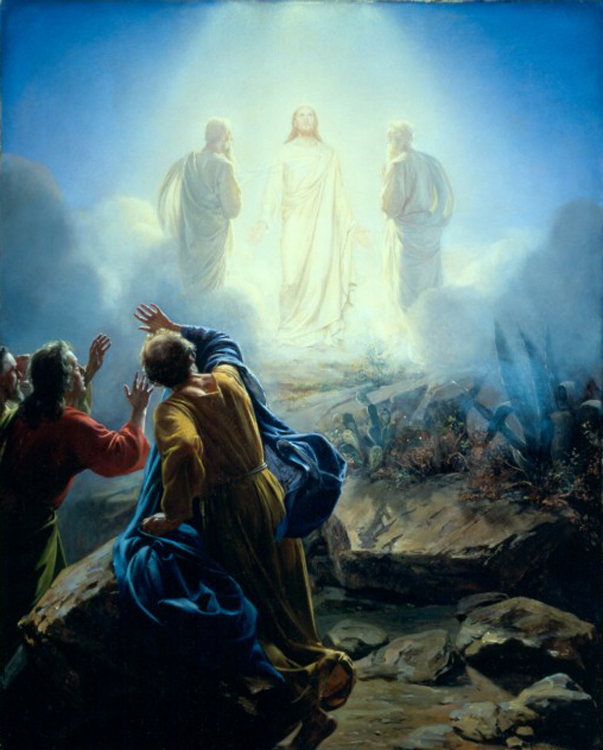
Transfigure Yourself??? ~ Feast of the Transfiguration ~ Br. Michael Marshall, Novice
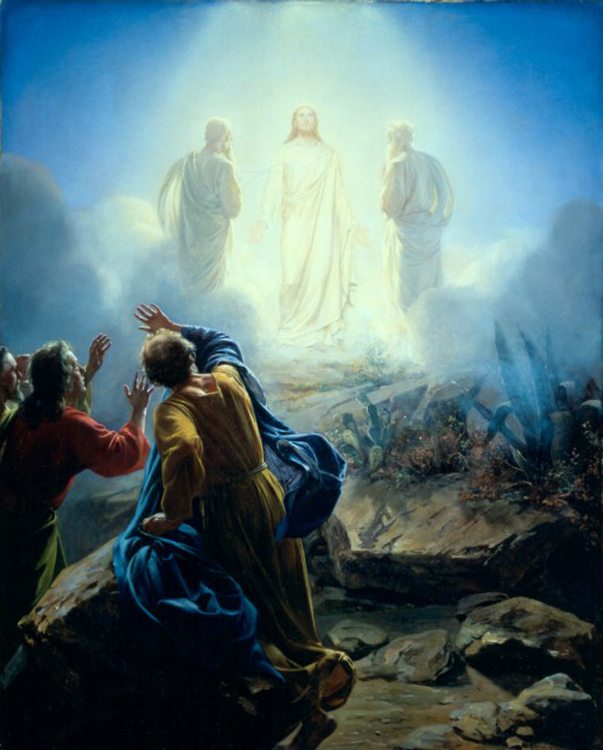
A couple of contestants on this season of “America’s Got Talent” are magicians, and they are just awesome! One act has done a performance in which clothing outfit changes occur within seconds multiple times, and for some reason this form of magic fascinates me. As I was reading the readings for today, this magic trick came to my mind because the woman goes through multiple “transfigurations” within 90 seconds. In fact, in the many years that I have been Catholic and heard the readings for the Feast of the Transfiguration, I somehow get wrapped up in the image of the Transfigured Lord, like how I got wrapped up in the magic of the woman switching outfits; as if it is some magic act performed by Jesus. I am like Peter who gets wrapped up in the moment of the awesomeness of what he witnesses before he hears the voice of God saying, “This is my chosen Son; listen to him.” Yet, this is not what the readings for today are about at all!
In the Second Letter of Peter, we read that Peter is reminding the early Christians that they have been told by God the Father that Jesus, as His Son, has a very important message to be heard. Fortunately, the message was heard and what was taught in the Gospels was spread, or else we would not be practicing our Christian faith today. Yet, unfortunately, the message has fallen upon so many deaf ears over the past 2000 years; and still falling upon deaf ears, even within the Christian community. People may see the words when reading Scripture, or hear the words at Church; BUT they are not truly attentively listening, hence have deaf ears. What is this message????? It simply can be stated in one word… LOVE! So much hatred, prejudice, and bigotry have happened because of the message of love falling upon deaf ears.
The questions I have are, “What are YOU going to do when hearing or reading these readings for today? Are you going to attentively listen or allow yourself to let the message fall upon deaf ears? What are you going to do to become ‘transfigured?’” I will admit that it is not easy to like somebody or like their actions, because of what they might have done to you. I even have displayed hatred toward people because of things I have been through because of what they have done to me, but that is not what I have been called to do. I have been called to love my neighbor regardless of liking their actions or not. WE ALL are called to listen to what Jesus taught… Practice and teach love, and hopefully those who have deaf ears will eventually come to hear the message. We are ALL called to be ‘transfigured’ so that we can spread the message of Christ.
Lord, may we have open ears to attentive listen to what Jesus taught us, and give us strength to continue to teach that message to others even during the tough situations in life. We ask this through Christ our Lord. Amen.

Got Stuff? ~ The Rev. Dcn. Dennis Klinzing, Novice

Someone in the crowd said to Jesus, “Teacher, tell my brother to share the inheritance with me.” He replied to him, “Friend, who appointed me as your judge and arbitrator?”
Then he said to the crowd, “Take care to guard against all greed, for though one may be rich, one’s life does not consist of possessions.”
Then he told them a parable. “There was a rich man whose land produced a bountiful harvest. He asked himself, ‘What shall I do, for I do not have space to store my harvest?’
And he said, ‘This is what I shall do: I shall tear down my barns and build larger ones. There I shall store all my grain and other goods and I shall say to myself, “Now as for you,
you have so many good things stored up for many years, rest, eat, drink, be merry!”’
But God said to him, ‘You fool, this night your life will be demanded of you; and the things you have prepared, to whom will they belong?’ Thus will it be for all who store up treasure for themselves but are not rich in what matters to God.” Luke 12:13-21
At this point, a man in the crowd interrupted Jesus and asked Him to solve a family problem (feud). Rabbis were expected to help settle legal matters, but Jesus refused to get involved. Why? Because He knew that no answer He gave would solve the real problem, which was covetousness in the hearts of the two brothers. As long as both men were greedy no settlement would be satisfactory. Their greatest need was to have their hearts changed. Like too many people today, they wanted Jesus to serve them, but not save them.
Covetousness is an unquenchable thirst for getting more and more of something we think we need in order to be truly satisfied. It may be a thirst for money or the things that money can buy, or even a thirst for position and power. Jesus made it clear that true life does not depend on an abundance of possessions. He did not deny that we have certain basic needs. He only affirmed that we will not make life richer by acquiring more of these things.
Mark Twain once defined ‘civilization’ as ‘a limitless multiplication of unnecessary necessities,” and he was right. In fact, many Christians are infected with covetousness and do not know it. They think that Paul’s admonition in 1 Timothy 6 applies only to the ‘rich and famous.’ Measured by the living standards of the rest of the world, most believers in America are indeed wealthy people.
Jesus told this parable to reveal the dangers that lurk in a covetous heart. As you read it, test your own responses to this farmer’s various experience.
How do you respond to the wealthy farmer’s dilemma? Here was a man who had a problem with too much wealth! If we say, “I certainly wish I had that problem! we may be revealing covetousness in our hearts. If suddenly you inherited a great deal of wealth, would it create a problem for you? Or would you simply praise God and ask Him what He wanted you to do with it?
There are perils to prosperity. Wealth can choke the Word of God, create sinners and temptations, and give you a false sense of security. People say that money does not satisfy, but it does satisfy if you want to live on that level. People who are satisfied only with the things that money can buy are in great danger of losing the things that money cannot buy.
This farmer saw his wealth as an opportunity to please himself. He had no thoughts of others or of God.
How do you respond to the decisions of the rich man? Are you saying, “Now that is a shrewd business!”Save and have it ready for the future!” But Jesus saw selfishness in all that this man did, and He said the man was a fool. The world’s philosophy is “Take care of Number One!” But Jesus does not endorse that philosophy.
There is certainly nothing wrong with following good business principles, or even with saving for the future. Jesus does not encourage waste. But neither does Jesus encourage selfishness motivated by covetousness.
How do you respond to the farmer’s desires? Are you saying, “This is the life! The man has success, satisfaction, and security! What more could he want?” But Jesus did not see this farmer enjoying life; He saw him facing death! Wealth cannot keep us alive when our time comes to die, nor can it buy back the opportunities we missed while we were thinking of ourselves and ignoring God and others.
Jesus has made it clear that true life does not come from an abundance of things, nor does true success or security. This man had a false view of both life and death. He thought that life came from accumulating things and that death was far away.
Finally, how do you respond to the death of the boastful farmer? We are prone to say, “Too bad this fellow died just when he had everything going for him! How tragic that he could not finish his great plans.” But the greatest tragedy is not what the man left behind, but what lay before him; eternity without God! The man lived without God and died without God, and his wealth was but an incident in his life. God is not impressed with our money.
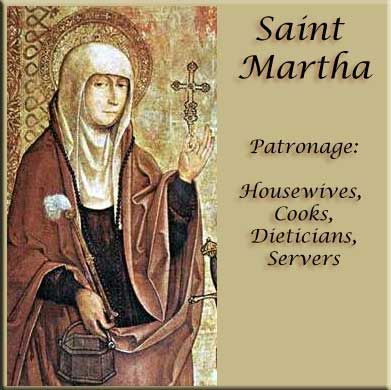
Service: The Feast of St. Martha ~ The Rev. Lady Sherwood, OPI
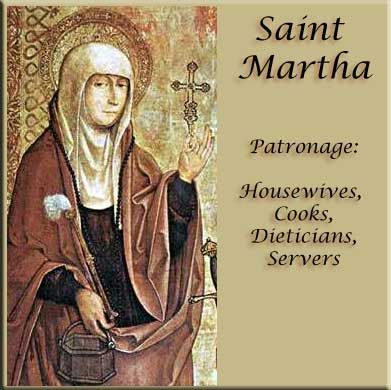
Today we come together to commemorate the life of St Martha.
We should all have knowledge about the story of Martha and Mary who welcomed Jesus into their home. Martha busies herself with the hospitality needs of our Lord Jesus whilst Mary sits at the feet of Jesus listening to his words. Martha complains to Jesus because she wanted Mary’s help but Jesus replies to her, “Martha, Martha, you are worried and distracted by many things; there is need of only one thing. Mary has chosen the better part, which will not be taken away from her.” (Lk 10:38-42)
Jesus’ reply was all about listening to his message. We can then see in ourselves and in our lives, what Jesus points out in Martha – is that we can be easily distracted and worried by worldly tasks and Through Martha’s story, Jesus is reminding us that there is one thing that is of importance: that is to follow Jesus’ message and his individual calling that he has for each of us.
In John 11:17-27, Martha meets Jesus as soon as she learns he is coming after hearing that her brother Lazarus had died. Immediately we see a change in Martha. She purposefully goes to Jesus and when he asks her about his belief in him she responds, “Yes, Lord, I believe that you are the Messiah, the Son of God, the one coming into the world.”
Martha has the opportunity to serve Jesus again.
Six days after the Passover (John 12:1-8). She does so with quiet humility. We come to understand Martha’s role is a different calling than that of Mary and this is much like it is in our own lives. we are each called into different service for the Lord’s glory, we each are blessed with different skills and talents with which to serve him. Martha chose to serve with love instead of with bitterness and arrogance.
Martha’s story gives us hope and is a good example for our own lives. Even though we can fall into the trap of trying to complete tasks without God’s assistance, there is opportunity in the Grace of the Lord to retry. When Jesus speaks to Martha, he is not unkind. His response is one of love. As the sinners we each are, we can only strive to learn and grow from our mistakes to make the next opportunity filled with Christ.
Martha is known as the patron saint of cooks, homemakers, and servants, St. Martha reminds us to thank all in our lives who serve us in whatever way. This can be our parents or those who cook for us, those who work in public service, our friends, our church clergy or even indeed anyone at all. As a way to celebrate St. Martha’s feast day today, we can pray to serve Jesus better:
Saint Martha, pray for us that we might serve Jesus better. Help us to overcome any distractions and worries that we may face in this world and to listen to his words and be present to him in our daily lives. May we remember that although we are called and blessed in different ways, that we are still all members of the same one body of our Lord Jesus Christ.
Amen.
Contradictions and Commitment ~ Br. Chip Noon, Novice
“So the last shall be first, and the first last.”
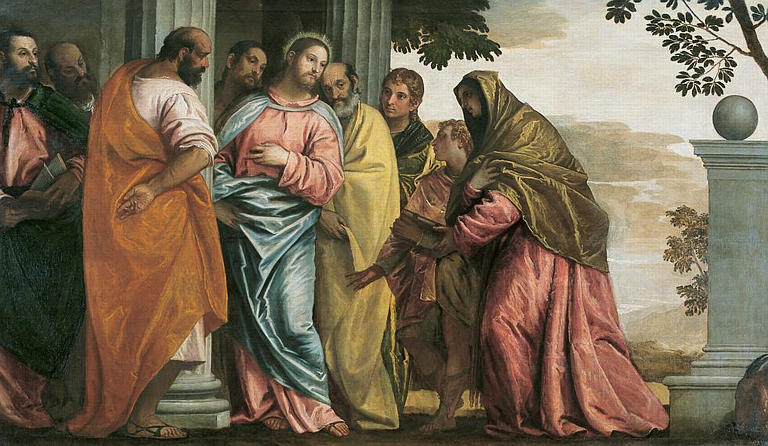
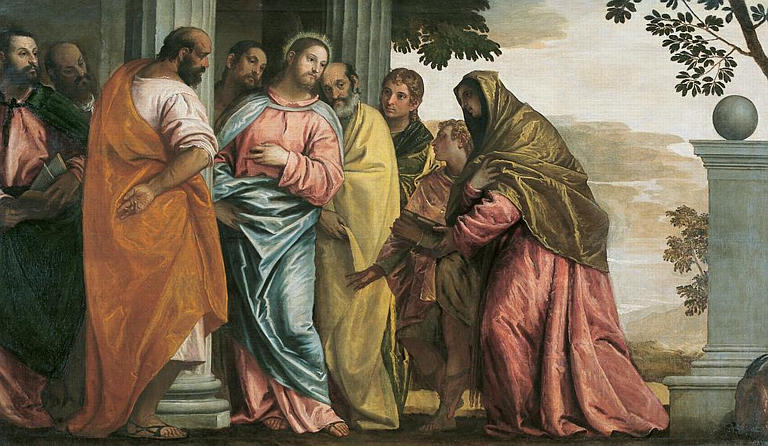
In Saint James, whose feast we celebrate today, we have a complex character and an important lesson. The Gospel today recounts the incident where the Apostle’s mother, Salome, beseeches Jesus for a favor: that her sons, James and John, be seated at his right hand and left hand in the kingdom.
If Jesus were to answer in today’s vernacular he might say, “You still don’t get it!”
Yes, James was a fisherman who, along with his brother John, was called by the Lord to drop everything and follow him. But he was not so poor, because we know that his father was successful in the family business and his mother was one of the women who were financiers of Jesus’ mission. So perhaps he felt a little superior to some of the other disciples? He did get to witness the Transfiguration, he offered to call down fire on a Samaritan town, he was the first Apostle to be martyred, and he and his brother were called “Sons of Thunder,” probably for his fiery temper. So he was something of a big deal.
But he was also trying to put himself first. He and his brother put his mother up to asking Jesus for a favored position, probably because he knew it was bold and misguided. Jesus rebuffs the request.
James was also the target of one of the Eight Rebukes of Jesus in the incident of offering to destroy the Samaritan town mentioned before.
And yet even though he still didn’t “get it,” he was one of the twelve Apostles and important to the mission of Jesus. And so he is an important lesson to us: nobody’s perfect, but we are still loved by the Lord – and even given great responsibility to spread his word.
Throughout the Gospels, we learn that your station in life, your wealth or lack of it, your talents or lack of them make no difference in the final calling. And what proof do we have of this teaching? It is the life of Jesus…and his suffering and death. Time and again we are taught that we must be servants, even those of us who are of the highest station, and we must be willing to sacrifice ourselves for others, rather than seek glory and riches. Because that is exactly what our Lord did: he sacrificed himself on the cross for our sins and our redemption. His was the ultimate commitment, and he asks no less of us.
Just as Saint James embodies contradictions of pride and humility, so we find Paul, in the first reading, telling us that we will also be faced with, and live within, contradictions. Our weak bodies, breakable earthen vessels, will be
afflicted in every way, but not constrained;
perplexed, but not driven to despair;
persecuted, but not abandoned;
struck down, but not destroyed;
always carrying about in the body the dying of Jesus,
so that the life of Jesus may also be manifested in our body.
The last shall be first, and the first last.
Paul says, “We who live are constantly being given up to death for the sake of Jesus.” In other words we may fall over and over, we may succeed over and over, but what we are living is the spirit of redemption every hour of every day. And so if we fall, we know intimately that we will be raised up if we ask for it, because God’s mercy is everlasting.
Although this life may seem like the life of Sisyphus, constantly pushing a boulder uphill only to have it roll to the bottom time after time, when we really contemplate our lot, we can always remember that Jesus told us the truth: our yoke is easy and our burden is light.
Lord, help us today to renounce our pride or our consternation, our smugness or our fears, our complacency or our anxiety and remind us that everything is for you and you are everything for us. And like Saint James, though we may at times deserve rebuke, we can be assured of our salvation.
Amen.
ABC’s and Priorities: Prayer ~ The Rev. Dcn. Scott Brown, OPI
When you pause to consider that God is infinitely strong and can do all that he pleases; that he is infinitely righteous so that he only does what is right, and that he is infinitely good so that everything he does is perfectly good; that He is infinitely wise so that he always knows perfectly what is right and good, and that he is infinitely loving so that in all his strength and righteousness and goodness and wisdom He raises the eternal joy of His loved ones as high as it can be raised — when you pause to consider this, then the lavish invitations of this God to ask Him for good things, with the promise that He will give them, is unimaginably wonderful.
Everyone seeks something.
We are all by nature seeking people. Some people seek for money, others for fame, others for pleasure, others for self-validation, others for worldly power. We may seek a husband or a wife or we may seek children or a new job or a better education or a new home or new friends or a new church. The tragedy of our time is that so many people are wasting their lives chasing after three things that can never satisfy—money, possessions and power.
There is an easy test to find out what you seek in life.
There is a simple test to help you discover what you truly seek in life. This test is absolutely foolproof. You tell me how you spend your time and your money and I’ll tell you what you are seeking. You can say anything you like, you can come to church and look very religious, but your time and your money don’t lie. Time is life and money is nothing but the time it takes to make the money. Show me your calendar and your checkbook and I’ll know the truth about your priorities.
Whatever righteous thing you seek in the spiritual realm, you can have it, if you want it badly enough.
“Blessed are those who hunger and thirst for righteousness, for they will be filled” (Matthew 5:6). This is one of the most stupendous promises in the Word of God. If you are hungry and thirsty for the righteousness that God provides, you will be filled.
If you want it, you can have a close walk with God.
If you want it, you can have a better marriage.
If you want to, you can do God’s will.
If you want to, you can witness for Christ.
If you want to, you can learn to pray.
If you want to, you can grow spiritually.
If you want to, you can walk in the Spirit.
If you want to, you can become a man of God or a woman of God.
If you want to, you can change deeply ingrained habits.
If you want to, you can break destructive patterns of behavior.
A: Ask God for what you want in life – if it is in his plans, you will receive.
B: Be patient, God doesn’t work on your time schedule. When He is ready it will happen.
C: Constantly pray: ask once and you may receive, but continuous prayer lets God know that you are serious about this.
One final thought. Jesus’ appeal is always personal. He never says, “Come and join the church” or “Come and be baptized” or “Come and give money.” He simply says, “Come unto me.” When Jesus says, “You will be filled,” he means, “You will be filled with Jesus himself!”
If you are hungry, come and eat of the Bread of Life.
If you are thirsty, come and drink of the Water of Life.
If you are weary, come and find rest.
If you are guilty, come and be forgiven.
If you are far from God, come back home again.
The Firstborn of All Creation ~ Br. Chip Noon, Novice
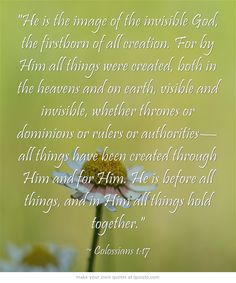
“Christ Jesus is the image of the invisible God, the firstborn of all creation.”
This first sentence of today’s second reading holds all things together in today’s readings, psalm, and Gospel. And it holds all things together in our lives and in our beliefs.
Let me explain.
In today’s first reading, Moses is instructing the people about the laws of God, and how they are to understand and obey them. They are finally approaching the Promised Land and he seems to be urgently trying one last time to impart the glory of God to this stiff-necked people. He has been giving a long and complicated sermon on their duties and responsibilities, then he stops and assures them that what he has been teaching is “not too mysterious and remote” for them. It is not up in the sky, nor across the sea, nor anywhere distant and hard to obtain. He says,
“No, it is something very near to you,
already in your mouths and in your hearts;
you have only to carry it out.”
Then, in the second reading the Apostle Paul is telling the Colossians that Christ Jesus is everything…everything around us, everything from the beginning to the end, everything that we are looking for and that is looking for us.
The third reading likewise gives a similar lesson: Love God and love your neighbor. And the legal scholar then asks, “And who is my neighbor?”
So just as Moses says, we don’t have to search for what is right and holy, it is already within us; and as Paul tells us everything that is can be found in Christ Jesus; so Jesus himself is saying we don’t have to look around and search for those whom we should love because everybody is worthy of this love.
“My task is easy and my burden is light” once again echoes in our ears from today’s readings.
“Christ Jesus is the image of the invisible God, the firstborn of all creation.”
Years ago, when I was questioning everything, believing nothing, wracking my brain for answers that always seemed to be too hard to grasp, especially the existence of God and my place in the scheme of things, my mother told me a story. She said that when she and her older sister were teenagers, they would have discussions about religion, God, the Church, the commandments…you know, everything that youngsters do to find their own place in the world. Her sister, my Aunt Mary, was always the one to be disputatious. She never let a moment go by when she wasn’t throwing doubt in my mother’s direction. She never seemed at peace, my Aunt Mary, and let everyone in the family know it. And it was after one of these contentious talks that my mother decided, without telling her sister, that she was through with questioning. She said she just decided to accept what she had been taught, and what she felt in her heart was right.
And from then on, that’s how she lived. She trusted in God, she trusted her fellow man, she trusted everything. I did ask her about the possibility of being taken in by unscrupulous people and she told me that happened very seldom. She was not naïve about life, but she put her energy into the positive things around her: We don’t need to search for God and the commandments of God. Jesus is the image of God and is always with us, and every single person is someone to love and be kind to.
She could disarm the most hostile store clerk with a simple, “Gosh, you must be having a really bad day.” And peace would descend. It was amazing to watch!
So why is it that I, and I suspect you too, have to remind myself every day of these lessons? Maybe that’s the way I’m built…just a little thicker in the skull than I should be. But one thing I do know, that when I finally wake up after wrestling with a problem and realize that the solution is right there, it is God whom I have invoked, either subconsciously or consciously. And I know, from years of experience, that calling on God, on Jesus, on the Holy Spirit may not solve that problem, but it certainly allows me to put it in perspective and return to a measure of serenity.
One more thing: in today’s Responsorial Psalm from the daily readings of the USCCB which I use for my sermons, the response is written: “Turn to the Lord in your need, and you will live.”
See, an easy task and a light burden!
Lord, help us today and every day to turn first to you in our need. Help us all to know that you are here in our hearts, and that all of our neighbors carry you within their hearts Help us to love our neighbors, even those who persecute us, as you love us all. In Jesus’ name we ask this.
Amen.

Zen Master!!! ~ Br. Chip Noon, Novice
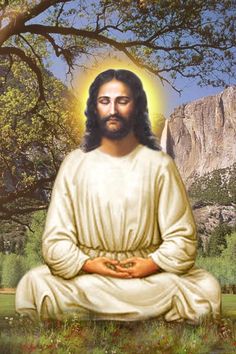
I have always been struck by the similarities of Jesus’ teachings to the koans of the Zen Masters, who were so popular in my youth. “Two hands clap and there is a sound. What is the sound of one hand?” (Hakuin Ekaku) But this one is immediately applicable to today’s readings: “If you meet the Buddha, Kill Him.” (Linji).
Jesus was a Zen Master of his time.
In the first reading, we have the makings of a typical koan:
Elisha left the oxen, ran after Elijah, and said,
“Please, let me kiss my father and mother goodbye,
and I will follow you.”
Elijah answered, “Go back!
Have I done anything to you?”
As we know, Old Testament scripture pre-figured the life and teachings of Jesus, so here we see the Master saying, “Once you start along my path, there is no going back.” It took a simple question to put Elisha on the right path.
In the Koan, the Master Linji is saying that we are always searching for a tangible presence. But Zen teaches that there is no duality: there is no “here” nor “there”; or, there is no “I am searching for enlightenment” nor “I have found enlightenment.” There is no way to describe enlightenment to ourselves or to others. When we reach it, we will know it…and then have no need to discuss it.
Doesn’t Jesus imply the same as Luke records:
“When asked by the Pharisees when the kingdom of God would come, Jesus replied, “The kingdom of God will not come with observable signs. Nor will people say, ‘Look, here it is,’ or ‘There it is.’ For you see, the kingdom of God is in your midst.””
So in today’s Gospel we encounter several other koans. In the first, someone tells Jesus he will follow him wherever he goes. And Jesus answers he has nowhere to go.
Then he says to another, “Follow me.” But the man says he has sacred obligations, that is, to bury his father. Jesus says, “Let the dead bury their dead.”
And the third man asks leave to say goodbye to his family, at which point Jesus says, in metaphor, if you look behind, you will lose your way. Keep your eyes ahead to the Kingdom. In other words, you can only plow a straight furrow if you keep your eyes on your work.
To us today, with all that we have absorbed and been taught about our catholic faith, these scripture readings are somewhat intelligible. Some of us have to work at them, others get the meaning immediately. But imagine the followers of Jesus as they hear these off-the-wall comments from their Rabbi. What must they have thought? We know that some went away confused, and we know that some understood and followed.
But we also know that with the descent of the Holy Spirit, the Apostles and Jesus’ followers were given the answers to these mysterious koans. Would that we could have the answers like that!
But wait! What does the Apostle Paul say in today’s reading to the Galatians?
“I say, then: live by the Spirit
and you will certainly not gratify the desire of the flesh.
For the flesh has desires against the Spirit,
and the Spirit against the flesh;
these are opposed to each other,
so that you may not do what you want.
But if you are guided by the Spirit, you are not under the law.”
Isn’t he saying what the Zen Master said? You can search all you want in this physical realm for God, you can long for heaven in some far off corner of the sky, you can follow all the rules you want, but The Kingdom of God is right here, right now, within, without…in fact, you are the Kingdom of God.
But finally, there is a corollary to these readings. And that is, “Take up your cross and follow me.” In other words, not only are you expected to forget the past, keep your eyes on the prize, and steer straight for the Promised Land. But you are also expected to do some work along the way. As James tells us: “In the same way, faith by itself, if it is not accompanied by action, is dead.”
Then what about that business of “my yoke is easy and my burden is light”? It seems to me the difference here between what Jesus teaches us and how Zen is practiced is that Zen is focused on the individual’s path to enlightenment. Jesus is telling us we have to bring others along on this path.
How appropriate, then, for Dominicans! If the Kingdom is right here, right now, then we are tasked with showing this truth to everyone we meet, right here, right now. There is no holiday, no time off. As Christians we must live our faith, not simply express it. And when you come to think of it, how hard is that? What kind of burden is it to live in the “now” of our faith and knowledge of God’s magnificent goodness as taught to us by the Son and as impelled by the Holy Spirit?
Lord, as we contemplate the meaning of the lessons of scripture, help us to remember that the Kingdom of God is at hand and that all we have to do is stretch out our hands and grasp it.
Amen.
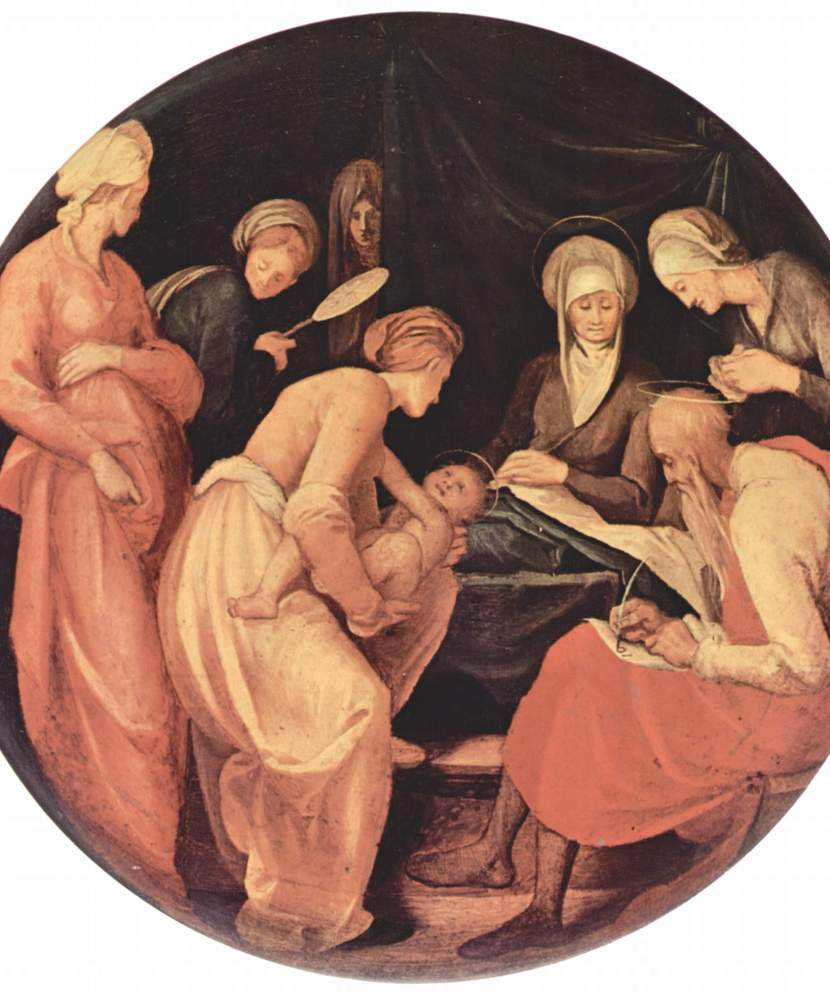
The Nativity of John the Baptist
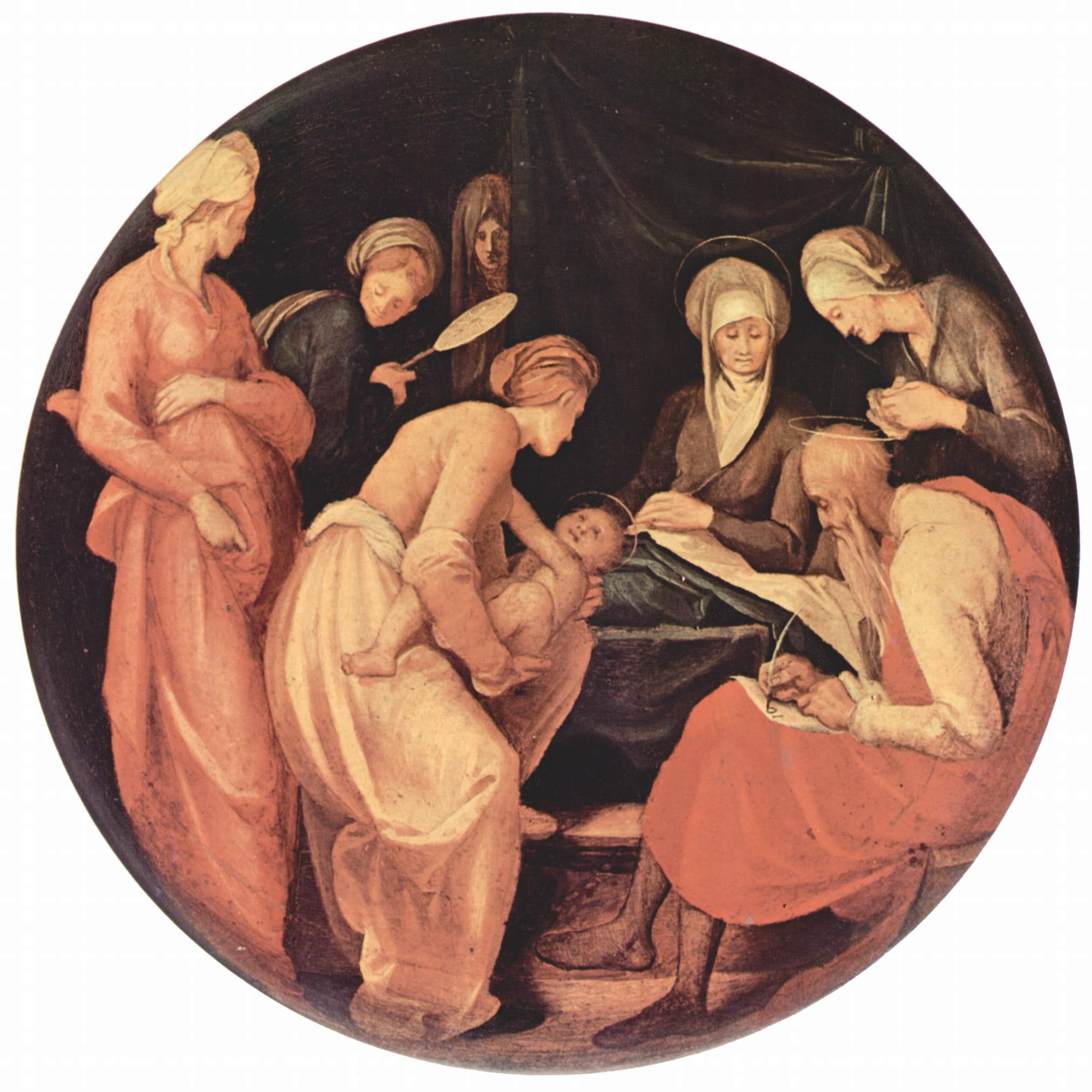
Today, we celebrate the birth of St John the Baptist, the forerunner to the Lord Jesus.
Firstly, let us look together at what the holy scriptures tell us about this blessed and miraculous event in Lk 1:5=25 (NIV):
5 In the time of Herod king of Judea there was a priest named Zechariah, who belonged to the priestly division of Abijah; his wife Elizabeth was also a descendant of Aaron. 6 Both of them were righteous in the sight of God, observing all the Lord’s commands and decrees blamelessly. 7 But they were childless because Elizabeth was not able to conceive, and they were both very old. 8 Once when Zechariah’s division was on duty and he was serving as priest before God, 9 he was chosen by lot, according to the custom of the priesthood, to go into the temple of the Lord and burn incense. 10 And when the time for the burning of incense came, all the assembled worshipers were praying outside. 11 Then an angel of the Lord appeared to him, standing at the right side of the altar of incense. 12 When Zechariah saw him, he was startled and was gripped with fear. 13 But the angel said to him: “Do not be afraid, Zechariah; your prayer has been heard. Your wife Elizabeth will bear you a son, and you are to call him John. 14 He will be a joy and delight to you, and many will rejoice because of his birth, 15 for he will be great in the sight of the Lord. He is never to take wine or other fermented drink, and he will be filled with the Holy Spirit even before he is born. 16 He will bring back many of the people of Israel to the Lord their God. 17 And he will go on before the Lord, in the spirit and power of Elijah, to turn the hearts of the parents to their children and the disobedient to the wisdom of the righteous—to make ready a people prepared for the Lord.” 18 Zechariah asked the angel, “How can I be sure of this? I am an old man and my wife is well along in years.” 19 The angel said to him, “I am Gabriel. I stand in the presence of God, and I have been sent to speak to you and to tell you this good news. 20 And now you will be silent and not able to speak until the day this happens, because you did not believe my words, which will come true at their appointed time.” 21 Meanwhile, the people were waiting for Zechariah and wondering why he stayed so long in the temple. 22 When he came out, he could not speak to them. They realized he had seen a vision in the temple, for he kept making signs to them but remained unable to speak. 23 When his time of service was completed, he returned home. 24 After this his wife Elizabeth became pregnant and for five months remained in seclusion. 25 “The Lord has done this for me,” she said. “In these days he has shown his favour and taken away my disgrace among the people.”
So let us now try to picture this joyous scene:
We have the parents, the Jewish Priest Zechariah and Elizabeth who were both advanced in age and were beyond the child=bearing years. Also, Elizabeth was barren and unable to conceive. The blessings and sheer joy at the birth of their son must have been immeasurable! All the family would have been there celebrating this wonderful event because in those days, the birth of a Son was a major celebration of joy and music. This sadly wasn’t the case in those days for female births. The Lord our God truly blessed his parents by giving them and also us as a world, John.
But the significance of John’s birth,his life and ministry goes way beyond that of a usual birth. John was sent with a purpose, he was sent to be the forerunner who would pave the way for the coming into the world of Our Lord Jesus Christ, and who would also be the person who later baptised our Lord. John the baptist shows us by his life how we truly should be living as a child of God, and there are several lessons we can learn from him. Firstly, whole-hearted belief in Jesus Christ is possible. John could have chosen to believe in and worship any number of gods available to him before Jesus arrived on the scene. But in his life John knew that the Messiah was coming. He believed this with his whole heart and spent his days “preparing the way” for the Lord’s coming (Matthew 11:10). But the road was not an easy one to prepare. Daily he faced doubters of various influence and popularity who did not share his enthusiasm for the coming Messiah. Under hard questioning from the Pharisees, John shared his belief: “‘I baptize with water,’ John replied, ‘but among you stands one you do not know. He is the one who comes after me, the thongs of whose sandals I am not worthy to untie’” (John 1:26-27). John believed in the Christ and his great faith prepared him for hardships, but it kept him steadfast on his course until the time when he could say as he saw Jesus approach, “Look, the Lamb of God, who takes away the sin of the world!” (John 1:29). As believers, we can all have this steadfast faith.
Secondly, anyone can be a strong and devoted witness for Jesus Christ. John’s life is an example to us of the seriousness with which we are to approach the Christian life and our call to ministry, whatever that may be. We pattern our lives after John’s by first examining ourselves to be sure we are truly in the faith (2 Corinthians 13:5). Second, like John, we are to know and believe that “to live is Christ and to die is gain” (Philippians 1:21), so we can be fearless in the face of persecution and death. John lived his life to introduce others to Jesus Christ, and knew the importance of repenting of one’s sins in order to live a holy and righteous life. And as a follower of Jesus Christ, he also was unafraid of calling out people such as Herod and the Pharisees for their sinful behaviour.
Thirdly, John shows us how to stand firm in our faith no matter what the circumstances. Paul reminded Timothy that “everyone who wants to live a godly life in Christ Jesus will be persecuted” (2 Timothy 3:12). But for many of us who live in freedom, persecution takes on a very mild form. As he lived in an occupied country, John had to be aware that anything contrary to utter devotion to the king or emperor was asking for trouble. Yet his message was unchanging, bold and strong. It was John’s belief, his message, and his continual rebuke of King Herod that landed him in prison. While it is hard to know for sure what John was feeling as he sat in prison, we can be sure that he might have had some doubts about the Lord who tested his faith.
Let us look at the examples that we can learn from the birth and life of John the baptist and let us incorporate these lessons more fully within our own lives as the children of God.
Let us pray:
Father, we thank you for sending John the Baptist into the world to prepare the way for the coming of your Son, Our Lord Jesus Christ.
Help us to learn from the examples of his life and to more fully incorporate them into our own lives, so that just as the life of John the Baptist gave you glory, that our lives may also glorify you.
Amen.


You must be logged in to post a comment.