
Category: Sermon
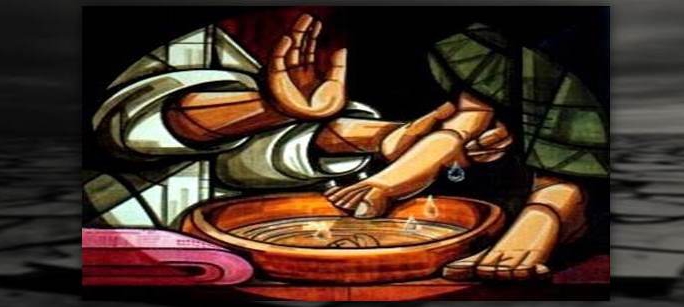
Holy Thursday ~ Br. Igor Kalinski, Novice
On this day the holy church is reminding us of four events from the life of our Savior: washing the feet of the apostles of Jesus Christ; establishing the sacrament of the Holy Eucharist; the prayer of Jesus Christ in the Garden of Gethsemane, and the betrayal by Judas.
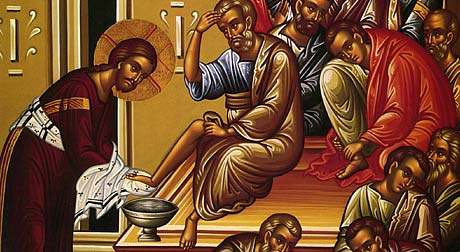
Before the last supper, the Lord Jesus Christ washed the feet of his disciples. Saint John the Apostle and Evangelist tells us: so he got up from the meal, took off his outer clothing and wrapped a towel around his waist. After that he poured water into a basin and began to wash his disciples feet, drying them with towel that was wrapped around him. When he had finished washing their feet, he put on his clothes and returned to his place. ”Do you understand what i have done for you?” he asked them. I have set you an example that you should do as i have done for you. (John13:4-6; 12 and 15)
Imagine brothers and sisters, the Lord has washed the feet of his disciples. What an example! What a serving of a man, serving for others! ”I gave you example!” says our Saviour- By the example I gave you do not think of supremacy, or for ruling over the rest, but to be servants.
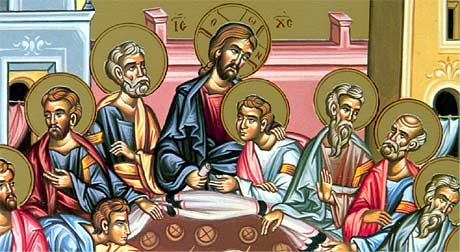
After washing their feet, the Lord celebrated the Paschal meal with the disciples, according the law of Moses. He then institutedthe new covenant Pascha- the Holy Mystery of the Holy Eucharist. The Gospel Writers tell us in Matthew 26:26-28; Mark 14:22-23; and Luke 22:19-20 that, while they were eating, Jesus took bread, gave thanks, and broke it, and gave it to his disciples, saying: ”take and eat, this is my body. Then he took the cup, gave thanks and offered it to them, saying ”drink from it all of you.This is my blood of the covenant which is poured out for many for the forgiveness of sins.”
In the Holy Eucharist, in the Holy Communion, we unite with the Lord Jesus Christ, in it we receive the Lord into ourselves. What Grace is that brothers and sisters! Thats why he commands: ”This do until the end of this world: ”Do this in my memory.” ( Luke22:19)

After the last supper, the Lord and his disciples went onto the Mount of Olives and into the Garden of Gethsemene (Matthew 26:30-36: Mark 14:26-31; Luke 22:39) There in Gethsemene began the Lord’s passions, his spiritual and his bodily sufferings. When he bowed his head and knelt, the Saviour prayed with bloody sweat streaming from his brow, and surrended to the will of God: ”Father if you are willing, take this cup from me: yet not my will but yours be done”. (Luke 22:42)
While praying in Gethsemene, Jesus Christ shows us that in temptations and sufferings, that prayer gives great and holy comfort and gives strength, even heroic strength in most the heaviest of tempations. He also shows us how, no matter what, we should surrender to God’s will.
Around midnight in the garden came the betrayel by Judas, one of the twelve. He came with many people together, a crowd with weapons such as the swords and knifes of the Temple Guards ( Matthew 26:47; Mark 14:43) and also soldiers and their servants. (John18:3) The betrayer gave a signal: ” the one I kiss is the man. Arrest him” (Matthew26:48) (Mark 14:44) Going at once to Jesus, Judas said ” Greetings Rabbi!” and kissed him. ( Matthew26:49) From that moment the name of Judas Iscariot became hated and cursed.
The Church does not baptise children named Judas. Even today we call those who have betrayed a friend a ”Judas.” We call those who, under the guise of friendship, commit fraud, those who for this world’s materialisic treasures, become betrayers; those who for avarice became extortionists, those allegoricaly or directly declare: ”What will you will give us? We will and can surrender everyone and everything!”
Judas, as you know, hanged himself. The Evangelist Saint Matthew says: ”So Judas threw the money into the temple and left. Then he went away and hanged himself ( Matthew27:5) And the writer of the Acts of Apostles, Saint Luke supplements ”he feel headlong, his body burst open and all his intestines spilled out.” (Acts 1:18) What a horrific event!
Brothers and sisters, reminding ourselves for the four occasions or events of the earthly life of our Saviour, let us teach ourselves from them
- to serve the others
- To devote ourselves to the sacarments for forgiveness of sins and for everlasting life
- -to surrend to the will of God
- -to be mindful of ourselves and to never to be like Judas
Oh Lord help us these teachings not only to remember, but also to fulfill in our lives. Amen
And Jesus Wept ~ Br. Igor Kalinski, Novice
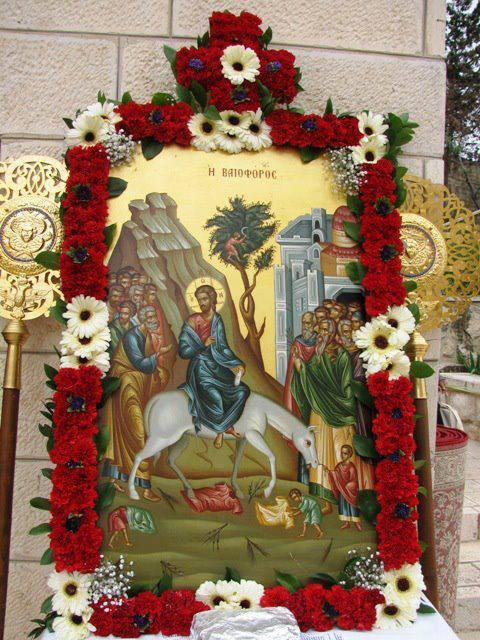
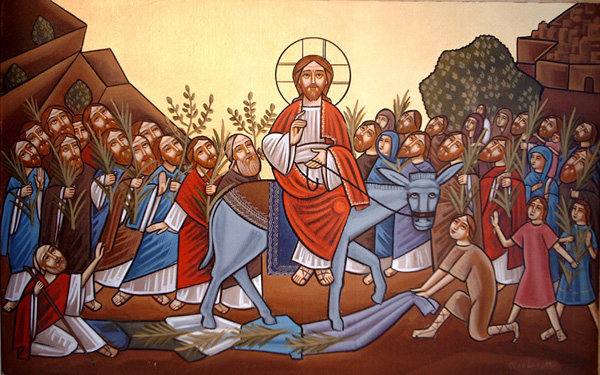
Today we remind ourselves of the solemn entrance of Jesus Christ into the city Jerusalem as recorded in Matthew 21:1-17; Mark 11:1-11, Luke 19:29-44, and John 12:12-19.
Yes, this was a truly solemn entrance! Our savior is seated on a donkey like the ancient kings: So Zadok the priest, Nathan the prophet, Benaiah son of Jehoiada, the Kerethites and the Pelethites went down and had Solomon mount King David’s mule, and they escorted him to Gihon. I Kings 1:38)
to fulfill the prophecy of the Prophet Zechariah 9:9:
“Rejoice greatly, O daughter of Zion!
Shout, O daughter of Jerusalem!
Behold, your King is coming to you;
He is just and having salvation,
Lowly and riding on a donkey,
A colt, the foal of a donkey.”
The Lord is traveling to the Mount of Olives in Jerusalem. There are many people came in Jerusalem for the festivities of the Passover, and when they heard that Jesus is coming, they take palm branches and went in the city for reception, and they praise him. There are lots of people going beside him, behind him, and many in front are laying their clothes in the path, on him to pass. Many are cutting branches from the trees and spreading them in the road, and the crowd walking in front is singing “Hosanna the Son of David, Blessed is the One who comes in the name of the Lord, Hosanna in the Highest!”
But something is happening, which does not fit with the greatness, the joy of the people, the celebrations of the entrance of a king, the joy of the Lord’s entrance into Jerusalem. Saint Luke the Evangelist tells us in Luke19:41 that as Jesus approached Jerusalem, and saw the city, he wept over it.
Tears! Listen brothers and sisters, the Lord is crying! Lord Jesus Christ is weeping with tears!
He who relieved the tears of many tears of people by a simple command, he whose heart went out to the widow of Nain when she was going to the funeral of her only son, and said ”don’t cry”( Luke7:13), is now crying himself.
What tremendous grief! What tremendous pity! We cannot begin to describe the depths of our Lord’s emotions. Only if our souls somehow could feel what Jesus felt, so that we could cry with him, as the child is weeping for his mother.
Tears- says Saint Augustine of Hippo, are the blood of the soul. They talk of very powerful spiritual feelings, tears of sadness, tears of joy, tears of anger and tears of repentance.
Why would the Lord weep over Jerusalem? Saint Luke the Evangelist explains in Luke 19: 41-44: 41 as he approached Jerusalem and saw the city, he wept over it 42 and said, “If you, even you, had only known on this day what would bring you peace—but now it is hidden from your eyes. 43 The days will come upon you when your enemies will build an embankment against you and encircle you and hem you in on every side. 44 They will dash you to the ground, you and the children within your walls. They will not leave one stone on another, because you did not recognize the time of God’s coming to you.”
It is clear that the Lords tears are tears of deep unconditional sadness, of unconditional love! Why is the Savior crying? He does not cry for himself, nor for his sacrificial act that must bring to completion, but for the tragic destiny of Jerusalem and its citizens. The Lord has seen the horrific days when enemies will surround the city, will kill the children and destroy the city, and who will leave no stone unturned, something that indeed happened in 70 year AD as described by the historian Joseph Flavian.
Whose guilt will cause the suffering that will come? The citizens of Jerusalem are they for whom the dear Lord weeps. This is made clear for us in Luke19:44, and our Lord weeps because Jerusalem does not recognize that the Lord has come into their midst. The Savior knows that his Grace has been rejected by the city. The Pharisees and people’s leaders don’t care. They are full of evil and envy. And Jesus crying. He saw the betrayal of Jude, the scattering of his disciples, he saw how the most zealous and passionate Peter will deny him, the illegitimacy of the priests and leaders of the Jews, corruption of Pilate, the hesitation of the faith of the people. He saw all the sins, vices, and failings of mankind to the end of the world.
Of course Jesus wept. Out of his great love for us, in his compassion, of course he wept. But not only for Jerusalem. He cried for all of us, for our sins, transgressions, for our bad unChristian life.
The tears of our Lord, brothers and sisters, are calling us to be sanctified, to come back to our Lord with penance and repentance, to new life, to crucify our bodily passions and lusts, to reject our old selves and to become new people. New people in Christ our Lord, (Ephesians 4:22-24: 22 You were taught, with regard to your former way of life, to put off your old self, which is being corrupted by its deceitful desires; 23 to be made new in the attitude of your minds; 24 and to put on the new self, created to be like God in true righteousness and holiness.)
As we now conclude the 40 days of Great Lent, in which we have prayed and studied to ready our spiritual selves for the coming of Christ’s resurrection, and to the salvation of our souls, let us cry and weep for our sins. With repentance and tears to wash the spots of sins from our hearts, and with the joy of His forgiveness, let us come to the Lord, shouting and singing to the Lord, “Hosanna in the Highest, Hail to the King!”
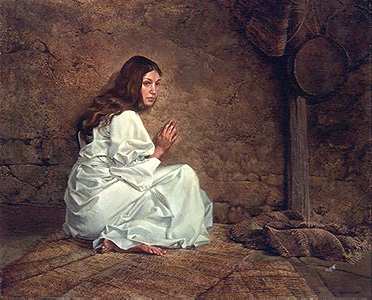
The Annunciation ~ Br. Chip Noon, Novice

Yes, I see it all now:
I’m the Lord’s maid, ready to serve.
Let it be with me
just as you say.
What would we have said when we were around 14 years old? How would we have reacted?
Think back upon your youth. At 14 what was your focus in life? Boys? Girls? Friends? Adventure? The terrors of the day? The joys of the day?
But Mary said: “Let it be with me according to your word.”
How could that have happened?
We now know that young girls in Israel were betrothed to be married when they were 12 to 14. Today it seems unbelievable, but back then, it was common. Today we hardly know what life is all about when we are that age. But back then, life was what you were given day to day. There was no “What will I be when I grow up?” There was what you were.
Still, how could a young girl face such an imposing, impossible future? How could a young girl face an angel and converse with him and still have her wits about her?
This is such a joyous story told by Luke in the Gospel. Here is a child who is confronted by an otherworldly being telling her:
“Good morning!
You’re beautiful with God’s beauty,
Beautiful inside and out!
God be with you.”
And although she is “thoroughly shaken, wondering what was behind a greeting like that,” she simply asks “how can this be?” She doesn’t argue, she doesn’t protest, she simply asks, “how can this be?” And when the angel Gabriel tells her how it can be and that, in fact, her cousin Elizabeth, an old, barren woman, is also pregnant and that “nothing is impossible with God,” what does she say?
“Yes, I see it all now:
I’m the Lord’s maid, ready to serve.
Let it be with me
just as you say.”
Oh wouldn’t it be wonderful, miraculous, immensely comforting to be able to respond like that? Wouldn’t we be at such peace if we could say “Let it be with me just as you say.” Just think of Mary, a young girl, a virgin…a child, really…answering God’s call in such a forthright, obedient way. Imagine yourself answering God’s call like this. “Let it be with me just as you say.”
Isn’t that what Jesus is asking us every day? Isn’t that really our call? Isn’t that what you hear in your heart each time you hear this Gospel?
How can you answer? How can we all answer? How can we all have the faith that Mary had to give ourselves over to the will of God?
Lord, prepare us for the coming of your Son on Easter. Let this lesson of Mary’s complete and utter faith guide us as we seek your salvation, as we seek the eternal peace you have promised us. Let this young child give us strength, peace, and comfort, in Jesus’ name. Amen.

Br. Dominic Ferrante, Novice

Following Jesus’ example of obeying the will of God can be a difficult thing. I found out first hand just how hard it can be. I had been offered a new job that was an incredible opportunity and blessing that God bestowed upon me. That bad part was it was 400 miles from my home and that meant leaving my family and striking out on my own until our house could be sold and they could join me.
I was confident that God wanted me to follow this path. I knew this was what God meant for me to do…even though I knew the loneliness and hardships of being away from my wife and son, for an undetermined amount of time, would be difficult to bear. I cried almost every day that we were apart and pleaded with God to hasten our reunion. I forgot that what is to be is in God’s time not my time. It is “Thy will be done,” not “my” will be done.
God had given me, up to that point, the toughest test of my life and I nearly failed. I nearly failed because I made the situation about me and my loneliness, and not the blessings and path God had chosen for me.
Jesus knew his time on earth was coming to an end. His humanity was troubled and afraid of what was to come to pass. Even though he was afraid of the prospect of facing death he knew there was no way to go against the will of his Father so he went willingly.
His death and resurrection had been predestined from the beginning of time and he was prepared to fulfill that prophecy. He said to his disciples “Amen, amen, I say to you, unless a grain of wheat falls to the ground and dies, it remains just a grain of wheat; but if it dies, it produces much fruit”. Jesus knew that his death and resurrection would cleanse the sins of man and inspire many people to follow in the steps of fledgling Christianity. Jesus knew his death and resurrection would be an almost irresistible call to people to follow his teachings and to live their lives closer to God and his covenants.
The challenge for us as Christians, is to accept whatever God has planned for us. We may not understand his reasoning, but we must have unwavering faith, just as Jesus did. We must learn that we are to follow God’s will no matter how difficult or frightening it may seem. We must remember that God has only love for us, and has only the best intentions for us in our lives.
Therefore it is up to us to go forth and proclaim the joys of the gift of forgiveness. Christ died for us. We must also bear fruit in our lives but praising and preaching the word of God.
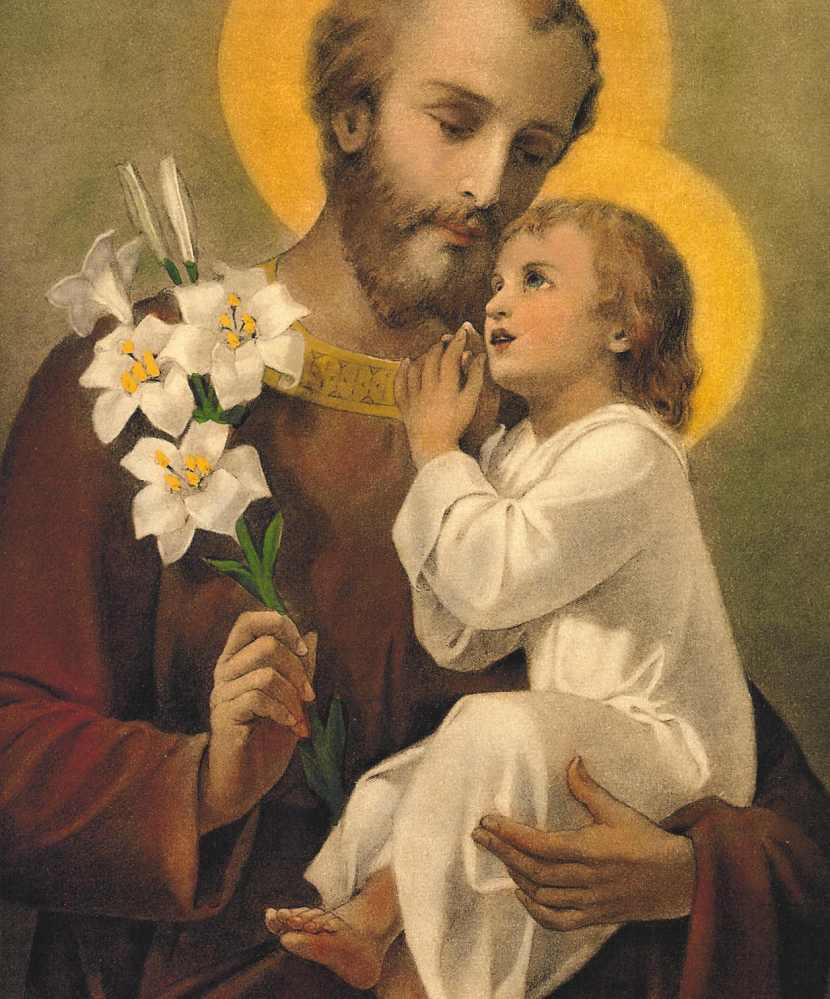
St. Joseph ~ The Rev. Lady Sherwood, OPI
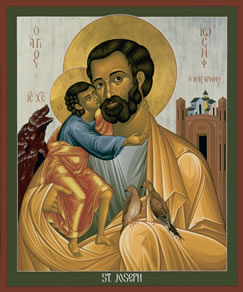
Just like our Heavenly Father gives us love, care, stability and the standard to live by with his holy word in the scriptures, he is a true Father to us who wants the very best for all his children. St. Joseph follows our Father’s example, as both husband and step-father. He gives us examples which men should follow in their lives. Joseph cared for and provided for the Holy Household. There are many qualities that Joseph had which we could use to be the role model for Christian husbands and fathers. Joseph was a very compassionate man. We can see an example of this when he suspected his wife of infidelity; he planned to divorce her quietly rather than denounce her publicly and expose her to public shame and penalty.
Joseph was always obedient to God and did what he knew was God’s will without hesitation. Examples of this are that he kept Mary as his wife; he protected and provided for his family when they had to flee to foreign lands to protect them from danger.
Joseph led a life of deep prayer and was in communion with God, and would always seek out that which was God’s will. God often told Joseph his will using dreams.
Joseph was a provider of care, When Jesus’s life was threatened, Joseph would take them out of danger. He took his family to Egypt and only returned when it was safe to do so, and when Jesus went missing ataged twelve, Joseph went searching for him bas both parents were obviously extremely worried about Jesus’s safety.
Joseph also brought much more to Jesus’s life, he taught him his trade which Jesus worked in for about twenty years, he gave Jesus love, stability and was his earthly male role model, which was and still is vitally important for a good father to give any child.
Sadly not all children are brought up in such a way today, but husbands and fathers truly should seek to follow this sincere man of God in the way they run their lives. Are you married? Do you give all the love, trust and respect to your spouse? Or with stresses and strains do you always argue or not truly make time for each other? If you have children, do you know where they are and if they are safe, or who they might be talking to online? Do you give emotional stability, patience and unconditional love? Do your children see you as the role model they need in a Father? We should strive to be as our heavenly Father is to each of us, to our spouses, our children and in fact to all as our brothers and sisters.
While the Gospels do not shed much light on St. Joseph’s life, it is believed that he died before Jesus’ public ministry.
Over the years, many traditions and customs have sprung up in celebration of St. Joseph’s Feast Day.
According to legend, there was a famine in Sicily many centuries ago. The villagers prayed to St. Joseph, foster-father of the Infant Savior, and asked his intercession before the throne of God. Their prayers were answered. With the ending of the dreadful famine, a special feast of thanksgiving was held in commemoration of the Saint. This celebration became tradition. Wealth families prepared huge buffets. They then invited the less fortunate people of the village, especially the homeless and sick.
The celebration begins with a religious tableau. Selected villagers portray an elderly man, a lovely young woman, and a little child. The three are seated at the head table and remain there during the early part of the festivity. Others accompanying this “Holy Family” are twelve men or boys, representing the Apostles and other children, attired as angels. The village priest blesses the food, then the “Holy Family” is served first by the host and hostess.
All are free to come and go as they wish. The guests may eat what they choose and as much as pleases them. The festival lasts most of the day and well into the night. When all have been fed, they go on their way with thankful hearts and take the blessing of the host and hostess with them.
The effect of the table design is dignified, solemn, yet festive, grand and inspiring. Much symbolism is contained in its shape and decoration. The “steps” represent the ascent from earth to heaven. On the topmost step is a statue of St. Joseph or a picture of the Holy Family. White linen tablecloths cover the table. Vigil lights of green, brown and deep yellow, representing St. Joseph’s attire, are profusely placed. Palms placed nearby and around the room, as well as lily plants and white carnations give the table softness and the scents together with incense used in the opening of the ceremony are suggestive of the fragrance of heaven and the sweetness of salvation.
The food dishes represent the harvest, the created beauties of the world. Breads are baked in shapes of a staff, a carpenter’s implement, a hand, the cross and animals close to the Infant Child at birth. These shapes represent St. Joseph and the life of Christ. Minestras, very thick soups, are made of lentils, favas and other types of beans, together with escarole, broccoli or cauliflower. Other vegetables, celery, fennel stalks, boiled and stuffed artichokes are also served.
No cheese is eaten on St. Joseph’s day. The spaghetti is not sprinkled with grated Incanestrato, but in its place a traditional mixture of tasted dry bread crumbs with fresh sardines and fennel sauce is used. A dish of “sweet macaroni” with honey sauce is also served.
Then, the special dessert without which no St. Joseph’s Day buffet could ever be called by that name. It is St. Joseph’s Sfinge: a large round cream puff filled with ricotta (Italian cottage cheese) and topped with red cherries and glazed orange slices. Many dessert cookies are embellished with almonds. The almond tree is characteristic among the flora of the Mediterranean and a profoundly sacred symbol to those of Jewish, Moslem and Christian faiths alike.
All are free to come and go as they wish. The guests may eat what they choose and as much as pleases them. The festival lasts most of the day and well into the night. When all have been fed, they go on their way with thankful hearts and take the blessing of the host and hostess with them.
It is also customary for the village officials to arrange a public buffet in St. Joseph’s honor. The banquet table invariably stands in the piazza–public square–opposite the doors of the cathedral. The table is usually built around two sides of the piazza in the form of a right angle. These village tables in the public squares may not be as elaborately decorated as those in the homes, but they sage beneath the weight of choice foods and wines contributed by the wealthy villagers. All come to this public table at some time during the day to pay homage to the great saint.

Second Chances ~ Br. Michael Marshall, Novice
 Remember when you first learned to cuss? Remember when you first learned to cuss and your parents found out about it? Uh oh! Everyone has been disciplined when it comes to saying a swear word, whether it is saying the swear word in front of one’s parents or another person tells the parents their kid used a swear word. The most common response given to the child is, “I ought to wash your mouth out with soap!” This disciplinary response sounds rather harsh, but it hopefully teaches a child that using a swear word is improper behavior, and from that point on, actually having had his/her mouth washed out with soap, that the child will think twice about swearing. The punishment does not mean the parents do not love their child, but the use of a swear word has its consequences. And the child is given a second chance.
What about when you stole something for the first time, and got caught? What happened then? Now, I would assume that none of you ever stole a car, but let’s use that as an example. So, we may find a young man who steals a car and gets caught. Of course calls his parents to help him, and to bail him out of jail. The parents know that it will be in the best interest of their son to leave him in jail. They are leaving them in jail not because they do not love their son, but because they want to teach him a lesson. Out of tough love he learns that there are consequences for his actions. They do not disown him; they love him unconditionally, and have faith he will never steal again. He is given a second chance.
Today’s reading from the Gospel of John has a very challenging message for us, because it speaks about God’s love for us as a whole. “For God so loved the world that he gave his only Son, so that everyone who believes in him might not perish but might have eternal life (John 3:16). While at the same time there is mention of condemnation. “Whoever believes in him will not be condemned, but whoever does not believe has already been condemned, because he has not believed in the name of the only Son of God.” (John 3:18) What needs noted is that the entire Gospel passage needs to be taken in its entirety and put into appropriate context to see how God loves us.
Let us return back to the example of the child using a swear word. If we only apply verse 18 to the situation, we would find the parents only disciplining the child with no purpose of helping the child learn from their mistake. Yet a parent is not only there to show discipline, but to love their child unconditionally – despite mistakes. Let us now apply this to the example of the young person who steals a car. Jesus is using the harsh language of condemnation just as a parent shows tough love – a parent who does not condone negative behavior; that parent who watches their son go to jail. Jesus is boldly explaining God’s love, God’s parental love, in the entire passage.
Now, this does not mean a child has the right to keep making mistakes knowing their parents will continue to love them despite the mistakes. Nor does it mean that because God loves us unconditionally, that we can continue to sin or turn away from God saying that it is okay because God loves me. There is a responsibility which we have, whether it is to our parents or God. We may mess up, but we need to strive to grow and to change our ways. Just because this Scripture is read during Lent, just because we are in Lent, does not mean we only work hard to improve ourselves during these 40 days in preparation for Easter; we need to apply this lesson to every day of our lives. What are you doing to change your ways, and keep growing in your relationship with God? What is it that you are doing, or not doing, that you need for God to give you a second chance?

Rules!!!! ~ Sister Dollie Wilkinson
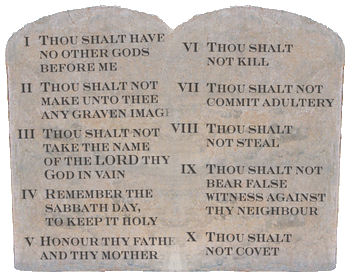
Growing up, there always seemed to be a never-ending list of rules, or things I should and should not do. Also, when my parents divorced, and my Mother remarried, I learned that different places (households) had their own set of rules. As a child, well this just all became confusing at times. As children of a loving Father, we are reminded of another set of rules, which eventually became engraved in stone. In Exodus 19, we learn how these commandments came to be.
“Three months after the Israelite people left Egypt, they came to the desert called Sinai. They set up camp near the mountain called Mount Sinai and Moses went up the mountain. There God spoke to Moses and told him to say to the people, “If you will obey me, and keep my covenant, you will be my very own people.” Then Moses came back down the mountain and told the people what God had said. They all answered, “We will do everything that the Lord has said. “So Moses went back up the mountain and told this to God. Then God said, “Go down and tell the people to spend today and tomorrow on washing their clothes and getting ready. On the next day I will come down on Mount Sinai where everyone can see me. Mark a place around the mountain that the people must not cross and tell them not to go up on the mountain. If anyone touches the mountain, he must be put to death. Do not touch him; kill him with rocks or arrows.” So Moses came down the mountain and told this to the people, they washed their clothes and got ready. On the morning of the third day the Lord came down on the mountain in the form of fire and smoke went up from it. A dark cloud was on the mountain with lightning and thunder coming from it. There was the sound of a very loud trumpet and the whole mountain shook. All of the Israelites shook with fear. Moses led them out of the camp to meet God and they stood at the bottom of the mountain.”
If you were Moses, would you have been so patient to await God’s coming, to deliver a set of rules for His chosen people? As children, were we ever so patient to listen to our parents when they told us what we should and should not do? I am guessing some of us would not have been this patient, but if so, we would not have been so quick to follow God’s instructions to the letter. Yet, this is exactly what Moses did, and in doing so, received a list of rules which still stands as a guide, not only for Christians worldwide, but as a strong set of standards most humans follow on a daily basis.
So what are those Ten Commandments gifted by God, to Moses, on Mt. Sinai? Exodus 20:1-17 offers them in detail.
“Then God spoke all these words: I am the LORD your God, who brought you out of the land of Egypt, out of the house of slavery; you shall have no other gods before me. You shall not make for yourself an idol, whether in the form of anything that is in heaven above, or that is on the earth beneath, or that is in the water under the earth. You shall not bow down to them or worship them; for I the LORD your God am a jealous God, punishing children for the iniquity of parents, to the third and the fourth generation of those who reject me, but showing steadfast love to the thousandth generation of those who love me and keep my commandments. You shall not make wrongful use of the name of the LORD your God, for the LORD will not acquit anyone who misuses his name. Remember the Sabbath day, and keep it holy. Six days you shall labor and do all your work. But the seventh day is a Sabbath to the LORD your God; you shall not do any work–you, your son or your daughter, your male or female slave, your livestock, or the alien resident in your towns. For in six days the LORD made heaven and earth, the sea, and all that is in them, but rested the seventh day; therefore the LORD blessed the Sabbath day and consecrated it. Honor your father and your mother, so that your days may be long in the land that the LORD your God is giving you. You shall not murder.
You shall not commit adultery. You shall not steal. You shall not bear false witness against your neighbor. You shall not covet your neighbor’s house; you shall not covet your neighbor’s wife, or male or female slave, or ox, or donkey, or anything that belongs to your neighbor.
So now Moses, and pretty much everyone else, has this set of rules, in which to live by. And one would think most, if not all, are pretty straightforward. Oh, but this is not so. There have been so many misunderstandings, and misinterpretations, of these commandments, that they have sparked controversy, and fostered wars, for many many years. So why is it hard for God’s chosen people to understand the meaning of these simple rules? Well, they aren’t so simple, but when studied, and prayed on, can offer a useful set of guidelines. Let’s explore each more in depth:
- The First Commandment is about Loyalty.
The Creator of the universe declares He is our God and our deliverer and asks us to demonstrate our love for Him by having no other God’s. The First Commandment is the first of a series of four that define our relationship with our Heavenly Father. Establishing, developing and maintaining that personal relationship with the true and living God is the most important commitment we can ever make. That is the primary focus of the first of the Ten Commandments, “You shall have no other gods before Me”. We should love, honor and respect Him so much that He alone is the supreme authority and model in our lives. He alone is God. We should allow nothing to prevent us from serving and obeying Him. - The Second Commandments is about Worship..
The one and only true God loves us so much that He is jealous of our love and does not want to share our love by us bowing down to meaningless idols. The Second Commandment goes to the heart of our relationship with our Creator. It deals with several crucial questions. How do we perceive God? How do we explain Him to ourselves and to others? Above all, what is the proper way to worship the only true God? The Second Commandment is a constant reminder that only we, of all created things, are made in the image of God. Only we can be transformed into the spiritual image of Christ, who of course came in the flesh as the perfect spiritual image of our heavenly Father. - The Third Commandment is about Reverence.
God asks us to respect His Holy name and not to use it in vain. The Third Commandment focuses on showing respect. It addresses the way we communicate our feelings about God to others and to Him. It encompasses our attitudes, speech and behavior. Respect is the cornerstone of good relationships. The quality of our relationship with God depends on the love and regard we have for Him. It also depends on the way we express respect for Him in the presence of others. We are expected always to honor who and what He is. Conversely, the use of God’s name in a flippant, degrading or in any way disrespectful manner, dishonors the relationship we are supposed to have with Him. This can vary from careless disregard to hostility and antagonism. It covers misusing God’s name in any way. - The Fourth Commandment is about Sanctification and Relationship.
God starts off the fourth Commandment with the word “Remember”. This is because He knew we would forget it. God asks that we keep it set apart for Holy purposes so we can draw nearer to Him. The Fourth Commandment to remember the Sabbath concludes the section of the Ten Commandments that specifically helps define a proper relationship with God, how we are to love, worship and relate to Him. It explains why and when we need to take special time to draw closer to our Creator. It is also a special sign between us and God forever, that it is Him that sanctifies us, Him alone we belong to and worship. The Sabbath, the seventh day of the week was set apart by God as a time of rest and spiritual rejuvenation. - The Fifth Commandment is about Respect for Parental authority.
God instructs us to show love for our parents by honoring them. The Fifth Commandment introduces us to a series of Commandments that define proper relationships with other people. The fifth through to the 10th serve as the standards of conduct in areas of human behavior that generate the most far reaching consequences on individuals, families, groups and society. Families are the building blocks of societies that build strong nations. When families are fractured and flawed, the sad results are tragic and reflected in newspaper headlines every day. Any individual or group, including whole nations that understand the importance of strong families reap the rewards of an improved relationship and blessings from God. The Fifth Commandment shows us from whom and how the fundamentals of respect and honor are most effectively learned. - The Sixth Commandment is about Respect for Human life.
God asks us to demonstrate love and not hate towards others by not murdering. We must learn to control our tempers. Taking another person’s life is not our right to decide. That judgment is reserved for God alone. That is the thrust of this Commandment. God does not allow us to choose to willfully or deliberately take another person’s life. The Sixth Commandment reminds us that God is the giver of life and He alone has the authority to take it or to grant permission to take it. God wants us to go far beyond avoiding murder. He requires that we not maliciously harm another human being in word or deed. God desires that we treat even those who choose to hate us respectfully and do all within our power to live in peace and harmony with them. He wants us to be builders, not destroyers of good relationships. To accomplish this we must respect this wonderful gift of this precious possession, human life. - The Seventh Commandment is about Purity in Relationships.
God asks us to express and demonstrate our love for our partner by not committing adultery. Adultery is the violation of the marriage covenant by willful participation in sexual activity with someone other than one’s spouse. Since God’s law sanctions sexual relationships only within a legitimate marriage, the command not to commit adultery covers in principle, all varieties of sexual immorality. No sexual relationship of any sort should occur outside of marriage. That is the crux of this Commandment. Most of us need the support and companionship of a loving spouse. We need someone special who can share our ups and downs, triumphs and failures. No one can fill this role like a mate who shares with us a deep love and commitment. - The Eighth Commandment is about Honesty.
God instructs us to show our love and respect for others by not stealing what belongs to them. The Eighth Commandment safeguards everyone’s right to legitimately acquire and own property. God wants that right honored and protected. His approach to material wealth is balanced. He wants us to prosper and enjoy physical blessings. He also expects us to show wisdom in how we use what He provides us and He does not want possessions to be our primary pursuit in life. When we see material blessings as a means to achieve more important objectives, God enjoys seeing us prosper. To Him it is important that generosity, rather than greed, motivate the choices we make. - The Ninth Commandment is about Truthfulness.
God says if we love others we should not deceive or lie to them. How important is truth? The Bible says that Jesus is “the way and the Truth” John 14:6. To fully appreciate the Ninth Commandment with its prohibition of lying, we must realize how important truth is to God. Jesus Christ said of God the Father, “Your word is truth” John 17:17. As the source of truth, God requires that His servants always speak truthfully.. God expects truth to permeate every facet of our lives. Everything in the life of a Christian is anchored to truth. God wants us as His children, to commit ourselves to truth and reflect it in everything we do. - The Tenth Commandment is about Contentment..
God instructs us not to covet because He knows it can entrap us into even greater sin. To “covet” means to crave or desire, especially in excessive or improper ways. The Tenth Commandment does not tell us that all of our desires are immoral. It tells us that some desires are wrong. Coveting is an immoral longing for something that is not rightfully ours. That is usually because the object of our desire already belongs to someone else. But coveting can also include our wanting far more than we would legitimately deserve or that would be our rightful share. The focus of the Tenth Commandment is that we are not to illicitly desire anything that already belongs to others. The opposite of coveting is a positive desire to help others preserve and protect their blessings from God. We should rejoice when other people are blessed. Our desire should be to contribute to the well being of others, to make our presence in their lives a blessing to them. The last of the Ten Commandments is aimed directly at the heart and mind of every human being. In prohibiting coveting, it defines not so much what we must do but how we should think. It asks us to look deep within ourselves to see what we are on the inside. As with each of the previous nine Commandments, it is directed toward our relationships. It specifically deals with the thoughts that threaten those relationships and can potentially hurt ourselves and our neighbors.
Now we know what we should, or should not do. But though these rules seems simple, and easy to follow, this does not mean every one can adhere to these commandments, all the time. After all, we are only human. And as a young child will inevitably mess up, so shall we, the children of a forgiving Father. So what do we do? Hide our face in shame, or pretend we didn’t do anything wrong, or worse, try to hide the evidence. Oh I did that when I was little, but somehow my parents always found out what I did. Their response? Normally it began with this statement: Why didn’t you tell us what you did, instead of lying about it at first? I figure most parents are like this, only seeking the truth from a misbehaving child. Then they can reason with him or her, offer solutions (or mild reprimands), and then show the child how much they love him/her. Is this not how our heavenly Father responds, when we have slipped up and broke a rule? He knows we are only human, and though He offers us a set of guidelines to live by, also knows we may goof up. But by His grace we are saved, and by His love we are forgiven.

Dust to Dust ~ Sr. Dollie Wilkinson, OPI
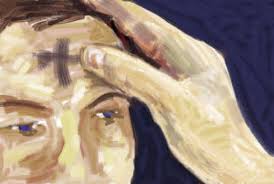
“‘Excuse me, you’ve got some dirt on your head.”
How many times have you heard this, and felt yourself heave a heavy sigh. But this simple question can serve as a catalyst for a very important discussion. So why exactly do we have this smudge on our foreheads?
Ash Wednesday begins Lent, a time when we stop and assess how we’re doing in our walk with God. Lent helps us identify spiritual areas in which we can grow and sinful areas that we need to avoid. To repent, put simply, means to turn away from sin and turn toward God. We use ashes as an outward expression of our need to begin again.
For over twelve hundred years on the dies cinerum (day of ashes) faithful followers have approached the altar and received ashes upon their foreheads. These ashes are made from the burnt palm fronds that were blessed on the Palm Sunday of the previous year. The ashes are sprinkled with holy water, usually fragranced with incense and blessed using four prayers that are thousands of years old. The use of ashes for repentance and penance can be traced even further back and is practiced throughout the world. On Ash Wednesday ashes are applied to believers’ foreheads in the shape of the cross.
So today we begin a 40 day period of wilderness wandering, 40 days because that’s how long Jesus was tempted in the wilderness. Even those in our society who have never really observed Lent know that it’s the time of year when pious people suffer and give things up not so God will be impressed with us, but to press upon ourselves the need for repentance and reform. As stated in this passage from the prophet Joel –
“Yet even now, says the Lord,
return to me with all your heart,
with fasting, with weeping, and with mourning;
rend your hearts and not your clothing.
return to the LORD, your God,
for he is gracious and merciful,
slow to anger, and abounding in steadfast love.
Amen.”
Seems to sum things up pretty well…..Fasting, Weeping, Mourning. For those of us who act like Lent is a competitive sport, this text from Joel is a pretty awesome starting place. But Lent isn’t a contest, and other than the outward sign of a cross of ashes on our forehead, is meant to be very private. As we are cautioned to do in Matthew 6:1-6, 16-18:
“Beware of practicing your piety before others in order to be seen by them; for then you have no reward from your Father in heaven. “So whenever you give alms, do not sound a trumpet before you, as the hypocrites do in the synagogues and in the streets, so that they may be praised by others. Truly I tell you, they have received their reward. But when you give alms, do not let your left hand know what your right hand is doing, so that your alms may be done in secret; and your Father who sees in secret will reward you. “And whenever you pray, do not be like the hypocrites; for they love to stand and pray in the synagogues and at the street corners, so that they may be seen by others. Truly I tell you, they have received their reward. But whenever you pray, go into your room and shut the door and pray to your Father who is in secret; and your Father who sees in secret will reward you. “And whenever you fast, do not look dismal, like the hypocrites, for they disfigure their faces so as to show others that they are fasting. Truly I tell you, they have received their reward. But when you fast, put oil on your head and wash your face,so that your fasting may be seen not by others but by your Father who is in secret; and your Father who sees in secret will reward you.”
But, why does God say to return to God with all of our heart rather than return to God when we get our crap together? I mean in Lent we tend to really focus on our behavior, and there’s nothing wrong with that, but if God says return to me with all your heart, I think that maybe the implication is that we give our hearts to a whole lot of things that are not God. So if we think Lent is about giving things up so we can impress God maybe we should ask ourselves: which is harder – the fasting part or the returning to God with all our heart part?
I don’t think that my problem is that I eat too much sugar or spend too much time on Facebook. My problem…and maybe yours too, is that I sort of give my heart out to things, and even people, that cannot love me back. I mean, by the time I even get to the table of God’s grace, I’ve tried to love so many things and people, and hopes and doubts – I’ve given myself to them so completely that there’s very little left. So little to be fed by God’s grace since my starving little heart is doled out in so many pieces trying to get it’s own needs met. And so, thank God, once a year we gather to speak the truth of how we piece out our hearts, how we sin and fall short, how we rely on every single other thing to love us – everything but God. How we love each other and are loved by each other so poorly with the small leftover bits of our hearts after we’ve given most of them and time to career advancement, saving the world, saving for our future, buying fake cows on Facebook and the dull pain of chemical dependency, sugar binges or the next spiritual practice or restricted diet that promises to make us whole. It’s not our time that’s so wasted with all of it…I think it’s something so much more valuable… I think it’s our hearts.
So we gather again this Ash Wednesday with the faithful all across the world, to gather all the pieces of our broken selves…all the pieces of our starving little hearts and we come again here to be told, of all things, that we are dust and to dust we shall return. The very thing we are trying to pretend is not true. I think we give our hearts away because we’re afraid of the limits of our earthly bodies. In other words, we sin. And all of it…and I hate to be so cliché, but basically, when it comes down to it, all of it is about the fact that we’re afraid to die. But even though we may be afraid to die, then you’d think hearing you are dust and to dust you shall return would be pretty bad news, but not so. Because here’s the thing: in the creation story in Genesis 2 it says that the Lord God formed man from the dust of the ground, and breathed into his nostrils, the breath of life; and the man became a living being. So, yes, children of God…you are dust and to dust you shall return. But remember this: it is from dust and the very breath of God that you were created out of divine love. A divine love which mends the pieces of your heart back together whenever you return to it. Always, always always! And to do this, to gather the given away pieces of our hearts so that in returning to God, God can make them whole, well, there’s a term for that …it’s repentance.
I used to think that repentance meant to feel so bad about being bad that you promise to not be bad anymore. But now I see repentance as just returning again to God. Just as in the story of a certain Carmelite nun, who found contemplative prayer to be very hard because her thoughts would wander a thousand times during a 20 minute prayer session. She was sure her teacher Thomas Merton would rebuke her for such a failure, so she was surprised when instead Merton said that her wandering thoughts were just 1,000 opportunities to return to God.
That’s what Ash Wednesday and Lent are…a thousand opportunities to return to God with all your heart. Returning again to the only thing in which we are once again whole…and that is the eternal and divine love of God. The eternal and divine love of God who created you from dust and breath. The eternal and divine love of God to which you will return after your last breath when again you are dust.
Finding God in Our Suffering ~ Br. Igor Kalinski, Novice
” Does not man have hard service on earth? Are not his days like those of hired man? Like a slave longing for the evening shadows, or a hired man waiting eagerly for his wages so I have been allotted months of futility, and nights of misery have been assigned to me. When i lie down I think ” How long before I get up?`The night drags on, and I toss till dawn.
In the first reading in the Book of Job, these verses are telling us how fast our days are passing. Living here on this earth, we have our own difficulties, our struggles, and sometimes, our God appoints difficult times to discipline us, to prepare us, to become stronger, to teach us through the pain, sorrow, and to remind us how we are nothing without His presence in our lives. Without Him we can not face the problems of our days. Through our suffering we become humble; we become one with the character of Christ in our suffering. We become similar to Him, so much so that we want to follow Him everyday. He was carried His cross to Calvary. We must carry ours daily, that is our daily passion. We all of us have problems, hard moments, sad and bad things with which we must deal. How merciful it is that we have Him to take our sorrows and pains! Through His wounds, we become more compassionate to our neighbors, knowing that they also need help.
Now think of your own situations and acknowledge that we seldom know what God is orchestrating behind the scenes. At any point we might become characters on the stage of suffering. When we face the same kinds of decisions that were thrust upon Job, will we bless the Lord or curse Him? We will acknowledge that God both gives and takes away, He gives us days, years, decades with difficulties and through that we build our character to be more strong, He teach us how to behave when life is not sweet, He is not leaving us, we do not going to forget that this is the valley of tears, and in the verse 8:17 from the Gospel of Matthew, we learn that he took our infirmities and carried our diseases, so in difficult times we always have our Lord Jesus who will take our problems with Him. He takes our illness, our struggles. The proof of His actions are so so many, for with God anything is possible!
Danger? No. I do not expect danger. God will deliver us, in the Gospel of MARK verses 1:29-39 ” So He went to her (Peter`s mother in law) took her hand and helped her up and the fever was gone, and so many sick people, demon-possessed, all town came to the gate of that house that evening, and all receive healing, powerful God`s healing, restoration, renewal bodily and spiritually making their faith to grow.”
This also our mission, as Christian and Dominican as well. We are to help alleviate the suffering, to bring healing to the spirits of the least, the lost, and the forgotten. Won’t you accept that mission?
Amen
Follow Me ~ Sr. Dollie Willkinson, OPI

As I watched my old house being torn down a couple weeks ago many memories came rushing in. The joy of bringing my first little girl home from the hospital, on a heart monitor because she had Gastro-esophageal reflux, which caused her to turn blue from losing her breath quite often; or bringing her younger sister home a few short years later, and watching this very precocious girl try to not only keep up with her older sister, but her older cousins, all of whom seemed to think our home was the fun place to be. Then, so many years later, bringing home my granddaughter, and watching her take her first steps, being so afraid she would slip and fall on our hardwood floors. There are so many memories in this one house, that some would wonder why we (my family and I), would readily abandon it and seek somewhere else to live, to create new memories. But in Mark 1:14-20, this is exactly what Jesus is asking four young men to do, leave what they know, where they are comfortable, and have known all their lives, to follow Him and become something more.
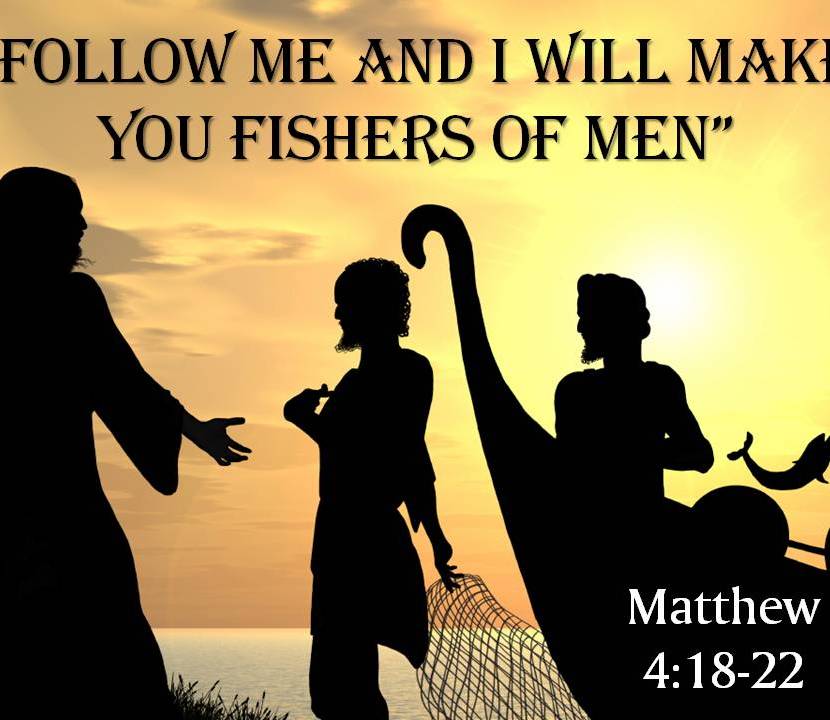
“Now after John was arrested, Jesus came to Galilee, proclaiming the good news of God, and saying, “The time is fulfilled, and the kingdom of God has come near; repent, and believe in the good news.” As Jesus passed along the Sea of Galilee, he saw Simon and his brother Andrew casting a net into the sea–for they were fishermen. And Jesus said to them, “Follow me and I will make you fish for people.” And immediately they left their nets and followed him. As He went a little farther, He saw James son of Zebedee and his brother John, who were in their boat mending the nets. Immediately He called them; and they left their father Zebedee in the boat with the hired men, and followed him.”
As Jesus walked by the Sea of Galilee, He saw Simon, Andrew, James, and John. And called to them. There were no questions, no good byes. They just simply dropped their nets, and left to follow Jesus. Now if it were me, and I suspect most of you, I would be filled with questions. Like, “Where are we going? What will we do? How long will we be gone? What do I need to take? Where will we stay?” But this conversation doesn’t take place in today’s gospel. Jesus does not offer a map, an itinerary, or a destination, only an invitation. This is not the type of journey you can prepare for. It’s not about planning and organizing, making lists, or packing supplies. It’s just not that easy. If anything this journey is about leaving things behind……to leave behind our nets, our boats, and all that seems familiar.
So Simon and Andrew were casting a net into the sea for they were fishermen. Day after day it was the same thing; the same sea, the same net, the same boat. Day after day it was wind, water, fish, sore muscles, and tired bodies. They probably grew up watching their dad and granddad fishing, watching their future life, and how they too would spend their time. Cast the net, and pull it in. If you are not casting the net, then you probably sat in the boat mending the net. That’s what James and John were doing. Casting and mending, always……casting and mending. You know about those days, right? How many of us go through our days on autopilot, feeling as if we are stuck in some time loop?
We may not fish for a living but we know about casting and mending nets. Days that all seem the same. One looks like another and nothing changes. We don’t expect much to happen, so this seems like our life. We cast the nets. We mend the nets. Casting and mending to make a living, to feed our family, to pay the bills, to gain security and get to retirement, to hold our family together, make our marriage work, and to grow up our children. Casting and mending to gain the things we want; a house, a car, books, clothes, a vacation. Casting and mending to earn a reputation, gain approval, establish status. And to make our way through another day of loneliness, sadness, or illness. Casting and mending are realities of life. They are also the circumstances in which Jesus comes to us, the way in which we hear the call to new life, and the place where we are changed and the ordinary becomes the extraordinary.
Those future disciples of Jesus, Simon and Andrew, James and John, were not looking for Him. They are too busy with the nets. It is another day of casting and mending. They may not have even noticed Jesus but He not only sees them; He speaks to them. Jesus has a way of showing up in the ordinary places of life and interrupting our daily routines of casting and mending nets. That’s exactly what He did in the lives of these four gentleman. And that’s what He can do for your life and mine. “Follow me” is Jesus’ invitation to a new life. If these four fishermen accept the invitation, their lives will forever be different. They will be different. They will no longer catch just fish. They will “fish for people”. When Jesus says this, He is describing the transformation of their lives, not simply a job catching new members or followers. Whatever your life is, however you spend your time, there is in that life Jesus’ call to “Follow me.”
That’s the hard part for most of us. We’re pretty good at accumulating and clinging but not so good at letting go. More often than not our spiritual growth involves some kind of letting go. We never get anywhere new as long as we’re unwilling to leave where we are. We accept Jesus’ invitation to follow, not by packing up, but by letting go. “Follow me” is both the invitation to and the promise of new life. So what are the nets that entangle us? What are the little boats (or old houses) that contain our life? Who are the people from whom we seek identity, value, and approval? What do we need to let go of and leave behind, so that we might follow Him? Please don’t think this is simply about changing careers, disowning our family, or moving to a new town. It is about the freedom to be fully ourselves, and in so being discover God’s plan for us. We need to let go so that our life may be changed, so that we can now travel in a new direction, so that we may be open to receive the beauty of God’s promises. When we let go, everything is transformed.. That’s why Jesus could tell these four gentlemen they would still be fishermen. But now they would fish for people. They wouldn’t become something they weren’t already, but they would be changed. They would more authentically be who they already are – Fishers of men! Won’t you? Won’t you let go and let God?


You must be logged in to post a comment.