Bernard, son of Tescelin Sorrel, and Aleth, daughter of the lord of Montbard, was born in the family castle of Fontaines, near Dijon, in Burgundy. His pious French mother offered all her seven children—six sons and one daughter—to God at birth and devoted herself to their upbringing. According to the standards of that day, they were very well educated, the sons learning Latin and verse-making even before being trained in the profession of arms. Bernard was sent to Chatillon-on-the-Seine, to study in a college of secular canons. At school he gave evidence of a strong intellect as well as of a genuinely religious nature. During this period the death of his mother, to whom he was deeply attached, threw him into a state of prolonged and acute depression.
When Bernard finished his schooling at nineteen or thereabouts, he had, in addition to the advantages of noble birth and natural talent, the sweetness of temper, wit, and personal charm that make for popularity. Subject to strong temptations of the flesh, he often considered giving up the world, and even forsaking the study of literature, which was one of his greatest pleasures. He felt attracted to the Benedictine monastery at Citeaux,[1] founded fifteen years before by Robert of Molesme, Alberic, and Stephen Harding. One day Bernard knelt in prayer in a wayside church, to ask God’s guidance as to his future. On arising all doubt had vanished and he was resolved to follow the strict Cistercian way of life. His uncle, Gaudry, a valiant fighting man, and Bernard’s younger brothers, Bartholomew and Andrew, declared they would accompany him, and an appeal was made to their eldest brother, Guy. He, however, had a wife and two children; but when his wife soon after entered a convent, he also joined them. Gerard, another brother, was a soldier, engrossed in his calling; still, after being wounded and taken prisoner, he also heard God’s call, and on his release followed the others. Hugh of Macon was also won over, and others who had previously given no thought to the religious life. Such was Bernard’s eloquence that within a few weeks he had succeeded in persuading thirty-one Burgundian nobles to go with him to Citeaux. Bernard and his brothers gathered to bid their father farewell and ask his blessing. Only one son was left behind, Nivard, the youngest, and as the party rode away, Guy called to him, “Farewell, little Nivard! You will have all our lands and estates for yourself.” “Oh,” answered the boy, “then you are taking Heaven and leaving me only the earth! The division is too unequal!” Such was the pervasive spiritual atmosphere of this age of faith.
When they at length arrived at Citeaux near Easter, 1112, there had been no new novices for several years, and Stephen Harding, the abbot, received them with open arms. Bernard, now twenty-two, wished to live hidden and forgotten, concerned only with God. From the start, he trained himself to obey the command he later gave to all postulants, “If you desire to live in this house, leave your body behind; only spirits can enter here.” At the end of a year, he and his companions—all save one—made their profession and continued their cloistered life. When Bernard was unable to reap the grain as fast as the others, he was assigned to lighter work, but he prayed God to give him strength to use a scythe properly, and soon did as well as the best. He used to say, “Our fathers built their monasteries in damp, unwholesome places, so that monks might have the uncertainty of life more sharply before their eyes.” The Cistercians had in fact chosen swampy, unproductive lands, but their diligence was rapidly transforming them into fertile fields, gardens, and pastures. In 1113 Stephen founded the monastery of La Ferte, and in 1114 that of Pontigny. The Count of Troyes offered a site on his great estates for a third new monastery Stephen, aware of Bernard’s exceptional abilities, appointed him abbot, and ordered him to take twelve monks, including his own brothers, and found a house in the diocese of Langres, in Champagne. They settled in the Valley of Wormwood, which had once been a retreat for robbers. Here they cleared a piece of land, and, with the help of the people round about, built themselves a plain dwelling.
The land was poor and the monks lived through a period of extreme hardship. Their bread was of the coarsest barley; wild herbs or boiled beech leaves sometimes served as vegetables. Also, Bernard was at first so severe in his discipline that the monks, though obedient, began to be discouraged. Their apathy made him realize his fault, and as a penalty he condemned himself to a long silence. At length he was bidden by a vision to start preaching again. He now took care that food should be more plentiful, though it was still coarse and simple. The fame of the house and its holy abbot soon spread through that part of France. The number of monks grew to one hundred and thirty. The monastery was given the name of Clairvaux.
Bernard, a prey to many anxieties, suffered from stomach trouble, but he never complained or took advantage of an indulgence for the sick. In 1118 he became so ill that his life was in danger. One of the powerful ecclesiastics of the time, William of Champeaux, bishop of Chalons, recognized in the ailing abbot a predestined leader. He obtained from the Cistercian chapter held in that year at Citeaux the authority to govern him for twelve months as his superior. Knowing that Bernard required rest and quiet, he placed him in a little house outside the monastic enclosure at Clairvaux, with orders not to follow the rule and to free his mind from all concerns of the community.
Bernard, after living on a special diet and under a physician’s care for this period, returned to the monastery in improved health. His old father and young Nivard had by then followed him there, and received their habits at his hands.
The four first daughter houses of Citeaux, namely, La Ferte, Pontigny, Clairvaux, and Morimond, founded in their turn other houses, Clairvaux having the most numerous offshoots. In 1121 Bernard performed his first miracle. While singing Mass he restored to Josbert de la Ferte, a relative of his who had been stricken dumb, the power of speech. The man was enabled to confess before he died, three days later, and to make retribution for many acts of injustice. There are also accounts of sick persons whom Bernard cured by making the sign of the cross over them, all attested to by truthful eyewitnesses. Another story has to do with the church at Foigny which was infested with pestilential flies; Bernard pronounced an excommunication upon them, at which all died. This occurrence gave rise to the old French saying, “the curse of the flies of Foigny.”
Because of his continued poor health, the general chapter relieved Bernard of work in the fields and directed him to devote himself to preaching and writing. The change gave him an opportunity to produce a treatise on Degrees of Humility and Pride, which contains an excellent analysis of human character. In 1122, at the request of the archbishop of Paris, he went up and preached to the university students who were candidates for Holy Orders. Some of them were so deeply impressed by his preaching that they accompanied him back to Clairvaux. A band of German knights who stopped to visit at Clairvaux returned later to ask admission to the order. Their conversion was the more remarkable as their main interest in life up to that time had been wars and tournaments. Centuries later, in his Art of Preaching, Erasmus wrote, Bernard is an eloquent preacher, much more by nature than by art; he is full of charm and vivacity, and knows how to reach and move the affections.” Bernard was always willing to receive monks who came from other orders or to release any of his who wished to transfer to another religious institution in the hope of attaining greater perfection.
Notwithstanding his longing for a retired life, for years on end Bernard was traveling about Europe on missions connected with the Church. His reputation for learning and sanctity and his talent as a mediator became so famous that princes called on him to decide their disputes, bishops asked his opinion on problems involving their churches, and popes accepted his counsel. It was said that he governed the churches of the West from his isolated monastery at Citeaux. Once he wrote that his life was “overrun everywhere by anxieties, suspicions, cares. There is scarcely an hour free from the crowd of discordant applicants, and the troubles and cares of their business. I have no power to stop their coming and cannot refuse to see them, and they do not leave me even time to pray.”
The election of unworthy men to the episcopacy and to other Church offices troubled Bernard deeply, and he fought it with all his might. A monk, his enemies said, should stay in his cloister and not bother himself with such matters. A monk, he replied, was as much a soldier of Christ as other Christians were, and had a special duty to defend the He of God’s sanctuary. Bernard’s outspoken censures had their effect in changing the way of life of several high churchmen. Henry, archbishop of Sens, and Stephen, bishop of Paris, renounced their attendance at court and their secular style of living.
Abbot Suger of St. Denis,[2] who as regent of France lived for a time in great state, now gave up his worldly habits, resigned his secular posts, and busied himself reestablishing discipline in his own abbey. Bernard wrote to the dean of Languedoc: “You may imagine that what belongs to the Church belongs to you, while you officiate there. But you are mistaken; for though it is reasonable that one who serves the altar should live by the altar, yet it must not be to promote either his luxury or his pride.
Whatever is taken beyond what is needed for bare nourishment and simple plain clothing is sacrilege and theft.” Bernard also had a sharp exchange with Peter the Venerable, archabbot of Cluny, in which he criticized Peter’s way of life and that of the Cluniacs.[3]
Bernard was obliged to assist at many important synods. He also helped to found the celebrated order of the Knights Templars.[4] A serious schism followed the death of Pope Honorius II in 1130. Innocent II was chosen pope by a majority of the cardinals, but simultaneously a minority faction elected one of their number, Cardinal Peter de Leone, who took the name of Anacletus. An ambitious and worldly man, Anacletus succeeded in getting the strongholds of Rome into his hands, and Pope Innocent fled to Pisa. A council of bishops was held soon afterwards at Etampes. Bernard attended and as a result of his vigorous defense, Innocent was recognized by the council. The new Pope soon went to France, where he was splendidly received by King Louis VI.
Bernard went with him to Chartres, and there he met King Henry of England, who was also persuaded to acknowledge Innocent; then the party continued on to Germany, and Bernard was present at Innocent’s; meeting with the Emperor Lothaire II, who offered recognition if he were given the right to invest new bishops. Bernard’s remonstrances caused Lothaire to withdraw his condition, which, indeed, Innocent had already promptly rejected.
In 1131 Pope Innocent visited Clairvaux. He was received by a simple procession of monks. At table the food consisted of coarse bread, vegetables and herbs, with one small fish for the Pope, which the others, writes the chronicler, had to view from a distance. The following year Bernard accompanied the Pope back to Italy, reconciled him with several cities, and went on with him to Rome. Innocent then made him legate to Germany, and along the way north Bernard preached in the Pope’s behalf and converted sinners. Having brought more harmony to the Church in Germany, Bernard returned to Italy to assist at the council of Pisa. There it was voted to excommunicate schismatics. Later he went to Milan and persuaded the people to become reconciled with both Innocent and the emperor. The citizens helped him to establish at nearby Chiaravalle the first Cistercian monastery in Italy. Returning to Clairvaux, he took with him a number of postulants for admission, among them a young canon of Pisa, Peter Bernard, later to become Pope Eugenius III. As his first task after arriving at the monastery, the future pontiff was asked to stoke the fire in the calefactory.[5]
A year before Bernard had been called into Aquitaine, where William, the duke of that province, was persecuting the adherents of Pope Innocent, and had expelled the bishops of Poitiers and Limoges. William was a prince of great wealth, gigantic stature, and exceptional ability, who from his youth on had been irreverent and aggressive.
Bernard’s prayers and persuasion having failed to prevail on William to restore the bishops, he used a more powerful weapon. He went to the church to say Mass, while the duke and other schismatics stood at the door, as under excommunication. The kiss of peace before the Communion had been given, when suddenly Bernard laid the wafer of the Host on the paten, turned, and holding it high advanced with it to the door, his eyes flashing and his countenance all on fire. “Hitherto,” he said, “I have entreated and besought you, and you have despised me. Other servants of God have joined their prayers to mine, and you have not regarded them. Now the Son of the Virgin, the Lord and Head of that Church which you persecute, comes in person to see if you will repent. He is your judge, at whose name every knee bows, in Heaven, in Earth, and in Hell. Into His hands your obstinate soul will one day fall. Will you despise Him? Will you scorn Him as you have done His servants?” Unable to bear more, the terrified duke fell on his face. Bernard lifted him up, and bade him salute the bishop of Poitiers. The duke did as bidden, abandoned the schism, and restored the bishop to his see. William afterwards founded a new Cistercian monastery and went on pilgrimage to Compostella,[6] in the course of which he died.
Through Bernard’s efforts other schisms were healed. The death of Anacletus in 1138 opened the way to peace, for though his adherents elected a successor, Bernard’s preaching in Rome won them over to Innocent. After these valiant labors, Bernard returned to Clairvaux. He refused five bishoprics which were offered to him in order to concentrate on preaching to his own monks; his sermons on the Song of Songs became particularly famous.
We now come to one of the famous controversies of medieval times. Bernard was recognized as the most eloquent and influential man of his age. Next to him in stature was the brilliant and unfortunate teacher, Peter Abelard,[7] who was a far greater scholar than Bernard. It was perhaps inevitable that the two should clash, for they represented opposite currents of thought. Bernard was a defender of traditional authority, of “faith not as an opinion but as a certitude”; Abelard spoke for the new rationalism, represented by Anselm, and for the free exercise of human reason. In 1121 Abelard’s orthodoxy had been questioned, and a synod had condemned him to burn his book on the Trinity. Forced to keep away from Paris, where he enjoyed great popularity as a teacher, he had lived as a hermit for many years. He had returned to resume his lectures, and in 1139 William of St. Thierry, a Cistercian, denounced him as a heretic to the legate of the Holy See, and also to Bernard, saying they were the only men powerful enough to crush the error. Bernard had three private talks with Abelard, in which the latter promised to withdraw what was dangerous in his views, but he remained defiant. In 1141 at a council at Sens, Abelard was formally arraigned, charged with heresy on a number of counts. Bernard was at first unwilling to appear; but when Abelard’s supporters claimed that he was afraid to meet the recalcitrant teacher face to face, he felt obliged to attend. Abelard listened to the charges drawn up by Bernard, and refused to make a defense, though told he might do so. He felt that the bishops were solidly massed against him, so with an appeal to the Pope he left the assemblage.
The bishops then condemned as heretical seventeen propositions taken from Abelard’s writings, sentenced him to silence, and wrote an account of the proceedings for Pope Innocent, who confirmed the sentence. Stopping off at the monastery of Cluny on his way to Rome, Abelard heard of the Pope’s confirmation. By this time he was completely broken in health and spirit; his death followed in April, 1142. Bernard has been severely criticized for his uncompromising attitude, but he felt that Abelard’s brilliance made him extremely dangerous. He wrote to the Pope that Abelard was “trying to reduce to nothing the merits of Christian faith, since he seems himself able by human reason to comprehend God altogether.”
One of Bernard’s great friends was the Irish bishop, Malachy (Maelmhaedhoc l’Morgair), a zealous reformer of monasticism in his native isle. After retiring from the see of Armagh, Malachy came to Clairvaux, and died there some years later in Bernard’s arms. He had brought a number of young men with him from Ireland to be trained under Bernard, and in 1142 the first Cistercian monastery was established in Ireland. In 1145 that same Peter Bernard of Pisa who had followed Bernard to Clairvaux in 1138 was elected Pope, taking the name of Eugenius III. Bernard felt a fatherly concern for Eugenius, a shy and retiring man, unaccustomed to public life. For his guidance he wrote the most important of his works, <On Consideration>. In it he impressed on Eugenius the varied obligations of his office, but reminded him to reserve time every day for self-examination and contemplation, a duty more vital than any official business. There was danger, he wrote, of becoming so preoccupied as to fall into forgetfulness of God; the reformation of the Church must begin at the very top, for if the Pope fails, the whole Church is dragged down. This book has been in high repute with the clergy ever since Bernard’s time.
Arnold of Brescia, a pupil of Abelard, now attracted Bernard’s notice—and his flaming opposition. Arnold had been condemned with Abelard by the council of Sens, but four years later, in Rome, he led a movement of the commune of citizens to overthrow the Pope and set up a government on the model of the ancient Roman republic. His stirring up of the populace compelled Eugenius to flee the city for a time. There were uprisings elsewhere against the temporal authority of the bishops, but the whole movement was confused and badly organized. Arnold was tried and condemned by the Church, and later executed by Emperor Frederick Barbarossa.
During this time the Albigensian heresy,[8] with all its startling social and moral implications, had been making alarming progress in the south of France. In 1145 the papal legate to France, Cardinal Alberic, asked Bernard to go down to Languedoc. III and weak though he was, Bernard obeyed, stopping to preach along the way Geoffrey, his secretary, accompanied him, and relates various miracles to which he was an eyewitness. At a village in Perigord Bernard blessed with the sign of the cross some loaves of bread, saying, “By this you shall know the truth of our doctrines and the falsehood of what the heretics teach, if such as are sick among you recover their health on eating these loaves.” The bishop of Chartres, who stood near Bernard, afraid of the possible outcome, added, “That is, if they eat with a right faith, they will be cured.” But Bernard insisted on his own statement, “whoever tastes will be cured.” And a number of sick persons were, in fact, made well after eating the bread. Although the supporters of the heresy were stubborn and violent, especially at Toulouse and Albi, in a short time he had apparently restored orthodoxy. Twenty-five years later, however, the Albigensians had a stronger hold on the country than ever. The great St. Dominic, whose story appears later in this volume, then came to win back the country once more.
On Christmas Day, 1144, the Seljuk Turks captured Edessa, chief city of one of the Christian principalities set up by the First Crusade. Appeals for help went at once to Europe, for the position of all Christians in Syria was jeopardized. King Louis VII of France announced his intention of leading a new crusade, and the Pope commissioned Bernard to preach the Holy War. Bernard began at Vezelay on Palm Sunday, 1146.
Queen Eleanor and a company of nobles, the first to take the cross, were followed by such a throng that the supply of cloth badges[9] was exhausted and Bernard tore strips from his own habit to make more. Having roused France, he wrote to the rulers and peoples of England, Italy, Sicily, Spain, Poland, Denmark, Moravia, Bohemia, and Bavaria, and went in person to Germany. Bernard had to deal there with a half-crazy monk, who in his name was inciting the populace to massacre Jews. He then made a triumphant tour through the Rhineland. The Emperor Conrad III took the cross, and set out in May, 1147; Louis of France soon followed.
This Second Crusade was a miserable failure. Conrad’s army was cut to pieces crossing the mountains of Asia Minor. Louis was diverted to the East and his forces were exhausted by a futile siege of Damascus. The chief reason for the collapse of the great enterprise lay within the crusaders themselves. Many were led by sordid motives; they committed every kind of lawless act on their march. Bernard, because he had seemed to promise success, was bitterly criticized. In reply he declared that he had trusted the Divine mercy to bless a crusade undertaken for the honor of His Name, but that the army’s sins had brought catastrophe; yet who could judge of its true success or failure?
“How is it,” he asked, “that the rashness of mortals dares condemn what they cannot understand?”
Soon after the return of the defeated crusaders, Bernard started to organize a third expedition to deliver the Holy Land from the Turks, working this time with Abbot Suger, who had opposed the previous venture. But early in 1151 Suger died; France was again on the verge of civil war and the project was dropped. Pope Eugenius died in 1153, and that same year Bernard was taken with his last illness. He had long dwelt in Heaven in desire, though he had ascribed his desire to weakness rather than piety.
“The saints,” he said, “were moved to pray for death out of a longing to see Christ, but I am driven hence by scandals and evil.” In the spring of 1153 the archbishop of Trier implored him to go to Metz and try to make peace between the citizens of Metz and the duke of Lorraine, who had subjugated them. Forgetting his infirmities, Bernard set out for Lorraine, and there prevailed on both sides to lay down their arms and later to accept the treaty he drew up for them.
Back at Clairvaux after performing this final work of mediation, the abbot’s health failed rapidly. With his spiritual sons gathered round him, he received the Last Sacraments. He comforted them, saying that the unprofitable servant should not occupy a place uselessly, that the barren tree should be rooted up. On August 20 God took him. Bernard was sixty-three years old, had been abbot for thirty-eight years, and had seen sixty-eight monasteries established by his men from Clairvaux. According to one historian, he had “carried the twelfth century on his shoulders.” Doctor Mellifluus, the Honey-Sweet Doctor, as he was called for his eloquence, had been the counselor of prelates and the reformer of disciplines; his writings have continued to inspire the faithful. Although he lived after Anselm of Canterbury, the great scholastic who used reason as a means to clarify faith, Bernard was on the side of the ancient doctors who trusted wholly to Scripture and faith and mystical experience. For the outstanding excellence of his life and works he is reckoned the last of the Church Fathers. He was canonized in 1174, twenty-one years after his death. His relics are at Clairvaux, his skull in the cathedral of Troyes; his emblems are a pen, bees, and instruments of the Passion.

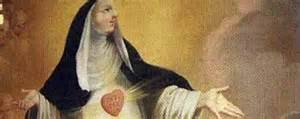
 Catherine was born into poverty and hunger following the devastation of war. Her father, an unemployed locksmith, became despondent and quarrelsome as so many do when they lose their livelihood. Her mother supported the family by weaving coarse cloth at home. Catherine and her brother grew up in an atmosphere that was absent the peace of Christ.



 The Order of Preachers, Independent
You must be logged in to post a comment.