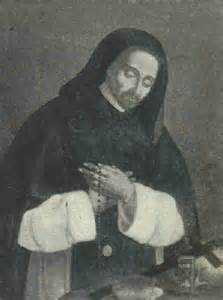
The Feast of Our Lady of the Rosary ~ Br. Shawn Gisewhite


Gospel:  Luke 10:17-24

In the Name of God; +Father, Son and Holy Spirit. Amen.

On October 7th, 1571, Pope Saint Pious V sent a coalition of Christian forces to rescue the Christian outposts in Cyprus that were taken by the Muslims.  This small group faced almost certain death when compared to the large Muslin Navy.   In response, the Pope called for all of Europe to pray the Rosary for their victory and led a Rosary procession in Rome.  After about 5 hours of intense sea battle, the Christian forces were able to stop the Ottoman Navy and prevent the Sultan from invading and capturing Rome.  This great victory was attributed to the Virgin Mary.  October 7th became the Feast of Our Lady of Victory, now known as Our Lady of the Rosary.

Although a simple string of beads used to help us count our prayers, the Rosary has long been a weapon against the forces of darkness and a shield of protection from harm.

The following inspiring episode from World War II, written by Sr. Mary Sheila O’Neil and reported in the October-December, 1979 issue of Garabandal Magazine illustrates the power of the Rosary:

It was a busy day in March. As a teacher-principal in the 1950’s, I had to make sure that each day provided the time for the two separate roles. On that March fourth, an incident between a teacher and a parent had kept me out of my class for almost an hour that morning, so for the rest of the day, I was desperately trying to make up class time. Hence, the knock on my door at 2:00 p.m. was not welcome.

With relief, I found it was only a salesman who needed my signature and even produced his pen. As he did so, his Rosary had caught onto the pen’s clip and came out as well. I signed as I said indifferently, “So, you are a Catholic.” “Oh no,” he said, “but a lot of us owe our lives to Our Lady, and I promised Her I would always keep my Rosary with me and say it every day.”

Twenty minutes later, I was still at the door listening, fascinated, to the account of one of the wonderful experiences a group of airmen had had with Our Lady. My visitor hesitated to start, for he had noticed my “non welcome” opening of the door. But eager now to hear his story, I assured him that the class was doing an exercise, and I begged him to proceed. He continued:

It was May, 1940, and we had joined the Air Force in late September. At Halifax, we were given an intensive training course, because they needed us overseas, and to us young lads, the whole program was exciting.

We were grouped into squadrons, each of which consisted of six to ten planes, and each was trained to maneuver as a unit. Therefore about thirty to fifty men made up a squadron, along with the squadron leader who gave all the orders and kept the group functioning in unity.

In May, our squadron was told we were going overseas and would be in action at once. We would work on nightly missions over enemy territory until the war was over. We were waiting for our new squadron leader, due to arrive in two days on a 9:00 p.m. air-force flight. Being an officer, he would, we thought, go at once to the officers’ quarters.

We watched the plane, glimpsed him from the distance, and resigned ourselves to waiting until the next day to “size him up.” A couple of hours later, this squadron leader, Stan Fulton, in full uniform, entered our bunk house.

“Well men, we’re going to spend some dangerous hours together, but let’s hope we all meet back here when it’s over. Ah, there’s a free bunk and I am tired! I’ll meet each of you tomorrow.”

With that, he threw his bag on an upper bunk. Our squadron leader, an officer, sleeping here with us! We liked him at once and our liking and our admiration grew each day.

That first night he knelt on the floor and prayed his Rosary in silence. Astounded, we were struck dumb. When he finished, he looked at us with his friendly smile and said, “I hope you guys don’t mind a fellow saying some prayers because where we’re going, we’re going to need them.”

The next day our maneuver practice, under his command, assured us that Fulton was not just our military leader, but our friend. He was one of us; he never tried to intimidate us with his rank.

That night, he repeated his prayer session. Although our group had trained together for six months at least, I had never seen anyone kneel in prayer, and had no idea that any of our group was Catholic; but the third night three of our companions joined Fulton in saying the Rosary. The rest of us did not understand but we kept a respectful silence.

A few nights later — we were quick learners — we all answered the Hail Marys and Our Fathers. Fulton looked pleased, and thus we ended each day in prayer.

On June 1, 1940, we were to leave Halifax to begin a series of night raids from England over Germany. The evening before, Fulton gave each of us a Rosary.

“We shall be in some tight situations, but then, if you agree, we’ll say the Rosary. If you will promise to keep the Rosary with you always throughout your life and to say it, I can promise you that Our Lady will bring you all back safe to Canada.”

We answered, “Sure thing.” Little did we dream we would be in action for four years, many times in dreadful danger with fire all around us. At such times, Fulton’s voice would ring through each plane, “Hail Mary…” How reverently and sincerely did we respond! How many hundreds of Rosaries we must have said.

After two years, it was noted that ours was the only squadron that had not lost a plane nor a single life. We said nothing, but we knew.

Finally, the terrible war was over. During those years, we lost all sense of excitement and adventure. All that concerned us was survival! We did survive, too. All returned to Canada in 1945, fully convinced that Our Lady had taken care of us.

So I never forget to keep my Rosary with me and say it every day although I am not a Catholic. When I change my trousers, the first thing I transfer, even before my wallet, is my rosary.

This Feast day is a special one for me as a Dominican.  Tradition holds that the Virgin Mary gave the Rosary to St. Dominic.  As a Dominican, my devotion to both Our Lady and the Rosary helps shape who I am as a Christian.

Today as I stand before you a newly ordained Priest in the Church of God, I can’t help but think of all I’ve been through. The hurdles that I had to jump. The mountains I had to climb. The fights I had to fight.  Life has not been easy up to this point and I suspect it won’t become any easier now that I have been set apart for service in the Church.

I first felt a call to ordained ministry as a small child…..a calling that I have strived to answer throughout most of my life.  No easy task!  A Bishop once told me that the closer I get to serving God and serving the Church, the more Satan will up his attacks on me.  At first I thought he was a little crazy, but it’s very true indeed.  Life has presented me with many challenges.  Challenges that most people would not be able to deal with.  How did I deal emotionally and spiritually with these many challenges?  Where did I turn for a spiritual booster shot?  To the Rosary!  Well, to my set of Anglican Prayer Beads to be exact, but don’t hold that against me.  LOL

Raised Anabaptist, worship aids such as prayer beads were seen as Romish and evil.  Prayers to Mary were idol worship.  I don’t know why, but I was always drawn to the use of prayer beads and to a deeper relationship with our Heavenly Queen.  I explain it as I did not choose her, rather she chose me!  Somehow she spoke to me.  Spoke to my heart in a way I can not begin to describe.  For the longest time, just like the pilot in the story earlier, all I did was carry those beads around with me.  I didn’t know how to use them for prayer.  I was too afraid to search how to pray the Rosary online for fear that my uber Protestant parents would spaz on me!  Although I never used them for prayer, those beads provided me with strength and with comfort.  It was as if the love of Mary and of her Son Jesus were in those beads and every time I clutched them in my hand it was as if I was being held in their loving embrace.

After my mother passed in 2011, my relationship with our Holy Mother grew stronger.  It was at that time I actually began to use my Rosary with the assigned prayers.  And oh what joy it brought to my soul!  Whenever I was sad, downtrodden, scared, stressed, worried, or lonely I turned to my Rosary for comfort and encouragement.  Through life’s many battles, this little string of beads helped me to win the victory; just as the Christian forces over the Muslim Navy.

In today’s Gospel the Lord tells his disciples that He has given them the power of the enemy.  I say this is true in the power of the Rosary.  A gift….a spiritual weapon against the forces of evil….given to us by the Mother of God.  Through our faith in Jesus, through the intercession of the most blessed Virgin Mary, through the power of the Rosary, we have power and dominion over the forces of darkness.

Amen.

Feast of the Guardian Angels~ The Rev. Dcn. Dollie Wilkinson, OPI

We often think of guardian angels as a special angel only for children, but the truth is that we all have a guardian angel for our entire lives. Our angels are a gift from God. They watch over us, aid us in prayer, enlighten us, guide us and protect us. Angels are mentioned in both the Old and New Testament and many saints have had visions of their guardian angels. We can hope that our Guardian Angel will help us during our journey to eternal happiness in Heaven. The Feast of the Guardian Angels is celebrated on October 2nd. Although Guardian Angels have been venerated since the early days of the Church, it wasn’t until the 17th century that Pope Clement X extended the feast day to the universal Church. It comes just two days after the Feast of the Archangels Gabriel, Michael, and Raphael.

On this Feast of the Guardian Angels in 2011, Pope Benedict XVI said,

Dear friends, the Lord is always near and active in human history, and follows us with the unique presence of His angels, that today the Church venerates as ‘Guardian,’ in other words those who minister God’s care for every man. From the beginning until death human life is surrounded by their constant protection.

It is an established Catholic belief that each individual person has their own guardian angel assigned to watch over their soul. There are three important verses in the Catholic Bible from which this belief is drawn:

Psalm 90:11: “For he shall give his angels charge over thee, to keep thee in all thy ways.”

Matthew 18:10: “See that ye despise not one of these little ones; for I say unto you, that in heaven their angels do always behold the face of my Father which is in heaven.”

Hebrews 1:14: “Are they not all ministering spirits, sent forth to do service for the sake of them that shall inherit salvation?”

These verses have led St. Jerome, one of our early Church Fathers, to conclude, “How great the dignity of the soul, since each one has from his birth an angel commissioned to guard it.” Many others wrote about our guardian angels, including St. John Chrysostom, St. Basil, and St. Thomas Aquinas. According to Aquinas, our guardian angels have a good influence over us, but they cannot control our free will. Guardian angels influence or guide us by acting upon our intellect through our senses and our imagination. When they do this, they are influencing our will to do good and avoid evil. So really, their job is to help you get to heaven. Thus guardian angels do not control us by any means, but they do greatly assist us in finding and doing God’s will. Our guardian angels are also able to protect us from danger as well as assist us in prayer and meditation on the divine things of God.

We don’t only have the Scriptures and the Early Fathers of the Church who tell us about our Guardian Angels. We also have the saints, some of which actually witnessed their guardian angel in action. In many cases their Guardian Angel was visible to them. These include St. Padre Pio, who could see his guardian angel, which would often send him on special missions; St. Faustina Kowalska, whose Guardian Angel accompanied her to observe the pains of the Holy Souls in Purgatory; and St. Gemma Galgani, to name a few. St. Gemma Galgani wrote much about her Guardian Angel in her autobiography, including this account:

One evening, when I was suffering more than usual, I was complaining to Jesus and telling him that I would not have prayed so much if I had known that He was not going to cure me, and I asked Him why I had to be sick this way. My angel answered me as follows: ‘If Jesus afflicts you in your body, it is always to purify you in your soul. Be good.’”

Ask yourself this question today: How is my relationship with my guardian angel? Do I listen to him? Do I say good morning to him in the morning? Do I ask him: Watch over me when I sleep?’ Do I speak with him? Do I ask his advice? He is by my side. We can answer this question today, each of us: How is our relationship with this angel that the Lord has sent to watch over me and accompany me on my journey, and who always sees the face of the Father who is in heaven?So, today is the day to tell your guardian angel “Thank You” for their daily guidance, and to show gratitude to God for assigning a powerful heavenly protector for your personal care. It is also a good time to make the resolution to pray to your Guardian Angel daily as our Holy Father admonishes us.

As St. Bernard of Clairvoux plainly states in his sermon:

“‘He has given his angels charge over you to guard you in all your ways’. These words should fill you with respect, inspire devotion and instill confidence; respect for the presence of angels, devotion because of their loving service, and confidence because of their protection. And so the angels are here; they are at your side, they are with you, present on your behalf. They are here to protect you and to serve you.

But even if it is God who has given them this charge, we must nonetheless be grateful to them for the great love with which they obey and come to help us in our great need. So let us be devoted and grateful to such great protectors; let us return their love and honor them as much as we can and should. Yet all our love and honor must go to Him, for it is from Him that they receive all that makes them worthy of our love and respect. Even though we are children and have a long, a very long and dangerous way to go, with such protectors what have we to fear? They who keep us in all our ways cannot be overpowered or led astray, much less lead us astray. They are always loyal, prudent, and powerful.

Guardian Angel Novena:

Loving God, you are so good that you gave me a Guardian Angel to protect my body and my soul. Help me to know and follow my angel so that, with their guidance, I will be worthy of being in Heaven with You!

My sweet Guardian Angel, you are my defender every day of my life. Protect me from sin and bodily harm. Help me to learn to defend and protect myself so that I can be the person that God is calling me to be.

You are with me all the time so you already know these my intentions that I ask you to deliver to the Lord. (Mention your intentions here…)

My guardian angel, my defender, protect me!

Amen.


Can’t We All Get Along? A How To Guide ~ The Rev. Dcn. Scott Brown, OPI

 
PHIL 2:1-5

Brothers and sisters:
If there is any encouragement in Christ,
any solace in love,
any participation in the Spirit,
any compassion and mercy,
complete my joy by being of the same mind, with the same love,
united in heart, thinking one thing.
Do nothing out of selfishness or out of vainglory;
rather, humbly regard others as more important than yourselves,
each looking out not for his own interests,
but also for those of others.

Have in you the same attitude
that is also in Christ Jesus.

Well you heard it here first, we are told to get along with each other, not fight bicker and quarrel. Lets give this a try and see what happens. I suspect that if everyone gave this a shot we could solve most all of the words problems quickly and easily.

When it comes to getting along with other Christians, the Bible doesn’t waste words. If we’re going to really get along, we’ll have to model the sacrifice of Christ.

We’re about to read a passage that uses the word “if” several times. This tiny Greek word, however, is synonymous with “since.” It’s a “conditional particle,” and it works like this. You might think, “If I’m going to church today, I’d better get out of bed and get dressed.” You’re really saying, “Since I’m going to church today and since the clock tells me I’m already 15 minutes late, I’d better get out of bed and get dressed for church.” Or even more realistic, “If I’m going to be happily married to my wife, I’d better take the garbage out today.” Since you probably want to be happily married, “if” is the same as “since.” And you can replace the word “if” with “since” in any of these opening statements from Philippians 2.

How can you practice unity in an imperfect church? How can it possibly work?

  1. Eliminate selfishness

What a powerful instruction: “Do nothing out of rivalry or conceit, but in humility consider others as more important than yourselves.” (2:3)

We live in a land that preaches a “Look-out-for-number-1” gospel. The climb up career ladder is so focused, business ethics are often left wanting. The entire nation suffers, at times, from selfish-driven, corporate stock market scandals. Countless individuals suffer in smaller offices, where some career ladders are placed squarely on the backs of fellow employees.

How opposite a message the church proclaims! Our greatest leaders are our greatest servants. We’ve even named our key lay-leaders – deacons – after the Greek word for “servants.” The “diakonos” in the Greek world was the lowest servant on the social totem pole.


  1. Be subject to Christ

There is more to getting along with one another than simply putting aside selfishness. We must all put aside our personal desires and personal standards, and reach for a higher mark. When we have “fellowship with” or are “united with” Christ (2:1), we find that higher standard. When we are united with Christ, we will be united with the Word of God. Having a sound theology, a sound understanding of what it is to follow Christ, is critically important.

Without a higher standard, each one of us is left to determine the standard of morality on our own. Another phrase for such a lifestyle might be “cultural anarchy,” since there would be no authoritative voice of truth. The church is the last point of reference for ultimate truth in any culture. Armed with the never-changing truth from the Bible, the church has been charged with proclaiming that message without apology.


III. Serve others

Instead of selfish ambition, there is humility (2:3). Instead of vain conceit, there is service to others (2:3-4). It all leads to unity in the entire church, for Christians who forsake selfishness, submit to the authority of Christ, and serve one another will be quickly “focusing on one goal.” (2:2).

What an unusual savior we have. He gave up everything to become nothing. The one who should have been served came to serve. We should have died for him, but he died for us. As a result of his willingness to serve, Jesus was exalted to the highest place in all of creation.

When Christians elect to serve others, they too are exalted. As Jesus promised, the first become last, but the last become first. The greatest leaders? Servants, all of them.

We already know that success and servanthood go hand in hand. Bill Gates became the richest man in America because he developed a software program of “windows” that turned the computer into a servant for millions of people. The most successful companies in America consistently put the customer first, with either their products, their services, their assistance, or both. If excellence in the business world is tied to servanthood, how much more so is it true in the church?

Heavenly Father, give us the ability to love one another, get along with each other, and forgive each other as you have commanded. Help us to put aside selfishness and serve each other as the deacons you desire us to be. Amen


The Feast of the Archangels ~ The Very Rev. Lady Sherwood, OPI

Feast of Sts Michael, Gabriel, and Raphael, Archangels.

R1: DN 7:9-10,13-14

or RV 12:7-12AB

R Psalm: PS 138:1-2AB, 2CDE-3,4-5

Gospel: JN 1: 47-51

Today we gather as a church to honour and commemorate the Feast of the Archangels, Michael, Gabriel and Raphael, the Archangels of God’s Heavenly Hosts. We only know the names of these three, even though there are believed to be seven Archangels if not more. Let us take a look at what we know from the Holy Scriptures about these three Archangels of God. As St. Michael is the Prince of the heavenly hosts, let us begin with him.

St Michael:

His name means “Who is like God”. (This is a rhetorical question, as obviously means nobody is like God as God is the highest there ever was or ever can be).

St. Michael is mentioned by his name in three books of Holy  Scripture:

In Daniel, he is described as “one of the chief princes” in the heavenly hierarchy (Dan. 10:13). He is also described to Daniel as “your prince” (Dan. 10:12). The meaning of this phrase is later clarified, and Michael is described as “the great prince who has charge of your people” (Dan. 12:1). He is thus depicted as the guardian angel of Israel. These same passages also refer to Michael doing battle against the spiritual forces at work against Israel.

In Jude 9, Michael is said to have contended with the devil over the body of Moses. On this occasion, we are told, “he did not presume to pronounce a reviling judgment upon him, but said, ‘The Lord rebuke you.’”

In Revelation, Michael and his angels are depicted fighting the devil and casting them out of heaven (Rev. 12:7-8). He is also commonly identified as the angel who binds the devil and seals him in the bottomless pit for a thousand years (Rev. 20:1-3), though the name “Michael” is not given on this occasion.

St. Gabriel:

His name means “God is my warrior” (meaning, essentially, “God is my defender”).

St. Gabriel is mentioned  in two books of Holy Scripture:

In Daniel, he is assigned to help Daniel understand the meaning of a vision he has seen (Dan. 8:16). Later, while Daniel is in a prolonged period of prayer, Gabriel comes to him (Dan. 9:21) and gives him the prophecy of “seventy weeks of years” concerning Israel’s future (Dan. 9:24-27).In Luke, he appears to Zechariah the priest and announces the conception and birth of John the Baptist (Luke 1:13-19). Later, he appears to the Virgin Mary and announces the conception and birth of Jesus Christ (Luke 1:26-33).

St. Raphael:

His name means “God heals.”

St. Raphael is mentioned in only book of Scripture: Tobit.

In Tobit, the blind Tobit and the maid Sarah, whose seven husbands have been killed by the demon Asmodeus, pray to God.

The prayer of both was heard in the presence of the glory of the great God. And Raphael was sent to heal the two of them: to scale away the white films of Tobit’s eyes; to give Sarah the daughter of Raguel in marriage to Tobias the son of Tobit, and to bind Asmodeus the evil demon, because Tobias was entitled to possess her (Tob. 3:16-17).

Raphael thus becomes a travelling companion of Tobias, posing as a relative named Azarias son of Ananias (Tob. 5:12). He eventually binds the demon, enabling Tobias to safely marry Sarah, and provides the means for Tobit to be healed of his blindness.

Afterward, he reveals his true identity, saying:

I am Raphael, one of the seven holy angels who present the prayers of the saints and enter into the presence of the glory of the Holy One (Tob. 12:15).

These Archangels serve the will of God by protecting , guarding and healing us at God’s request. God has ensured his children always have the full protection not only of God himself, but also from all the hosts of heaven. Our Father loves and protects his children, only ensuring all is best for them. Let us give our thanks and praise for the wonderful gift of His Archangels, and of all the hosts of heaven to our God and heavenly Father.

Let us end with the prayer of St Michael:

St. Michael the Archangel, defend us in battle.

Be our defense against the wickedness and snares of the Devil.

May God rebuke him, we humbly pray,

and do thou, O Prince of the heavenly hosts,

by the power of God, thrust into hell Satan, and all the evil spirits,

who prowl about the world

seeking the ruin of souls. Amen.


Blessed Lawrence of Ripafratta

One of the outstanding characters in the Dominican reform of the late fourteenth century was Blessed Lawrence of Ripafratta, who was novice-master of several saints and blesseds of our Order.

Lawrence was born in the fortified city of Ripafratta, in 1359. His noble family had the duty of guarding the outer defenses of the city of Pisa against the depredations of its powerful neighbor cities. It was a warlike place and time to come into the world, but Lawrence gave early evidence of being a man of peace. At the age of twenty, after innocent and promising youth, he entered the convent of Saint Catherine, in Pisa. He made rapid progress, both in prayer and in study, and busied himself with the works of the Order for several years before being called upon to help in the reform movement that was headed by Blessed John Dominici.

In 1402, Lawrence was made novice-master in the novitiate of the reformed congregation of Tuscany, in Cortona. Here the novices were to be trained in the primitive rigor of the Order, in an attempt to by-pass the destructive elements of the past half century, which had reduced religious observance to an alarming state of indifference. Plague and schism had taken toll both in numbers and quality of the religious orders, and the remaining houses were living under a relaxed observance of the rule, in a struggle for survival. John Dominici, under the inspiration of Raymond of Capua, felt that the time had come to tighten up the observance once more and return to the first practices of penance and silence. His suggestions were not popular among those who lived in the relaxed convents. The only alternative was to begin again, with a new novitiate, and hope that the idea would take hold gradually and effect internal reform among the other houses.

Excellent novices soon made their appearances at Cortona: Saint Antoninus and Blessed Peter Capucci, and the artist brothers, Fra Angelico and Fra Benedetto. Several others who were to attain fame in the order came under Lawrence’s influence and were shaped by him and to saintly and useful members of the apostolate, not all in the same fashion- Saint Antoninus was to become Archbishop of Florence, Fra Angelico and his brother made San Marco world famous for its art. Blessed Lawrence is, indeed, an interesting study; a severe and exacting man when it came to keeping the rule, a man of broad vision and great resourcefulness in carrying out the work of preaching. He was obviously not at all afraid of talented people going astray if they were allowed to use their talents for God, and he displayed great insight into the development of each of his novices as individuals.

Eventually, Blessed Lawrence was appointed vicar-general of the reformed congregation and moved to the convent of St. Dominic of Pistoia. Here he preached almost continually, and had a reputation for compassion to the poor whom he tended, taught and visited, even in time of plague.

Lawrence of Ripafratta lived to be ninety-eight, and in his old age we have a touching picture of his novices-now men of distinction and authority- coming back to consult him about this or that detail of their work. He wrote often to St. Antoninus, perhaps feeling that being archbishop of Florence was a job with many worries.

Lawrence of Ripafratta died in 1457, and was beatified, after a long history of miracles at his tomb in 1851.

Born: in Ripafratta in 1359

Died: He died at Pistoia in his 98th year in 1457

Beatified: Pope Gregory XVI confirmed his cult in 1851


Blessed Dalmatius Moner

This Dominican Blessed, who was noted particularly for his observance of poverty, lived in the early years of the Order and helped to establish the high reputation of the Spanish religious.

Blessed Dalmatius was born in Aragon, in 1291, and we know nothing else about his life before he entered the Order. He was a member of the province of Aragon and gave a perfect example of strict observance of the rule and the spirit of religious detachment from things of earth. All that we know about him, are a few anecdotes, none of which can be fixed with certainty as to date or place.

We read that his spirit of poverty was so extreme that he never wore a habit or cappa that was not in tatters. He picked up his wardrobe from the cast-offs of his brethren, and, since the spirit of poverty was quite rigid in this providence, the cast-off clothes must have looked a sight. Dalmatius seemed to make a virtue of this, since all the records we have make mention of it. As to food, he never ate fish or eggs, and lived on a diet of hard bread and unseasoned vegetables, to which he added a few ashes during Lent. The beds in the house were hard enough for most people, but not for him. He slept on the bare earth when he could not get into the church to pray and take an occasional nap, his head rested on the altar step.

Dalamtius is credited with several miracles, which included healing and spiritual assistance. At one time, a novice was tempted to leave the Order. Dalmatius, going about it without being told, sought out the novice and solved his difficulties. At another time, a mother whose small child had a serious eye disease came looking for Dalmatius to heal her child. The friar refused, because, he said, this affliction would save her child from serious sin, and that God was waiting till some time in the future to heal him.

During the last forty years of his life, Dalmatius lived in the cave of Saint Mary Magdalene, in the south of France, where he had gone on a pilgrimage of devotion. Here he was favored with numerous ecstasies and great spiritual insight. One time, while he was in the cave, a group of friars from his own province where lost in the woods in a bad storm. They prayed to him to help them, and a young man came with a lantern and guided them home.

Dalmatius died in his own convent in the presence of all the friars and provincials who had gathered for a chapter. He was declared blessed in 1721.

Born: in 1291 near Gerona in Spain

Died: 1341

Beatified: Pope Innocent XIII confirmed his cult in 1721

Equal Work/Equal Pay? Grace and Mercy ~ The Very Rev. Lady Sherwood, OPI

Reading 1: IS 55:6-9
R Psalm: PS 145: 2-3, 8-9,17-18
Reading 2: PHIL 1: 20C-24, 27A
Gospel: MT 20:1-16A

If we look at today’s Gospel reading of MT 20:1-16A, Jesus is telling us about the Parable of the labourers in the vineyard. This was in response to the question asked by Peter in MT 19:27: “We have left everything to follow you! What then will there be for us?” Peter was asking Jesus what reward would be given to those who give up everything in their lives to follow him. Today’s Gospel reading is the response about the truth of His Kingdom.

As you can imagine, working in a vineyard, especially in first century Israel would’ve been extremely hard toil in the heat of the summer and often extra workers were taken on to ensure the work was done. We read in the the Parable today that Jesus is telling us that some of the labourers who had toiled all day, were paid the same as those who were called maybe to work only the last hour of the day.

There was envy and anger about this as the workers who had toiled all day thought they would be paid more. So why did the landowner decide to pay the full day wage to all regardless of when they started work and what is this telling us in our christian lives today?

The landowner was being fair, keeping his promise of reward and was showing mercy to the other workers.
Our Lord God has fairness, keeps his promise and has mercy. God gives his grace and mercy abundantly upon those of his choosing. “For he says to Moses, “I will have mercy on whom I have mercy, and I will have compassion on whom I have compassion’. It does not, therefore, depend on men’s desire or effort, but on God’s mercy” (ROM 9:15-16).
God gives His grace and mercy to those whose self-righteous works could not possibly obtain it. “We are all sinful and fall short of the glory of God” (ROM 3:23), but God’s grace is sufficient to redeem all who believe and serve his ways.

It matters not whether we are called into the Lord’s service either early or later in life to partake of His grace. The glory and praise of our salvation is His and His alone.
As Christians and children of God, we should rejoice in the service which others give to our Lord. He is faithful and will reward us as he has promised.

The message we are being given in verse 16 today, “The last will be first, and the first last,” is telling us that no matter at what stage in life we are called to His service, the reward of eternal life and salvation will be given to all who follow and serve Him. An example of this is the thief on the cross in (LK 23:39-43), whose life was limited to a moment of repentance and confession of faith to our dear Lord Jesus, and he received the same reward of eternal life as given to all the Apostles and saints.
Eternal life shall be granted to all who serve, confess their faith and who follow the ways of the Lord. This is given by the grace and mercy of our Lord and God because of his promise to all who truly serve him. This is the important message that still holds true and is relevant to our lives today.

Mark was born in Modena and entered the convent of the order there in young manhood. He observed the rules with great fidelity, and became noted both for his learning and his holiness, which is a sentence that would fit into nearly every Dominican biography written, and tells us nothing in particular about Mark as a person. However, when we recall the times in which he lived , it becomes clearer to us that anyone who kept the Dominican Rule in its entirety is truly to our notice . The abuses which stirred Savonarola to thundering speech in the pulpits of Ferrara and Florence could not have been absent from all of Italy. It look solid virtue to hold out against the opulent worldliness of the times, and Mark of Modena apparently did a thorough job of it, since he has been beatified.

Mark was made prior of the convent of Pesaro, and the only miracle we have on record (he is supposed to have performed many) took place at his convent. A woman’s little boy had died, and she pleaded with Mark to restore the child’s life. After praying for awhile, Mark turned to her and said, “Madam, your little boy is in paradise. Do not try to get him back again, for his second loss will be worse than this one.” However, she insisted on his working the miracle, and he did so. The child returned to life, and, ten years later, covered with disgrace and opprobrium, died a second time, leaving his mother in worse grief than ever.

Mark of Modena died in 1498, the year that the city of Florence burned Savonarola at the stake. It was a time of terrible happenings in Italy and all Europe. The people of Modena mourned the death of Mark, and went to pray at his tomb. Many of their needs were answered there, and a number of prodigies were reported in connection with the translation of his relics to the Rosary chapel of the church. The bells were said to have rung by themselves, and sweet perfume filled the air. Until recently, his relics were still exposed yearly for veneration during the week of Whitsunday.

Born: in Modena at the beginning of the 15th century

Died: in at Pesaro in 1498

Beatified: by Pope Pius IX in 1857

Continue reading

Hospitality: The Feast of St. Matthew ~ The Very Rev. Lady Sherwood, OPI

Reading 1:EPH 4:1=7,11=13

R Psalm: PS 19:2=3,4=5

Gospel: MT 9:9=13

Today we commemorate the Feast of St Matthew the Apostle.

Today’s Gospel reading of the call of Matthew to follow Jesus is fascinating and we can learn much from it that is very applicable to our lives today.

If we look at verse 9, Jesus is walking along when he comes to a tax collector named Matthew who was sat doing his job. Jesus gives him an invitation “to follow him”, and without even a second thought, gets up and immediately follows Jesus. A simple call and a simple and immediate response. There was something in that moment that motivated Matthew to follow Jesus. We don’t know what this was, but we do know that Jesus called and Matthew immediately answered that call.

As the story in today’s Gospel reading unfolds, there is a main point which I feel is very important. This being the Hospitality of Jesus. If we look at verse 10, Jesus was sat having dinner with his disciples and many tax collectors and sinners arrived and we’re welcomed and joined in this dinner. The lesson from this is that Our Lord Jesus is comfortably at home with sinners and with outcasts on all levels and offers all his hospitality.

This is an extremely important message and lesson to each of us, because it clearly shows that Jesus shares his hospitality with us regardless of who we are, of messes and failures we have made in our past or indeed our present circumstances. Jesus does not judge us nor condemns us, he shares himself with us and also invites us to share with him.

Hospitality and love is at the very heart of God’s relationship with us=an essential spiritual gift for any church and every child of God who wants to reflect God in the local community and even thoughout the world.

God in Jesus invited those on the margins of life without judgement and in the same way, we as children and servants of God are to invite people into the home of both our church and our lives also without judgement, following Our Lord’s example, so that we can share hospitality with them and encourage them to partake in the hospitality of Jesus by sharing themselves with us.

Our God is an hospitable God of love=and we as both his church and his children should ensure just as Jesus did, that everyone feels welcome and unturned. Too many churches and Christians sadly only have a tendency to mix with their own kind, or pass judgement on others, making them unwelcome, but Our Lord Jesus’ approach is the exact opposite to this and our approach should mirror the example of Jesus. Some churches and Christians only welcome other others on “conditions” =that they will change their behaviours to fit in with their expectations, for example: “You are welcome at our table =as long as you change and play by our rules”. But the hospitality that Jesus shows is radically different and is how we should be.

Jesus loves everyone, and nobody is asked to change to fulfill expectations and rules at his table. This is truly how we as servants of the Lord should be, following His example and not mankind’s prejudices and rules. We ought to be showing the same the same hospitality, love and acceptance just as our dear Lord Jesus does.

May the Lord bless you on this feast of St Matthew.


Blessed Francis Posadas

Few Dominicans have had more difficulty getting into the Order than Blessed Francis de Posadas, and he was one of the glories of the convent of the Scala Coeli, in Cordova. It is embarrassing for us to read that the reason for his exclusion was plain and simple snobbery on the part of the superiors of the convent of St. Paul, in Cordova.

Francis was born of a poor young couple who were war refugees, and who had been shunted from place to place until, when Francis was very small, his father’s health failed, and he died in Cordova. The young widow tried several types of work, and finally she was reduced to selling eggs and vegetables at a street stand. She tried to educate her child, for she knew he was very talented, but, without money, it simply was not possible to send him to school. She encourage him to go to the Dominican Church of St. Paul, and he served Mass there every morning from the time he was six or seven years old.

While he was still a very tiny child, he used to gather the other children together for rosary processions or other devotions. The smile of God seemed to rest upon him. For all his poverty, he was a very happy and attractive child, like by everyone; and he was a natural leader among his fellows. Twice during his childhood, he was miracuously saved from death. This fact and his undoubted piety, should have seemed sufficient reason for admitting him into a religious order. However, by the time Francis was old enough, there were two reasons to make his entry difficult: his mother had remarried, and the step-father would not permit him to enter. The Dominicans, moreover, would not have him. They said that they did not want the son of a street peddler.

Francis had friends in the Order, but the prior of the house he wished to enter took a violent dislike to him. It was several years before the young man could overcome the resistance of this man, who, having some influence with the provincial, was stubbornly determined that Francis should not be allowed to enter. Even when the fathers in the convent of Scala offered to take the boy and train him in Latin- so that he could qualify for clerical studies-the vindictive dislike of the prior followed him and almost prevented his acceptance.

Francis was finally accepted, made his novitiate, and gradually overcame all dislike and distrust by his charming manner and his unquestioned talents as student and preacher. After his ordination, he was sent out to preach, and he earned the reputation of being a second St, Vincent Ferrer. His talents as a preacher were rivaled only by his gifts as a confessor. He not only could read hearts and discover sins that had been willfully concealed, but sometimes he was called to one place or another by an interior spirit and shown someone badly in need of the sacraments.

Francis hated the thought of holding authority in the Order. When appointed prior of one of the convents, he remarked that he would much sooner be sentenced to the galleys. He twice refused a bishopric, and he skillfully eluded court honors.

Several remarkable conversions are credited to Francis Posadas. His last tears were a series of miracles wrought in the souls of his penitents. People followed him about to hear him preach, regarding him as a saint and miracle worker. One of his most noted converts was a woman more than one hundred years old- a Moor- with no intention of deserting Mohammedanism.

Francis of Posadas was the author of a number of books which he wrote to assist him in his apostolate. One was a life of St. Dominic. and several were biographies of other saintly people.

After a life filled with miracles, Francis died in 1713. Being forewarned of his death, he made private preparations, but to the last minute he was busy in the confessional before dying suddenly. By the time of his death, not only the Dominicans of Cordova, but the people of all Spain were happy to have him as a fellow countryman. He was beatified a century after his death, in 1818.

Born: Cordona in Spain in 1644

Died: In 1713 of natural causes

Beatified: He was declared Blessed by Pius VII in 1818