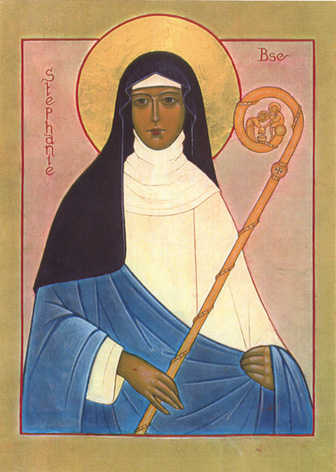
Born to pious parents in 1457 in Soncino, Italy, her father became a Dominican tertiary while Stephana was very young. She was taught the catechism by the stigmatic Blessed Matthew Carrieri who lived at the nearby Dominican convent. Even though she was too small to understand, he told her that she was to be his spiritual heiress. She began receiving visions of Dominican saints from age seven, at which point she made vows of poverty, chastity and obedience. Carrieri died when Stephana was 14, and soon after he appeared to her in a vision and she received the stigmata.
She became a Dominican tertiary at Soncino at age 15, and was devoted to caring for the poor and sick. She founded a community of Third Order sisters in Soncino, and served as its first abbess. Her counsel was sought by many, including Saint Angela Merici, Blessed Augustine of Biella, and Blessed Osanna of Mantua.
Although she had no formal theological training, she could discuss mystical theology at the most profound level. She could read the hearts and minds of the people around her, and had the gift of prophesy and healing. She lived in a nearly continuous fast, and inflicted severe penances on herself. Stephana accurately predicted the date of her own death. She died of natural causes on 2 January 1530, and was beatified 14 December 1740 by Pope Benedict XIV.
May the words of my mouth and the meditations of our hearts be always acceptable in your sight our rock and our redeemer. Amen.
Today is one of those interesting days in the lectionary where there are a lot of choices regarding the readings for Mass. As usual my message this morning is going to be on the gospel however I had to make a choice. Both of the reading options today focus on the same event in the life of Christ and are in fact from the same section of the Gospel of Luke; the difference is that one is 18 verses long and the other 3. I have chosen the latter for today and whilst it may be easy to assume I have done this to make my job easier that’s not the case. Rather, I want to focus on the core of the message today as it relates to the Feast of the Holy Family and I today I think that is better served by the short reading.
For those of you who haven’t heard or read the Gospel for today I’d like to share it with you (Luke 2:22; 39,40):
When the days were completed for their purification
according to the law of Moses,
they took him up to Jerusalem
to present him to the Lord.
When they had fulfilled all the prescriptions
of the law of the Lord,
they returned to Galilee,
to their own town of Nazareth.
The child grew and became strong, filled with wisdom;
and the favor of God was upon him.
As I already mentioned this is a very short reading, one of the shortest Gospel readings I’ve ever encountered for Mass; however in its short few verses it is full of such grace and a message that all of us with our own families should heed.
Throughout the history of the Church the Fathers and other believers have gone to a great effort to preserve for us the memory of the Blessed Virgin Mary and her role in the life of Christ, the Church and our Salvation. I have been asked many times by people outside of the Catholic faith why we do this, why we focus on the Blessed Virgin and why she is so important to us. For me the answer is rather simple, the Blessed Virgin was the first Christian, she was the first person upon the face of the Earth to welcome the mission of the Messiah who would be born of her womb. As such, her yes and her entire life are the perfect model for what it is to be a Christian. If we, as individual followers of Christ were to model our lives on that of the Blessed Mother we could be assured that we would be following the path laid out by Christ that leads to eternal life within the beatific vision. However, today, I want to take this one step further.
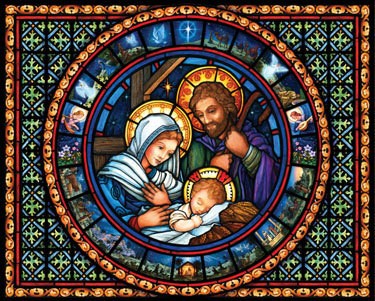
Since the dawn of time God has highlighted for us that we are made to be social beings; we humans are made to exist in units called families. Adam was not created alone to walk the Earth but was rather given a companion and this expanded into family life after the fall and the birth of Cain and Abel. And so it is with us today, and just as God has given us a great witness in Mary of the life we should lead as followers of Christ, so he has given us an example of what our lives as families following the Gospel path should be; the very Holy Family themselves, Jesus, Joseph and Mary.
Now I’m sure some of you are wondering why on earth I chose the short reading to highlight how the Holy Family is a model for us in our own family lives, it says so little. You’re right, when it comes to sheer volume of words the Gospel reading today doesn’t seem to say much at all. However, if we stop and contemplate the meaning behind the events recorded we can see clear message for how our lives as Christian families should be.
Firstly, the reading begins with Mary and Joseph taking Jesus to the Temple to be dedicated and for Mary to be purified. This tradition is something that continued throughout many of the branches of Catholic Christianity but has somewhat fallen by the wayside in the West. Traditionally 40 days after the birth of a child mother and baby would come to Church and receive special blessings. Now to many this may seem archaic and may imply that the mother was not clean and worthy without the blessing; however, this is far from the truth. Rather, this event marks a special witness to the joy that the congregation feels over the birth of another Christian soul; it gives them the opportunity to welcome mother and child with open living arms and gives the family the chance to welcome the Church and Christ into their newly expanded family.
So what can we take from this? What message and model do we see in these actions for ourselves? The Holy Family, by following the precepts of the Law of Moses show us that if each and every one of us are going to be followers of Christ we need to ensure that He is at the centre of our family. It is not the Father or the Mother, or the Children who should stand as the focus of family life but rather the redeemer. If we place Jesus and his precepts within the centre of our family life our family will be a happier and stronger place. Now this doesn’t need to mean that our every thought and word is only about Church or Jesus; rather it means that we should always make Christ a part of our daily lives. As a family we should pray together often, we should attend Mass or other worship services together and above all we should always be comfortable talking of Christ and our faith with each other. If we as families can do this, just like the Holy Family, we will be blessed in the sight of God and I’m sure we will be happier and healthier individually and corporately.
To me, the second half of the reading is a curious thing; it tells us that the Holy Family went home and that Jesus become strong, wise and found favour with God. So, does this mean that Jesus wasn’t always wise, strong and in God’s favour?
This is an interesting question as it would be easy to entertain these thoughts from these words. However, I think the Gospel writer had a deeper meaning in mind here. Right now we are in the middle of the celebration of Christmas, those twelve days where we celebrate the incarnation, God becoming man. And I think it is this that the Gospel is hinting at. These words don’t indicate the Jesus was a simple human who through growth and development became our redeemer, rather, I think it is being highlighted for us that though God himself descended from heaven in total perfection He still emptied himself and subjected himself to normal growth and development to witness to us that in Jesus we have a something unique, that we have a redeemer who is at once both totally God and totally man; this is the beauty and mystery of the incarnation.
So this Christmas Season as we contemplate the birth of the Christ Child and the mystery that is the incarnation I want us all to remember the importance of our families and the role that we play in the Church, in society and in fostering love. It is my humble and constant prayer that all Christian family will but Christ at their centre and foster a life of faith and devotion so that all may return to our Heavenly Father when this mortal life is through.
Let us pray:
Jesus, Mary and Joseph, in you we contemplate the splendour of true love, to you we turn with trust.
Holy Family of Nazareth, grant that our families too may be places of communion and prayer, authentic schools of the Gospel and small domestic Churches.
Holy Family of Nazareth, may families never again experience violence, rejection and division: may all who have been hurt or scandalized find ready comfort and healing.
Holy Family of Nazareth, may…[we ever be] mindful of the sacredness and inviolability of the family, and its beauty in God’s plan.
Jesus, Mary and Joseph, graciously hear our prayer. Amen.
In today’s Gospel we read about the presentation of the infant Jesus in the temple. The Holy Family faithfully carried out all the requirements of the law as they were a devout Jewish family. For the Jews the spilling of blood was a source of uncleanness and so, after giving birth, there had to be a ceremony of purification after a designated number of days. Sometimes the husband too went through a similar ceremony. According to the Mosaic law (Leviticus 12:2-8), a woman who gave birth to a boy was not allowed to touch anything sacred for 40 days (in the case of a baby girl, the period was even longer) nor could she enter the Temple precincts because of her impurity. At the end of this period, as mentioned by Luke, she was required to offer a year-old lamb as a burnt offering and a turtle dove or a young pigeon as an offering for sin. Those who could not afford the lamb could offer two birds instead. The parents also presented their first-born son as an offering to the Lord, again in accordance with Jewish law (Exodus 13:2,12).
Two elderly people, Simeon and Anna, are mentioned in the reading. Simeon had received a promise that he would not die until he had laid eyes on the Messiah. Simeon was one of those known as “The Quiet in the Land”, Jews who did not look for a military Messiah, and had no dreams of armies or power, but believed in a life of constant watchfulness and prayer until God should come. Simeon was righteous and devout and the Holy Spirit rested on him. Guided by the Spirit, Simeon arrives at the temple and receives the infant Jesus in his arms.
How lucky was Simeon to receive the Son of God in his arms. But aren’t we luckier than him? We receive the body and blood of Jesus each and every time we celebrate the Eucharist. Still, do we feel the same ecstatic joy when we receive Jesus within us? For some, receiving communion has become almost a mechanical act without bringing about any inner joy and transformation. We should praise God in gratefulness. Praise is actually a joyful form of prayer. Aren’t there many things in our lives for which we should thank and praise God? The answer is Yes! But sometimes we conveniently forget them. Myself included. There have been many times in my life where I have been pleased by the outcome of a particularly difficult situation and only later, sometimes much later, I remember to give God the glory and the thanks. But thanking Him should not be an after thought! We should remember to praise God at all times and in all places and to thank Him daily for the many blessings that he has bestowed upon us. Even when those blessings may be hard for us to see. As the song by Casting Crowns says, “I will praise you in this storm.” Even when beaten down by the hardships of life, always remember to praise God.
Simeon then blessed Mary and Joseph and said, “This child is destined for the falling and the rising of many in Israel, and to be a sign that will be opposed so that the inner thoughts of many will be revealed–and a sword will pierce your own soul too.” Mary and Joseph are astounded at what was being said about their child. But this prophesy of Simeon is not so sweet for them. Jesus bringing about the fall of people is a difficult and dangerous idea to come to terms with. We know what happened in history. To Mary he says a more painful prophesy: A sword will pierce your own soul.
The hardships began at the annunciation of Mary by the angel of God were not yet over. They continued and would reach the climax as she would take part in the sufferings of her beloved son. The true greatness of Mary is not in the privileges God bestowed on her, but in her readiness to accept unconditionally everything God asked of her.
How do we respond when God asks certain things of us in our lives? Many times our preoccupations make us say “No” or some conditional “Yes” to God. A little over a year ago, my wife and I were dealing with something that I pray no one else ever has to go through. At a time when I should have been strong in my faith and trusted fully in God, with the full knowledge that He would see me through the toughest time in my life, I found myself questioning my faith. Now I never questioned the existence of God or the life-giving blood of Christ shed of Cavalry, but I did question whether or not He was there for me in my hour (or I should say my almost 5 years) of need. In the midst of this lowest point in my life, God’s call for me to serve Him in His Holy Church became increasingly louder. To the level of almost deafening! I can not lie….I became pretty agitated. No, I became down right mad! Why? Because there I was, begging God to take the pain away. Begging for Him to use His power to take this chalice from me. Begging Him to spare me the emotional suffering I had to endure by no fault of my own. Yet, there He was….seemingly ignoring my cries for help. Not only that, but having the nerve to ask something of me. Did I answer “Yes?” Sure, in the long run. 5 years later! Instead of responding to God with a resounding “Yes,” trusting that all is in accordance with His plan, I gave a “No” followed by many conditional “Yeses.” When I finally let go, when I finally did as our most blessed Mother did and said “Yes” to God, that is when His blessings rained down upon me.
When we see God’s great interventions in our lives our eyes should be open to them in thankful amazement and our hearts should be raised in gratitude to the Lord. Just as Simeon was able to die after seeing the greatness and the Glory of God in the infant Jesus, so too was I able to die to my old sin nature after I beheld the Glory of the Lord. Be as Simeon and praise the Lord for all He has done and will do in your lives. Be as Mary and say “Yes” to God no matter how hard it may be to do so. In the end we shall hear God say, “Well done, my good and faithful servant!”
Imagine, if you will, that you are a young couple. Who, like most young people your age, find out that you are expecting your first child. Whether you have tried to have children, or this is an unexpected gift, doesn’t matter. Just the fact that you will soon welcome a blessed addition to your family, should fill you with joy. I have a niece who was told she would never have children, who now has not one, but two darling children. I can imagine the joy, and fear, this young mother must feel, watching her babies grow. All mothers feel joy when they have children, but there is also a pervasive fear. After the birth of my first daughter, I suffered a miscarriage. I was blessed to have another child, a daughter, just a couple years later. But I will always remember the loss of my second child, even if I never gazed upon his (or her) sweet face. This is a tragedy that wounds a mother deeply.
But there is another loss that is even more heart-breaking. I know my niece welcomes her children with gratitude and love. But sadly, one of these dear ones is a boy, who will be taken from her arms before his second birthday. Or he would have, if he had lived during the time of King Herod. Losing a child from miscarriage is hard. But to give birth to a child, then have this precious one snatched away from you, whether by illness, tragedy, or in the case of Jesus’ time, by the decree of a tyrannical king, is almost too terrible to imagine. Yet, it happened to many new parents of this time. Imagine my niece”s lil boy, instead of learning to walk and talk, is cruelly snatched from his home and sentenced to death.
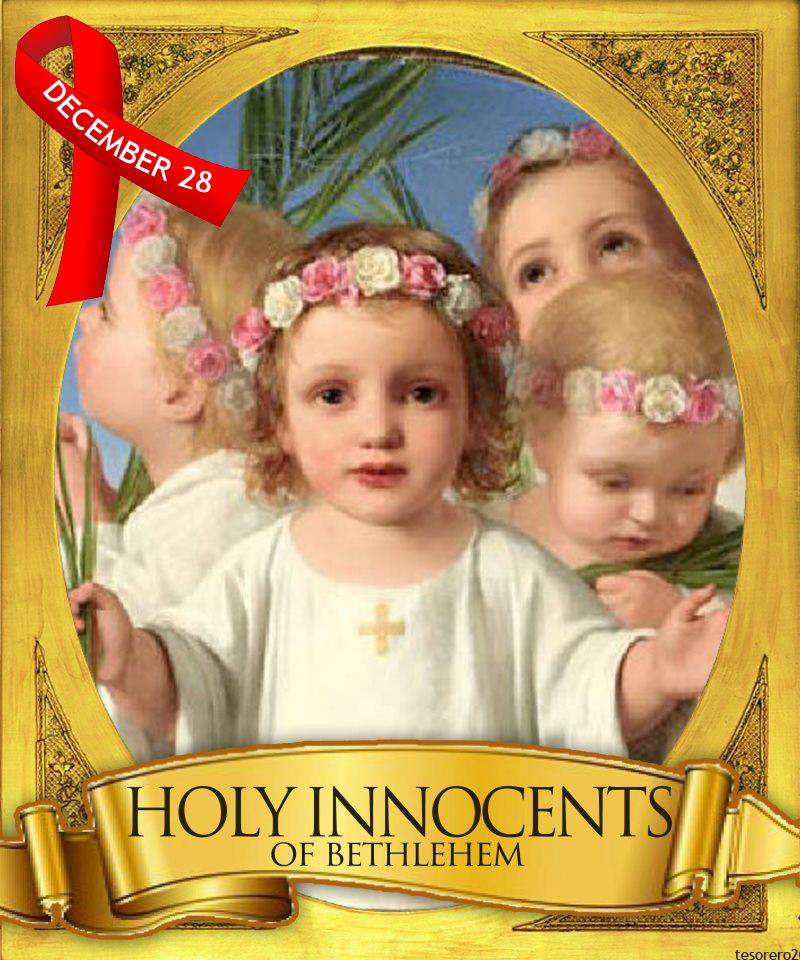
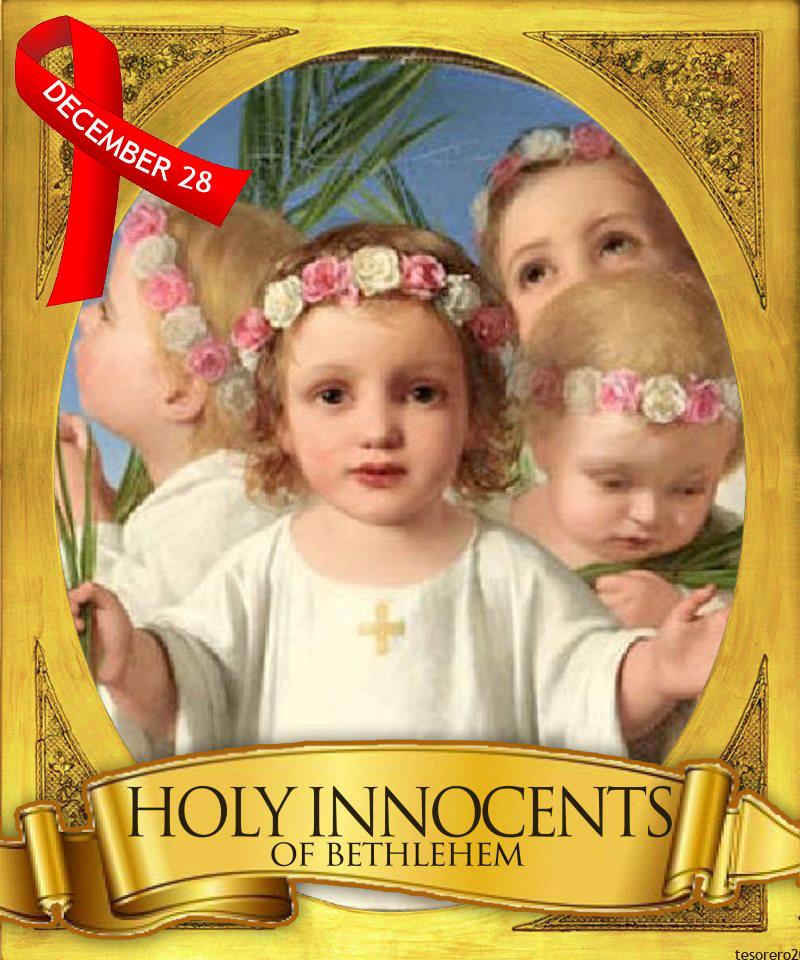
Today, December 28, we celebrate the birthday of those children who were slaughtered, as the Gospel tells us, by the very cruel king, Herod. According to Mathew 2:1-18, Herod was “greatly troubled” when astrologers from the east came asking the whereabouts of “the newborn king of the Jews,” whose star they had seen. They were told that the Jewish Scriptures named Bethlehem as the place where the Messiah would be born. Herod cunningly told them to report back to him so that he could also “do him homage.” The Magi found Jesus, offered him their gifts but warned by an angel, avoided Herod on their way home. As detailed in Matthew 2:16, King Herod then ordered all young boys in Bethlehem, who were two years old and under, to be executed in an attempt to kill the baby Jesus. However, an angel warned Jesus’ parents and they fled to safety in Egypt. .
“Then when Herod saw that he had been tricked by the magi, he became very enraged, and sent and slew all the male children who were in Bethlehem and all its vicinity, from two years old and under, according to the time which he had determined from the magi.”
Some believe that the children who were killed were the first Christian martyrs. Today, the Feast of the Holy Innocents is celebrated in churches worldwide. It is also called The Innocents’ Day or Childermas or Children’s Mass. We offer prayer for those innocent children who were slaughtered. By no fault of their own, by the fact that they were born male, and because a cruel man decided this must be done, these young souls were taken from their parents way too soon. I am thankful every single day for the blessed gift of my daughters. To have a child, whether boy or girl, but to then have someone decree they must be put to death, well I cannot imagine the heart break their parents must have experienced. Let us today, and always, remember these young children, the Holy Innocents.
“Blessed are you, Bethlehem in the land of Judah! You suffered the inhumanity of King Herod in the murder of your babes and thereby have become worthy to offer to the Lord a pure host of infants. In full right do we celebrate the heavenly birthday of these children whom the world caused to be born unto an eternally blessed life rather than that from their mothers’ womb, for they attained the grace of everlasting life before the enjoyment of the present. The precious death of any martyr deserves high praise because of his heroic confession; the death of these children is precious in the sight of God because of the beatitude they gained so quickly. For already at the beginning of their lives they pass on. The end of the present life is for them the beginning of glory. These then, whom Herod’s cruelty tore as sucklings from their mothers’ bosom, are justly hailed as “infant martyr flowers”; they were the Church’s first blossoms, matured by the frost of persecution during the cold winter of unbelief.
St. Augustine
A Prayer To The Holy Innocents.
Holy Innocents, you died before you were old enough to know what life means, pray for all children who die young that God may gather them into His loving arms.
Holy Innocents, you were killed because one man was filled with hatred, pray for those who hate that God may touch their hearts and fill them with love.
Holy Innocents, you experienced a violent death, pray for all who are affected by violence that they may find peace and love.
Holy Innocents, your parents grieved for you with deep and lasting sorrow, pray for all parents who have lost young children that God may wrap a warm blanket of comfort around them.
Holy Innocents, those around you certainly felt helpless to prevent your deaths, pray for all who feel helpless in their circumstances that they may cling to God for courage and hope.
Holy Innocents, you who are now in Heaven, pray for all of us that one day we may join you there to bask in God’s love forever.
Open our ears, O Lord, to hear your word and know your voice. Speak to our hearts and strengthen our wills that we may serve you now and always. Amen.
First let me start by wishing you all a very Merry Christmas season!
Every year when Christmas rolls around I realise how very easy at this time of the year to get caught up in the hype, the presents, the food, and the times spent with family and friends and to lose sight of what Christmas is really all about and its place in our faith life.
I am sure that when many of you read or heard today’s Gospel there was hint of confusion in your minds. Here we are two days after celebrating the birth of our Saviour and we are hearing about Christ’s resurrection. It doesn’t really appear to make total sense at first glance. However, if we take a moment to contemplate Christmas and what it means for us, remembering Christ’s death and resurrection at this time of year is not that strange.
Most of us have known from an early age that Christmas is that time of year when we celebrate the birth of a very special baby, Jesus, who was born as God’s son through a special lady called Mary. As children though, the meaning of this message is somewhat lost on us, and rightly so. The birth of that baby in Bethlehem holds a potent significance in the life of the whole human family. Though we are of course, celebrating the birth of the Christ Child there is a much deeper significance to the event.
What we are celebrating at this time of year is theologically termed the incarnation; in Christ we do not simply have a baby born in peculiar circumstances, we in fact have God Himself coming to the earth to dwell and walk amongst us. Does God come clothed in glory to enact His will upon the human family? No He comes as a meek and humble babe, born in a stable to a carpenter and his wife. And it is here that we can begin to see the reason for remembering the resurrection today.
This miraculous birth leaves us with one big burning question; why? Why on earth did God in His power and majesty choose to come and walk amongst us mortals? Theologians have written many volumes on this topic, but I like to put it rather simply; God became incarnate as Jesus so that He could die. Take a moment to think about that; from the moment of His birth the babe in the manger was walking towards Easter.
I have to admit that I didn’t always look at Christmas in this light, for most of my life I’ve looked at it as the joyous birth of our saviour; and well we should. However, for me, this event has become tinged with a different shade as the story of Christmas is the beginning of the story of Easter. From here all of the life of this little babe was preparing humanity for His ultimate sacrifice for us. And so it is that today we are reminded of that fact by the Gospel reading. We are reminded that this little babe has laid the first foot on the path to Calvary and through His great sacrifice will come the miracle of the resurrection which will open the way for fallen humanity to enter into a restored relationship with God.
If there is one thing that we can take away from today I hope it’s the realisation that Christmas draws its significance from Easter. Christmas isn’t the penultimate celebration of Christ in our Calendar, rather it is the start of the path that leads to the greatest event in human history; the resurrection of Christ. It is my hope and prayer that we can all take a moment today in this busy Christmas season to remember the sacrifice of Christ and all it meant for us and to that God for loving us so much that He came to walk the earth as a simple child so that we could return to His loving embrace.
Let us pray:
Dear God, help us to focus on you today, remembering that the gift of Christ, Immanuel, is our most treasured gift for the whole year through. Fill us with your joy and the peace of your Spirit. Direct our hearts and minds towards you. Thank you for your reminder that both in seasons of celebration and in seasons of brokenness, you’re still with us. You never leave us. Thank you for your daily Presence in our lives, that we can be assured your heart is towards us, your eyes are over us, and your ears are open to our prayers. Thank you that your surround us with favour as with a shield, we are safe in your care. We choose to press in close to you today… In the name of the Father, and of the Son and of the Holy Spirit. Amen.
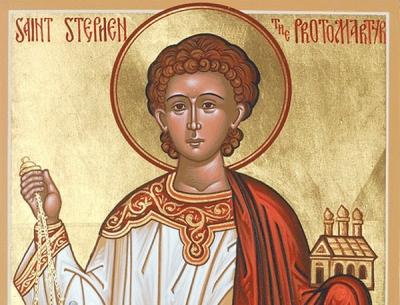
So now our Lord and Saviour is born! All the Turkey and trimmings have been eaten, and many people head to the stores, looking for the latest cheap bargains. Around the world, there will be people buying things in boxes. And so today we celebrate The Feast of St Stephen the Martyr, this also has the alternate name of ‘Boxing day’. Boxing day is not about shopping, it is a day where we give boxes of gifts and food to the poor and needy in our society. It is a day of showing the Lords love to the less fortunate. But what has all this talk about boxes got to do with today’s feast of St Stephen?
St. Stephen was called by the Apostles at the dawn of the church from among seven Greek men who were of good reputation, who were filled with Spirit and who had wisdom. They were the first Deacons of the Church. They oversaw the welfare of the members of the church, they gave care to the poor, for widows and for orphans. This is the link that I see with the true meaning of the alternative name of ‘Boxing day’, about giving care and welfare.
According to tradition, Stephen was a young man, most likely still in his teen years. He was full of grace and power. He performed many miracles amongst the people in the name of our Lord Jesus Christ. This however, did not go down well with those of senior rank in the temple court, and various synagogues would challenge Stephen with many debates and arguments, however, Stephen would always come out of them on top every time due to being filled with the wisdom of the Holy Spirit. This led to anger and before much time had passed, Stephen was charged with blasphemy, taken to the Sanhedrin to defend his case, which he did with great eloquence.
Stephen began with the promises given to Abraham and went all the way to the building of the temple during Solomon’s reign, before then directing his sights on the Sanhedrin itself. ‘How stubborn you are, heathen still at heart and deaf to the truth! You always fight against the Holy Spirit. Like Fathers like sons! Was there ever a Prophet your fathers did not prosecute? They killed those who foretold the coming of the righteous one, and now you have betrayed him and murdered him, you who have received the law as God’s angels gave it to you, and yet have not kept it! ‘ (Acts 7:51=53).
This led to a fit of anger and fury and the council dragged Stephen to the edge of the city to stone him to death, he had no true trial nor verdict. But Stephen still kept his faith until the finish, having a vision of the heavens being torn open with Jesus standing there at Gods right hand.
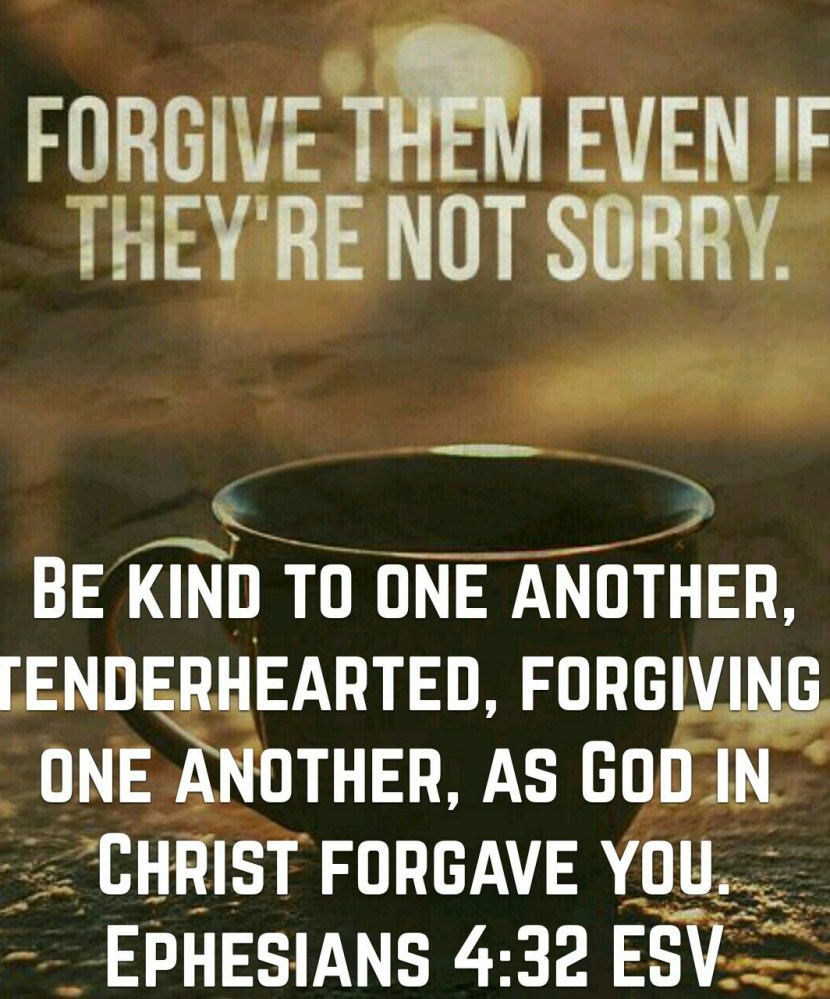
Stephen’s last mortal words were pleas to God for the forgiveness for his persecutors, that those sin would not be held against them. St Stephen is the Proto=Martyr, This is because he was the first victim of persecution of the church that is mentioned after the ascension of Jesus into heaven.
Life’s fulfilment =the eternal heavenly banquet rests squarely in God’s hands. This leaves us as children of God to love our neighbour, to care for this world, and to seek those things which make for peace, for joy, and for salvation. Stephen is such an excellent example for us to follow in our daily Christian lives, both in the way he cared for the poor and needy, and also by the way he forgave his persecutors and even prayed for them. May we strive to imitate the values in the life of St Stephen, for the glory of God within our own lives.
Let us pray:
Grant, Lord, we pray that we imitate the truth of the Christian life we lead following the example of St Stephen the Martyr, who we celebrate today. Mav we, as he did, love and care for the needy in our society in your ever=loving name and to your glory, and that also like St, Stephen, we can forgive and pray for forgiveness for all who may harm us. Through the Lord Jesus Christ, your Son, who lives and reigns with you in the unity of the Holy Spirit, one God, for ever and ever. Amen.
Some of you may remember a wonderful Tim Allen Christmas movie from the 90s called, The Santa Clause. I remember seeing it the first Christmas it came out and re-watching it as a Christmas staple several Christmases thereafter. The movie is a light-hearted comedy about the main character accidentally becoming the new Santa and all to the shock and delight of his child who, due to his mom’s new boyfriend, had lost his belief in Santa. From the very beginning of the movie the father, played by Tim Allen is questioned by the boy about all the different reasons why believing in Santa seemed irrational to him and the father’s response was, “Charlie, sometimes believing in something means… you just believe in it.” wanting to instill faith in his son that anything is possible if you believe.
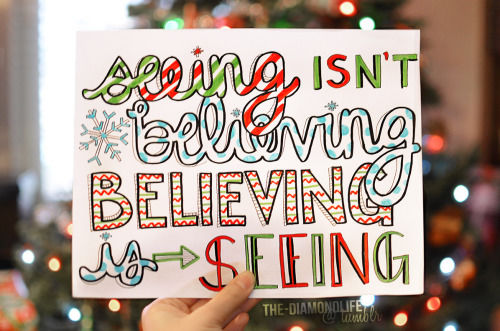
Later on in the movie the fathers own faith is tested when he arrives to the north pole and realizes that he indeed will be the new Santa, he questions an elf saying, “I see it but I don’t believe it.” to which the elf Judy responds, “You’re missing the point. Seeing isn’t believing, believing is seeing. Kids don’t have to see this place to know that it’s here, they just know.”
The whole underlying theme of the movie is that sometimes we get so wrapped up in our lives and what society teaches us as a reality, that we start to lose our faith and need to, ‘see to believe’. In today’s gospel, “Joseph [Mary’s] husband, since he was a righteous man, yet unwilling to expose [Mary] to shame, decided to divorce her quietly. Such was his intention when, behold, the angel of the Lord appeared to him in a dream and said, “Joseph, son of David, do not be afraid to take Mary your wife into your home. For it is through the Holy Spirit
that this child has been conceived in her.
She will bear a son and you are to name him Jesus, because he will save his people from their sins.”” like the elf Judy reminded Santa of his faith and duty to it, so did the angel of the lord to Joseph.
Often today not only in this season but in our lives of modernity, we forget that miracles are possible through faith if we are willing to believe and submit to God’s plan for us as Mary did so many years ago when she said to the angel Gabriel, “I am the Lord’s servant,… May it be to me as you have said.” Christmas is a time that we should remember and proclaim to others the awesome news that, “With man this [miracle] is impossible, but with God all things are possible.” and that our wonderful Father in heaven, “… God so loved the world that he gave his one and only Son, that whoever believes in him shall not perish but have eternal life.” This season is a time to reflect and be reminded of the literal birth of our salvation into the world.
On this wonderful vigil of the Nativity of our Lord, I ask that we not be like Charlie the questioning child or like Joseph the caring but doubting husband and rather that we chose this Christmas season to believe that Christmas miracles do exist and that we don’t have to see them to know that they exist. Sometimes we just have to trust in ourselves and in our faith and instead of questioning or trying to figure out the will of God, we should just submit to it, understanding that if we only believe he will provide for us what we need because he loved us enough to let his only son who was born on this very eve die to save us so that we can one day be reunited with him and all his saints in his heavenly kingdom. So as we embark into the Christmas celebrations just remember, “Seeing isn’t believing, believing is seeing.”
God, the one who loved us enough to give up your only son;
God the Holy Spirit who brought us the Word which became flesh and dwelt among us through your humble servant Mary,
and God the son who was born on this day to save us from our trespasses;
We ask that on this day of your nativity,
you grant us the hearts to believe without being witnesses to the event but knowing that it and its message is the truth of this season. May we each be witnesses to the Miracle of Christmas and bless others as you have blessed us.
In the name of the Father, the Son, and the Holy Spirit.
8And there were in the same country shepherds abiding in the field, keeping watch over their flock by night. 9And, lo, the angel of the Lord came upon them, and the glory of the Lord shone round about them: and they were sore afraid.
10And the angel said unto them, Fear not: for, behold, I bring you good tidings of great joy, which shall be to all people. 11For unto you is born this day in the city of David a Saviour, which is Christ the Lord.
12And this shall be a sign unto you; Ye shall find the babe wrapped in swaddling clothes, lying in a manger. 13And suddenly there was with the angel a multitude of the heavenly host praising God, and saying,
14Glory to God in the highest, and on earth peace, good will toward men.
15And it came to pass, as the angels were gone away from them into heaven, the shepherds said one to another, Let us now go even unto Bethlehem, and see this thing which is come to pass, which the Lord hath made known unto us. 16And they came with haste, and found Mary, and Joseph, and the babe lying in a manger.
17And when they had seen it, they made known abroad the saying which was told them concerning this child. 18And all they that heard it wondered at those things which were told them by the shepherds.
19But Mary kept all these things, and pondered them in her heart. 20And the shepherds returned, glorifying and praising God for all the things that they had heard and seen, as it was told unto them. Luke 2:8-20 King James Version (KJV)
After 2000 years of Christmas sermons, in hundreds of languages, in different countries throughout the world, and by way of innumerable faith traditions, is there anything new or original left to be said about Christmas, and what it means, that hasn’t been said before? Perhaps not. However, like re-reading that favorite book for the 17th time, or watching that favorite movie or television show for the 358th time, even when you know exactly what comes next, what the very next word is going to be, often we find a new meaning or a new slant on something that is as tried and true as Christmas itself.
And so it is with me this year. This Gospel reading recalls the story of the angels bringing the news of Christ’s birth to the shepherds. Now, we all know that story. We’ve heard it many times over, and those of us who cherish “A Charlie Brown Christmas” will always, in some ways, hear Linus quoting from Luke, no matter who is reading that passage of the Bible to us. We know the story. We SEE the story in every Nativity scene we pass by. There is almost always a shepherd near the manger carrying a lamb on his shoulders and another lamb or sheep to be seen somewhere hanging around. It’s always seemed to me that the sheep and the shepherds were just THERE, minor players in a Christmas play, the “extras” assigned to the kids who didn’t quite measure up to the roles of Mary or Joseph; they enter stage left, ooh and aah over the baby, and exit stage right, singing “Go tell it on the mountain”, singularly unimportant and taking secondary roles to the more illustrious wise men (who in reality weren’t there at all) and most definitely playing supporting roles to the Holy Family, or just standing around as so much scenery, contributing to the mood and filling up the bare spots in the Nativity scene. I overheard a conversation recently that made me really think about the shepherds. While visiting some friends, their cat jumped into the midst of the family crèche and knocked over the obligatory shepherd. It was chipped. The younger daughter of the family was somewhat distressed, and to make the little girl feel better, the mother said to her, “Don’t worry about it, Honey. It’s just the shepherd. He’s not all that important.” I didn’t think much about it at the time, but when reading the Scripture appointed for today, it struck me. Not all that important? But weren’t they? Who WERE these shepherds? Why were they there in the first place? Why did THEY get the news of Christ’s birth in such a spectacular way? Who were they that they should be eyewitnesses of God’s glory and receive history’s greatest birth announcement?
In Christ’s day, shepherds stood on the bottom rung of the Palestinian social ladder. They shared the same unenviable status as tax collectors and dung sweepers. Only Luke mentions them. When the twelve tribes of Israel migrated to Egypt, they encountered a lifestyle foreign to them. The Egyptians were agriculturalists. As farmers, they despised shepherding because sheep and goats meant death to crops. Battles between farmers and shepherds are as old as they are fierce. The first murder in history erupted from a farmer’s resentment of a shepherd. Smug religious leaders maintained a strict caste system at the expense of shepherds and other common folk. Shepherds were officially labeled “sinners”—a technical term for a class of despised people.
Into this social context of religious snobbery and class prejudice, God’s Son stepped forth. How surprising and significant that God the Father handpicked lowly, unpretentious shepherds to be the first to hear the joyous news: “It’s a boy, and He’s the Messiah!” What an affront to the religious leaders who were so conspicuously absent from the divine mailing list. Even from birth, Christ moved among the lowly. It was the sinners, not the self-righteous, He came to save. So is it really all that surprising that the first announcement of Christ’s birth was to the lowly shepherds on Bethlehem’s hillsides?
Consider the events leading up to Christ’s birth. Mary was barely 15. Christ was born to an unwed mother, Mary, a servant girl; Mary the young woman who delivered while only betrothed to Joseph. He was born in a stable, a cave! A holy God being born to a couple no different than immigrants, far from home and in a strange city, in a place where animals were kept. A couple who couldn’t even find a place to stay, turned out of every inn! It’s all too bizarre.
Yet this is the God we experience. This is our claim; This is the meaning of his very name: Immanuel, meaning “God with us” — with us not just in nice times, but most especially in the times of our lives when we are in the caves, and stables of our lives, when we are turned out of the places we’d like to be, when we are at the lowest of low points, when we are out in the dark, and in the cold like the shepherds.
Our God, the God who comes to us in the person of Jesus Christ, is the God of the oppressed, the repressed, the depressed; the God of the sad, the grieving, the sorrowful; the God of the lonely, the lowly, the poor, the God of the Shepherds; the God of the despised, the destitute, the dejected. Our God is the God of Abraham, Isaac, and Jacob, the God who stood with the enslaved Hebrews in Egypt, who led them out of Egypt to a promised land of freedom. Our God is the God of widows and orphans and stranded travelers. Our God is the God who doesn’t stay neat and tidy and spotless, but comes and stands beside us in our times of deepest need, who comes among us as the child in the dirty manger and the God of the shepherds on the hillside. The God we’re speaking of dares to join the unsuccessful, the failures, the dispossessed, and the downtrodden; the God of the Shepherds.
Wherever there is suffering, our God is there. He stands with Zacchaeus, the despised tax collector, and with Bartimaeus, the blind beggar. He is with us when we face cancer, chemotherapy, and radiation treatments. He is with us when we face amputations, operations, loneliness, the loss of a loved one, or even death itself. The God of the manger and the Shepherd is Immanuel, God with us. At our deepest times of loss and need, in the dirtiest and most embarrassing parts of our lives, God is with us, His rod and His staff, they comfort us. It is God who glues us back together when we become, like that figure in my friends’ Nativity scene, chipped, flawed, and much less than perfect.
And it is up to us, to demonstrate the love of God, the God of the lowly, the downtrodden, to the world. We, like the shepherds in the Christmas story, are to be the ones who are to proclaim the good news “which shall be to all people” to all the people of the world. It is our responsibility as Christians to be the instruments through which God can work in this world. As was most famously stated more than four centuries ago by Saint Theresa of Avila:
Christ has no body but yours,
no hands, no feet on earth but yours,
Yours are the eyes with which he looks with compassion on this world,
Yours are the feet with which he walks to do good,
Yours are the hands, with which he blesses all the world.
Yours are the hands, yours are the feet,
Yours are the eyes, you are his body.
Christ has no body now but yours, no hands, no feet on earth but yours,
Yours are the eyes with which he looks with compassion on this world.
Christ has no body now on earth but yours.
My very favorite Christmas carol, “In the Bleak Midwinter,” includes the lines, “What, then, shall I bring him, empty as I am? If I were a shepherd, I would bring a lamb. If I were a wise man I would do my part. What can I give Him? I can give Him my heart.”
Won’t you, this Christmas, give Him your heart? Won’t you, like the shepherds in the children’s plays of the Christmas story, be one to “go tell it on the mountain, over the fields and everywhere” that Jesus Christ is born? Amen.
Today we come together to celebrate the Third Sunday of Advent, also called ‘Gaudette Sunday’. This is when we come together to REJOICE as we await in hope and anticipation the coming of our Saviour. ‘Gaudette’ originally comes from the vulgate translation (Phil 4:4) of ‘Gaudette in Domino Semper’, and which means “Rejoice in the Lord always”, and as such the theme we focus on today is Rejoicing and joy!
We are half way through our observance of Advent and we REJOICE because we know that the coming of our Lord and Saviour is now less than two weeks away. Today we light the Rose/pink candle on our advent wreaths to signify and to remind us that this a time to REJOICE.
In our Liturgy of the Word today, we clearly hear St Paul (in the conclusion of his first letter to the Thessalonians), telling us important Do’s and Don’ts, let us look at these:
Do: “REJOICE always. PRAY without ceasing. In all circumstances GIVE THANKS.
Dont’:” Do not quench the Spirit. Do not despise Prophetic utterances.”
Our Liturgy and Holy scriptures today are all about REJOICING!!
This can be seen both in the message of the Prophet Isaiah (today’s first reading), and also in our Holy Gospel reading today of St. John the Baptist, and also of St. Paul, to remind us of the ever presence among us of the One Lord, the one and true source of our Joy: Jesus Christ!!
We all know how very easy it can be among all the hustle and bustle of the preparations of our Christmas celebrations to forget to recognise that Jesus is present and in the midst and indeed is the true reason for our Christmas preparations and celebration. This is why today is so important. It is an invite to us and for us to REJOICE always, to PRAY without ceasing, and to GIVE THANKS!! Why is this important? Because we have SEEN THE Light and we truly recognise Christ’s presence among us.
Let us not be mistaken, Jesus is NOT only present in the Baby of Bethlehem born of Mary; NOT only present as the crucified Lord nailed to the cross dying for our sins; NOT only present as the Risen Lord outside the empty tomb on Easter Sunday, nor only with the Apostles in that upper room on Easter Sunday night.
The Risen Lord Jesus Christ, Our Lord and Saviour, truly IS PRESENT, among us, yes, right here and right NOW, speaking to our hearts and Spirit through the Holy scriptures, and giving himself to us ALWAYS in the Holy Eucharist which we share.
May we truly REJOICE! May the blessing told to us by St. Paul (second reading), truly be a blessing to each and every one of us, as we continue our Advent journey and preparation for the coming of Our Lord and Saviour: ” May the God of peace make us perfectly holy: and may we entirely=Spirit, soul and body =be preserved blameless for the coming of Our Lord Jesus Christ.”
Let us pray with joy and rejoicing in our hearts:
O God, who sees how your people faithfully await the feast of the Lord’s Nativity, enable us, we pray, to attain the joys of so great a salvation and to celebrate them always with solemn worship and glad rejoicing.
Through Our Lord Jesus Christ, your Son, who lives and reigns with you in the unity of the Holy Spirit, one God, for ever and ever. Amen.
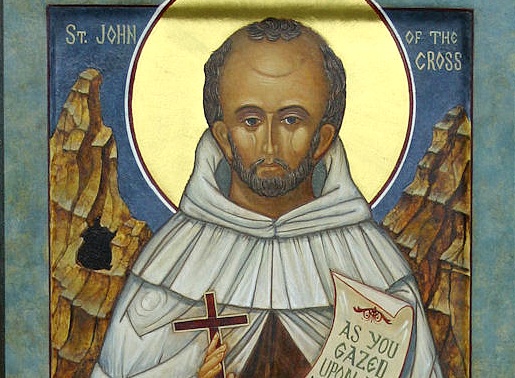
St. John of the Cross, born Juan de Yepes y Alvarez, in Spain in 1542, was a Spanish mystic, Carmelite Friar, influential poet and major figure of the Counter Reformation. He was educated in Biblical Studies, Theology and Philosophy and chose at an early age to pursue a Religious calling. In 1563 he joined the Carmelite Order and was ordained a Priest in 1567.
St. John of the Cross was a follower of Theresa of Avila. He later became her Priest Confessor. He and Theresa were on a mission to reform the Carmelite Order. To restore the Order to the more strict observance that earlier followers were required to adhere to. Because of these waves of reform, St. John was kidnapped and held in prison in a cell barely large enough for him to lay down in. He was fed bread and water and his only possessions were a prayer book and an oil lamp to read it by. He was taken out into the town square once a week where he was publicly whipped and then returned to his tiny cell. Through all of this, his faith remained strong and he found solace in writing poetry. After 9 months, John managed to escape from prison and rejoined Theresa and her Nuns in Toledo. He spent the remainder of his life traveling and establishing new Carmelite Houses throughout Spain until his death in 1591.
As we read and reflect on the life, ministry and death of St. John of the Cross, we can’t but help to see the need for reform in our own time. Not just in the Church, but in our Country, in our society and in our own lives. As the year 2017 rapidly comes to and end, and we look forward to the start of a new year, we must pause to reflect on all that has happened. 2017 saw, in our Nation, division, hatred, prejudice, turmoil, death, destruction, a watering down of Church teachings and the decline of society.
In the Church, we saw traditional Christian doctrine replaced by a more watered down and “socially acceptable” set of beliefs. Beliefs that Jesus is no longer the only path to Heaven. That Hell does not exist. That salvation is no longer necessary. Sin is no longer sin. Forgiveness is no longer needed because sin does not exist. God is no longer The God….the one and only. He (or she) is now defined by human characteristics and within the confines of human rationalization. We now are able to decide who and what God is based on who and what we want God to be in order to meet our own views or agenda. I attended a Bible Study earlier this year at an Episcopal Church where each participant described for us the “version” of God they worship. My version, the God who has existed before the dawn of time, was viewed as out dated, judgmental and not “hip.” Yes….you heard me! My God was not “hip!”
In our society we saw racism rear its ugly head once again. Blood was shed on our streets. A war broke out between the police and the public. Misguided youth rioted in towns across America; burning down buildings, destroying property and assaulting anyone in their path of destruction. Leaders in our Government on both sides of the aisle, instead of standing up for what was right and leading us by example, used these travesties to push their political agendas. We saw the Nation torn apart by one of the most hostile, disgusting and rigged elections in American history. Politicians, vying for the role of Leader of the Free World, acted in ways that should embarrass us as a Nation and as a People for many years to come. All of this fanned and fueled by a dishonest media. Now as we come to the close of 2017, we are plagued by a storm of sexual harassment allegations. From Hollywood to the Senate, hundreds of victims are coming forward to share their story.
If now is not the time for reform, I don’t know when is! Just as St. John of the Cross set out to reform the Carmelite Order, we too should do all we can to usher in reform in both the Church and in our society. Reform is not easy and often leads to hardship or even punishment for those who champion it. Fear of arrest and imprisonment, just as St. John endured, is indeed a valid fear. Maybe it’s a fear of losing your job or losing your friends. I have seen many within the Episcopal Church speak out against the ever growing heresy within her walls, only to then be thrown out of the Church as a result. I have seen friends lose friends over the election and even one passed over for a promotion because his beliefs are too “traditional.” But do not be discouraged. Find within yourself and within the Holy Scriptures the strength and the courage to speak out. To champion reform. To be the lonely voice crying, shouting, over the crowd. Preach reform, teach reform, and above all, strive to reform yourselves first and foremost. As the late Michael Jackson said, “if you want to make the world a better place, just look in the mirror and make a change.”







You must be logged in to post a comment.