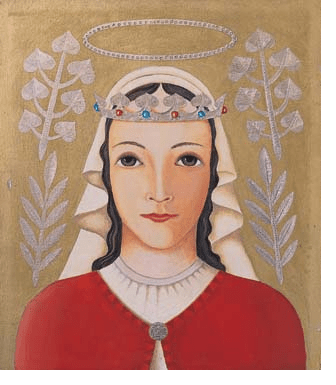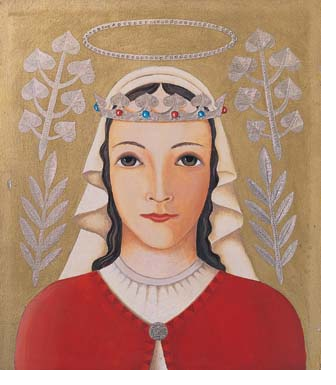
Our Lady of Guadalupe ~ The Rev. Dcn. Dollie Wilkinson, OPI

 virgen


When I first became a Christian, I looked for the presence of God in my life. See, I was initially a non-believer, so I asked God for a sign. I’m sure He got a good laugh out of that one. The presence of our Lord was all around me, I just had to open my eyes to see. Yet in Luke 1:39-47, we learn that an unborn child recognized God’s presence in Mary’s womb.

Mary set out and traveled to the hill country in haste to a town of Judah, where she entered the house of Zechariah
and greeted Elizabeth. When Elizabeth heard Mary’s greeting, the infant leaped in her womb, and Elizabeth, filled with the Holy Spirit, cried out in a loud voice and said, “Most blessed are you among women, and blessed is the fruit of your womb. And how does this happen to me, that the mother of my Lord should come to me? For at the moment the sound of your greeting reached my ears, the infant in my womb leaped for joy. Blessed are you who believed that what was spoken to you by the Lord would be fulfilled.” And Mary said: “My soul proclaims the greatness of the Lord; my spirit rejoices in God my savior.” “

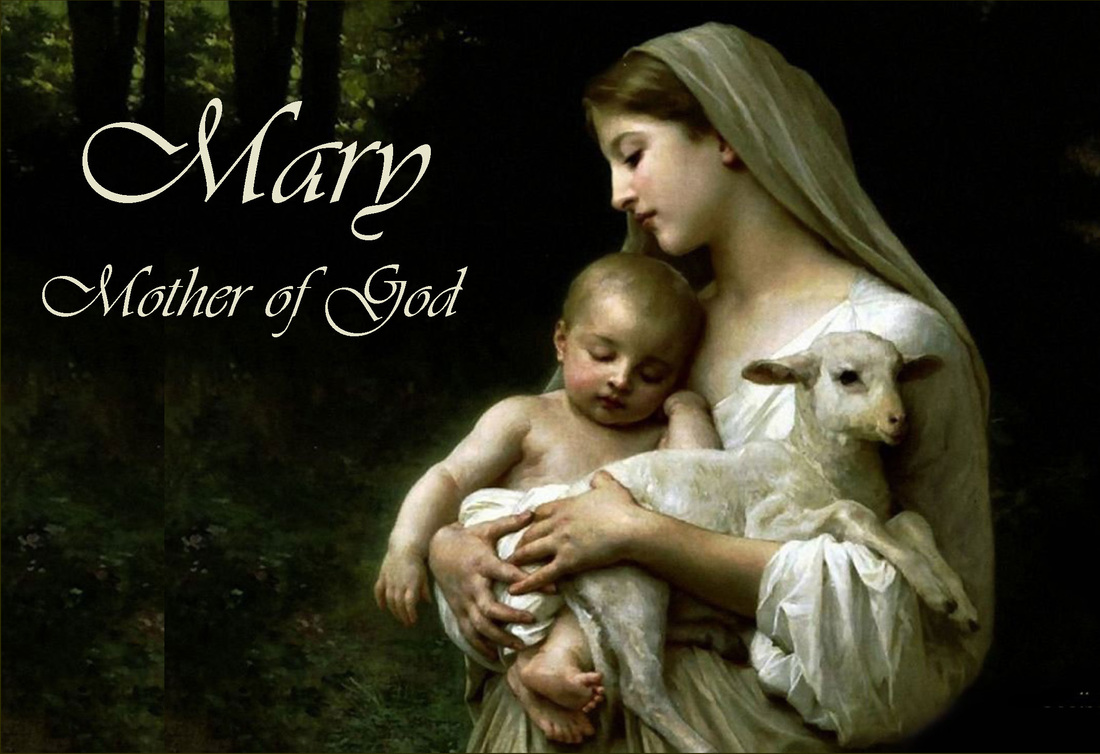
Now imagine if the blessed Virgin Mary appeared to me, just as she did to Juan Diego a long time ago. Would I have been so ready to accept her presence, just as he did? The opening of the New World brought with it both fortune-seekers and religious preachers desiring to convert the native populations to the Christian faith. One of the converts was a poor Aztec Indian named Juan Diego. On one of his trips to the chapel, Juan was walking through the Tepayac hill country in central Mexico. Near Tepayac Hill he encountered a beautiful woman surrounded by a ball of light as bright as the sun. Speaking in his native tongue, the beautiful lady identified herself:

“My dear little son, I love you. I desire you to know who I am. I am the ever-virgin Mary, Mother of the true God who gives life and maintains its existence. He created all things. He is in all places. He is Lord of Heaven and Earth. I desire a church in this place where your people may experience my compassion. All those who sincerely ask my help in their work and in their sorrows will know my Mother’s Heart in this place. Here I will see their tears; I will console them and they will be at peace. So run now to Tenochtitlan and tell the Bishop all that you have seen and heard.”

Juan, age 57, and who had never been to Tenochtitlan, nonetheless immediately responded to Mary’s request. He went to the palace of the Bishop-elect Fray Juan de Zumarraga and requested to meet immediately with the bishop. The bishop’s servants, who were suspicious of the rural peasant, kept him waiting for hours. The bishop-elect told Juan that he would consider the request of the Lady and told him he could visit him again if he so desired. Juan was disappointed by the bishop’s response and felt himself unworthy to persuade someone as important as a bishop. He returned to the hill where he had first met Mary and found her there waiting for him. Imploring her to send someone else, she responded:

“My little son, there are many I could send. But you are the one I have chosen.”

She then told him to return the next day to the bishop and repeat the request. On Sunday, after again waiting for hours, Juan met with the bishop who, on re-hearing his story, asked him to ask the Lady to provide a sign as a proof of who she was. Juan dutifully returned to the hill and told Mary, who was again waiting for him there, of the bishop’s request. Mary responded:

“My little son, am I not your Mother? Do not fear. The Bishop shall have his sign. Come back to this place tomorrow. Only peace, my little son.”

Unfortunately, Juan was not able to return to the hill the next day. His uncle had become mortally ill and Juan stayed with him to care for him. After two days, with his uncle near death, Juan left his side to find a priest. Juan had to pass Tepayac Hill to get to the priest. As he was passing, he found Mary waiting for him. She spoke:

“Do not be distressed, my littlest son. Am I not here with you who am your Mother? Are you not under my shadow and protection? Your uncle will not die at this time. There is no reason for you to engage a priest, for his health is restored at this moment. He is quite well. Go to the top of the hill and cut the flowers that are growing there. Bring them then to me.”

While it was freezing on the hillside, Juan obeyed Mary’s instructions and went to the top of the hill where he found a full bloom of Castilian roses. Removing his tilma, a poncho-like cape made of cactus fiber, he cut the roses and carried them back to Mary. She rearranged the roses and told him:

“My little son, this is the sign I am sending to the Bishop. Tell him that with this sign I request his greatest efforts to complete the church I desire in this place. Show these flowers to no one else but the Bishop. You are my trusted ambassador. This time the Bishop will believe all you tell him.”

At the palace, Juan once again came before the bishop and several of his advisers. He told the bishop his story and opened the tilma letting the flowers fall out. But it wasn’t the beautiful roses that caused the bishop and his advisers to fall to their knees; for there, on the tilma, was a picture of the Blessed Virgin Mary precisely as Juan had described her. The next day, after showing the Tilma at the Cathedral, Juan took the bishop to the spot where he first met Mary. He then returned to his village where he met his uncle who was completely cured. His uncle told him he had met a young woman, surrounded by a soft light, who told him that she had just sent his nephew to Tenochtitlan with a picture of herself. She told his uncle:

“Call me and call my image Santa Maria de Guadalupe”.

It’s believed that the word Guadalupe was actually a Spanish mis-translation of the local Aztec dialect. The word that Mary probably used was Coatlallope which means “one who treads on snakes”. Within six years of this apparition, six million Aztecs had converted to Catholicism. The tilma shows Mary as the God-bearer – she is pregnant with her Divine Son. Since the time the tilma was first impressed with a picture of the Mother of God, it has been subject to a variety of environmental hazards including smoke from fires and candles, water from floods and torrential downpours and, in 1921, a bomb which was planted by anti-clerical forces on an altar under it. There was also a cast-iron cross next to the tilma and when the bomb exploded, the cross was twisted out of shape, the marble altar rail was heavily damaged and the tilma was…untouched! Indeed, no one was injured in the Church despite the damage that occurred to a large part of the altar structure.

In 1977, the tilma was examined using infrared photography and digital enhancement techniques. Unlike any painting, the tilma shows no sketching or any sign of outline drawn to permit an artist to produce a painting. Further, the very method used to create the image is still unknown. The image is inexplicable in its longevity and method of production. It can be seen today in a large cathedral built to house up to ten thousand worshipers. It is, by far, the most popular religious pilgrimage site in the Western Hemisphere.

Mary’s appearance to Juan Diego as one of his people is a powerful reminder that Mary and the God who sent her accept all peoples. In the context of the sometimes rude and cruel treatment of the Indians by the Spaniards, the apparition was a rebuke to the Spaniards and an event of vast significance for Native Americans. While a number of them had converted before this incident, they now came in droves. According to a contemporary chronicler, nine million Indians became Catholic in a very short time. In these days when we hear so much about God’s preferential option for the poor, Our Lady of Guadalupe cries out to us that God’s love for and identification with the poor is an age-old truth that stems from the Gospel itself.


PRAYER TO OUR LADY OF GUADALUPE

O Virgin of Guadalupe,
Mother of the Americas,
grant to our homes the grace of loving
and respecting life in its beginnings,
with the same love with which
you conceived in your womb
the life of the Son of God.
Blessed Virgin Mary,
Mother of Fair Love,
protect our families so that
they may always be united
and bless the upbringing of our children.

Our hope, look upon us with pity,
teach is to go continually to Jesus,
and if we fall
help us to rise again and return to Him
through the confession of our faults
and our sins in the Sacrament of penance,
which gives peace to the soul.

We beg you to grant us a great love
of all the holy Sacraments,
which are, as it were,
the signs that your Son left us on earth.
Thus, Most Holy Mother,
with the peace of God in our consciences,
with our hearts free from evil and hatred,
we will be able to bring to all others
true joy and peace,
which come to us from your Son,
our Lord Jesus Christ,
who with the Father and the Holy Spirit,
lives and reigns for ever and ever.

Amen.


11 December 2016 – Third Sunday of Advent (Gaudete)

 hqdefault

Gaudete in Domino semper: iterum dico, gaudete. Rejoice in the Lord always; again I say, rejoice.

Today is Gaudete Sunday, the Third Sunday of Advent, one of the penitential seasons of the liturgical calendar. During Advent, we prepare ourselves for the coming of our Savior into the world.

This preparation can take many forms, including devotionals such as the Rosary, novenas, Advent calendars, and Advent candles and wreaths. Sometimes there is fasting among the faithful, and always the liturgical color is purple, symbolic of solemnity and somberness.

Except for today. Today’s candle and vestment color is rose. Today, near the midpoint of the Advent season, we are reminded to be joyful. “Rejoice in the Lord always.”

During Lent and during Advent, we are given sort of a break in our solemn preparations. But while in Lent, the rejoicing of Laetare Sunday implies open rejoicing, showing our joy, during Advent the Gaudete joy is rather internal, between us and God…or rather between us and the baby Jesus.

When I was a child, the Christmas season was always characterized by silence, peace, still nights, often slowly falling snow, and always carols and sacred music. It was a contemplative time. It was a personal time and I was comforted by the images of the manger, the Holy Family, the adoring shepherds and animals. In fact, I was rarely in a somber mood and saw no need for rejoicing on the third Sunday. But I was a child, and I thought as a child, and the anticipation of Christmas was more about the feasting and the celebrating and the gift giving.

But I was putting material things in place of the Holy Spirit, wasn’t I? Don’t we all?

Let’s go back to the Introit, the introductory part of the Mass and read the words again: “Rejoice in the Lord always.” How I missed the whole message!

Jesus told us, “The kingdom of God is among you.” He was saying that he was the One the Pharisees were awaiting, the Messiah, and here he was standing among them. And now that he has come among us, not the just Pharisees, but all of us, we must recognize his presence: “Rejoice in the Lord always.”

“Hold on a minute, Brother!” I can hear you say. “How did we get there so fast? It’s not even Christmas yet and you’ve jumped ahead to Jesus’ meeting with the Pharisees! Back up!”

OK, I’ll back up.

Let’s look at the First Reading wherein Isaiah is describing how the land will be when God finally comes among us and rescues us from the desert of sin and death. “Glory,” “splendor,” “vindication,” “joy and gladness.” All of these things will come to pass eventually. But for now, we must wait in anticipation.

And today’s psalm also speaks of the wonders of the Lord and his love for everyone and how he will reign forever.

Then James tells us to be patient. “Behold, the Judge is standing before the gates.”

And finally, the exemplar of waiting, of anticipation, of preparation for the coming of the Kingdom, John the Baptist finally can wait no longer and asks Jesus, in the Gospel, if he is “the one who is to come.”

He is coming. He is near. He is here. “The kingdom of God is among you.”

So on three Sundays in Advent, we are solemnly waiting, contemplating the day of his coming, performing our devotionals, and on one day in Advent, Gaudete, we are reminded that the kingdom of God is already here. Jesus is standing among us, as he stood among the Pharisees, and telling us, in the present and continuing tense, Maranatha, The Lord is come.

And being the mortals that we are, we need that reminding over and over. For some of us, myself especially, we need that reminder daily.

Maranatha – The Lord has come, the Lord is coming, the Lord is come. “Come, Lord” we entreat.

So let’s look today through rose-colored glasses and see the world as it really is, blessed by the coming of our Lord, full of love, life, and hope.

And so we pray, Gaudete!

(Play this hymn sometime today. https://www.youtube.com/watch?v=omtAIwRsy5c)

Gaudete in Domino semper: iterum dico, gaudete. Rejoice in the Lord always; again I say, rejoice.

Puer natus is a 14th Century hymn written for this time of year.

 Puer natus in Bethlehem, Alleluia.
Unde gaudet Jerusalem. Alleluia.

Hic jacet in præsepio, Alleluia.
Qui regnat sine termino. Alleluia.

Cognovit bos et asinus, Alleluia.
Quod puer erat Dominus. Alleluia.

Reges de Sabâ veniunt, Alleluia.
Aurum, thus, myrrhum offerunt. Alleluia.

Intrantes domum invicem, Alleluia.
Novum salutant principem. Alleluia.

De matre natus virgine, Alleluia.
Sine virili femine; Alleluia.

Sine serpentis vulnere, Alleluia.
De nostro venit sanguine; Alleluia.

In carne nobis similis, Alleluia.
Peccato sed dissimilis; Alleluia.

Ut redderet nos homines, Alleluia.
Deo et sibi similes. Alleluia.

In hoc natali gaudio, Alleluia.
Benedicamus Domino: Alleluia.

Laudetur sancta Trinitas, Alleluia.
Deo dicamus gratias. Alleluia.

tr. Hamilton Montgomerie MacGill, 1876A Child is born in Bethlehem;
Exult for joy, Jerusalem! Alleluia.

Lo, He who reigns above the skies
There, in a manger lowly, lies. Alleluia.

The ox and ass in neighbouring stall
See in that Child the Lord of all. Alleluia.

And kingly pilgrims, long foretold,
From East bring incense, myrrh, and gold, Alleluia.

And enter with their offerings,
To hail the new-born King of Kings. Alleluia.

He comes, a maiden mother’s Son,
Yet earthly father hath He none; Alleluia.

And, from the serpent’s poison free,
He owned our blood and pedigree. Alleluia.

Our feeble flesh and His the same,
Our sinless kinsman He became, Alleluia.

That we, from deadly thrall set free,
Like Him, and so like God, should be. Alleluia.

Come then, and on this natal day,
Rejoice before the Lord and pray. Alleluia.

And to the Holy One in Three
Give praise and thanks eternally. Alleluia.

Holiday Greetings!!!! Or Not???? ~ The Rt. Rev. M. R. Beckett, OPI

happy-holidays

Happy Holidays?????  When I was a kid, way back in the dark ages, I always thought that “Happy Holidays” meant “Merry Christmas and Happy New Year.”  Apparently I was a tad bit under informed……..  So once again, here we go……….

It’s that time of year again.  The time for all and sundry to argue the finer points of holiday greetings:  Merry Christmas versus Happy Holidays.  At the risk of being seen as a non-Christian priest, or a politically correct one, and abandoning or at least not defending my faith and my Lord, I feel compelled for some odd reason, to offer a treatise on the use of Happy Holidays.  So here goes….

“Happy Holidays.”  Now really, what’s wrong with that?  It’s a pleasant wish that encompasses good wishes for an entire month and a half long season.  Granted, that “season” is usually meant to be the period between Thanksgiving and New Year’s Day, and is usually understood to include only Christmas and New Year’s Day.   However, in that time period, what other holidays are there?  “Happy Holidays” is a collective and inclusive wish for the period encompassing Thanksgiving, Kwanzaa, Hanukkah, the Immaculate Conception of the Blessed Virgin Mary, the Feast of Our Lady of Guadalupe, the Winter solstice, Christmas Day (The Nativity of the Lord), Boxing Day and St. Stephen’s Day, St. John’s Day, the New Year and Epiphany, and it would take me forever to get through the list, if I could remember the list at all, just to give a pleasant hello to someone!  “Happy Holidays” is just easier!  Most of the aforementioned holidays ARE Christian holidays, though, so what’s wrong with “Happy Holidays?”

Leaving those “Happy Holidays” that are in the Christian calendar for a few minutes; let’s look at the ones that aren’t Christian holidays.

The Winter Solstice, or Yule, is celebrated by our Wiccan and Pagan brothers and sisters.   This is when the dark half of the year relinquishes to the light half. Starting the next morning at sunrise, the sun climbs just a little higher and stays a little longer in the sky each day. Known as Solstice Night, or the longest night of the year, the sun’s “rebirth” was celebrated with much joy.  It is from this celebration that we get many, many of our Christmas traditions.

Kwanzaa is celebrated by some of our African American brothers and sisters and is not a substitute for Christmas, nor is it a religious holiday.  Wishing someone a happy Kwanzaa does nothing to deny Christianity.

Hanukkah is a Jewish festival, celebrating a miracle that occurred way back in the 2nd century BCE.  Also known as the Festival of Lights, it is an eight-day Jewish holiday commemorating the rededication of the Holy Temple (the Second Temple) in Jerusalem at the time of the Maccabean Revolt.  The story of Hanukkah is alluded to in the book of 1 Maccabees and 2 Maccabees, but Hanukkah is not specially mentioned; rather, a story similar in character, and obviously older in date, is the one alluded to in 2 Maccabees 1:18,  according to which the relighting of the altar fire by Nehemiah was due to a miracle which occurred on the 25th of Kislev, and which appears to be given as the reason for the selection of the same date for the rededication of the altar by Judah Maccabee.  Now, 1 and 2 Maccabees are not considered canonical books by most Protestants, but are included in the Apocrypha, which IS in Catholic and Orthodox Bibles.  So while Hanukkah is not a Christian holiday, per se, it can be considered Biblical.  And since it celebrates the lighting of the rededication of the Temple and is celebrated with lights, and Christ is “the Light of the World,” and the fact that Christianity has its roots in Judaism, Happy Hanukkah to my Jewish friends!

The day after Christmas is Boxing Day, which is celebrated in the Commonwealth countries.  The tradition of Boxing Day has long included giving money and other gifts to those who are needy and in service positions, and this European tradition has been dated to the Middle Ages.  Shouldn’t we, as Christians, do this year-round, and not just during the “holidays”?

New Years Day:  Now, there’s a pagan holiday for you!  The Romans dedicated this day to Janus, the god of gates, doors, and beginnings. The month of January was named after Janus, who had two faces, one looking forward and the other looking backward.  It is from this Roman custom that we get the making of New Year’s resolutions:  looking backward, we resolve to not do something or other, and looking forward, we resolve TO do something or other.  Among the 7th century pagans of Flanders and the Netherlands, it was the custom to exchange gifts at the New Year.  So, I guess I’m asking, should we as Christians NOT celebrate the new year and not wish everyone a “Happy New Year”?  If this is the case, then we should certainly avoid making New Year’s resolutions, too. (Especially those that include diets and exercise!)

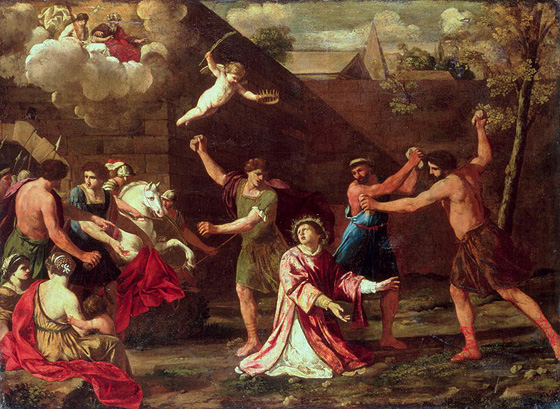
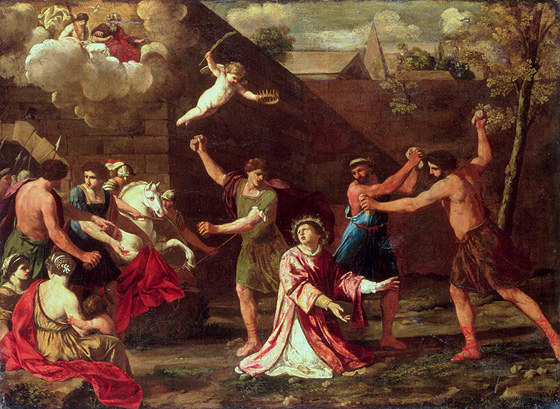
And then, there are the religious holidays that most Christians don’t really celebrate, and some don’t even know about.  The Feast of Saint Stephen, who was the first Christian martyr on 26 December, the Feast of St. John who was the “Beloved Disciple” on 27 December, the Immaculate Conception of the Blessed Virgin Mary on 8 December, and the Feast of Our Lady of Guadalupe on 12 December have already been mentioned.

Finally, there is Epiphany, which is perhaps one of the most important holidays of the liturgical or church year.  It is the last day of the Twelve Days of Christmas of which we sing in the (often-denigrated) Christmas carol, and which is overlooked by most non-liturgical churches.  Epiphany, which falls on January 6, is a Christian feast day that celebrates the revelation of God the Son as a human being in Jesus Christ.  Western Christians commemorate principally (but not solely) the visitation of the Biblical Magi to the Baby Jesus, and thus Jesus’ physical manifestation to the Gentiles.  The early Christian Fathers fixed the date of the feast on January 6.  Ancient liturgies noted Illuminatio, Manifestatio, Declaratio (Illumination, Manifestation, Declaration) taken from  Matthew 3:13–17; Luke 3:22; and John 2:1–11; where the Baptism and the Marriage at Cana were dwelt upon. Western Christians have traditionally emphasized the “Revelation to the Gentiles” mentioned in Luke, where the term Gentile means all non-Jewish peoples. The Biblical Magi, who represented the non-Jewish peoples of the world, paid homage to the infant Jesus in stark contrast to Herod the Great (King of Judea), who sought to kill him.  In this event, Christian writers also inferred a revelation to the Children of Israel. Saint John Chrysostom identified the significance of the meeting between the Magi and Herod’s court: “The star had been hidden from them so that, on finding themselves without their guide, they would have no alternative but to consult the Jews. In this way, the birth of Jesus would be made known to all.”  The earliest reference to Epiphany as a Christian feast was in A.D. 361, by Ammianus Marcellinus.   St. Epiphanius says that January 6 is hemera genethlion toutestin epiphanion (Christ’s “Birthday; that is, His Epiphany”).  He also asserts that the Miracle at Cana occurred on the same calendar day, and it was on this day, too, that John the Baptist baptized Jesus in the Jordan River.  So on 6 January, after all the Christmas trimmings have been put away, the gifts exchanged, New Years resolutions have been made (and some broken already), and the kids are back in school, we can still say, with all feeling, “Happy Holidays.”

Honestly, don’t you think “Happy Holidays” is so much easier?  And besides, I really like Bing Crosby’s Christmas carol, “Happy Holidays!”

St. Ambrose, Inspiration of Saints ~ Br. Mark G. Dickson-Patrick – Novice

bartolomeovivarini_stambrosepolyptych-detail

Today the Church celebrates the feast of St. Ambrose, who lived in the 4th century and is considered to be one of the most influential ecclesiastical figures of that time. He was born to an intellectual and Christian family, who raised him up in the ways of the faith. He was educated in Rome, where he studied law, literature, and rhetoric. He was appointed to a governorship by the Italian Prefect, after serving as lawyer in the court of the Prefect’s predecessor. Following the death of the Arian bishop of Milan in 370 Ambrose, in his role as governor, went out to help mitigate any conflict between the Catholics & the Arians. During his introductory speech, he was interrupted with a cry of “Ambrose, Bishop!” thus electing him by acclamation as Bishop of Milan. Though hesitant at first, he finally assented and was made Bishop of Milan. By all accounts, Ambrose took to his new duties as bishop with commitment and vigor.  He spent several hours each day in prayer and he led a simple and austere lifestyle. Along with administering baptism, penance, discipline of clergy, and civil judicial duties, Ambrose also supervised the charities of the church and defended those who were oppressed. He also had a great influence on another great saint of the Church, Augustine of Hippo. Traditionally, Ambrose is credited with promoting “antiphonal chant,” as well as with composing “Veni redemptor gentium,” an Advent hymn. Ambrose was one of the four original doctors of the Church and is the patron saint of Milan

In our reading from the Old Testament for today from the book of the prophet Isaiah, we hear the Lord calling the people of Israel to trust in Him, to look to Him as their source of strength and help in time of trouble. The Israelites were feeling downtrodden, thinking that God no longer protected them, that He no longer cared for them: “Why do you say, O Jacob, and speak, O Israel, ‘My way is hidden from the Lord, and my right is disregarded by my God’?” (Isaiah 40:27). The felt that the Lord had abandoned them in their struggles, in their misfortune. Then Isaiah gives us some of the most beautiful words of hope in the Old Testament (Isaiah 40:28-31):

“Have you not known? Have you not heard?

The Lord is the everlasting God,

the Creator of the ends of the earth.

He does not faint or grow weary;

His understanding is unsearchable.

He gives power to the faint,

and strengthens the powerless.

Even youths will faint and be weary,

and the young will fall exhausted;

but those who wait for the Lord shall renew their strength,

they shall mount up with wings like eagles,

they shall run and not be weary,

they shall walk and not faint.”

In our increasingly secular world today, we may not encounter formal heretics like the Arians of Ambrose’s time, but we do encounter many who do not believe in God and do not find joy for their lives. They often criticize believers and say that our hope is in vain. They believe that true freedom and truth is found in individualism, in atheism and humanism. In our workplace, in our homes, in the store, in our own friends and family are those who feel as though they are alone, dejected, and downtrodden. But our message, our hope, our joy, my friends, is that, “The Lord is an everlasting God, the creator of the ends of the earth…He gives power to the faint and strengthens the powerless.” Let us be strengthened by these words and pass them on to all in our world who need them. Let us proclaim the truth of the Gospel in Jesus Christ, as did St. Ambrose to the people that he served.

St. Ambrose, bishop and doctor of the Church, pray for us.

Xmas vs. Christmas…..Uh oh! ~ The Rt. Rev. Michael R. Beckett, OPI

christmas-or-xmas

Which is it?  Christmas?  Xmas?  What’s up with that?

This has been quite the heated debate in the last few years. We have seen the memes and heard folks say:

  • they take Christ out of Christmas.
  • It’s a sacreligious name for Christmas.
  • We are X-ing out Christ in Christmas.
  • People are trying to turn Christmas into  a secular holiday.
  • It’s an insult to Christians and to Christ.

Oh my!  I”m sure that most of you have seen the “The More You Know” ad spots on television.  Let’s consider this message on of those….So here we go…….

To begin:  Look around in your churches, my friends, especially those of you from a liturgical background, and see how many X’s you can find.

“Xmas” is a common abbreviation of the word “Christmas”.  The “-mas” part is from the Latin-derived Old English word for “Mass”, while the “X” comes from the Greek letter Chi, which is the first letter of the Greek word Χριστός, translated as “Christ”.  There is a common misconception that the word Xmas is a secular attempt to remove the religious tradition from Christmas by taking the “Christ” out of “Christmas”.  While “Xmas” is considered to be an informal abbreviation, and should never be used in formal writing, it is historically correct.

The word “Christ” and its compounds, including “Christmas”, have been abbreviated in English for at least the past 1,000 years, long before the modern “Xmas” was commonly used. “Christ” was often written as “XP” or “Xt”; there are references in the Anglo-Saxon Chronicle as far back as AD 1021. This X and P arose as the uppercase forms of the Greek letters χ and ρ used in ancient abbreviations for Χριστος (Greek for “Christ”), and are still widely seen in many Eastern Orthodox icons depicting Jesus Christ. The labarum, an amalgamation of the two Greek letters rendered as ☧, is a symbol often used to represent Christ in Catholic, Protestant, and Orthodox Christian Churches.

The Oxford English Dictionary (OED) and the OED Supplement have cited usages of “X-” or “Xp-” for “Christ-” as early as 1485. The terms “Xpian” and “Xtian” have also been used for “Christian”. The dictionary further cites usage of “Xtianity” for “Christianity” from 1634. According to Merriam-Webster’s Dictionary of English Usage, most of the evidence for these words comes from “educated Englishmen who knew their Greek”.In ancient Christian art, χ and χρ are abbreviations for Christ’s name. In many manuscripts of the New Testament and icons, Χ is an abbreviation for Χριστος, as is XC (the first and last letters in Greek, using the lunate sigma); compare IC for Jesus in Greek.

Thus, really and truly, the use of the “X” isn’t taking Christ out of Christmas at all.  And instead of protesting the use of “X” during the  Christmas season, wouldn’t we ALL be better people, the world be a better place, and Christ be better served,  if we kept that “X” in our words and deeds every day of the year?  Should we not celebrate Him always, 24/7/365?

So, having said all of the above,  may you keep Christ, not only in Christmas, but also in your hearts and minds and lives, every day and always.  Amen.

It’s a Wonderful Life! ~ Br. Matt Pepple, Novice


48c17ef6d40b1a5f36bab0fc795823ee

I recently saw the movie, “It’s a Wonderful Life”, directed by Frank Capra; it debuted in the post-war period of 1947. Now, it’s aired primarily by the NBC network during the holiday season. For a black and white movie, a lot of the movie’s themes are still relative for the world today.

Meet George Bailey, a young man, who is also the son of a banker. George has so many hopes and dreams that he wants to accomplish in his life. Then, after his father dies, he is left with the family business, “The Bailey Building and Loan”, and comes to the realization that many of his most cherished dreams may not come to pass. George gets married and has a family.

Things take a “sour turn” halfway through the film, when Mr. Potter,  the film’s villain; makes a dishonest move against George’s uncle.

As a result of this, George is feeling miserable and hopeless. Enter the angel Clarence. George was willed with so much grief and despair that he has contemplated throwing his life away.

Clarence presents George with a remarkable gift; a life he has never lived.

If you were to take a step back and analyze your life to this date. Though it’s probably safe to assume that our life hasn’t been as dramatic as the fictional character of George Bailey, we do have a lot of power to affect positive change. So, how many lives have you affected?  How have you helped people? What have you been able to do to affect positive change? What things could you make better? How would your friends and family be different?

Going further, imagine, now, what the world would have been like if Christ had never come into it. Our world, would have remained a very dark place. The birth of Jesus was a changing point. The Son of God was a gift that was given to us by God the Father. And as such, we must be thankful for this gift and look at our lives as gifts as well. God saw how dark the world was becoming, but as much, he was able to see the darkness inside of people’s lives.

In John 3:16, St. John writes, “For God so loved the world that he gave his one and only Son, that whoever believes in him shall not perish but have eternal life.” That’s right, God loves the world and all of us so very much, that he bundled up and placed his “gift” in swaddling clothes and placed him in that manger in that cave. And he gave us an eternal “gift” to spend it with him.

And it is up to us as Christians to continue to be that ‘gift.’  We must remember that often, we are the only Jesus people will see.  We are the only Bible some people will read.  The holidays and Christmas time can be a somewhat depressing time for many people, and as Christians it is important for us to never lose hope or our faith, but to exhibit that faith on a grander scale.

As much as Clarence gave George some perspective on his life, and his accomplishments already, I urge you to not lose hope or your faith. If self-analysis grants you great conviction or satisfaction, please know that you can still change your life. Our life on this Earth is truly a most wonderful and gracious gift. So make it a great one! Amen.

“A Little Child Shall Lead Them” ~ The Rev. Dcn. Dollie Wilkinson, OPI

jesseforlab

I love to garden, but often get frustrated when the small seedlings I have planted in the ground, do not take root. What usually happens is maybe one or two plants will survive my clumsy gardening, while the rest wither and die. I usually leave the dying stumps in the ground, figuring they will help fertilize the new plants trying to grow. In the beginning of Isaiah 11, we are offered a picture of the future that reminds us of how new growth springs from a solid root.

A shoot shall come out from the stump of Jesse, and a branch shall grow out of his roots.”

This vision of the future offers us hope, with the upcoming birth of baby Jesus. And further goes on to describe just exactly how the Messiah will lead His people. Why does the Holy Spirit, who gave Isaiah these visions of the future, want you and me to see this? Because we need to understand what kind of king we find in the manger of Bethlehem.

The spirit of the LORD shall rest on him, the spirit of wisdom and understanding, the spirit of counsel and might, the spirit of knowledge and the fear of the LORD. His delight shall be in the fear of the LORD. He shall not judge by what his eyes see, or decide by what his ears hear; but with righteousness he shall judge the poor, and decide with equity for the meek of the earth; he shall strike the earth with the rod of his mouth, and with the breath of his lips he shall kill the wicked. Righteousness shall be the belt around his waist, and faithfulness the belt around his loins.’”

We recently had a presidential election in the United States. And though we know that only one person can win, that didn’t prevent some people from being upset when their favorite candidate didn’t win. Everyone can describe in detail why their candidate is the best person to lead this country. But I imagine, if they were honest with themselves, they could also tell you the faults of this or that person. This is because no one person is perfect. But the prophet Isaiah described the most perfect leader, not just of a country, but of all time. Not only does this offer us hope for the coming Messiah, but also serves as inspiration for those who have lost heart in their daily struggles. What once seemed dying, lost, gone ….. now offers hope. All is not lost! This new vision of the future, as detailed in Isaiah 11:6-10, offers us a glimpse of God’s promises for the future.

The wolf shall live with the lamb, the leopard shall lie down with the kid, the calf and the lion and the fatling together, and a little child shall lead them. The cow and the bear shall graze, their young shall lie down together; and the lion shall eat straw like the ox. The nursing child shall play over the hole of the asp, and the weaned child shall put its hand on the adder’s den. They will not hurt or destroy on all my holy mountain; for the earth will be full of the knowledge of the LORD as the waters cover the sea. On that day the root of Jesse shall stand as a signal to the peoples; the nations shall inquire of him, and his dwelling shall be glorious.”

Paints a pretty picture, doesn’t it? I can here you mumbling though: “But, how will all this be possible?” We already know that God can work miracles. After all, who created all you see, touch, smell, hear? It certainly didn’t materialize out of thin air. So is it so hard to imagine a future where there will be no strife, no discord among animals and man? Oh, I know looking at the world today, that might be hard to understand and even harder to imagine. But Matthew 19:26 clearly states, “Jesus looked at them and said “With men this impossible, but with God all things are possible.”” So next time you find yourself losing heart, ready to give up, remember the One who created you, who decided you were worth something. All of us are special, worth saving, and it will take a little baby, a small child, to show us the way.

A Life of Hope: St. Francis Xavier ~ Br. Matt Pepple, Postulant


st-francis-xavier-icon-398

St. Francis Xavier was born in the family castle of Xavier, in Pamplona in the Basque area of Spanish Navarre in 1506. He was sent to the University of Paris in 1525 and obtained his licentiate in 1528. He met with St. Ignatius Loyola and was one of the seven, who in 1534 founded the Society of Jesus. He intended to join Ignatius in Venice and then they would go as missionaries to Palestine,  a trip which did not occur. He was ordained in 1537 and went to Rome in 1538 and 1540 when the Pope formally recognized the Society of Jesus. At that time, he, alongside Father Simon Rodriguez, was ordered to the Far East as the first Jesuit missionaries.

King John the 3rd retained Fr. Simon in Lisbon but Francis, spent six months preaching in Mozambique along with giving some assistance to the sick. He eventually arrived in Goa, India  in 1542 with Fr. Paul of Camerino and Francis Mansihas. He began evangelizing the natives and attempted to reform the Europeans by adopting their customs on his many travels. He converted tens of thousands to Christianity in the subsequent decade.

He visited Paravas in India, Malacca, near New Guinea, Morotai near the Philippines and Japan. In 1551, the East and India was dedicated as a separate province and Ignatius designated Francis as its first provincial. In 1552 he went to China and landed on Sancian; where he died before he could reach the mainland. Working against excessive complications, language problems, he had no proficiency in foreign speaking, insufficient monies, and lack of assistance, often actual confrontation, even from European representatives; he left the mark of his missionary enthusiasm and vigor on areas which adhered to Christianity for centuries. He was beatified in 1622 and declared patron of all foreign missions by Pope Pius X. on Dec. 3.

Our scripture for the week, Romans 15:4-13; St. Paul is speaking to us on what was written in the old days being relevant even today for our instruction. “So that by determination and encouragement of the scriptures that we may have hope.” We need to live more in an attitude of hope and inspiration from the direction of the scriptures. Paul also tells us that our God wants us to live in harmony and peace with our neighbors, as Christ did. And that all of us in this harmony and unison may glorify the God and Father of our Lord, Jesus Christ. We are to be welcoming of our neighbors as Christ has welcomed us. Jesus became a servant to the circumcised on the behalf of the truth of God in order that he might authorize the promises known to the fathers, so that the Gentiles may exalt God for his kindness and compassion. For it is written, “Therefore I will confess you among the Gentiles, and sing praises to your name.” Again, he said, “Rejoice, O Gentiles, and let all of the peoples praise Him.” Paul refers to the prophet Isaiah, “The root of Jesse shall come, the one who rises to rule the Gentiles; in him the Gentiles shall hope.” May the God of hope fill you with all joy and peace in believing, so that you may prosper in hope by the power of the Holy Spirit.

It was this hope that served as an inspiration for St. Francis Xavier. To have been a Missionary at his time, or really at the present time, was a very dangerous time. Things may have appeared very daunting to him, in the tasks that he was set forth. At any time, he and companions could have just given up. Hope, on the other hand, can be a very inspirational tool. God wants us to live and act in a spirit of hope, to be hopeful of the future and instill the hope of Christ in the present. We all have a certain desire for things to happen, for a certain situation to improve and get better, for a loved one who is sick to become healthier again, or for a better job. For as long as we live in hope, we can greet our neighbors, friends and relatives in an attitude of hope. As long as we have hope centered in Christ, there is always a chance for things to change. Jesus wants to be the light in your darkness and to be your hope for better things.

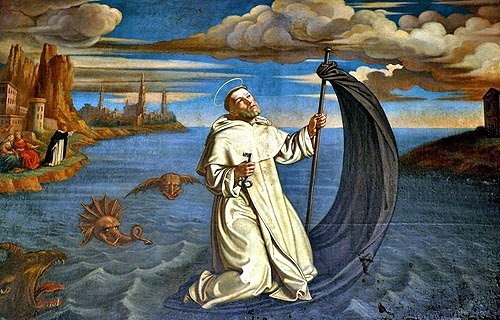
Blessed John of Vercelli

jonn-v

John Garbella was born early in the 13th century, somewhere near Vercelli. He studied at Paris and was ordained priest before 1229. He taught canon law at the University of Paris. While he was professor there, Jordan of Saxony (who was a friend of Saint Albert the Great) came to Paris, and John saw one after another of his best pupils desert their careers to join the Dominicans. He seems to have considered them quite objectively, without reference to himself, until one day he had an interior voice that spoke to him that it was God’s will for him to join the Dominicans. No one can say that John did not respond with alacrity; he dropped everything and ran down the street. (“Let me go; I am on my way to God!”) Jordan received him happily and gave him the habit.

In 1232, John was sent to Vercelli to establish a convent there. He built this and several other convents in Lombardy as houses of regular observance. While provincial of Lombardy, he also became inquisitor. It was a particularly difficult moment. His brother in religion, Peter of Verona, had just been killed by the heretics in Como. The entire countryside was in a state of war, with roving bands of heretics and robbers. It was the task of the new inquisitor to try to bring order out of this chaos, and what John did was remarkable, considering the situation. In spite of his heavy labors, which included the supervision of 600 friars in 28 different cities (he reached them only by walking), John of Vercelli established the ideals of study and regular observance in all of his houses.

It was the good fortune of John of Vercelli to live in an age that was well peopled by saints. He formed a close friendship with Saint Louis, the king of France. Several of his tasks in the order, particularly the Commission on the Program of Studies, he shared with Saint Albert the Great, Saint Thomas Aquinas, and Peter of Tarentaise (the future Pope Innocent V). In such company one would need to have a superior set of talents; John did.

In 1264 the chapter of the order met at Paris. Blessed Humbert had resigned as master general of the order. John went to the chapter hoping that he could resign as provincial of Lombardy. Instead of escaping one office, he fell heir to a still more difficult one. He was elected master general in 1264 and served in that capacity until 1283. John was then a man in his sixties and was, moreover, handicapped by a crippled leg. However, he accepted the office which would require him to walk, not only all over Lombardy, but all over Europe. It took a brand of courage and obedience that was little short of heroic.

During the generalate of John of Vercelli, the relics of Saint Dominic were transferred to the new tomb that had been prepared for it by Nicholas of Pisa. When the transfer was made, John of Vercelli fixed his seal on the tomb; the seals were still intact on their examination in 1946. During the translation of the relics, according to the account in the Vitae Fratrum, when the body of Saint Dominic was exposed to view, the head was seen to turn towards John of Vercelli. John, embarrassed, moved to another part of the church and gave his place to a cardinal. Whereupon, the head of Saint Dominic was seen by all to turn again in John’s direction.

On the death of Clement IV, John of Vercelli was very nearly elected pope. Being warned of the possibility, he fled in fright. However, his good friend Cardinal Visconti, was elected and took the name Gregory X. He appointed John as legate on several different missions.

He was commissioned by the pope to draw up the Schema for the second ecumenical council of Lyons in 1274–that council to which Saint Thomas Aquinas was hurrying when death found him on the road. At the council John distinguished himself for his assistance by offering to the council the talents of his best men. At the council, he accepted for the Dominican Order the special commission of promoting reverence for the Holy Name of Jesus and fighting blasphemy, which was, in that day as in ours, a prevalent vice. He can thus be considered the founder of the Holy Name Society, even though the Confraternity was not formed until 1432.

Several precious relics were suitably enshrined by John of Vercelli. These included several thorns from the Crown of Our Lord, which had been given him by Saint Louis of France. The cord of Saint Thomas, with which he had been guided by the angels and which he had worn until death, was given into the care of the master general, who gave it to the convent of Vercelli for safe keeping.

John’s career was rapidly reaching its end. In 1279, he presided over the famous chapter of Paris at which the order made the doctrine of Saint Thomas officially its own. The following year he laid the foundations of the Church of Santa Maria Sopra Minerva. One of his last official acts was to provide for a work on the instruction of novices (Benedictines, Dorcy).

Born: 1205 at Mosso Santa Maria, Italy as John Garbella

Died: September 1283 at Montpelier, France of natural causes; buried at the Dominican convent at Montpelier; his tomb was desecrated by Calvinists in 1562, and his body disappeared.

Beatified: 1903 by Pope Pius X (cultus confirmed), 1909 elevated him to the honors of the altar

The Feast of St. Andrew ~Br. Mark G. Dickson-Patrick – Novice


standrew

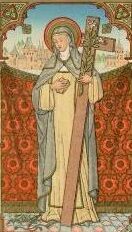
Today the Church celebrates the great feast of St. Andrew the Apostle, the brother of St. Peter. Andrew was a fisherman by trade, working alongside his brother before being called by Jesus to follow after Him. He became one of Jesus’ 12 apostles, and after His death and resurrection went out into various regions to preach the Good News of salvation. He was eventually martyred on an X-shaped cross, tied to the cross until death. As he was led to the cross, an ancient tradition attributes this quote to the Saint:

“Hail, O Cross, inaugurated by the Body of Christ and adorned with his limbs as though they were precious pearls. Before the Lord mounted you, you inspired an earthly fear. Now, instead, endowed with heavenly love, you are accepted as a gift…

O blessed Cross, clothed in the majesty and beauty of the Lord’s limbs!… Take me, carry me far from men, and restore me to my Teacher, so that, through you, the one who redeemed me by you, may receive me. Hail, O Cross; yes, hail indeed!”

Saint Andrew holds a special place for me, as he was the patron of the Roman Catholic College Seminary I attended for 4 years. Countless hours were spent praying before the image of this great saint, who was cradling an image of our seminary in his arms. This saint, who we deemed a brother, we would beg to intercede for the brothers of our house, for ourselves, and for an increase of vocations to the priesthood and to the religious life. Now, every year, I take it upon myself to pray a Novena to my brother, St. Andrew, for the state of the Church and the world.

Our Gospel reading this morning presents us with the moment that Andrew and his brother Peter are called by Jesus for the great work of preaching the Gospel. Fishermen by trade, they were mending their nets by the edge of the sea, when this teacher walks by and says “Come after me, and I will make you fishers of men.” We are told that they immediately left their nets and followed Jesus, not knowing at all what was to come. In a retreat on this topic to seminarians, Bishop Robert Morlino the Roman Catholic Bishop of Madison, WI, once said “When the Lord and Savior of the world comes up to you, looks you in the eye, and says ‘Follow me,’ why in the world would you ever stand still?” Andrew and Peter felt the call of conviction that the Lord laid on their hearts and as we know became two of the great apostles, preaching the Good News of salvation to the death.

There are times, I’d venture, that we often feel the call and conviction that Peter and Andrew felt, the call to preach the Gospel to all who will listen. We picture setting out on a grand crusade, bringing thousands to Christ and to salvation, bringing them home into the arms of God and away from the pain of heresy and death. But then we realize that with our busy lives in an increasingly secular world, we don’t have the time to go on these grand crusades that we have formulated in our mind. Notice what the Lord does with Peter & Andrew, and what He does with us as well. Jesus didn’t say, “Leave your nets, and you’re going to go on huge crusades.” No, he said, “Come follow me, and I will make you fishers of men.” Jesus took what they knew how to do, and enhanced it, for the work of ministry. So, too, does he do that with us. He takes our abilities, to teach, to pray, to work in the ordinariness of our lives, and enhances them for His uses, to preach the Gospel. That is how we can lead these lives of religious devotion in a secular and busy world.

My friends, there is work to be done. The harvest is plentiful, and the labors are few. Pray for an increase in vocations to the priesthood, diaconate, and religious life, that the Lord may take people in their ordinariness and enhance their gifts to serve His glory, that we may build up the Kingdom of God together. Like Peter & Andrew, heed the conviction that He is placing on your heart.

Amen.

Novena Prayer to St. Andrew

Saint Andrew, strong and powerful, intercede and pray for us.

Andrew, apostle of Christ, help me to rejoice in Jesus and so bring others to Him. May my words and deeds lead others to deeper faith in him. Bold missionary and evangelist, guide me where the Lord would have me preach his gospel. Companion of the Lord Jesus, send us people called to be priests, deacons, & religious. Saint Andrew, in your kindness hear and answer our prayer.

Amen.