
Category: Article
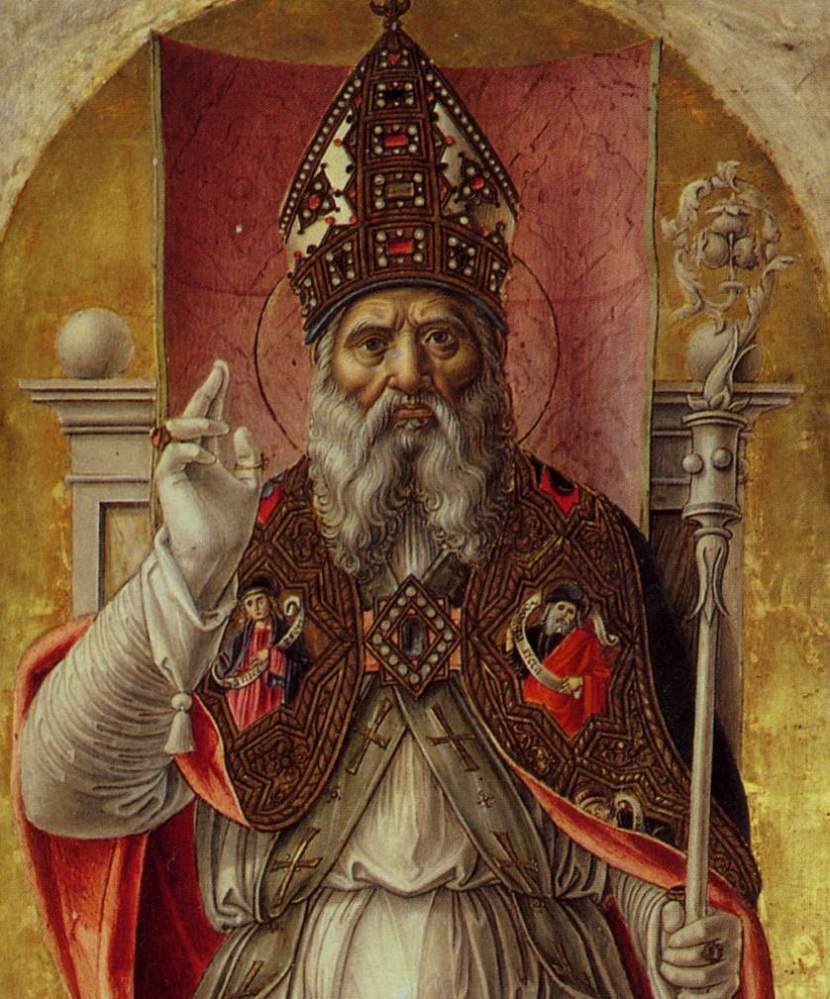
St. Ambrose, Inspiration of Saints ~ Br. Mark G. Dickson-Patrick – Novice

Today the Church celebrates the feast of St. Ambrose, who lived in the 4th century and is considered to be one of the most influential ecclesiastical figures of that time. He was born to an intellectual and Christian family, who raised him up in the ways of the faith. He was educated in Rome, where he studied law, literature, and rhetoric. He was appointed to a governorship by the Italian Prefect, after serving as lawyer in the court of the Prefect’s predecessor. Following the death of the Arian bishop of Milan in 370 Ambrose, in his role as governor, went out to help mitigate any conflict between the Catholics & the Arians. During his introductory speech, he was interrupted with a cry of “Ambrose, Bishop!” thus electing him by acclamation as Bishop of Milan. Though hesitant at first, he finally assented and was made Bishop of Milan. By all accounts, Ambrose took to his new duties as bishop with commitment and vigor. He spent several hours each day in prayer and he led a simple and austere lifestyle. Along with administering baptism, penance, discipline of clergy, and civil judicial duties, Ambrose also supervised the charities of the church and defended those who were oppressed. He also had a great influence on another great saint of the Church, Augustine of Hippo. Traditionally, Ambrose is credited with promoting “antiphonal chant,” as well as with composing “Veni redemptor gentium,” an Advent hymn. Ambrose was one of the four original doctors of the Church and is the patron saint of Milan
In our reading from the Old Testament for today from the book of the prophet Isaiah, we hear the Lord calling the people of Israel to trust in Him, to look to Him as their source of strength and help in time of trouble. The Israelites were feeling downtrodden, thinking that God no longer protected them, that He no longer cared for them: “Why do you say, O Jacob, and speak, O Israel, ‘My way is hidden from the Lord, and my right is disregarded by my God’?” (Isaiah 40:27). The felt that the Lord had abandoned them in their struggles, in their misfortune. Then Isaiah gives us some of the most beautiful words of hope in the Old Testament (Isaiah 40:28-31):
“Have you not known? Have you not heard?
The Lord is the everlasting God,
the Creator of the ends of the earth.
He does not faint or grow weary;
His understanding is unsearchable.
He gives power to the faint,
and strengthens the powerless.
Even youths will faint and be weary,
and the young will fall exhausted;
but those who wait for the Lord shall renew their strength,
they shall mount up with wings like eagles,
they shall run and not be weary,
they shall walk and not faint.”
In our increasingly secular world today, we may not encounter formal heretics like the Arians of Ambrose’s time, but we do encounter many who do not believe in God and do not find joy for their lives. They often criticize believers and say that our hope is in vain. They believe that true freedom and truth is found in individualism, in atheism and humanism. In our workplace, in our homes, in the store, in our own friends and family are those who feel as though they are alone, dejected, and downtrodden. But our message, our hope, our joy, my friends, is that, “The Lord is an everlasting God, the creator of the ends of the earth…He gives power to the faint and strengthens the powerless.” Let us be strengthened by these words and pass them on to all in our world who need them. Let us proclaim the truth of the Gospel in Jesus Christ, as did St. Ambrose to the people that he served.
St. Ambrose, bishop and doctor of the Church, pray for us.

Xmas vs. Christmas…..Uh oh! ~ The Rt. Rev. Michael R. Beckett, OPI

Which is it? Christmas? Xmas? What’s up with that?
This has been quite the heated debate in the last few years. We have seen the memes and heard folks say:
- they take Christ out of Christmas.
- It’s a sacreligious name for Christmas.
- We are X-ing out Christ in Christmas.
- People are trying to turn Christmas into a secular holiday.
- It’s an insult to Christians and to Christ.
Oh my! I”m sure that most of you have seen the “The More You Know” ad spots on television. Let’s consider this message on of those….So here we go…….
To begin: Look around in your churches, my friends, especially those of you from a liturgical background, and see how many X’s you can find.
“Xmas” is a common abbreviation of the word “Christmas”. The “-mas” part is from the Latin-derived Old English word for “Mass”, while the “X” comes from the Greek letter Chi, which is the first letter of the Greek word Χριστός, translated as “Christ”. There is a common misconception that the word Xmas is a secular attempt to remove the religious tradition from Christmas by taking the “Christ” out of “Christmas”. While “Xmas” is considered to be an informal abbreviation, and should never be used in formal writing, it is historically correct.
The word “Christ” and its compounds, including “Christmas”, have been abbreviated in English for at least the past 1,000 years, long before the modern “Xmas” was commonly used. “Christ” was often written as “XP” or “Xt”; there are references in the Anglo-Saxon Chronicle as far back as AD 1021. This X and P arose as the uppercase forms of the Greek letters χ and ρ used in ancient abbreviations for Χριστος (Greek for “Christ”), and are still widely seen in many Eastern Orthodox icons depicting Jesus Christ. The labarum, an amalgamation of the two Greek letters rendered as ☧, is a symbol often used to represent Christ in Catholic, Protestant, and Orthodox Christian Churches.
The Oxford English Dictionary (OED) and the OED Supplement have cited usages of “X-” or “Xp-” for “Christ-” as early as 1485. The terms “Xpian” and “Xtian” have also been used for “Christian”. The dictionary further cites usage of “Xtianity” for “Christianity” from 1634. According to Merriam-Webster’s Dictionary of English Usage, most of the evidence for these words comes from “educated Englishmen who knew their Greek”.In ancient Christian art, χ and χρ are abbreviations for Christ’s name. In many manuscripts of the New Testament and icons, Χ is an abbreviation for Χριστος, as is XC (the first and last letters in Greek, using the lunate sigma); compare IC for Jesus in Greek.
Thus, really and truly, the use of the “X” isn’t taking Christ out of Christmas at all. And instead of protesting the use of “X” during the Christmas season, wouldn’t we ALL be better people, the world be a better place, and Christ be better served, if we kept that “X” in our words and deeds every day of the year? Should we not celebrate Him always, 24/7/365?
So, having said all of the above, may you keep Christ, not only in Christmas, but also in your hearts and minds and lives, every day and always. Amen.
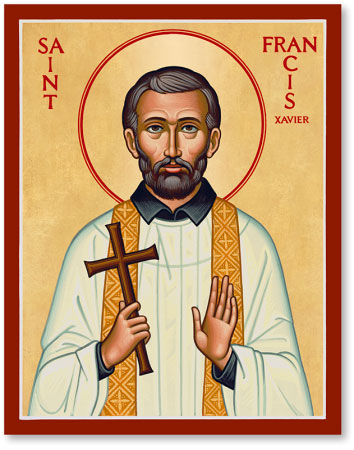
A Life of Hope: St. Francis Xavier ~ Br. Matt Pepple, Postulant

St. Francis Xavier was born in the family castle of Xavier, in Pamplona in the Basque area of Spanish Navarre in 1506. He was sent to the University of Paris in 1525 and obtained his licentiate in 1528. He met with St. Ignatius Loyola and was one of the seven, who in 1534 founded the Society of Jesus. He intended to join Ignatius in Venice and then they would go as missionaries to Palestine, a trip which did not occur. He was ordained in 1537 and went to Rome in 1538 and 1540 when the Pope formally recognized the Society of Jesus. At that time, he, alongside Father Simon Rodriguez, was ordered to the Far East as the first Jesuit missionaries.
King John the 3rd retained Fr. Simon in Lisbon but Francis, spent six months preaching in Mozambique along with giving some assistance to the sick. He eventually arrived in Goa, India in 1542 with Fr. Paul of Camerino and Francis Mansihas. He began evangelizing the natives and attempted to reform the Europeans by adopting their customs on his many travels. He converted tens of thousands to Christianity in the subsequent decade.
He visited Paravas in India, Malacca, near New Guinea, Morotai near the Philippines and Japan. In 1551, the East and India was dedicated as a separate province and Ignatius designated Francis as its first provincial. In 1552 he went to China and landed on Sancian; where he died before he could reach the mainland. Working against excessive complications, language problems, he had no proficiency in foreign speaking, insufficient monies, and lack of assistance, often actual confrontation, even from European representatives; he left the mark of his missionary enthusiasm and vigor on areas which adhered to Christianity for centuries. He was beatified in 1622 and declared patron of all foreign missions by Pope Pius X. on Dec. 3.
Our scripture for the week, Romans 15:4-13; St. Paul is speaking to us on what was written in the old days being relevant even today for our instruction. “So that by determination and encouragement of the scriptures that we may have hope.” We need to live more in an attitude of hope and inspiration from the direction of the scriptures. Paul also tells us that our God wants us to live in harmony and peace with our neighbors, as Christ did. And that all of us in this harmony and unison may glorify the God and Father of our Lord, Jesus Christ. We are to be welcoming of our neighbors as Christ has welcomed us. Jesus became a servant to the circumcised on the behalf of the truth of God in order that he might authorize the promises known to the fathers, so that the Gentiles may exalt God for his kindness and compassion. For it is written, “Therefore I will confess you among the Gentiles, and sing praises to your name.” Again, he said, “Rejoice, O Gentiles, and let all of the peoples praise Him.” Paul refers to the prophet Isaiah, “The root of Jesse shall come, the one who rises to rule the Gentiles; in him the Gentiles shall hope.” May the God of hope fill you with all joy and peace in believing, so that you may prosper in hope by the power of the Holy Spirit.
It was this hope that served as an inspiration for St. Francis Xavier. To have been a Missionary at his time, or really at the present time, was a very dangerous time. Things may have appeared very daunting to him, in the tasks that he was set forth. At any time, he and companions could have just given up. Hope, on the other hand, can be a very inspirational tool. God wants us to live and act in a spirit of hope, to be hopeful of the future and instill the hope of Christ in the present. We all have a certain desire for things to happen, for a certain situation to improve and get better, for a loved one who is sick to become healthier again, or for a better job. For as long as we live in hope, we can greet our neighbors, friends and relatives in an attitude of hope. As long as we have hope centered in Christ, there is always a chance for things to change. Jesus wants to be the light in your darkness and to be your hope for better things.
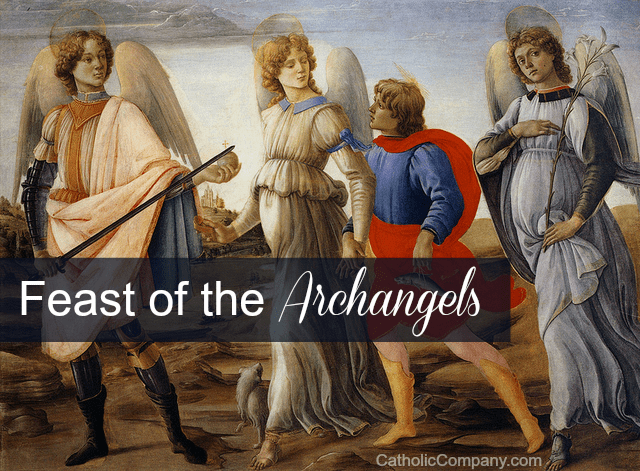
The Feast of the Archangels
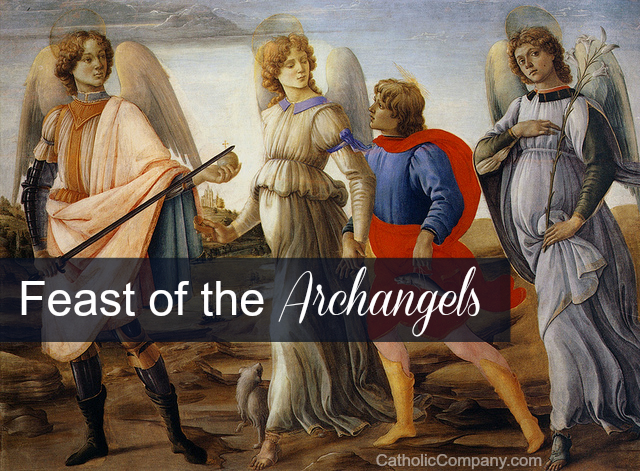
The liturgy celebrates the feast of these three archangels who are venerated in the tradition of the Church. Of the seven archangels, only three are named in Scripture. Michael (Who is like God?) was the archangel who fought against Satan and all his evil angels, defending all the friends of God. He is the protector of all humanity from the snares of the devil. Gabriel (Strength of God) announced to Zachariah the forthcoming birth of John the Baptist, and to Mary, the birth of Jesus. His greeting to the Virgin, “Hail, full of grace,” is one of the most familiar and frequent prayers of the Christian people. Raphael (Medicine of God) is the archangel who took care of Tobias on his journey.
Angels are pure, created spirits. The name angel means servant or messenger of God. Angels are celestial or heavenly beings, on a higher order than human beings. Angels have no bodies and do not depend on matter for their existence or activity. They are distinct from saints, which men can become. Angels have intellect and will, and are immortal. They are a vast multitude, but each is an individual person. Archangels are one of the nine choirs of angels listed in the Bible. In ascending order, the choirs or classes are 1) Angels, 2) Archangels, 3) Principalities, 4) Powers, 5) Virtues, 6) Dominations, 7) Thrones, 8) Cherubim, and 9) Seraphim.
St. Michael
The name of the archangel Michael means, in Hebrew, who is like unto God? and he is also known as “the prince of the heavenly host.” He is usually pictured as a strong warrior, dressed in armor and wearing sandals. St. Michael the Archangel is mentioned more than any other angel in the Bible. His name appears in Scripture four times, twice in the Book of Daniel, and once each in the Epistle of St. Jude and the Book of Revelation. From Revelation we learn of the battle in heaven, with St. Michael and his angels combatting Lucifer and the other fallen angels (or devils). We invoke St. Michael to help us in our fight against Satan; to rescue souls from Satan, especially at the hour of death; to be the champion of the Jews in the Old Testament and now Christians; and to bring souls to judgment.
This day is referred to as “Michaelmas” in many countries and is also one of the harvest feast days. In England this is one of the “quarter days”, which was marked by hiring servants, electing magistrates, and beginning of legal and university terms. This day also marks the opening of the deer and other large game hunting season. In some parts of Europe, especially Germany, Denmark, and Austria, a special wine called “Saint Michael’s Love” (Michelsminne) is drunk on this day. The foods for this day vary depending on nationality. In the British Isles, for example, goose was the traditional meal for Michaelmas, eaten for prosperity, France has waffles or Gaufres and the traditional fare in Scotland used to be St. Michael’s Bannock (Struan Micheil) — a large, scone-like cake. In Italy, gnocchi is the traditional fare.
Patron: Against temptations; against powers of evil; artists; bakers; bankers; battle; boatmen; cemeteries; coopers; endangered children; dying; Emergency Medical Technicians; fencing; grocers; hatmakers; holy death; knights; mariners; mountaineers; paramedics; paratroopers; police officers; radiologists; sailors; the sick; security forces; soldiers; against storms at sea; swordsmiths; those in need of protection; Brussels, Belgium; Caltanissett, Sicily; Cornwall, England; Diocese of Pensacola-Tallahassee Florida; England; Germany; Archdiocese of Mobile, Alabama; Papua, New Guinea; Puebla, Mexico; San Miguel de Allende, Mexico; Sibenik, Croatia; Archdiocese of Seattle, Washington; Diocese of Springfield, Massachusetts.
Symbols: Angel with wings; dressed in armour; lance and shield; scales; shown weighing souls; millstone; piercing dragon or devil; banner charged with a dove; symbolic colors orange or gold.
Prayer: Saint Michael the Archangel, defend us in battle. Be our protection against the wickedness and snares of the devil. May God rebuke him we humbly pray; and do Thou, O Prince of the Heavenly Host, by the Power of God, cast into hell Satan and all the evil spirits, who prowl through the world seeking the ruin of souls. Amen.
St. Gabriel
St. Gabriel’s name means “God is my strength”. Biblically he appears three times as a messenger. He had been sent to Daniel to explain a vision concerning the Messiah. He appeared to Zachary when he was offering incense in the Temple, to foretell the birth of his son, St. John the Baptist. St. Gabriel is most known as the angel chosen by God to be the messenger of the Annunciation, to announce to mankind the mystery of the Incarnation.
The angel’s salutation to our Lady, so simple and yet so full of meaning, Hail Mary, full of grace, has become the constant and familiar prayer of all Christian people.
Patron: Ambassadors; broadcasting; childbirth; clergy; communications; diplomats; messengers; philatelists; postal workers; public relations; radio workers; secular clergy; stamp collectors; telecommunications; Portugal; Archdiocese of Seattle, Washington.
Symbols: Archangel; sceptre and lily; MR or AM shield; lantern; mirror; olive branch; scroll with words Ave Maria Gratia Plena; Resurrection trumpet; shield; spear; lily; symbolic colors, silver or blue.
Prayer to St. Gabriel:
O Blessed Archangel Gabriel, we beseech thee, do thou intercede for us at the throne of divine Mercy in our present necessities, that as thou didst announce to Mary the mystery of the Incarnation, so through thy prayers and patronage in heaven we may obtain the benefits of the same, and sing the praise of God forever in the land of the living. Amen.
St. Raphael
Our knowledge of the Archangel Raphael comes to us from the book of Tobit. His mission as wonderful healer and fellow traveller with the youthful Tobias has caused him to be invoked for journeys and at critical moments in life. Tradition also holds that Raphael is the angel that stirred the waters at the healing sheep pool in Bethesda. His name means “God has healed”.
Patron: Blind; bodily ills; counselors; druggists; eye problems; guardian angels; happy meetings; healers; health inspectors; health technicians; love; lovers; mental illness; nurses; pharmacists; physicians; shepherds; against sickness; therapists; travellers; young people; young people leaving home for the first time; Archdiocese of Dubuque, Iowa; Archdiocese of Seattle, Washington.
Symbols: Staff; wallet and fish; staff and gourd; archangel; young man carrying a staff; young man carrying a fish; walking with Tobias; holding a bottle or flask; symbolic colors, gray or yellow.
Prayer to St. Gabriel:
O Raphael, lead us towards those we are waiting for, those who are waiting for us! Raphael, Angel of happy meetings, lead us by the hand towards those we are looking for! May all our movements, all their movements, be guided by your light and transfigured by your Joy.
Angel guide of Tobias, lay the request we now address to you at the feet of Him on whose unveiled face you are privileged to gaze. Lonely and tired, crushed by the separations and sorrows of earth, we feel the need of calling to you and of pleading for the protection of your wings, so that we may not be as strangers in the province of Joy, all ignorant of the concerns of our country.
Remember the weak, you who are strong–you whose home lies beyond the region of thunder, in a land that is always peaceful, always serene, and bright with the resplendent glory of God.
Amen.
Collect: O God, who dispose in marvelous order ministries both angelic and human, graciously grant that our life on earth may be defended by those who watch over us as they minister perpetually to you in heaven. Through our Lord Jesus Christ, your Son, who lives and reigns with you in the unity of the Holy Spirit, one God, for ever and ever.
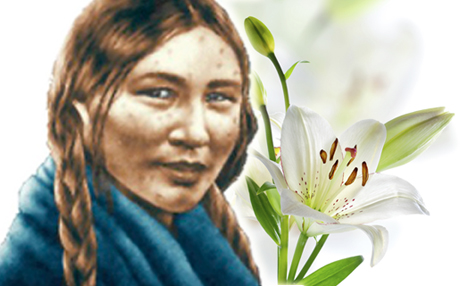
Memorial of Saint Kateri Tekakwitha ~ Br. Michael Marshall, Novice

Saint Kateri Tekakwitha was a Native American from the Algonquin-Mohawk tribes. She lived during a time when European colonists interacted with Native Americans in the fur trade. The Dutch allied with the Mohawk, while the French allied with the Huron. This led to conflict among the tribes, which made the living environment difficult for her people. She contracted smallpox as a child. This epidemic killed her family, and it left her face scarred. At the age of 19, she converted to Catholicism and was baptized in honor of Saint Catherine of Sienna. She did not marry, and moved to a Jesuit mission where she lived for the last 5 years of her life because many of her tribe shunned her for her decision to convert to Catholicism. She took the vow of perpetual virginity. Saint Kateri truly believed in the value of suffering as part of religious penance. It is said that the scars on her face disappeared upon her death at the age of 24. What led to her cause for sainthood were events of relics healing sick people. She was beatified by John Paul II in 1980, and canonized by Benedict XVI on October 21, 2012. She is the first Native American to be canonized.
First Reading – Isaiah 26:7-9, 12, 16-19
The way of the just is smooth;
the path of the just you make level.
Yes, for your way and your judgments, O LORD,
we look to you;
Your name and your title
are the desire of our souls.
My soul yearns for you in the night,
yes, my spirit within me keeps vigil for you;
When your judgment dawns upon the earth,
the world’s inhabitants learn justice.
O LORD, you mete out peace to us,
for it is you who have accomplished all we have done.
O LORD, oppressed by your punishment,
we cried out in anguish under your chastising.
As a woman about to give birth
writhes and cries out in her pains,
so were we in your presence, O LORD.
We conceived and writhed in pain,
giving birth to wind;
Salvation we have not achieved for the earth,
the inhabitants of the world cannot bring it forth.
But your dead shall live, their corpses shall rise;
awake and sing, you who lie in the dust.
For your dew is a dew of light,
and the land of shades gives birth.
Responsorial Psalm – Psalm 102:13-14AB and 15, 16-21
- From heaven the Lord looks down on the earth.
You, O LORD, abide forever,
and your name through all generations.
You will arise and have mercy on Zion,
for it is time to pity her.
For her stones are dear to your servants,
and her dust moves them to pity.
R. From heaven the Lord looks down on the earth.
The nations shall revere your name, O LORD,
and all the kings of the earth your glory,
When the LORD has rebuilt Zion
and appeared in his glory;
When he has regarded the prayer of the destitute,
and not despised their prayer.
R. From heaven the Lord looks down on the earth.
Let this be written for the generation to come,
and let his future creatures praise the LORD:
“The LORD looked down from his holy height,
from heaven he beheld the earth,
To hear the groaning of the prisoners,
to release those doomed to die.”
R. From heaven the Lord looks down on the earth.
Gospel: Matthew 11:28-30
Jesus said:
“Come to me, all you who labor and are burdened,
and I will give you rest.
Take my yoke upon you and learn from me,
for I am meek and humble of heart;
and you will find rest for yourselves.
For my yoke is easy, and my burden light.”
We can see that Saint Kateri Tekakwitha had a very hard life, with many struggles of tribal conflict, an illness which significantly affected her physical appearance, and the death of her direct family; yet despite all of these situations, God rewarded her with glory upon and after her death. Based upon the history that White people have with Native Americans due to prejudice, it might seem strange that we can look to Saint Kateri Tekakwitha as an example of how to overcome struggles in life, BUT her life is a clear illustration of what the readings for today are telling us. When she converted to Catholicism and took the vow of perpetual virginity, she put all trust in God; even understanding that suffering is a form of penance for the greater glory of God. The Gospel is exactly what this is all about.
In today’s context, we all have our own struggles in life which we can allow to overtake us, or we can choose to trust in God to overcome them; these challenges might be a disability, ongoing family conflict, financial troubles, or even a spiritual crisis. It is just a matter of how we handle these situations. Not everybody is able to overcome obstacles in life, and reach the point of throwing in the towel because the sight of God’s love and recognizing that the yoke is not as heavy as it may seem when trusting in God. Ultimately, we have to ask ourselves if we will be like Saint Kateri Tekakwitha in turning to God, hearing the words of Jesus:
“Come to me, all you who labor and are burdened,
and I will give you rest.
Take my yoke upon you and learn from me,
for I am meek and humble of heart;
and you will find rest for yourselves.
For my yoke is easy, and my burden light.”
Lord, help us to recognize when we need to turn to you in times of struggle, and allow the yoke to be lightened by turning to you. May we follow the example of Saint Kateri Tekakwitha by trusting in you. This we ask through Christ, Our Lord. Amen.
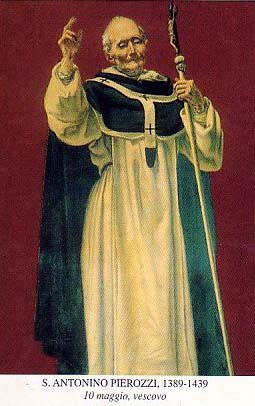
Saint Antoninus
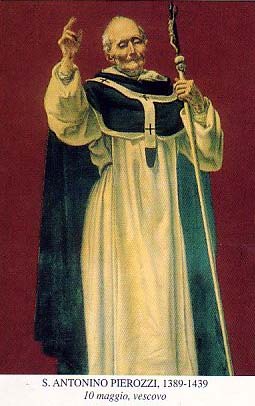
The story of Antonino Pierozzi is that of a great soul in a frail body, and of the triumph of virtue over vast and organized wickedness. His father, Niccolo Pierozzi, had been a noted lawyer, notary to the Republic of Florence. He and his wife Thomassina had their only child baptized as Antonio, but because the saint was both small and gentle people called him by the affectionate diminutive ‘Antonino’ all his life.
The world in which he lived was engrossed in the Renaissance; it was a time of violent political upheaval, of plague, wars, and injustice. The effects of the Great Schism of the West, over which Saint Catherine had wept and prayed a generation before, were still tearing Christendom apart when Antoninus was born–in the same year as Cosimo de’Medici. The fortunes of Florence were largely to rest in the hands of these two men.
There are only a few known details about the early life of Antoninus, but they are revealing ones. He was a delicate and lovable child. His stepmother, worried over his frailty, often gave him extra meat at table. The little boy, determined to harden himself for the religious life, would slip the meat under the table to the cats. Kids!
From the cradle his inclination was to piety. His only pleasure was to read the lives of saints and other good books, converse with pious persons, or employ himself in prayer. Accordingly, if he was not at home or at school, he was always to be found at Saint Michael’s Church before a crucifix or in our Lady’s chapel there. He had a passion for learning, but an even greater ardor to perfect himself in the science of salvation. In prayer, he begged nothing of God but His grace to avoid sin, and to do His holy will in all things.
Antoninus hitched his wagon to the star of great austerity and, at 14, discovered the answer to all his questions in the preaching of Blessed John Dominici, who was then the prior of Santa Maria Novella and later became cardinal-archbishop of Ragusa and papal legate. Antoninus went to speak with the preacher and begged to be admitted to the order.
At the time, Blessed John was reforming the Dominican priories of the area according to the wishes of Blessed Raymond of Capua. John planned to build a new and reformed house at Fiesole (near Florence), which he hoped to start again with young and fervent subjects who would revivify the order. It had declined under the plague and the effects of the schism. As yet, he had no building in which to house the new recruits.
Even were the monastery completed, it was to be a house of rigorous observance, and Antoninus looked far too small and frail for such an austere community. John Dominici, not wishing to quench the wick of youthful eagerness, had not the heart to explain all this. He told Antoninus to go home and memorize the large and forbidding book called Decretum Gratiani, supposing that its very bulk would discourage the lad.
Antoninus, however, was possessed of an iron will. He went home and began to read the book straight through. By the end of the year, he had finished the nearly impossible task set before him, and returned to Blessed John to recite it as requested. There was now no further way to delay his reception into the order, so he was received into the Dominican Order “for the future priory of Fiesole” in 1405 by Blessed John.
Due to the unsettled state of the Church, the order, and Italian politics, the training of the young aspirants was conducted at several different locations, including Cortona, and, for a time, the regular course of studies could not be pursued. Antoninus, nothing daunted, studied by himself. He was happily associated during these years with several future Dominican saints and beati, including Lawrence of Ripafratta, the novice master; Constantius of Fabriano; Peter Capucci; and his great friend, the artist, Fra Angelico.
Ordained and set to preaching, Antoninus soon won his place in the hearts of the Florentines. Each time he said Mass, he was moved to tears by the mercy of God, and his own devotion moved other hearts. He was given consecutively several positions in the order. While still very young, he was made prior of the Minerva in Rome (1430). He served the friars in various priories in Italy (including Cortona, Fiesole (1418-28), Naples, Gaeta, Siena, and Florence). As superior of the reformed Tuscan and Neapolitan congregations, and also as prior provincial of the whole Roman province, Antoninus zealously enforced the reforms initiated by John Dominici with a view to restoring the primitive rule. Antoninus became a distinguished master of canon law and assisted popes at their councils. There is evidence that at some point he served as a judge on the Rota. Pope Eugenius IV summoned him to attend the general Council of Florence (1439), and he assisted at all its sessions.
In 1436, he founded the famous priory of San Marco in Florence with the financial aid of Cosimo de’Medici in buildings abandoned by the Silvestrines. Under his guidance and encouragement, the San Marco’s monastery became the center of Christian art. He called upon his old companion, Saint Fra Angelico, and on the miniaturist, Fra Benedetto (Angelico’s natural brother), to do the frescoes and the choir books which are still preserved there. He also ensured that an outstanding library was collected.
Antoninus is still remembered today in the exquisite ‘Cloister of Saint Antoninus’ with its wide arches and beautiful ionic capitals, designed in the saint’s lifetime by Michelozzo for San Marco. In the lunettes of the cloister Bernardino Poccetti and others painted scenes from Antoninus’s life. (When Giambologna restored and altered the church of San Marco in 1588, he built for the saint’s body a superb chapel.)
To his horror, Antoninus’s wisdom and pastoral zeal made him a natural choice by Pope Eugenius IV for archbishop of Florence in 1446. Although Tabor reports that the pope had first chosen Fra Angelico, whose purity and wisdom had become known when he was painting in Rome. The artist entreated the holy father to choose Fra Antoninus instead, who had done great service by his unworldliness and gentle but irresistible power.
Antoninus’s appointment as bishop was a genuine heartbreak to a scholar who could never find enough time to study; in fact, he had been in Naples for two years reforming the houses of the province when he received word of the nomination and confirmation by the Florentines. For a time he tried to escape accepting the dignity by hiding himself on the island of Sardinia. That did not work. So he tried begging the holy father to excuse him because of his weak physical constitution. The pope would accept no excuses; he commanded Antoninus to proceed immediately to Fiesole under the pain of excommunication for disobedience.
While he obeyed with trepidation, it was a blessing for the people of Florence that he was consecrated bishop in March 1446; they were not slow in demonstrating their appreciation of their good fortune. He was the ‘people’s prelate’ and the ‘protector of the poor’ for he discharged his office with inflexible justice and overflowing charity. His love extended to the rich, too. The next year, the dying Pope Eugenius summoned Antoninus to Rome in order to receive the last sacraments from the holy bishop before dying in his arms on February 23, 1447.
For the remainder of his life, Antoninus combined an amazing amount of active work with constant prayer. He allowed himself very little sleep. In addition to the church office, he recited daily the office of our Lady, and the seven penitential psalms; the office of the dead twice a week; and the whole psalter on every festival. His prayer life allowed him to exhibit an exterior of serenity regardless of the situation. Francis Castillo, his secretary, once said to him, bishops were to be pitied if they were to be eternally besieged with hurry as he was. The saint made him this answer, which the author of his vita wished to see written in letters of gold: “To enjoy interior peace, we must always reserve in our hearts amidst all affairs, as it were, a secret closet, where we are to keep retired within ourselves, and where no business of the world can over enter.”
Because of his reputation for wisdom and ability, Antoninus was often called upon to help in public affairs, civil and ecclesiastical. Pope Nicholas V sought his advice on matters of church and state, forbade any appeal to be made to Rome from the archbishop’s judgements, and declared that Antonino in his lifetime was as worthy of canonization as the dead Bernardino of Siena, whom he was about to raise to the altars. Pius II nominated him to a commission charged with reforming the Roman court. The Florentine government gave him important embassies on behalf of the republic and would have sent him as their representative to the emperor if illness had not prevented him from leaving Florence. Yet he also busied himself with the beauty of the chant, and personally attended the Divine Office at his cathedral.
A distinguished writer on international law and moral theology, his best known work is Summa moralis, which is generally thought to have laid the groundwork for modern moral theology. He was conscious of the new problems presented by social and economic development, and taught that the state had a duty to intervene in mercantile affairs for the common good, and to give help to the unfortunate and needy. He was among the first Christian moralists to teach that money invested in commerce and industry was true capital; therefore, it was lawful and not usury to claim interest on it (combine this information with the fact that he was a staunch opponent of usury). All his many books were of a practical nature, including guidance for confessors (Summa confessionis) and a chronicle of the history of the world.
His first concern, however, was always for the people of his diocese, to whom he set an example of simple living and inflexible integrity. He preached regularly, made a yearly visitation of all the parishes in the diocese on foot, put down gambling, opposed both usury and magic, reformed abuses of all kinds, and served as the example of Christian charity. Each day he held an audience for anyone who wished to speak with him. No one appealed for his help, material or spiritual, in vain.
Antoninus was probably best known for his kindness to the poor, and there were many in the rich city of Florence. He pulled up his own flower garden and planted vegetables for the poor. He drove his housekeeper to distraction by giving away even his own tableware, food, clothing, and furniture. He never possessed any small precious objects, such as plates or jewels. His stable generally housed one mule, which he often sold to relieve some poor person. When that happened, some wealthy citizen would buy the animal and offer it as a present to the charitable archbishop. He kept in personal contact with the poor of the city, particularly with those who had fallen from wealth and were ashamed to beg. For their care he founded a society called the “Goodmen of Saint Martin of Tours,” who went about quietly doing much-needed charitable work–much in the fashion of our modern Society of Saint Vincent de Paul. His particular establishment now provides for about 600 families.
His charity did not end with the poor, but also extended to his enemies. A criminal, named Ciardi, who was called before the bishop to answer accusations, attempted to assassinate the archbishop. The saint narrowly escaped the thrust of his poniard, which pierced the back of his chair. Yet Antoninus freely forgave the potential assassin and prayed for his conversion. God answered his prayers so that he had the comfort of seeing Ciardi become a sincere Franciscan penitent.
When the plague again came to Florence in 1448, it was the saintly archbishop who took the lead in almsgiving and care of the sick. Many Dominicans died of the plague as they went about their priestly duties in the stricken city; sad but undaunted, Antoninus continued to go about on foot among the people, giving both material and spiritual aid. During the earthquakes of 1453-1455, he was similarly self-giving. The example of his own charity led many rich persons to likewise provide for the afflicted.
Antoninus’s was a role model in other ways, too. When he learned that two blind beggars had amassed a fortune, he took the money from them and distributed it to others in dire necessity. Was this an injustice? No, he provided for all the needs of the two for the rest of their lives. The bishop tried to hide his virtue from others and himself, until he would see reflections of them in his flock. By accident he discovered one such flame that he had sparked in a poor, obscure handicraftsman who continually practiced penance. The man spent Sundays and holidays in the churches, secretly distributed to the poor all he earned beyond that needed for subsistence, and kept a poor leper in his home, joyfully serving the ungrateful beggar and dressing his ulcers with his own hands. The leper, increasingly morose and imperious, carried complaints against his benefactor to the archbishop, who, discovering this hidden treasure of sanctity in the handicraftsman, secretly honored it, while he punished the insolence of the leper.
Cosimo de’Medici, who did not always have compliments for the Dominicans, admitted frankly, “Our city has experienced all sorts of misfortunes: fire, earthquake, drought, plague, seditions, plots. I believe it would today be nothing but a mass of ruins without the prayers of our holy archbishop.”
After 13 years as bishop, Antoninus died surrounded by his religious brothers from San Marco and mourned by the whole city. His whole life was mirrored in his last words, “to serve God is to reign.” Pope Pius II assisted at his funeral, when he was buried in San Marco’s church. Pius eulogized Antoninus as one who “conquered avarice and pride, was outstandingly temperate in every way, was a brilliant theologian, and popular preacher.”
His hairshirt and other relics were the vehicle for many miracles. It is significant that the canonization of Saint Antoninus was decreed by the short-lived Pope Adrian VI (August 31, 1522, to September 14, 1523), whose ideas for church reform were radical and drastic. His body was found uncorrupted in 1559, when it was translated with pomp and solemnity into a chapel richly adorned by the two brothers.
Born: March 1, 1389 at Florence, Italy
Died: May 2, 1459 at Florence, Italy
Canonized: May 1523 by Pope Adrian VI
Patronage: Fever
Representation: Antonius of Florence is generally portrayed in art as a Dominican bishop with scales. He might be shown (1) weighing false merchandise against the word of God; (2) as a Dominican with a pallium; (3) as a young man giving alms; (4) drifting down a river in a boat; or (5) holding a book in a bag . The likeness of the archbishop was recorded by contemporary artists, as in the bust at Santa Maria Novella and a statue at the nearby Uffizi Gallery in Florence. Antonio del Pollaiuolo’s painting of him at the foot of the Cross survives at San Marco, as does a series of scenes from his life in its cloister of San Antonino, and a portrait by Fra Bartolomeo.
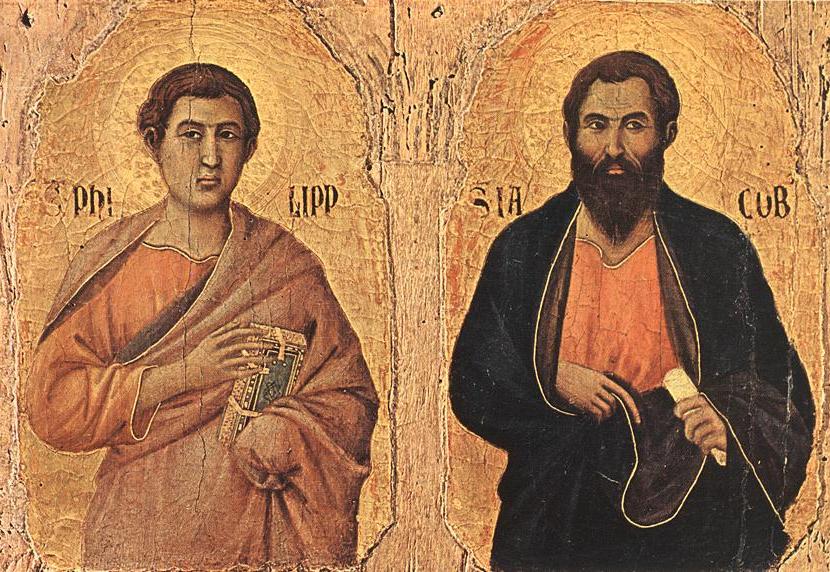
The Feast of Sts. Philip and James ~ The Rev. Lady Sherwood, OPI

Today as a church and as Christians we celebrate the double feast of the Apostles St. Philip and St. James.
St. Philip
Philip was born in Bethsaida, Galilee. He may have been a disciple of John the Baptist and is mentioned as one of the Apostles in the lists of Matthew, Mark, Luke, and in Acts. Aside from the lists, he is mentioned only in John in the New Testament. He was called by Jesus Himself and brought Nathanael to Christ. Philip was present at the miracle of the loaves and fishes, when he engaged in a brief dialogue with the Lord, and was the Apostle approached by the Hellenistic Jews from Bethsaida to introduce them to Jesus. Just before the Passion, Jesus answered Philip’s query to show them the Father, but no further mention of Philip is made in the New Testament beyond his listing among the Apostles awaiting the Holy Spirit in the Upper Room. According to tradition he preached in Greece and was crucified upside down at Hierapolis under Emperor Domitian.
St. James
St. James the Less, the author of the first Catholic Epistle, was the son of Alphaeus of Cleophas. His mother Mary was either a sister or a close relative of the Blessed Virgin, and for that reason, according to Jewish custom, he was sometimes called the brother of the Lord. The Apostle held a distinguished position in the early Christian community of Jerusalem. St. Paul tells us he was a witness of the Resurrection of Christ; he is also a “pillar” of the Church, whom St. Paul consulted about the Gospel.
According to tradition, he was the first Bishop of Jerusalem, and was at the Council of Jerusalem about the year 50. The historians Eusebius and Hegesippus relayed that St. James was martyred for the Faith by the Jews in the Spring of the year 62, although they greatly esteemed his person and had given him the surname of “James the Just.”
Tradition has always recognised him as the author of the Epistle that bears his name. Internal evidence based on the language, style, and teaching of the Epistle reveals its author as a Jew familiar with the Old Testament, and a Christian thoroughly grounded in the teachings of the Gospel. External evidence from the early Fathers and Councils of the Church confirmed its authenticity and canonicity. The date of its writing cannot be determined exactly. According to some scholars it was written about the year 49 A.D. Others, however, claim it was written after St. Paul’s Epistle to the Romans (composed during the winter of 57-58 A.D.). It was probably written between the years 60 and 62 A.D.
St. James addresses himself to the “twelve tribes that are in the Dispersion,” that is, to Christians outside Palestine; but nothing in the Epistle indicates that he is thinking only of Jewish Christians. St. James realises full well the temptations and difficulties they encounter in the midst of paganism, and as a spiritual father, he endeavours to guide zero direct them in the faith. Therefore, the burden of his discourse is an exhortation to practical Christian living.
Both St. Philip and St. James have their joint feast day on May 3rd.
Let us pray:
As we remember the apostles Philip and James we are reminded that God calls us all and sends us out into the world to be his hands and his feet. We thank you Jesus for the tasks you have entrusted to us. Help us each day to become more aware of our calling to serve you.
Lord in your mercy – hear our prayer
We pray for the needs of the world, remembering particularly those parts of the world where people live in daily fear of violence and oppression. We call to mind those parts of the world particularly on our hearts today.
Lord in your mercy – hear our prayer
We remember that Philip opened the scriptures to the Ethiopian eunuch helping to bring him to Christ. Let us also bring others to the full knowledge and love of Christ.
Amen.
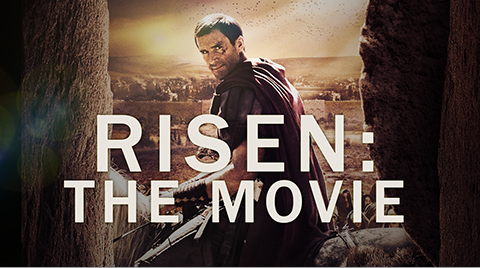
Movie Review: RISEN ~ The Rev L.S.T. Sherwood & The Rt. Rev. M.R. Beckett
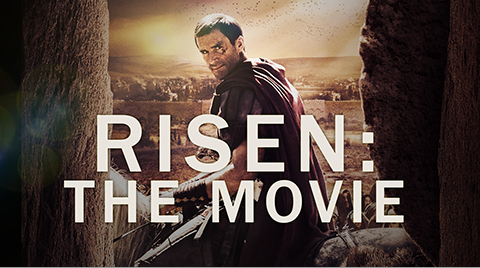
Risen is a 2016 American biblical drama film directed by Kevin Reynolds, and written by Reynolds and Paul Aiello. The film stars Joseph Fiennes, Tom Felton, Peter Firth, and Cliff Curtis, and was released by Columbia Pictures on February 19, 2016.
This is an excellent movie telling the Easter story from the sideways perspective not usually seen in movies and as such gives it a fresh and interesting perspective: through the faith journey of a Roman Officer, the Tribune, Clavius. The movie begins at an inn where the innkeeper, noticing Clavius` ring, brings Clavius to recount this story to him. Clavius starts the moving story at the crucifixion scene with Jesus accompanied on either side by the thieves who are already on the crosses being crucified with Jesus.
Jesus`s mother, Mary was there among the large gathered crowd which consisted mostly of women. Clavius ordered the Roman Centurion at the scene to break the legs of the thieves but upon seeing Mary, Clavius decides to pierce Jesus through his side piercing his heart and lungs by himself instead. After Jesus and the thieves had succumbed to death, the bodies of the thieves were taken down and dragged to a pit where they were left to rot. In the film, I could almost imagine being stood there as the effects of the swarms of flies etc. made it appear very realistic.
Joseph of Arimathea, who was a secret disciple of Jesus, had sought and received permission from Pilate to take down Jesus` body and to place his body in a new family tomb he had. He took the letter of permission to Clavius and the body was given to Joseph. The scribes however, were still very concerned about the stories going around told by Jesus` followers, namely that Jesus would rise again in three days. They took it the Sanhedrin where they managed to get the Roman seal placed on the stone of Jesus` tomb and two Roman Guards were placed there to keep watch.
The Roman Guards had not slept in two days and had some wine with them which they drank and fell asleep, to be awakened by the noise of the ropes of the tomb blasting apart and the stone of the tomb rolling open. The guards saw Jesus in the body and panicked due to the fact that they, having fallen asleep, meant death by Roman law. They fled to the sanctuary of the Jewish leaders who paid the only one who would speak to tell Clavius that the disciples of Jesus had stolen the body. Clavius was ordered to search for the body of Jesus, and if necessary to find a body that could be identified as Jesus, so as to quash the rumors of Jesus’ resurrection. All the recently executed dead were scrutinised to see if any could Jesus. None of the bodies that were looked would do.
Desperate to solve this riddle, Clavius hunted down first Mary Magdalen who had been seen near the tomb, then the other disciples. Clavius finally found the disciples all gathered together and Jesus was there amongst them. This part brought a smile to my heart, as this is where Clavius finally comes to believe and follows the disciples to Galilee where Jesus had stated they would see him again. The total change of heart and new found faith of Clavius was very realistically captured and was an extremely moving experience.
The disciples, together with Clavius, travelled to Galilee where they decided to do some fishing whilst waiting for Jesus but not one fish was caught. Then first thing in the morning, Peter saw someone walking along the beach and heard him tell them to try the right side, so out of faith Peter and the other disciples lowered the net as Jesus had instructed and the nets were over full with fish. When they came to the shore, they sat with Jesus and then watched as Jesus performed a miracle of healing on a man who was being kicked by others because he was a leper. After this, Jesus went to prepare a place for his disciples in his Fathers kingdom and he left the disciples the message that we still are told today, ”Go and tell tbe Gospel to all the world and to all nations”.
This film captured our hearts with the sheer beauty of the Lord’s love for us and what we should be doing today in his name for others. We are the disciples of today and are charged to do his works until his glorious return. An inspiring story of faith, a fantastic movie, with the message given in a fresh and interesting perspective, we consider Risen to be a very moving and definiately worth watching film. We give it 5 stars!!!!
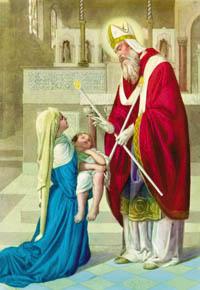
St. Blaise ~ The Rev. Lady Sherwood, OPI

St. Blaise was born in Sebastia in historical Armenia, now Sivas in Turkey. According to tradition, he was born from a noble family although we don`t know much about his life. What we do is that from being a healer of bodily ailments he became a physician of souls, and he retired for a time, by divine inspiration, to a cave where he remained in prayer.
St. Blaise was Bishop of Sebastea and he instructed his people as much by his example as he did by his words, and he has many miracles attributed to him as from all areas people came flocking to him for the cure of bodily and spiritual ills. In 316, the governor of Cappodocia and Lesser Armenia, Agricolaus began a persecution of christians by the order of the Emperor Licinius and Saint Blaise was seized. He endured interrogation and a severe scourging before he was hurried off to prison where he was subsequently beheaded.
The legendary Acts of St. Blaise were written in Greek 400 years later and as given in the Grande Encylopedie says as follows:
“Blaise, who had studied Philosophy in his youth, was a doctor in Sebaste in Armenia, the city of his birth, who exercised his art with miraculous ability, good=will, and piety. When the bishop of the city died, he was chosen to succeed him, with the acclaimation of all the people. His holiness was manifest through many miracles:from all around, people came to find him to find cures for their spirit and body; even wild animals came in herds to receive his blessing. In 316, Agricola, the governor of Cappadocia and of Lesser Armenia, having arrived in Sebastia at the order of the Emperor Licinius to kill the christians, arrested the bishop. As he was being led away to Jail, a mother set her only son, who was choking to death on a fish=bone, at his feet, and the child was cured straight away. Regardless, the governor unable to make Blaise renounce his faith, beat him with a stick, ripped his flesh with iron combs and then beheaded him.”
Consequently, Saint Blaise is invoked for his intercession and protection against illnesses and injuries of the throat.
The Blessing of St. Blaise
In many places around the world on the day of the Feast of St. Blaise (3rd Feb), the blessing of St. Blaise is given: two candles are consecrated, usually by prayer, these candles are then held in a crossed position by a priest and are either held over the heads of the faithful, or alternatively, the faithful are touched on the throat with them.
At the same time the following blessing is given: “May Almighty God at the Intercession of St. Blaise, Bishop and Martyr, preserve you from infections of the throat and from all other afflictions”. Finally the priest makes the sign of the cross over the faithful.

The Memorial of Sts. Timothy and Titus ~ The Rev. Dcn. Scott Brown, OPI
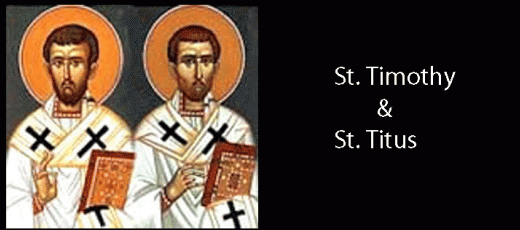
What we know from the New Testament of Timothy’s life makes it sound like that of a modern harried bishop. He had the honor of being a fellow apostle with Paul, both sharing the privilege of preaching the gospel and suffering for it.
Timothy had a Greek father and a Jewish mother named Eunice. Being the product of a “mixed” marriage, he was considered illegitimate by the Jews. It was his grandmother, Lois, who first became Christian. Timothy was a convert of Paul around the year 47 and later joined him in his apostolic work. He was with Paul at the founding of the Church in Corinth. During the 15 years he worked with Paul, he became one of his most faithful and trusted friends. He was sent on difficult missions by Paul—often in the face of great disturbance in local churches which Paul had founded.
Timothy was with Paul in Rome during the latter’s house arrest. At some period, Timothy himself was in prison (Hebrews 13:23). Paul installed him as his representative at the Church of Ephesus.
Timothy was comparatively young for the work he was doing. (“Let no one have contempt for your youth,” Paul writes in 1 Timothy 4:12a.) Several references seem to indicate that he was timid. And one of Paul’s most frequently quoted lines was addressed to him: “Stop drinking only water, but have a little wine for the sake of your stomach and your frequent illnesses” (1 Timothy 5:23).
Titus has the distinction of being a close friend and disciple of Paul as well as a fellow missionary. He was Greek, apparently from Antioch. Even though Titus was a Gentile, Paul would not let him be forced to undergo circumcision at Jerusalem. Titus is seen as a peacemaker, administrator, great friend. Paul’s second letter to Corinth affords an insight into the depth of his friendship with Titus, and the great fellowship they had in preaching the gospel: “When I went to Troas…I had no relief in my spirit because I did not find my brother Titus. So I took leave of them and went on to Macedonia…. For even when we came into Macedonia, our flesh had no rest, but we were afflicted in every way—external conflicts, internal fears. But God, who encourages the downcast, encouraged us by the arrival of Titus…” (2 Corinthians 2:12a, 13; 7:5-6).
When Paul was having trouble with the community at Corinth, Titus was the bearer of Paul’s severe letter and was successful in smoothing things out. Paul writes he was strengthened not only by the arrival of Titus but also “by the encouragement with which he was encouraged in regard to you, as he told us of your yearning, your lament, your zeal for me, so that I rejoiced even more…. And his heart goes out to you all the more, as he remembers the obedience of all of you, when you received him with fear and trembling” (2 Corinthians 7:7a, 15).
The Letter to Titus addresses him as the administrator of the Christian community on the island of Crete, charged with organizing it, correcting abuses and appointing presbyter-bishops.
 The Order of Preachers, Independent
You must be logged in to post a comment.