
Category: Lesson
The Feast of All Souls ~ The Very Rev. Lady Sherwood, OPI
All Souls
Reading 1: WIS 3:1=9
R psalm : PS 23:1=3A,3B=4,5,6
Reading 2: ROM 5:5=11
or ROM 6:3=9
Gospel: JN 6:37=40
Today we come together to pray for all the Souls of the dearly departed. We pray for our passed loved ones, we pray for those who to our earthly eyes, lived a faithful and Holy life, those who loved and followed the Lord, those who passed who cared for the poor and hungry.
But we don’t only come together today to pray for the good who have passed as we are not the judge, so we also come together to pray for the Souls of the departed of those who passed to our earthly eyes having lived by earthly values and a life that sadly seemed far from God. We pray for all the departed, both the faithful and unfaithful. We pray for all the departed Souls, entrusting them all to God’s tender mercy, knowing that in the Communion of Saints, that our prayers are heard and are able to be of help to all the Souls of the departed to attain the mercy of God and eternal salvation.
We never know what sins the departed =including our loved ones, may have kept hidden out of fear or weakness, only God truly can see all the heart, so it is vitally important that we come together today to offer our prayers and to offer to our Heavenly Father, the body, blood, soul and Divinity of his dearly beloved Son, in expiation for our sins, for the sins of the world, and the sins of the departed.
We pray in hope today that our dear Lord Jesus will receive our expiatory sacrifice that we offer in faith, and applies them to the benefit of all the deceased if they are in need of our prayers and sacrifice.
Eternal rest grant unto them, O Lord, and let perpetual light shine upon them. May all the Souls of the departed rest in peace. Amen.
What About You? ~ The Solemnity of All Saints ~ The Rt. Rev. Michael Beckett, OPI

Today we celebrate the Solemnity of All Saints (also called All Saints Day).
All Saints’ Day, All Hallows Day, or Hallowmas is solemnly celebrated on 1 November by many Western Liturgical Churches to honor, literally, all the saints, known and unknown; those individuals who have attained Heaven; all the holy men and women who have lived their lives for God and for his church, who now have attained Beatific vision and their reward of Heaven.
In early Christian history it was usual to solemnize the anniversary of a Martyrs death for the Lord at the place of their martyrdom. Frequently there were multiple martyrs who would’ve suffered and died on the same day which led to multiple commemorations on the same day. Eventually, the numbers of martyrs became so great that it was impossible for a separate day to be assigned to each individually, but the church feeling that every martyr should be venerated, appointed a feast day to commemorate them all on the same day.
The origin of the festival of All Saints celebrated in the West dates to the month of May in the year 609 or 610, when Pope Boniface IV consecrated the Pantheon at Rome to the Blessed Virgin and all the martyrs. In the 730’s Pope Gregory III moved the Feast of All Saints to 1 November when he founded an oratory in St. Peter’s for the relics of the holy apostles and of all saints, martyrs and confessors, of all the just made perfect who are at rest throughout the world.”
From our Readings today, we hear of the vision of St. John from the Book of Revelation:
After this I had a vision of a great multitude, which no one could count, from every nation, race, people, and tongue. They stood before the throne and before the Lamb, wearing white robes and holding palm branches in their hands. They cried out in a loud voice:
“Salvation comes from our God, who is seated on the throne, and from the Lamb.”
All the angels stood around the throne and around the elders and the four living creatures. They prostrated themselves before the throne, worshiped God, and exclaimed:
“Amen. Blessing and glory, wisdom and thanksgiving, honor, power, and might be to our God forever and ever. Amen.”
Then one of the elders spoke up and said to me, “Who are these wearing white robes, and where did they come from?” I said to him, “My lord, you are the one who knows.” He said to me, “These are the ones who have survived the time of great distress; they have washed their robes and made them white in the Blood of the Lamb.”
Who are these nameless saints? Their anonymity teaches us that sainthood is not reached through great achievements or rare acts of bravery. Sainthood comes from simply loving God and doing our best to live our lives in a way consistent with Jesus’ commandment. I would dare say that none of the saints actually set out to be saints. They simply loved God and lived their lives to follow Him.
Revelation goes on to remind us that giving our lives over to God will not protect us or insulate us from hardship. Living in, for, with, and through God, however, will make sure that we can and will endure whatever “great distress” comes our way. In this passage of Revelation, John is speaking specifically of those who have given their lives for their faith. Christians throughout the Middle East are being martyred by forces opposed to Christianity, but in reality, it is very unlikely that any of us will be called upon to sacrifice our lives for our faith.
Our challenge, then, is to live for Christ, rather than to die for Christ. Jesus does ask to lay down our lives for Him. Peter said to the Lord, “I will lay down my life for Your sake,” and he meant it (John 13:37). Has the Lord ever asked you, “Will you lay down your life for My sake?” (John 13:38). It is much easier to die than to lay down your life day in and day out with the sense of the high calling of God. We are not made for the bright-shining moments of life, but we have to walk in the light of them in our everyday ways. For thirty-three years Jesus laid down His life to do the will of His Father. “By this we know love, because He laid down His life for us. And we also ought to lay down our lives for the brethren” (1 John 3:16).
If we are true followers of Jesus, we must deliberately and carefully lay down our lives for Him. It is a difficult thing to do, and thank God that it is, for great is our reward. Salvation is easy for us, however, because it cost God so much. But the exhibiting of salvation in our lives is difficult. God saves a person, fills him with the Holy Spirit, and then says, in effect, “Now you work it out in your life, and be faithful to Me, even though the nature of everything around you is to cause you to be unfaithful.” And Jesus says to us, “…I have called you friends….” Remain faithful to your Friend, and remember that His honor is at stake in your bodily life. We are called to remain faithful, despite the reasons the world gives us to not, despite the “great distresses” in our lives.
Who are these dressed in white robes? It is my prayer to be counted among them. What about you?

It’s About Love! ~ The Rev. Dcn. Brenden Humberdross

May the words of my mouth and the meditations of our hearts be always acceptable to you O Lord, our God and Our Redeemer.
Today’s gospel is one that we have all heard many times, it’s short and sweet and epitomises what it means to be a Christian. In the words of Jesus that we hear today we see the whole Gospel, the whole Judeo-Christian system summed up in one word; love!
To fully appreciate what Jesus is saying in today’s gospel it’s important that we take a closer look at where it is located within the scriptures and what is going on in Christ’s life. If we examine the previous chapter of Matthew we see that Christ is nearing the end of his earthly mission. He has recently had his triumphal entry into Jerusalem on the back of a donkey with throngs celebrating and lining the road with palms at a time when the city was full of people gathered to celebrate the Passover.
For a moment, I want you to put yourselves in the place of the Jewish establishment. The city is full to overflowing with people come to celebrate at the Temple. There is a sense of expectation amongst the people; expectation of celebration, but also a sense of imminent redemption. Passover is the celebration of the redemption of Israel from slavery in Egypt and a type and shadow of the future redemption of Israel by the Messiah. The Roman occupiers are pressuring the Jewish leaders to control to crowd or face consequences. And amongst all of this an upstart preacher from Galilee is welcomed into the city like a king; how would this make you feel, what would you do?
As we examine how we might feel if we were the Jewish leaders I am sure that ideas of worry, fear, and concern enter our minds. I certainly know it did me; how can I retain my power, how can I calm the mod so that the Roman occupiers don’t react badly, how can I put this up-start preacher in his place; and it is precisely here that the Jewish establishment went. From examining the scriptures the period after Jesus entered Jerusalem was a time where the Pharisees and Sadducees tried time and again to trap Jesus and show the people that he was a fraud and most certainly not the messiah.
While in the Temple the Jewish leaders tried to question Christ’s authority to teach. However. Knowing the intent of their heart Jesus quickly turned the question back on the leaders in such a way that it was clear to all that Jesus was not just another teacher. Having failed once, they again tried to trap Jesus by asking him about taxes.
Asking a preacher about taxes while they’re preaching and teaching in Church may seem a little weird to us now. However, we have to remember that at the time of Christ the Jewish people were oppressed and occupied by the Romans whom they despised and wanted to overthrow. By asking Jesus about taxed the Pharisees were hoping to use the Roman’s against Jesus. If he said not to pay taxes the people would celebrate him by the Roman authorities would arrest him for sedition; if he said to pay taxes, then the gathered Jews would likely turn against him. However as before, Jesus confounds the Pharisees by giving a truly inspired response.
Now you’d think after two failed attempts the Pharisees and Sadducees might stop, but they didn’t. In true tag team style the Pharisees retreated to contemplate their interaction with Christ whilst the Sadducees made an attempt to discredit him. This time they tried to trap Jesus teaching immorality regarding marriage and to prove his belief in the resurrection as false. However, again, Jesus could see through there plan and he shot down their flawed understanding of sacred matters.
It is at this point that today’s reading fits into the story; after multiple attempts to discredit Jesus the Jewish establishment tries one last time. The Pharisees think they’re onto a winner and ask Christ to tell them what the greatest commandment is. In the mind of the Pharisees is Jesus puts his foot wrong here he will have committed blasphemy and in the Jewish system that would mean death! However, true to his form Jesus doesn’t fall into a trap but instead gives an answer that not even the Pharisees and Sadducees can find fault with. Jesus tells them that the greatest commandment is Love; particularly love of God.
So, why is this answer so perfect? Why did it stop the establishment in their tracks and start them planning a much more direct and drastic course to rid themselves of Jesus? It was because there was no way that they could combat the truth of Jesus which was evidently of divine origin.
When I examine this reading I am always drawn to a phrase at the end as being the crux of the message: “The whole law and the prophets depend on these two commandments”. Jesus tells us that everything we have ever been asked to do by God is based on love. Our hearts and our lives should be full of love if we are to be true followers of Christ.
In rebuffing the trap of the Pharisees Jesus was not rejecting their teachings, he wasn’t saying anything revolutionary. Instead he was confirming what had been taught by all the prophets and teachers of God; he was simply stating that the primary objective of all truth is love.
It is this love that should motivate all that we do. Our dear Presiding Bishop has said to me many time that we may be the only Bible a person ever reads and the only sermon they ever hear; it’s for this reason that I truly believe love is key. If we look at all people with the love of God, if love motivates our thoughts, our words and our actions then others will feel motivated to do the same. If we could all live the perfect love of God then the Kingdom of Heaven would truly be found on earth.
I want to challenge each and every one of us this week to go out of our way to demonstrate this love. Before we leave our homes let’s pray that the love of God may flow through us and motivate everything we do. If we can do this I know that we will touch the lives of many around us, even if we don’t realise it.
Be the love is going to be my motto this week and I hope that it will be yours too!
In the name of the Father, and of the Son, a d of the Holy Spirit. Amen.
Sheetrock ~ The Feast of Sts. Simon and Jude ~ Br. Chip Noon, Novice

Today we celebrate the Feast of Saints Simon and Jude, two Apostles about whom we know almost nothing. They are mentioned in all four Gospels, but only Jude is credited with more than being listed: he asks, “But, Lord, why do you intend to show yourself to us and not to the world?”
Simon is identified as a Zealot, probably not the ones who caused the Romans to destroy Jerusalem and the temple, but still an ardent foe of the Romans and the oppressors of the Jews. Jude is known as the son (or brother) of James. We are not positive which James he is related to, however. And neither are we sure if he is the author of the Epistle of Jude. Most Catholics believe that the two are the same. Most Protestants do not.
Legend has it that they both went to Persia to preach where they were both martyred, Simon by being sawn in half and Judas by being felled with a club.
Then of course there are other stories and legends about them. But does that matter?
Maybe. Maybe not.
What does matter on this feast day is the Responsorial Psalm from today’s Mass:
- (5a) Their message goes out through all the earth.
The heavens declare the glory of God,
and the firmament proclaims his handiwork.
Day pours out the word to day,
and night to night imparts knowledge.
R. Their message goes out through all the earth.
Not a word nor a discourse
whose voice is not heard;
Through all the earth their voice resounds,
and to the ends of the world, their message.
R. Their message goes out through all the earth.
Two apostles of the Twelve are celebrated today by recognizing their works, their mission, and their triumph – they listened to the Lord, heard his Word, and now pass that word on to everyone they meet…to the ends of the world, which could be Persia…or Syria, or Lebanon.
Most commentaries spend a lot of print on their names and who they really are. Nothing is said of their works, their ideas, or their results. And that is the case with most of us in this world. Most of us will never have an entry in Wikipedia. Nor will our names be found in the Depths of the Library of Congress. And if we really think about Jesus’ message, isn’t that not surprising?
As Paul says in today’s Reading, we are members of the household of God. In Jesus we are also being built together into a dwelling place of God in the Spirit. So whether we are the Front Door of the dwelling, or simply a piece of sheetrock in the hallway, if we are gone, there is an emptiness in the house, a missing piece.
But who knows if we are missing?
In Luke’s Gospel, Jesus tells us that “Indeed, the very hairs of your head are all numbered.” Therefore, God would know if we are missing. And who matters more?
The other day I was thinking almost exactly these thoughts. At my advanced age, I have begun to dwell too much in the past. Not good, I know. But I said to my wife that I wasn’t really sure that I had lived up to my potential, etc. etc. Yes, a little whining from this corner. We had a fruitful and fulfilling conversation that took me off the pity pot and set me straight. The upshot was that today’s Mass was directed, once again, directly at me.
Yes, I’m not in Wikipedia nor the Library of Congress. But I am in the hearts of our children and grandchildren and the many close and beautiful friends I have all over the world. I’m sure that if this piece of sheetrock called Me were to go, quite a few people would miss me.
And that’s what today’s Psalm tells me, and all of us. We’re part of the continuum of God’s word. We heard the message, we consumed it, and we passed it along in our turn, after which it will be passed again, and again.
All of us are in the chain that Simon and Jude passed on. Jesus’ message continues to go out through all the earth. And today’s Gospel concludes with naming the Apostles, so somewhere, down the line, we can see our names. Now it’s up to us to keep the house a-building…pass it on!
Lord, we have heard your good news. Give us the courage, strength, and wisdom to help spread your message through all the earth.
Amen.

Render to Caesar…~ Br. Jake Vogel, Aspirant
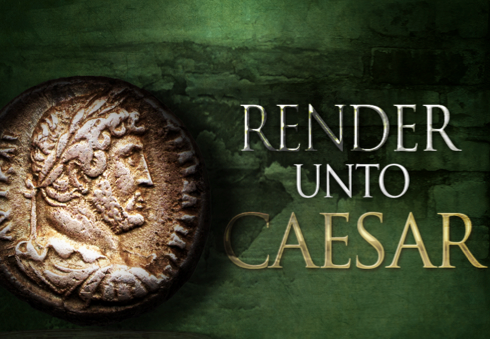
When I first set out to write this sermon I was a little overwhelmed as at first it seemed to me to be one of the more difficult Gospel readings to write about and so I did what I always do when I’m stressed or worried about something; I prayed. It was then that the message itself began to be clearer to me and through the things that I have been going through at work lately, I began to understand What Jesus meant when he said. “Render to Caesar’s the things that are Caesar’s.” This reading began to have very profound meanings for me firstly, that we should only give to those not of our family (Christians) that which they rightfully deserve nothing more and nothing less because as said in Proverbs, “Do not weary yourself to gain wealth, Cease from your consideration of it.” (Proverbs 23:4) We as Christians and as Dominicans should do what we must to satisfy our means to survive in the secular world as we are members of this realm in life, but we should not over exert ourselves to satisfy those of this world because one day this world will cease to exist. We should instead work to do what satisfies the will of our Father through his son Jesus and not let ourselves to be lead astray by the Pharisees of the world.
In this gospel reading the Pharisees are asking Jesus a question about paying taxes to catch him thinking he will either say yes to paying taxes which would not only put doubt on his allegiance to Israel but also could be considered breaking the second commandment as the money (Denarius) used to pay taxes not only had the head of Caesar but also called him ‘Divine’ there by committing idolatry; or that he would say not to pay taxes there by undermining the Roman government which could lead to his arrest. Not only does Jesus immediately sense their intent and scolds them saying, “Why are you testing me, you hypocrites?
Show me the coin that pays the census tax.” He then gives them a lesson of their own by stating in the simple sentence, “…render to Caesar what belongs to Caesar and to God what belongs to God.” (Matthew 22:18-21)
Through Jesus’ scolding of the Pharisees, we learn that we should not question or doubt the will of the Father and to do so is hypocritical because God always does what is right and just and so to question our Father’s will is to put us on the same rank as the Israelites who because, “the Lord’s anger burned against [them], He made them wander in the wilderness forty years, until the entire generation of those who had done evil in the sight of the LORD was destroyed.” (Numbers 23:13) We are shown that if we disobey Him however, that he will further teach us ways to understand his will so that we may reconcile ourselves to him.
Jesus then reminds us that we should not,
“…store up for yourselves treasures on earth, where moth and rust destroy, and where thieves break in and steal. But store up for yourselves treasures in heaven, where moth and rust do not destroy, and where thieves do not break in and steal. For where your treasure is, there your heart will be also.” (Matthew 6:19-21)
In making sure that we only have what we must to survive in the temporal realm and that we obey the law of the land by, ‘rendering to Caesar what is Caesar’s’ we will be able to better serve Him and build up our treasures in heaven rather than trying to cling to that which belongs to Caesar.
We are further reminded that if we want to follow Him we should, “… go, sell [our] possessions and give to the poor… Then come, follow Me.” (Matthew 19:21) As Jesus further explains in Luke if we sell our, “…possessions and give to the poor. [we] Provide [ourselves] with purses that will not wear out, an inexhaustible treasure in heaven, where no thief approaches and no moth destroys.” (Luke 12:33) Through, ‘giving to God’s what is God’s’ we are reminded to not only pay taxes (because it is giving those of this realm the things they are due) but also if possible to be as little involved with earthly riches and wealth as possible as we are reminded in Job that,
“They [who] shut themselves up by day; They do not know the light. For the morning is the same to him as thick darkness, For he is familiar with the terrors of thick darkness. They are insignificant on the surface of the water; Their portion is cursed on the earth… Drought and heat consume the snow waters, So does Sheol [for] those who have sinned.” (Job 24:16-9)
We should however not be discouraged or fear the Wrath of God for all will be forgiven in the end if we,
“deny [ourselves] and take up [our] cross and follow [Him]. For whoever would save his life will lose it, but whoever loses his life for my sake will find it. For what will it profit a man if he gains the whole world and forfeits his soul? Or what shall a man give in return for his soul? For the Son of Man is going to come with his angels in the glory of his Father, and then he will repay each person according to what he has done.” (Matthew 16:24-8)
Heavenly Father,
Continue to guide us in ways that help us denounce those who try to entrap us and lead us in the ways in which we can leave our earthly possessions behind to take up our cross and follow you.
We ask that the power of the Holy Spirit Guide us so that we may be claimed as heirs to your heavenly treasures and Eternal Kingdom by our redemption through your son our savior Jesus Christ.
Amen.
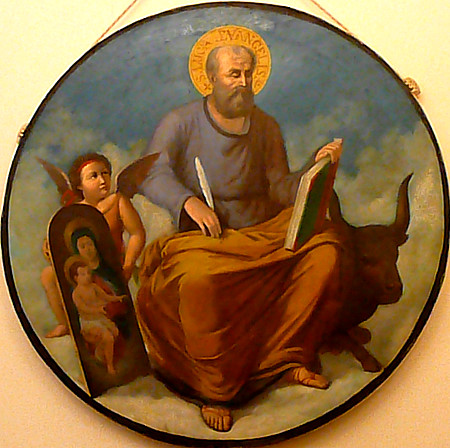
The Feast of St. Luke ~ The Very. Rev. Lady Sherwood, OPI
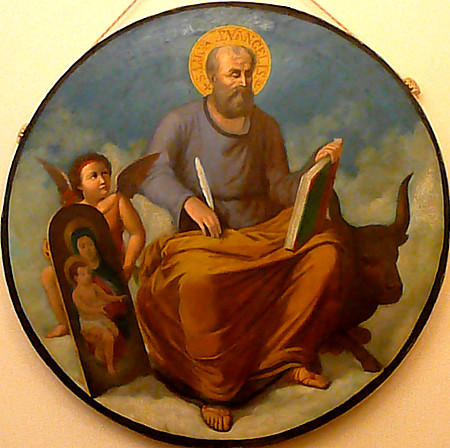
Feast of St. Luke
Reading 1: 2 TM 4:10-17B
R psalm: PS 145: 10-11, 12-13, 17-18
Gospel: LK 10: 1-9
My dearest brothers and sisters, today we come together to commemorate and honour the Feast of St. Luke.
St. Luke wrote the Gospel scriptures in the book of his name and he also gives us the Book of Acts. Indeed, it is St. Luke that gives us the most insight into our Lord Jesus in the Holy Gospel. We have so much to thank the Lord for in St Luke, aspired by the Holy spirit, we are given a clear picture of our Lord Jesus. So today we say to our heavenly Father, “Thank the Lord for St. Luke!”
St Luke is one of the men that the Holy spirit used to write the Good news of Jesus that is now known by children of God to the ends of the earth.
St. Luke listened to eye witnesses of our Saviour’s birth, of His life, His ministry, His death, His resurrection and His ascension. St. Luke recorded in writing for us the works and the words of Jesus which our Lord spoke for the salvation of all. Indeed, St. Luke has given each of us a record and a clear picture of the salvation which our dear Lord Jesus has accomplished for us. St. Luke didn’t stop there, he also recorded for us salvation delivered.
In Acts, St. Luke records for us the preaching of Jesus by all the apostles, he tells us of conversions of both Jews and of Gentiles. We are told of the ministry of St. Paul, who brought the Gospel of our Lord to the very heart of the Roman empire. We are taught of God’s Grace in saving us through the preaching of the Holy Gospel, also through Baptism, and through the last supper.
The Gospel of St Luke and the book of Acts are the Lord’s wonderful gifts to each and every one of us, so that we may hear and know the good news of the salvation found in our Lord Jesus. St. Luke also tells us where that salvation of our dear Lord is given to us through His Holy church. We indeed have so much to thank the Lord for St Luke!
Thank you dear Heavenly Father for St. Luke! In the name of your Son, Our Lord Jesus Christ. Amen.

The Lord is My Shepherd!~Rev. Deacon Sister Dollie Wilkinson

Recently, I was talking to a dear friend of mine about a mutual friend of ours who was soon to meet our Lord. I expressed confusion, and doubts, as to why God would call this dear soul home so soon. But mostly, I was angry! It seems here lately too many people, whether casual friends, or those dear to me, are dying or have left us way too soon. Between natural disasters such as hurricanes and earthquakes, to violence inflicted on so many who woke up never realizing today was their last day on earth, the overwhelming emotion I believe many of us are experiencing, besides sadness……is outright anger.
While is would be easy to blame God, for all the tragedy and suffering that seems to be prevelant in the world today. We are cautioned in Ecclesiastes 9:12 (NKJV) ” For man also does not know his time: Like fish taken in a cruel net, Like birds caught in a snare, So the sons of men are snared in an evil time, When it falls suddenly upon them.”
In Exodus 32:1-14 we are also reminded that anger isn’t only a human emotion. Even our Lord expressed anger at His people, yet was reminded of His promise. And, I think it’s this sacred promise we need to remember during these turbulent times.
“When the people saw that Moses delayed to come down from the mountain, the people gathered around Aaron, and said to him, “Come, make gods for us, who shall go before us; as for this Moses, the man who brought us up out of the land of Egypt, we do not know what has become of him.” Aaron said to them, “Take off the gold rings that are on the ears of your wives, your sons, and your daughters, and bring them to me.” So all the people took off the gold rings from their ears, and brought them to Aaron. He took the gold from them, formed it in a mold, and cast an image of a calf; and they said, “These are your gods, O Israel, who brought you up out of the land of Egypt!” When Aaron saw this, he built an altar before it; and Aaron made proclamation and said, “Tomorrow shall be a festival to the LORD.” They rose early the next day, and offered burnt offerings and brought sacrifices of well-being; and the people sat down to eat and drink, and rose up to revel. The LORD said to Moses, “Go down at once! Your people, whom you brought up out of the land of Egypt, have acted perversely; they have been quick to turn aside from the way that I commanded them; they have cast for themselves an image of a calf, and have worshiped it and sacrificed to it, and said, ‘These are your gods, O Israel, who brought you up out of the land of Egypt!'” The LORD said to Moses, “I have seen this people, how stiff-necked they are. Now let me alone, so that my wrath may burn hot against them and I may consume them; and of you I will make a great nation.” But Moses implored the LORD his God, and said, “O LORD, why does your wrath burn hot against your people, whom you brought out of the land of Egypt with great power and with a mighty hand? Why should the Egyptians say, ‘It was with evil intent that he brought them out to kill them in the mountains, and to consume them from the face of the earth’? Turn from your fierce wrath; change your mind and do not bring disaster on your people. Remember Abraham, Isaac, and Israel, your servants, how you swore to them by your own self, saying to them, ‘I will multiply your descendants like the stars of heaven, and all this land that I have promised I will give to your descendants, and they shall inherit it forever.'” And the LORD changed his mind about the disaster that he planned to bring on his people.”
So, during these turbulent times, as natural disasters, senseless shootings, random violence, and political quarrels divide not only our nation, but our world, I think its crucial we pray daily, and reflect on Psalm 23. For in this well known Psalm, there is a never ending source of comfort, peace, and abundant promises.
“The LORD is my shepherd, I shall not want. He makes me lie down in green pastures; he leads me beside still waters; he restores my soul. He leads me in right paths for his name’s sake. Even though I walk through the darkest valley, I fear no evil; for you are with me; your rod and your staff– they comfort me. You prepare a table before me in the presence of my enemies; you anoint my head with oil; my cup overflows. Surely goodness and mercy shall follow me all the days of my life, and I shall dwell in the house of the LORD my whole life long.”
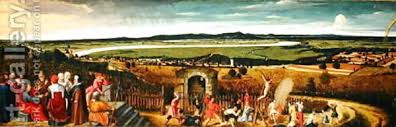
The Rev. Dcn. Brenden Humberdross
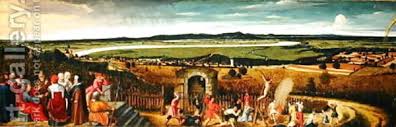
Open our ears, O Lord, to hear your word and know your voice. Speak to our hearts and strengthen our wills that we may serve you now and always. Amen.
Throughout the gospels Jesus shared the truths of the Gospels with His Apostles and disciples through parables. In very general terms a parable is a story that’s used to teach a spiritual truth or moral lesson; the parables of Jesus often couched these lessons in terms that the Jewish population of the day would understand. Today’s Gospel is no exception to this and we see Jesus using a story about a vineyard to teach the great truths of the Gospel plan.
I’m sure that when some of us first read this story we may have had difficulty seeing the Gospel truths hidden within it. Often the parables seems confusing and hard to interpret especially given that we’re not first century Jews and the basis of our life is quite different to them. However, if we ask the Spirit to dwell within us and enlighten our minds, and if we do a little study, the parables can easily be opened to us.
As foreign as vineyards and workers wanting to murder and steal an inheritance may be to us today’s parable of the Vineyard holds a surprising message for us. Encapsulated within this parable is the whole mission of Jesus and our part in the plan of salvation. Each character in the story represents “players” in God’s great plan of redemption and I’m sure that the Apostles were as amazed at figuring this parable out as I was when I first realised what it was about.
The parable stares with a man who is preparing a vineyard; in this parable the man represents God and the vineyard refers to his people. Just like a vigneron tends his vines and wants them to mature and reach their full potential God tends to his creation. When the Father placed Adam and Eve in the Garden of Eden He wanted them to be full of Joy and live a life in full communion with Him for all eternity. Sadly we all know how that story goes; however, just like a vigneron wouldn’t abandon his vines God has not abandoned us. He wants to vineyard to prosper and for each and every one of us to return to Him.
As God has tended to the vineyard over the years His chosen people have been tended to by leaders. These leaders, the Jewish establishment, are represented by the vinedressers; these people were chosen by God to tend to the vineyard, to carry out His will and to make sure that His children could obtain salvation. To ensure that this was happening the Lord sent Prophets to His people to ensure that the message of salvation was being heeded by all and taught with fidelity. In the parable these prophets are represented by the servants sent by the Master. One would expect that these heralds of the Lord would be welcomed in the vineyard and their message would be headed however any student of the Bible will know that this wasn’t the case. Those tending the vineyard weren’t keen on having the Masters “spies” in the vineyard reporting back or telling them what to do. So instead of heading the Masters word and be ready for the harvest they killed the servants. This is exactly what Israel did throughout their history; they treated the chosen prophets of God with contempt and rejected their messages choosing to follow their own wills instead of God’s.
It’s for this reason that the Master had to resort to sending his son, just as God had to send His own Son Jesus to the earth. So what did the workers do to the son? They did exactly what the people of Israel did to Jesus. They threw him outside of the walls of the vineyard to be killed. This action has a double meaning in reality; firstly we know that Jesus was killed outside of the walls of Jerusalem and secondly those who tended the Vineyard (the Jews) didn’t actually put Jesus to death, instead the Romans (those outside the vineyard) carried out this task.
The concepts raised in this parable raise an interesting question for me; if humankind was able to be obedient, if we were able to truly follow the will of God from the beginning, how different would love on earth be? Would Jesus have had to sacrifice His life for us? Would there be sickness, disease and death? Many of us have a tendency to blame God for these things; how many times have your hard people say “why does God allow evil?” or “If God was real He wouldn’t allow all this war” or a myriad of other statements. What this parable points out for us here is that none of this is actually God’s will! He created a vineyard for us that was perfect and He has done all that he could to keep it this way. It is the fact that we couldn’t listen and follow the plan that has led to a world full of evil and heartache; God doesn’t perpetrate evil those who tend to the vineyard do!
The parable ends with a dire warning to those of Israel who were listening. The vineyard will be taken away from those who do not tend it correctly or who reject those who are sent to manage it. So who will the vineyard be given to? Who will reap the rewards meant for the vineyard workers? The answer is those who are obedient to God and who bear the fruits of following the path that Christ has laid out.
It is my hope brothers and sisters that we will listen to the Son and not be like the workers in the vineyard. We must try our hardest to work out what it is that God would have us do and follow that path with all of our hearts. If we do so, at the great last day when we stand before the throne God will look into our hearts and welcome us into His kingdom with open arms.
Let us pray:
Lord God, we are grateful that you have prepared this world for us and that you have sent righteous workers to tend to it. We ask that your blessing will fall upon all of those you have called to minister to us that they may reach your word and care for your people. May our hearts always be open to heeding their words and following the paths of righteousness so that on the last day we may be found worthy of our heavenly abode. In Jesus name we pray. Amen.
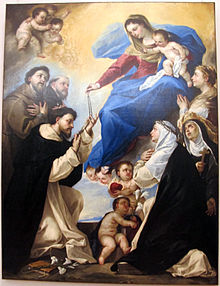
The Feast of Our Lady of the Rosary ~ Br. Shawn Gisewhite
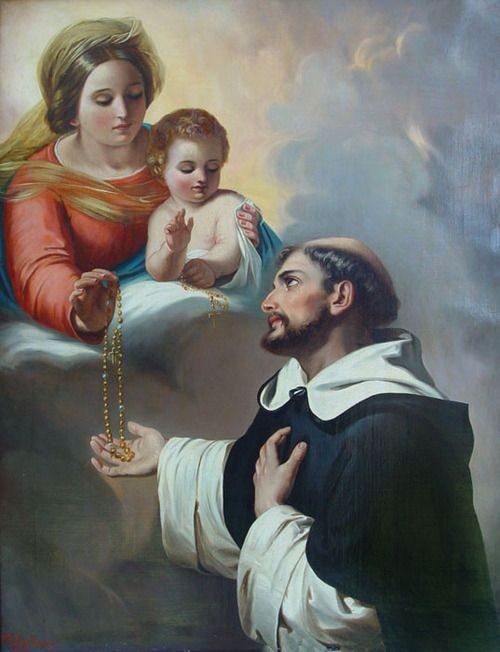
Gospel: Luke 10:17-24
In the Name of God; +Father, Son and Holy Spirit. Amen.
On October 7th, 1571, Pope Saint Pious V sent a coalition of Christian forces to rescue the Christian outposts in Cyprus that were taken by the Muslims. This small group faced almost certain death when compared to the large Muslin Navy. In response, the Pope called for all of Europe to pray the Rosary for their victory and led a Rosary procession in Rome. After about 5 hours of intense sea battle, the Christian forces were able to stop the Ottoman Navy and prevent the Sultan from invading and capturing Rome. This great victory was attributed to the Virgin Mary. October 7th became the Feast of Our Lady of Victory, now known as Our Lady of the Rosary.
Although a simple string of beads used to help us count our prayers, the Rosary has long been a weapon against the forces of darkness and a shield of protection from harm.
The following inspiring episode from World War II, written by Sr. Mary Sheila O’Neil and reported in the October-December, 1979 issue of Garabandal Magazine illustrates the power of the Rosary:
It was a busy day in March. As a teacher-principal in the 1950’s, I had to make sure that each day provided the time for the two separate roles. On that March fourth, an incident between a teacher and a parent had kept me out of my class for almost an hour that morning, so for the rest of the day, I was desperately trying to make up class time. Hence, the knock on my door at 2:00 p.m. was not welcome.
With relief, I found it was only a salesman who needed my signature and even produced his pen. As he did so, his Rosary had caught onto the pen’s clip and came out as well. I signed as I said indifferently, “So, you are a Catholic.” “Oh no,” he said, “but a lot of us owe our lives to Our Lady, and I promised Her I would always keep my Rosary with me and say it every day.”
Twenty minutes later, I was still at the door listening, fascinated, to the account of one of the wonderful experiences a group of airmen had had with Our Lady. My visitor hesitated to start, for he had noticed my “non welcome” opening of the door. But eager now to hear his story, I assured him that the class was doing an exercise, and I begged him to proceed. He continued:
It was May, 1940, and we had joined the Air Force in late September. At Halifax, we were given an intensive training course, because they needed us overseas, and to us young lads, the whole program was exciting.
We were grouped into squadrons, each of which consisted of six to ten planes, and each was trained to maneuver as a unit. Therefore about thirty to fifty men made up a squadron, along with the squadron leader who gave all the orders and kept the group functioning in unity.
In May, our squadron was told we were going overseas and would be in action at once. We would work on nightly missions over enemy territory until the war was over. We were waiting for our new squadron leader, due to arrive in two days on a 9:00 p.m. air-force flight. Being an officer, he would, we thought, go at once to the officers’ quarters.
We watched the plane, glimpsed him from the distance, and resigned ourselves to waiting until the next day to “size him up.” A couple of hours later, this squadron leader, Stan Fulton, in full uniform, entered our bunk house.
“Well men, we’re going to spend some dangerous hours together, but let’s hope we all meet back here when it’s over. Ah, there’s a free bunk and I am tired! I’ll meet each of you tomorrow.”
With that, he threw his bag on an upper bunk. Our squadron leader, an officer, sleeping here with us! We liked him at once and our liking and our admiration grew each day.
That first night he knelt on the floor and prayed his Rosary in silence. Astounded, we were struck dumb. When he finished, he looked at us with his friendly smile and said, “I hope you guys don’t mind a fellow saying some prayers because where we’re going, we’re going to need them.”
The next day our maneuver practice, under his command, assured us that Fulton was not just our military leader, but our friend. He was one of us; he never tried to intimidate us with his rank.
That night, he repeated his prayer session. Although our group had trained together for six months at least, I had never seen anyone kneel in prayer, and had no idea that any of our group was Catholic; but the third night three of our companions joined Fulton in saying the Rosary. The rest of us did not understand but we kept a respectful silence.
A few nights later — we were quick learners — we all answered the Hail Marys and Our Fathers. Fulton looked pleased, and thus we ended each day in prayer.
On June 1, 1940, we were to leave Halifax to begin a series of night raids from England over Germany. The evening before, Fulton gave each of us a Rosary.
“We shall be in some tight situations, but then, if you agree, we’ll say the Rosary. If you will promise to keep the Rosary with you always throughout your life and to say it, I can promise you that Our Lady will bring you all back safe to Canada.”
We answered, “Sure thing.” Little did we dream we would be in action for four years, many times in dreadful danger with fire all around us. At such times, Fulton’s voice would ring through each plane, “Hail Mary…” How reverently and sincerely did we respond! How many hundreds of Rosaries we must have said.
After two years, it was noted that ours was the only squadron that had not lost a plane nor a single life. We said nothing, but we knew.
Finally, the terrible war was over. During those years, we lost all sense of excitement and adventure. All that concerned us was survival! We did survive, too. All returned to Canada in 1945, fully convinced that Our Lady had taken care of us.
So I never forget to keep my Rosary with me and say it every day although I am not a Catholic. When I change my trousers, the first thing I transfer, even before my wallet, is my rosary.
This Feast day is a special one for me as a Dominican. Tradition holds that the Virgin Mary gave the Rosary to St. Dominic. As a Dominican, my devotion to both Our Lady and the Rosary helps shape who I am as a Christian.
Today as I stand before you a newly ordained Priest in the Church of God, I can’t help but think of all I’ve been through. The hurdles that I had to jump. The mountains I had to climb. The fights I had to fight. Life has not been easy up to this point and I suspect it won’t become any easier now that I have been set apart for service in the Church.
I first felt a call to ordained ministry as a small child…..a calling that I have strived to answer throughout most of my life. No easy task! A Bishop once told me that the closer I get to serving God and serving the Church, the more Satan will up his attacks on me. At first I thought he was a little crazy, but it’s very true indeed. Life has presented me with many challenges. Challenges that most people would not be able to deal with. How did I deal emotionally and spiritually with these many challenges? Where did I turn for a spiritual booster shot? To the Rosary! Well, to my set of Anglican Prayer Beads to be exact, but don’t hold that against me. LOL
Raised Anabaptist, worship aids such as prayer beads were seen as Romish and evil. Prayers to Mary were idol worship. I don’t know why, but I was always drawn to the use of prayer beads and to a deeper relationship with our Heavenly Queen. I explain it as I did not choose her, rather she chose me! Somehow she spoke to me. Spoke to my heart in a way I can not begin to describe. For the longest time, just like the pilot in the story earlier, all I did was carry those beads around with me. I didn’t know how to use them for prayer. I was too afraid to search how to pray the Rosary online for fear that my uber Protestant parents would spaz on me! Although I never used them for prayer, those beads provided me with strength and with comfort. It was as if the love of Mary and of her Son Jesus were in those beads and every time I clutched them in my hand it was as if I was being held in their loving embrace.
After my mother passed in 2011, my relationship with our Holy Mother grew stronger. It was at that time I actually began to use my Rosary with the assigned prayers. And oh what joy it brought to my soul! Whenever I was sad, downtrodden, scared, stressed, worried, or lonely I turned to my Rosary for comfort and encouragement. Through life’s many battles, this little string of beads helped me to win the victory; just as the Christian forces over the Muslim Navy.
In today’s Gospel the Lord tells his disciples that He has given them the power of the enemy. I say this is true in the power of the Rosary. A gift….a spiritual weapon against the forces of evil….given to us by the Mother of God. Through our faith in Jesus, through the intercession of the most blessed Virgin Mary, through the power of the Rosary, we have power and dominion over the forces of darkness.
Amen.
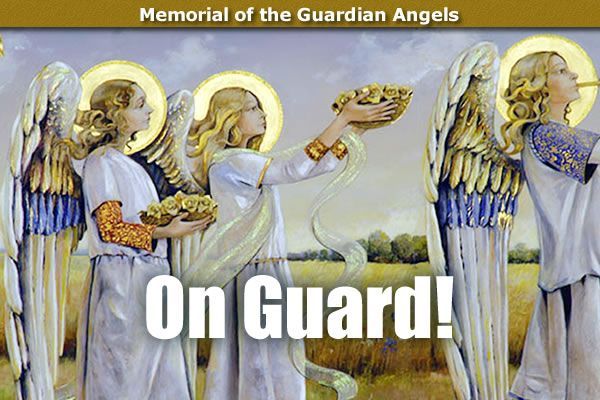
Feast of the Guardian Angels~ The Rev. Dcn. Dollie Wilkinson, OPI
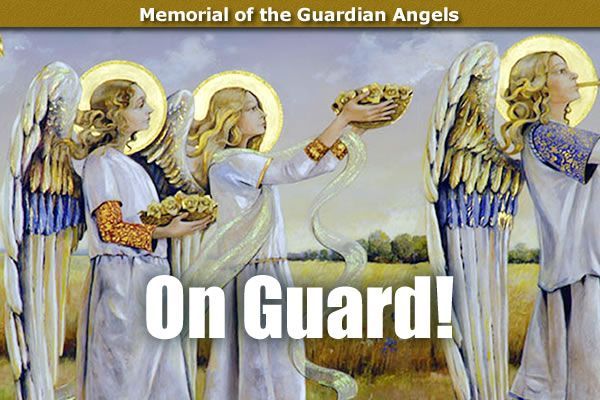
We often think of guardian angels as a special angel only for children, but the truth is that we all have a guardian angel for our entire lives. Our angels are a gift from God. They watch over us, aid us in prayer, enlighten us, guide us and protect us. Angels are mentioned in both the Old and New Testament and many saints have had visions of their guardian angels. We can hope that our Guardian Angel will help us during our journey to eternal happiness in Heaven. The Feast of the Guardian Angels is celebrated on October 2nd. Although Guardian Angels have been venerated since the early days of the Church, it wasn’t until the 17th century that Pope Clement X extended the feast day to the universal Church. It comes just two days after the Feast of the Archangels Gabriel, Michael, and Raphael.
On this Feast of the Guardian Angels in 2011, Pope Benedict XVI said,
“Dear friends, the Lord is always near and active in human history, and follows us with the unique presence of His angels, that today the Church venerates as ‘Guardian,’ in other words those who minister God’s care for every man. From the beginning until death human life is surrounded by their constant protection.”
It is an established Catholic belief that each individual person has their own guardian angel assigned to watch over their soul. There are three important verses in the Catholic Bible from which this belief is drawn:
Psalm 90:11: “For he shall give his angels charge over thee, to keep thee in all thy ways.”
Matthew 18:10: “See that ye despise not one of these little ones; for I say unto you, that in heaven their angels do always behold the face of my Father which is in heaven.”
Hebrews 1:14: “Are they not all ministering spirits, sent forth to do service for the sake of them that shall inherit salvation?”
These verses have led St. Jerome, one of our early Church Fathers, to conclude, “How great the dignity of the soul, since each one has from his birth an angel commissioned to guard it.” Many others wrote about our guardian angels, including St. John Chrysostom, St. Basil, and St. Thomas Aquinas. According to Aquinas, our guardian angels have a good influence over us, but they cannot control our free will. Guardian angels influence or guide us by acting upon our intellect through our senses and our imagination. When they do this, they are influencing our will to do good and avoid evil. So really, their job is to help you get to heaven. Thus guardian angels do not control us by any means, but they do greatly assist us in finding and doing God’s will. Our guardian angels are also able to protect us from danger as well as assist us in prayer and meditation on the divine things of God.
We don’t only have the Scriptures and the Early Fathers of the Church who tell us about our Guardian Angels. We also have the saints, some of which actually witnessed their guardian angel in action. In many cases their Guardian Angel was visible to them. These include St. Padre Pio, who could see his guardian angel, which would often send him on special missions; St. Faustina Kowalska, whose Guardian Angel accompanied her to observe the pains of the Holy Souls in Purgatory; and St. Gemma Galgani, to name a few. St. Gemma Galgani wrote much about her Guardian Angel in her autobiography, including this account:
“One evening, when I was suffering more than usual, I was complaining to Jesus and telling him that I would not have prayed so much if I had known that He was not going to cure me, and I asked Him why I had to be sick this way. My angel answered me as follows: ‘If Jesus afflicts you in your body, it is always to purify you in your soul. Be good.’”
Ask yourself this question today: How is my relationship with my guardian angel? Do I listen to him? Do I say good morning to him in the morning? Do I ask him: Watch over me when I sleep?’ Do I speak with him? Do I ask his advice? He is by my side. We can answer this question today, each of us: How is our relationship with this angel that the Lord has sent to watch over me and accompany me on my journey, and who always sees the face of the Father who is in heaven?” So, today is the day to tell your guardian angel “Thank You” for their daily guidance, and to show gratitude to God for assigning a powerful heavenly protector for your personal care. It is also a good time to make the resolution to pray to your Guardian Angel daily as our Holy Father admonishes us.
As St. Bernard of Clairvoux plainly states in his sermon:
“‘He has given his angels charge over you to guard you in all your ways’. These words should fill you with respect, inspire devotion and instill confidence; respect for the presence of angels, devotion because of their loving service, and confidence because of their protection. And so the angels are here; they are at your side, they are with you, present on your behalf. They are here to protect you and to serve you.
But even if it is God who has given them this charge, we must nonetheless be grateful to them for the great love with which they obey and come to help us in our great need. So let us be devoted and grateful to such great protectors; let us return their love and honor them as much as we can and should. Yet all our love and honor must go to Him, for it is from Him that they receive all that makes them worthy of our love and respect. Even though we are children and have a long, a very long and dangerous way to go, with such protectors what have we to fear? They who keep us in all our ways cannot be overpowered or led astray, much less lead us astray. They are always loyal, prudent, and powerful.
Guardian Angel Novena:
Loving God, you are so good that you gave me a Guardian Angel to protect my body and my soul. Help me to know and follow my angel so that, with their guidance, I will be worthy of being in Heaven with You!
My sweet Guardian Angel, you are my defender every day of my life. Protect me from sin and bodily harm. Help me to learn to defend and protect myself so that I can be the person that God is calling me to be.
You are with me all the time so you already know these my intentions that I ask you to deliver to the Lord. (Mention your intentions here…)
My guardian angel, my defender, protect me!
Amen.
 The Order of Preachers, Independent
You must be logged in to post a comment.