
Category: Lesson
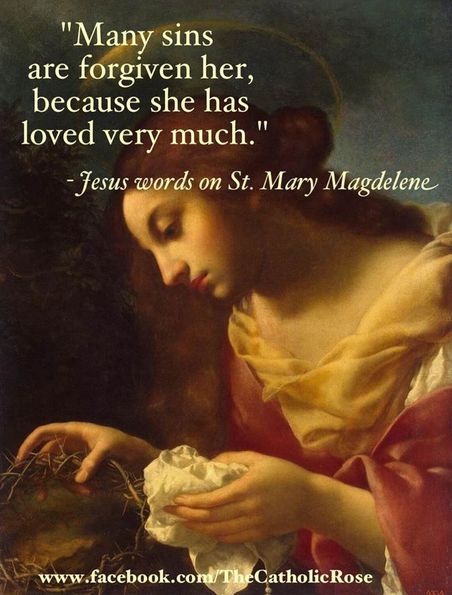
From Sinner to Saint ~ St. Mary Magadalene ~ The Rev. Dcn. James Dominic, Novice

+In the Name of God; Father, Son and Holy Spirit. Amen.
Today is the Feast of St Mary Magdalene, the Protectress of The Order of Preachers.
She has a special place in the history of the church as Mary Magdalene is honored as one of the first witnesses of the Resurrection of Jesus, and received a special commission from him to tell the Apostles of his resurrection. It is for that reason that in Orthodox and Catholic tradition she is referred to as the “Apostle to the Apostles.”
I would today like to look at her in the light of one verse from 2 Cor 5:17.
17 Therefore, if anyone is in Christ, the new creation has come: The old has gone, the new is here!
When Mary met Jesus, she was a new woman. But what was the old Mary like?
We first come across Mary Magdalene as the woman out of whom Jesus drove seven demons (Lk 8:1-3). St Luke records this as follows: “After this, Jesus traveled about from one town and village to another. The Twelve were with him, also some women who had been cured of evil spirits and diseases: Mary (called Magdalene) from whom seven demons had come out—and many others. These women were helping to support them out of their own means. (Lk 8:1-3)
She was obviously well off and supported Jesus in his ministry.
It was only at the end of the sixth century that it was first suggested that she was a prostitute
It was in Pope Gregory the Great’s homily on Luke’s gospel, dated 14 September 59, that he said this about Mary, “She, whom Luke calls the sinful woman, whom John calls Mary, we believe to be the Mary from whom seven devils were ejected according to Mark. And what did these seven devils signify, if not all the vices? It is clear, brothers, that the woman previously used the unguent to perfume her flesh in forbidden acts.”(homily XXXIII)
Anyone know what unguent is?
An “unguent” is a semi solid paste – a bit like ointment.
Whether or not she really was a prostitute, we don’t know, but we do know that when she met Jesus her life was changed forever. We can relate to how Mary felt when her life was transformed by Jesus, as Jesus has that same effect on each and every one of us.
She is called Mary Magdalene to distinguish her from the other three Marys mentioned in the Gospel, possibly even four.
- i) Mary the mother of Jesus,
- ii) Mary the mother of James and Joses and
iii) Mary Salome the mother of the sons of Zebedee
(Mt 27:56)
And possibly she is also distinguished from Mary of Bethany, Martha and Lazarus’s sister – though some scholars think Mary of Bethany and Mary Magdalene are one and the same.
She is Mary from the village of Magdala, which means in Aramaic,“a tower.” And what a “tower of strength” she was to the early Christian Community! She is the first to meet the risen Lord – and it was this meeting that transformed her from a frightened woman to a tower of strength. Uniquely, she is a witness to Jesus death, burial and the empty tomb.
It is said of Mary: Mary’s role as a witness is unusual because women at that time were not considered credible witnesses in legal proceedings. Because of this, and because of extra-biblical traditions about her subsequent missionary activity in spreading the Gospel, she is known by the title, “Equal of the Apostles”.
Through Jesus, Mary’s life was transformed. Our lives too can be totally transformed by Christ if we let Him into our hearts and live as new creatures in Christ Jesus!
Let me tell you a little story:
A few years ago, a clergy friend and mentor of mine knew of some personal struggles I was having and gave me a book entitled, “Loving Mercy.” He assured me reading this book would be an answer to my prayers. I thanked him and to be totally honest, I placed the book on my bookshelf at home and didn’t crack it open for a long time. Then one evening when I was feeling utterly overwhelmed by life, I happened to come across that book and I started to read it. It’s a book about how encountering Christ should transform us to care for others. In it, I found this fascinating story of Judson Cornwall, an American Pentecostal preacher who, after the war, was invited to speak at a renewal conference in Germany.
Let me quote you a little from that book:
“Remarkably, when his wife emptied the bin, she spotted the invitation, pressed it out and put it on his desk again. It haunted him for days as he shuffled around it. Finally, the Spirit won and he reluctantly agreed to go.
Arriving in Germany he was not relieved of his dis-ease and the Conference center turned out to be in the former headquarters of the SS, Hitler’s elite guard, which aroused all sorts of images and old hatreds in him. He spent two days before the conference praying and fasting and preparing – and avoiding the Germans.
On the first night of the Conference he went down to speak and took Umbrage at his translator, a somewhat stereotypical Aryan Ueberfrau – giant, buxom, blonde hair in a bun.
He spat out his sermon, so it was no surprise that it was badly delivered, badly received and died a death.
He returned to his room and decided to go back to America the next day. Full of humiliation and emotion he cried himself to sleep. In the night, he awoke to demons screaming in his mind; “You don’t belong here! You have no authority here! Go home! Experienced in spiritual warfare, Cornwall recognized the attack and figured it had to do with the demonic history of the SS in the building, and immediately rebuked the demons in Jesus’ name.
Three times the demonic voices woke him; three times he rebuked them.
After the third time, he got up and asked God what was happening and why his prayers weren’t sufficient and the demons kept returning.
The Lord spoke immediately:
“The demons are tormenting you because you really don’t have any authority here. You have no authority here because you don’t love these people. Your authority to minister is related to your love for those to whom you minister. Now you can go on hating these people, pack up and go home tomorrow or you can let me love them through you.”
Cornwall acknowledged his deep racism and prejudice. Too embarrassed to go home, he confessed his sin and asked God to love through him the Germans who he loathed. He knew he needed a miracle of grace. Immediately he was overwhelmed by the Spirit of God and filled with Christ’s love for the Germans. Having spent two days avoiding the Germans and refusing to eat with them, he could not wait for breakfast. He rushed downstairs to the queue for the breakfast and greeted and hugged everyone in the food line.
When he got to his translator he gave her a big kiss and hugged her. Immediately she pulled back and barked: “You hate us!”
“No, no”, he replied “That was yesterday, today I love you!”
Judson Cornwall preached that morning and the power of God was on his words.
At the end of the sermon there was a huge line of people wanting to speak with him personally, something he usually avoided, but he sensed God wanted him to be attentive to the people individually.
One by one, people came and thanked him for helping them to forgive the Americans, whether because they had lost loved ones in combat against them or in the bombing raids.
Cornwall saw pain and resentment cut both ways…but the obedience to the Spirit of Christ heals historic hurts and unites us in the love of God” (p.22-24 Loving Mercy : Simon Ponsonby)
Conclusion
It is our choice how we respond to Jesus. We should follow the example of Mary Magdalene who was transformed from a sinner to a saint. Mary Magdalene shows us that no one is too bad for the grace of God. You might ask, “How can I be a saint?”
St Paul addresses the Ephesian Church with these words:
“Paul, an apostle of Christ Jesus by the will of God to the SAINTS who are in Ephesus and who are faithful in Christ Jesus.” (Eph 1:1)
A Saint is simply someone who is sanctified – who has set himself or herself apart for follow God.
And we won’t always get it right as Judson Cornwall found out. But God will guide us in the right way, if we are willing to allow him to do so.
On this day of the Feast of St Mary Magdalene, may I challenge you that, as saints, you are ready to allow God to change you into the person He wants you to be.
Just as He did with St Mary Magdalene.
Amen.
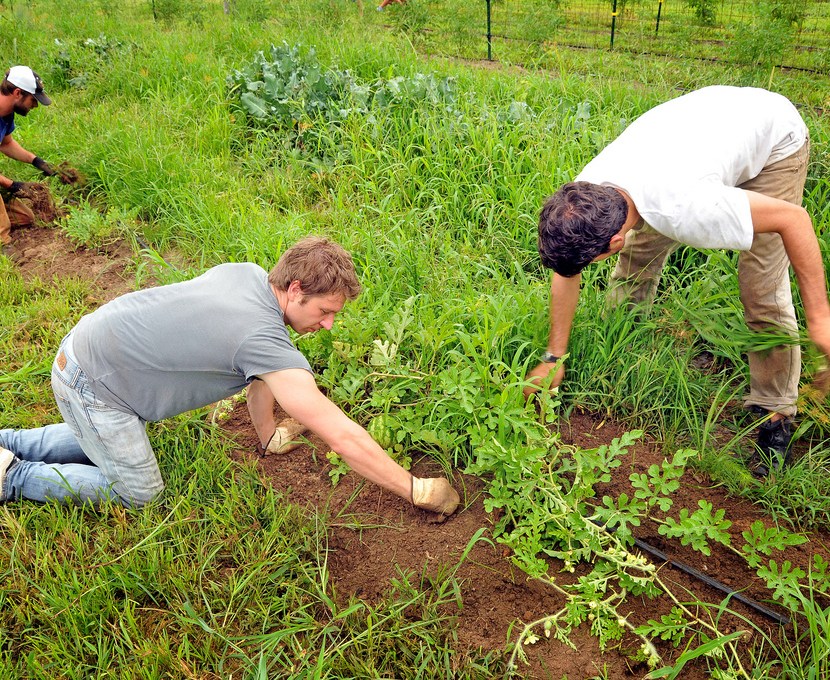
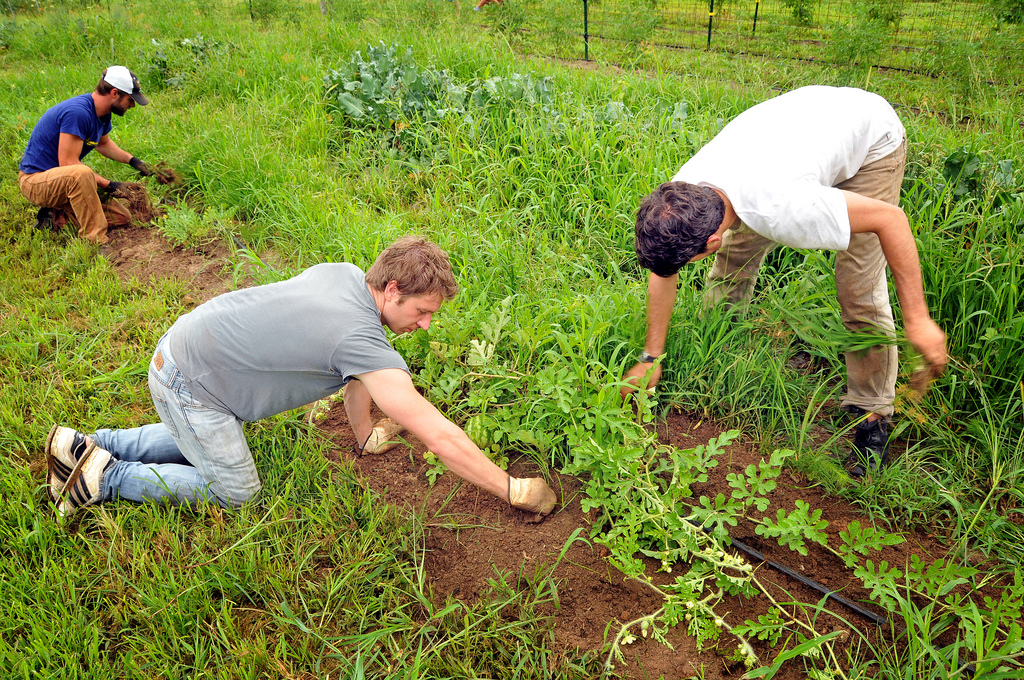
Tending the Farm ~ Br. Chip Noon, Novice
A couple of months ago I was visiting a friend from my college days. I had an enjoyable time with him and his wife, and we also participated in our College Glee Club’s annual spring concert: alumni are always invited at the end of the concert to sing some college songs and the Alma Mater. A marvelous evening, both musically and socially!
The next day, since my friend is very involved in the Society of Friends, we went to Quaker Meeting. Quaker Meeting, for those of you who might not know, is their equivalent of the Mass, with a mighty difference: there is very little talking…sometimes none…and no ritual, liturgy, hymns, or sermon. Quakers sit “expectantly waiting.” It is not a time for thinking or remembering the worldly distractions of the past week. It is not a time for intellectual exercises. It is a time to “come with mind and heart prepared,” to bring “neither a determination to speak nor a determination to remain silent.” If one is moved to speak, one ought to speak, because it may be the word of God moving in you.
So as I sat there, I began wondering what I was doing as an Old Catholic, and especially as a Dominican. It was a serious question, and I had no answer in those moments. So I prayed, and I asked for guidance in my mission.
Silence.
Silence.
Silence.
And then my friend stood, moved by that still, small voice within, and began what is known as “spoken ministry.” He was worrying about the turmoil in the world today and what to do about those whom he felt were acting against others’ best interests, leading them, and us, down a sad and perilous path. “How do I react to them?” he said. “How do I love them, as I should?”
He went on to talk about an article he had just read, “The Seed of God” by Elizabeth Bathurst. In the article, he read that we all have the seed of God within us. With some, it is ignored or deliberately left untended. Others recognize it and cultivate it. But that seed is in everyone…it is from, and of, God.
And so, how can we condemn someone we think is doing harm? How can we censure them? If “that of God” is within them, who are we to judge?
I wasn’t moved to think about the answer to that question, but about the answer to my prayers…guidance in my mission.
There it was.
First, let’s look back at today’s first reading. “My word…shall do my will, achieving the end for which I sent it.” And then look at the Responsorial Psalm: “The seed that falls on good ground will yield a fruitful harvest.” And the second reading that talks about creation, harvest, first fruits.
All of these horticultural references. And that comment I once heard: “God doesn’t call the prepared, God prepares the called.”
My mission. Our mission as friars and sisters in the Order of Preachers. That morning, God was cultivating his seed within me, tending, watering, nurturing.
Now comes today’s Gospel: A sower went out to sow.
Let me tell you that I was not sure how to present this experience I had at Quaker Meeting. I’ve been thinking about it a lot. Should I write an article? Should I talk it over with our Prior? What do I do with it.
And then I was assigned the sermon for the 15th Sunday of Kingdomtide. “A sower went out to sow.”
Jesus has already told me what my mission is. I was called, and, as he has done time and time again, God is preparing me. (I must admit here I’m a pretty hard row to hoe…) God is telling me once again that my mission is, as he often says, to go out into the fields and work for the harvest.
I’m a farmer of souls. God has sown the seed in all of us, and I am called once again, to tend it, to water it, to cultivate the soil in which it lies, to fertilize, prune, and then to harvest the yield. I am a farmer in the fields of the Lord.
Aren’t we all just farmers? In our Order, we are proclaimers of the Word. But to proclaim effectively we must first till the ground and cultivate the seed of God that is already planted.
In today’s Gospel Jesus says that the seed of God is given to all. Some ignore it, some reject it, some are not even aware that it is there. But for those who hear the word of God and understand it the yield is a hundred or sixty or thirtyfold.
As I sat in Quaker Meeting I was being prepared for this Sunday’s sermon. I was shown that there is a seed in all of us. I was shown that there are garden tools in the shed. I was shown the fertilizer and the ground to fertilize. I am called to help those whose seed is on rocky ground, among thorns, threatened to be devoured by negative forces.
Whew!
And still God prepares me. Because in the face of such a daunting task, who am I to help bring in such a harvest? I have been called, and I am still, and probably always, being prepared to go out into the fields.
- Alleluia, alleluia.
The seed is the word of God, Christ is the sower.
All who come to him will have life forever.
R. Alleluia, alleluia.
Lord, in your mercy, bless our eyes and our ears that we may receive your word and understand it. Bless our path to the fields of the harvest. And bless our work to deliver the harvest to you, who live and reign with God and the Holy Spirit, now and forever. Amen.
St. Kateri Tekakwitha ~ The Rev. Dcn. Dollie Wilkinson
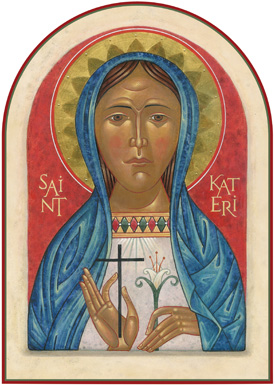
Kateri Tekakwitha, known as “Lily of the Mohawks”, was a young Mohawk woman who lived in the 17th century. The story of her conversion to Christianity, her courage in the face of suffering and her extraordinary holiness is an inspiration to all Christians. Saint Kateri Tekakwitha is the first Native American Saint in the United States of America and Canada. Her Shrine is located in Fonda, New York. This National Shrine was created to honor Kateri and the Native peoples north and south of the border, for it was here that she was baptized on Easter Sunday April 5, 1676, and lived her teenage years.
Kateri was born in 1656 of an Algonquin mother and a Mohawk Chief in the Mohawk village of Ossernenon (modern day Auriesville) in upstate New York. When she was only 4 years old her parents and brother died of smallpox. Kateri survived the disease, but it left her face badly scarred and her eyesight impaired. Because of her poor vision, Kateri was named “Tekakwitha”, which means “she who bumps into things”. Kateri was taken in by her uncle who was bitterly opposed to Christianity. When she was 8 years old, Kateri’s foster family, in accordance with Iroquois custom, paired her with a young boy who they expected she would marry. However, Kateri wanted to dedicate her life to God by remaining single and offering her life to Jesus.
When Kateri was ten, in 1666, a war party composed of French soldiers and hostile Natives from Canada destroyed the Mohawk strongholds on the south bank of the Mohawk, including Ossernenon. The surviving Mohawks moved to the north side of the river and built their fortified village about half a mile west of the present village of Fonda. Kateri lived in Caughnawaga, site of the present Shrine, for her next ten years.
When Kateri was 18 years of age, she began instructions in the Catholic Faith in secret. Her uncle finally relented and gave his consent for Kateri to become a Christian, provided that she did not try to leave the Indian village. For joining the Catholic Church, Kateri was ridiculed and scorned by villagers. She was subjected to unfair accusations and her life was threatened. Nearly two years after her baptism, in St. Peter’s Chapel at the present Kateri Shrine in Fonda, she escaped to the Mission of St. Francis Xavier, a settlement of Christian Natives in Canada. The village in Canada was also named Caughnawaga (Kahnawake). Here she was known for her gentleness, kindness, and good humor. On Christmas Day 1677 Kateri made her first holy communion and on the Feast of the Annunciation in 1679 made a vow of perpetual virginity. She also offered herself to the Blessed Mother Mary to accept her as a daughter.
While in Canada, Kateri taught prayers to children and worked with the elderly and sick. She would often go to Mass both at dawn and sunset. She was known for her great devotion to the Blessed Sacrament and to the Cross of Jesus. During the last years of her life, Kateri endured great suffering from a serious illness. She died on April 17th, 1680, shortly before her 24th birthday, and was buried in present day Kahnawake, Quebec, Canada. In Canada her feast day is celebrated on April 17th, and on July 14th in the United States.
Tradition holds that Kateri’s final words were. . .“Jesus, I love you”, after which she embraced her creator for all eternity. Witnesses reported that within a few minutes of her death, the pock marks from smallpox completely vanished and her face shone with radiant loveliness. Before her death, Kateri promised her friends that she would continue to love and pray for them in heaven. Both Native Americans and settlers immediately began praying for her heavenly intercession. Several people, including a priest who attended Kateri during her last illness, reported that Kateri had appeared to them and many healing miracles were attributed to her. Fifty years after Kateri’s death the first convent for Indian nuns was established in Mexico and they pray daily for Sainthood for Blessed Kateri. Their prayers were answered on October 21, 2012 when Kateri was canonized as the first Native American woman to be honored with sainthood.
Prayer to Saint Kateri Tekawitha:
Saint Kateri Tekakwitha, our elder sister in the Lord, discreetly, you watch over us; May your love for Jesus and Mary inspire in us words and deeds of friendship, of forgiveness and of reconciliation. Pray that God will give us the courage, the boldness and the strength to build a world of justice and peace among ourselves and among all nations. Help us, as you did, to encounter the Creator God present in the very depths of nature, and so become witnesses of Life.
With you, we praise the Father, the Son and the Holy Spirit.
Amen.
The Feast of St. Benedict ~ Br. James Dominic, Novice
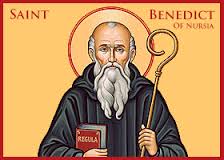
Benedict of Nursia (c. 480 – c. 547) known as the Father of Western monasticism had a huge influence in his own time and in succeeding centuries. His monks were a source of stability in the highly disordered state of Europe following the collapse of the Roman Empire and the invasions of the northern tribes (Vandals, Huns, etc.) and laid the ground for the emergence of the cultural wealth of the Renaissance from the 12th century onwards.
Benedict was born about 480, the son of a Roman noble from Nursia and it is believed he was a twin of St Scholastica. Little is known about his life as the only source is the Second book of Gregory’s Dialogues. It has been described as “the biography of the greatest monk, written by the greatest Pope, himself also a monk”. It is more a spiritual portrait than a factual biography.
Benedict began studies in Rome but left before completing them to become a hermit in Subiaco. Over a period of three years in solitude, Benedict matured both in mind and character. At the same time he became deeply respected by people in the neighborhood, so that when the abbot of a nearby monastery died, the monks begged him to be their abbot. Although he did not agree with their lifestyle, he finally accepted. However, it did not work, so much so that the monks tried to poison him and he went back to his hermit’s cave. The legend is that they tried to poison his drink but, when he blessed the cup, it shattered. They then tried to kill him with poisoned bread but, when he blessed it, a raven came and snatched it away. Many other miracles were attributed to him and many people came to him for direction. So he built 12 monasteries each with a superior and 12 monks. He himself lived in a 13th with some whom he thought were more promising. Benedict, however, was the father or abbot of all the groups.
Benedict later traveled to Monte Cassino, near Naples, where he drew up the final version of his Rule. This contained much of the traditional monastic teaching of earlier monks like Cassian, Basil and probably also the so-called Rule of the Master, though much modified by Benedict. His vision was a life characterized by prudence and moderation rather than severe asceticism and lived within a framework of authority, obedience, stability, and community life. ‘Stability’ meant that a monk would generally stay permanently in the monastery which he had joined. It was a way of life which was complete, well-ordered and practical. The monk’s day was taken up with liturgical prayer, complemented by sacred reading and manual work of various kinds which took care of the community’s needs.
Benedict was not a priest and there is no evidence that he intended to found a religious order.
His principal goal and achievement was to write a Rule or way of life. Today’s Order of St Benedict (OSB) is of later origin and not a “religious order”” as commonly understood but rather a confederation of congregations into which the traditionally independent Benedictine abbeys have affiliated themselves for the purpose of representing their mutual interests, without however losing any of their autonomy. Benedict’s own personality is reflected in his description of the kind of person the abbot should be: wise, discreet, flexible, learned in the law of God, but also a spiritual father to his community. Gregory’s Dialogues spoke of him as having second sight and miraculous powers.
Because of its inner qualities and the endorsement it received from secular rulers and other founders of religious institutes, Benedict’s Rule became the standard monastic code in the early Middle Ages. Because of it flexibility, it could be adapted to the different needs of society in different places. In a world of civil turmoil with the break-up of the Roman Empire, it was the monasteries which became centers of learning, agriculture, hospitality, and medicine in a way which Benedict himself could never have imagined.
The best known symbols connected with Benedict are a broken cup (containing poison) and a raven. He is also shown wearing a monastic cowl and holding either the Rule or a rod for corporal punishment. Benedict spent the rest of his life realizing the ideal of monasticism contained in his rule. He died at Monte Cassino, Italy, according to tradition, on 21 March 547. He was named patron protector of Europe by Pope Paul VI in 1964. His feast day, previously 21 March, was moved in 1969 to 11 July, a date on which his feast had been celebrated in several places.
In today’s Gospel, we see Jesus traveling throughout the towns and villages of Galilee; preaching, teaching,proclaiming the Good News of the Kingdom; and he was healing all sorts of diseases and illnesses. But, behind all that he does, is his deep compassion for the needs of the people. He sees them harassed and dejected, wandering and aimless like sheep without a guiding shepherd – a familiar image in the Old Testament . Then, looking at his disciples, he says, “The harvest is rich but the laborers are few, so ask the Lord of the harvest to send laborers to his harvest.” Jesus cannot do it all on his own. In fact, he will hardly step outside the boundaries of Palestine. He needs many helpers.
Today, the situation has not changed. The harvest is as big as ever; people are as lost and rudderless as they have ever been in spite of the great strides in knowledge we have made. Where are the laborers? They are not just the bishops, priests, religious brothers and sisters. That is a very narrow concept of laborers. Every single baptized person is called, in some way, to be a harvester, to help people find and experience the truth and love that God gives in Jesus. Every single person, in that sense and it is a very real sense, has a vocation, a call to serve and to build the Kingdom.
What and where and with whom is my vocation? These, I’m sure questions St. Benedict often asked of God. These are questions we ask still today. We can look to the Rule of St. Benedict as an orderly way to live our lives and usher forth the Kingdom of Heaven. His Rule is the Shepherd in a world of lost sheep. Leading the flock to eternal salvation through our Lord and Savior Jesus Christ.
Amen.
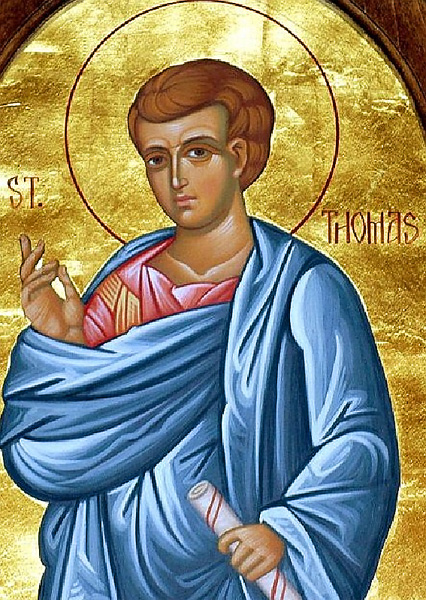
Faith and Doubt ~ The Feast of St. Thomas the Apostle ~ The Very Rev. Lady Sherwood, OPI
Reading 1: EPH 2:19=22
R psalm: Mark 6:15
Gospel: JN 20:24=29
Today’s we come together to commemorate the Feast of St Thomas the Apostle, often nicknamed ‘Doubting Thomas’,because on Easter Sunday after Mary had seen Jesus, he went to the room where the disciples were and suddenly appears to them despite locked doors and they could clearly see the wounds to His hands and side. Jesus tells them, “Peace be with you”. The disciples believed.
Thomas however, wasn’t with the other Apostles when Jesus had appeared to them, and when Thomas arrived after Jesus had left them, the other disciples told Thomas about Jesus visiting them, but Thomas didn’t believe, he told them, “Unless I see Jesus for myself, and can touch His wounds, I won’t believe.” I can easily imagine that Thomas may have thought the other apostles were teasing him; or why wouldn’t Jesus have stayed long enough until he had managed to arrive?
The next week however, the disciples are gathered together again, this time Thomas was with them. Jesus suddenly appeared and told Thomas to put his hands on His and to feel his wounds. Thomas does so, and Jesus asked Thomas, “Do you believe because you have seen me?” and he tells him, “Blessed are those who do not see yet believe.”
Can you imagine what it would be like to be mainly remembered by many because of our greatest moment of doubt? Haven’t we all doubted at one time or another? I can tell you that I have once or twice. Thomas therefore, is the disciple to whom all of us can relate. Most of us have experienced what it is to live between faith and doubt at some point.
Most people tend to think that Faith and doubt are opposites, but in true fact, it is often a part of our faith journey. It is a stop, or a bump in the road that most of us would’ve made more than once on our journey. This doesn’t make us bad Christians or believers. Indeed, rather, it can be seen as a sign that we take our relationship with God seriously that we allow ourselves to walk the journey of faith without knowing for certain through what we will be travelling.
Christian tradition tells us that Thomas set sail for India and indeed was the first to spread Christianity there. He is the Patron Saint of India.
The doubt that Thomas previously had, was what brought him faith and that faith was such that he brought the message of Christ to many.
We all have times of doubt, at least all of us that see faith as a true journey, not a one=time stop gap. Doubt can actually propel us to faith, and can be what gives us the shake up we may at times need. It can be what sends us out of our comfort zones and into a new and better world. Doubt can act like a ticket that starts us truly on our journey to a whole new life of faith. It can be a sign of not the absence of God as many may think, but rather of God working within us to do something new.
Let us pray:
O Glorious St Thomas, your grief for Jesus was such that it wouldn’t allow you to to believe that he had risen until you saw him and touched his wounds. But your love for Jesus was equally great and it led you to give up your life for Him.
Pray for us, that we may grieve for our sins which were the cause of Christ’s sufferings. Help us to spend our lives in His service and so to be Blessed, which Our Lord Jesus applied to those who would believe in Him without seeing Him.
Amen.

Love Above All Else ~ The Rev. Dcn. Shawn Gisewhite, Novice
In the name of God; Father, Son and Holy Spirit. Amen.
A few days ago we celebrated the Feast of Sts. Peter and Paul. While examining the life of Peter, we were introduced to a man who, when called by Jesus to follow him, did just that. The Bible tells us he did so without hesitation, without question. He gave up a prosperous career as a fishermen, and he gave up his own family to follow Jesus.
In today’s Gospel reading, we here this echoed again. Leave your parents, leave your family, leave everything you know and hold dear to you to follow Jesus.
Now does that mean that I, as a married Deacon, must leave my wife in order to follow Jesus? The answer is of course “no.” What it means is that I am to be free from anything that comes between me and ministry. God and ministry first, family and career second. Notice he doesn’t say, “whoever doesn’t leave your father or mother doesn’t love me.” What He said was, “whoever LOVES your father or mother more than me, doesn’t love me.”
Our God has always been a selfish god. We were created in His image and our existence is solely to worship Him. We were not place on this planet to become the most successful, to become rich, to be the most famous. We were created only to worship God. Think about that for a moment. We were created ONLY to worship God. When you are frustrated and overwhelmed by feeling like you have to have the fastest car, the biggest house, the fanciest clothes, the most prestigious job….remember NONE of that matters! Our entire purpose in life is to love God and love others!
The Gospel goes on to say, “Whoever welcomes you, welcomes me, and the one who sent me.” Reading on, “and whoever gives even a cup of cold water to one of these in the name of a disciple – truly I tell you, none of these will lose their reward.”
In these two verses we learn how to treat others. Especially those who are less fortunate than us. They teach us hospitality. One of the greatest examples of how we are to be a host to others and how we are to treat others is found in the story of Sodom and Gomorrah. Being raised in a conservative Protestant denomination, I was always taught that God reigned down Hellfire and Brimstone upon the cities for the sin of Homosexuality. I’m sure most of you have heard this before and sadly some of you may still believe it. However, this was not the case. God’s disappointment was over the violation of strict hospitality laws. They were to welcome the stranger. Wash the dust from their feet, offer them the softest pillow to sit on, serve them the finest food and wine, and offer them protection under your tent. When the men of the city came demanding that the two Angels of the Lord be given over to them so that they may “know them” in the Biblical sense, was a clear violation of the hospitality laws. Although the act would be sexual by nature, they wished to “know them” only as a way to mock them and to degrade them. A way to show dominance. True, there were many other sins being committed within the city walls, but Homosexuality was NOT the reason for the city’s destruction.
So we are to welcome others in the name of Christ Jesus and to offer food and drink to those in need. We are to love others as God loves us and we are to love God above all others. We are to put down our nets when He calls and follow Him. No questions asked.
“Whoever welcomes you, welcomes me.” This is a powerful verse and one that we here in the Unified Old Catholic Church strive to follow in all we do, in who we are, and in how we treat others. We are a welcoming church. A church that does not discriminate. We don’t care if you are male, female, gay, straight, young, old, rich, poor, black or white. ALL are welcome in our church, just as ALL are welcome at the Lord’s table and into His heavenly kingdom. “Whoever welcomes you, welcomes me.” On behalf of the Unified Old Catholic Church of Christ, I welcome you! If you are seeking a church home, a family….then look no farther. We are here for you. We love you. Just as you are. With all your flaws and imperfections. We welcome you, just as Jesus welcomes you. With open arms, with acceptance, with understanding and most importantly….with LOVE! Come to the loving arms of Jesus and find comfort in this, your new family.
Amen.
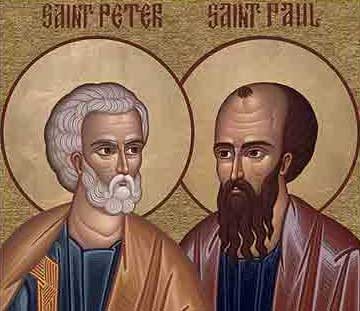
The Feast of St. Peter and Paul ~ The Rev. Dcn. Shawn Gisewhite
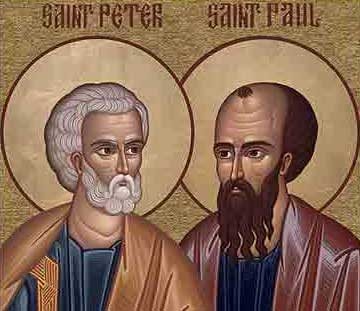
In the name of God; Father, Son and Holy Spirit. Amen.
Today we celebrate the Feast of Sts. Peter and Paul, two of the most influential men in Christianity. Peter, the rock on which Christ built His Church and Paul, the converted persecutor of Christians turned missionary. As Christians, we can look at the lives and deaths of these great men as a model of how we are to live and possibly die for Christ.
Let us look at each of these men individually.
Peter, known originally as Simon, was the brother of Andrew. Both fishermen by trade, they later became “fishers of men.” Andrew, having discovered Jesus as the Messiah through John the Baptist, ran home to tell his brother Simon of the good news. Simon meets Jesus who instructs the brothers to lay down there nets and follow Him. A command the Bible tells us they obeyed without even a second thought. Simon’s faith is later tested by Jesus as he walks on water and then denies Jesus three times. In the end, Jesus tells Simon that from now on his name shall be Peter (meaning Petros or Rock) and on this “rock” He shall build His Church.
After Pentecost, Peter traveled to Antioch where he established a church which he ruled from 33AD to roughly 39AD. Peter goes on to travel all over the Roman Empire in what is now Turkey. He arrived in Rome in 40AD and remained there for the next quarter century. In 51 AD Peter returned to Jerusalem for the Council in which it was decided Gentiles need not adhere to the customs and regulations of Judaism. It was at this council that Peter and Paul not only meet, but butted heads. Paul rebukes Peter publicly over the subject of Gentile Christians. These two would meet again in Rome in 67AD.
Paul, originally known as Saul, was a Roman citizen and a Pharisee. As such, Saul was a leader of Christian persecution. One day Saul has a blinding vision, a conversion moment in which his heart is turned to Christ. He is baptized and becomes one of Christianity’s most fervent missionaries. Now known as Paul, he preaches the Gospel to the ends of the world. First to Arabia then back to Damascus. Then to Jerusalem where he visits Peter for the first council. From Jerusalem he travels throughout Europe, including Macedonia, Greece and Italy.
While preparing for a missionary trip to Spain, he is imprisoned for 2 years by the Jews in Capernium. Paul later travels again, but his ship wrecks in Malta. He is imprisoned once again. This time for 2 years for preaching in Rome. Paul was arrested a third and final time in 67 AD in Rome.
Although both Apostles of Christ, these two men ministered independent of each other. In the end, there were two people who linked their fates one with the other; Simon Magus and the Emperor Nero.
Simon Magus was a practitioner of black magic. A sorcerer if you will. Offering to pay the Apostles to give him the gift to confer upon others the Holy Spirit, Simon Magus is rebuked and ran out of the Middle East by Philip. Now bitter and more determined than ever to show his power over that of these so called “Christians,” Simon Magus takes his show on the road all the way to Rome. There he meets Emperor Nero. Besides being an all around bad guy, Nero has a strong desire to be a sorcerer. He appoints Simon Magus to his court and aims to learn all he can from him. In order to show his superior power, Simon Magus decides to recreate the ascension of Jesus by flying around in the sky. Simon Magus does so with the help of demonic spirits. That is until the prayers of two men cause the sorcerer to come crashing to the pavement at Nero’s feet. His legs crushing on impact, Simon Magus dies of his wounds a few days later. Who were these men who caused the death of Nero’s sorcerer? None other than Peter and Paul who were both in Rome preaching the Good News of Christ Jesus.
Nero, who had begun a city wide persecution of Christians, was furious over the death of his sorcerer by these leaders of the Christian movement. Fellow believers pleaded with Peter to flee Rome and save his life. Although he was determined to remain in Rome and suffer persecution alongside his followers, Peter gives in and heads out of town. During all of this, Paul is now incarcerated in Rome. When he comes to the city gate, Peter has a vision. He sees Christ walking into the city. Peter asks Jesus where he is going, to which he replied, “I go into Rome to be crucified again.” Peter, understanding the meaning of the vision, returns to Rome were he is imprisoned alongside Paul.
While in prison, Peter and Paul convert the Captains of the guard and 47 others. Eventually on June 29th, 67 AD Peter and Paul’s lives come to an end. Peter is taken outside the city gates where he is crucified upside down. Paul, being a Roman citizen, does not face crucifixion. Instead, he is beheaded. Tradition is that his head bounced 3 times down the pavement, and at each place a spring sprang up from the ground.
Looking at the lives and deaths of these great men, we can find the strength, determination and faith to carry on the great mission to preach the Gospel unto the ends of the world, even in the face of persecution and death. Like Peter, we are to give up everything to follow Christ when he calls us. This may not be an easy task. After all, we worked long and hard for that new car, that big house, and to secure the perfect job. It is hard to give up everything and go where the Lord leads. It is equally hard to walk out into the deep, trusting in the Lord that we will not sink. Like Peter walking on the water, so are we to have faith strong enough keep us afloat. Like Paul, no matter how hardened our hearts are, we can turn to love and accept Christ as our Lord and Savior. Even when imprisoned and on a sinking ship, Paul didn’t let anything stand in the way of him carrying out his missionary duties. No matter how bleak the situation or how tall the obstacle, we must remain strong in our faith and push on.
Remember these men when we feel that it is impossible for one person to make a difference. Remember them when we are persecuted for our faith. Remember them when we see Christians around the world martyred for their beliefs. When our own faith is shaken and we feel like the world is against us, remember Sts. Peter and Paul and ask them for guidance and look to their examples for the strength to go on.
Amen.

Fear and Faith ~ Br. Brenden Humbrdross, Novice
12th Sunday in Ordinary Time – Matthew 10: 26-33

May the words of my mouth and the meditations of our hearts be always acceptable to you O Lord, our God and our Creator.
I want to start by being honest with you all; when I first sat down and read the Gospel today in preparation for writing this sermon I was a little perplexed. At face value the words were rather challenging and a little cryptic and I was at a loss for a focus, something that usually comes quickly to me. So I had to take a little while and really sit and stew over the words of Christ.
As I did this my mind wondered (a little off task in some ways) to my Dominican heritage. There’s a book that many of us Dominicans would have read called “The New Wine of Dominican Spirituality” and in these pages the Gospel and the Dominican approach to it is likened to wine and the process of drinking and becoming drunk (metaphorically of course). I realised that as I sat and thought about the Gospel I was actually doing what we’re called to do as Dominicans. Like a connoisseur of fine wine I was taking my time to let the tastes fully develop, to let the wine of the gospel breath; and I have to say that I am glad that I did. As I sat and read over the passage and contemplated its words the full bloom of the passages bouquet was opened to my senses.
I thought this was something worth sharing as I’ve known many people who are put off reading the Bible by the conception that it’s a musty, cryptic book that takes a lifetime to understand at even a basic level. However, nothing can be further from the truth! The Bible is as easy to consume as a bottle of wine; all we need to do is pull the cork and invite our friend the Holy Spirit to share it with us. If we do this the words of the scriptures will open before us and we can all become drunk with the Word.
So as I sat imbibing the drink of the Gospel it became apparent to me that today’s Gospel reading is extremely relevant for not only the Christian world, but the entirety of humanity at this time. The reading starts with Christ telling His Apostles not to fear; who are they not to fear? The reading simply says “them”. If we explore back into the preceding passages we see that Christ is speaking about those who would persecute the Apostles. Christ is adamant that we should not fear those who persecute us.
It seems that every time I turn on the television or read a news article I’m reading fresh tales of war, famine and persecution. It’s hard in these days of terror not to become afraid; images of bombings, stabbings, beheadings and even crucifixions adorn our media portals. However, Jesus wants us all to know that we don’t need to be afraid; it seems like a big ask doesn’t it; don’t be afraid when there’s an unending barrage of hate and terror presented to us? Nevertheless, Jesus offers the disciples some advice to combat this fear and terror and I think that it applies to us just as well as it did to those in the times of Christ.
Jesus points out to His Disciples that though they may face persecution and harm, maybe even death, these things are not final. The woes of this world can only impact upon our physical bodies; no persecutor has the ability to diminish or destroy our soul that power only rests with Him who created it. For this reason Jesus tells us that the only being we should fear is our Father in Heaven. If we breach the laws of the Gospel and fall short of the mark it is only He who can respect our rejection of His love by denying us eternal grace in Heaven. In contrast to this, if we accept the love of God in our lives then God will reward us abundantly with an eternity in His presence.
So you may be left wondering what prompted this discussion about fear between Jesus and the Disciples and how persecution factored into that. If we examine the exchange in the reading we can see that Christ is talking to the Apostles about spreading the message of salvation, He tells them that whatever they have heard they must tell to others and that if they don’t deny God’s message He will not deny them before God. And so it is with all of us, we are all called to not be afraid and to boldly spread the message of salvation that we have heard.
It can be confronting to think that we are all called to bring others to Christ, to open the paths to Salvation but when you read the scriptures there is really no way to avoid it. So let me ask, what are you doing to spread the message of Christ to others? When I’ve spoken about this with people they often say things like “oh nothing, I don’t know my Bible well enough” or “I can speak to people about Church they’ll think I’m a Bible Basher”. But the first step in bringing others to Christ is being an example to them. Right now you could all be, relaxing, enjoying a lazy Sunday, reading the paper and having a Cuppa, but instead you’re here, reading this sermon and that will have an impact on your actions throughout the week I am sure.
Don’t be afraid to get involved in the good works already happening in your community and equip yourself with knowledge to help you face the harsh realities of life and to be ready to fulfil your divine purpose on earth. It is my prayer that throughout the coming week you may all be strengthened by the Spirit that God may bind up your wounds and heal you so that you can begin the process of becoming that which he created you to be; that you can boldly go forward, unafraid and proclaim Christ and his Salvation.
Let us pray:
Lord,
by the light of the Holy Spirit
you have taught the hearts of your faithful.
In the same Spirit
help us to relish what is right
and always rejoice in your consolation.
We ask this through Christ our Lord.
Amen.
In the name of the Father, the Son and the Holy Spirit. Amen.
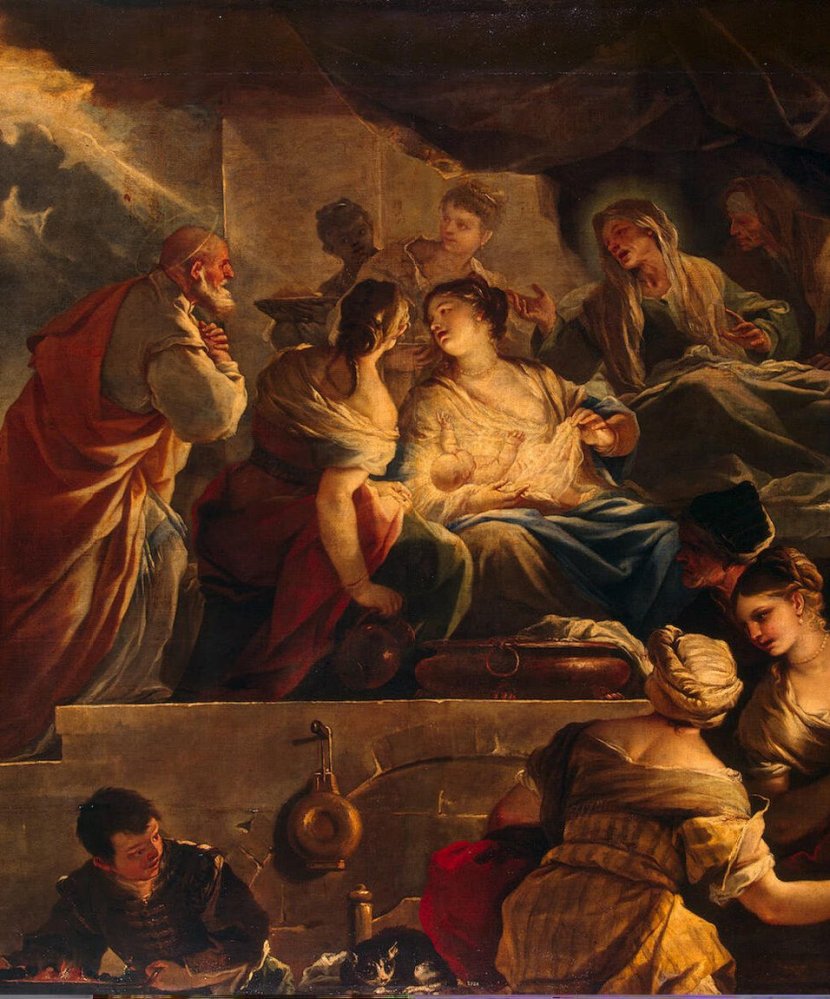
The Solemnity of the Birth of John the Baptist ~ The Very Rev. Lady Sherwood, OPI
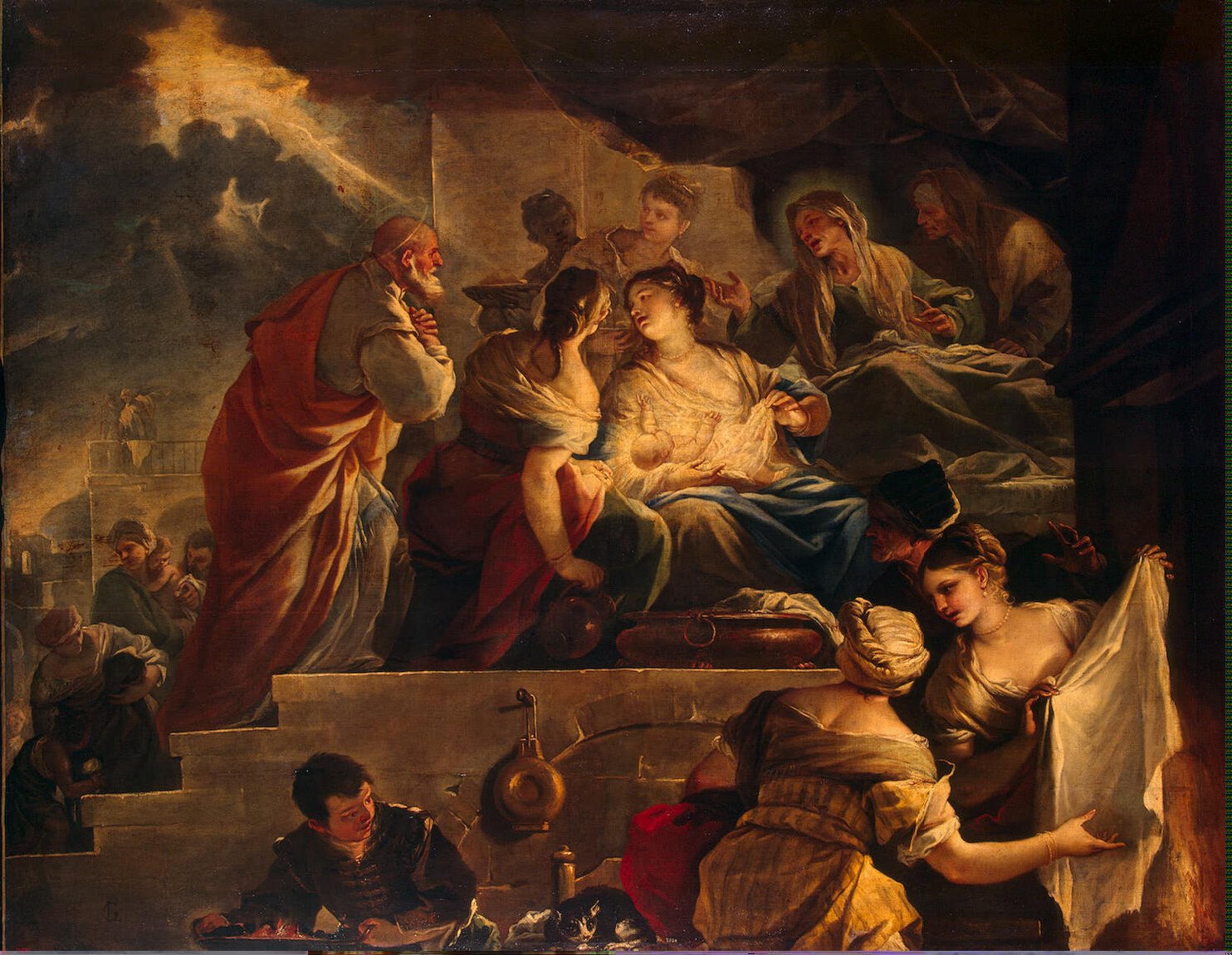
Reading 1 :IS 49 :1=6
R psalm : PS 139: 1B=3,13=14AB,14C=15
Reading 2: ACTS 13:22=26
Holy Gospel: LK 1:57=66,80
Today, we as a church come together to commemorate the birth of St John the Baptist, often called the ‘Forerunner’.
John was the son of Zechariah and Elizabeth. In the Gospel of Luke, we are told that Zechariah was told beforehand about the birth, and that he was to be named John. The name John means “God is Gracious” (LK 1 :8=2:3).
John whilst still within his mother’s womb, instantly recognised the presence of Our Lord Jesus, who was also still in his mother’s womb, when Mary went to visit her cousin Elizabeth (LK 1 :41). John lept for joy in Elizabeth’s womb as soon as Mary and Elizabeth met, and this is when John was cleansed of original sin. This came to pass just as the Angel Gabriel had previously promised Zechariah in LK 1 :15.
When John was older, he left the home of his parents and went to live his life in the desert. He wore only a garment made of camel skin and only had Locusts and wild honey to eat. John would preach in the desert (MK 1:6; Matt 3:4).
John went about preaching and proclaiming about the Kingdom of God and of a time of coming judgement. He invited those who wanted to repent, to accept him to baptise them as a sign of their repentance.
John, just like the prophets, disturbed the comfortable and gave much comfort to the disturbed. The message of John spread far and wide. The Gospel of Mark tells us that all peoples of both Jerusalem and Judea travelled to him and confessed their sins as John baptised them in the river Jordan (MK 1:5).
John clearly shows his humility because he never wanted attention for himself, he always directed people to Jesus. Some wondered if John was the Messiah, but John reassured them that indeed he wasn’t and he declared that his ministry was merely for to prepare for the coming of the Messiah. John said, “I have baptised you with water, but He will baptise you with the Holy Spirit.” (MK 1:8)
Then Jesus himself came to John to be baptised and John immediately recognised Jesus as the Messiah and he declared, “This is the Lamb of God who takes away the sins of the world”. (JN 1 :29). This statement from John is still used in Mass prayer today, when the Priest holds up the sacred Host as we prepare for the Holy Eucharist, as the Priest says, “This is the Lamb of God who takes away the sins of the world…”.
It was after being baptised by John, that our Lord Jesus began his Earthly ministry. When John had been baptised by John, John again showed his humility as again, he turned his attention to Jesus, declaring, “He must increase, I must decrease”(JN 3:30).
St John the Baptist is an excellent example that we as Christians should take much notice of within our lives of faith. Just as John always showed his humility by turning his attention away from himself and towards our Lord Jesus, we too, also need to show this same humility if we are truly to serve and follow the Lord. We also, must turn attention away from ourselves and towards Jesus. Just as John himself declared, “He must increase, I must decrease”.
Let us pray:
O glorious St John the Baptist, greatest prophet among those born of woman, although you were sanctified in your mother’s womb and lived a most innocent life, nevertheless, it was your will to live in the wilderness of the desert, there to devote yourself to the practice of austerity, penance and humility;
Obtain for us by your intercession, the grace of the Lord to be wholly detached within our hearts, from earthly goods and self attention. Increasing our humility and service, by making ourselves far lesser and in the never ending increasing, to be ever greater within our hearts and lives.
Amen.
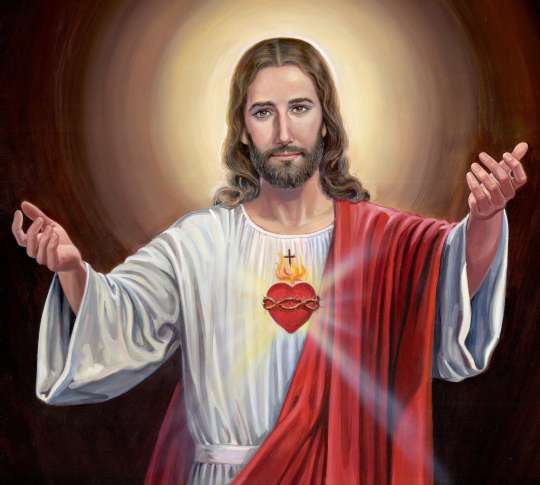
Sacred Heart of Jesus! ~ The Rev. Dcn. Dollie Wilkinson, OPI
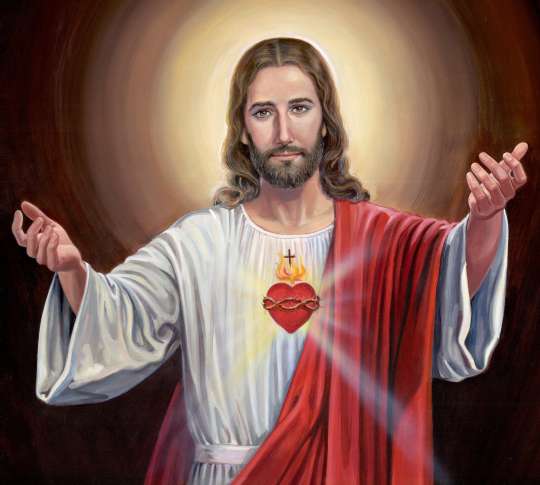
It is the Feast of the Sacred Heart of Jesus. As a Catholic, you’ve seen the image of Jesus depicted in many ways–kneeling in prayer, surrounded by children, as a child in the arms of St. Anthony, and dying on the cross. One of the most recognizable images is the image of the Sacred Heart of Jesus. It’s the image of Jesus with His heart exposed, surrounded by thorns, with flames and a cross emerging from the top. This image of Jesus is striking and powerful. In honor of the Feast of the Sacred Heart of Jesus, let’s take a look at the meaning of this image. What does it symbolize? Why do we celebrate the Feast of the Sacred Heart of Jesus? Also, who was Margaret Mary Alacoque and what was her connection to the Sacred Heart of Jesus?
The sacred heart of Jesus Christ is a symbol that entered the world through the mystical experiences of several Roman Catholic nuns to whom the pierced Heart of the Savior appeared in visions. Yet it was Saint Mary Alocoque who perceived, through many supernatural visions of Christ’s passion, the symbol of the inflamed pierced heart, encircled with thorns. This vision is known as the “great apparition”, which occurred during the octave of Corpus Christi, in June of 1675.
In this vision Jesus entrusted Saint Mary with the mission of propagating the new devotion. Jesus continued to appear to Margaret Mary and made revelations to her until 1675. It wasn’t until 1856, that Pope Pius IX decreed that the feast should be regularly celebrated throughout the world.
What Does the Sacred Heart Symbolize?
Catholics (and people in general) are visual people. Jesus knows this about us that’s why in addition to using parables to give us messages, He uses images to convey His messages. Seeing an image of the Heart of Jesus with thorns and the cross and flames certainly grabs our attention and speaks to us. He is saying, look at My Heart and see what I am feeling. The thorns around His heart are a representation of our sins and how our sinning pierces His heart. The flames and the cross serve as a reminder of the suffering He endured for our salvation and of His burning love for us. The dripping blood represents the blood Jesus shed for our salvation. That’s a pretty powerful message! But let’s explore this image in depth, to understand it fully.
The Sacred Heart is often depicted in Christian art as a flaming heart shining with divine light, pierced by the lance-wound, encircled by the crown of thorns, surmounted by a cross, and bleeding. Sometimes the image is shown shining within the bosom of Christ with his wounded hands pointing at the heart.
Elements:
- Heart: The heart is the center of being, both physical and spiritual. The heart represents compassion, understanding, love and charity. It also represents the temple of God, His Divine Center and dwelling place. The heart is the spiritual center of a being. The pierced and bleeding heart alludes to the manner of Jesus’ death and reveals to us Christ’s goodness and charity through his wounds and ultimate sacrifice.
- Crown of thorns: A crown is a symbol that represents sovereignty, victory, honor, dignity, reward, the highest attainment, dedication, completeness, the circle of time, of continuity and endless duration. For Christians it is also a symbol of the righteous, blessing and favor, and victory over death. Yet the crown that was placed on Christ’s head was made of thorns to deliberately parody the crown of roses worn by the Roman Emperor. The crown of thorns has thus become the symbol of the Passion and martyrdom of Jesus Christ.
- Cross: In Christianity the cross is a symbol of salvation through Christ’s sacrifice. It is redemption, atonement, suffering and a symbol of faith.
- Flames or Fire: Transformation, purification, renewal of life, power, strength, energy. Fire facilitates change or passage from one state to the other. Fire manifested as flame symbolizes spiritual power and forces. Fire and flame both represent truth and knowledge as consumers of lies, ignorance, illusion and death.
-
Light: Light is a symbol of life, truth, illumination and a source of goodness. Radiance emitted by light symbolizes new life from divinity and the power of dispelling evil and the forces of darkness. It also embodies the aspects splendor, glory and joy. When illustrated the straight line usually represents light and the undulating line is symbolically heat; light and heat are symbolically complementary and polarize the element of fire.
In conclusion:
The sacred heart is a symbol of great self sacrifice and unconditional divine love for all beings captured in the actions and deeds of Jesus Christ. When our love and compassion overcomes and sacrifices our own ego, our spirit will be liberated and transform our entire being into a holy one. If we align ourselves with meaning of the Sacred Heart and the liberating vibration of Christ consciousness, this great symbol can become a gateway for us to change the world through our expression of unequivocal, genuine love. So let us love one another unconditionally.
As my Father has loved Me, so have I loved you.
— John 15:8
 The Order of Preachers, Independent
You must be logged in to post a comment.