
Category: Lesson

It’s a Wonderful Life! ~ Br. Matt Pepple, Novice

I recently saw the movie, “It’s a Wonderful Life”, directed by Frank Capra; it debuted in the post-war period of 1947. Now, it’s aired primarily by the NBC network during the holiday season. For a black and white movie, a lot of the movie’s themes are still relative for the world today.
Meet George Bailey, a young man, who is also the son of a banker. George has so many hopes and dreams that he wants to accomplish in his life. Then, after his father dies, he is left with the family business, “The Bailey Building and Loan”, and comes to the realization that many of his most cherished dreams may not come to pass. George gets married and has a family.
Things take a “sour turn” halfway through the film, when Mr. Potter, the film’s villain; makes a dishonest move against George’s uncle.
As a result of this, George is feeling miserable and hopeless. Enter the angel Clarence. George was willed with so much grief and despair that he has contemplated throwing his life away.
Clarence presents George with a remarkable gift; a life he has never lived.
If you were to take a step back and analyze your life to this date. Though it’s probably safe to assume that our life hasn’t been as dramatic as the fictional character of George Bailey, we do have a lot of power to affect positive change. So, how many lives have you affected? How have you helped people? What have you been able to do to affect positive change? What things could you make better? How would your friends and family be different?
Going further, imagine, now, what the world would have been like if Christ had never come into it. Our world, would have remained a very dark place. The birth of Jesus was a changing point. The Son of God was a gift that was given to us by God the Father. And as such, we must be thankful for this gift and look at our lives as gifts as well. God saw how dark the world was becoming, but as much, he was able to see the darkness inside of people’s lives.
In John 3:16, St. John writes, “For God so loved the world that he gave his one and only Son, that whoever believes in him shall not perish but have eternal life.” That’s right, God loves the world and all of us so very much, that he bundled up and placed his “gift” in swaddling clothes and placed him in that manger in that cave. And he gave us an eternal “gift” to spend it with him.
And it is up to us as Christians to continue to be that ‘gift.’ We must remember that often, we are the only Jesus people will see. We are the only Bible some people will read. The holidays and Christmas time can be a somewhat depressing time for many people, and as Christians it is important for us to never lose hope or our faith, but to exhibit that faith on a grander scale.
As much as Clarence gave George some perspective on his life, and his accomplishments already, I urge you to not lose hope or your faith. If self-analysis grants you great conviction or satisfaction, please know that you can still change your life. Our life on this Earth is truly a most wonderful and gracious gift. So make it a great one! Amen.
“A Little Child Shall Lead Them” ~ The Rev. Dcn. Dollie Wilkinson, OPI
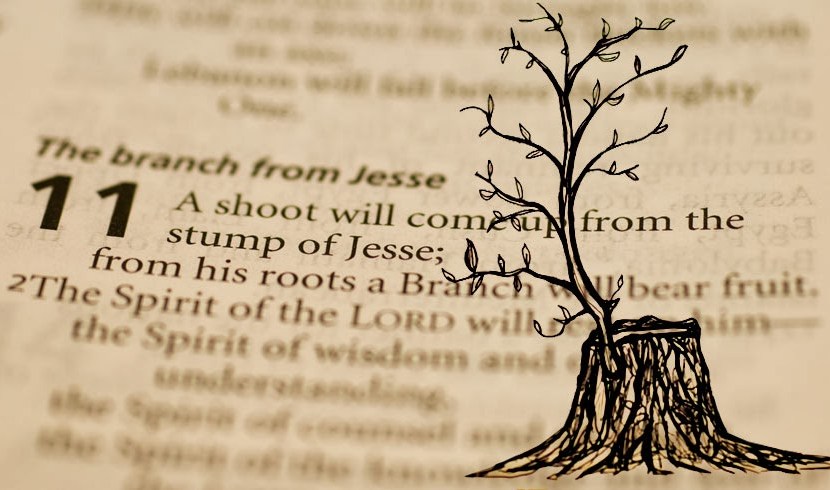
I love to garden, but often get frustrated when the small seedlings I have planted in the ground, do not take root. What usually happens is maybe one or two plants will survive my clumsy gardening, while the rest wither and die. I usually leave the dying stumps in the ground, figuring they will help fertilize the new plants trying to grow. In the beginning of Isaiah 11, we are offered a picture of the future that reminds us of how new growth springs from a solid root.
“A shoot shall come out from the stump of Jesse, and a branch shall grow out of his roots.”
This vision of the future offers us hope, with the upcoming birth of baby Jesus. And further goes on to describe just exactly how the Messiah will lead His people. Why does the Holy Spirit, who gave Isaiah these visions of the future, want you and me to see this? Because we need to understand what kind of king we find in the manger of Bethlehem.
“The spirit of the LORD shall rest on him, the spirit of wisdom and understanding, the spirit of counsel and might, the spirit of knowledge and the fear of the LORD. His delight shall be in the fear of the LORD. He shall not judge by what his eyes see, or decide by what his ears hear; but with righteousness he shall judge the poor, and decide with equity for the meek of the earth; he shall strike the earth with the rod of his mouth, and with the breath of his lips he shall kill the wicked. Righteousness shall be the belt around his waist, and faithfulness the belt around his loins.’”
We recently had a presidential election in the United States. And though we know that only one person can win, that didn’t prevent some people from being upset when their favorite candidate didn’t win. Everyone can describe in detail why their candidate is the best person to lead this country. But I imagine, if they were honest with themselves, they could also tell you the faults of this or that person. This is because no one person is perfect. But the prophet Isaiah described the most perfect leader, not just of a country, but of all time. Not only does this offer us hope for the coming Messiah, but also serves as inspiration for those who have lost heart in their daily struggles. What once seemed dying, lost, gone ….. now offers hope. All is not lost! This new vision of the future, as detailed in Isaiah 11:6-10, offers us a glimpse of God’s promises for the future.
“The wolf shall live with the lamb, the leopard shall lie down with the kid, the calf and the lion and the fatling together, and a little child shall lead them. The cow and the bear shall graze, their young shall lie down together; and the lion shall eat straw like the ox. The nursing child shall play over the hole of the asp, and the weaned child shall put its hand on the adder’s den. They will not hurt or destroy on all my holy mountain; for the earth will be full of the knowledge of the LORD as the waters cover the sea. On that day the root of Jesse shall stand as a signal to the peoples; the nations shall inquire of him, and his dwelling shall be glorious.”
Paints a pretty picture, doesn’t it? I can here you mumbling though: “But, how will all this be possible?” We already know that God can work miracles. After all, who created all you see, touch, smell, hear? It certainly didn’t materialize out of thin air. So is it so hard to imagine a future where there will be no strife, no discord among animals and man? Oh, I know looking at the world today, that might be hard to understand and even harder to imagine. But Matthew 19:26 clearly states, “Jesus looked at them and said “With men this impossible, but with God all things are possible.”” So next time you find yourself losing heart, ready to give up, remember the One who created you, who decided you were worth something. All of us are special, worth saving, and it will take a little baby, a small child, to show us the way.
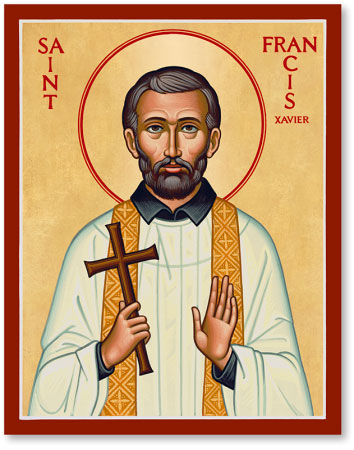
A Life of Hope: St. Francis Xavier ~ Br. Matt Pepple, Postulant

St. Francis Xavier was born in the family castle of Xavier, in Pamplona in the Basque area of Spanish Navarre in 1506. He was sent to the University of Paris in 1525 and obtained his licentiate in 1528. He met with St. Ignatius Loyola and was one of the seven, who in 1534 founded the Society of Jesus. He intended to join Ignatius in Venice and then they would go as missionaries to Palestine, a trip which did not occur. He was ordained in 1537 and went to Rome in 1538 and 1540 when the Pope formally recognized the Society of Jesus. At that time, he, alongside Father Simon Rodriguez, was ordered to the Far East as the first Jesuit missionaries.
King John the 3rd retained Fr. Simon in Lisbon but Francis, spent six months preaching in Mozambique along with giving some assistance to the sick. He eventually arrived in Goa, India in 1542 with Fr. Paul of Camerino and Francis Mansihas. He began evangelizing the natives and attempted to reform the Europeans by adopting their customs on his many travels. He converted tens of thousands to Christianity in the subsequent decade.
He visited Paravas in India, Malacca, near New Guinea, Morotai near the Philippines and Japan. In 1551, the East and India was dedicated as a separate province and Ignatius designated Francis as its first provincial. In 1552 he went to China and landed on Sancian; where he died before he could reach the mainland. Working against excessive complications, language problems, he had no proficiency in foreign speaking, insufficient monies, and lack of assistance, often actual confrontation, even from European representatives; he left the mark of his missionary enthusiasm and vigor on areas which adhered to Christianity for centuries. He was beatified in 1622 and declared patron of all foreign missions by Pope Pius X. on Dec. 3.
Our scripture for the week, Romans 15:4-13; St. Paul is speaking to us on what was written in the old days being relevant even today for our instruction. “So that by determination and encouragement of the scriptures that we may have hope.” We need to live more in an attitude of hope and inspiration from the direction of the scriptures. Paul also tells us that our God wants us to live in harmony and peace with our neighbors, as Christ did. And that all of us in this harmony and unison may glorify the God and Father of our Lord, Jesus Christ. We are to be welcoming of our neighbors as Christ has welcomed us. Jesus became a servant to the circumcised on the behalf of the truth of God in order that he might authorize the promises known to the fathers, so that the Gentiles may exalt God for his kindness and compassion. For it is written, “Therefore I will confess you among the Gentiles, and sing praises to your name.” Again, he said, “Rejoice, O Gentiles, and let all of the peoples praise Him.” Paul refers to the prophet Isaiah, “The root of Jesse shall come, the one who rises to rule the Gentiles; in him the Gentiles shall hope.” May the God of hope fill you with all joy and peace in believing, so that you may prosper in hope by the power of the Holy Spirit.
It was this hope that served as an inspiration for St. Francis Xavier. To have been a Missionary at his time, or really at the present time, was a very dangerous time. Things may have appeared very daunting to him, in the tasks that he was set forth. At any time, he and companions could have just given up. Hope, on the other hand, can be a very inspirational tool. God wants us to live and act in a spirit of hope, to be hopeful of the future and instill the hope of Christ in the present. We all have a certain desire for things to happen, for a certain situation to improve and get better, for a loved one who is sick to become healthier again, or for a better job. For as long as we live in hope, we can greet our neighbors, friends and relatives in an attitude of hope. As long as we have hope centered in Christ, there is always a chance for things to change. Jesus wants to be the light in your darkness and to be your hope for better things.
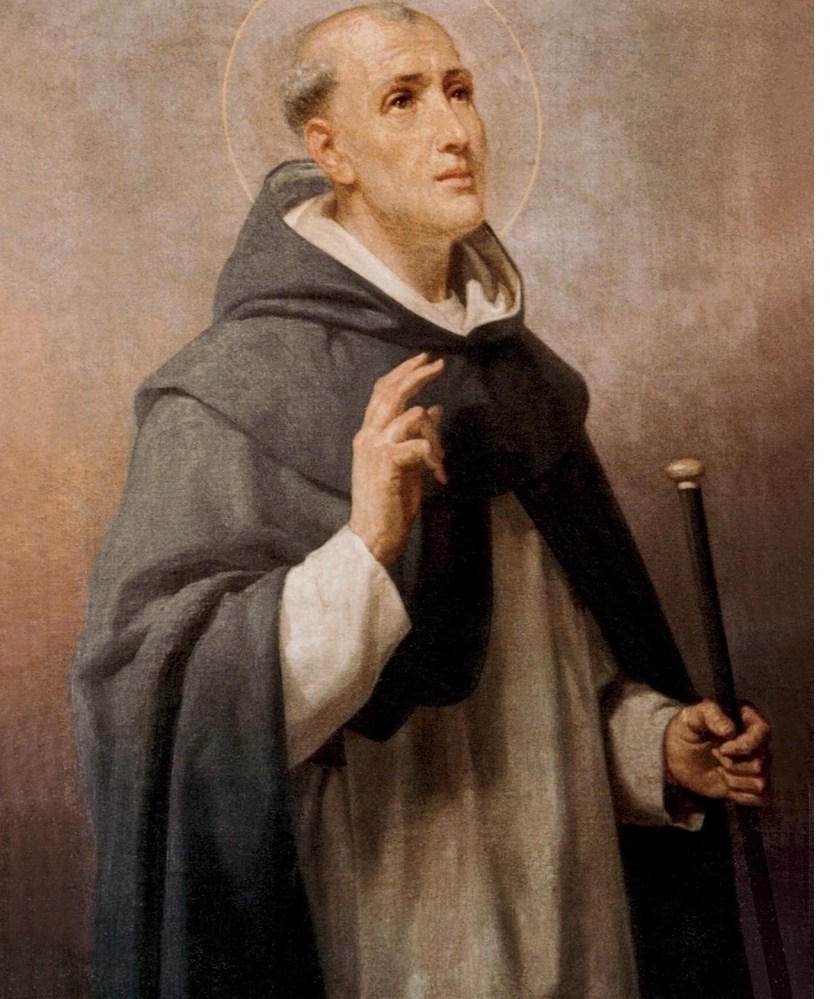
Blessed John of Vercelli
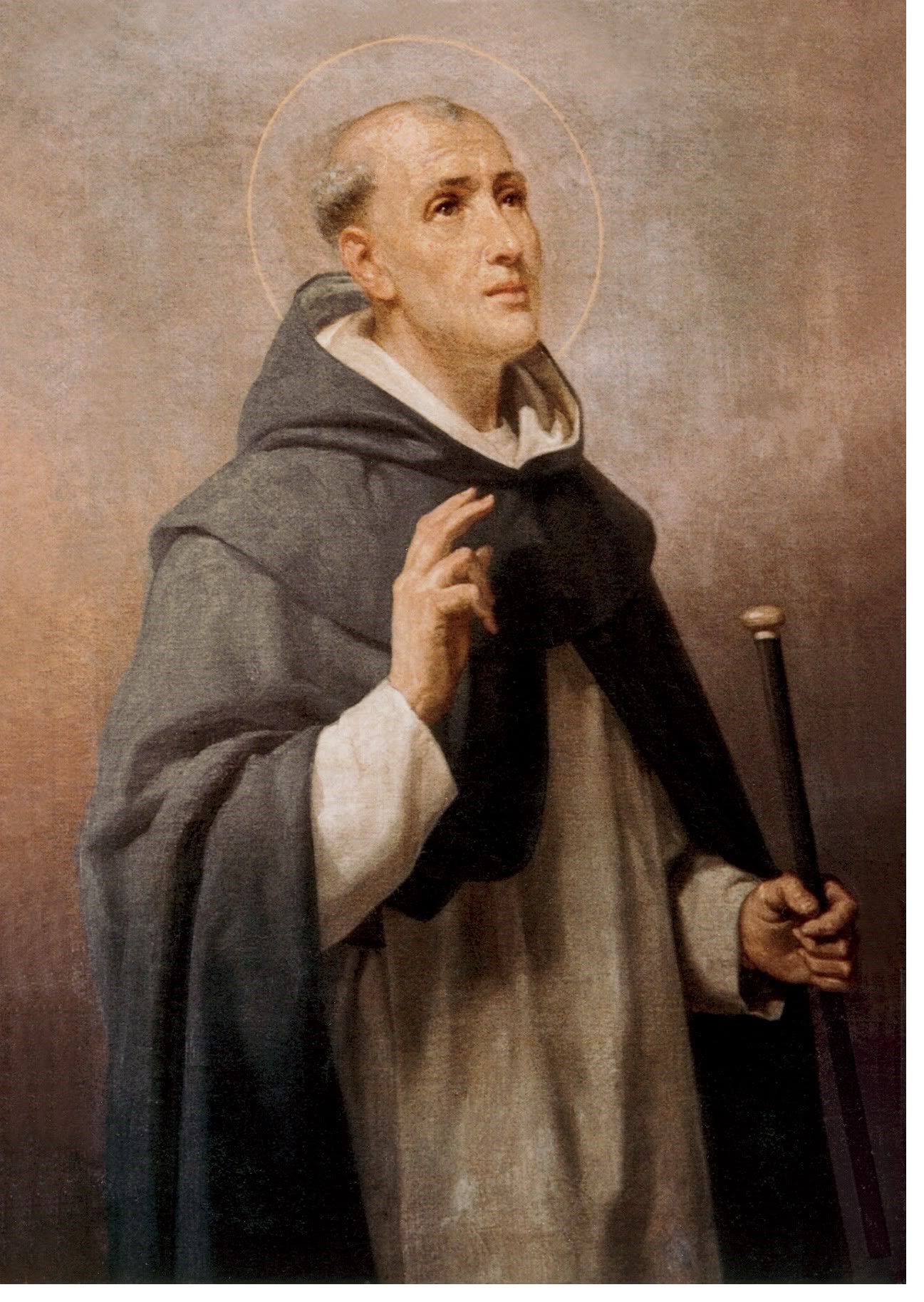
John Garbella was born early in the 13th century, somewhere near Vercelli. He studied at Paris and was ordained priest before 1229. He taught canon law at the University of Paris. While he was professor there, Jordan of Saxony (who was a friend of Saint Albert the Great) came to Paris, and John saw one after another of his best pupils desert their careers to join the Dominicans. He seems to have considered them quite objectively, without reference to himself, until one day he had an interior voice that spoke to him that it was God’s will for him to join the Dominicans. No one can say that John did not respond with alacrity; he dropped everything and ran down the street. (“Let me go; I am on my way to God!”) Jordan received him happily and gave him the habit.
In 1232, John was sent to Vercelli to establish a convent there. He built this and several other convents in Lombardy as houses of regular observance. While provincial of Lombardy, he also became inquisitor. It was a particularly difficult moment. His brother in religion, Peter of Verona, had just been killed by the heretics in Como. The entire countryside was in a state of war, with roving bands of heretics and robbers. It was the task of the new inquisitor to try to bring order out of this chaos, and what John did was remarkable, considering the situation. In spite of his heavy labors, which included the supervision of 600 friars in 28 different cities (he reached them only by walking), John of Vercelli established the ideals of study and regular observance in all of his houses.
It was the good fortune of John of Vercelli to live in an age that was well peopled by saints. He formed a close friendship with Saint Louis, the king of France. Several of his tasks in the order, particularly the Commission on the Program of Studies, he shared with Saint Albert the Great, Saint Thomas Aquinas, and Peter of Tarentaise (the future Pope Innocent V). In such company one would need to have a superior set of talents; John did.
In 1264 the chapter of the order met at Paris. Blessed Humbert had resigned as master general of the order. John went to the chapter hoping that he could resign as provincial of Lombardy. Instead of escaping one office, he fell heir to a still more difficult one. He was elected master general in 1264 and served in that capacity until 1283. John was then a man in his sixties and was, moreover, handicapped by a crippled leg. However, he accepted the office which would require him to walk, not only all over Lombardy, but all over Europe. It took a brand of courage and obedience that was little short of heroic.
During the generalate of John of Vercelli, the relics of Saint Dominic were transferred to the new tomb that had been prepared for it by Nicholas of Pisa. When the transfer was made, John of Vercelli fixed his seal on the tomb; the seals were still intact on their examination in 1946. During the translation of the relics, according to the account in the Vitae Fratrum, when the body of Saint Dominic was exposed to view, the head was seen to turn towards John of Vercelli. John, embarrassed, moved to another part of the church and gave his place to a cardinal. Whereupon, the head of Saint Dominic was seen by all to turn again in John’s direction.
On the death of Clement IV, John of Vercelli was very nearly elected pope. Being warned of the possibility, he fled in fright. However, his good friend Cardinal Visconti, was elected and took the name Gregory X. He appointed John as legate on several different missions.
He was commissioned by the pope to draw up the Schema for the second ecumenical council of Lyons in 1274–that council to which Saint Thomas Aquinas was hurrying when death found him on the road. At the council John distinguished himself for his assistance by offering to the council the talents of his best men. At the council, he accepted for the Dominican Order the special commission of promoting reverence for the Holy Name of Jesus and fighting blasphemy, which was, in that day as in ours, a prevalent vice. He can thus be considered the founder of the Holy Name Society, even though the Confraternity was not formed until 1432.
Several precious relics were suitably enshrined by John of Vercelli. These included several thorns from the Crown of Our Lord, which had been given him by Saint Louis of France. The cord of Saint Thomas, with which he had been guided by the angels and which he had worn until death, was given into the care of the master general, who gave it to the convent of Vercelli for safe keeping.
John’s career was rapidly reaching its end. In 1279, he presided over the famous chapter of Paris at which the order made the doctrine of Saint Thomas officially its own. The following year he laid the foundations of the Church of Santa Maria Sopra Minerva. One of his last official acts was to provide for a work on the instruction of novices (Benedictines, Dorcy).
Born: 1205 at Mosso Santa Maria, Italy as John Garbella
Died: September 1283 at Montpelier, France of natural causes; buried at the Dominican convent at Montpelier; his tomb was desecrated by Calvinists in 1562, and his body disappeared.
Beatified: 1903 by Pope Pius X (cultus confirmed), 1909 elevated him to the honors of the altar
The Feast of St. Andrew ~Br. Mark G. Dickson-Patrick – Novice
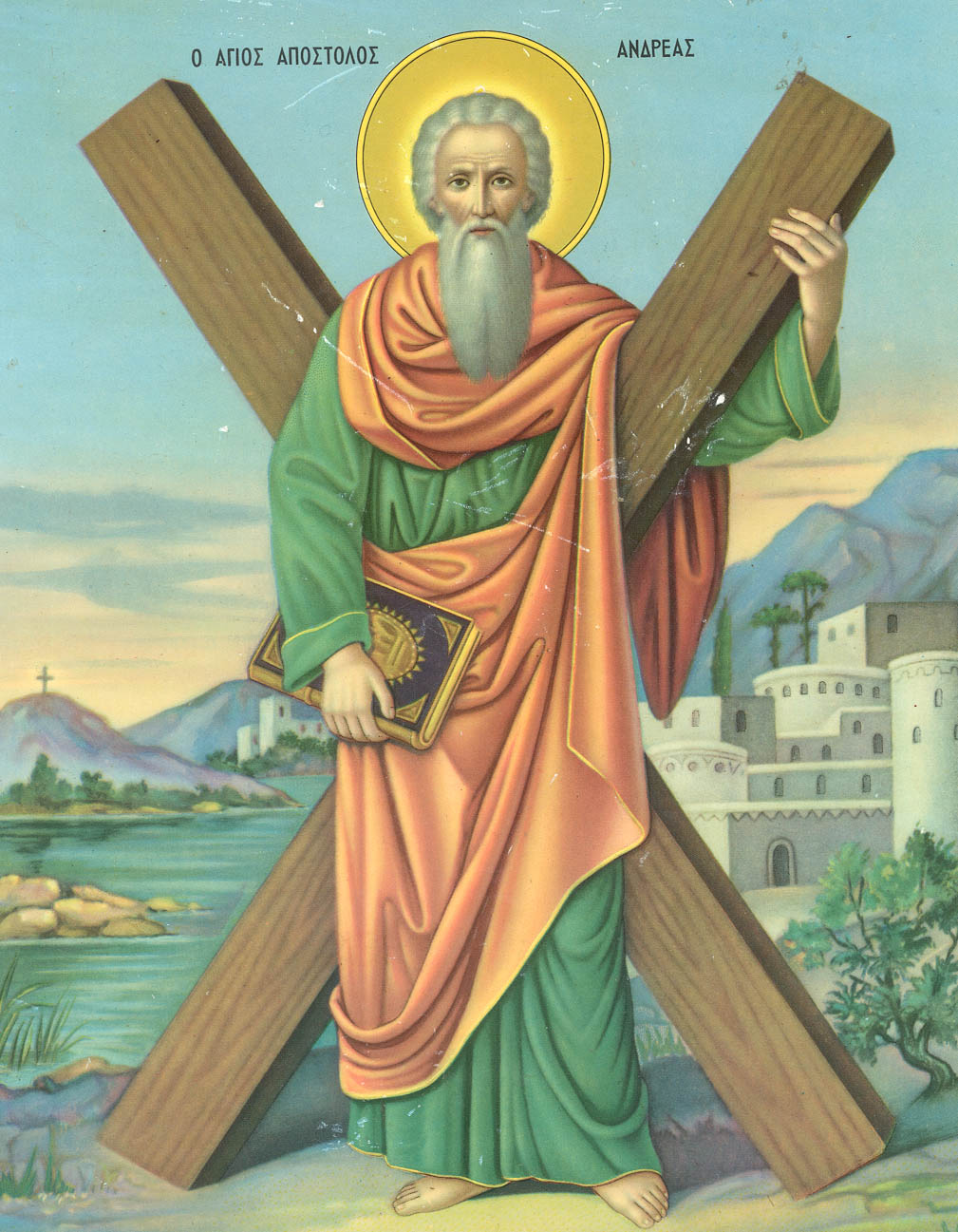
Today the Church celebrates the great feast of St. Andrew the Apostle, the brother of St. Peter. Andrew was a fisherman by trade, working alongside his brother before being called by Jesus to follow after Him. He became one of Jesus’ 12 apostles, and after His death and resurrection went out into various regions to preach the Good News of salvation. He was eventually martyred on an X-shaped cross, tied to the cross until death. As he was led to the cross, an ancient tradition attributes this quote to the Saint:
“Hail, O Cross, inaugurated by the Body of Christ and adorned with his limbs as though they were precious pearls. Before the Lord mounted you, you inspired an earthly fear. Now, instead, endowed with heavenly love, you are accepted as a gift…
O blessed Cross, clothed in the majesty and beauty of the Lord’s limbs!… Take me, carry me far from men, and restore me to my Teacher, so that, through you, the one who redeemed me by you, may receive me. Hail, O Cross; yes, hail indeed!”
Saint Andrew holds a special place for me, as he was the patron of the Roman Catholic College Seminary I attended for 4 years. Countless hours were spent praying before the image of this great saint, who was cradling an image of our seminary in his arms. This saint, who we deemed a brother, we would beg to intercede for the brothers of our house, for ourselves, and for an increase of vocations to the priesthood and to the religious life. Now, every year, I take it upon myself to pray a Novena to my brother, St. Andrew, for the state of the Church and the world.
Our Gospel reading this morning presents us with the moment that Andrew and his brother Peter are called by Jesus for the great work of preaching the Gospel. Fishermen by trade, they were mending their nets by the edge of the sea, when this teacher walks by and says “Come after me, and I will make you fishers of men.” We are told that they immediately left their nets and followed Jesus, not knowing at all what was to come. In a retreat on this topic to seminarians, Bishop Robert Morlino the Roman Catholic Bishop of Madison, WI, once said “When the Lord and Savior of the world comes up to you, looks you in the eye, and says ‘Follow me,’ why in the world would you ever stand still?” Andrew and Peter felt the call of conviction that the Lord laid on their hearts and as we know became two of the great apostles, preaching the Good News of salvation to the death.
There are times, I’d venture, that we often feel the call and conviction that Peter and Andrew felt, the call to preach the Gospel to all who will listen. We picture setting out on a grand crusade, bringing thousands to Christ and to salvation, bringing them home into the arms of God and away from the pain of heresy and death. But then we realize that with our busy lives in an increasingly secular world, we don’t have the time to go on these grand crusades that we have formulated in our mind. Notice what the Lord does with Peter & Andrew, and what He does with us as well. Jesus didn’t say, “Leave your nets, and you’re going to go on huge crusades.” No, he said, “Come follow me, and I will make you fishers of men.” Jesus took what they knew how to do, and enhanced it, for the work of ministry. So, too, does he do that with us. He takes our abilities, to teach, to pray, to work in the ordinariness of our lives, and enhances them for His uses, to preach the Gospel. That is how we can lead these lives of religious devotion in a secular and busy world.
My friends, there is work to be done. The harvest is plentiful, and the labors are few. Pray for an increase in vocations to the priesthood, diaconate, and religious life, that the Lord may take people in their ordinariness and enhance their gifts to serve His glory, that we may build up the Kingdom of God together. Like Peter & Andrew, heed the conviction that He is placing on your heart.
Amen.
Novena Prayer to St. Andrew
Saint Andrew, strong and powerful, intercede and pray for us.
Andrew, apostle of Christ, help me to rejoice in Jesus and so bring others to Him. May my words and deeds lead others to deeper faith in him. Bold missionary and evangelist, guide me where the Lord would have me preach his gospel. Companion of the Lord Jesus, send us people called to be priests, deacons, & religious. Saint Andrew, in your kindness hear and answer our prayer.
Amen.

Presents and Gifts ~ The Rt. Rev. Michael Beckett, OPI

What you are is God’s gift to you.
What you become is your gift to God.
We have survived Black Friday and made it through Cyber Monday!!!!! As always at this time of the year, our thoughts turn to gifts: giving and receiving, what we want to give, what we want to receive, what will please those we love, the shopping, the ordering, the wrapping, the general hustle and bustle of the Christmas season centering around gifts ad infinitum, donating to the people with the red kettles and bells so the less fortunate can have gifts…..
And then there’s the practice of ‘re-gifting,’ passing along that unwanted or unusable gift that we were given, to someone else, so that they will have SOMETHING, and so that they too, can possibly pass that pink and orange and green plaid scarf along, re-gifting it themselves to someone else who won’t use it either….and sometimes by some freak chance that unwanted item comes back to us several years later….and not much too worse for the wear…. And is re-gifting, as amusing (and cheap) as it may seem, necessarily a bad thing?
Why all this focus on gift-giving and gift-receiving at this time of year? The union of Christmas and gift giving was a gradual one; actually, the full story of the bright packages beneath the tree, like most of our Christmas customs, begins in the days before the birth of Christ. In ancient Rome, gifts were exchanged during the New Year’s celebrations. At first these gifts were simple, such as a few twigs from a sacred grove and small items of food. Many gifts were in the form of vegetables in honor of the fertility goddess Strenia. During the Northern European Yule, (yep, the yuletide season is a pagan thing) fertility was celebrated with gifts made of wheat products, such as bread and alcohol.
Like many of the old and pagan customs, exchanging gifts was difficult to get rid of even as Christianity spread and gained official status. Early church leaders tried to outlaw the custom, but the people cherished it too much to let it go. St. John Chrysostom urged no compromise with heathen abominations, but he, too, failed in this tenacity of hanging on to the tradition of gift giving. Since there was no general agreement about the exact date of the birth of Jesus, it must have seemed helpful to have it supersede the Saturnalia, so the rebirth of the sun became instead the birth of the Son of God, and the church leaders looked for a Christian justification for the practice of all this gift giving. This justification was found in the Magi’s act of bearing gifts to the infant Jesus, and in the concept that Christ was a gift from God to the world, bringing in turn the gift of redemption and everlasting life.
What you are is God’s gift to you.
What you become is your gift to God.
Wikipedia defines a gift as the transfer of something without the expectation of receiving something in return. Although gift-giving might involve an expectation of reciprocity, a gift is meant to be free. By extension the term “gift” can refer to anything that makes the other happier or less sad, especially as a favor, including forgiveness and kindness.
God’s gifts to us are free and clear. He has given us the gift of His Son, Our Lord and Savior Jesus Christ. He has given us the gift of eternal life: “For the wages of sin is death, but the gift of God is eternal life in Christ Jesus our Lord.” Romans 6:23 (NIV); The gift of salvation: “For it is by grace you have been saved, through faith—and this is not from yourselves, it is the gift of God.” Ephesians 2:8 (NIV); And the gifts that are unique to each of us: “We each of us have our own individual gifts: But each of you has your own gift from God; one has this gift, another has that.” 1Corinthians 7:7 (NIV)
Besides the obvious gift of His Son, and the forgiveness that we receive through Him whom we receive by faith, what other gifts has God given specifically to you? What talents have you received? What blessings have been given to you?
We learn about the 7 Gifts of the Spirit in Isaiah 11:2-3: “2 The Spirit of the LORD will rest on him— the Spirit of wisdom and of understanding, the Spirit of counsel and of might, the Spirit of the knowledge and fear of the LORD— 3 and he will delight in the fear of the LORD. He will not judge by what he sees with his eyes, or decide by what he hears with his ears;” (NIV)
And more importantly, what are you doing with those gifts? What are you giving back to God? What are you “becoming” as you use your gifts and talents? Which of the gifts that you have been given are you “regifting?” In other words, when we’ve received a gift from God, do we share that gift with others? Do we “regift?” We are told in 1 Peter 4:10, “Each one should use whatever gift he has received to serve others, faithfully administering God’s grace in its various forms.” (NIV) Jesus himself addresses this very thing in the parable of the talents in Matthew 25:14-30. By using our gifts, they multiply and we bring others to know God, and by recognizing what we have been given and using them for God’s glory, we are giving back to God.
What is the most precious thing we can give to God? The most precious gift we can give is what God wants the most. God wants us to make the fervent attempt to repent, get right with Him, and not lead a double life, trying to follow two contradictory paths, but living our lives according to His will. God simply wants us to give ourselves to Him. This is the best gift we can give! Our gift to Him is how we respond to the gifts He has given us which are the gifts of life and of grace. We can best do this when we are headed in His direction, following His precepts with a grateful, willing heart and mindset, and by striving to be the best that we can be by becoming what it is that He wants us to be.
Barbara Streisand sings in “The Best Gift:”
The best gift
That I ever got
Didn’t really weigh a lot
It didn’t have a ribbon ’round
And it sometimes made a terrible sound
The best of all it seems to me
It wasn’t ‘neath the Christmas tree
And yet, I guess I’d have to say
That it made all the other presents twice as gay
The best gift that I’ve ever known
I’d always wanted most to own
Yet in my dreams of sugar and spice
I never thought it could be so nice
The best gift that I ever get
Was sometimes dry and sometimes wet
Was usually pink but oftentimes red
As it lay so innocently in it’s bed
The best gift of the year to me
The one I hold most dear to me
A gift that simply drove me wild
Was a tiny new born child…
As we celebrate the birth of THE tiny newborn Child, God’s greatest and best Gift to us, let us strive to make ourselves the best gift we can give to others, and to God. Amen.
Living for Jesus: The Vocational Life ~ Br. Igor Kalinski, OPI

Are you willing to trust God with everything?
What steps can you take to develop a deeper trust in God’s provision?
As I look in the passage in today’s Gospel and Epistle, I put myself in the same position, how to react and what to do as Christian person who follows Christ.
As a friar living a life of vows, professed totally to God and my superior’s will, and offering prayers for the needs of those who needs me, I must take St. Paul as an example. The Apostle St Paul tells us today in the Epistle to the Thessalonians that with his own hands he provided funding for his existence, for food and for his missions that he must accomplish and traveling to all of those places he must visit.
In following his example, I have prayed a lot for the last two years for a stable job, so I can finance my work within the Dominican Order and the Church, and God answered my prayers for the glory and proclamation of his Kingdom. We as Independent Old Catholic clergy and religious follow this example to supply what we need for our spiritual work, firstly with work that will provide us money so we can invest in those abandoned and marginalized people who often are forgotten from their dominant parishes in our cities and towns. In today’s Gospel we read about all these natural signs from one side and from another side all what occur in today’s world scene full of hatred, criminal benefit of business with weapons making wars, destroying countries, making millions of refugees scattered in every corner in the globe, destroying families and homes into ruins. This all must be fulfilled as a sign that our God will return in this world one more time to give His righteous judgement for all acts of evil to be put in end and give punishment or redemption to those that their names are written in the Book of Life or eternal separation from the light for those that have followed their evil deeds of the devil.
We go back in the old testament where the Prophet Malachi has written this:
“But for you who fear my name, there will arise the sun of justice with its healing rays”
That’s what God desires for us, not because he needs our money or time or whatever else we can offer him, instead, he doesn’t want us to miss the blessing that comes from giving as St Paul showed us. We don’t get paid for our work as clergy because it is not some kind of occupation but it is life of vocation, we don’t get paid by someone higher than us, but we work here or there to provide food for us and those that we take care of, and then after we get home in our oratories we put our habits as visible sign of our dedicated vowed life and we continue with our work in and at our ministry that we are called to serve. This often reminds me that in the 21st century we yet live like in the time of St Apostle Paul. We don’t live or work or ministry so we wait to be paid. Our rewards and provisions come only from God. We are of those who must do our best to accommodate and help our neighbors in need, that is real ministry.
Let me compare another example, like that one when Jesus and his disciples decided to eat the Passover lamb, they payed someone for a rented room, and there in that rented room, we received our most important sacrament: the gift of holy Eucharist, the first mass. This, again, reminds me of my poor humble oratory with altar in the center, few candles, crucifix, one bed, few books. This is how I work for Jesus. There does not come a huge congregation, and I don’t stand up in a huge crowd of people. We minister to those who need us, one or two or three persons at a time, and yet there in between stands Jesus giving us a clear statement that two or three gathered in His name, showing that he remains with us invisible with Holy Spirit or visible in the Altar under the sign of bread and wine.
But let us stand bold, do not get discouraged, having his name written in our hearts, baptized in his name, we belong to Him. As he was seized, persecuted, we must realize that the same could occur to us as today we see how our brothers and sisters face persecutions and martyrdom in Syria, Iraq, Nigeria and many other places.
Praise the Lord for the peace this the places where live and support petitions for the persecuted brothers and sisters as many will be crowned as martyrs, let’s not get discouraged, or to live in fear that comes from the wicked devil, but rejoice, we will inherit Heaven! Let us continue to share the good news to many, so all of us can enter there and share God’s love and eternal life.
As a friar in the Dominican Order, I am called to serve and live by the charism of our father St Dominic de Guzman as preacher of the Gospel and truth, not with preaching long sermons, but that what we share with others to correspond with the way of our life that we daily walk the path of thrones in this valley of tears.
We must not be afraid, but stay bold in Jesus, he is our doctor, physician, healer, our Lord and Redeemer.
I am reminded of the American hymn, “Living for Jesus”:
“Living for Jesus”
Thomas O. Chisholm
Living for Jesus a life that is true, striving to please him in all that I do,
yielding allegiance, glad-hearted and free, this is the pathway of blessing for me.
O Jesus, Lord and Savior, I give myself to thee, for thou, in thy atonement, didst give thyself for me;
I own no other master, my heart shall be thy throne, my life I give, henceforth to live,
O Christ, for thee alone.
Now take few minutes to imagine what Jesus would say about your Christian life to this point. What does he think about your faith, what does he think about your accomplishments for his kingdom, would he describe you as someone growing closer to him every day?
Amen.
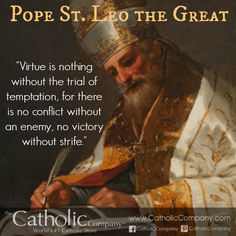
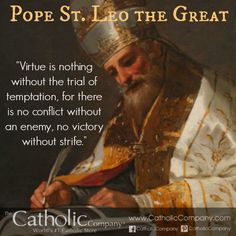
Oops! There It…Wait….. ~ Pope St. Leo the Great ~ Br. Chip Noon, Novice
“God moves in a mysterious way
His wonders to perform;
He plants His footsteps in the sea
And rides upon the storm.”
This poem by William Cowper, written in 1773, could be taken as a motto for our present time. And it is most certainly applicable to the Saint whom we venerate today, the day of his death over fifteen hundred years ago.
Saint Leo was a man of many contradictions from our vantage point all these years later. So it is important to remember the times in which he lived, and the chaos and turmoil which all Europeans faced.
Saint Leo became Pope, the Bishop of Rome, in 440. The Roman Empire was threatened and attacked on all sides by people who wanted what Rome had and was no longer willing to share as it once did. The Vandals, Goths, Visigoths, Ostrogoths, Huns, and other tribes invaded Roman lands either for plunder or because they were being pushed out of their own lands. Rome had been sacked in 410 and was under constant threat, while its legions were retreating back toward Italy.
The authority of the Roman State was palpably disintegrating and Christians, as both participants in the government and critics of it, were at everyone’s mercy.
So here comes Leo, from an aristocratic family and used to authority, in his thirties he was sufficiently powerful that he was honored with a dedication to a treatise against heresy and asked for political help by Cyril, the Patriarch of Alexandria. At the age of 40 he was elected Pope.
A man of deep learning and broad education, Leo was constantly working to explain and elucidate the theology surrounding the person of Jesus Christ and his role as mediator and savior. There was not a conflict among theologians of the Christian world that he was not privy to and willing to give his opinion about.
In his Christmas Day Sermon he preached:
Our Saviour, dearly-beloved, was born today: let us be glad. For there is no proper place for sadness, when we keep the birthday of the Life, which destroys the fear of mortality and brings to us the joy of promised eternity. No one is kept from sharing in this happiness. There is for all one common measure of joy, because as our Lord the destroyer of sin and death finds none free from charge, so is He come to free us all. Let the saint exult in that he draws near to victory. Let the sinner be glad in that he is invited to pardon. Let the gentile take courage in that he is called to life…
We find him ecumenical in his ideas and joyful in his message. And his other writings as well show a true man of God and shepherd of his flock.
But here we find this deacon of the church embroiled in geopolitics that rivaled almost anything we have today. Sent as a legate on a diplomatic mission, he was away from Rome when Pope Sixtus III died and he was unanimously elected Pope. As Pope, he worked diligently to consolidate the power of the Roman Church as the central repository of the mandate from Jesus through Peter, the singular head of all Christian churches. So his zeal in saving souls and bringing them joy through the Gospel was equaled by his zeal in building a powerful organization capable of withstanding the tempests of the time.
And this is where I had to step back and re-evaluate my initial assessment of Leo.
Who am I, I thought, to question his secular machinations? Who am I to judge him by today’s standards?
What I mean is, in Leo I saw a conniving, albeit compassionate power player, politician, diplomat, and shepherd. For example, when the Vandals sacked Rome in 455, he was instrumental in persuading them not to murder the population, which they were accustomed to doing after a victory. Before that, in 452, he had also persuaded Attila, leader of the Huns, to refrain from sacking the city. Attila and his army withdrew. These are examples of diplomacy of the highest and most significant level.
Could he have saved his flock had he not been such a powerful presence in the secular world?
All of which is a long way to get to today’s Gospel.
Asked by the Pharisees when the Kingdom of God would come,
Jesus said in reply,
“The coming of the Kingdom of God cannot be observed,
and no one will announce, ‘Look, here it is,’ or, ‘There it is.’
For behold, the Kingdom of God is among you.”
If the Kingdom of God was during Jesus’ time among the Pharisees, then it was certainly among the Romans and the Vandals and the Huns. Therefore, perhaps Leo was helping the church to bear much fruit, as we heard in the Alleluia of today’s Mass. Perhaps he was the lightning needed in the European sky to settle the darkness of constant warfare and terror of that time.
And perhaps Paul’s letter to Philemon can be seen as “God moving in a mysterious way” in Leo’s life as well. Paul is asking his friend Philemon to take back his slave, Onesimus, who is now a Christian and worker in Christ with Paul. What a transformation! How unlikely at the time that a master would see a slave as an equal and a brother in Christ. How unlikely that a bishop would be placed in the position of geopolitical power.
Therefore we do not know when the Son of Man will appear, or where, or how. We only know that the Holy Spirit is at work among the most unlikely, or sometimes most truly likely, people and situations. In today’s world it is harder and harder to trust our fellow men and women. Maybe we are entering the same chaos of 1500 years ago.
And if so, we can trust in the Lord, as it says in today’s Psalm.
The LORD secures justice for the oppressed,
gives food to the hungry.
The LORD sets captives free.
The LORD gives sight to the blind.
The LORD raises up those who were bowed down;
the LORD loves the just.
The LORD protects strangers.
The fatherless and the widow he sustains,
but the way of the wicked he thwarts.
The LORD shall reign forever;
your God, O Zion, through all generations. Alleluia.
Blessed is he whose help is the God of Jacob.
Lord, protect us in this time and for all time. Help us to remember that you are with us now and even to the end of time. Help us accept your love and do our best to pass it on to others. In Jesus’ name.
Amen.
The Feast of All Souls ~ The Rev. Dcn. Dollie Wilkinson, OPI

Worshiper Lighting Votive Candle on Altar
Is death the last sleep? No–it is the last and final awakening.
-Sir Walter Scott
We all have lost loved ones, some so early in their life, others who had been with us for a good long while. But for those left behind, the sense of loss can be almost too much to bear. Yet we know in our hearts that we shall see our loved ones again, that we will all be reunited with each other—in our heavenly Father’s kingdom. So until that time, we remember them with love, and offer up prayers for their soul.
Today, November 2nd, we celebrate the Feast of All Souls. On the day after All Saints, the Church reminds us of those who have not yet achieved the goal of their pilgrimage, the Kingdom of Heaven. As part of the communion of saints, they need our prayers. Today’s feast is an opportunity for us to pray in unity for our relatives and friends and for those who have no one to pray for them. All Soul’s Day (sometimes called the “Day of the Dead”) is always November 2 (November 3rd if the 2nd falls on a Sunday).
All Soul’s Day is a Roman Catholic day of remembrance for friends and loved ones who have passed away. This comes from the ancient Pagan Festival of the Dead, which celebrated the Pagan belief that the souls of the dead would return for a meal with the family. Candles in the window would guide the souls back home, and another place was set at the table. Children would come through the village, asking for food to be offered symbolically to the dead, then donated to feed the hungry.
The day purposely follows All Saint’s Day in order to shift the focus from those in heaven to those in purgatory. It is celebrated with Masses and festivities in honor of the dead. While the Feast of All Saints is a day to remember the glories of Heaven and those there, the Feast of All Souls reminds us of our obligations to live holy lives and that there will be purification of the souls of those destined for Heaven.
Upon death, it is believed that souls have not yet been cleansed of sin. Praying for souls of loved ones helps to remove the stain of sin, and allow the souls to enter the pearly gates of heaven. Through prayer and good works, living members of the church may help their departed friends and family. There are three Requiem Masses that are said by the clergy to assist the souls from Purgatory to Heaven: one for the celebrant, one for the departed, and one for the Pope. One such reading for the Mass is included in the Book of Wisdom:
“The souls of the just are in the hand of God
and no torment shall touch them.
They seemed, in the view of the foolish, to be dead;
and their passing away was thought an affliction
and their going forth from us, utter destruction.
But they are in peace.
For if before men, indeed, they be punished,
yet is their hope full of immortality;
chastised a little, they shall be greatly blessed,
because God tried them
and found them worthy of himself.
As gold in the furnace, he proved them,
and as sacrificial offerings he took them to himself.
In the time of their visitation they shall shine,
and shall dart about as sparks through stubble;
they shall judge nations and rule over peoples,
and the Lord shall be their King forever.
Those who trust in him shall understand truth,
and the faithful shall abide with him in love:
because grace and mercy are with his holy ones,
and his care is with his elect.”
The traditions of the Feast of All Souls began independently of the Feast of All Saints. The Feast of All Souls owes its beginning to seventh century monks who decided to offer the mass on the day after Pentecost for their deceased community members. In the late tenth century, the Benedictine monastery in Cluny chose to move their Mass for their dead to November 2, the day after the Feast of all Saints. This custom spread and in the thirteenth century, Rome put the feast on the calendar of the entire Church. The date remained November 2 so that all in the Communion of the Saints might be celebrated together.
Other customs have arisen over time in the celebration of All Souls Day. The Dominicans in the 15th century instituted a custom of each priest offering three Masses on the Feast of All Souls. Pope Benedict XIV in 1748 approved this practice, and it rapidly spread throughout Spain, Portugal and Latin America. During World War I, Pope Benedict XV, recognizing the number of war dead and the numerous Masses that could not be fulfilled because of destroyed Churches, granted all priests the privilege of offering three Masses on All Souls Day: one for the particular intention, one for all of the faithful departed, and one for the intentions of the Holy Father.
Many more customs are associated with The Day of the Dead celebrations. In the home an altar is made with an offering of food upon it. It is believed that the dead partake of the food in spirit and the living eat it later. The offerings are beautifully arranged with flowers such as marigolds, which are the traditional flower of the dead. There is a candle placed for each dead soul, and they are adorned in some manner. Incense is also often used, and mementos, photos, and other remembrances of the dead also adorn the offerings. Traditional Catholics still honor customs related to the relief of the souls suffering in purgatory. One custom is for persons to pray six Our Fathers, Hail Mary’s and Glory Be’s for the intentions of the Pope in a church, and thereby, receive a plenary indulgence for a soul in purgatory. This action may be repeated for another soul, by leaving the church and re-entering it to repeat the prayers.
All Soul’s Day lives on today, particularly in Mexico, where All Hallows’ Eve, All Saint’s Day and All Soul’s Day are collectively observed as “Los Dias de los Muertos” (The Days of the Dead). First and foremost, the Days of the Dead is a time when families fondly remember the deceased. But it is also a time marked by festivities, including spectacular parades of skeletons and ghouls. In one notable tradition, revelers lead a mock funeral procession with a live person inside a coffin.
As we all know, death is never final. We will be reunited with our loved ones. And for those in purgatory, let us pray for their souls to be cleansed, so we shall all live again in our Father’s house.
A prayer for all our departed Brothers and Sisters:
Merciful Father,
hear our prayer
and console us.
As we renew
our faith in Your Son,
whom You raised from the dead,
strengthen our hope
that all our departed brothers and sisters
will share in His resurrection,
who lives and reigns
with You and the Holy Spirit,
one God, for ever and ever.
Amen
Invocation for the Souls in Purgatory:
My God,
bestow Thy blessings and Thy mercies
on all persons
and on those souls in Purgatory,
for whom I am in charity, gratitude, or friendship bound
and have the desire to pray.
Amen
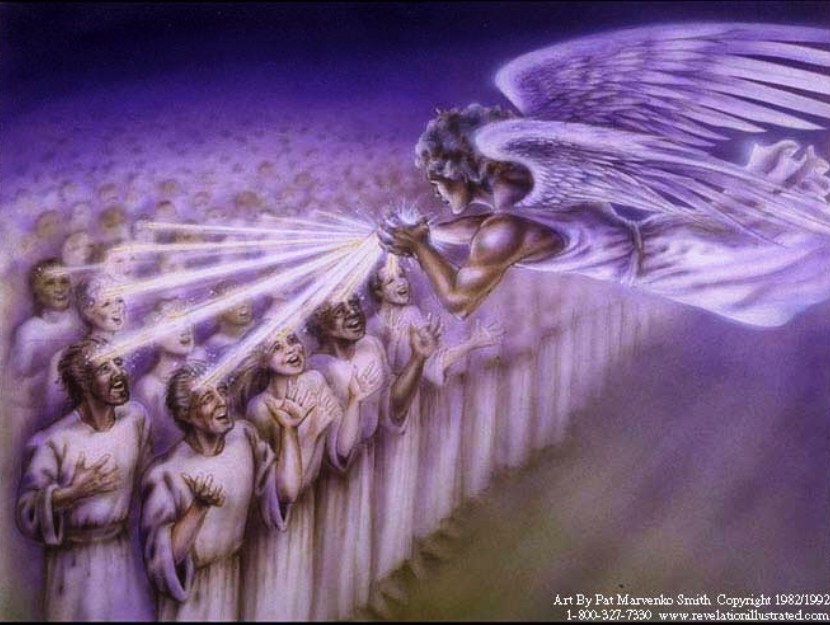
Who Are These in White Robes: The Feast of All Saints ~ The Rt. Rev. Michael Beckett, OPI
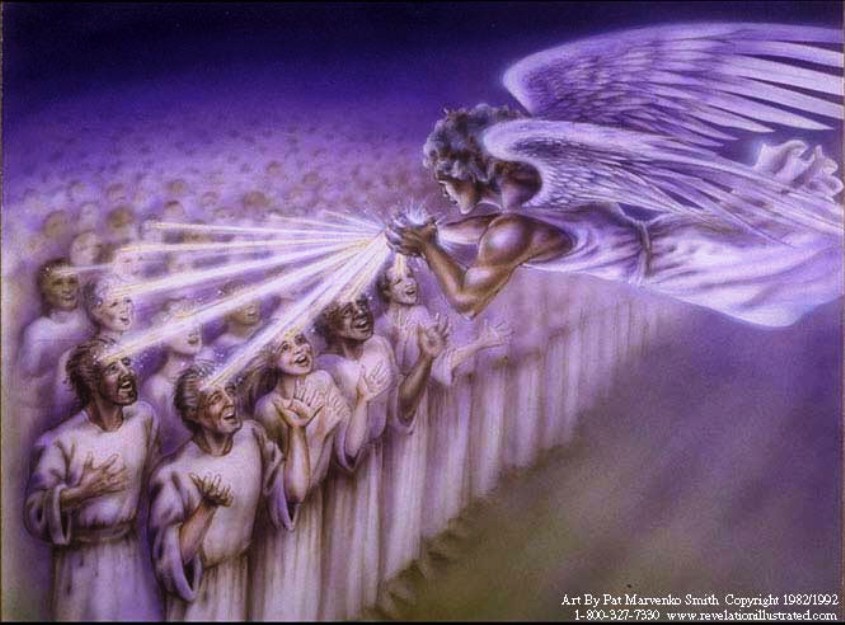
Today we celebrate the Solemnity of All Saints (also called All Saints Day).
All Saints’ Day, All Hallows Day, or Hallowmas is solemnly celebrated on 1 November by many Western Liturgical Churches to honor, literally, all the saints, known and unknown; those individuals who have attained Heaven; all the holy men and women who have lived their lives for God and for his church, who now have attained Beatific vision and their reward of Heaven.
In early Christian history it was usual to solemnize the anniversary of a Martyrs death for the Lord at the place of their martyrdom. Frequently there were multiple martyrs who would’ve suffered and died on the same day which led to multiple commemorations on the same day. Eventually, the numbers of martyrs became so great that it was impossible for a separate day to be assigned to each individually, but the church feeling that every martyr should be venerated, appointed a feast day to commemorate them all on the same day.
The origin of the festival of All Saints celebrated in the West dates to the month of May in the year 609 or 610, when Pope Boniface IV consecrated the Pantheon at Rome to the Blessed Virgin and all the martyrs. In the 730’s Pope Gregory III moved the Feast of All Saints to 1 November when he founded an oratory in St. Peter’s for the relics of the holy apostles and of all saints, martyrs and confessors, of all the just made perfect who are at rest throughout the world.”
From our Readings today, we hear of the vision of St. John from the Book of Revelation:
After this I had a vision of a great multitude, which no one could count, from every nation, race, people, and tongue. They stood before the throne and before the Lamb, wearing white robes and holding palm branches in their hands. They cried out in a loud voice:
“Salvation comes from our God, who is seated on the throne, and from the Lamb.”
All the angels stood around the throne and around the elders and the four living creatures. They prostrated themselves before the throne, worshiped God, and exclaimed:
“Amen. Blessing and glory, wisdom and thanksgiving, honor, power, and might be to our God forever and ever. Amen.”
Then one of the elders spoke up and said to me, “Who are these wearing white robes, and where did they come from?” I said to him, “My lord, you are the one who knows.” He said to me, “These are the ones who have survived the time of great distress; they have washed their robes and made them white in the Blood of the Lamb.”
Who are these nameless saints? Their anonymity teaches us that sainthood is not reached through great achievements or rare acts of bravery. Sainthood comes from simply loving God and doing our best to live our lives in a way consistent with Jesus’ commandment. I would dare say that none of the saints actually set out to be saints. They simply loved God and lived their lives to follow Him.
Revelation goes on to remind us that giving our lives over to God will not protect us or insulate us from hardship. Living in, for, with, and through God, however, will make sure that we can and will endure whatever “great distress” comes our way. In this passage of Revelation, John is speaking specifically of those who have given their lives for their faith. Christians throughout the Middle East are being martyred by forces opposed to Christianity, but in reality, it is very unlikely that any of us will be called upon to sacrifice our lives for our faith.
Our challenge, then, is to live for Christ, rather than to die for Christ. Jesus does ask to lay down our lives for Him. Peter said to the Lord, “I will lay down my life for Your sake,” and he meant it (John 13:37). Has the Lord ever asked you, “Will you lay down your life for My sake?” (John 13:38). It is much easier to die than to lay down your life day in and day out with the sense of the high calling of God. We are not made for the bright-shining moments of life, but we have to walk in the light of them in our everyday ways. For thirty-three years Jesus laid down His life to do the will of His Father. “By this we know love, because He laid down His life for us. And we also ought to lay down our lives for the brethren” (1 John 3:16).
If we are true followers of Jesus, we must deliberately and carefully lay down our lives for Him. It is a difficult thing to do, and thank God that it is, for great is our reward. Salvation is easy for us, however, because it cost God so much. But the exhibiting of salvation in our lives is difficult. God saves a person, fills him with the Holy Spirit, and then says, in effect, “Now you work it out in your life, and be faithful to Me, even though the nature of everything around you is to cause you to be unfaithful.” And Jesus says to us, “…I have called you friends….” Remain faithful to your Friend, and remember that His honor is at stake in your bodily life. We are called to remain faithful, despite the reasons the world gives us to not, despite the “great distresses” in our lives.
Who are these dressed in white robes? It is my prayer to be counted among them. What about you?
 The Order of Preachers, Independent
You must be logged in to post a comment.