
Category: Member Posts
Food…Not Only for the Soul… ~ The Rev. Deacon Scott Brown, OPI

From the Epistle of St. James, 2:14-17
14 How does it help, my brothers, when someone who has never done a single good act claims to have faith? Will that faith bring salvation?
15 If one of the brothers or one of the sisters is in need of clothes and has not enough food to live on,
16 and one of you says to them, ‘I wish you well; keep yourself warm and eat plenty,’
without giving them these bare necessities of life, then what good is that?
17 In the same way faith, if good deeds do not go with it, is quite dead.
Our jobs as Christians is to give those without faith, those who are doubting their faith, and those who have lost their faith, the spiritual necessities to regain that faith they once had by our actions and deeds. Pray with and for those who doubt their faith or have lost their faith. Feed the hungry, both nutritionally and spiritually. Clothe the naked, both physically and spiritually. Comfort the sick and dying, both physically and spiritually. And last but not least, open your homes to the homeless, both spiritually and physically.
Matthew 25:31-40 says:
“When the Son of Man comes in his glory, and all the angels with him, then he will sit on his glorious throne.
32Before him will be gathered all the nations, and he will separate people one from another as a shepherd separates the sheep from the goats.
33And he will place the sheep on his right, but the goats on the left.
34Then the King will say to those on his right, ‘Come, you who are blessed by my Father, inherit the kingdom prepared for you from the foundation of the world.
35For I was hungry and you gave me food, I was thirsty and you gave me drink, I was a stranger and you welcomed me,
36I was naked and you clothed me, I was sick and you visited me, I was in prison and you came to me.
’ 37Then the righteous will answer him, saying, ‘Lord, when did we see you hungry and feed you, or thirsty and give you drink?
38And when did we see you a stranger and welcome you, or naked and clothe you?
39And when did we see you sick or in prison and visit you?’
40And the King will answer them, ‘Truly, I say to you, as you did it to one of the least of these my brothers, you did it to me.
The instructions are pretty clear here: we are our brothers’ keepers. Jesus has instructed us to take care of each other both physically and spiritually. It is up to each of us to fulfill Jesus’s instruction in order to inherit the kingdom of Heaven.
If we don’t follow the above instructions then we can expect the following as stated in Matthew 25:41-46
41Then he will say to those on his left, ‘Depart from me, you cursed, into the eternal fire prepared for the devil and his angels.
42For I was hungry and you gave me no food, I was thirsty and you gave me no drink,
43I was a stranger and you did not welcome me, naked and you did not clothe me, sick and in prison and you did not visit me.’
44Then they also will answer, saying, ‘Lord, when did we see you hungry or thirsty or a stranger or naked or sick or in prison, and did not minister to you?’
45Then he will answer them, saying, ‘Truly, I say to you, as you did not do it to one of the least of these, you did not do it to me.’
46And these will go away into eternal punishment, but the righteous into eternal life.”
The instructions seem clear and the rewards are truly wonderful. Just as the consequences of not following the teachings of the Lord are quite clear and not nearly as wonderful.
Step back and take a look at your Christian life and evaluate yourself. Have you followed the teachings, have you clothed, fed, prayed, or visited? Or do you shun and ignore the people who need your spiritual help and guidance. Today would be a good time to start looking a little closer at those who most of us feel are “beneath us” or “unreachable”. Even the smallest act of kindness and true love might be just enough to touch the hearts of those in need.
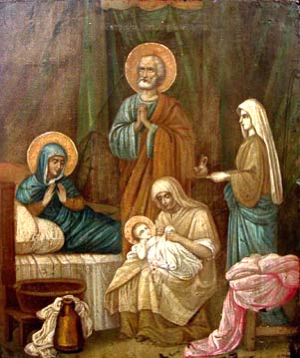
The Birth of the Blessed Virgin Mary~The Rev. Lady Sherwood, OPI
 Today we celebrate the birth of the mother of our Lord and Saviour, the Blessed Virgin Mary.
The earliest known account of Mary’s birth is to be found in the protoevangelium of James (5:2), an apocryphal text from the late second century, with her parents Saint Anne and Saint Joachim.
Usually in the case of saints, the church commemorates their date of death, but both the births of saint John the Baptist and the feast of the blessed virgin Mary’s birth which we celebrate today, are traditionally celebrated because besides the prophet Jeremiah, (Jer 1:5), these alone were holy in their very birth.
The feast of the birth of Mary, as with the feast of her Assumption, originated in Jerusalem. It actually first began as the feast of the Basilica sancte Maria ubi nata est, which is now named the Basilica of Saint Anne.
The original church which was built in the fifth century, was a Marian basilica erected on a spot that was known as the Shepherd’s pool and this is believed to have been the home of Mary’s parents.
The feast began to be celebrated in Rome towards the latter end of the seventh century and it was first established their when brought there by Eastern monks.
The wine growers in France called this feast “Our Lady of the Grape Harvest”. This is because the best grapes would be brought to the local church, they would be blessed and some of the bunches of these grapes would be attached to the hands of the statue of Mary.
A festival meal which includes these grapes is part of the tradition for this day.

Angels Unaware….Are You One? ~ The Rev. Deacon Dollie Wilkinson, OPI

There is an elderly gentleman in my neighborhood, who lives alone, and seems to spend most of his days hitting plastic golf balls in his yard, or feeding stray cats who appear every evening on his front porch. When we moved in to our new home a few years ago, he at first appeared distant, not very friendly. Since then, I have learned that this is just his way. He had a severe brain injury many years ago, so he doesn’t relate to others like you and I would. But, he has a big heart, and is very generous. See, most of my neighbors are elderly, and thus on a fixed income. So money is usually tight for these folks, as it is for most of us. This kind gentleman has a daughter who brings him boxes of produce and bread every week. And, he gladly shares these with every one, including myself. He could be selfish, and keep this bounty all to himself, but he doesn’t. We are blessed by his generosity, but I believe he is likewise favored in the eyes of the Lord, as described in Proverbs 22:1-2, 8-9, 22-23:
“A good name is to be chosen rather than great riches, and favor is better than silver or gold. The rich and the poor have this in common: the LORD is the maker of them all. Whoever sows injustice will reap calamity, and the rod of anger will fail. Those who are generous are blessed, for they share their bread with the poor. Do not rob the poor because they are poor, or crush the afflicted at the gate; for the LORD pleads their cause and despoils of life those who despoil them.”
This generous neighbor could turn around and try to sell the produce, or pick and choose who he gives it to, but instead he freely shares with whomever needs it. I know many of you may donate to a worthy cause, such as an orphanage, or maybe you buy gifts for a Secret Santa child during the holidays. Yet, when a scruffy bum approaches you on the street as you rush through your day, do you speak harsh words to him, or her……do you even politely say “No” when they ask for spare change……or do you just rush past, having already passed judgment on someone you really do not know? But, then you see a group of school children collecting money for a field trip, and decide to donate, considering them a better use of your time and money? I’m not saying we should not support our children in their endeavors, but I just want to caution you to heed the message in James 2:1-10, (11-13), 14-17:
“My brothers and sisters, do you with your acts of favoritism really believe in our glorious Lord Jesus Christ? For if a person with gold rings and in fine clothes comes into your assembly, and if a poor person in dirty clothes also comes in, and if you take notice of the one wearing the fine clothes and say, “Have a seat here, please,” while to the one who is poor you say, “Stand there,” or, “Sit at my feet,” have you not made distinctions among yourselves, and become judges with evil thoughts? Listen, my beloved brothers and sisters. Has not God chosen the poor in the world to be rich in faith and to be heirs of the kingdom that he has promised to those who love him? But you have dishonored the poor. Is it not the rich who oppress you? Is it not they who drag you into court? Is it not they who blaspheme the excellent name that was invoked over you? You do well if you really fulfill the royal law according to the scripture, “You shall love your neighbor as yourself.” But if you show partiality, you commit sin and are convicted by the law as transgressors. For whoever keeps the whole law but fails in one point has become accountable for all of it. For the one who said, “You shall not commit adultery,” also said, “You shall not murder.” Now if you do not commit adultery but if you murder, you have become a transgressor of the law. So speak and so act as those who are to be judged by the law of liberty. For judgment will be without mercy to anyone who has shown no mercy; mercy triumphs over judgment. What good is it, my brothers and sisters, if you say you have faith but do not have works? Can faith save you? If a brother or sister is naked and lacks daily food, and one of you says to them, “Go in peace; keep warm and eat your fill,” and yet you do not supply their bodily needs, what is the good of that? So faith by itself, if it has no works, is dead.”
Please do support our children, or those in orphanages, or Secret Santa, but also do not ignore your next door neighbor, or the dearheart who comes up to you on the street. Just as my neighbor exemplified in his generosity, to pick and chose who receives our money, time, or gifts, is to serve in judgment over others. As we all know, “You shall love your neighbor as yourself.” is not only commanded by God, but should serve as a basis for all we say and do in our daily lives. Because what good is it to say we have faith, we believe in our heavenly Father, if we do nothing else but spend our days worrying about just ourselves? “So faith by itself, if it has no works, is dead.” So, what works, or actions, have you committed to doing here lately to help others?

More than Lip Service ~ The Rev. Deacon Joshua Hatten, OPI

St. Mark 7:1-8,14-15, 21-23
When the Pharisees with some scribes who had come from Jerusalem gathered around Jesus, they observed that some of his disciples ate their meals with unclean, that is, unwashed, hands. —For the Pharisees and, in fact, all Jews, do not eat without carefully washing their hands, keeping the tradition of the elders. And on coming from the marketplace they do not eat without purifying themselves. And there are many other things that they have traditionally observed, the purification of cups and jugs and kettles and beds. — So the Pharisees and scribes questioned him, “Why do your disciples not follow the tradition of the elders but instead eat a meal with unclean hands?” He responded, “Well did Isaiah prophesy about you hypocrites, as it is written:
This people honors me with their lips, but their hearts are far from me; in vain do they worship me, teaching as doctrines human precepts.
You disregard God’s commandment but cling to human tradition.” He summoned the crowd again and said to them, “Hear me, all of you, and understand. Nothing that enters one from outside can defile that person;
but the things that come out from within are what defile. “From within people, from their hearts, come evil thoughts, unchastity, theft, murder, adultery, greed, malice, deceit, licentiousness, envy, blasphemy, arrogance, folly.
All these evils come from within and they defile.”
In today’s Gospel we see Jesus calling out the Pharisees for their hypocrisy – the fact that they placed more importance on man made rules and regulations rather than purity of the mind and heart. I wonder how many of us Christ would find ourselves guilty of the very same hypocrisy today?
So often, too often, many Christians sew their wild oats Monday through Saturday and then find themselves praying for a crop failure on Sunday. Sure, we may wear our crucifixes or crosses, have all the right bumper stickers and even do volunteer work for this organization or another – all the outward show to identify ourselves as Christians – but is it in vain? Just for the show? Really meaning nothing because of the conditions of our hearts?
Do we harbor hatred in our minds? Lusts in our bellies? Unforgiveness? Addictions? Do we gossip or spread rumours? Do we murmur and complain? I think you get the gist; we know the list could go on and on.
While we know that, for us, perfection in this life is an impossibility, we ARE to strive for it. We are called to be in this world, but not of it. We are called to be holy as our God is holy. After all, we are made in the divine image! But, we will fall. We will fail.
So what is the point? It lies in this: that when we do falter, when we do fail – that we get back up, seek out forgiveness for our sins and shortcomings and get back in the race toward holiness. Keeping our focus on Jesus Christ, with the aide of the Holy Spirit, that is GOD within us, we can accomplish what is pleasing to the Almighty. What finds favour in His sight we can choose to do, but only with His help. We must seek out, with humility and singleness of heart and a hatred of what is unholy, to do what makes us truly the sons and daughters of God. Not merely putting on an outward show. But, truly, in our heart of hearts desiring that which is pleasing and good in the eyes of the Lord.
I spent nearly a decade as a raging alcoholic. During that time I never missed a church service, I always sang the loudest in the choir and I volunteered with many, many different organizations… but for what? It was all a song and dance – pure show. Internally, I was rotten. My life was as far off the tracks as it could be. And with all that show, I was only fooling myself. I wasn’t right with the Lord. I was not pleasing Him. I was a Pharisee. So long as other people could see the “great” works I was doing then I felt holy and most of the time holier-than-thou. It was all in vain. All for naught, nothing, nada, zip, zilch.
Once I turned my inner life around and stopped drinking and put God back where He belonged, as the most important part of my life, then everything changed. I wasn’t any longer concerned about putting on the “show” for others. No more did all the “lip service” matter. I had to take a long and painful and difficult look at my life. At the way not only did it affect me, but how it effected others. The show mattered, not in any good way. Not in any way that was gainful spiritually. It hurt me and those I loved and those I associated with – most of all, it hurt God. I was letting Him down. All the outward folderol was costing me a true relationship with the Almighty. It was making a mockery of the cross – of the work, the price that Christ had paid for me.
Now I ask each of us to take our finger of deep introspection and turn it toward ourselves. WE typically have no problem pointing out the faults and hypocrisies in others, but it is much harder to be honest with ourselves about our shortcomings. However, when we do get honest with ourselves about ourselves, then – and only then – can we take a moral inventory and see what was purely lip service, eliminate it and live our lives for Christ and in Christ and BY CHRIST, be victorious!
This is the lesson of today’s Gospel. This is what Christ is teaching us. Not simply to have a pretense of honoring him with a great outward show – what does it matter if your hands are dirty or clean when your mind and emotions, that is, YOUR SPIRIT, is filthy?? Take that first step of trust in Christ, and allow the divine guidance to lead our thoughts into line with the thoughts of God. To have our actions FOLLOW what we are internally. To truly love and serve the Lord with gladness and singleness of heart. By doing this, then we are really the children of God and please Him with our works. And then, we can be led onto His path of peace. Amen.
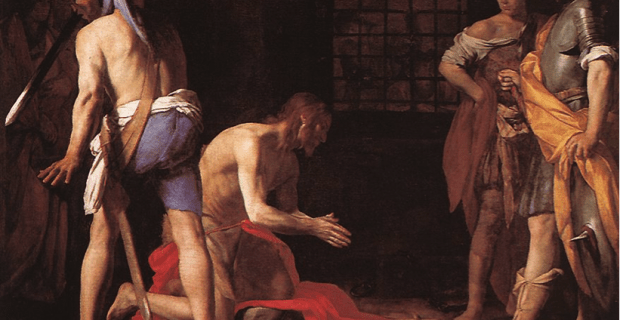
The Beheading of St. John the Baptist ~ The Rev. Lady Sherwood
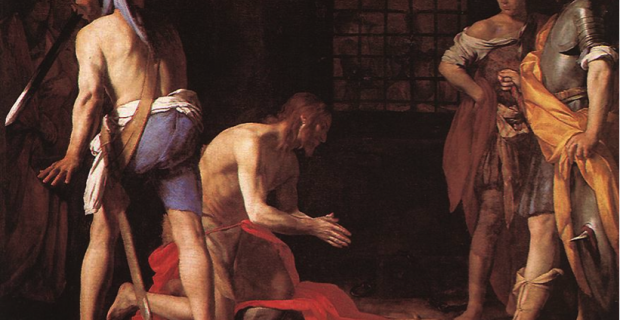
The Beheading of St. John the Baptist is a feast day that commemorates his martyrdom when John was beheaded upon the orders of Herod Antipas through the vengeful request of his step-daughter Salome and her mother Herodias.
Herod was a tetrarch of Galilee under the Roman Empire and he had imprisoned John in 27 AD because John the Baptist had reproved Him for divorcing his wife Phasaelis, and unlawfully taking Herodias, the wife of his brother, Herod Philip I.
On Herod’s birthday, Herodias’s daughter Salome, danced for the King and his guests. Her dancing pleased Herod to such an extent that in his drunkenness, he promised to give her anything for which she asked including up to half of his Kingdom.
When Salome asked her mother Herodias for what she should request, her mother told her to ask for the head of St. John the Baptist to be presented to her on a platter.
Herod was appalled by Salome’s request but as he had promised she could have anything for which she asked, he reluctantly granted her request and he had John executed in prison and delivered to Salome in the manner she had requested.
None of the sources give an exact date for the beheading of John the Baptist, but it is believed to have taken place around 28-29 AD at the fortress of Machaerus.
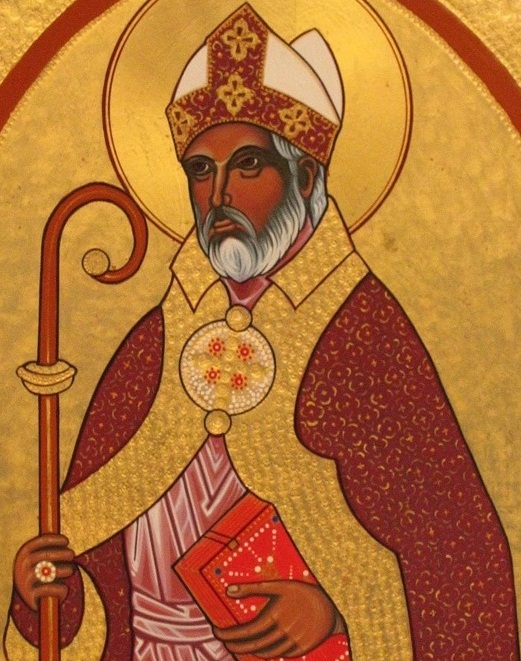
Memorial of Saint Augustine ~ Br. Michael Marshall, Novice
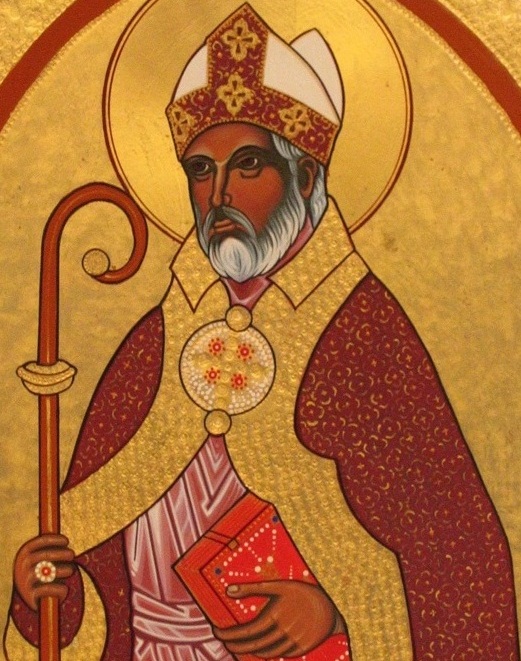
Augustine of Hippo lived from 354 to 430, and was an early Christian theologian and philosopher whose writings influenced the development of Western Christianity and Western philosophy. He was the bishop of Hippo Regius. He is viewed as one of the most important Church Fathers in Western Christianity for his writings in the Patristic Era. Among his most important works are City of God and Confessions. In the Catholic Church and the Anglican Communion, he is a saint, a preeminent Doctor of the Church, and the patron of the Augustinians. His memorial is celebrated on 28 August, the day of his death. He is the patron saint of brewers, printers, theologians, the alleviation of sore eyes, and a number of cities and dioceses. Many Protestants, especially Calvinists, consider him to be one of the theological fathers of the Protestant Reformation due to his teachings on salvation and divine grace.
In the summer of 386, at the age of 31, after having heard and been inspired and moved by the story of Ponticianus’s and his friends’ first reading of the life of Saint Anthony of the Desert, Augustine converted to Christianity. As Augustine later told it, his conversion was prompted by a childlike voice he heard telling him to “take up and read” which he took as a divine command to open the Bible and read the first thing he saw. Augustine read from Paul’s Epistle to the Romans – the so-called “Transformation of Believers” section, consisting of chapters 12 through 15 – wherein Paul outlines how the Gospel transforms believers, and the believers’ resulting behavior.
In 391 Augustine was ordained a priest and became a famous preacher (more than 350 preserved sermons are believed to be authentic), and was noted for combating the Manichaean religion, to which he had formerly adhered.
In 395 he was made coadjutor Bishop of Hippo, and became full Bishop shortly thereafter, hence the name “Augustine of Hippo”; and he gave his property to the church of Thagaste. He remained in that position until his death in 430. He wrote his autobiographical Confessions in 397-398. His work The City of God was written to console his fellow Christians shortly after the Visigoths had sacked Rome in 410. Augustine worked tirelessly in trying to convince the people of Hippo to convert to Christianity. Though he had left his monastery, he continued to lead a monastic life in the episcopal residence. He left a regula for his monastery that led to his designation as the “patron saint of regular clergy.”
Shortly before Augustine’s death the Vandals, a Germanic tribe that had converted to Arianism, invaded Roman Africa. The Vandals besieged Hippo in the spring of 430, when Augustine entered his final illness. According to Possidius, one of the few miracles attributed to Augustine, the healing of an ill man, took place during the siege. According to Possidius, Augustine spent his final days in prayer and repentance, requesting that the penitential Psalms of David be hung on his walls so that he could read them. He directed that the library of the church in Hippo and all the books therein should be carefully preserved. He died on 28 August 430. Shortly after his death, the Vandals lifted the siege of Hippo, but they returned not long thereafter and burned the city. They destroyed all of it but Augustine’s cathedral and library, which they left untouched. Augustine was canonized by popular acclaim, and later recognized as a Doctor of the Church in 1298 by Pope Boniface VIII. His feast day is 28 August, the day on which he died. His prominence as a Doctor of the Church is mostly due to the many topics in which he took a theological stance. Here is a list of key topics: Creation, ecclesiology, eschatology, just war, Mariology, natural knowledge and biblical interpretation, original sin, free will, sacramental theology, and views on sexuality.
1 Thessalonians 4:1-8
Brothers and sisters,
we earnestly ask and exhort you in the Lord Jesus that,
as you received from us
how you should conduct yourselves to please God–
and as you are conducting yourselves–
you do so even more.
For you know what instructions we gave you through the Lord Jesus.
This is the will of God, your holiness:
that you refrain from immorality,
that each of you know how to acquire a wife for himself
in holiness and honor, not in lustful passion
as do the Gentiles who do not know God;
not to take advantage of or exploit a brother or sister in this matter,
for the Lord is an avenger in all these things,
as we told you before and solemnly affirmed.
For God did not call us to impurity but to holiness.
Therefore, whoever disregards this,
disregards not a human being but God,
who also gives his Holy Spirit to you.
Matthew 25:1-13
Jesus told his disciples this parable:
“The Kingdom of heaven will be like ten virgins
who took their lamps and went out to meet the bridegroom.
Five of them were foolish and five were wise.
The foolish ones, when taking their lamps,
brought no oil with them,
but the wise brought flasks of oil with their lamps.
Since the bridegroom was long delayed,
they all became drowsy and fell asleep.
At midnight, there was a cry,
‘Behold, the bridegroom! Come out to meet him!’
Then all those virgins got up and trimmed their lamps.
The foolish ones said to the wise,
‘Give us some of your oil,
for our lamps are going out.’
But the wise ones replied,
‘No, for there may not be enough for us and you.
Go instead to the merchants and buy some for yourselves.’
While they went off to buy it,
the bridegroom came
and those who were ready went into the wedding feast with him.
Then the door was locked.
Afterwards the other virgins came and said,
‘Lord, Lord, open the door for us!’
But he said in reply,
‘Amen, I say to you, I do not know you.’
Therefore, stay awake,
for you know neither the day nor the hour.”
The familiar image of an angel and the devil sitting on a person’s shoulders has been shown in movies and television many times. An angel and the devil have not literally sat on my shoulders, but I can identify with that image. A thought of wanting to do something that may not be the best idea comes to my mind… I think about it, and I hear the devil say to me something like, “Life’s short, do it!” Then look over at the angel which is waving its finger at me and saying, “Oh no! You know better than that!!!” I eventually weigh the consequences of both actions, and 99% of the time I do the right thing because I know what is responsible and right.
The readings for today speak to the subject of responsibility and doing what is right. Paul is instructing the Thessalonians on how to live according to how God intends humanity to live if they truly are to follow the teachings of Jesus. Following Jesus means letting go of any immoral behavior. The parable which Jesus tells is about being responsible enough to take time to be prepared, knowing that negative consequences will result if one is not prepared. This preparedness is about living a life in which one desires to follow God instead of going astray.
We know that God loves us unconditionally, but it is our responsibility to live according to his commandments and teachings given to us through Jesus. We cannot allow the devil sitting on our left shoulder tell us it is okay to do things which we know are not of God. When the angel is saying, “You know better!” we need to listen to the angel.
How do we do the right thing? We do not put ourselves in a position which presents the opportunity for the devil to convince us that it is okay to do something; we spend time around positive and responsible people, we take time to read Scripture, we pray, we recognize our vices in life and stay away from them. Are you doing the right thing?
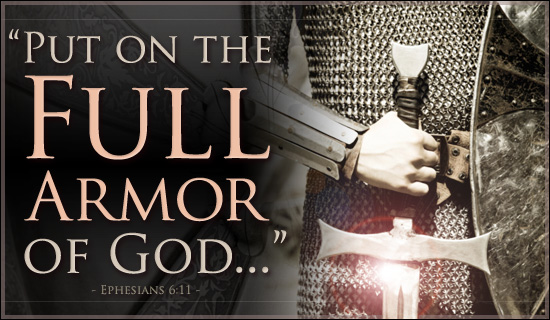
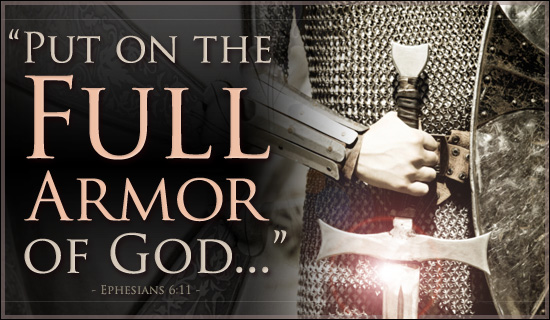
The Armor of God~ The Rev. Deacon Dollie Wilkinson, OPI
If any of you read popular fiction, have been to a movie theater recently, or even followed posts on popular media, the trend now a days is to be a hero. From firefighters, and policemen (who are real-life heroes), to the multitude of Super Hero characters, such as Ironman, The Hulk, or Batman. There seems to be a need for heroes in our lives. We want someone to protect us, to fight off bad guys, to fight the good fight. Anyone who has served in the military, especially if they have gone in to combat in defense of their country, truly knows what it means to be a hero. Can you imagine going into the middle of a war zone? Bullets whizzing by over your head. Rockets, grenades, shells, land mines going off all around you? It would be frightening, wouldn’t it? What if you went back in time? Can you imagine being in the middle of a field of knights on horseback and foot soldiers, wildly swinging huge swords, maces, and battle axes, as arrows whizzed by over your head? I don’t think any of us would really want to be down in the middle of that. But think about this: is it even conceivable to imagine that you, if you knew you were headed into that kind of war zone, that you would do so with the clothes you have on right now? Take a look at what you’re wearing. How do you think those clothes would fare in the middle of battle like the ones I just described? Any good soldier, or hero knows you must prepare to do battle, and this includes putting on armor, equipping ourselves for the upcoming battle.
Did you know that there is an unseen battle that you and I are engaged in every single day; a conflict, a fight for your heart and your mind? Ephesians 6:10-20 is perhaps the clearest definition of the spiritual war. the Apostle Paul has several things he wants us to understand, several things God wants us to understand about the unseen battle that is raging all around us; the battle, if we belong to Jesus through faith, the battle we are always fighting.
“Finally, be strong in the Lord and in the strength of his power. Put on the whole armor of God, so that you may be able to stand against the wiles of the devil. For our struggle is not against enemies of blood and flesh, but against the rulers, against the authorities, against the cosmic powers of this present darkness, against the spiritual forces of evil in the heavenly places. Therefore take up the whole armor of God, so that you may be able to withstand on that evil day, and having done everything, to stand firm. Stand therefore, and fasten the belt of truth around your waist, and put on the breastplate of righteousness. As shoes for your feet put on whatever will make you ready to proclaim the gospel of peace. With all of these, take the shield of faith, with which you will be able to quench all the flaming arrows of the evil one. Take the helmet of salvation, and the sword of the Spirit, which is the word of God. Pray in the Spirit at all times in every prayer and supplication. To that end keep alert and always persevere in supplication for all the saints. Pray also for me, so that when I speak, a message may be given to me to make known with boldness the mystery of the gospel, for which I am an ambassador in chains. Pray that I may declare it boldly, as I must speak.”
In this spiritual war, we are “A Band of Brothers.” We fight side by side. We watch each other’s backs. We protect each other and defend each other. We go to the wall for each other. We march with each other. This is key for us to understand, and especially for us to practice. When you see another brother or sister in Christ who is facing problems, you need to come along side them and help them. See what you can do to serve and support them. In a battle, the heroic soldiers are those who stay and help the wounded get off the battlefield. Those who flee just to protect themselves are seen as cowards. As Christians, we are in this battle together, which means we must help those around us who get injured and damaged in the fight. We must come around them and give them the encouragement and support that they need. That is good to know in a war like this. It is good to know that we are not fighting alone. It is good to know that we have friends and allies. It is good to know that we are watching out for one another.
That is what Paul means here by using those encouraging words…….we are never alone! If we are going to survive spiritual warfare, we must constantly be in training for battle so that we can become stronger. However, when we do these things, we need to remember that we ourselves are not getting stronger, nor is it our strength by which we are doing these things. Notice that the strength comes from the Lord and in the power of His might. This strength comes to us from God as we exercise and train and discipline ourselves. As we engage in the spiritual disciplines of Bible reading, praying, attending church, tithing, evangelism, etc., we naturally grow stronger in the Lord and His might is able to work in and through us more easily.
And in verses 11-20, Paul explains in much greater detail how to prepare yourselves for battle. Putting on the spiritual armor is another way to grow in the strength of the Lord. So Ephesians 6:10 is a battle cry. It is a rallying cry. It is a motivational challenge. Wake up! Get up! Be strong! If you want to survive in this fight, you must get into the training. You must put on the Armor of God. What does this mean? Ultimately, to put on the armor of God is to put on (by grace, through faith) the Lord Jesus Christ. Are you ready to be a hero? Do you have what it takes to fight the good fight? Remember, your strength will always come from the Lord, “be strong in the Lord and in the strength of his power.”
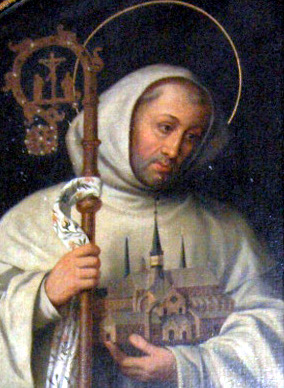
St. Bernard of Clairvaux ~ Br. Michael Marshall, Novice
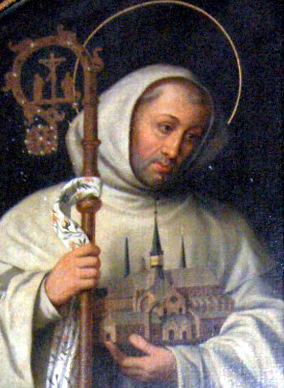
Memorial of Saint Bernard, Doctor of the Church – August 20th
Saint Bernard was born in 1090. Early in life, he studied Scripture and was well-versed in it. He sought admission into a religious order which we know as the Cistercians today, and eventually established an Abbey in Clairvaux. The abbey struggled initially but eventually men entered in numbers. Saint Bernard was instrumental in addressing issues between local royalty and Church affairs, by defending the rights of the Church. In 1130, a schism occurred and during that time two popes (Innocent II and Anacletus II) were elected; and Saint Bernard was selected by King Louis de Gros with consent of the bishops to be a judge of the rivalry between the popes. He was in favor of Innocent II, which caused him to be recognized by all the great Catholic powers, and went to Italy with Innocent II, and later returned to France to further progress of resolution of the conflict which led to the schism. While still in France, another schism took place due to William X, and Saint Bernard was able to resolve this conflict by inviting William to the Mass which he celebrated in the Church of La Couldre. At the moment of the Communion, placing the Sacred Host upon the paten, he went to the door of the church where William was, and pointing to the Host, he adjured the Duke not to despise God as he did His servants. William yielded and the schism ended. Saint Bernard then travelled to Italy to face more tension within the local church, and then finally returned to Clairvaux where he spent time in his cloister to compose many important writings which led him to be declared a Doctor of the Church. Because of conflict and turmoil in the East, Saint Bernard was sent to preach a new Crusade which failed. Bernard died in the sixty-third year of his age, after forty years spent in the cloister. He founded one hundred and sixty-three monasteries in different parts of Europe; at his death they numbered three hundred and forty-three. He was the first Cistercian monk placed on the calendar of saints and was canonized by Alexander III, 18 January 1174. Pope Pius VIII bestowed on him the title of Doctor of the Church. The Cistercians honor him as only the founders of orders are honored, because of the wonderful and widespread activity which he gave to the Order of Citeux.
Matthew 22:1-14
Jesus again in reply spoke to the chief priests and the elders of the people in parables saying, “The Kingdom of heaven may be likened to a king who gave a wedding feast for his son. He dispatched his servants to summon the invited guests to the feast, but they refused to come. A second time he sent other servants, saying, ‘Tell those invited: “Behold, I have prepared my banquet, my calves and fattened cattle are killed, and everything is ready; come to the feast.”’ Some ignored the invitation and went away, one to his farm, another to his business. The rest laid hold of his servants, mistreated them, and killed them. The king was enraged and sent his troops, destroyed those murderers, and burned their city. Then the king said to his servants, ‘The feast is ready, but those who were invited were not worthy to come. Go out, therefore, into the main roads and invite to the feast whomever you find.’ The servants went out into the streets and gathered all they found, bad and good alike, and the hall was filled with guests. But when the king came in to meet the guests he saw a man there not dressed in a wedding garment. He said to him, ‘My friend, how is it that you came in here without a wedding garment?’ But he was reduced to silence. Then the king said to his attendants, ‘Bind his hands and feet, and cast him into the darkness outside, where there will be wailing and grinding of teeth.’ Many are invited, but few are chosen.”.
This Gospel reading is a very challenging one to digest. The parable which Jesus is presenting to the people is about preparedness for entering the Kingdom of Heaven. I would say that the majority of Christians approach this from the viewpoint of what is considered moral versus what is considered as immoral. But I will not go down that path. In the parable, Jesus is using the King to represent God, and that God has invited humanity to the reward of heaven.
“Some ignored the invitation and went away, one to his farm, another to his business. The rest laid hold of his servants, mistreated them, and killed them. The king was enraged and sent his troops, destroyed those murderers, and burned their city.”
In this passage from the reading, Jesus is trying to explain that God will put people in their place because of their actions which go against what God wants of humanity, as much as they believe they are doing what God wants. The parable goes onto tell that the king has kept the invitation open even though some do not show up, but many do show up. When the person who does not show up fully prepared due to not being appropriately dressed, he is cast out and not allowed into the feast.
I am challenging you to look at the message in a different way other than from the perspective of morality. I am challenging all of us to think about how we treat others; whether we help those in need when possible, or if we just avoid the situation; if we spend time with God in prayer; and if we are self-absorbed. Being prepared pertains to every aspect of our lives. Are we doing what we need to in order to be prepared?
Do we pray? Do we read and study our Bibles. Do we spend time in Christian fellowship? I challenge to you spend a period of time in honest self-reflection, in honest self-evaluation, and then, with all haste, make yourselves prepared for the wedding feast. Amen.
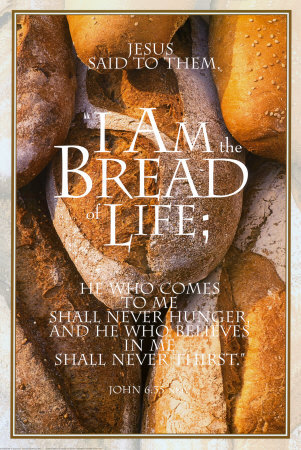
The True Bread of Life ~ The Rev. Lady Sherwood, OPI
 Based on Jn 6:24-35
Today our Lord Jesus is telling us that it is not the physical food of bread that we should be looking for and that we should be looking to be fed by the Holy Spirit. The bread of life is not the loaf in a packet that we buy from a shelf in the supermarket, but is indeed Jesus himself. Jesus was referring to himself as it is he that we need for life, he is essential for true life itself.
If we leave a loaf out overnight it is likely to become stale and perhaps mouldy as it is quickly perishable, whereas the true bread of live-Jesus is erernal. He is the bread that lasts and sustains us forever.
In my life I often come across people who are hungry because of their life circumstances, but many of these people regardless of this are filled with joy, love and hope as they know that Jesus is the truth and that he will always sustain them.
This is exactly what Jesus is telling us when he said, “I am the bread of life.” Jesus feeds us with love, hope, grace and forgiveness and he the true bread from heaven which we need to live the full lives which we were all created to live.
When we partake of the Holy Eucharist, we share in this bread of life. We share in our Lord Jesus with all our Christian brothers and sisters across all the world and across all of time.
We are to share the bread of life with others, to work for food which endures forever. We are called by God our Father to work for him, to share his love, and the good news of the salvation of Jesus.
We are called to be preach the word, to be peacemakers, to love each other for who we are irrespective of any differences. We are called to work to share the unconditional love and acceptance of our Lord Jesus to all and to live our lives as an outpouring of that love.
In whichever way you are called, let us go forth bringing the love and peace and the completeness of the bread of life into the world and into people’s hearts and lives.
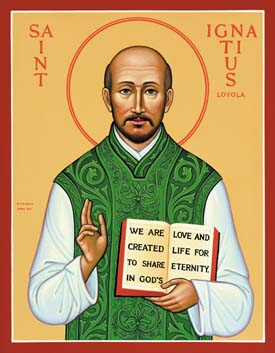
St. Ignatius Loyola ~ Br. Igor Kalinski
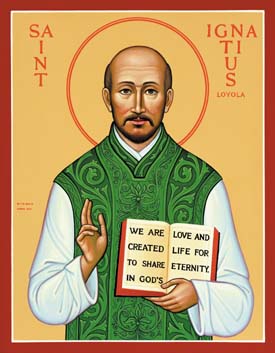
Saint Ignatius of Loyola was a Basque nobleman and soldier born in 1491. During the battle of Pamplona a cannon ball hit him in the leg and he was forced to recover for quite some time until his leg healed and cured. In the meantime, stubborn and proud young men could find him reading nothing other than the lives of the saints and life of Christ. Over time those books attracted him so much so that, although he grew up as a faithful catholic, he discovered that there was much he did know know. He began to daydream about how to serve Christ as did the saints throughout history. This was the beginning of a long journey to conversion that wouldl take him to Jerusalem, then Paris, and finally Rome.
After recovering he decided to surrender all to God’s service. For almost a year he remained in a cave near Manreza and lived a time in penance, but felt God’s mercy. He felt that God raised “such students” to lead him in spiritual life. At that time he began to write his experiences in a book he later titled “Spiritual Exercises”
In Paris he met his first 6 friends. In 1534 the group has passed the vows of poverty and chastity. They also decided to work in a hospital and to do missionary work in Jerusalem. They felt if that were not possible, they would put themselves at the disposal of the pope, and go where he sent them. Ignatius became the first superior general and oversaw rapid growth of the Society of Jesus.
Ignatius grew from a young tempted person involved with global issues to a in great mystic. His extraordinary life of prayer is reflected in Spiritual Exercises-upon which the Jesuit life is based.
Ignatius was loaded with grace so that he could find God in all things. He wanted the Jesuits to be skilled people in making decisions and discernment, to feel the difference between good and evil and to be always ready to love and serve Christ and the Church
 The Order of Preachers, Independent
You must be logged in to post a comment.