The Birth of the Blessed Virgin Mary~The Rev. Lady Sherwood, OPI

nativity_of_the_mother_of_godToday we celebrate the birth of the mother of our Lord and Saviour, the Blessed Virgin Mary.

The earliest known account of Mary’s birth is to be found in the protoevangelium of James (5:2), an apocryphal text from the late second century, with her parents Saint Anne and Saint Joachim.

Usually in the case of saints, the church commemorates their date of death, but both the births of saint John the Baptist and the feast of the blessed virgin Mary’s birth which we celebrate today, are traditionally celebrated  because besides the prophet Jeremiah, (Jer 1:5), these alone were holy in their very birth.

The feast of the birth of Mary, as with the feast of her Assumption, originated in Jerusalem. It actually first began as the feast of the Basilica sancte Maria ubi nata est, which is now named the Basilica of Saint Anne.

The original church which was built in the fifth century, was a Marian basilica erected on a spot that was known as the Shepherd’s pool and this is believed to have been the home of Mary’s parents.

The feast began to be celebrated in Rome towards the latter end of the seventh century and it was first established their when brought there by Eastern monks.

The wine growers in France called this feast “Our Lady of the Grape Harvest”. This is because the best grapes would be brought to the local church, they would be blessed and some of the bunches of these grapes would be attached to the hands of the statue of Mary.

A festival meal which includes these grapes is part of the tradition for this day.

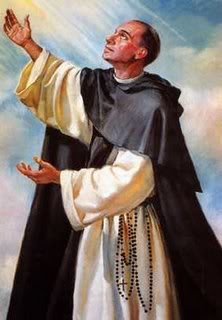
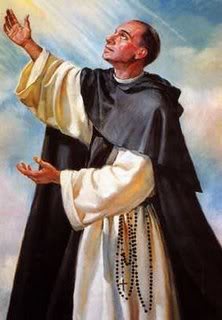
Blessed Bertrand of Garrique

img-Blessed-Bertrand-of-Garrigue

Bertrand was a secular priest under the Cistercians, missioner, and ardent opponent of Albigensianism when he first met Saint Dominic in the party of Bishop Diego. Bertrand may have been the one to recruit Dominic in the battle against the French heretics because they worked closely together in this mission for the rest of their lives.

Bertrand joined the first Dominican friars by receiving the habit at Toulouse in 1216. Dominic left him in charge of the community when he traveled to Rome to seek papal approval of the order. Bertrand’s zeal and experience played an important role in the founding of the Friar Preachers. When the brothers were sent out in little groups on missions, Bertrand was left in Paris with Matthew of France, where he helped to form the Dominican tradition of learning and governed the first foundation at Paris.

While Bertrand’s advice and prayers helped to establish the order, he is best remembered as the closest friend and traveling companion of Saint Dominic, until he was appointed as provincial of Provence. He witnessed the miracles and heavenly favors bestowed upon his friend and provided us with insightful testimony about the heart and mind of the founder.

Bertrand himself was credited with many miracles, both during his life and after his death. Others considered him a “second Dominic” in austerity and holiness, but he humbly overlooked his own claims to sanctity in his loving insistence on those of his friend.

Bertrand was preaching a mission to the Cistercian sisters of Saint Mary of the Woods near Garrigue, when he fell sick and died. He was buried in the sisters’ cemetery until the frequency of miracles suggested that he should be given a more suitable shrine. His relics were lost and shrine destroyed during the religious wars, but pilgrimages were still made to “Saint Bertrand’s Cemetery” until the time of the French Revolution.

Born: at Garrigue, diocese of Nîmes, France, c. 1195

Died: In 1230 he died in Le Bouchet

Beatified: cultus confirmed by Pope Leo XIII in 1881

Angels Unaware….Are You One? ~ The Rev. Deacon Dollie Wilkinson, OPI

AngelDisguise2

      There is an elderly gentleman in my neighborhood, who lives alone, and seems to spend most of his days hitting plastic golf balls in his yard, or feeding stray cats who appear every evening on his front porch. When we moved in to our new home a few years ago, he at first appeared distant, not very friendly. Since then, I have learned that this is just his way. He had a severe brain injury many years ago, so he doesn’t relate to others like you and I would. But, he has a big heart, and is very generous. See, most of my neighbors are elderly, and thus on a fixed income. So money is usually tight for these folks, as it is for most of us. This kind gentleman has a daughter who brings him boxes of produce and bread every week. And, he gladly shares these with every one, including myself. He could be selfish, and keep this bounty all to himself, but he doesn’t. We are blessed by his generosity, but I believe he is likewise favored in the eyes of the Lord, as described in Proverbs 22:1-2, 8-9, 22-23:

       “A good name is to be chosen rather than great riches, and favor is better than silver or gold. The rich and the poor have this in common: the LORD is the maker of them all. Whoever sows injustice will reap calamity, and the rod of anger will fail. Those who are generous are blessed, for they share their bread with the poor. Do not rob the poor because they are poor, or crush the afflicted at the gate; for the LORD pleads their cause and despoils of life those who despoil them.”

This generous neighbor could turn around and try to sell the produce, or pick and choose who he gives it to, but instead he freely shares with whomever needs it. I know many of you may donate to a worthy cause, such as an orphanage, or maybe you buy gifts for a Secret Santa child during the holidays. Yet, when a scruffy bum approaches you on the street as you rush through your day, do you speak harsh words to him, or her……do you even politely say “No” when they ask for spare change……or do you just rush past, having already passed judgment on someone you really do not know? But, then you see a group of school children collecting money for a field trip, and decide to donate, considering them a better use of your time and money? I’m not saying we should not support our children in their endeavors, but I just want to caution you to heed the message in James 2:1-10, (11-13), 14-17:

My brothers and sisters, do you with your acts of favoritism really believe in our glorious Lord Jesus Christ? For if a person with gold rings and in fine clothes comes into your assembly, and if a poor person in dirty clothes also comes in, and if you take notice of the one wearing the fine clothes and say, “Have a seat here, please,” while to the one who is poor you say, “Stand there,” or, “Sit at my feet,” have you not made distinctions among yourselves, and become judges with evil thoughts? Listen, my beloved brothers and sisters. Has not God chosen the poor in the world to be rich in faith and to be heirs of the kingdom that he has promised to those who love him? But you have dishonored the poor. Is it not the rich who oppress you? Is it not they who drag you into court? Is it not they who blaspheme the excellent name that was invoked over you? You do well if you really fulfill the royal law according to the scripture, “You shall love your neighbor as yourself.” But if you show partiality, you commit sin and are convicted by the law as transgressors. For whoever keeps the whole law but fails in one point has become accountable for all of it. For the one who said, “You shall not commit adultery,” also said, “You shall not murder.” Now if you do not commit adultery but if you murder, you have become a transgressor of the law. So speak and so act as those who are to be judged by the law of liberty. For judgment will be without mercy to anyone who has shown no mercy; mercy triumphs over judgment. What good is it, my brothers and sisters, if you say you have faith but do not have works? Can faith save you? If a brother or sister is naked and lacks daily food, and one of you says to them, “Go in peace; keep warm and eat your fill,” and yet you do not supply their bodily needs, what is the good of that? So faith by itself, if it has no works, is dead.”

       Please do support our children, or those in orphanages, or Secret Santa, but also do not ignore your next door neighbor, or the dearheart who comes up to you on the street. Just as my neighbor exemplified in his generosity, to pick and chose who receives our money, time, or gifts, is to serve in judgment over others. As we all know, “You shall love your neighbor as yourself.” is not only commanded by God, but should serve as a basis for all we say and do in our daily lives. Because what good is it to say we have faith, we believe in our heavenly Father, if we do nothing else but spend our days worrying about just ourselves? “So faith by itself, if it has no works, is dead.” So, what works, or actions, have you committed to doing here lately to help others?

Blessed Catherine of Racconigi

Blessed Catherine

Catherine was born into poverty and hunger following the devastation of war. Her father, an unemployed locksmith, became despondent and quarrelsome as so many do when they lose their livelihood. Her mother supported the family by weaving coarse cloth at home. Catherine and her brother grew up in an atmosphere that was absent the peace of Christ.

Surprisingly, God reached the heart of little Catherine when she was only five. It was then that her mystical experiences began. Our Lady appeared to her while the tiny child was praying alone in her tiny room and told Catherine that Jesus wished to make her His spouse. Then as a child her own age, Jesus himself appeared, accompanied by many other saints including Catherine of Siena and Peter Martyr, and the Blessed Mother place the ring of espousal on her finger. Like the ring of Saint Catherine of Siena, it was visible to today’s saint but could not be seen by others.

Thereafter Catherine had frequent ecstasies and visions. Jesus always appeared to her as a man her own age. He talked with her, taught her how to pray, and several times took her heart away to cleanse it. When He appeared with His Cross, he offered to help Him. He let it rest on her should a moment, and it left a wound for the rest of her life. She also received the stigmata, though it too remained invisible to others and, at her request, it was only revealed by her confessor after her death.

And, of course, Jesus worked many miracles on behalf of His friend: made a broken dish whole again, and provided money and food when the family’s poverty was extreme. In times of trial, the heavenly hosts came to comfort the girl who received great consolation from the aspiration, “Jesus, my hope!”

Because her family opposed her becoming a Dominican, she took the habit of a tertiary. Her mystical experiences roused a storm of gossip among her neighbors, who were terrified at the lights and sounds that came from her home. The devil stirred up more trouble to mitigate her influence over other souls. Even the Dominican fathers ostracized her and eventually she was forced out of town and settled in Racconigi.

There rich and poor sought out Catherine for her wise counsel, prayers, and material assistance. She was almost continually in ecstasy. The particular object of Catherine’s prayers was the salvation of soldiers dying in battle. Numerous miracles occurred before and after her death, and a cult arose at her tomb almost immediately. Even her persecutors were aware of her sanctity and retracted their bitter words.

Born: in the diocese of Cuneo in the Piedmont, Italy, 1487

Died: 1574

Beatified: Pope Pius VII confirmed her holiness and cult in 1810


Blessed Guala

img-Blessed-Guala-of-Brescia

Guala was one of the first disciples of Saint Dominic, attracted by the Dominican ideal in 1219, when he heard the founder preach. He received the habit from Dominic at the time the friary opened in Bergamo. After a short novitiate, he was appointed prior there.

Guala proved to be an able superior and a practical administrator and builder. He was on the committee that planed the convent of Saint Agnes in Bologna. During a delay in the construction of the convent because of the opposition of the family of Blessed Diana d’Andalò, who was financing the project, Guala was sent to Brescia to assume the position of its first prior.

During this period Guala had the revelation of Saint Dominic’s greatness that became the subject of many early legends. Although they were good friends, Guala did not know that Dominic was dying on their return from a chapter. Guala had fallen asleep with his head leaning against the belltower of the conventual church at Brescia when he had a vision of two ladders coming down from heaven. Our Lord was visible at the top of one ladder, and Our Lady at the top of the other. Angels were ascending and descending on them. As Guala watched, a friar, who sat at the foot of one ladder with his face covered was drawn up to heaven and great glory surrounded him. Guala awoke, deeply affected by the vision, and went immediately to Bologna, where he found that Saint Dominic had died at the time of his vision.

In 1226, Guala was named the prior of Bologna’s Saint Nicholas abbey, famous for its regularity and fervor. While there, Pope Honorius III appointed him arbiter between Bologna and Modena. Guala worked hard to forge a treaty that lasted 10 years. The following year Pope Gregory IX asked him to negotiate between Emperor Frederick II and the Lombard confederacy–an even more daunting diplomatic task. Guala was also commissioned to convince Frederick to keep his vow to lead a crusade. He was unable to resolve matters between the parties, but at least they maintained the status quo of an uneasy peace.

In 1228, Guala was consecrated bishop of Brescia. As such, he negotiated a number of treaties between warring cities. Frederick broke all the promises he had made and attacked the cities that had remained loyal to the pope. In 1238, Frederick’s army besieged Brescia, but the attackers had to withdraw within three months, which is credited to Guala.

Guala’s contemporaries described him as “a man of great prudence, well acquainted with the world, and of accomplished manners,” and said that “he governed the diocese entrusted to his care with such holiness that, both during his life and after his death, he wrought many wonders through God.”

The years of labor and civil strife wore him down. He resigned his see in 1242 in order to enter complete seclusion and pray without interruption in preparation for death. Therefore, he retired to the Vallumbrosan monastery of San Sepolcro d’Astino, where he lived as a hermit until his death. He was buried in the Benedictine church, and after many miracles at his tomb, his cause was promoted.

Born: in Bergamo, Italy

Died: in San Sepolcro d’Astino, Italy, in 1244

Beatified: cultus approved in 1868 by Pope Pius IX.

Saint Rose of Lima

st-rose-of-lima-1

At her confirmation in 1597, she took the name of Rose, because, when an infant, her face had been seen transformed by a mystical rose. As a child she was remarkable for a great reverence, and pronounced love, for all things relating to God. This so took possession of her that thenceforth her life was given up to prayer and mortification. She had an intense devotion to the Infant Jesus and His Blessed Mother, before whose altar she spent hours. She was scrupulously obedient and of untiring industry, making rapid progress by earnest attention to her parents’ instruction, to her studies, and to her domestic work, especially with her needle.

After reading of St. Catherine she determined to take that saint as her model. She began by fasting three times a week, adding secret severe penances, and when her vanity was assailed, cutting off her beautiful hair, wearing coarse clothing, and roughening her hands with toil. All this time she had to struggle against the objections of her friends, the ridicule of her family, and the censure of her parents. Many hours were spent before the Blessed Sacrament, which she received daily.

Finally she determined to take a vow of virginity, and inspired by supernatural love, adopted extraordinary means to fulfill it. At the outset she had to combat the opposition of her parents, who wished her to marry. For ten years the struggle continued before she won, by patience and prayer, their consent to continue her mission.

At the same time great temptations assailed her purity, faith, and constance, causing her excruciating agony of mind and desolation of spirit, urging her to more frequent mortifications; but daily, also, Our Lord manifested Himself, fortifying her with the knowledge of His presence and consoling her mind with evidence of His Divine love. Fasting daily was soon followed by perpetual abstinence from meat, and that, in turn, by use of only the coarsest food and just sufficient to support life.

Her days were filled with acts of charity and industry, her exquisite lace and embroidery helping to support her home, while her nights were devoted to prayer and penance. When her work permitted, she retired to a little grotto which she had built, with her brother’s aid, in their small garden, and there passed her nights in solitude and prayer. Overcoming the opposition of her parents, and with the consent of her confessor, she was allowed later to become practically a recluse in this cell, save for her visits to the Blessed Sacrament.

In her twentieth year she received the habit of St. Dominic. Thereafter she redoubled the severity and variety of her penances to a heroic degree, wearing constantly a metal spiked crown, concealed by roses, and an iron chain about her waist. Days passed without food, save a draught of gall mixed with bitter herbs. When she could no longer stand, she sought repose on a bed constructed by herself, of broken glass, stone, potsherds, and thorns. She admitted that the thought of lying down on it made her tremble with dread. Fourteen years this martyrdom of her body continued without relaxation, but not without consolation. Our Lord revealed Himself to her frequently, flooding her soul with such inexpressible peace and joy as to leave her in ecstasy four hours. At these times she offered to Him all her mortifications and penances in expiation for offences against His Divine Majesty, for the idolatry of her country, for the conversion of sinners, and for the souls in Purgatory.

Many miracles followed her death. She was beatified by Clement IX, in 1667, and canonized in 1671 by Clement X, the first American to be so honored. Her feast is celebrated 30 August. She is represented wearing a crown of roses.

Born:1586 at Lima, Peru as Isabel

Died: August 24, 1617 at Lima, Peru

Beatified: April 15, 1668 by Pope Clement IX

Canonized: April 2, 1671 by Pope Clement X

Representation: anchor; crown of flowers; crown of roses; Holy Infant; roses; Dominican tertiary holding roses; Dominican tertiary accompanied by the Holy Infant

Patronage: against vanity; Americas; Central America; embroiderers; florists; gardeners; India; Latin America; Lima, Peru; needle workers; New World; people ridiculed for their piety; Peru; Philippines; diocese of Santa Rosa, California; South America; vanity; Villareal Samar, Phillipines; West Indies

More than Lip Service ~ The Rev. Deacon Joshua Hatten, OPI

lip3

St. Mark 7:1-8,14-15, 21-23

When the Pharisees with some scribes who had come from Jerusalem gathered around Jesus, they observed that some of his disciples ate their meals with unclean, that is, unwashed, hands.   —For the Pharisees and, in fact, all Jews, do not eat without carefully washing their hands, keeping the tradition of the elders.  And on coming from the marketplace they do not eat without purifying themselves.   And there are many other things that they have traditionally observed, the purification of cups and jugs and kettles and beds. — So the Pharisees and scribes questioned him, “Why do your disciples not follow the tradition of the elders but instead eat a meal with unclean hands?”   He responded, “Well did Isaiah prophesy about you hypocrites, as it is written:
This people honors me with their lips, but their hearts are far from me; in vain do they worship me, teaching as doctrines human precepts.
You disregard God’s commandment but cling to human tradition.”   He summoned the crowd again and said to them, “Hear me, all of you, and understand.   Nothing that enters one from outside can defile that person;
but the things that come out from within are what defile.  “From within people, from their hearts, come evil thoughts, unchastity, theft, murder, adultery, greed, malice, deceit, licentiousness, envy, blasphemy, arrogance, folly.
All these evils come from within and they defile.”

In today’s Gospel we see Jesus calling out the Pharisees for their hypocrisy – the fact that they placed more importance on man made rules and regulations rather than purity of the mind and heart.  I wonder how many of us Christ would find ourselves guilty of the very same hypocrisy today?

So often, too often, many Christians sew their wild oats Monday through Saturday and then find themselves praying for a crop failure on Sunday.  Sure, we may wear our crucifixes or crosses, have all the right bumper stickers and even do volunteer work for this organization or another – all the outward show to identify ourselves as Christians – but is it in vain?  Just for the show?  Really meaning nothing because of the conditions of our hearts?

Do we harbor hatred in our minds?   Lusts in our bellies?  Unforgiveness?  Addictions?  Do we gossip or spread rumours?  Do we murmur and complain?  I think you get the gist; we know the list could go on and on.

While we know that, for us, perfection in this life is an impossibility,  we ARE to strive for it.  We are called to be in this world, but not of it.  We are called to be holy as our God is holy.  After all, we are made in the divine image!  But, we will fall.  We will fail.

So what is the point?  It lies in this:  that when we do falter, when we do fail – that we get back up, seek out forgiveness for our sins and shortcomings and get back in the race toward holiness.  Keeping our focus on Jesus Christ, with the aide of the Holy Spirit, that is GOD within us, we can accomplish what is pleasing to the Almighty.   What finds favour in His sight we can choose to do, but only with His help.  We must seek out, with humility and singleness of heart and a hatred of what is unholy, to do what makes us truly the sons and daughters of God.  Not merely putting on an outward show. But, truly, in our heart of hearts desiring that which is pleasing and good in the eyes of the Lord.

I spent nearly a decade as a raging alcoholic.  During that time I never missed a church service, I always sang the loudest in the choir and I volunteered with many, many different organizations… but for what?  It was all a song and dance – pure show.  Internally, I was rotten.  My life was as far off the tracks as it could be.  And with all that show, I was only fooling myself.  I wasn’t right with the Lord.  I was not pleasing Him.   I was a Pharisee.  So long as other people could see the “great” works I was doing then I felt holy and most of the time holier-than-thou.  It was all in vain.  All for naught, nothing, nada, zip, zilch.

Once I turned my inner life around and stopped drinking and put God back where He belonged, as the most important part of my life, then everything changed.  I wasn’t any longer concerned about putting on the “show” for others.   No more did all the “lip service” matter.  I had to take a long and painful and difficult look at my life.  At the way not only did it affect me, but how it effected others.  The show mattered, not in any good way.  Not in any way that was gainful spiritually.   It hurt me and those I loved and those I associated with – most of all, it hurt God.  I was letting Him down.  All the outward folderol was costing me a true relationship with the Almighty.  It was making a mockery of the cross – of the work, the price that Christ had paid for me.

Now I ask each of us to take our finger of deep introspection and turn it toward ourselves.  WE typically have no problem pointing out the faults and hypocrisies in others, but it is much harder to be honest with ourselves about our shortcomings.  However, when we do get honest with ourselves about ourselves, then – and only then – can we take a moral inventory and see what was purely lip service, eliminate it and live our lives for Christ and in Christ and BY CHRIST, be victorious!

This is the lesson of today’s Gospel.   This is what Christ is teaching us.  Not simply to have a pretense of honoring him with a great outward show – what does it matter if your hands are dirty or clean when your mind and emotions, that is, YOUR SPIRIT, is filthy??  Take that first step of trust in Christ, and allow the divine guidance to lead our thoughts into line with the thoughts of God.  To have our actions FOLLOW what we are internally.  To truly love and serve the Lord with gladness and singleness of heart.  By doing this, then we are really the children of God and please Him with our works.  And then, we can be led onto His path of peace.  Amen.

The Beheading of St. John the Baptist ~ The Rev. Lady Sherwood

beheading-620x320

The Beheading of St. John the Baptist is a feast day that commemorates his martyrdom when John was beheaded upon the orders of Herod Antipas through the vengeful request of his step-daughter Salome and her mother Herodias.

Herod was a tetrarch of Galilee under the Roman Empire and he had imprisoned John in 27 AD because John the Baptist had reproved Him for divorcing his wife Phasaelis, and unlawfully taking Herodias, the wife of his brother, Herod Philip I.

On Herod’s birthday, Herodias’s daughter Salome, danced for the King and his guests. Her dancing pleased Herod to such an extent that in his drunkenness, he promised to give her anything for which she asked including up to half of his Kingdom.

When Salome asked her mother Herodias for what she should request, her mother told her to ask for the head of St. John the Baptist to be presented to her on a platter.

Herod was appalled by Salome’s request but as he had promised she could have anything for which she asked, he reluctantly granted her request and he had John executed in prison and delivered to Salome in the manner she had requested.

None of the sources give an exact date for the beheading of John the Baptist, but it is believed to have taken place around 28-29 AD at the fortress of Machaerus.

Memorial of Saint Augustine ~ Br. Michael Marshall, Novice

saintaugustine_ofhippo

Augustine of Hippo lived from 354 to 430, and was an early Christian theologian and philosopher whose writings influenced the development of Western Christianity and Western philosophy. He was the bishop of Hippo Regius. He is viewed as one of the most important Church Fathers in Western Christianity for his writings in the Patristic Era. Among his most important works are City of God and Confessions. In the Catholic Church and the Anglican Communion, he is a saint, a preeminent Doctor of the Church, and the patron of the Augustinians. His memorial is celebrated on 28 August, the day of his death. He is the patron saint of brewers, printers, theologians, the alleviation of sore eyes, and a number of cities and dioceses. Many Protestants, especially Calvinists, consider him to be one of the theological fathers of the Protestant Reformation due to his teachings on salvation and divine grace.

In the summer of 386, at the age of 31, after having heard and been inspired and moved by the story of Ponticianus’s and his friends’ first reading of the life of Saint Anthony of the Desert, Augustine converted to Christianity. As Augustine later told it, his conversion was prompted by a childlike voice he heard telling him to “take up and read” which he took as a divine command to open the Bible and read the first thing he saw. Augustine read from Paul’s Epistle to the Romans – the so-called “Transformation of Believers” section, consisting of chapters 12 through 15 – wherein Paul outlines how the Gospel transforms believers, and the believers’ resulting behavior.

In 391 Augustine was ordained a priest and became a famous preacher (more than 350 preserved sermons are believed to be authentic), and was noted for combating the Manichaean religion, to which he had formerly adhered.

In 395 he was made coadjutor Bishop of Hippo, and became full Bishop shortly thereafter, hence the name “Augustine of Hippo”; and he gave his property to the church of Thagaste. He remained in that position until his death in 430. He wrote his autobiographical Confessions in 397-398. His work The City of God was written to console his fellow Christians shortly after the Visigoths had sacked Rome in 410. Augustine worked tirelessly in trying to convince the people of Hippo to convert to Christianity. Though he had left his monastery, he continued to lead a monastic life in the episcopal residence. He left a regula for his monastery that led to his designation as the “patron saint of regular clergy.”

Shortly before Augustine’s death the Vandals, a Germanic tribe that had converted to Arianism, invaded Roman Africa. The Vandals besieged Hippo in the spring of 430, when Augustine entered his final illness. According to Possidius, one of the few miracles attributed to Augustine, the healing of an ill man, took place during the siege. According to Possidius, Augustine spent his final days in prayer and repentance, requesting that the penitential Psalms of David be hung on his walls so that he could read them. He directed that the library of the church in Hippo and all the books therein should be carefully preserved. He died on 28 August 430. Shortly after his death, the Vandals lifted the siege of Hippo, but they returned not long thereafter and burned the city. They destroyed all of it but Augustine’s cathedral and library, which they left untouched.  Augustine was canonized by popular acclaim, and later recognized as a Doctor of the Church in 1298 by Pope Boniface VIII. His feast day is 28 August, the day on which he died. His prominence as a Doctor of the Church is mostly due to the many topics in which he took a theological stance. Here is a list of key topics: Creation, ecclesiology, eschatology, just war, Mariology, natural knowledge and biblical interpretation, original sin, free will, sacramental theology, and views on sexuality.

1 Thessalonians 4:1-8

Brothers and sisters,
we earnestly ask and exhort you in the Lord Jesus that,
as you received from us
how you should conduct yourselves to please God–
and as you are conducting yourselves–
you do so even more.
For you know what instructions we gave you through the Lord Jesus.
This is the will of God, your holiness:
that you refrain from immorality,
that each of you know how to acquire a wife for himself
in holiness and honor, not in lustful passion
as do the Gentiles who do not know God;
not to take advantage of or exploit a brother or sister in this matter,
for the Lord is an avenger in all these things,
as we told you before and solemnly affirmed.
For God did not call us to impurity but to holiness.
Therefore, whoever disregards this,
disregards not a human being but God,
who also gives his Holy Spirit to you.


Matthew 25:1-13

Jesus told his disciples this parable:
“The Kingdom of heaven will be like ten virgins
who took their lamps and went out to meet the bridegroom.
Five of them were foolish and five were wise.
The foolish ones, when taking their lamps,
brought no oil with them,
but the wise brought flasks of oil with their lamps.
Since the bridegroom was long delayed,
they all became drowsy and fell asleep.
At midnight, there was a cry,
‘Behold, the bridegroom! Come out to meet him!’
Then all those virgins got up and trimmed their lamps.
The foolish ones said to the wise,
‘Give us some of your oil,
for our lamps are going out.’
But the wise ones replied,
‘No, for there may not be enough for us and you.
Go instead to the merchants and buy some for yourselves.’
While they went off to buy it,
the bridegroom came
and those who were ready went into the wedding feast with him.
Then the door was locked.
Afterwards the other virgins came and said,
‘Lord, Lord, open the door for us!’
But he said in reply,
‘Amen, I say to you, I do not know you.’
Therefore, stay awake,
for you know neither the day nor the hour.”

The familiar image of an angel and the devil sitting on a person’s shoulders has been shown in movies and television many times. An angel and the devil have not literally sat on my shoulders, but I can identify with that image. A thought of wanting to do something that may not be the best idea comes to my mind… I think about it, and I hear the devil say to me something like, “Life’s short, do it!” Then look over at the angel which is waving its finger at me and saying, “Oh no! You know better than that!!!” I eventually weigh the consequences of both actions, and 99% of the time I do the right thing because I know what is responsible and right.

The readings for today speak to the subject of responsibility and doing what is right. Paul is instructing the Thessalonians on how to live according to how God intends humanity to live if they truly are to follow the teachings of Jesus. Following Jesus means letting go of any immoral behavior. The parable which Jesus tells is about being responsible enough to take time to be prepared, knowing that negative consequences will result if one is not prepared. This preparedness is about living a life in which one desires to follow God instead of going astray.

We know that God loves us unconditionally, but it is our responsibility to live according to his commandments and teachings given to us through Jesus. We cannot allow the devil sitting on our left shoulder tell us it is okay to do things which we know are not of God. When the angel is saying, “You know better!” we need to listen to the angel.

How do we do the right thing? We do not put ourselves in a position which presents the opportunity for the devil to convince us that it is okay to do something; we spend time around positive and responsible people, we take time to read Scripture, we pray, we recognize our vices in life and stay away from them. Are you doing the right thing?

Blessed James of Mevania

dominican cross

Very early in life, prodigies surrounded Blessed James, for on the day of his birth three brilliant stars, each containing the image of a friar preacher, appeared in the sky over Bevagna. Children ran through the streets crying : “To the schools! To the schools! behold the new masters heaven is sending us !” The three preachers were later understood to be James, Blessed Ambrose of Siena, and St. Thomas Aquinas.

James was given a good education and was carefully trained in the ways of holiness. The power of his prayers was seen early. When still a small child, he brought about peace between two quarreling families. At the age of sixteen, he met the Dominicans. Two friars had come to preach in his native city during Lent. Deciding, after much prayer, that God was calling him to the Dominican apostolate, he went home with the two missioners and began his novitiate.

The early promises of his great learning were well fulfilled. In and age that shone with the brilliance of Albert, Thomas and Bonaventure, the preaching of James of Bevagna was still remarkable. He was particularly gifted at reconciling enemies and bringing peace to warring families and cities.

James was very severe with himself, particularly in the matter of poverty. On one occasion, his mother, shocked at the poor condition of the habit he was wearing, gave money to buy a new one. As he wanted very much more to get a crucifix for his cell, he did so. His mother reminded him that the money was given for clothing. James replied with the text, “Put ye on the Lord Jesus Christ,” assuring her that this was the garment he had bought with her gift.

At another time, praying before the same crucifix, James was overcome with a sense of his own unworthiness and begged of God some sign that his soul was to be saved. Blood gushed from the hands and side of the figure on the cross, and a voice from heaven told him that his token of God’s favor would reassure him. Some of the miraculous blood was preserved for more than two centuries. Kept at the tomb of Blessed James, it worked many miracles, but it was stolen by heretics.

Forewarned of the hour of his death, James was assured that Our Lady would come to meet him, because he had often sacrificed to adorn her altars. She came at the time foretold, and James went happily with her into the presence of God.

Born: Bevagna in Umbria, Italy in 1220

Died: 1301 at Mevania, Italy of natural causes

Beatification: 1400 (Cultus confirmed) by pope Boniface IX; again on May 18, 1672 (cultus confirmed) by Pope Clement X