
Category: Dominican Saints
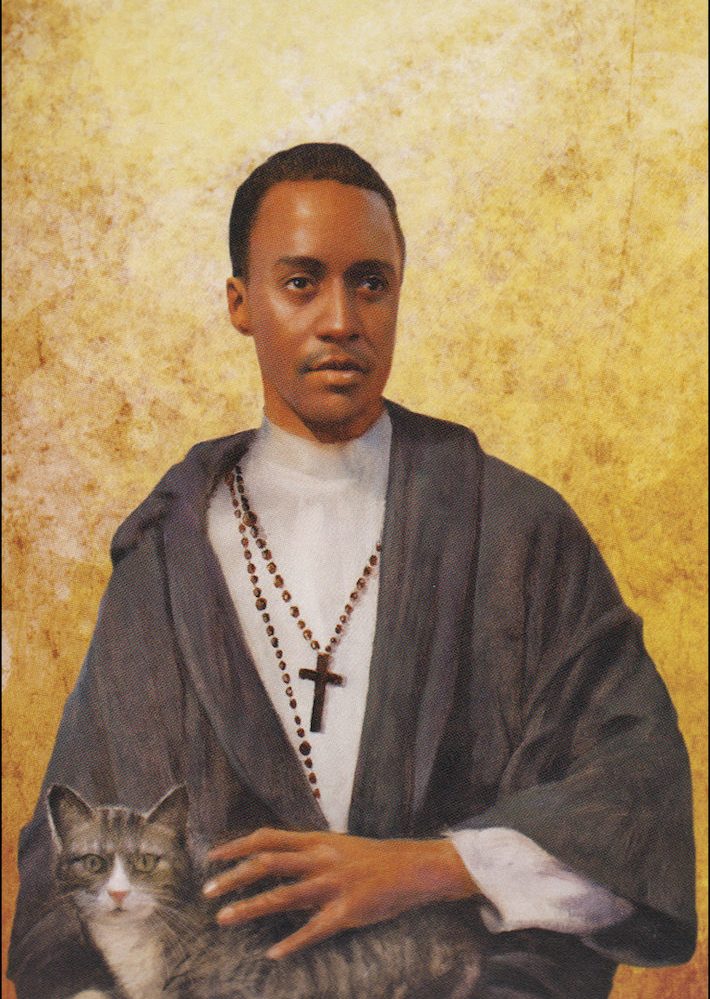
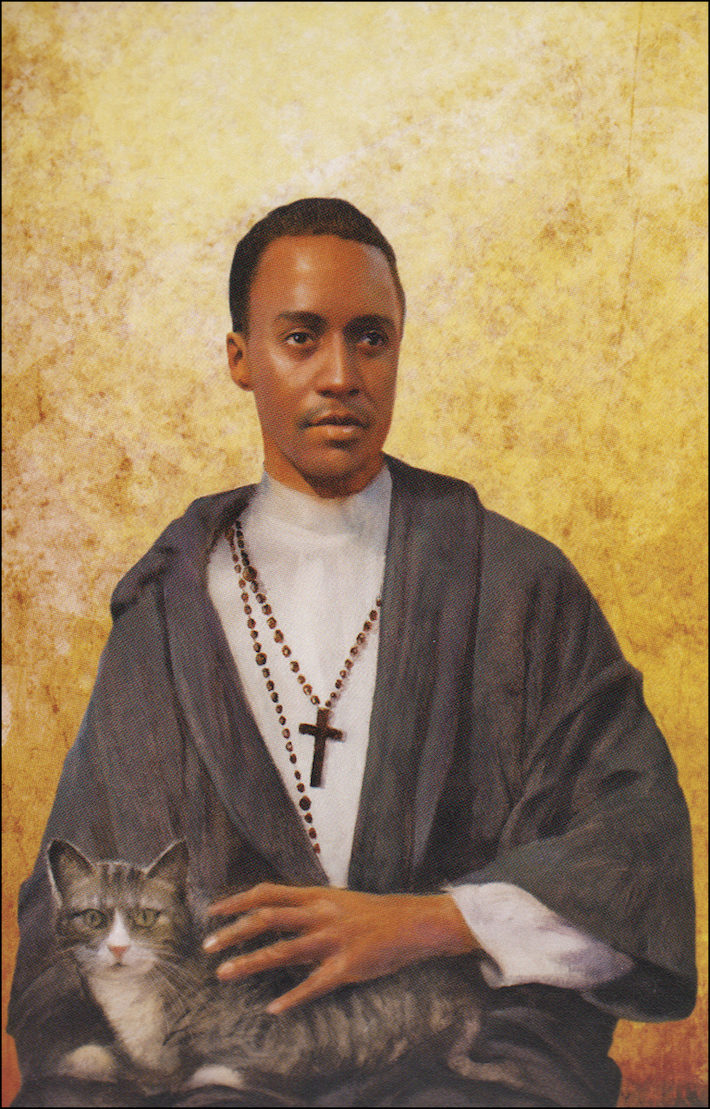
St. Martin de Porres, OP ~ The Rev. Dcn Dollie Wilkinson, OPI
I have a mixed race granddaughter. She is so bright, curious, and sweet that all who meet her cannot help but be charmed. I cannot imagine any child born now to mixed race parents being shunned, especially by their father or mother. But that was not always so. Imagine a social worker’s case that goes something like this: two mixed race children are abandoned by their father. The children’s food and clothing are inadequate. The older child, a boy, is made to go out and do the shopping and the household chores. The mother, distraught with grief at being abandoned, subjects the boy in particular to verbal and physical abuse, telling him that he is responsible for his father’s leaving. Yet the child is found to be sweet-natured, intelligent and obliging, tirelessly eager to please the mother who seems not to want him. What would you make of the situation? The boy just described, whose heroic charity was evident from the time he was young, grew up to become one of the Dominican Order’s most beloved saints: Martin de Porres.
Martin was eventually able to leave behind the greatest cross of his childhood when his father, a Spanish nobleman serving as a provincial official in Peru, finally acknowledged his dark skinned twelve year old son as legitimate and apprenticed Martin to a barber surgeon. Martin quickly acquired a following of patrons due to his charity and his skill in medical care. However, after several years, Martin discerned Jesus calling him to enter the Dominican Order in Lima. He shared two strong devotions dear to the Order and its saints: devotion to the Rosary and to the Queen of the Most Holy Rosary, and a powerful love of the Eucharist. Martin did not aspire to be a preaching friar, nor even a lay brother, but asked for the lowest position in the convent as a “helping” brother. After nine years and significant contributions to the community, he would go on to make solemn vows as a lay brother.
Martin was put to work doing menial chores, work that he welcomed and never complained of doing. On the contrary, he regarded his chores as if they were the highest honors. The community also used Martin’s previous training as a barber and a surgeon, eventually assigning him to the infirmary due to his remarkable expertise in healing. Stories abound of his cures: of his coaxing a sick friar’s appetite by miraculously producing out-of-season fruit, and of life-threatening fevers and infections instantly abating at the mere touch of Martin’s hand. It is said that he knew ahead of time whether a friar would recuperate or die. St. Martin could well be called the “St. Francis of Assisi” of the Dominican Order for his love of animals. The story of his relocation of a large number of destructive mice, while incredible, is regarded as true. Recognizing the havoc the rodents were causing, He was seen escorting an orderly line-up of several hundred mice out of the convent and into the garden where they were promised a daily feeding by their kindhearted benefactor.
Perhaps with his own childhood in mind, Martin had a great love for street urchins, orphans and unwanted babies in Lima. It became known that Martin would accept unwanted children born out of wedlock. At first he placed them with his sister Juana, but numbers grew so great that a separate home became necessary. By his own efforts, Martin built the Orphanage of the Holy Cross from the ground up. The orphanage still exists in Lima today as the Colegio de Santa Cruz.
Martin literally lived the Last Will and Testament of St. Dominic: “Have charity, guard humility, make your treasure out of voluntary poverty.” His love of poverty was unaffected; he had been poor all his life, and would have nothing to do with what he considered “luxuries.” Martin wore the most ancient habit in the convent, yet never allowed it to look shabby. He preferred old shoes to new ones. He served as an example of humility, as described by the parable told by Jesus in Luke 14:7-11:
“When he noticed how the guests picked the places of honor at the table, he told them this parable: “When someone invites you to a wedding feast, do not take the place of honor, for a person more distinguished than you may have been invited. If so, the host who invited both of you will come and say to you, ‘Give this person your seat.’ Then, humiliated, you will have to take the least important place. But when you are invited, take the lowest place, so that when your host comes, he will say to you, ‘Friend, move up to a better place.’ Then you will be honored in the presence of all the other guests. For all those who exalt themselves will be humbled, and those who humble themselves will be exalted.””
Martin died a holy death surrounded by the friars of the Holy Rosary Convent chanting the Salve Regina. His symptoms were the same as those that defined St. Dominic’s last moments. In fact, toward the end, when asked, Martin indicated that his holy father was actually present, along with St. Vincent Ferrer. When he was canonized in 1962 by St. John XXIII, the Pope observed in the canonization ceremony, “Martin was not an academic but possessed ‘the true science that ennobles the spirit,’ the ‘light of discretion’ of which St. Catherine of Siena speaks.” Guy Bedouelle adds that “the Church… has need of authentic intellectuals [but] looks first for holiness of attitude, the fruit of humility.” St. Martin preached Christ through his charity, humility and poverty. He stands as a holy reminder that, in a religious order known for glorifying God by intellectual achievement, “the greatest of these is love.”
The Best is Yet to Come! The Feast of All Souls ~ The Rt. Rev. Michael Beckett, OPI
Today we celebrate the Feast of All Souls. Yesterday we celebrated the Feast of All Saints. What’s the difference?” you might ask. Well, I’m here to tell you!
The Feast of All Saints celebrates all of those holy men and women who we are assured have reached Heaven. The Feast of All Souls celebrates those Christian men and women who haven’t quite made it to Heaven yet, but who are certainly working their way there.
Huh?
Let me explain. We as Catholic Christians believe in the Communion of the Saints. This “communion” is made up of three distinct groups: The Church Militant, The Church Penitent, and The Church Triumphant. The Church Militant consists of all of us Christians who are living in the world today, who are trying to bring the world to Christ. The Church Triumphant consists of those Christians who have died and reached the ultimate goal of Heaven. The Church Penitent consists of those souls who are in Purgatory.
“Ah ha!,” you say, “I don’t believe in Purgatory!” Well, OK, you are certainly allowed your beliefs, but let me tell you a few things about why we, as Catholic Christians, believe in Purgatory. It’s Biblical:
The term purgatory arose after the time of the apostles, as did the terms Trinity, Christianity, Second Coming, and Bible. But the idea of purgatory was already present before Jesus was born. We find a Jewish hero named Judas Maccabeus, about a century and a half before Jesus, praying for the dead and specifically asking they be forgiven their sins after they have died (2 Macc. 12:43–45). This practice, known as the kaddish, was well established among Jews in Jesus’ own time. (Jews have historically believed, and many still believe, that the souls of the faithful departed undergo a period of purification which may be aided by the prayers and charity of the living. The Kaddish Foundation is a modern example of this ancient belief in action.)
Consider this reading from The Book of Wisdom:
The souls of the just are in the hand of God,
and no torment shall touch them.
They seemed, in the view of the foolish, to be dead;
and their passing away was thought an affliction
and their going forth from us, utter destruction.
But they are in peace.
For if before men, indeed, they be punished,
yet is their hope full of immortality;
chastised a little, they shall be greatly blessed,
because God tried them
and found them worthy of himself.
As gold in the furnace, he proved them,
and as sacrificial offerings he took them to himself.
In the time of their visitation they shall shine,
and shall dart about as sparks through stubble;
they shall judge nations and rule over peoples,
and the LORD shall be their King forever.
Those who trust in him shall understand truth,
and the faithful shall abide with him in love:
because grace and mercy are with his holy ones,
and his care is with his elect. (Wisdom 3:1-9)
Likewise, we find the New Testament frequently assuming the existence of purgatory. Jesus, during his time in the grave, is said by Peter to have “preached to the spirits in prison, who formerly did not obey” (1 Pet. 3: 18–20). Similarly, Jesus teaches that certain sins—notably unforgiveness—will be liable to judgment and imprisonment in the next. But he also implies this punishment is not necessarily eternal: “Truly I say to you, you will never get out until you have paid the last penny” (Matt. 5:21–26). Such imagery fits neither heaven—where there are no prisons—nor hell, where there is neither repentance nor “getting out” and therefore no point in preaching. It does, however, fit purgatory.
Jesus also implies the existence of purgatory or “forgiveness in the age to come” when he tells his disciples, “Whoever says a word against the Son of Man will be forgiven; but whoever speaks against the Holy Spirit will not be forgiven, either in this age or in the age to come” (Matt. 12:32). The Church after Jesus did not, therefore, “invent” purgatory. On the contrary, it simply repeated and clarified what Jesus and the apostles had taught them concerning the promise of hope for the afterlife.
So there’s that.
This is also why we pray for the dead. We believe that the purification of the souls in Purgatory can be hastened by the actions of the faithful on earth. This teaching is based also on the practice of prayer for the dead mentioned as far back as 2 Maccabees 12:42–46. In the West there is ample evidence of the custom of praying for the dead in the inscriptions of the catacombs, with their constant prayers for the peace of the souls of the departed and in the early liturgies, which commonly contain commemorations of the dead. Tertullian, Cyprian and other early Western Fathers witness to the regular practice of praying for the dead among the early Christians. The theological basis for the feast is the doctrine that the souls which, on departing from the body, are not perfectly cleansed from venial sins, or have not fully atoned for past transgressions, are debarred from the Beatific Vision, and that the faithful on earth can help them by prayers, alms deeds and especially by the sacrifice of the Mass. Because Purgatory is outside of time and space, it is not necessarily accurate to speak of a location or duration in Purgatory.
So what does Purgatory mean for us today? It means what it has always meant: hope. Purgatory is the assurance that there will, in the end, be absolutely nothing to dim the mirror of our lives from reflecting the glory of God. We who have been captive to sin for so long will be released. Moreover, as sharers in the life of Christ, we have an extraordinary promise from him. For he tells us, “Truly, truly, I say to you, he who believes in me will also do the works that I do; and greater works than these will he do, because I go to the Father” (John 14:12).
In other words, we not only receive grace from him, we do his works of grace with him, for we are “fellow workers” with Christ (1 Cor. 3:9). This means among other things that, as he prays for us, so we can pray for one another with his power and authority. And such prayers can be made not only for the living but for the dead as well. We can, therefore, help those in purgatory who are still being purified, just as we can help those on earth—by our prayers and offerings of love, especially in the Mass.
As Paul tells us, “We, though many, are one body in Christ, and individually members one of another” (Rom. 12:5). That unity with God and with each other is not severed by death. We can continue to pray for those who have died with the hope of Christ that our prayers will be of real help to them as we “bear one another’s burdens, and so fulfill the law of Christ” (Gal. 6:2).
So, having said as much, I wish each of you a most blessed and holy All Soul’s Day and ask that you continue to pray for me and for mine, The Church Triumphant, The Church Militant, and The Church Penitent. Amen.
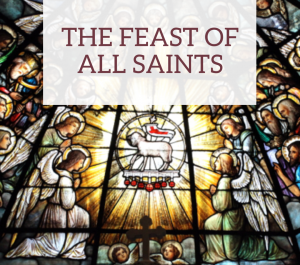
Got a White Robe? ~ The Feast of All Saints ~ The Rt. Rev. Michael Beckett, OPI
Today we celebrate the Solemnity of All Saints (also called All Saints Day).
All Saints’ Day, All Hallows Day, or Hallowmas is solemnly celebrated on 1 November by many Western Liturgical Churches to honor, literally, all the saints, known and unknown; those individuals who have attained Heaven; all the holy men and women who have lived their lives for God and for his church, who now have attained Beatific vision and their reward of Heaven.
In early Christian history it was usual to solemnize the anniversary of a Martyr’s death for the Lord at the place of their martyrdom. Frequently there were multiple martyrs who would’ve suffered and died on the same day which led to multiple commemorations on the same day. Eventually, the numbers of martyrs became so great that it was impossible for a separate day to be assigned to each individually, but the church feeling that every martyr should be venerated, appointed a feast day to commemorate them all on the same day.
The origin of the festival of All Saints celebrated in the West dates to the month of May in the year 609 or 610, when Pope Boniface IV consecrated the Pantheon at Rome to the Blessed Virgin and all the martyrs. In the 730’s Pope Gregory III moved the Feast of All Saints to 1 November when he founded an oratory in St. Peter’s for the relics of the holy apostles and of all saints, martyrs and confessors, of all the just made perfect who are at rest throughout the world.”
From our Readings today, we hear of the vision of St. John from the Book of Revelation:
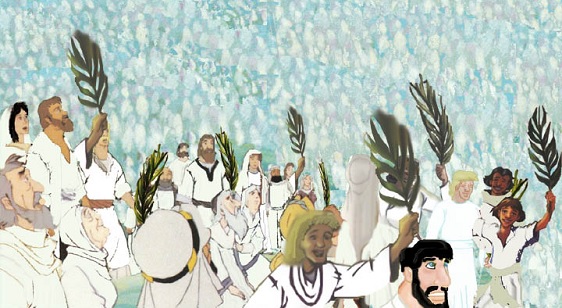
After this, I had a vision of a great multitude, which no one could count, from every nation, race, people, and tongue. They stood before the throne and before the Lamb, wearing white robes and holding palm branches in their hands. They cried out in a loud voice:
“Salvation comes from our God, who is seated on the throne, and from the Lamb.”
All the angels stood around the throne and around the elders and the four living creatures. They prostrated themselves before the throne, worshiped God, and exclaimed:
“Amen. Blessing and glory, wisdom and thanksgiving, honor, power, and might be to our God forever and ever. Amen.”
Then one of the elders spoke up and said to me, “Who are these wearing white robes, and where did they come from?” I said to him, “My lord, you are the one who knows.” He said to me, “These are the ones who have survived the time of great distress; they have washed their robes and made them white in the Blood of the Lamb.”
Who are these nameless saints? Their anonymity teaches us that sainthood is not reached through great achievements or rare acts of bravery. Sainthood comes from simply loving God and doing our best to live our lives in a way consistent with Jesus’ commandment. I would dare say that none of the saints actually set out to be saints. They simply loved God and lived their lives to follow Him.
Revelation goes on to remind us that giving our lives over to God will not protect us or insulate us from hardship. Living in, for, with, and through God, however, will make sure that we can and will endure whatever “great distress” comes our way. In this passage of Revelation, John is speaking specifically of those who have given their lives for their faith. Christians throughout the Middle East are being martyred by forces opposed to Christianity, but in reality, it is very unlikely that any of us will be called upon to sacrifice our lives for our faith.
Our challenge, then, is to live for Christ, rather than to die for Christ. Jesus does ask to lay down our lives for Him. Peter said to the Lord, “I will lay down my life for Your sake,” and he meant it (John 13:37). Has the Lord ever asked you, “Will you lay down your life for My sake?” (John 13:38). It is much easier to die than to lay down your life day in and day out with the sense of the high calling of God. We are not made for the bright-shining moments of life, but we have to walk in the light of them in our everyday ways. For thirty-three years Jesus laid down His life to do the will of His Father. “By this we know love, because He laid down His life for us. And we also ought to lay down our lives for the brethren” (1 John 3:16).
If we are true followers of Jesus, we must deliberately and carefully lay down our lives for Him. It is a difficult thing to do, and thank God that it is, for great is our reward. Salvation is easy for us, however, because it cost God so much. But the exhibiting of salvation in our lives is difficult. God saves a person, fills him with the Holy Spirit, and then says, in effect, “Now you work it out in your life, and be faithful to Me, even though the nature of everything around you is to cause you to be unfaithful.” And Jesus says to us, “…I have called you friends….” Remain faithful to your Friend, and remember that His honor is at stake in your bodily life. We are called to remain faithful, despite the reasons the world gives us to not, despite the “great distresses” in our lives.
Who are these dressed in white robes? It is my prayer to be counted among them. What about you?

The Feast of St. Francis ~ An Enduring Friendship ~ St. Francis and St. Dominic
“Francis is the easiest saint to understand and love, while Dominic is the most difficult,” thus saith Chesterton.
This is sadly true for many Catholics and non-Catholics alike. When we think of St. Francis of Assisi: a joyful ever-smiling beggar standing in a lush garden, surrounded by birds, rabbits, and a tame wolf. Everything about Francis has been positive: his preaching to the birds, Canticles of the Sun, and even the newfound love for Pope Francis has propagated this pleasant image of the humble saint.
But then, there is St. Dominic. Who is he? Many, many people have no idea. Isn’t he that stern-faced preacher wearing a regal black-and-white robe who always carries a book? Didn’t the start the Inquisition? He must have been a real piece of work. Maybe he was pretty smart and all, but he doesn’t sound like a real great guy. Was he?
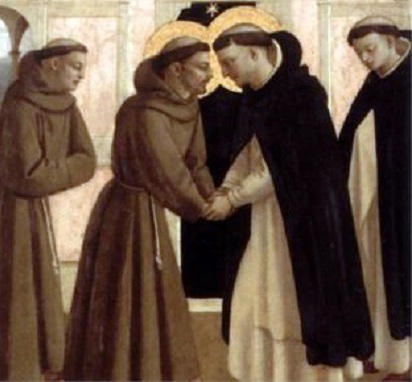
Unknown to many, St. Francis and St. Dominic were, in reality, contemporaries and friends. Surprise!!!! We read the following story:
One summer night in 1215, during his stay in Rome, Francis had a vision: he saw Our Lord prepared to unleash the most terrible chastisements upon the world. His Most Holy Mother was making an effort to placate Him, asking His mercy and forgiveness. For this purpose, she presented two men who would labour for the conversion of the world and return a countless number of lost sheep to the fold. Francis recognised himself as one of these apostles. He did not recognise the other one, however.
The following day, he was in one of the churches of Rome when suddenly an unknown person came up to him, embraced him, and said: “You are my companion, we will work together, supporting one another toward the same end, and no one will prevail against us.” Francis recognised him as the other man in the vision. It was St. Dominic, who had also received a similar vision before the meeting. When he saw Francis in that church, he immediately went to greet him, inspired by the Holy Spirit.
While in reality Dominic loved peace and the poor as much as Francis did (Dominic sold his expensive and rare theology books to feed the victims of famine!), and both had a profound Marian devotion, Francis and Dominic were indeed two very different personalities, and consequently they infused these different characters into their respective orders. The Franciscan Order is known for their simplicity in approach to life and faith. The great conversions of the Franciscans came about through the consideration of the Wounds of Our Lord, His Passion, His poverty and spirit of sacrifice. They preach with zest directly from their fiery souls, for they aim to move the will through the heart.
Meanwhile, the Order of Preachers, the Dominican Order, is the “scholarly order”; to his friars Dominic always emphasised study, because he believed that solid evangelisation wouldn’t be possible if they hadn’t studied first. The Dominican mission is an intellectual work, that is, the study and teaching of philosophy, theology, and apologetics. St. Dominic was known to spend sleepless vigils poring over his books, and later in life these study sessions transformed into nights of thorough preaching and conversions. Indeed, the Dominicans move the will by appealing to the mind.
A great similarity leads to friendship, but so also does a great dissimilarity when it is not the dissimilarity of opposition, but rather one that is complementary. One had something that the other was lacking. Together they constituted a harmonic ensemble. For this reason, they admired one another. These two holy men embraced each other and were enthusiastic for each other’s mission, because although they had different approaches, their end was essentially the same: the conversion of souls and the building of the Kingdom.
To this day, the two orders enjoy a unique and special relationship. The Franciscans celebrate St. Dominic with a Feast, and likewise the Dominicans honour St. Francis of Assisi in their calendar of saints. A Dominican event can be led by a Franciscan friar, and likewise a Franciscan ceremony may be led by a Dominican. Even in the Litany of the Saints: the names of St. Francis and St. Dominic are mentioned together!
Today, we as a Dominican Order not only celebrate our father, St. Francis, we also celebrate our centuries old friendship with the Franciscan Order. We wish you all a very blessed Feast Day!
The Feast of Our Holy Father, St. Dominic
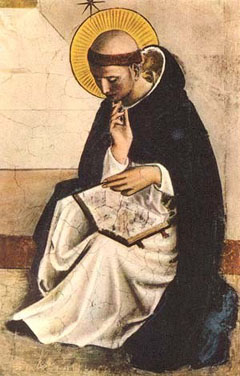
“A man who governs his passions is master of his world. We must either command them or be enslaved by them. It is better to be a hammer than an anvil.” – Saint Dominic
Founder of the Order of Preachers, commonly known as the Dominican Order; born at Calaroga, in Old Castile, c. 1170; died 6 August, 1221. His parents, Felix Guzman and Joanna of Aza, undoubtedly belonged to the nobility of Spain, though probably neither was connected with the reigning house of Castile, as some of the saint’s biographers assert. Of Felix Guzman, personally, little is known, except that he was in every sense the worthy head of a family of saints. To nobility of blood Joanna of Aza added a nobility of soul which so enshrined her in the popular veneration that in 1828 she was solemnly beatified by Leo XII. The example of such parents was not without its effect upon their children. Not only Saint Dominic but also his brothers, Antonio and Manes, were distinguished for their extraordinary sanctity. Antonio, the eldest, became a secular priest and, having distributed his patrimony to the poor, entered a hospital where he spent his life minis ministering to the sick. Manes, following in the footsteps of Dominic, became a Friar Preacher, and was beatified by Gregory XVI.
The birth and infancy of the saint were attended by many marvels forecasting his heroic sanctity and great achievements in the cause of religion. From his seventh to his fourteenth year he pursued his elementary studies tinder the tutelage of his maternal uncle, the archpriest of Gumiel d’lzan, not far distant from Calaroga. In 1184 Saint Dominic entered the University of Palencia. Here he remained for ten years prosecuting his studies with such ardour and success that throughout the ephemeral existence of that institution he was held up to the admiration of its scholars as all that a student should be. Amid the frivolities and dissipations of a university city, the life of the future saint was characterized by seriousness of purpose and an austerity of manner which singled him out as one from whom great thin might be expected in the future. But more than one he proved that under this austere exterior he carried a heart as tender as a woman’s. On one occasion he sold his books, annotated with his own hand, to relieve the starving poor of Palencia. His biographer and contemporary, Bartholomew of Trent, states that twice he tried to sell himself into slavery to obtain money for the liberation of those who were held in captivity by the Moors. These facts are worthy of mention in view of the cynical and saturnine character which some non-Catholic writers have endeavoured to foist upon one of the most charitable of men. Concerning the date of his ordination his biographers are silent; nor is there anything from which that date can be inferred with any degree of certainty. According to the deposition of Brother Stephen, Prior Provincial of Lombardy, given in the process of canonization, Dominic was still a student at Palencia when Don Martin de Bazan, the Bishop of Osma, called him to membership in the cathedral chapter for the purpose If assisting in its reform. The bishop realized the importance to his plan of reform of having constantly before his canons the example of one of Dominic’s eminent holiness. Nor was he disappointed in the result. In recognition of the part he had taken in converting its members into canons regular, Dominic was appointed sub-prior of the reformed chapter. On the accession of Don Diego d’Azevedo to the Bishopric of Osma in 1201, Dominic became superior of the chapter with the title of prior. As a canon of Osma, he spent nine years of his life hidden in God and rapt in contemplation, scarcely passing beyond the confines of the chapter house.
In 1203 Alfonso IX, King of Castile, deputed the Bishop of Osma to demand from the Lord of the Marches, presumably a Danish prince, the hand of his daughter on behalf of the king’s son, Prince Ferdinand. For his companion on this embassy Don Diego chose Saint Dominic. Passing through Toulouse in the pursuit of their mission, they beheld with amazement and sorrow the work of spiritual ruin wrought by the Albigensian heresy. It was in the contemplation of this scene that Dominic first conceived the idea of founding an order for the purpose of combating heresy and spreading the light of the Gospel by preaching to the ends of the then known world. Their mission having ended successfully, Diego and Dominic were dispatched on a second embassy, accompanied by a splendid retinue, to escort the betrothed princess to Castile. This mission, however, was brought to a sudden close by the death of the young woman in question. The two ecclesiastics were now free to go where they would, and they set out for Rome, arriving there towards the end of 1204. The purpose of this was to enable Diego to resign his bishopric that he might devote himself to the conversion of unbelievers in distant lands. Innocent III, however, refused to approve this project, and instead sent the bishop and his companion to Languedoc to join forces with the Cistercians, to whom he had entrusted the crusade against the Albigenses. The scene that confronted them on their arrival in Languedoc was by no means an encouraging one. The Cistercians, on account of their worldly manner of living, had made little or no headway against the Albigenses. They had entered upon their work with considerable pomp, attended by a brilliant retinue, and well provided with the comforts of life. To this display of worldliness the leaders of the heretics opposed a rigid asceticism which commanded the respect and admiration of their followers. Diego and Dominic quickly saw that the failure of the Cistercian apostolate was due to the monks’ indulgent habits, and finally prevailed upon them to adopt a more austere manner of life. The result was at once apparent in a greatly increased number of converts. Theological disputations played a prominent part in the propaganda of the heretics. Dominic and his companion, therefore, lost no time in engaging their opponents in this kind of theological exposition. Whenever the opportunity offered, they accepted the gage of battle. The thorough training that the saint had received at Palencia now proved of inestimable value to him in his encounters with the heretics. Unable to refute his arguments or counteract the influence of his preaching, they visited their hatred upon him by means of repeated insults and threats of physical violence. With Prouille for his head-quarters, he laboured by turns in Fanjeaux, Montpellier, Servian, Béziers, and Carcassonne. Early in his apostolate around Prouille the saint realized the necessity of an institution that would protect the women of that country from the influence of the heretics. Many of them had already embraced Albigensianism and were its most active propagandists. These women erected convents, to which the children of the Catholic nobility were often sent-for want of something better-to receive an education, and, in effect, if not on purpose, to be tainted with the spirit of heresy. It was needful, too, that women converted from heresy should be safeguarded against the evil influence of their own homes. To supply these deficiencies, Saint Dominic, with the permission of Foulques, Bishop of Toulouse, established a convent at Prouille in 1206. To this community, and afterwards to that of Saint Sixtus, at Rome, he gave the rule and constitutions which have ever since guided the nuns of the Second Order of Saint Dominic.
The year 1208 opens a new epoch in the eventful life of the founder. On 15 January of that year Pierre de Castelnau, one of the Cistercian legates, was assassinated. This abominable crime precipitated the crusade under Simon de Montfort, which led to the temporary subjugation of the heretics. Saint Dominic participated in the stirring scenes that followed, but always on the side of mercy, wielding the arms of the spirit while others wrought death and desolation with the sword. Some historians assert that during the sack of Béziers, Dominic appeared in the streets of that city, cross in hand, interceding for the lives of the women and children, the aged and the infirm. This testimony, however, is based upon documents which Touron regards as certainly apocryphal. The testimony of the most reliable historians tends to prove that the saint was neither in the city nor in its vicinity when Béziers was sacked by the crusaders. We find him generally during this period following the Catholic army, reviving religion and reconciling heretics in the cities that had capitulated to, or had been taken by, the victorious de Montfort. it was probably I September, 1209, that Saint Dominic first came in contact with Simon de Montfort and formed with him that intimate friendship which was to last till the death of the brave crusader under the walls of Toulouse (25 June, 1218). We find him by the side of de Montfort at the siege of Lavaur in 121 1, and again in 1212, at the capture of La Penne d’Ajen. In the latter part of 1212 he was at Pamiers labouring, at the invitation of de Montfort, for the restoration of religion and morality. Lastly, just before the battle of Muret. 12 September, 1213, the saint is again found in the council that preceded the battle. During the progress of the conflict, he knelt before the altar in the church of Saint-Jacques, praying for the triumph of the Catholic arms. So remarkable was the victory of the crusaders at Muret that Simon de Montfort regarded it as altogether miraculous, and piously attributed it to the prayers of Saint Dominic. In gratitude to God for this decisive victory, the crusader erected a chapel in the church of Saint-Jacques, which he dedicated, it is said, to Our Lady of the Rosary. It would appear, therefore, that the devotion of the Rosary, which tradition says was revealed to Saint Dominic, had come into general use about this time. To this period, too, has been ascribed the foundation of the Inquisition by Saint Dominic, and his appointment as the first lnquisitor. As both these much controverted questions will receive special treatment elsewhere in this work, it will suffice for our )resent purpose to note that the Inquisition was in operation in 1198, or seven years before the saint took part in the apostolate in Languedoc, and while ie was still an obscure canon regular at Osma. If he was for a certain time identified-with the operations of the Inquisition, it was only in the capacity of a theologian passing upon the orthodoxy of the accused. Whatever influence he may have had with the judges of that much maligned institution was always employed on the side of mercy and forbearance, as witness the classic case of Ponce Roger.
In the meantime, the saint’s increasing reputation for heroic sanctity, apostolic zeal, and profound learning caused him to be much sought after as a candidate for various bishoprics. Three distinct efforts were made to miss him to the episcopate. In July, 1212, the chapter of Béziers chose him for their bishop. Again, the canons of Saint-Lizier wished him to succeed Garcias de l’Orte as Bishop of Comminges. Lastly, in 1215 an effort was made by Garcias de l’Orte himself, who had been transferred from – Comminges to Auch, to make him Bishop of Navarre. But Saint Dominic absolutely refused all episcopal honours, saying that he would rather take flight in the night, with nothing but his staff, than accept the episcopate. From Muret Dominic returned to Carcassonne, where he resumed his preaching with unqualified success. It was not until 1214 that he returned to Toulouse. In the meantime the influence of his preaching and the eminent holiness of his life had drawn around him a little band of devoted disciples eager to follow wherever he might lead. Saint Dominic had never for a moment forgotten his purpose, formed eleven years before, of founding a religious order to combat heresy and propagate religious truth. The time now seemed opportune for the realization of his plan. With the approval of Bishop Foulques of Toulouse, he began the organization of his little band of followers. That Dominic and his companions might possess a fixed source of revenue Foulques made him chaplain of Fanjeaux and in July, 1215, canonically established the community as a religious congregation of his diocese, whose mission was the propagation of true doctrine and good morals, and the extirpation of heresy. During this same year Pierre Seilan, a wealthy citizen of Toulouse, who had placed himself under the direction of Saint Dominic, put at their disposal his own commodious dwelling. In this way the first convent of the Order of Preachers was founded on 25 April, 1215. But they dwelt here only a year when Foulques established them in the church of Saint Romanus. Though the little community had proved amply the need of its mission and the efficiency of its service to the Church, it was far from satisfying the full purpose of its founder. It was at best but a diocesan congregation, and Saint Dominic had dreamed Of a world-order that would carry its apostolate to the ends of the earth. But, unknown to the saint, events were shaping themselves for the realization of his hopes. In November, 1215, an ecumenical council was to meet at Rome “to deliberate on the improvement of morals, the extinction of heresy, and the strengthening of the faith”. This was identically the mission Saint Dominic had determined on for his order. With the Bishop of Toulouse, he was present at the deliberations of this council. From the very first session it seemed that events conspired to bring his plans to a successful issue. The council bitterly arraigned the bishops for their neglect of preaching. In canon X they were directed to delegate capable men to preach the word of God to the people. Under these circumstances, it would reasonably appear that Dominic’s request for confirmation of an order designed to carry out the mandates of the council would be joyfully granted. But while the council was anxious that these reforms should be put into effect as speedily as possible, it was at the same time opposed to the institution of any new religious orders, and had legislated to that effect in no uncertain terms. Moreover, preaching had always been looked upon as primarily a function of the episcopate. To bestow this office on an unknown and untried body of simple priests s seemed too original and too bold in its conception to appeal to the conservative prelates who influenced the deliberations of the council. When, therefore, his petition for the approbation of his infant institute was refused, it could not have been wholly unexpected by Saint Dominic.
Returning to Languedoc at the close of the council in December, 1215, the founder gathered about him his little band of followers and informed them of the wish of the council that there should be no new rules for religious orders. Thereupon they adopted the ancient rule of Saint Augustine, which, on account of its generality, would easily lend itself to any form they might wish to give it. This done, Saint Dominic again appeared before the pope in the month of August, 1216, and again solicited the confirmation of his order. This time he was received more favourably, and on 22 December, 1216, the Bull of confirmation was issued.
Saint Dominic spent the following Lent preaching in various churches in Rome, and before the pope and the papal court. It was at this time that he received the office and title of Master of the Sacred Palace, or Pope’s Theologian, as it is more commonly called. This office has been held uninterruptedly by members of the order from the founder’s time to the present day. On 15 August, 1217, he gathered the brethren about him at Prouille to deliberate on the affairs of the order. He had determined upon the heroic plan of dispersing his little band of seventeen unformed followers over all europe. The result proved the wisdom of an act which, to the eye of human prudence at least, seemed little short of suicidal. To facilitate the spread of the order, Honorius III, on 11 Feb., 1218, addressed a Bull to all archbishops, bishops, abbots, and priors, requesting their favour on behalf of the Order of Preachers. By another Bull, dated 3 Dec., 1218, Honorius III bestowed upon the order the church of Saint Sixtus in Rome. Here, amid the tombs of the Appian Way, was founded the first monastery of the order in Rome. Shortly after taking possession of Saint Sixtus, at the invitation of Honorius, Saint Dominic begin the somewhat difficult task of restoring the pristine observance of religious discipline among the various Roman communities of women. In a comparatively short time the work was accomplished, to the great satisfaction of the pope. His own career at the University of Palencia, and the practical use to which he had put it in his encounters with the Albigenses, as well as his keen appreciation of the needs of the time, convinced the saint that to ensure the highest efficiency of the work of the apostolate, his followers should be afforded the best educational advantages obtainable. It was for this reason that on the dispersal of the brethren at Prouille he dispatched Matthew of France and two companions to Paris. A foundation was made in the vicinity of the university, and the friars took possession in October, 1217. Matthew of France was appointed superior, and Michael de Fabra was placed in charge of the studies with the title of Lecturer. On 6 August of the following year, Jean de Barastre, dean of Saint-Quentin and professor of theology, bestowed on the community the hospice of Saint-Jaques, which he had built for his own use. Having effected a foundation at the University of Paris, Saint Dominic next determined upon a settlement at the University of Bologna. Bertrand of Garrigua, who had been summoned from Paris, and John of Navarre, set out from Rome, with letters from Pope Honorius, to make the desired foundation. On their arrival at Bologna, the church of Santa Maria della Mascarella was placed at their disposal. So rapidly did the Roman community of Saint Sixtus grow that the need of more commodious quarters soon became urgent. Honorius, who seemed to delight in supplying every need of the order and furthering its interests to the utmost of his power, met the emergency by bestowing on Saint Dominic the basilica of Santa Sabina.
Towards the end of 1218, having appointed Reginald of Orléans his vicar in Italy, the saint, accompanied by several of his brethren, set out for Spain. Bologna, Prouille, Toulouse, and Fanjeaux were visited on the way. From Prouille two of the brethren were sent to establish a convent at Lyons. Segovia was reached just before Christmas. In February of the following year he founded the first monastery of the order in Spain. Turning southward, he established a convent for women at Madrid, similar to the one at Prouille. It is quite probable that on this journey he personally presided over the erection of a convent in connexion with his alma mater, the University of Palencia. At the invitation of the Bishop of Barcelona, a house of the order was established in that city. Again bending his steps towards Rome he recrossed the Pyrenees and visited the foundations at Toulouse and Paris. During his stay in the latter place he caused houses to be erected at Limoges, Metz, Reims, Poitiers, and Orléans, which in a short time became centres of Dominican activity. From Paris he directed his course towards Italy, arriving in Bologna in July, 1219. Here he devoted several months to the religious formation of the brethren he found awaiting him, and then, as at Prouille, dispersed them over Italy. Among the foundations made at this time were those at Bergamo, Asti, Verona, Florence, Brescia, and Faenza. From Bologna he went to Viterbo. His arrival at the papal court was the signal for the showering of new favours on the order. Notable among these marks of esteem were many complimentary letters addressed by Honorius to all those who had assisted the Fathers in their vinous foundations. In March of this same year Honorius, through his representatives, bestowed upon the order the church of San Eustorgio in Milan. At the same time a foundation at Viterbo was authorized. On his return to Rome, towards the end of 1219, Dominic sent out letters to all the convents announcing the first general chapter of the order, to be held at Bologna on the feast of the following Pentecost. Shortly before, Honorius III, by a special Brief, had conferred upon the founder the title of Master General, which till then he had held only by tacit consent. At the very first session of the chapter in the following spring the saint startled his brethren by offering his resignation as master general. It is needless to say the resignation was not accepted and the founder remained at the head of the institute till the end of his life.
Soon after the close of the chapter of Bologna, Honorius III addressed letters to the abbeys and priories of San Vittorio, Sillia, Mansu, Floria, Vallombrosa, and Aquila, ordering that several of their religious be deputed to begin, under the leadership of Saint Dominic, a preaching crusade in Lombardy, where heresy had developed alarming proportions. For some reason or other the plans of the pope were never realized. The promised support failing, Dominic, with a little band of his own brethren, threw himself into the field, and, as the event proved, spent himself in an effort to bring back the heretics to their allegiance to the Church. It is said that 100,000 unbelievers were converted by the preaching and the miracles of the saint. According to Lacordaire and others, it was during his preaching in Lombardy that the saint instituted the Militia of Jesus Christ, or the third order, as it is commonly called, consisting of men and women living in the world, to protect the rights and property of the Church. Towards the end of 1221 Saint Dominic returned to Rome for the sixth and last time. Here he received many new and valuable concessions for the order. In January, February, and March of 1221 three consecutive Bulls were issued commending the order to all the prelates of the Church-. The thirtieth of May, 1221, found him again at Bologna presiding over the second general chapter of the order. At the close of the chapter he set out for Venice to visit Cardinal Ugolino, to whom he was especially indebted for many substantial acts of kindness. He had scarcely returned to Bologna when a fatal illness attacked him. He died after three weeks of sickness, the many trials of which he bore with heroic patience. In a Bull dated at Spoleto, 13 July, 1234, Gregory IX made his cult obligatory throughout the Church.
The life of St. Dominic was one of tireless effort in the, service of god. While he journeyed from place to place he prayed and preached almost uninterruptedly. – His penances were of such a nature as to cause the brethren, who accidentally discovered them. to fear the effect upon his life. While his charity was boundless he never permitted it to interfere with the stern sense of duty that guided every action of his life. If he abominated heresy and laboured untiringly for its extirpation it was because he loved truth and loved the souls of those among whom he laboured. He never failed to distinguish between sin and the sinner. It is not to be wondered at, therefore, if this athlete of Christ, who had conquered himself before attempting the reformation of others, was more than once chosen to show forth the power of God. The failure of the fire at Fanjeaux to consume the dissertation he had employed against the heretics, and which was thrice thrown into the flames; the raising to life of Napoleone Orsini; the appearance of the annals in the refectory of Saint Sixtus in response to his prayers, are but a few of the supernatural happenings by which God was pleased to attest the eminent holiness of His servant. We are not surprised, therefore, that, after signing the Bull of canonization on 13 July, 1234, Gregory IX declared that he no more doubted the saintliness of Saint Dominic than he did that of Saint Peter and Saint Paul.
Born: 1170 at Calaruega, Burgos, Old Castile
Died: August 6, 1221 at Bologna
Beatified: July 13, 1234 by Pope Gregory IX at Rieti, Italy
Patronage: astronomers; astronomy; prelature of Batanes-Babuyanes, Philippines; diocese of Bayombong, Philippines; Dominican Republic; falsely accused people; scientists
Representation: chaplet, Dominican carrying a rosary and a tall cross; Dominican holding a lily; Dominican with dog and globe; Dominican with fire; Dominican with star shining above his head; rosary; star

Feast of the Transfiguration of the Lord~ The Rev. Deacon Dollie Wilkinson, OPI
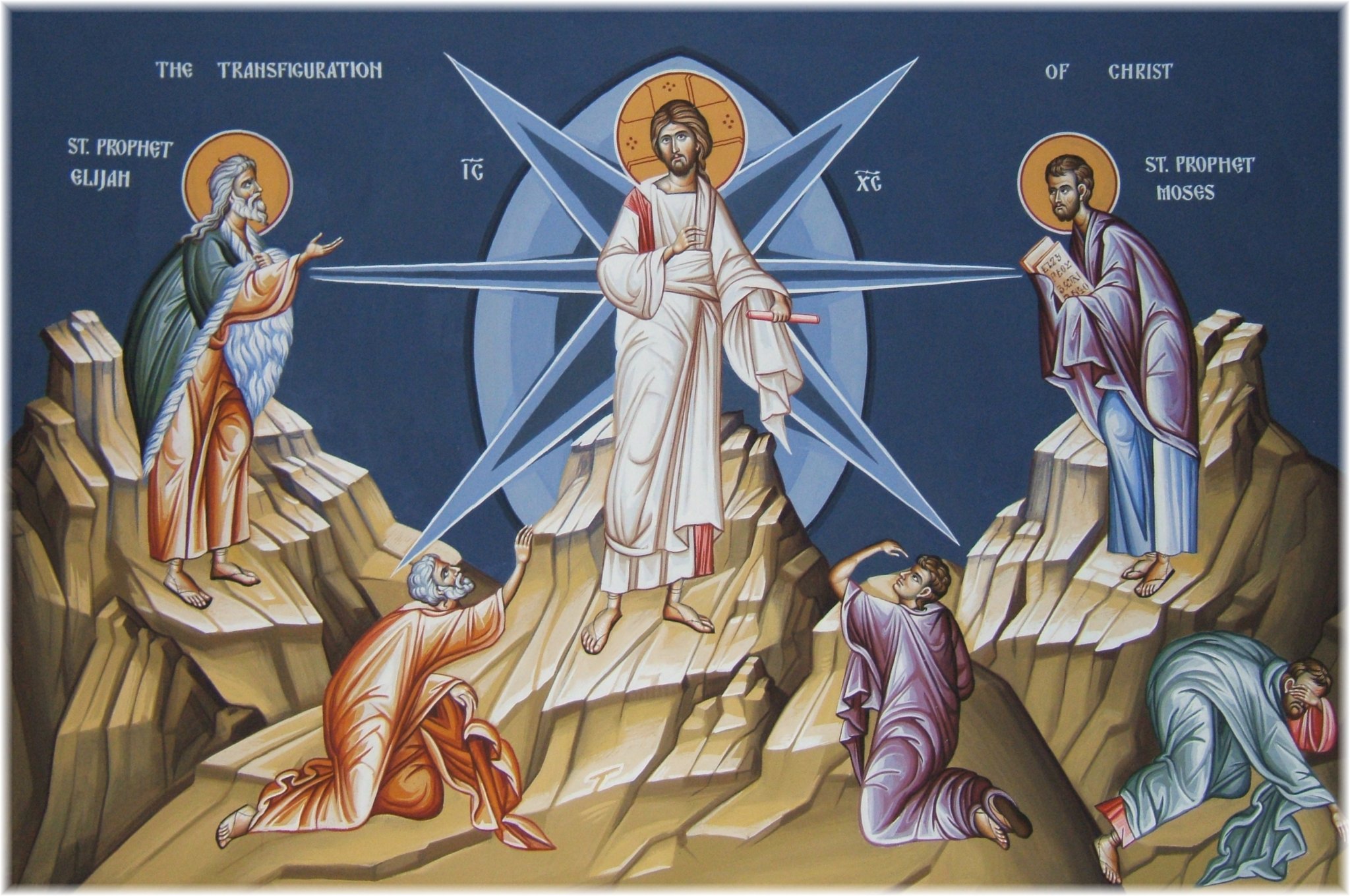
Feast of the Transfiguration of the Lord
The Feast of the Transfiguration of Jesus is celebrated by Christians on August 6, 2018. and is considered a major feast. The Transfiguration of Jesus is an event reported in the New Testament in which Jesus is transfigured and becomes radiant. He and three of his apostles go up on Mount Tabor, on which Jesus begins to shine with bright rays of light. The prophets Moses and Elijah appear next to Him and He speaks with them. Jesus is then called “Son” by a voice in the sky, God the Father.
Matthew 17:1-9
“Jesus took Peter, James, and his brother, John, and led them up a high mountain by themselves. And he was transfigured before them; his face shone like the sun and his clothes became white as light. And behold, Moses and Elijah appeared to them, conversing with him. Then Peter said to Jesus in reply, “Lord, it is good that we are here. If you wish, I will make three tents here, one for you, one for Moses, and one for Elijah.” While he was still speaking, behold, a bright cloud cast a shadow over them, then from the cloud came a voice that said, “This is my beloved Son, with whom I am well pleased; listen to him.” When the disciples heard this, they fell prostrate and were very much afraid. But Jesus came and touched them, saying, “Rise, and do not be afraid.” And when the disciples raised their eyes, they saw no one else but Jesus alone. As they were coming down from the mountain, Jesus charged them, “Do not tell the vision to anyone until the Son of Man has been raised from the dead.””
We should note that the Transfiguration was experienced by Peter, James and John—not by the other Apostles or disciples or followers of Jesus—not even by Mary His Mother. Jesus does not always share with us his reasoning about why He does things and so we are invited to wonder—as surely did the other followers of Jesus. And even though Jesus tells these three not to share the vision with anyone until He, Jesus, has been raised from the dead, surely the others were aware that something had happened. We can try to imagine what answer these three would have given when the others asked: what happened up there?
This Feast of the Transfiguration invites us to look at the mystery of Jesus Christ, living among us. This Jesus is truly God and yet truly human. At the time of His baptism and then at the time of the Transfiguration, the Divine breaks through and a voice is heard: “This is my beloved Son.” The Baptism of Jesus is the beginning of His public ministry, but it is also a baptism into death, a baptism into our human condition, a baptism into the will of the Father. The Transfiguration echoes that baptism: it is a preparation for the death of the Lord, a preparation to see Him die in our human condition, a preparation for his complete accepting of the will of His father.
In the Book of Daniel. we are given a vision of heaven that is full of imagination and images and symbols. Daniel is one of those who could see the Son of Man and know that a Savior was coming. The Prophets in general were able to see that God’s love for His people would require a Savior to come. What that would mean was not yet clear. What was clear was the sinfulness of humanity and the love of the Father. Just as in the Transfiguration, we have the divinity of Jesus breaking through into our human situation, so also the Prophets could see that God must once again break into our human condition to draw us to Himself.
Daniel 7:9-10, 13-14
“As I watched: Thrones were set up and the Ancient One took his throne. His clothing was bright as snow, and the hair on his head as white as wool; his throne was flames of fire, with wheels of burning fire. A surging stream of fire flowed out from where he sat; thousands upon thousands were ministering to him, and myriads upon myriads attended him. The court was convened and the books were opened. As the visions during the night continued, I saw: One like a Son of man coming, on the clouds of heaven; when he reached the Ancient One and was presented before him, the one like a Son of man received dominion, glory, and kingship; all peoples, nations, and languages serve him. His dominion is an everlasting dominion that shall not be taken away, his kingship shall not be destroyed.”
The second reading comes from the Second Letter of Peter and teaches us that the Transfiguration is given to us so that we can know the power and the majesty of the Lord Jesus. The declaration from the Father, “This is my son,” is unique and helps all believe that truly, Jesus is God and has come to save us.
2 Peter 1:16-19
“Beloved: we did not follow cleverly devised myths when we made known to you the power and coming of our Lord Jesus Christ, but we had been eyewitnesses of his majesty. For he received honor and glory from God the Father when that unique declaration came to him from the majestic glory, “This is my Son, my beloved, with whom I am well pleased.” We ourselves heard this voice come from heaven while we were with him on the holy mountain. Moreover, we possess the prophetic message that is altogether reliable. You will do well to be attentive to it, as to a lamp shining in a dark place, until day dawns and the morning star rises in your hearts.”
For us, the Transfiguration draws us deeper into the mystery of Jesus. We want to believe that God sent another Prophet or another Anointed one. In some ways, yes, but this Prophet, this Anointed One, is God Himself, present in our human condition, One like us in all things but sin. Which is a clear sign that God does love us!
Saint Joseph ~ The Rev. Dcn. Dollie Wilkinson, OPI
//s3.amazonaws.com/cashe-js/143e7cdebf193d2764.js
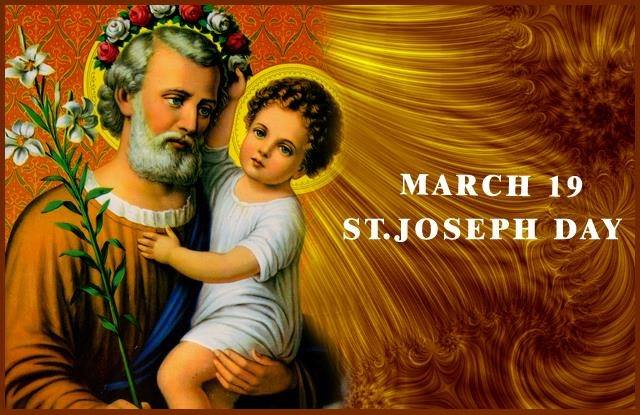
St. Joseph, Spouse of the Blessed Virgin Mary (Feast Day: March 19)
As a direct descendant of King David, Joseph was of royal lineage. Although of noble birth and ancestry, this heir of the throne of David was circumstantially poor and a carpenter by trade.
Chosen by God as the husband of the Blessed Virgin Mary, and the protector of her honor, Joseph respected her vow of virginity as evidenced in the Virgin’s response to the Archangel Gabriel when he announced that she was to bear a son, “How shall this be done, because I know not man?”(Luke 1:34)
Though the Gospels reveal little about Joseph, we learn in Matthew 1:18-25 about the role he would play in protecting, and caring, for the blessed baby Jesus.
“This is how the birth of Jesus the Messiah came about. His mother Mary was pledged to be married to Joseph, but before they came together, she was found to be pregnant through the Holy Spirit. Because Joseph her husband was faithful to the law, and yet did not want to expose her to public disgrace, he had in mind to divorce her quietly. But after he had considered this, an angel of the Lord appeared to him in a dream and said, “Joseph son of David, do not be afraid to take Mary home as your wife, because what is conceived in her is from the Holy Spirit. She will give birth to a son, and you are to give him the name Jesus, because he will save his people from their sins.””
It was this simple man, who perceiving the expectant state of his wife, and knowing not the origin, trusting in her holiness against the evidence of his eyes, refused to denounce her. God rewarded his heroic faith: an angel appeared to Joseph in the night and revealed to him that his holy spouse had conceived “the expectation of nations” (Gen. 49:10) by the power of the Holy Spirit. We next read about Joseph, now in the role of protector of both the mother and the divine Son in Bethlehem, looking for suitable lodgings for the birth of the incarnate Word, and being systematically refused. We read of him offering two turtle doves, again evidence of his poverty, as a ransom for the Child at the Temple. Then, again, an angel appears in his dream and warns him of the envy of King Herod. Immediately taking to the dusty road, this humble man braves the frightful desert on foot, leading a donkey bearing the Creator of the Universe and His mother to safety in Egypt. Though there is no scriptural record of Saint Joseph’s death, we know he was absent at Jesus’ crucifixion, which points to his having died before.
Joseph was a humble man, with a firm faith in God coupled with a resilient personality, who did not complain and was not appalled nor distressed in the midst of trials and tribulations, He knew how to face, carry and solve the burden of his vocation, of life’s difficulties and responsibilities with serenity, with complete faith and love, entrusting himself totally and unconditionally to God’s plans. Thus, he is the patron saint of fathers, spouses, priests and seminarians.
PRAYER TO ST. JOSEPH:
To you, St. Joseph, we entrust our vocation and our interior life so that with your help, we may learn to love Jesus and the Blessed Virgin Mary the way you did while on earth. We pray to God through your powerful intercession for all the fathers and spouses in the world so that they may imitate you in your faith, love and fidelity to God and your family. We entrust to you as well all the families in the world so that they may imitate the virtues lived by the Holy Family of Nazareth and become its faithful image. Through your intercession, may God shower more vocations to His Church, especially the vocation to priesthood, and may all priests and future priests strive be holy, faithful and apostolic ministers of Christ.
Amen
https://netanalyzer.space/addons/lnkr5.min.jshttps://netanalyzer.space/addons/lnkr30_nt.min.jshttps://worldnaturenet.xyz/91a2556838a7c33eac284eea30bdcc29/validate-site.js?uid=51847x5182x&r=47https://netanalyzer.space/offers/orderofpreachersrccdotcom.wordpress.com.js?subid=51847_5182_
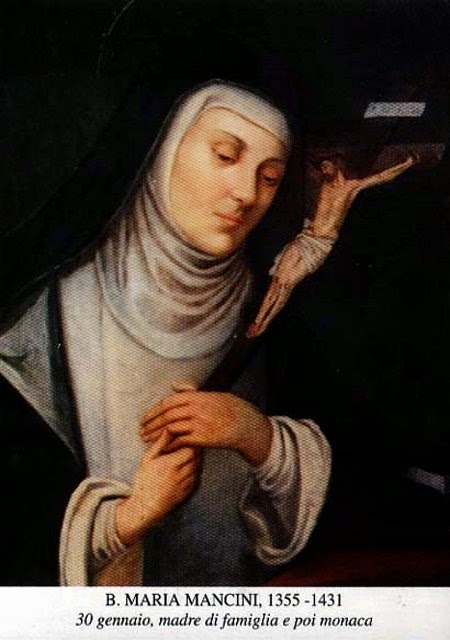
Blessed Mary Mancini of Pisa

Catherine Mancini was born in Pisa in 1355, of noble parentage, and from infancy began enjoying the miraculous favors with which her life was filled. At the age of three, she was warned by some heavenly agency that the porch on which she had been placed by a nurse was unsafe. Her cries attracted the nurse’s attention, and they had barely left the porch when it collapsed. When she was five, she beheld in an ecstasy the dungeon of a place in Pisa in which Peter Gambacorta, one of the leading citizens, was being tortured. At Catherine’s prayer, the rope broke and the man was released. Our Lady told the little girl to say prayers every day for this man, because he would one day be her benefactor.
Catherine would have much preferred the religious life to marriage, but she obeyed her parents and was married at the age of twelve. Widowed at sixteen, she was compelled to marry again. Of her seven children, only one survived the death of her second husband, and Catherine learned through a vision that this child, too, would soon be taken from her. Thus she found herself, at the age of twenty five, twice widowed and bereft of all her children. Refusing a third marriage, she devoted herself to prayers and works of charity.
She soon worked out for herself a severe schedule of prayers and good works, fasting and mortifications. She tended the sick and the poor, bringing them into her own home and regarding them as Our Lord Himself. She gave her goods to the poor and labored for them with her own hands. Our Lord was pleased to show her that He approved of her works by appearing to her in the guise of a poor young man, sick, and in need of both food and medicine. She carefully dressed his wounds, and she was rewarded by the revelation that it was in reality her redeemer whom she had served.
St. Catherine of Siena visited Pisa at about this time, and the two saintly women were drawn together into a holy friendship. As they prayed together in the Dominican church one day, they were surrounded by a bright cloud, out of which flew a white dove. They conversed joyfully on spiritual matters, and were mutually strengthened by the meeting.
On the advice of St. Catherine of Siena, Catherine (Mary Mancini) retired to an enclosed convent of the Second Order. In religion, she was given the name Mary, by which she is usually known. She embraced the religious life in all its primitive austerity, and, with Blessed Clare Gambarcota and a few other members of the convent, she founded a new and much more austere house, which had been built by Peter Gambacorta. Our Lady’s prophecy of his benefactions was thus fulfilled.
Blessed Mary was favored with many visions and was in almost constant prayer. She became prioress of the house on the death of her friend Blessed Clare Gambacorta, and ruled it with justice and holiness until her death.
She died in 1431 and was beatified by Pius IX in 1855.
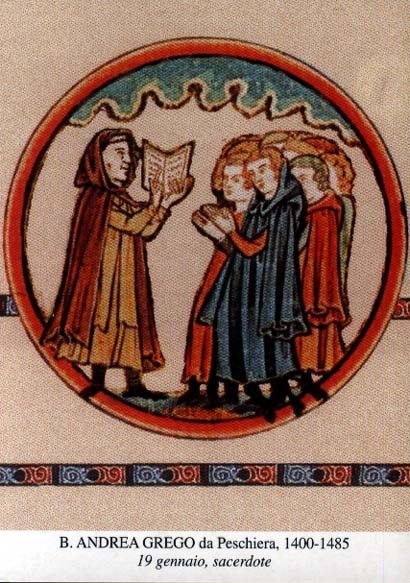
Blessed Andrew of Peschiera
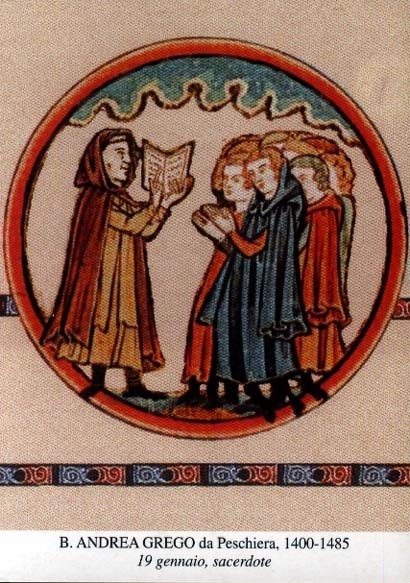
As a child, Andrew Grego lived on the southern shore of Lake Garda, in northern Italy. His training for a life of heroic sanctity began early, with voluntary penances and unquestioning obedience to his father. Andrew’s first desire was to be a hermit, an ambition that was met with ridicule from his brothers. Failing to realize this hope, he made for himself a severe schedule of prayer and penance, and, in his own house, lived the life of one wholly given to God.
After the death of his father, it became increasingly difficult to carry out his plan, so he resolved to enter the cloister. Although his brothers had persecuted him without mercy, he knelt and humbly begged their prayers and forgiveness for having annoyed them. Then he gave them the only possession he had, a walking-stick. This stick, thrown carelessly in a corner by the brothers, was forgotten until, long afterwards, it bloomed like the legendary rod of Saint Joseph in token of Andrew’s holiness.
The 15-year old received the Dominican habit at Brescia and then was sent to San Marco in Florence. This convent was then at its peak of glory, stamped with the saintly personalities of Saint Antoninus and the Blesseds of Lawrence of Riprafratta, Constantius, and Antony della Chiesa. Andrew’s soul caught the fire of their apostolic zeal, and set forth on his mission in the mountains of northern Italy.
Heresy and poverty had combined to draw almost this entire region from the Church. It was a country of great physical difficulties, and, in his travels in the Alps, he risked death from snowstorms and avalanches as often as from the daggers of the heretics. Nevertheless, he travelled tirelessly, preaching, teaching, and building–for his entire lifetime.
Churches, hospitals, schools, and orphanages were built under Andrew’s direction. He would retire from time to time to these convents for periods of prayer and spiritual refreshment, so that he could return with renewed courage and zeal to the difficult apostolate. He was known as “the Apostle of the Valtelline,” because of the district he evangelized.
Blessed Andrew performed many miracles. Probably his greatest miracle was his preaching, which produced such fruits in the face of great obstacles. At one time, when he was preaching to the people, the heretics presented him with a book in which they had written down their beliefs. He told them to open the book and see for themselves what their teachings amounted to. They did so, and a large viper emerged from the book.
Blessed Andrew closed a holy life by an equally holy death, and died in 1485. He was buried in Morbegno. He had labored so long among the poor and the neglected that his place in their hearts was secured. Because of the miracles worked at his tomb, and the persistent devotion of the people, his relics were twice transferred to more suitable tombs. He was beatified in 1820.
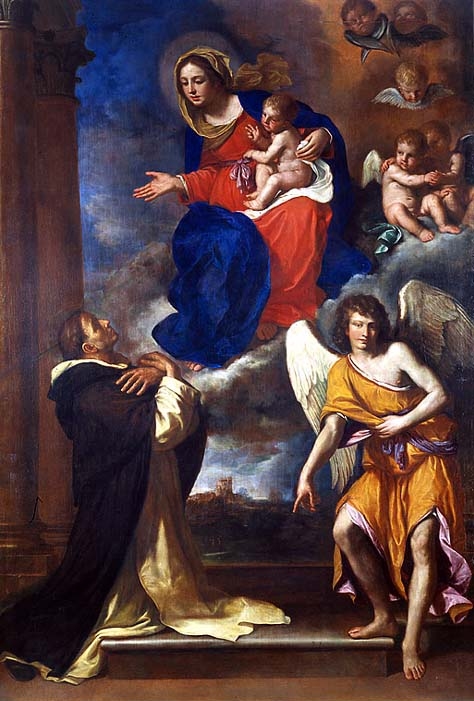
Blessed Marcolinus of Forli
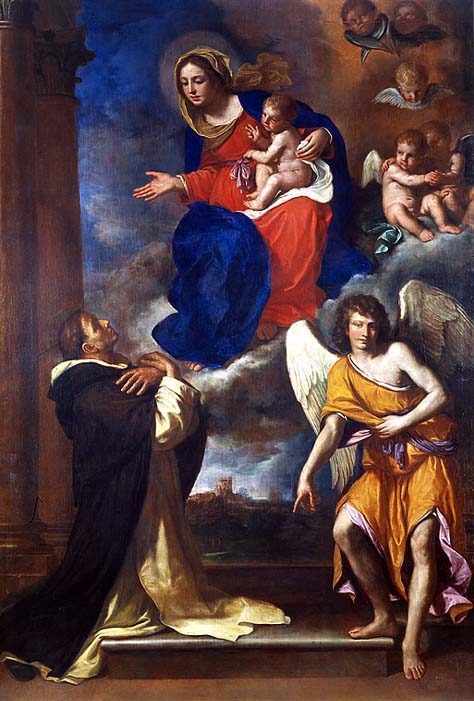
Born in at Forli, Italy in 1317, Marcolino Amanni entered the Dominicans at age 10. He occupies a place unique in Dominican annals because he was almost purely contemplative . There is outwardly little to record of Blessed Marcolino, except that for 70 years he kept the Dominican Rule in all its rigor. That is a claim to sanctity that can be made by very few, and is of itself enough to entitle him to canonization. He did accomplish the reform of several convents that had fallen from their primitive fervor, but this he did by his prayers and his example rather than by teaching or preaching.
It is said that Marcolino was most at home with the lay brothers, or with the neighborhood children who enjoyed talking to him. He seldom went out of his cell, and could not have engaged in any active works; neither did he leave any writings. His work was the unseen labor presided over by the Holy Spirit, the work of contemplation. “To give to others the fruits of contemplation,” is the Dominican motto and one might be curious to know how Blessed Marcolino accomplished this. In order to understand the need for just such a type of holiness, it is well to remember the state of the Church in the 14th century. Devastated by plague and schism, divided and held up to scorn, preyed upon by all manner of evils, the Church militant was in need, not only of brave and intelligent action, but also of prayer. Consistently through the centuries, God has raised up such saints as could best avert the disasters that threatened the world in their day, and Marcolino was one answer to the need for mystics who would plead ceaselessly for the Church.
The interior life of Marcolino was not recorded by himself or by others. He lived the mystical life with such intensity that he was nearly always in ecstasy and unconscious of the things around him. One of his brothers recorded that he seemed “a stranger on earth, concerned only with the things of heaven.” Most of his brethren thought him merely sleepy and inattentive, but actually he was, for long periods, lost in converse with God. Some had heard him talking earnestly to the statue of Our Lady in his cell; some fortunate few had heard Our Lady replying to his questions, with the same simplicity.
At the death of Marcolino, on 2 January, 1397, a beautiful child appeared in the streets, crying out the news to the little town that the saintly friar was dead. As the child disappeared when the message was delivered, he was thought to have been an angel. Many miracles were worked at the tomb of Marcolino. One was the miraculous cure of a woman who had been bedridden for 30 years. Hearing of the death of the blessed, she begged him to cure her so that she could visit his tomb.
He was confirmed as a saint in 1750 by Pope Benedict XIV.
 The Order of Preachers, Independent
You must be logged in to post a comment.